
Inspiration
Most mental wellness apps rely on static, pre-recorded audio libraries. Once a user listens to a track a few times, its effectiveness drops significantly. Human emotional states are dynamic, changing throughout the day based on stress, sleep debt, and physical tension. We wanted to build something that moves past generic audio files by pairing responsive sound design with structured emotional regulation tools. The inspiration was to treat sound not as passive background noise, but as an active, responsive tool for nervous system regulation.
What it does
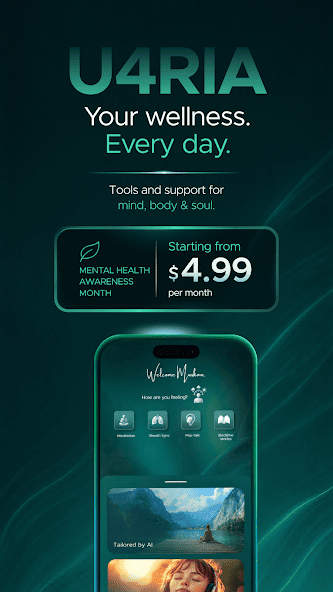
U4RIA is an AI-powered emotional wellness app designed around a proprietary audio engine and our SOS Wellness Wheel framework. It delivers personalized sessions across 13 core modules to support daily mental balance.
Key features include:
- Dynamic audio experiences spanning frequency-based soundscapes, sleep journeys, and ambient nature environments
- Targeted breathwork sessions (BreatheSync) calibrated for acute stress down-regulation
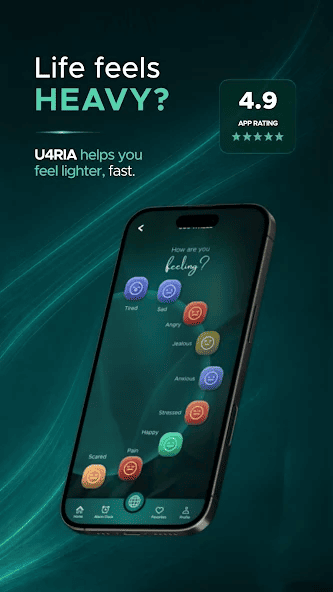
- The SOS Wellness Wheel, enabling users to identify acute pain points and receive immediate, targeted interventions
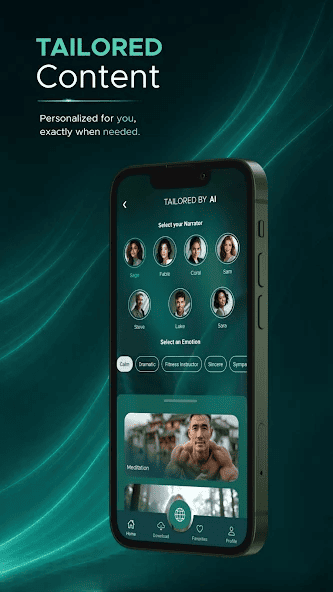
- AI personalization that matches meditation, affirmations, and sound tools to user inputs and routine patterns
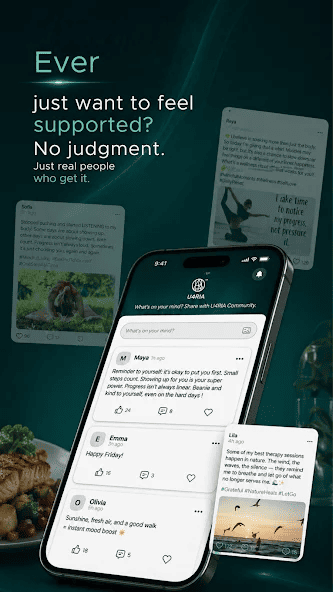
- Comprehensive lifestyle support including nutritional guidance, pep-talk audio motivation, and community interaction
How I built it
The application is built across a multi-tier mobile and backend architecture focused on low-latency audio processing:
- Proprietary sound engine designed to layer, blend, and modulate multi-track acoustic frequencies and nature elements smoothly
- Algorithmic recommendation layer that maps real-time user check-ins against the SOS Wellness Wheel taxonomy to output relevant sessions
- Cross-platform mobile front end deployed on iOS and Android with intuitive visual controls for deep session immersion
- Cloud backend orchestrating user personalization profiles, dynamic audio delivery, and content updates
Challenges I ran into
Building high-quality responsive audio on mobile devices brought several hurdles:
- Managing audio thread performance and asset caching to prevent stutter or latency when transitioning soundscapes
- Designing an algorithmic mapping system that gives genuinely useful recommendations based on brief emotional check-ins rather than overwhelming the user with choices
- Ensuring battery efficiency during long background audio playback, particularly for overnight sleep sessions
- Balancing complex sound layering with clean, distraction-free user interface design
Accomplishments that I'm proud of
- Reaching over 200,000 organic downloads across 160 countries worldwide
- Maintaining high community satisfaction with a 4.9-star rating on iOS and a 5-star rating on Android
- Earning coverage and recognition in publications like Wellbeing Magazine, Business Today Global, and MSN
- Building an audio experience that users genuinely rely on every night for restorative sleep and daily stress recovery
What I learned
- Audio perception is deeply subjective; giving users granular control over sound layers creates far better engagement than locked tracks
- In emotional wellness, reducing friction to relief is vital. When someone feels stressed, they need instant intervention rather than long menus
- Lightweight, dependable offline audio playback is essential for users meditating on flights, during commutes, or in low-connectivity areas
What's next for TuneWorks
- Integrating biometric feedback from wearables like Apple Watch and Oura to adapt audio frequency and tempo automatically to heart rate variability
- Expanding the sound engine with more procedural generative audio models for endless non-looping focus and sleep sessions
- Enhancing community wellness challenges to help users build consistent daily mindfulness habits together
- Deepening partnerships with clinical researchers to validate acoustic intervention outcomes for anxiety and insomnia
Built With
- netxjs
- postgresql
- stripe
- typescript
- vercel
