-
-
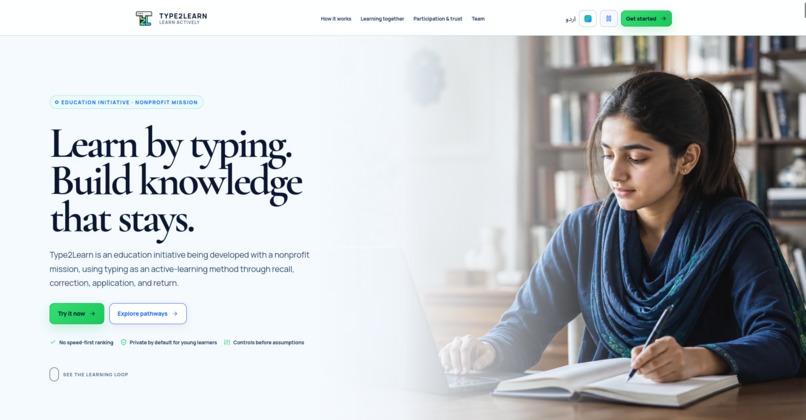
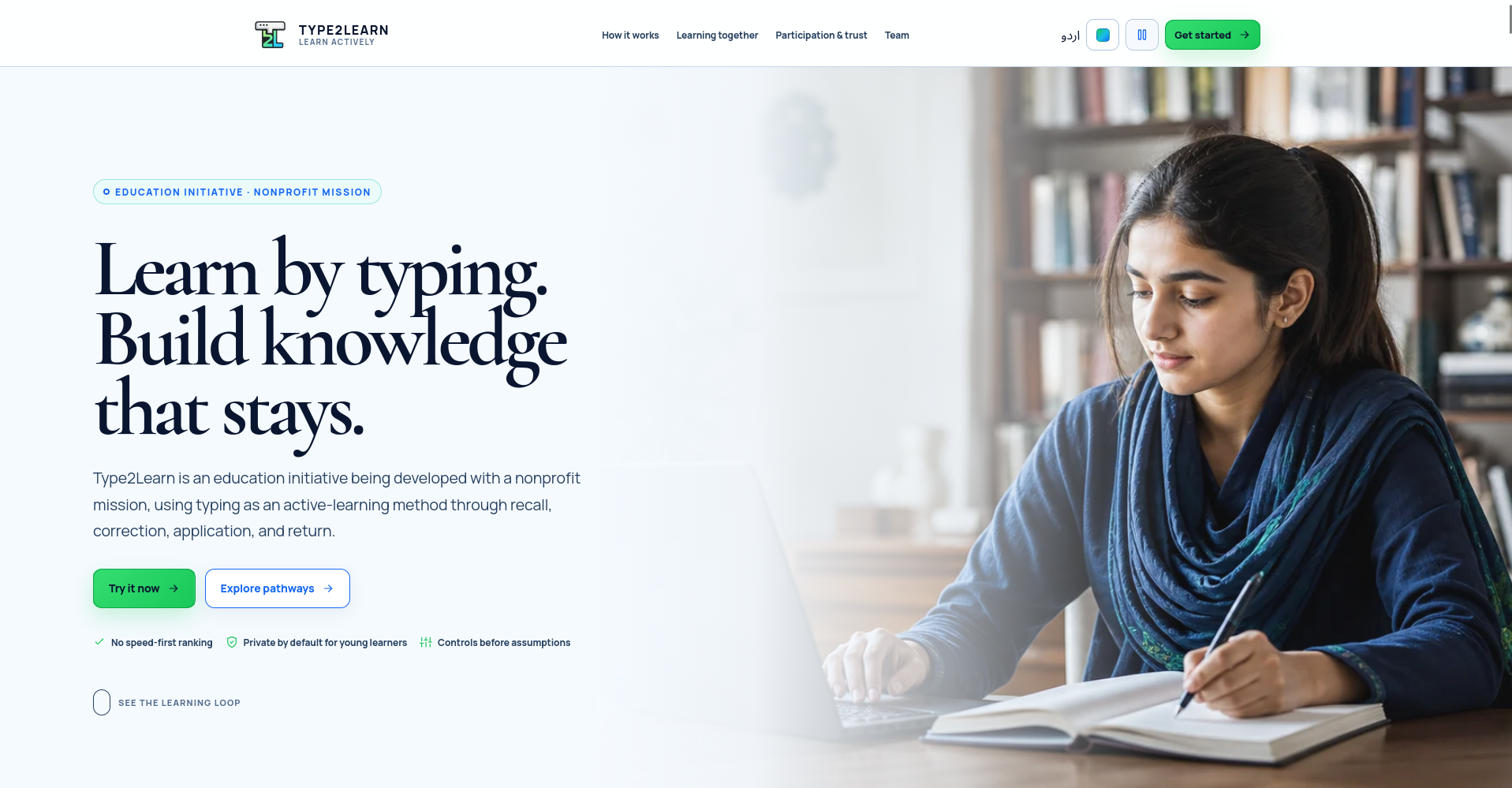
Landing
-
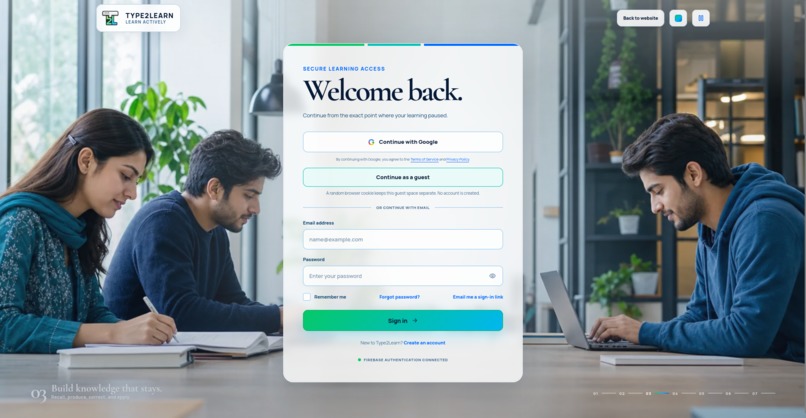
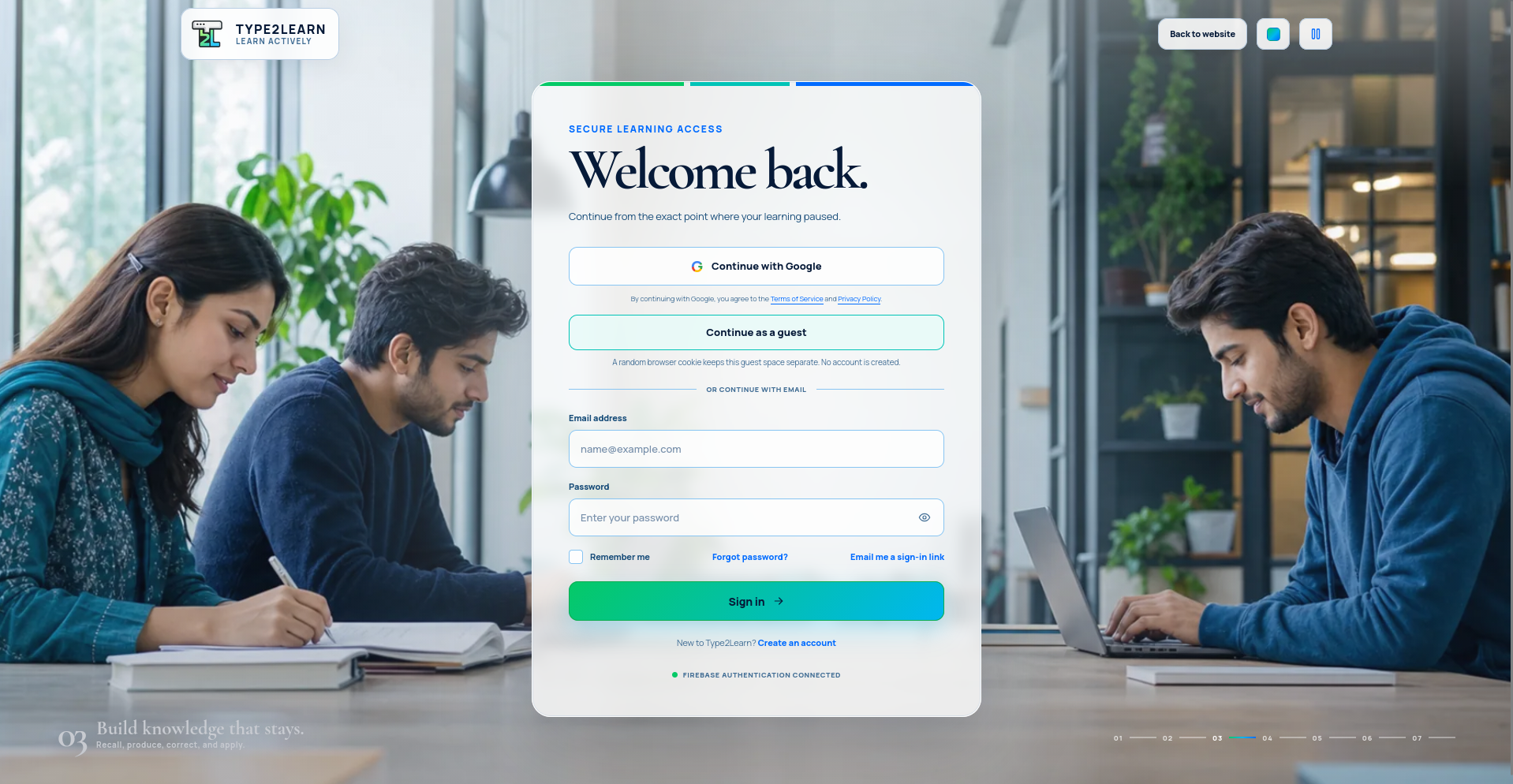
login
-
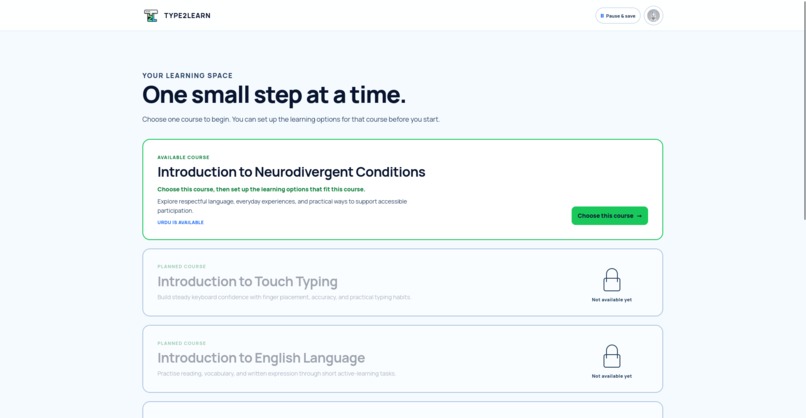
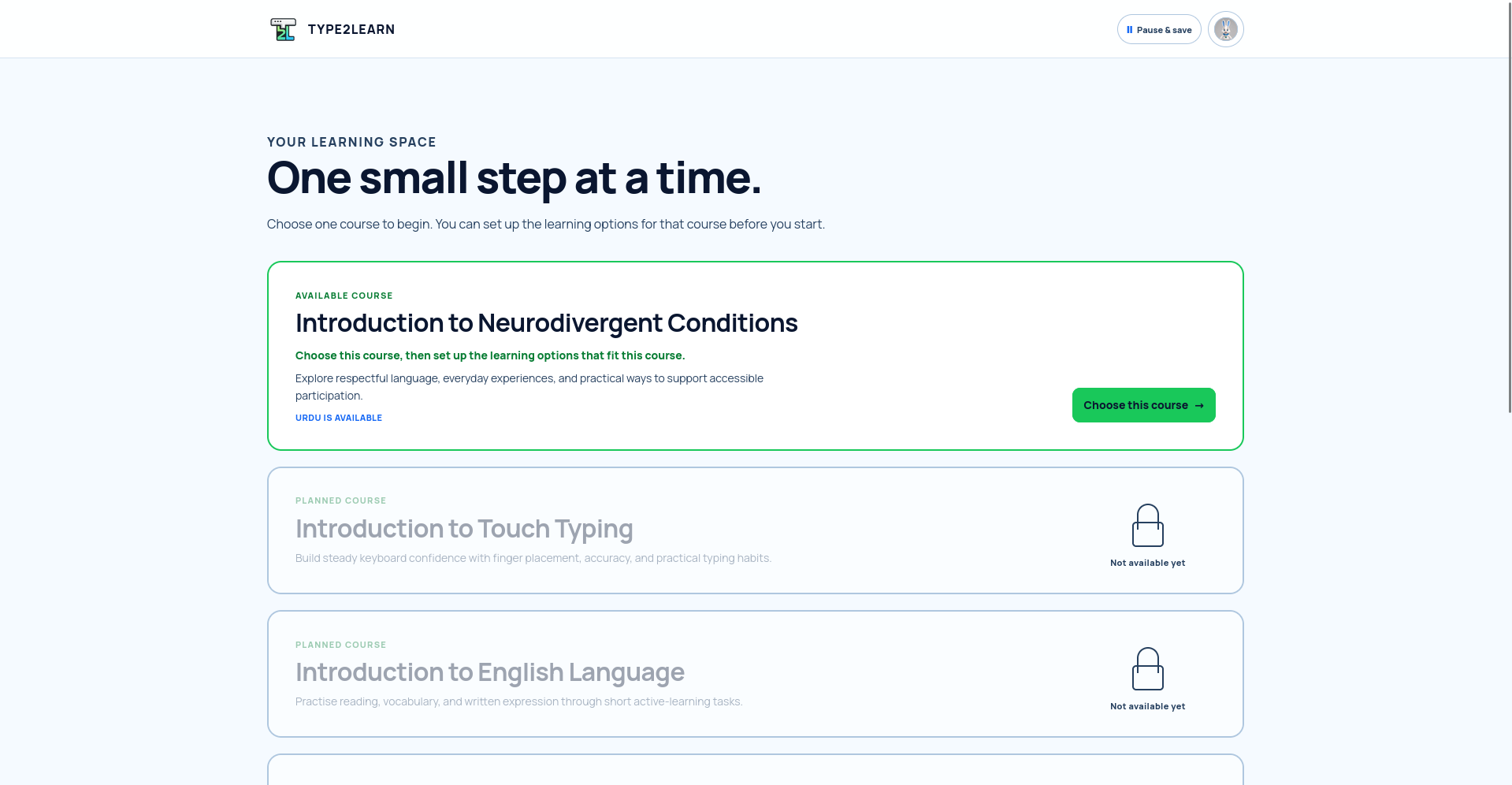
course selection
-
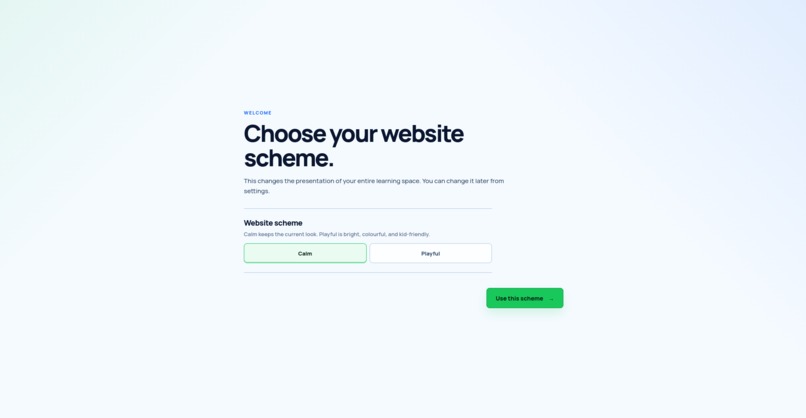
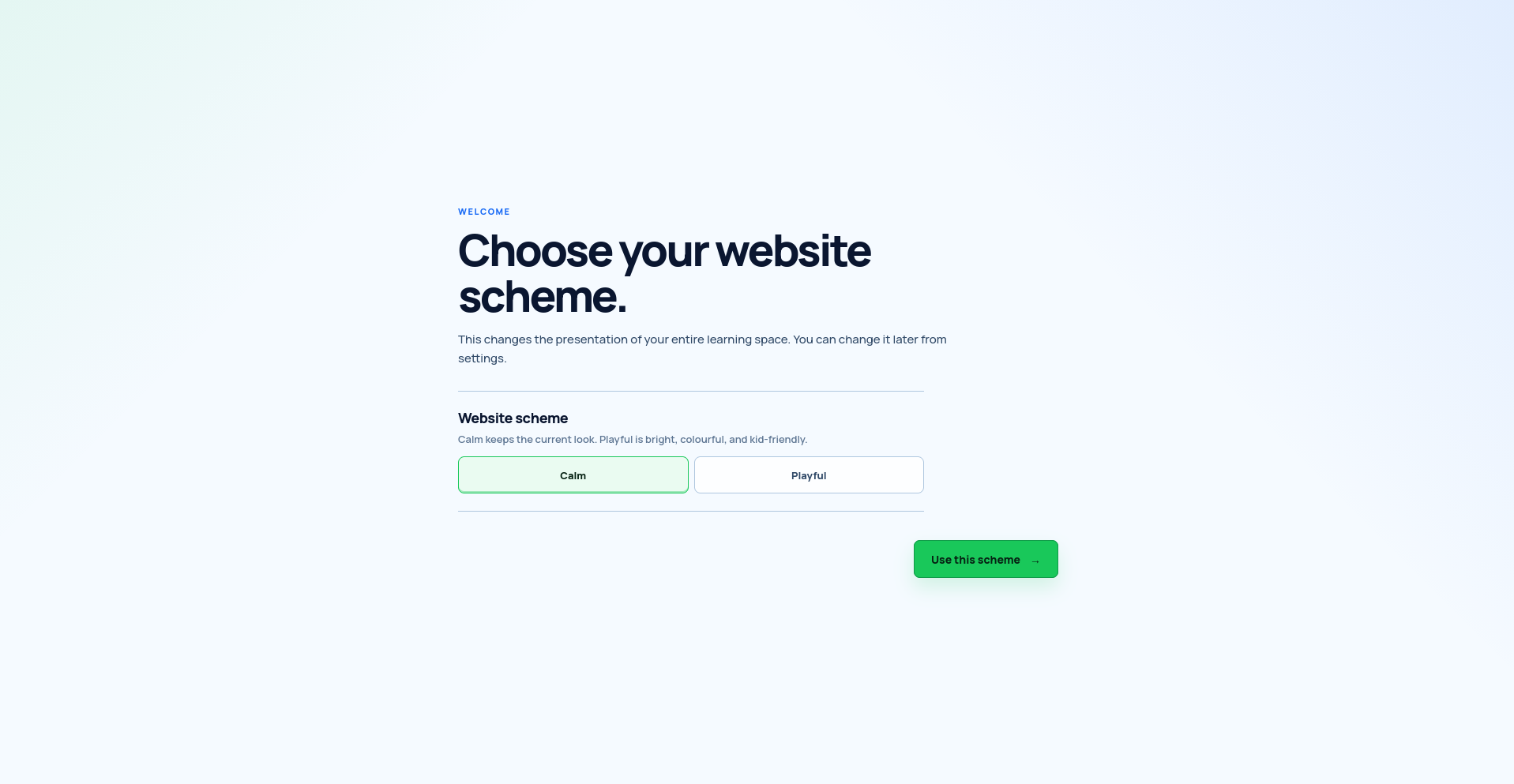
calm mode
-
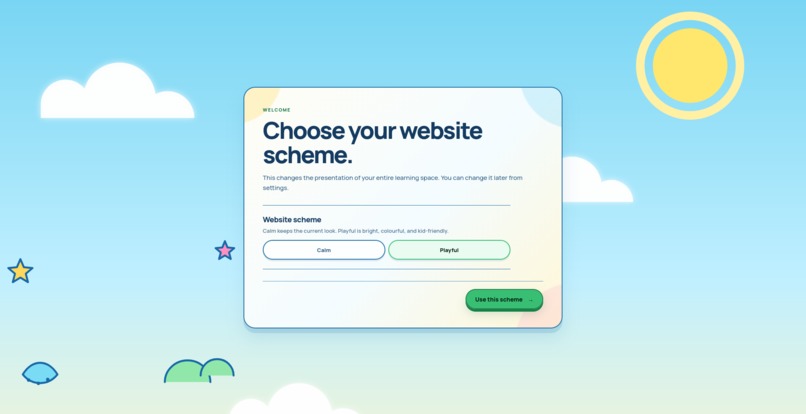
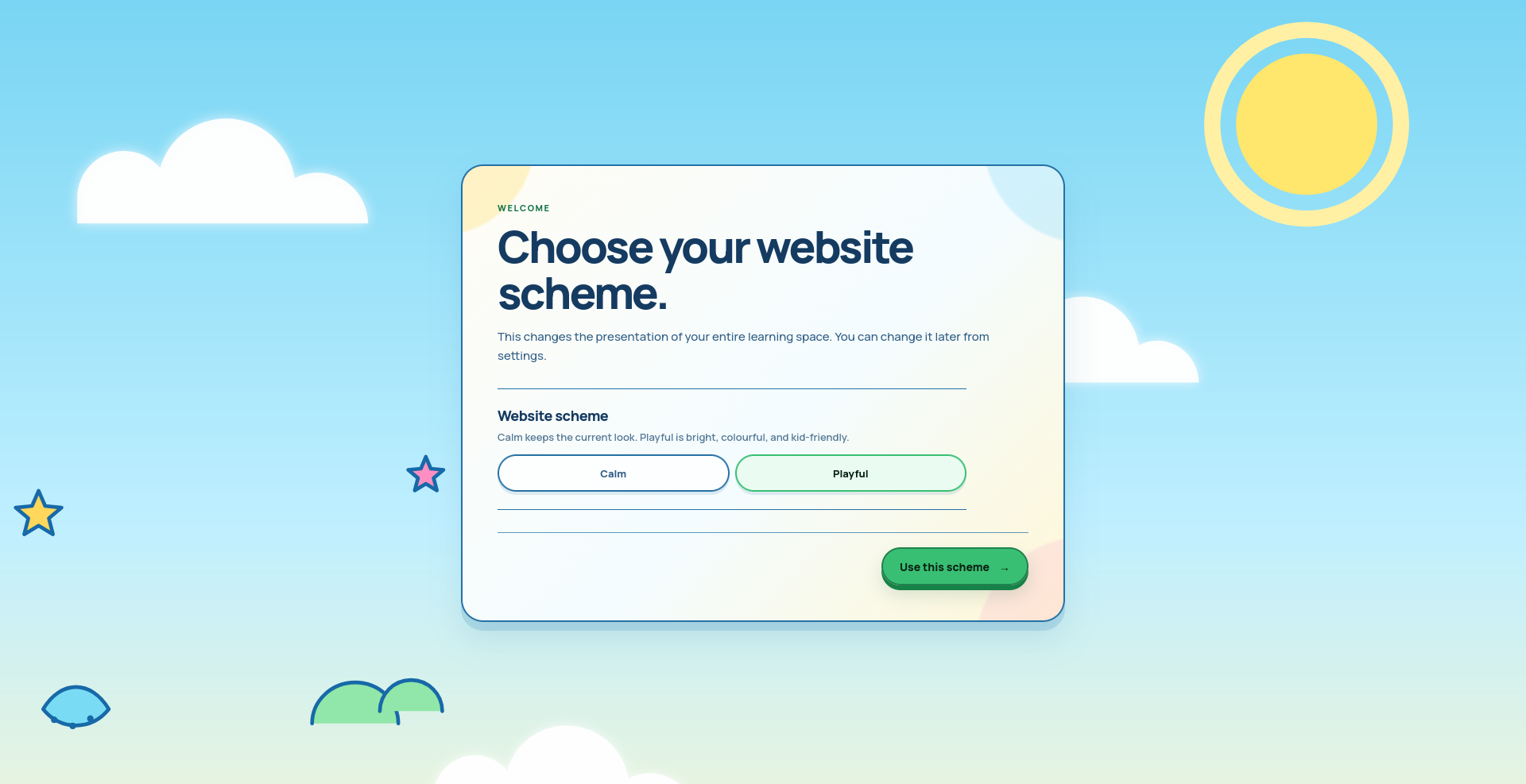
playful mode
-
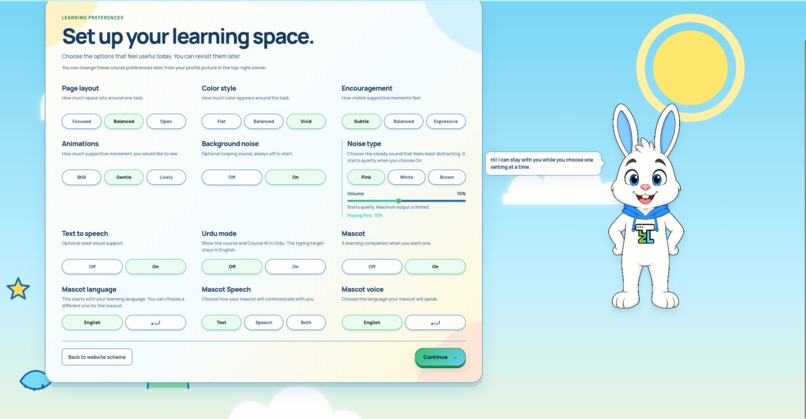
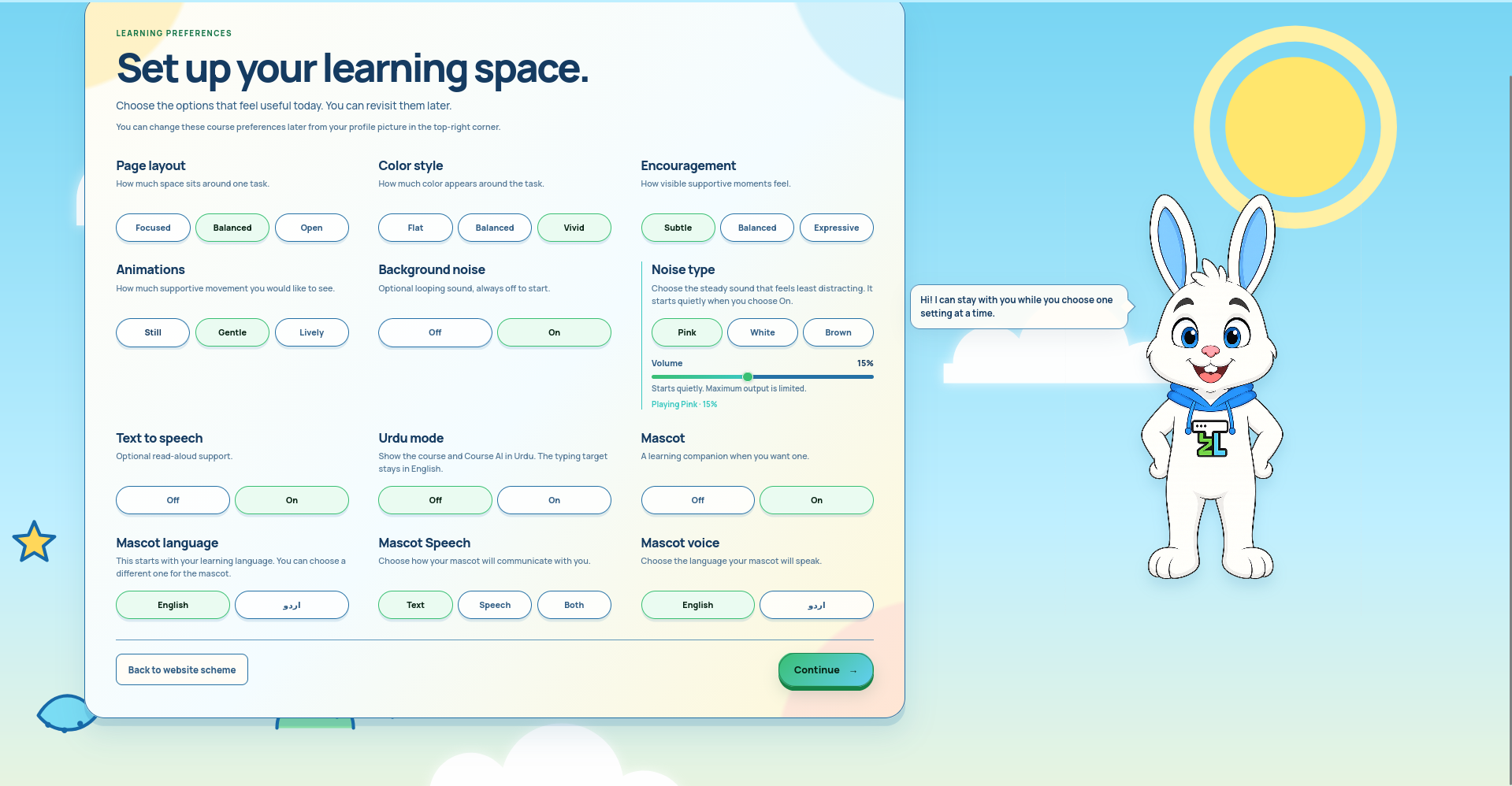
settings
-
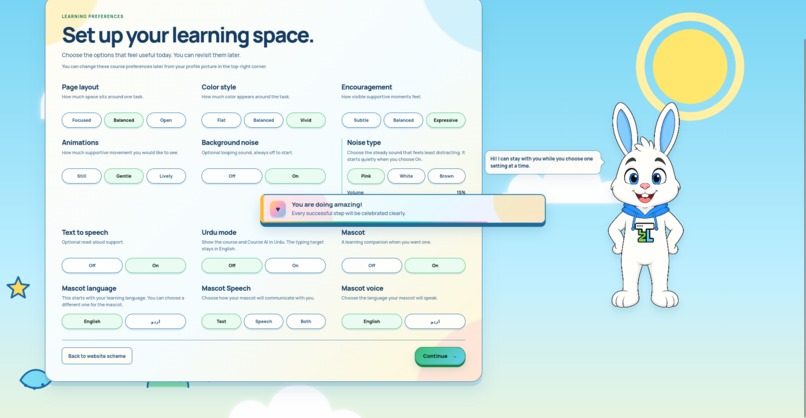
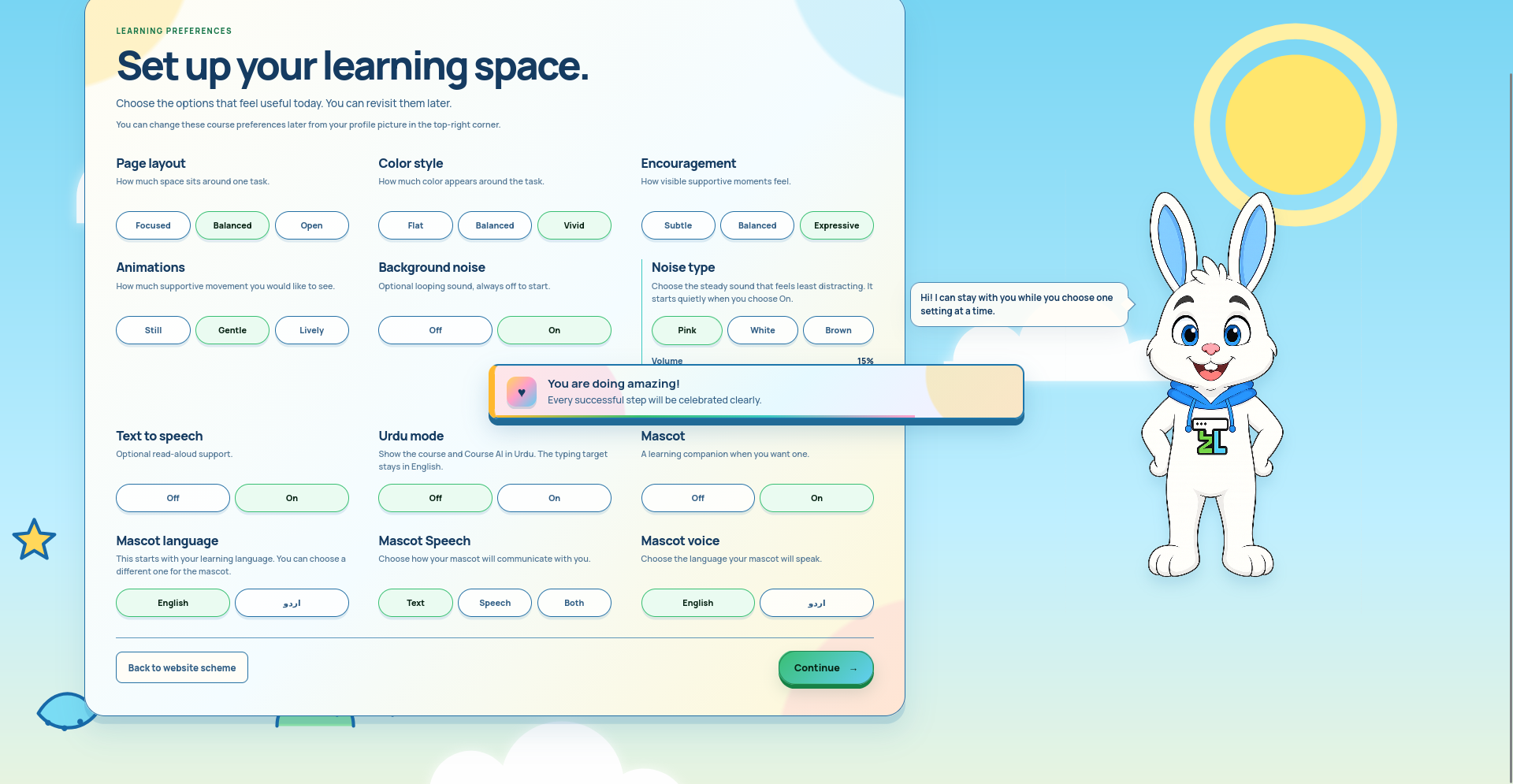
encouragement
-
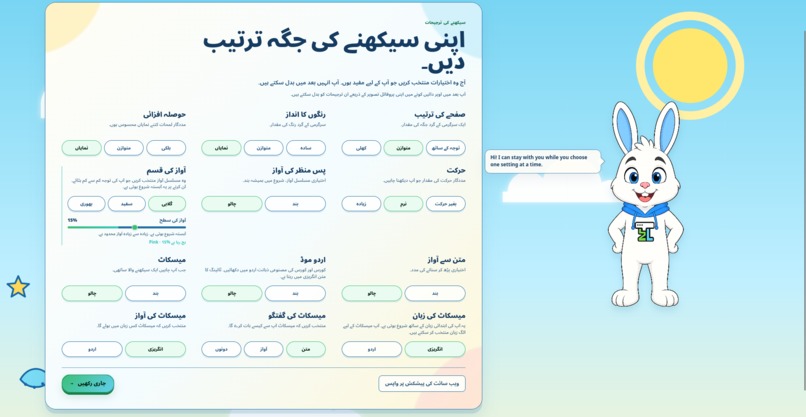
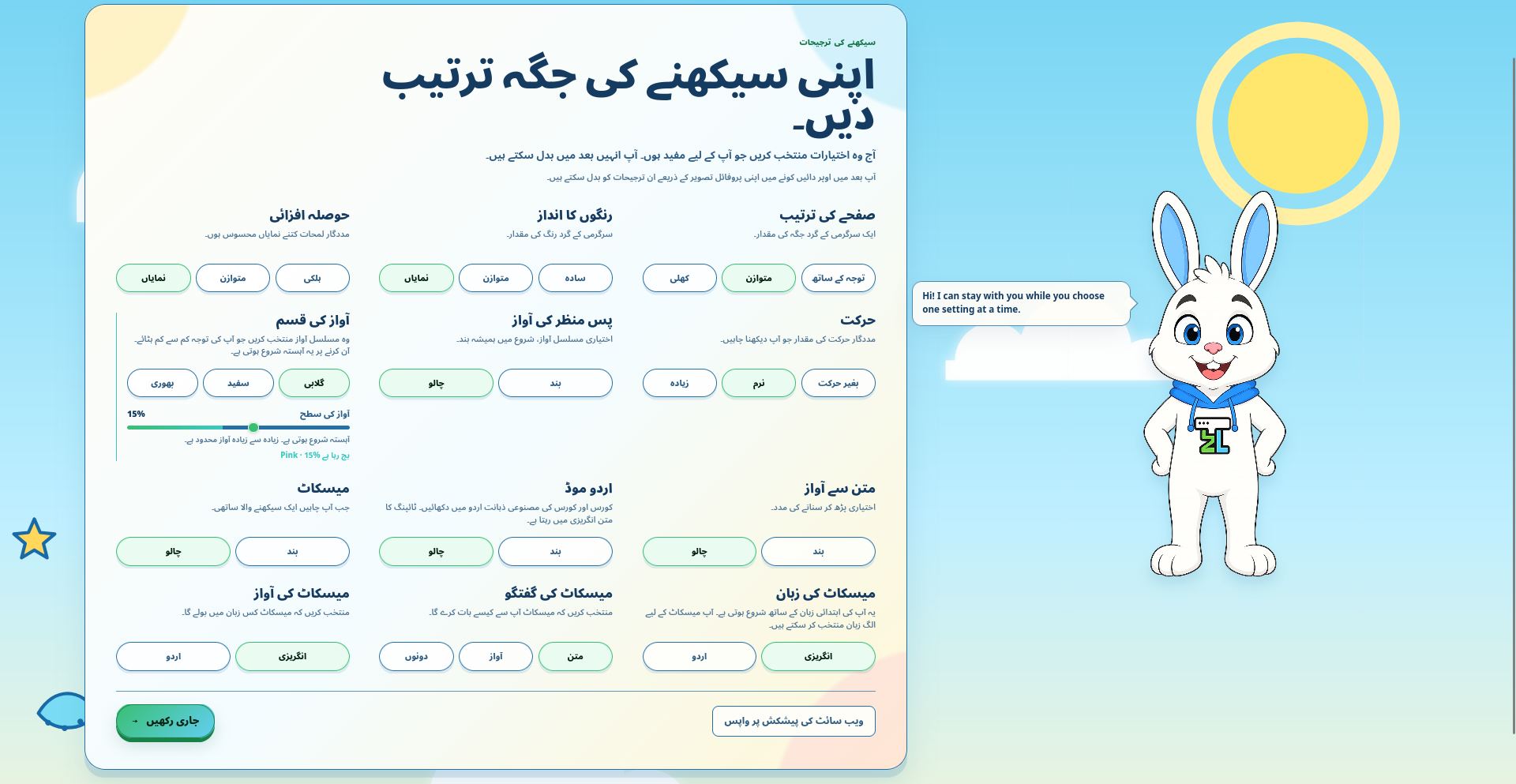
urdu mode
-
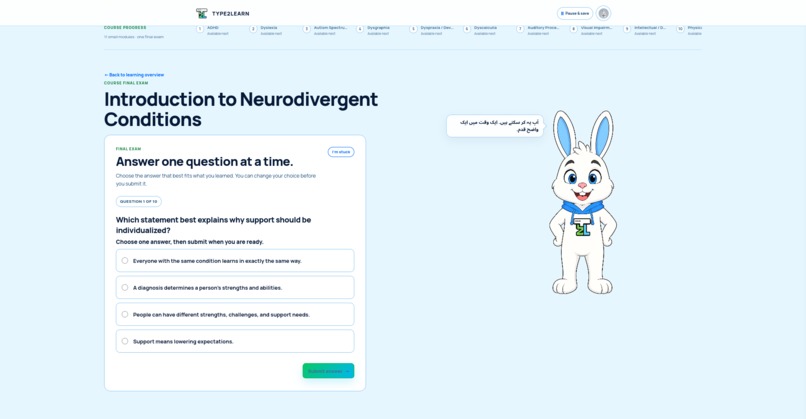
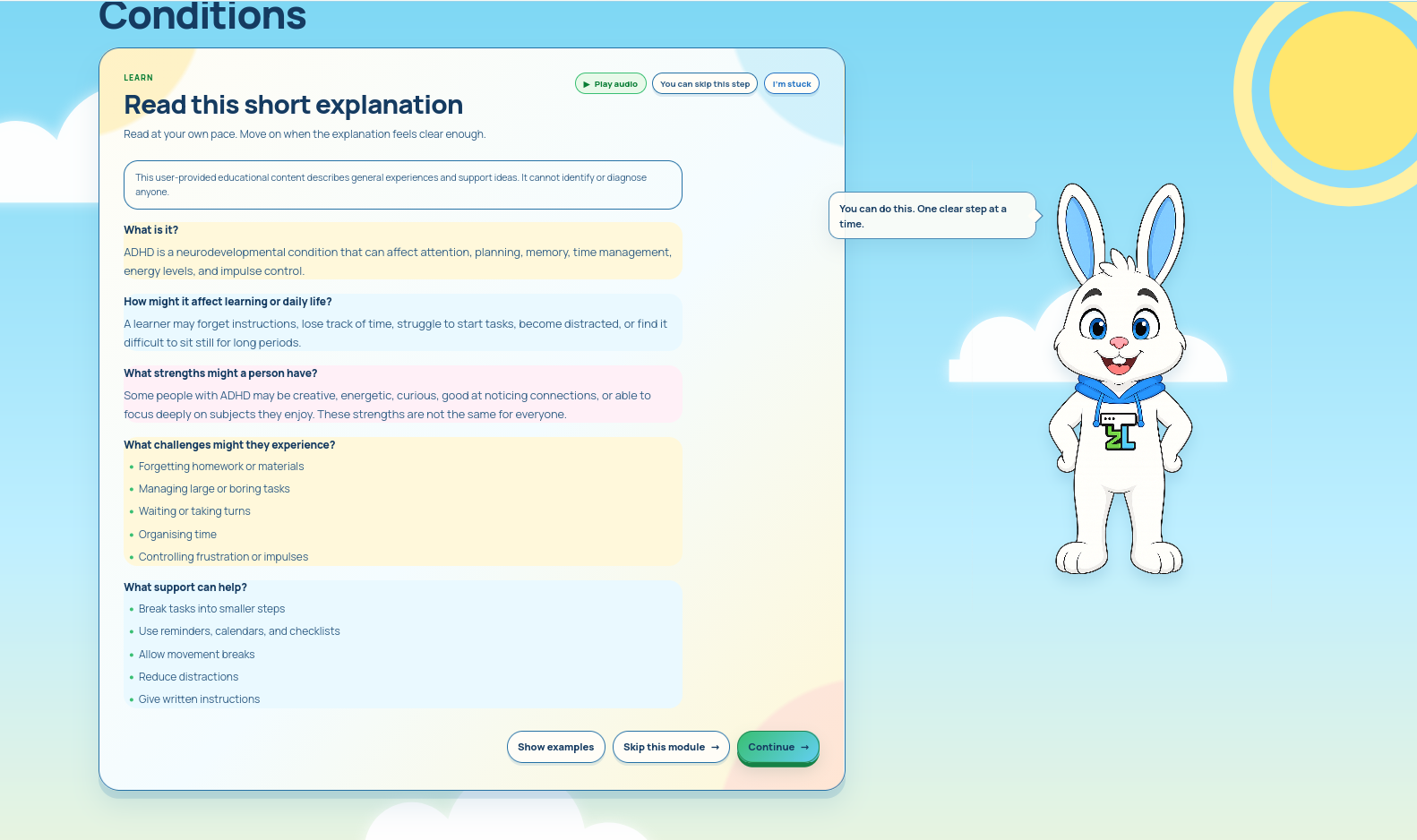
calm reading
-
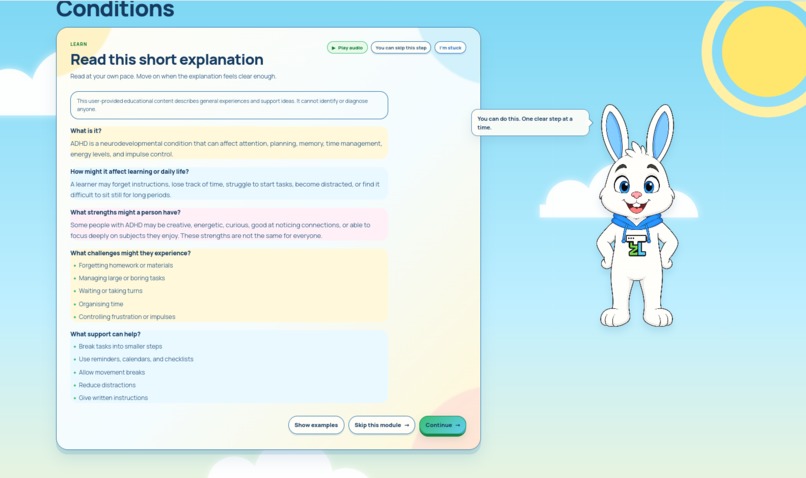
playful reading
-
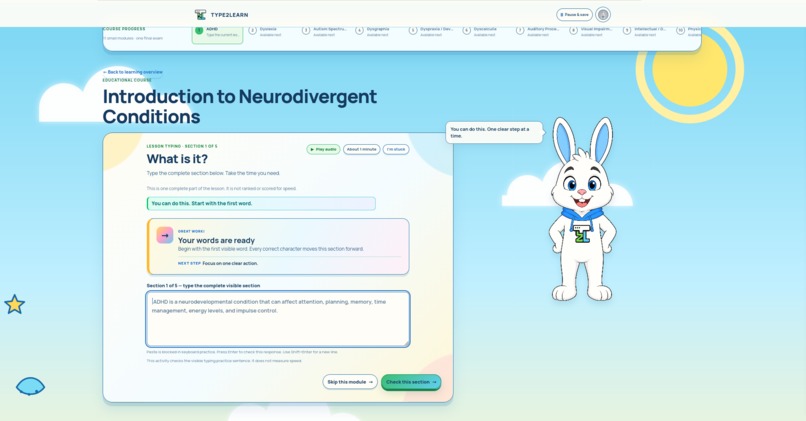
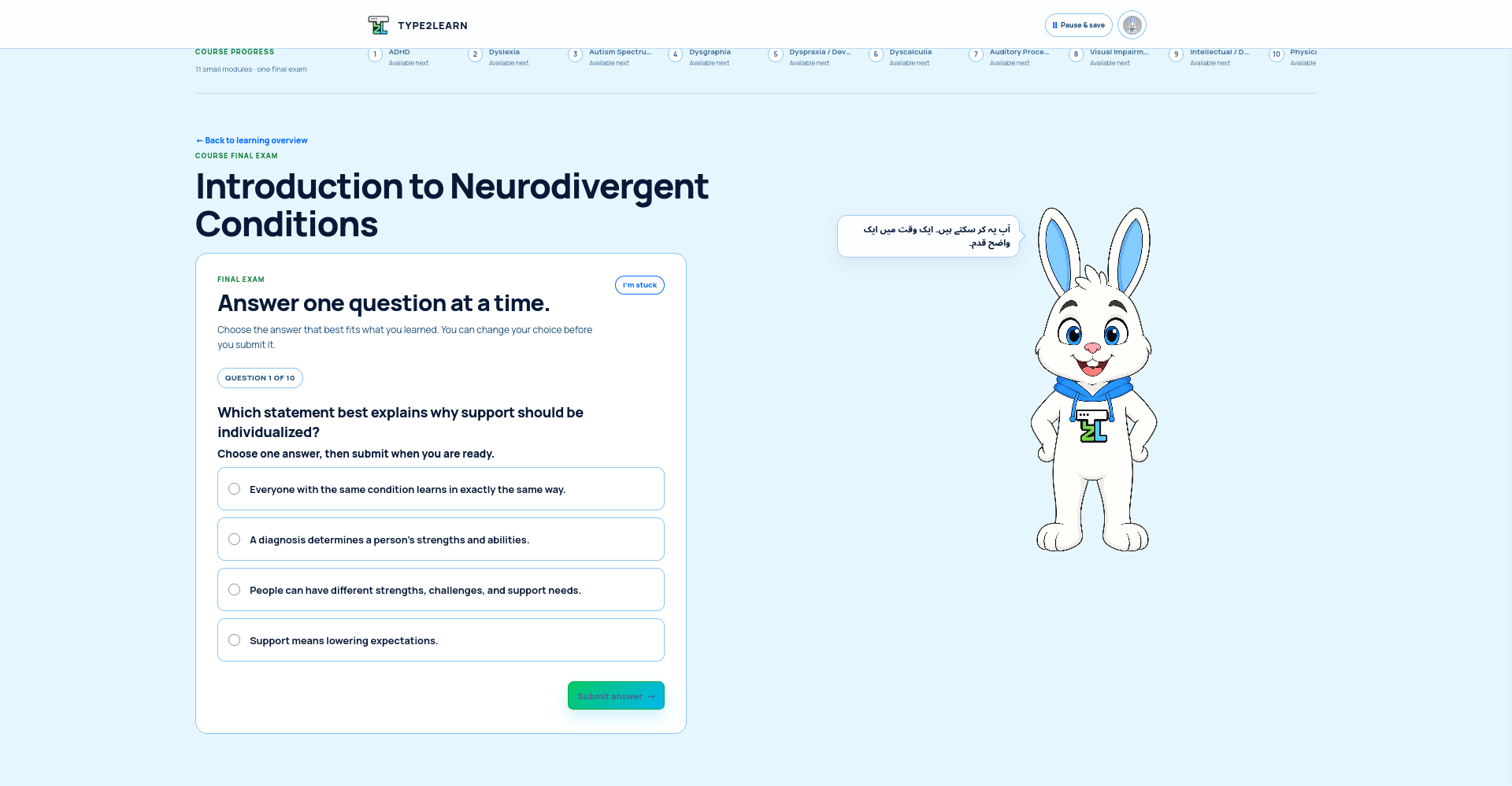
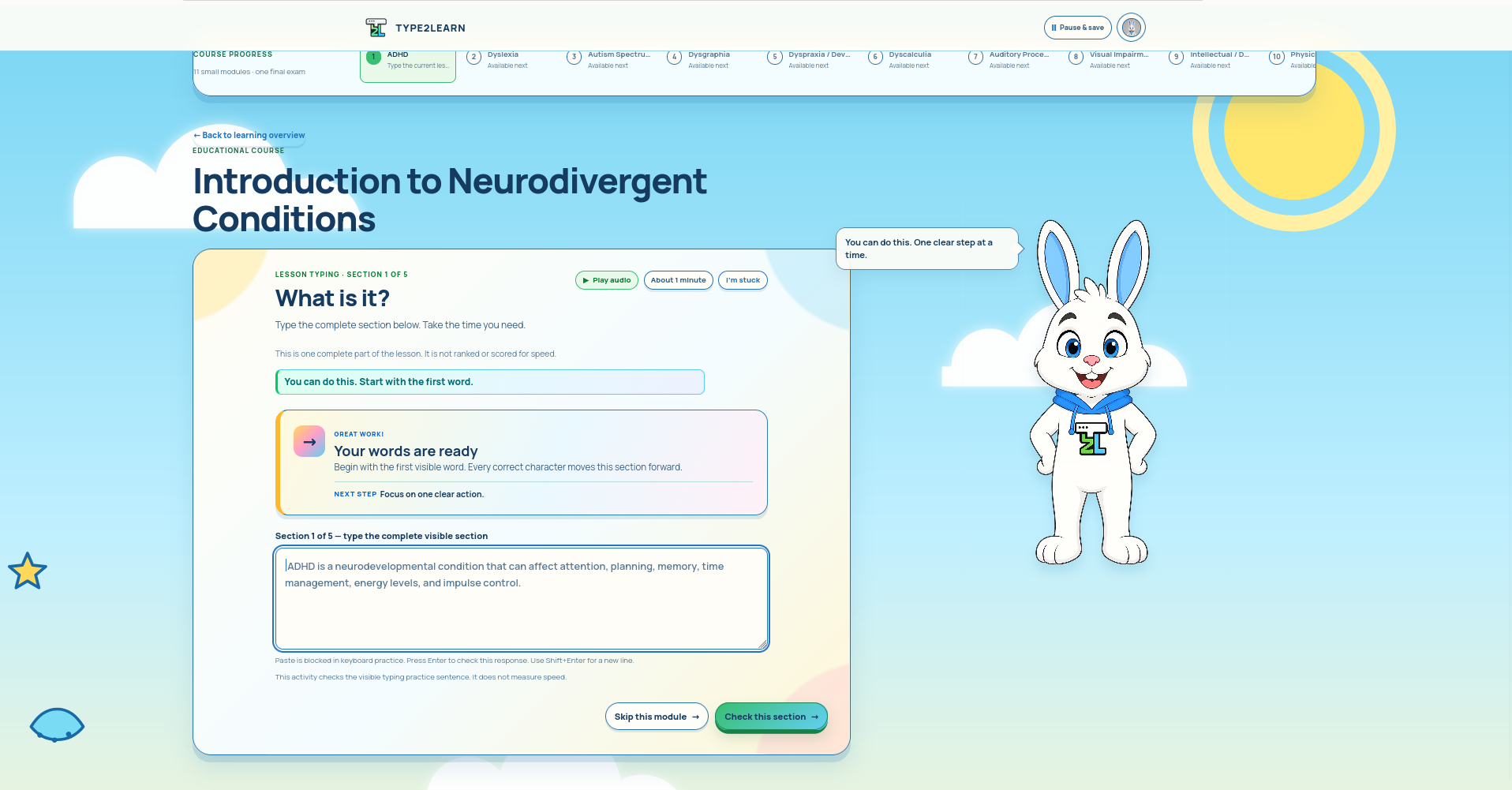
typing
Type2Learn
Type2Learn turns ordinary course material into an adaptive, low-pressure learning experience.
Instead of forcing every learner to study, respond, and be assessed in the same way, Type2Learn adjusts the learning environment around the learner.
It is built for neurodivergent learners and anyone who struggles with standard teaching formats. No diagnosis is required.
What Type2Learn does
A school, university, teacher, or course provider can give Type2Learn existing PDF or Markdown course material. Type2Learn turns it into structured learning modules with accessibility tools, practice, AI support, and assessment built in.
A learner can:
- Read, listen, type, speak, and recall instead of being forced into one format.
- Change text spacing, layout, narration, and background sound.
- Use optional white, brown, or pink noise.
- Get first-step help, smaller tasks, simpler explanations, visual explanations, and personalised encouragement.
- Use a course-aware AI study companion when they are stuck.
- Complete active recall, module revision, understanding checks, and module certificates.
The main idea is simple: give the learner control first, then adapt only when it helps.
An AI agent, not just a chatbot
Type2Learn does more than answer questions.
It can use small, privacy-conscious signals such as:
- repeated attempts
- rereading
- longer pauses
- narration use
- difficulty progressing through a task
If the learner appears to be struggling, the agent can:
- suggest one small change;
- let the learner accept, reject, or reverse it;
- adjust which practice or assessment item comes first;
- identify the exact learning objective that still needs work;
- return the learner only to the relevant section;
- check understanding again with an equivalent question.
Behaviour can guide support, but it cannot decide whether a learner passes or needs review.
Low-pressure assessment
Type2Learn supports:
- Multiple-choice, typed, and spoken answers
- One question at a time
- No timers
- No speed scores
- No rankings
- No visible percentages
If an important concept has not been demonstrated, the learner gets a focused revision step instead of being repeatedly failed.
The system then checks the same objective again with a different question.
The learner sees language such as “Understanding check” and “Next helpful step”, not a public score or ranking.
Responsible AI and privacy
AI can help explain, encourage, adapt, and evaluate specific learning objectives, but it cannot:
- diagnose a condition
- reveal or complete assessment answers
- force permanent changes to learner settings
- use behavioural data as pass/fail evidence
Type2Learn does not keep:
- raw keystroke logs
- permanent microphone recordings
- full chat histories
- unnecessary personal data for behavioural analysis
- raw answers, selected MCQ options, scores, or model reasoning in learner-progress storage
Learners can disable adaptive support. Core course content, accessibility tools, narration, and normal learning activities can continue even when AI features are unavailable.
Type2Learn is an education tool, not a diagnostic or mental-health treatment tool. Its role is to reduce avoidable learning barriers and academic pressure.
Inspiration
In Pakistan, about 78% of 10-year-olds are reported to be in “learning poverty” by the World Bank. A 2020 study across schools in Lahore also pointed to a large number of students facing learning difficulties inside mainstream classrooms.
These struggles are often mistaken for laziness, lack of effort, or bad behaviour. Repeated failure and pressure can turn a learning problem into a much larger academic and emotional burden.
Type2Learn started from one question:
What if the course adapted to the learner instead of expecting every learner to adapt to one course format?
Built with learners, not assumptions
None of us wanted to decide what neurodivergent learners needed without asking them.
We worked with 5+ neurodivergent students, lecturers, researchers, and professionals. We spoke to learners before development, consulted them while building, and returned with the working product for review and improvement.
Their feedback directly shaped features such as:
- smaller learning steps
- read-aloud support
- different response methods
- layout and spacing controls
- adaptive help
- white, brown, and pink background noise
- lower-pressure assessment
Research also shaped the product. Ma’am Quratulain’s paper, A Computer-Based Method to Improve Spelling of a Learner with Dyslexia, reported nearly four times fewer mistakes when typing compared with handwriting. , whom we also interviews and have uploaded it. That became an early reason for Type2Learn’s keyboard-first approach.
Instead of one “neurodivergent mode,” Type2Learn gives learners choices because what helps one person may distract another.
The support is continuous
Type2Learn supports the learner before, during, and after a lesson:
Course material → accessible module → learning support → active recall → understanding check → targeted revision → re-check
The AI companion can also provide course-aware explanations and encouragement throughout the process, without simply giving away answers.
Evidence so far
Type2Learn has already received:
- 23,000+ page views in Google Analytics
- approximately 2,000 unique visitors in Cloudflare analytics
- dozens of user reviews and feedback responses
Interview, review, and development evidence is maintained with the project.
Development approach
Type2Learn grew through:
research → learner interviews → prototype → feedback → implementation → review → iteration
A simple public landing page existed earlier for outreach. Working product development began on August 3, 2026.
The goal was never to build features around assumptions. Features were added because research, learners, or professionals gave us a reason to add them.
Beyond the hackathon
Type2Learn is intended to continue as a non-profit learning platform, not stop as a hackathon demo.
Next priorities are:
- more courses and real-world pilots
- more learner testing
- lower internet dependency
- stronger assessment models
- continued accessibility improvements
- wider adoption by schools, universities, and learning organisations
The long-term goal is simple:
Make existing education easier to access without asking the learner to become someone else first.
Built With
- accessibility
- accessible-education
- active-learning
- adaptive-learning
- adhd
- ai-in-education
- artificial-intelligence
- assistive-technology
- autism
- dyslexia
- edtech
- firebase
- google-gemini
- human-centered
- inclusive-education
- javascript
- multilingual-education
- neurodiversity
- node.js
- openai
- personalized-learning
- speech-recognition
- text-to-speech
- urdu
- voice-ai


Log in or sign up for Devpost to join the conversation.