Inspiration
The inspiration for this project came from the increasing need for strong security measures in the digital world. With the rise in cyber threats and data breaches, implementing an extra layer of protection like two-factor authentication has become crucial to safeguard sensitive information.
What it does
The Two-Factor Authentication project provides a robust security solution by requiring users to provide two different forms of identification to authenticate themselves. It combines traditional username/password authentication with an additional verification code, ensuring a higher level of security and reducing the risk of unauthorized access.
How we built it
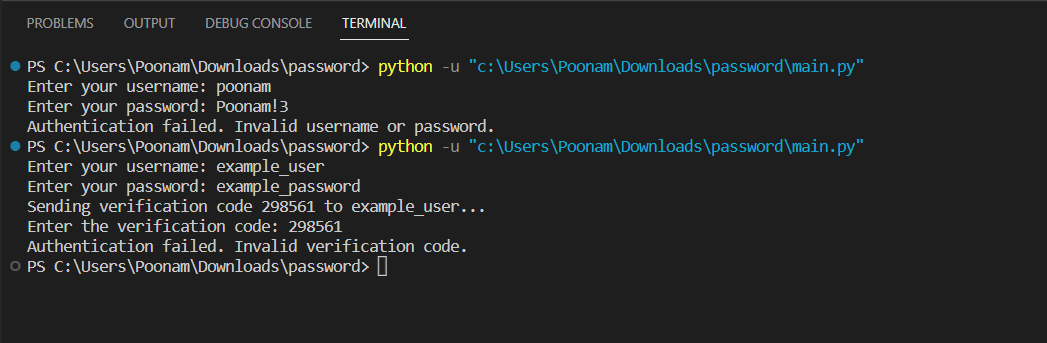
We built this project using Python, leveraging its simplicity and versatility. The authentication process involves validating the username and password entered by the user, generating a random verification code, and sending it to the user. The user is then prompted to enter the verification code for authentication.
Challenges we ran into
Throughout the development process, we encountered challenges in implementing the various components of the two-factor authentication system. Generating secure random verification codes and securely transmitting them to the user while simulating the verification process required careful consideration. Additionally, ensuring the code's robustness and handling potential edge cases presented challenges that we had to address.
Accomplishments that we're proud of
We are proud to have developed a working two-factor authentication system that enhances security and provides a reliable means of user authentication. The project successfully combines multiple authentication factors, validates user credentials, and simulates the verification process. We are pleased with the project's simplicity, effectiveness, and potential to enhance security in various applications.
What we learned
During the development of this project, we gained a deeper understanding of the importance of implementing multi-factor authentication as an effective security measure. We learned about the various factors involved in authentication, including username/password authentication and the use of verification codes. Additionally, we improved our knowledge of random number generation, input validation, and error handling in Python.
What's next for Two-Factor Authentication
In the future, we plan to enhance the project by integrating industry-standard authentication protocols and practices. This includes incorporating time-based one-time passwords (TOTP) or leveraging authenticator apps like Google Authenticator for generating verification codes. We also aim to implement stronger encryption and secure communication channels to ensure the highest level of security for user authentication. Furthermore, we plan to explore integrating this two-factor authentication system into web applications, mobile apps, and other platforms to provide a seamless and secure user experience.


Log in or sign up for Devpost to join the conversation.