-

Twivia's logo
-
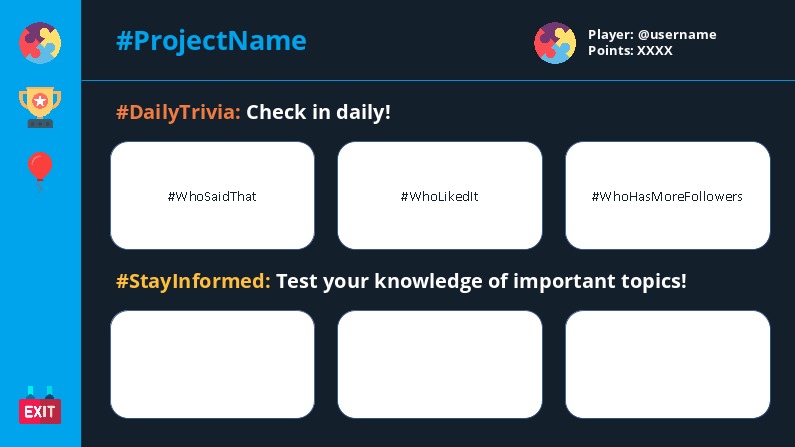
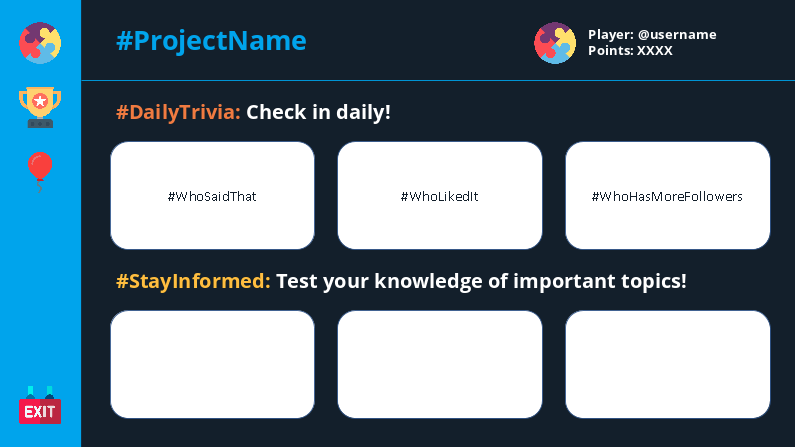
The prototype for Twivia's main game page
-

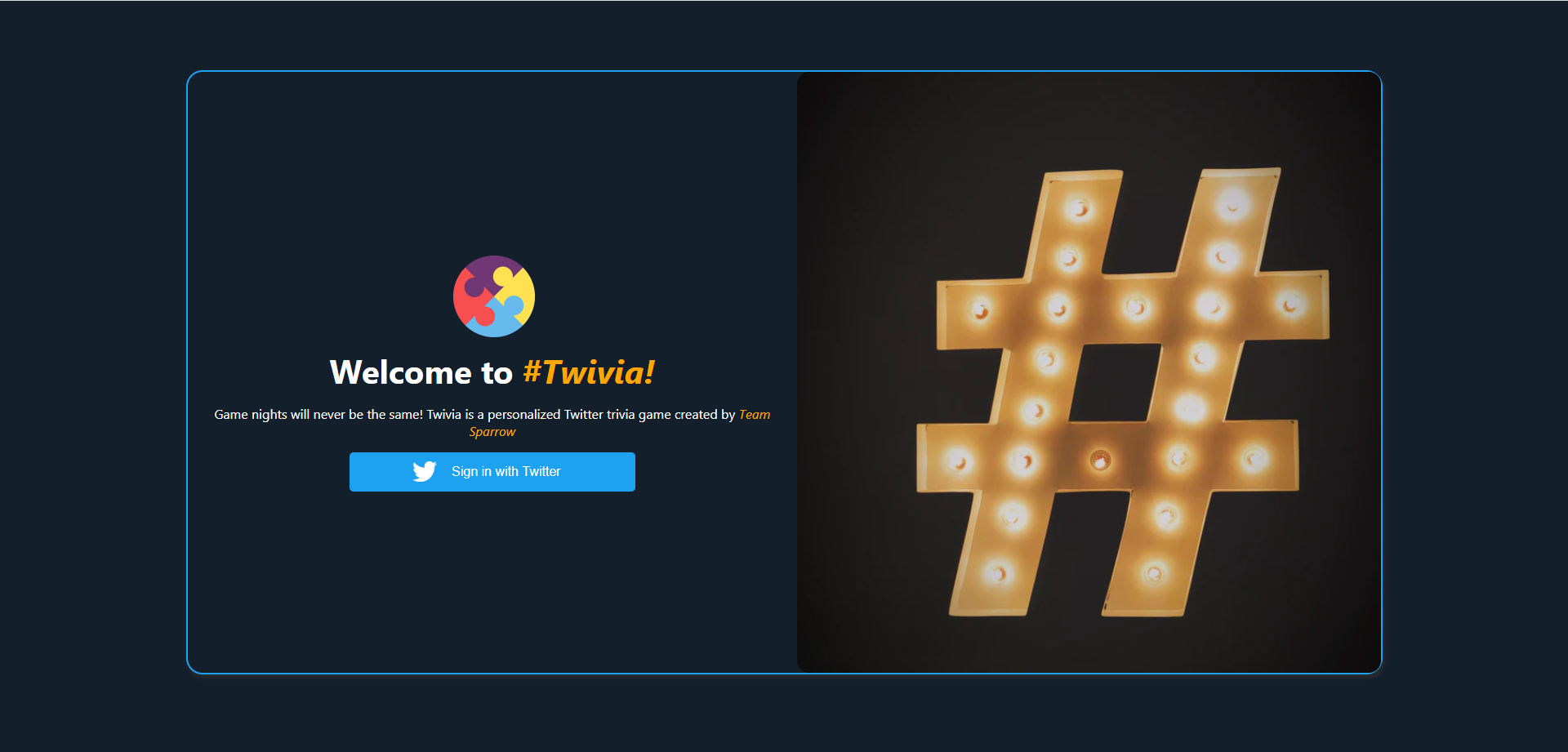
The final version for the landing page
-
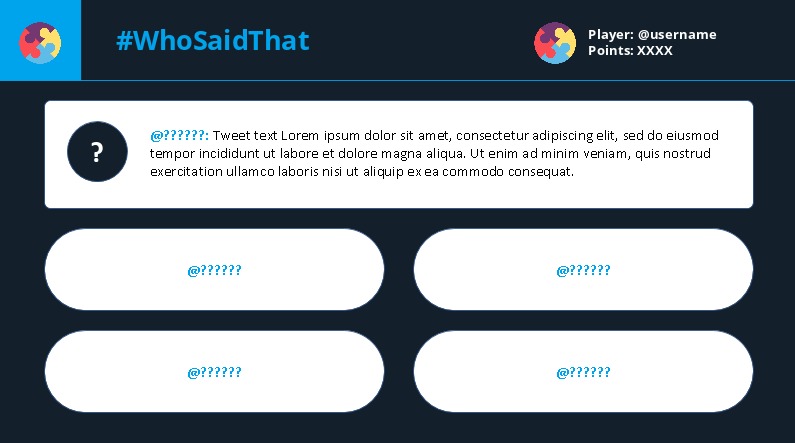
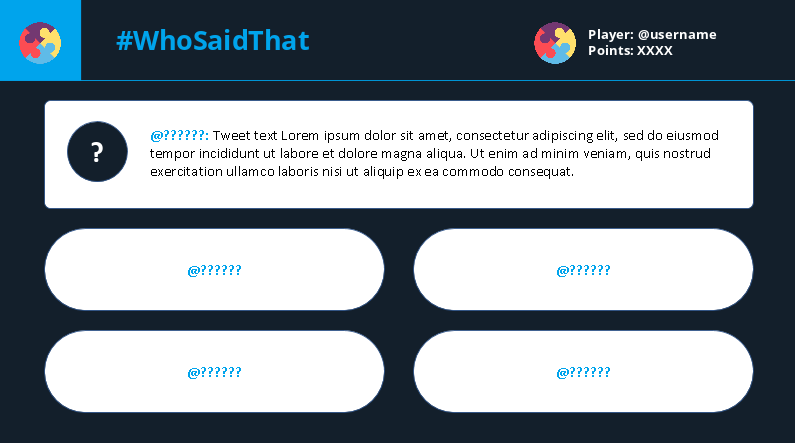
A prototype of what #WhoSaidThat would have looked like
-

This is what the get_call returns through Keroku for a #WhoHasMoreFollowers game.
-

This is what the get_call returns through Keroku for a #WhoSaidThat game.



About
Twivia is a webapp built using Twitter's API (Tweepy), Python, React, and JavaScript. Users are quizzed based on their Twitter metrics, which are obtained after the player logs in through a Twitter Auth. For example, we prepared the game #WhoHasMoreFollowers, where the user has to guess between 2 account which one has the most followers. We also had the game #WhoSaidThat ready, where the user has to guess between 4 accounts which one tweeted the text presented. Unfortunately, we ran into issues bridging website front-end with the backend, but the codebase serves as proof of concept.
Inspiration
We are looking to develop a new way to connect with others while being apart. Aside from community-building, friendly competition brings engagement to the twitter platform and the personalized nature of this app quantifies timelines, makes them easier to digest.
Advantages
- The leaderboard enables users to access and check who has the most points. Sharing a game with scoring can potentially encourage healthy competition amongst friends.
- The experience is completely personalized as the game is built based on the accounts the user follows already.
- With this game, users can get a better feel of their timeline and who they follow.
Opportunities
- The webapp could host games with a focus on educating. They would be based on information posted by reliable NGO's and government bodies, such as the CDC.
- Party rooms are a possibility. In here multiple users would be able play at once and compete with each other.
- If the site were to run advertisements, it would have the potential to drive revenue from its amount of active users.
- Twivias could be integrated to Twitter as a plugin or gamebot to redirect user engagement to the platform itself.
Challenges
- Multiple calls to the Twitter API and returning bulky json objects increases latency delay across the pipeline
- Unless the webapp adds games or new dynamics periodically, users could grow uninterested and stop playing.
- While this does use Twitter information, the traffic itself is going into a different platform.


Log in or sign up for Devpost to join the conversation.