Inspiration
In the past decade, new forms of communication, such as microblogging and text messaging have emerged and become ubiquitous. While there is no limit to the range of information conveyed by tweets and texts, often these short messages are used to share opinions and sentiments that people have about what is going on in the world around them. Tweets and texts are short: a sentence or a headline rather than a document. The language used is very informal, with creative spelling and punctuation, misspellings, slang, new words, URLs, and genre-specific terminology and abbreviations, such as, RT for "re-tweet" and # hashtags, which are a type of tagging for Twitter messages. For example, Twitter maintains information of who follows whom and re-tweets and tags inside of tweets provide discourse information.
What it does
Sentiment analysis in the domain of micro-blogging is a relatively new research topic so there is still
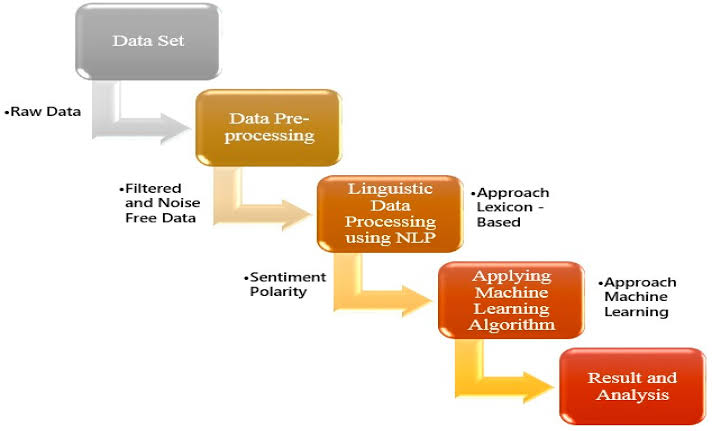
a lot of room for further research in this area. Decent amount of related prior work has been done on sentiment analysis of user reviews, documents, web blogs/articles and general phrase level sentiment analysis. These differ from twitter mainly because of the limit of 140 characters per tweet which forces the user to express opinion compressed in very short text. Given a piece of written text the problem is to categorize the text into one specific sentiment polarity Positive, Neutral and Negative based on the scope of text. There are three level sentiment polarity categorizations namely the document level, the sentence level, and the entity and aspect level. ## How we built it
Challenges we ran into
This model can only analyse the sentiment of English words. It can’t give 100% accurate result.
Computer programs have problems recognizing things like sarcasm and irony, negations, jokes, and exaggerations - the sorts of things a person would have little trouble identifying.
Accomplishments that we're proud of
To overcome the drawbacks of the methods we have reviewed above, we propose a new model for
sentiment analysis. Unlike previously discussed system we will classify them into 3 types Positive, Negative and neutral. Additionally, aspect level sentiment classification takes place intended to cover all aspects. It includes tasks like extracting, object feature, determining polarity and grouping feature synonyms.
Built With
- ide
- java
