WHAT DO YOU EAT? — Turning Twitch Into a Live Food Marketplace
Inspiration
Millions of people watch livestreams every day, discovering new cultures, communities, products, and experiences. But what happens when a streamer introduces an incredible meal? Viewers get hungry, conversations happen, and the opportunity to connect that moment to a real restaurant often disappears.
We wanted to change that.
Imagine a Twitch creator traveling through South Africa, discovering a local restaurant, and sharing a meal with thousands of viewers. Someone watching nearby could discover that restaurant and order food for themselves.
Now imagine the same experience with a neighborhood restaurant in New York, a healthy food brand, or a creator introducing their audience to something they've never tried before.
Fast-food companies have spent decades making their products recognizable through advertising. We believe livestreaming can create similar opportunities for healthier meals, independent restaurants, and emerging food businesses.
Our inspiration also comes from everyday life. Millions of people work long hours, commute home, and have limited time to cook. Food discovery should be convenient, entertaining, accessible, and connected to the communities people already enjoy.
What if watching someone enjoy food could become the easiest way to discover what you're eating next?
What It Does
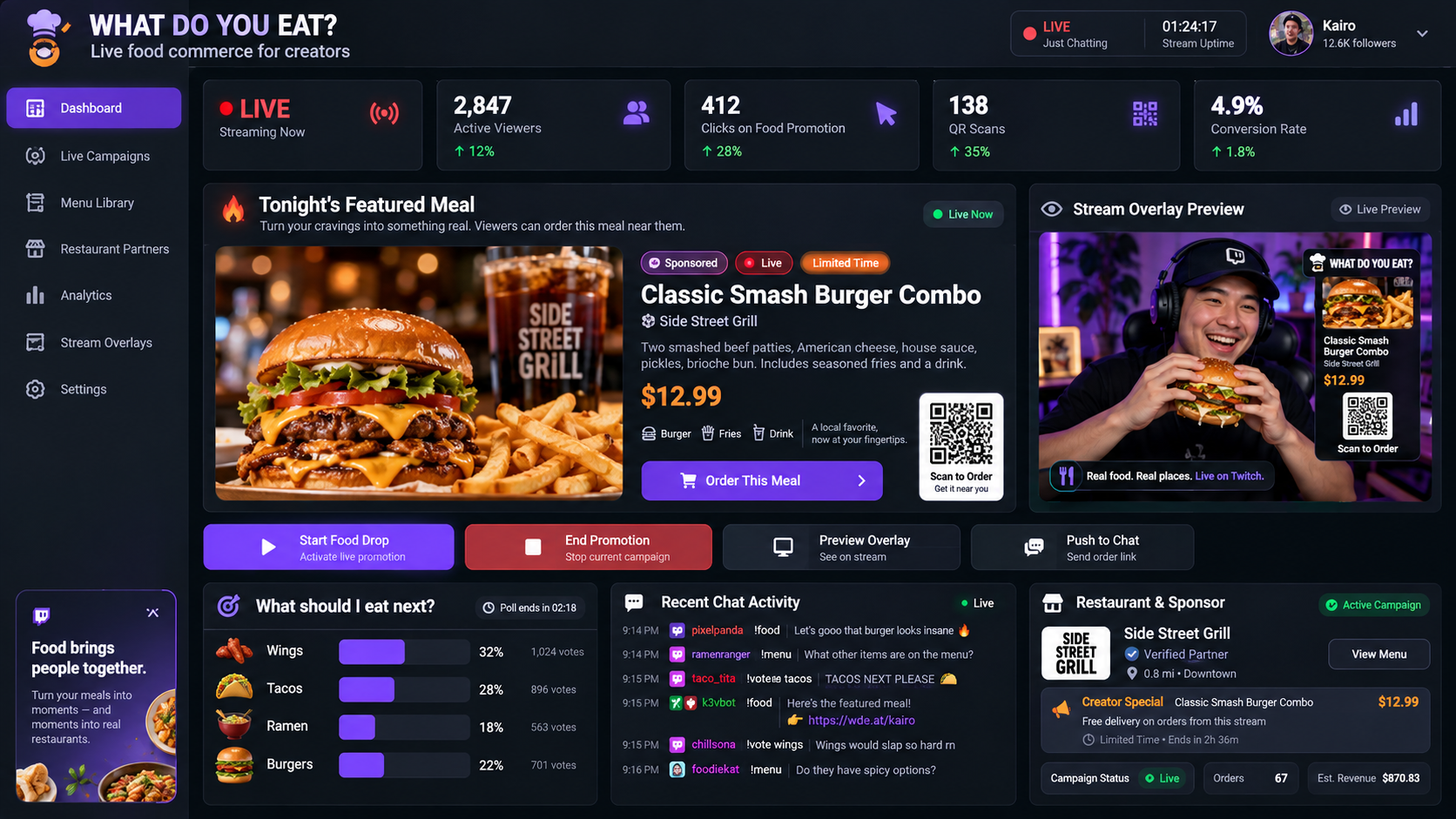
WHAT DO YOU EAT? transforms Twitch livestreams into interactive food discovery and shopping experiences.
Creators can opt into restaurant sponsorships, introduce featured meals, and give viewers a way to explore food without leaving the experience.
The concept connects three participants:
- Creators: Discover sponsorship opportunities, promote restaurants and featured meals, and earn revenue through attributable food promotions.
- Restaurants and food brands: Reach relevant audiences through trusted creators and introduce their products through interactive digital menus.
- Viewers: Discover meals, explore ingredients, customize food, find participating restaurants nearby, and eventually place orders.
Our demonstration focuses on a simple scenario: a livestreamer introduces a burger, and viewers explore that meal through a premium interactive interface.
Using a Three.js food viewer, audiences can inspect the burger in 3D, change its bun, modify toppings, and see their selections reflected in the visual presentation and price.
The broader vision is a creator-driven food marketplace where restaurants and brands can connect with streamers, sponsor food experiences, and reach consumers at the moment of discovery.
How We Built It
We approached the project by designing a focused, browser-based prototype that demonstrates how livestream entertainment and interactive food commerce can work together.
Our technical approach centers on:
- React and TypeScript: Responsive menus, customization controls, and ordering interfaces.
- Three.js and React Three Fiber: Interactive 3D food visualization, allowing viewers to inspect meals and see supported customizations.
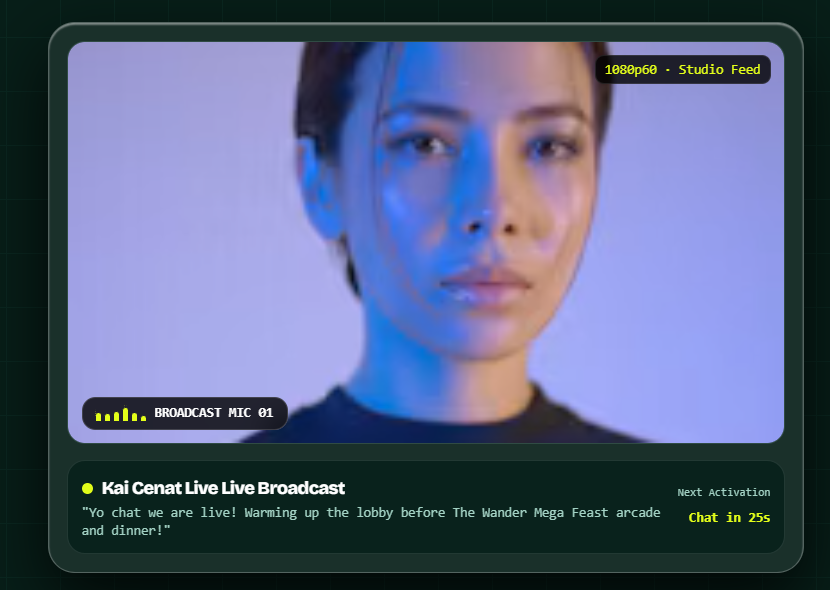
- Streamer experience: A simulated livestream featuring a generic creator introducing a meal.
- Commerce interaction: A configurable menu, synchronized pricing, and a demonstration shopping bag.
- Twitch integration architecture: A planned creator dashboard, livestream overlay, chat commands, and real-time event synchronization.
We deliberately chose a clean, food-first design rather than a complicated dashboard.
Food should be the hero of the experience. The interface should make a burger look appetizing, make customization understandable, and give viewers a clear path from curiosity to purchase.
The current prototype specification uses simulated livestream and ordering experiences. Live Twitch connectivity, real restaurant fulfillment, and payment processing are planned integrations rather than completed features.
Challenges We Faced
Our biggest challenge was figuring out how to connect three very different experiences: livestream entertainment, food discovery, and restaurant commerce.
1. Making the experience visually appealing
Food presentation matters. We wanted the interface to resemble a premium digital restaurant menu rather than a traditional advertising overlay. Three.js allows us to explore food presentation interactively, but maintaining visual quality across devices requires careful rendering and asset optimization.
2. Connecting global audiences to local restaurants
A creator might have viewers in dozens of countries, but food ordering happens locally. We designed the concept around location-aware restaurant discovery so viewers could eventually find relevant meals near them.
3. Keeping customization accurate
When viewers change a bun or remove an ingredient, the visual experience, selected options, and price need to stay synchronized. A compelling 3D preview also must not misrepresent what a restaurant will actually prepare.
4. Making sponsorships feel natural
We wanted food promotions to complement livestream content rather than interrupt it. This requires thoughtful placement, creator control, and clear sponsorship disclosures.
5. Keeping the first demonstration achievable
Rather than attempting to build a global delivery marketplace immediately, we narrowed the initial experience to one streamer, one featured meal, a small menu, and a simulated purchase journey.
What We Learned
The most important insight from designing this project is that food advertising and food discovery do not have to be separate experiences.
Traditional advertising creates awareness. Interactive livestream commerce can potentially connect that awareness to immediate action.
We also learned that the interface is part of the product experience. When food is presented clearly and customers understand their options, digital ordering becomes more intuitive.
Finally, we recognized that creator commerce does not have to serve only the biggest brands. Smaller restaurants, healthier food providers, and local businesses could use creator partnerships to reach communities that traditional advertising might not reach economically.
What's Next
Our next development milestones are to connect the experience to Twitch chat and creator accounts, introduce real-time sponsored meal activation, and test local restaurant discovery.
We also envision a marketplace where restaurants can create sponsorship opportunities and creators can choose which food businesses they want to represent.
Future restaurant pilots would help validate ordering integrations, creator attribution, fulfillment, and the economics of sponsored food discovery.
Our long-term goal is simple:
Turn the world's livestreaming audiences into communities that discover, share, and shop for food together.
We're not just imagining another food ordering app. We're exploring a new distribution channel for restaurants, a new revenue opportunity for creators, and a more entertaining way for people to decide what to eat.
Built With
- codex
- github
