Inspiration
We got inspired by the idea of developing a digital twin for asma patients to predict how they would evolve and if their current medication plan will work or not and and why. The main objective has been to help medical professionals on deciding how they should treat each patient based on their particular context.
What it does
It uses an XGBoost model trained on 500 cases of more or less 140 features to predict 4 variables (if a patient is controlled, if a patient scores lower than 20 in its ACT test, if a patient will not adhere to it's medication and if its FEV1 test will score as lower than 90%). These predictive models give us a simulation substrate on which to see how a patient would evolve based on the input features.
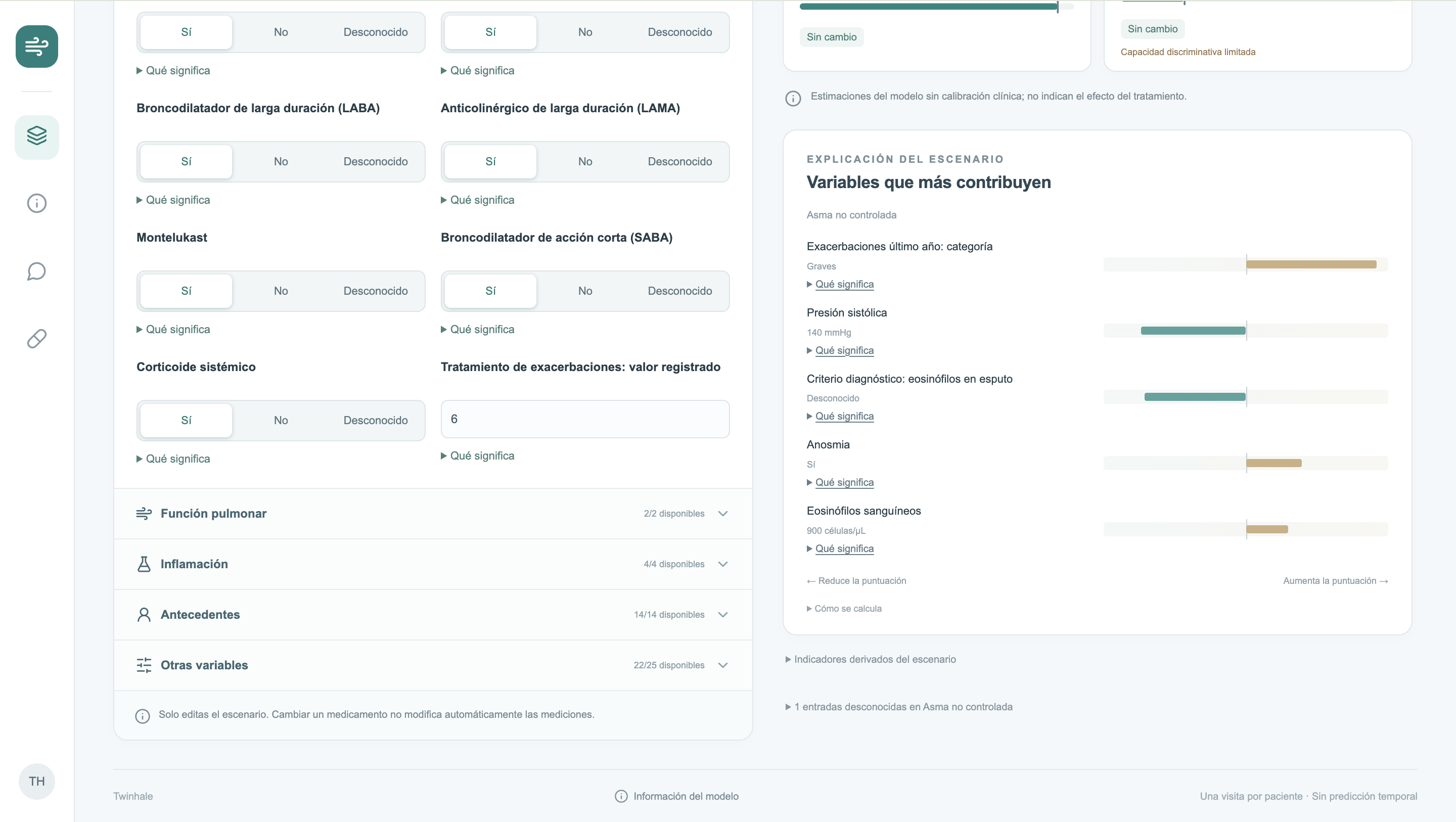
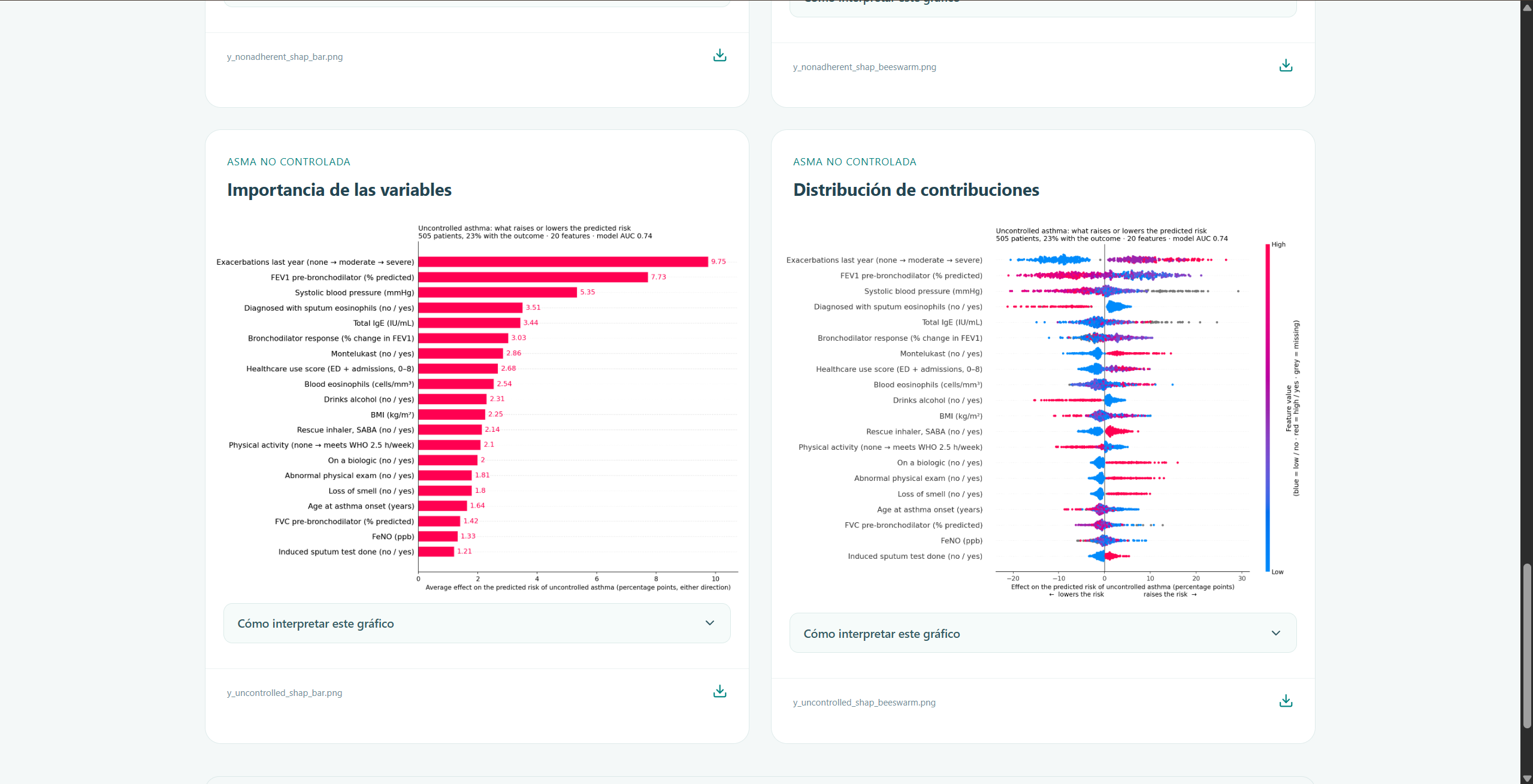
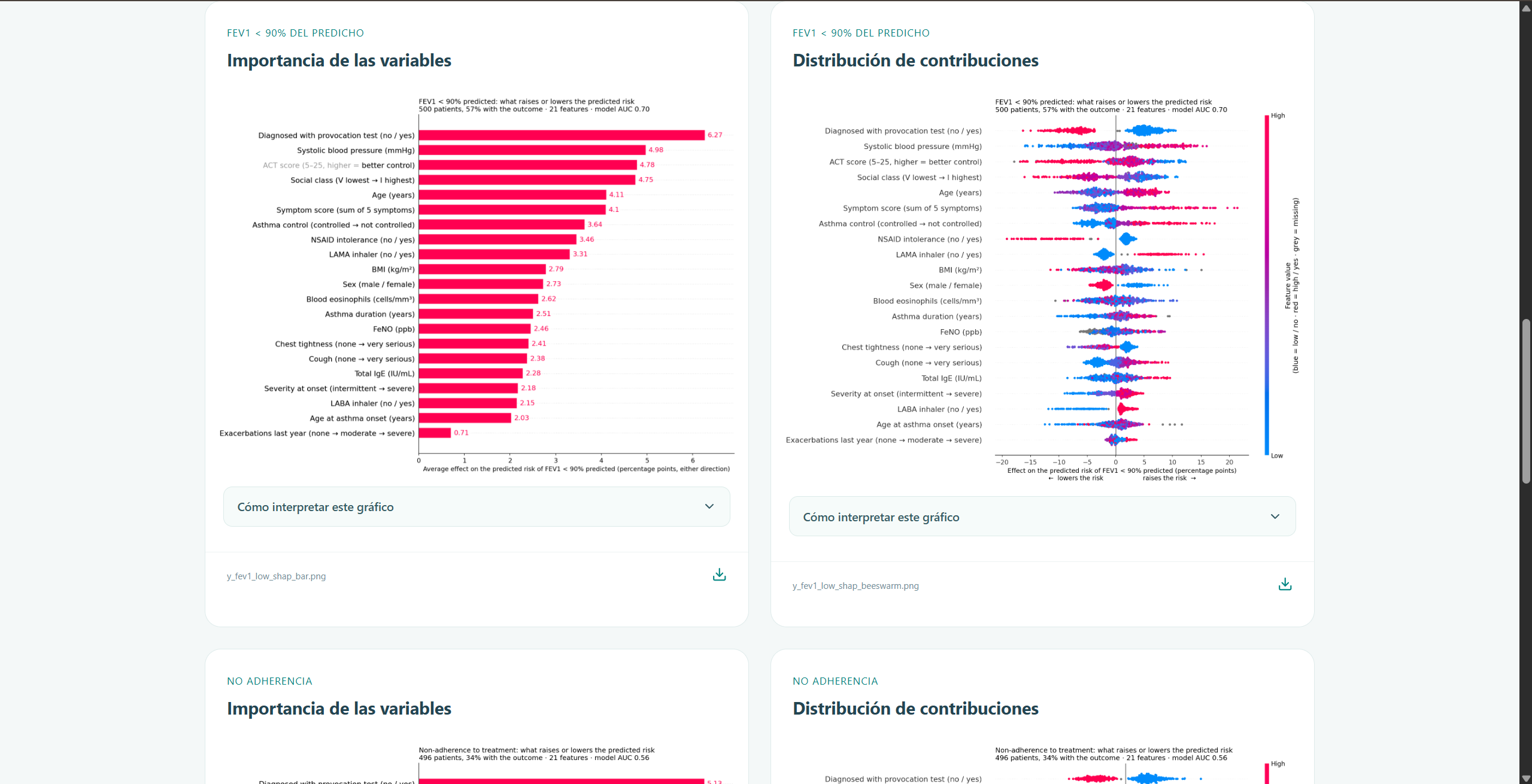
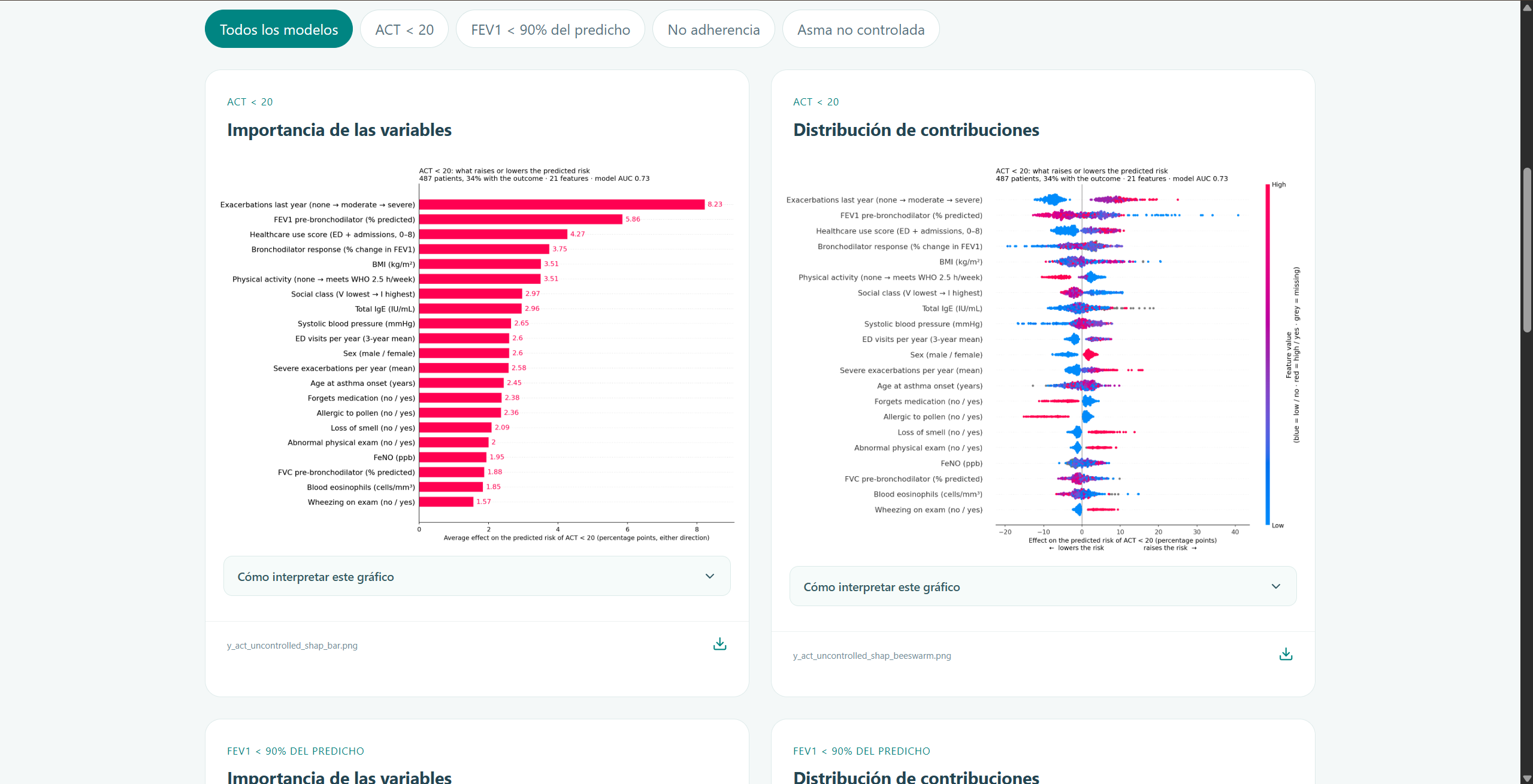
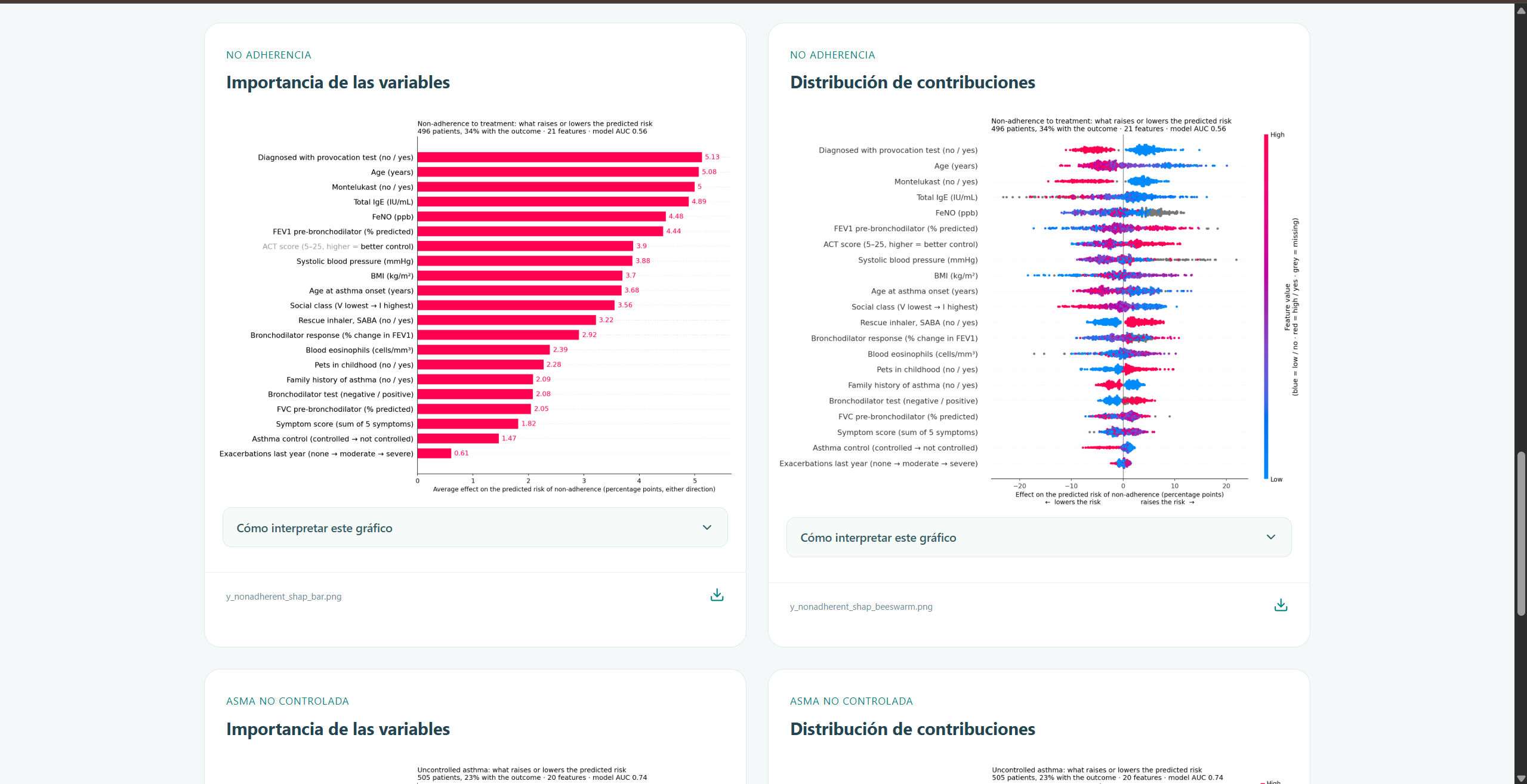
To see how the features change the prediction we computed the SHAP values and feature importance, and then we constructed a reduced set of models with the top 20 features for each model to have a clearer picture on how these features can be used to predict the chosen variables.
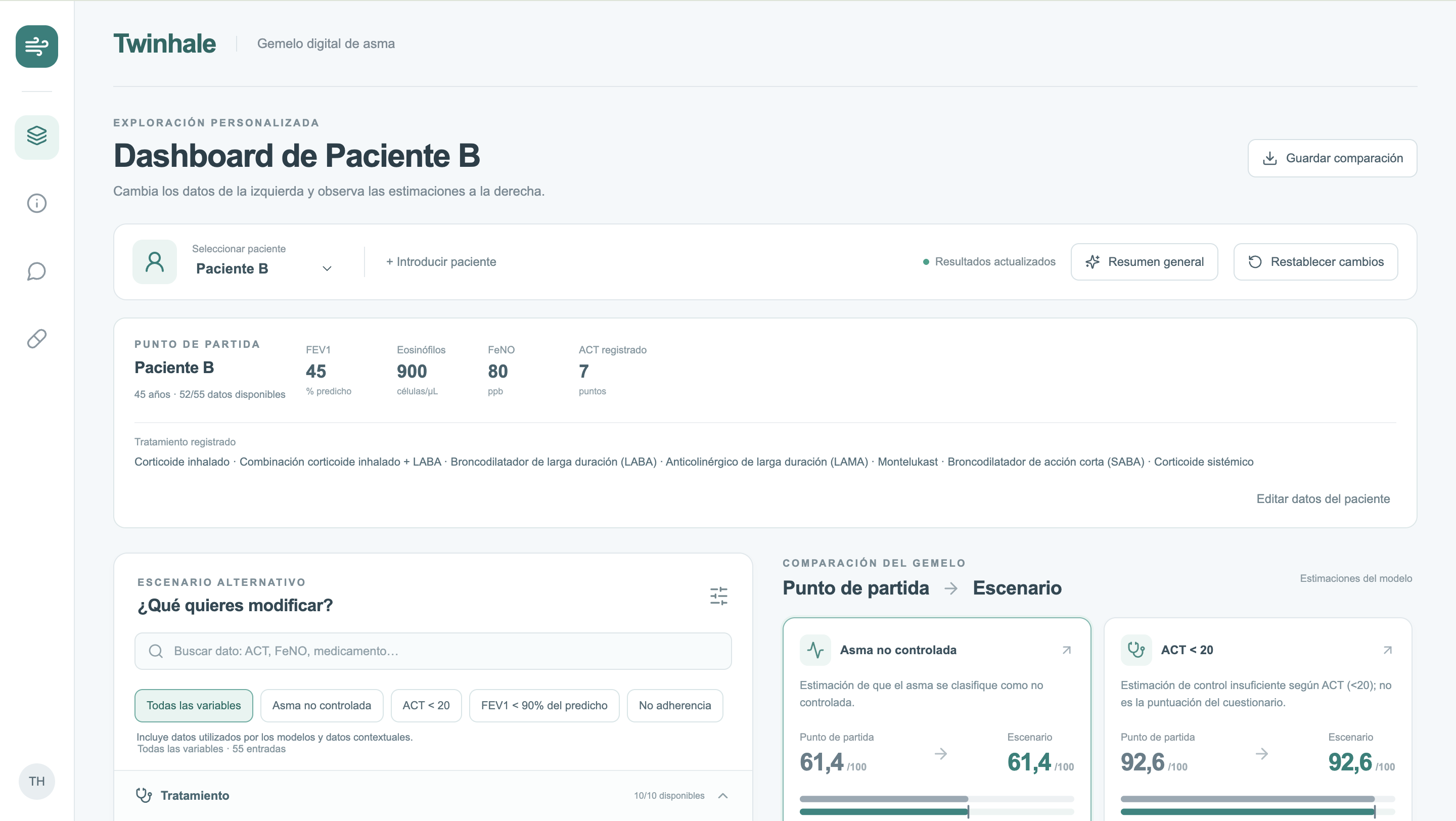
With these reduced models we have built a dashboard where the professionals can set the data of the patients and see how the twin-models predict each of the variables, these predictions get updated each time a value is changed on the dashboard, and the direction of the effect of the features is shown in real time too.
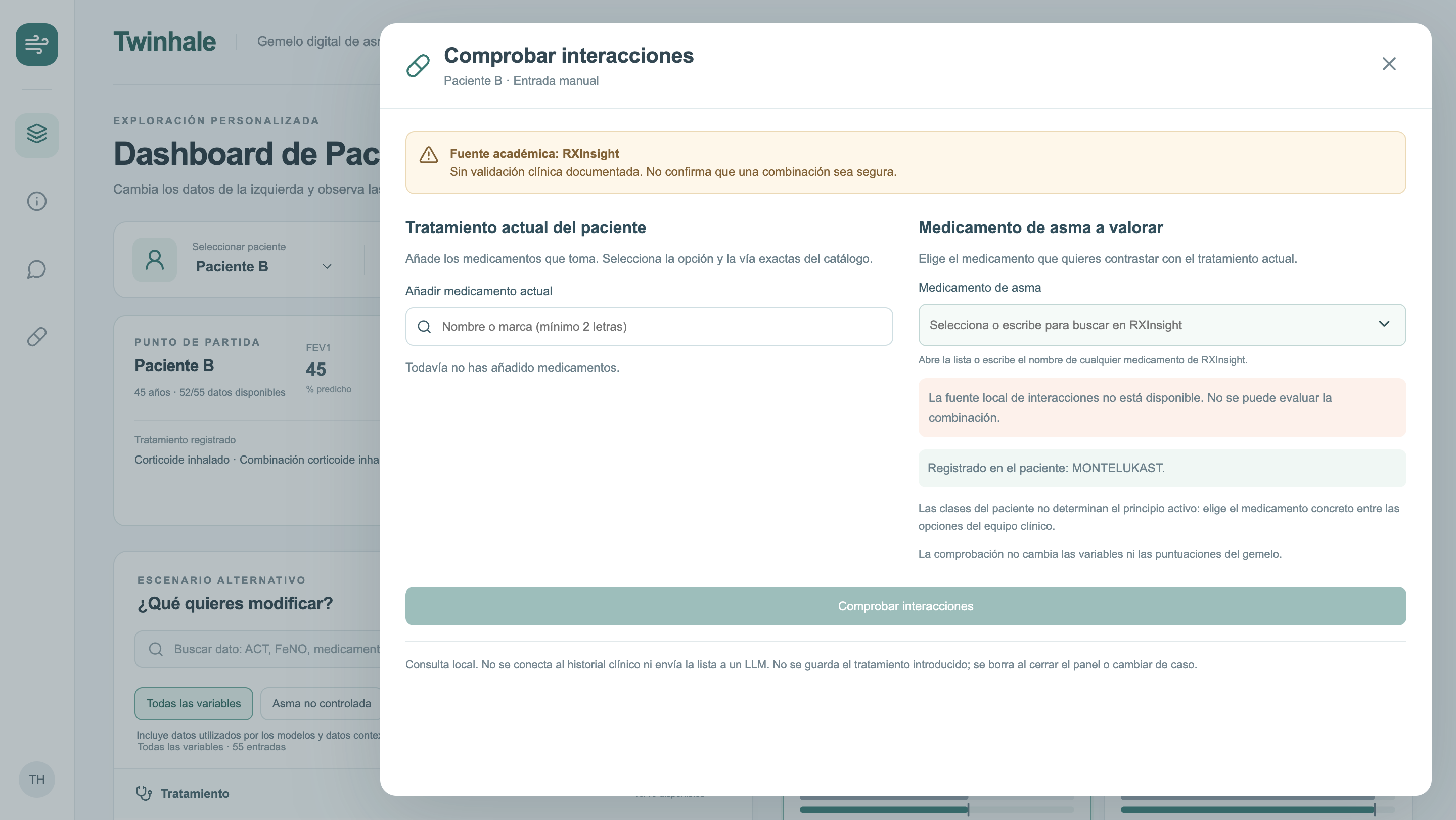
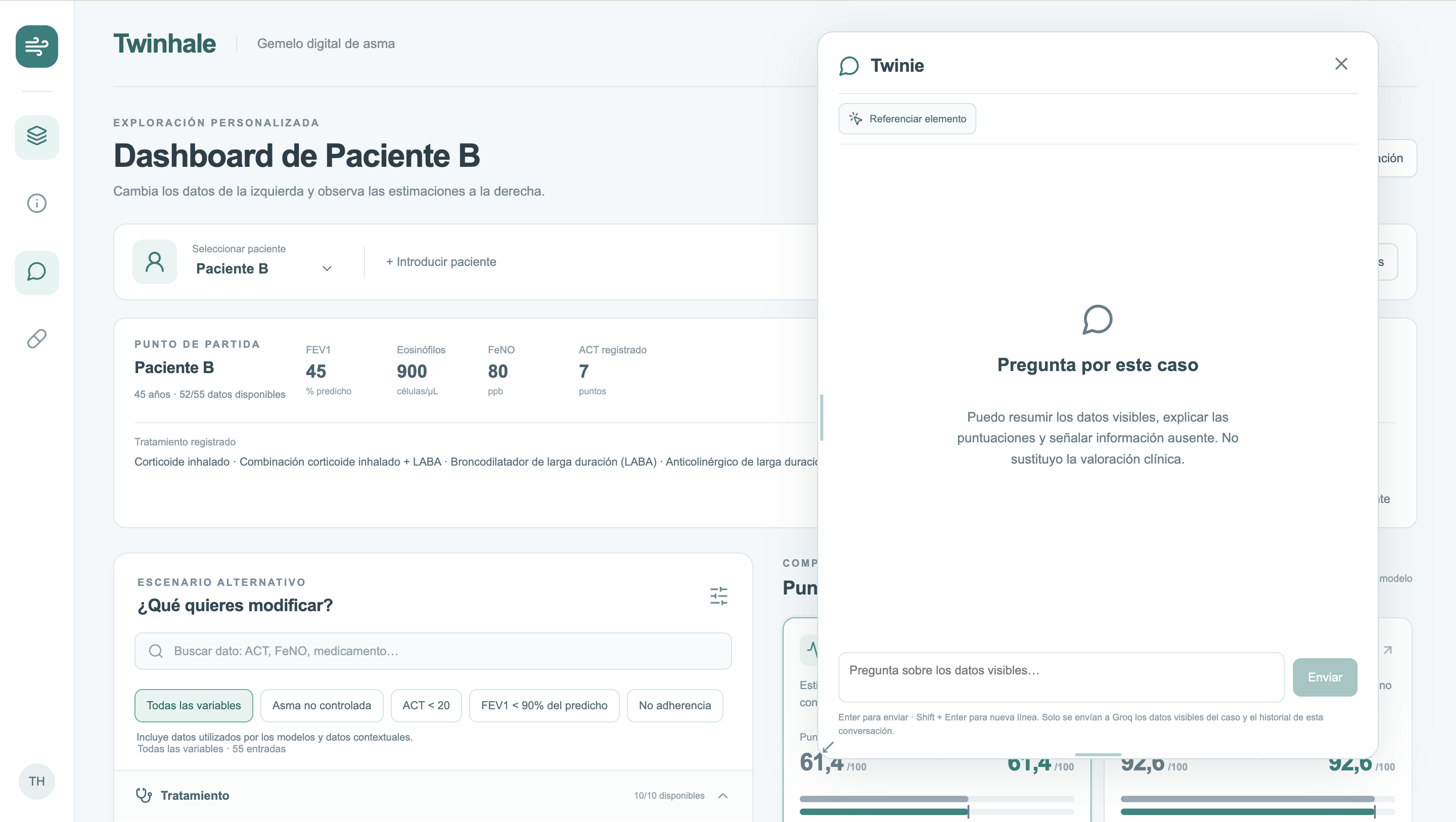
We have an AI powered assistant named Twinie that can explain everything in the dashboard. On top of that, we have included a drug-drug interaction database to know if the patient with Asma is currently taking asma related drugs (such as corticosteroids) as well as other medications related to other diseases to see if there is a harmful interaction between those.
Challenges we ran into
We had an initial problem on how to use the small dataset (500 patients) to build a reliable simulation model for our digital twin.
Accomplishments that we're proud of
We think the explainability of our models is good and aligns with the experts intuition, also we think our dashboard is easy to read and use.
What we learned
A lot about asma and how to leverage statistical models to learn from medical data, as well as building a nice looking dashboard with intuitive navigation tools.
What's next for Twinhale
We would need to explore the possibility of including more data and more predictive models.
Built With
- asma
- chatbot
- css
- html5
- javascript
- python
- shap
- xgboost

Log in or sign up for Devpost to join the conversation.