-
-
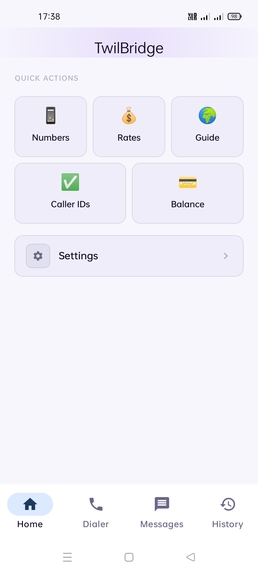
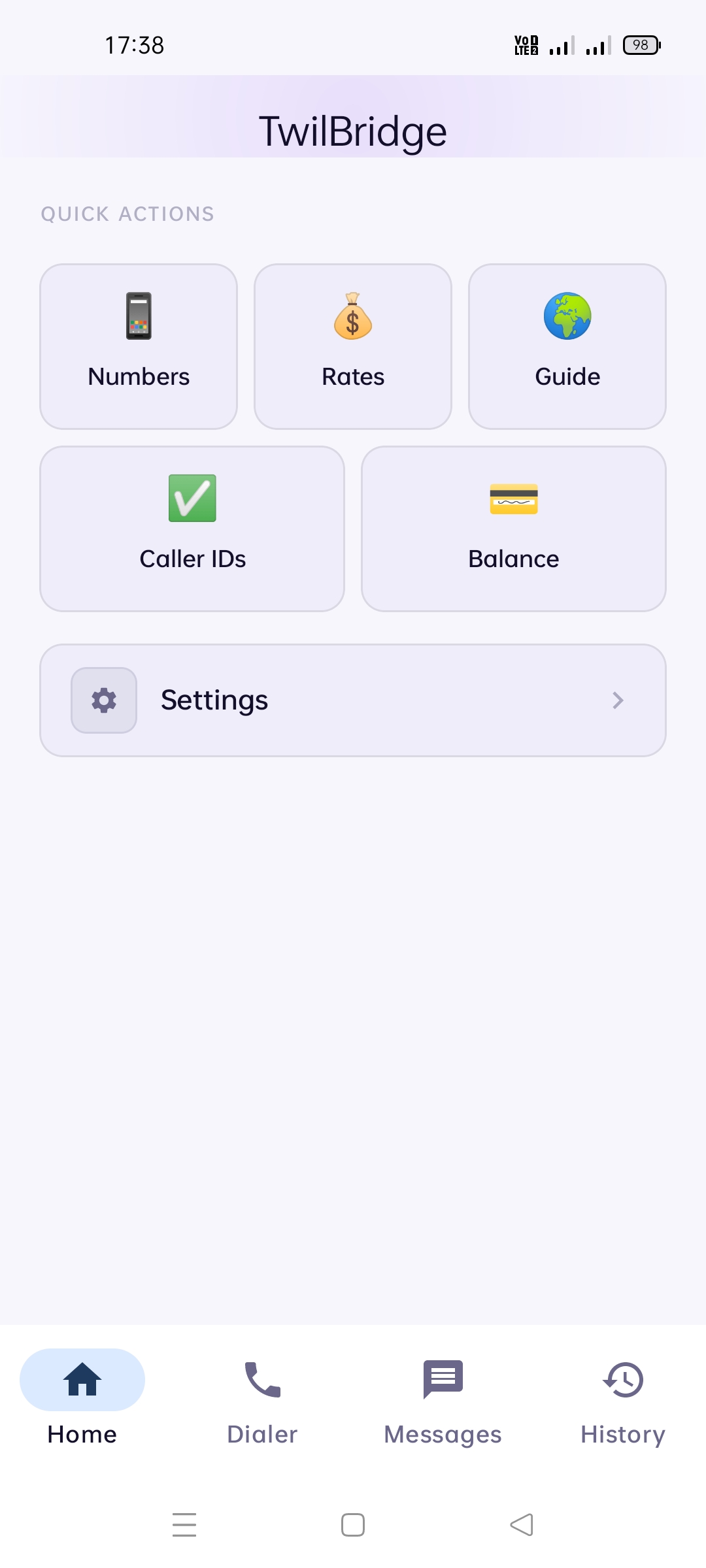
Home screen
-
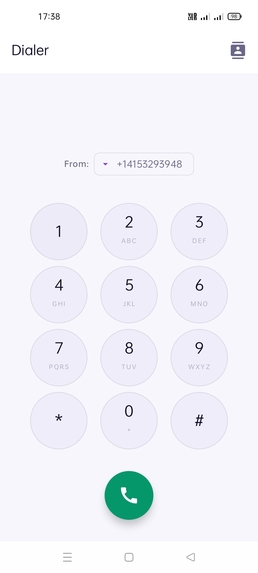
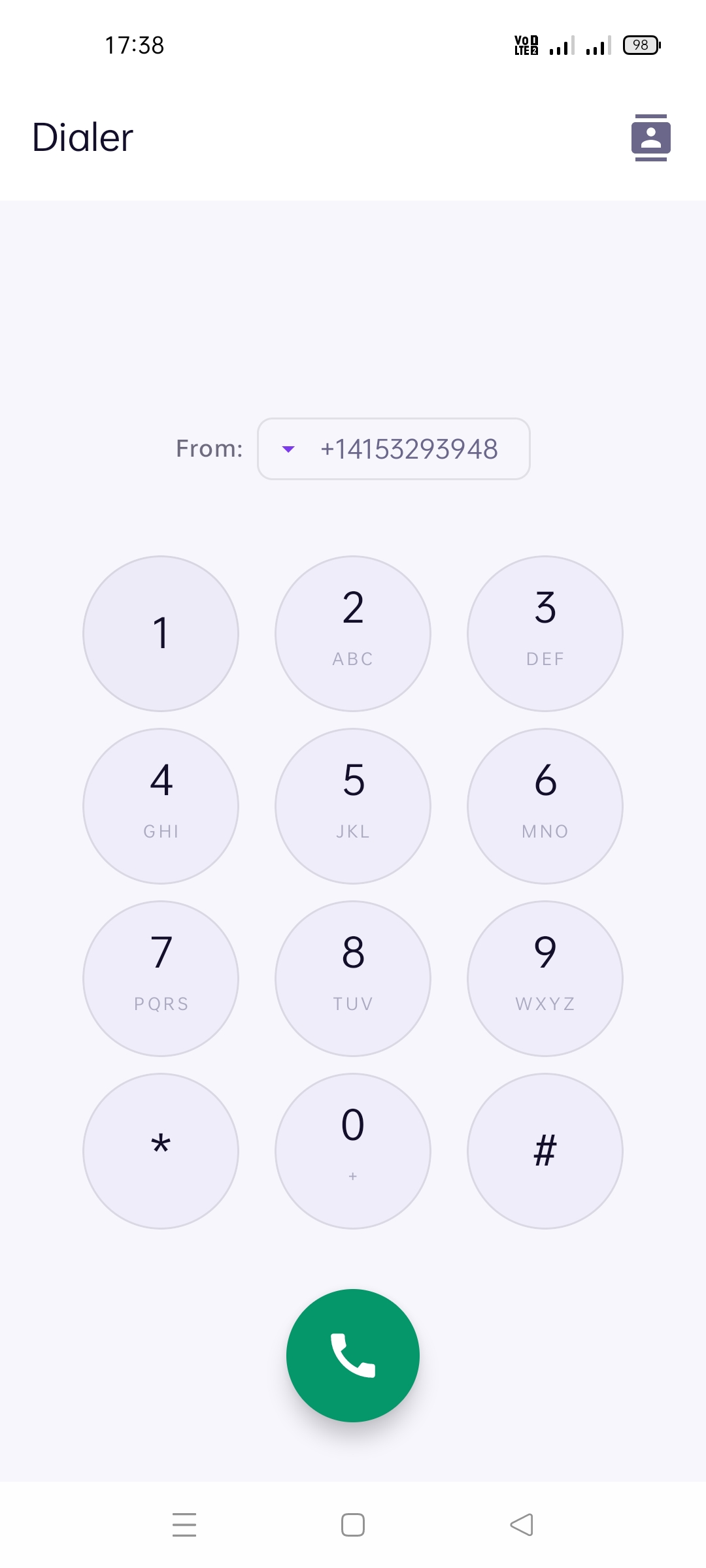
Dialer
-
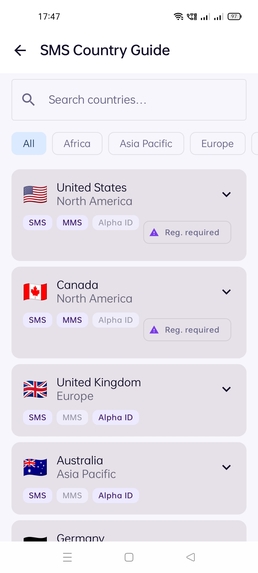
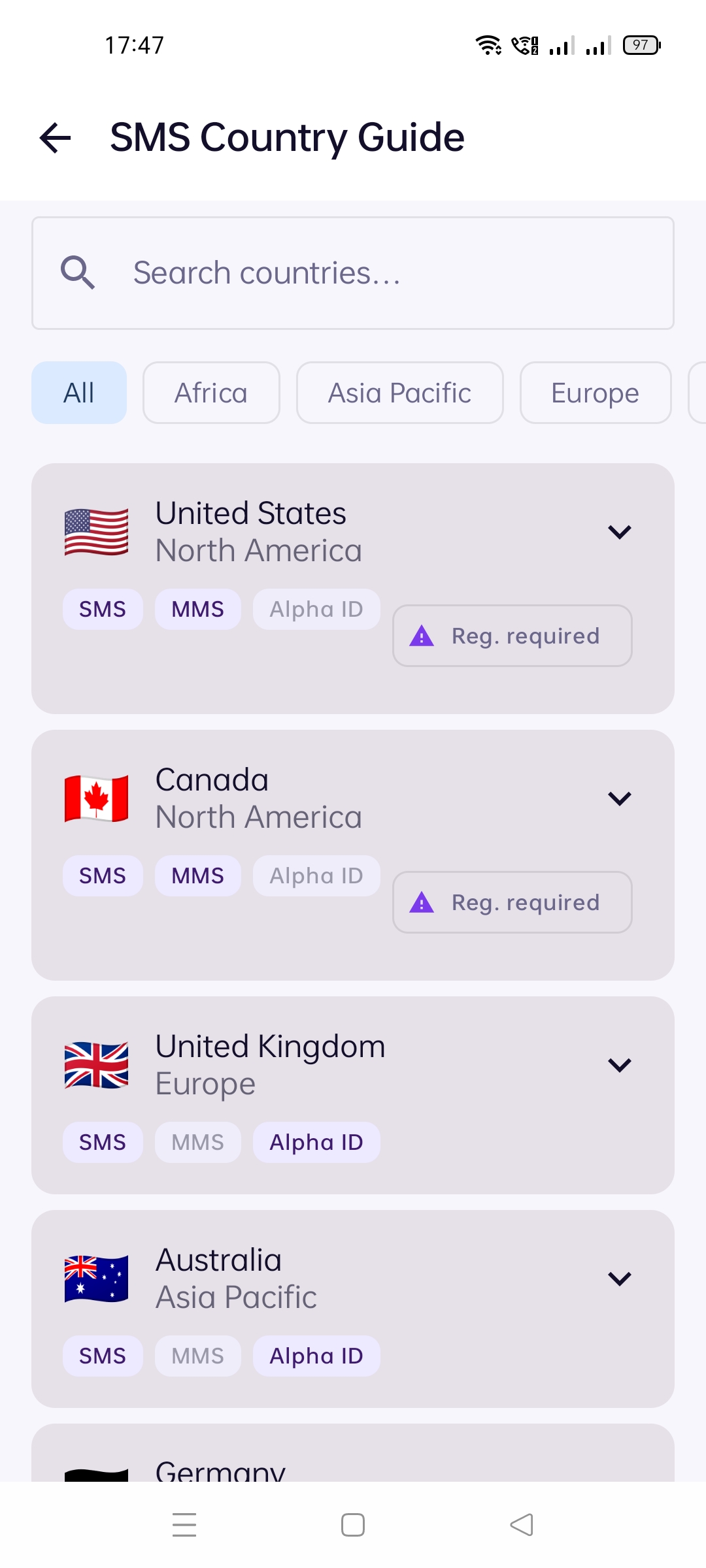
SMS Guide
-
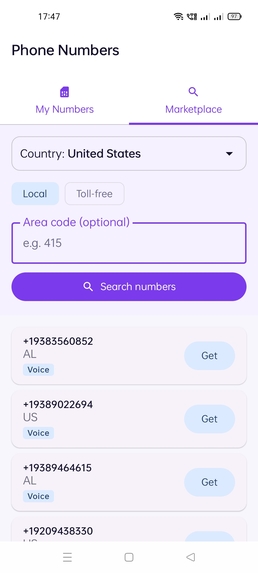
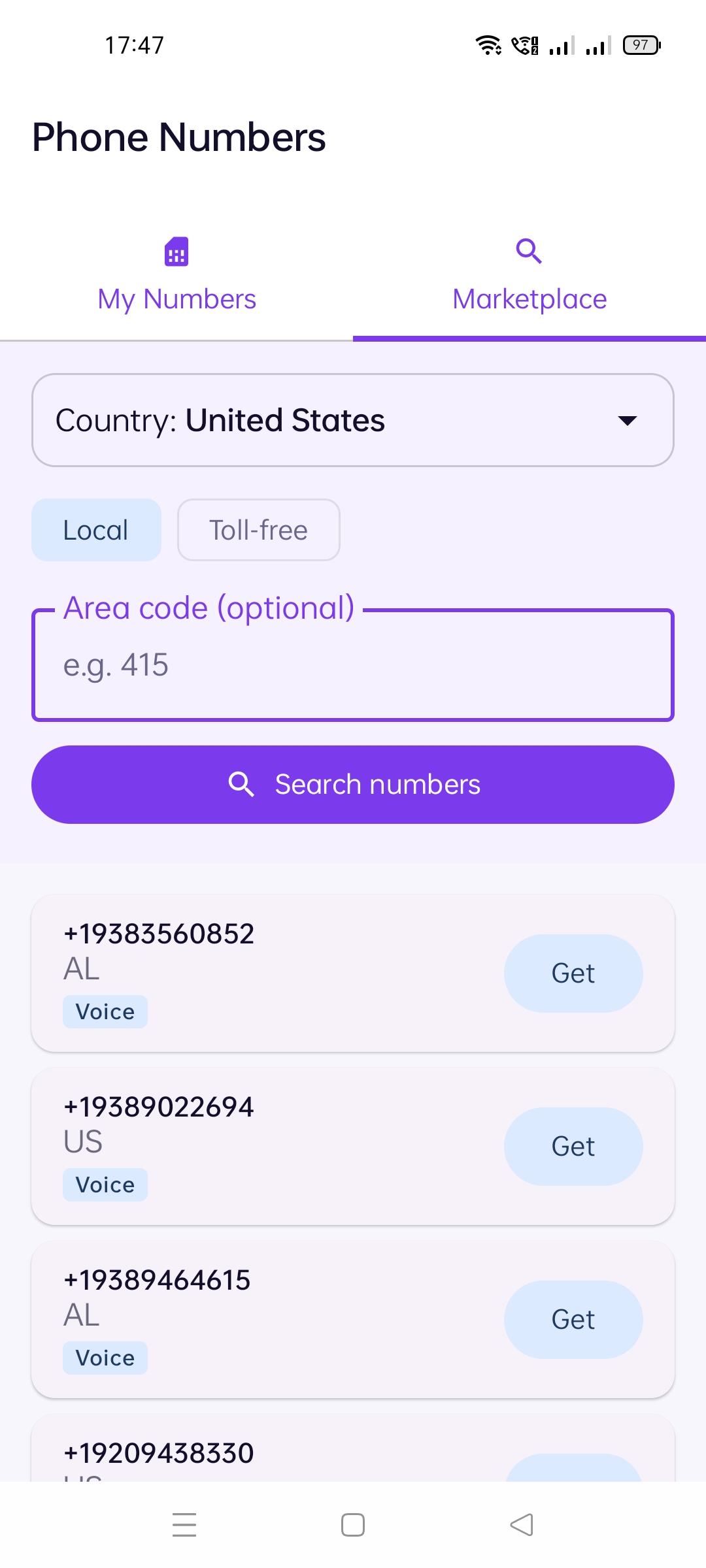
Phone Number Management
-
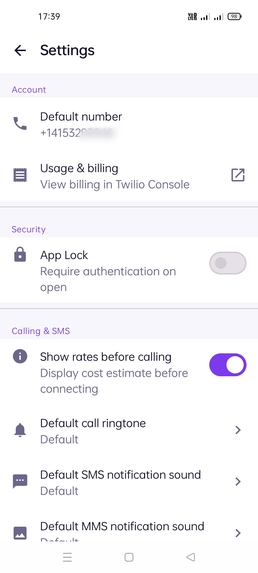
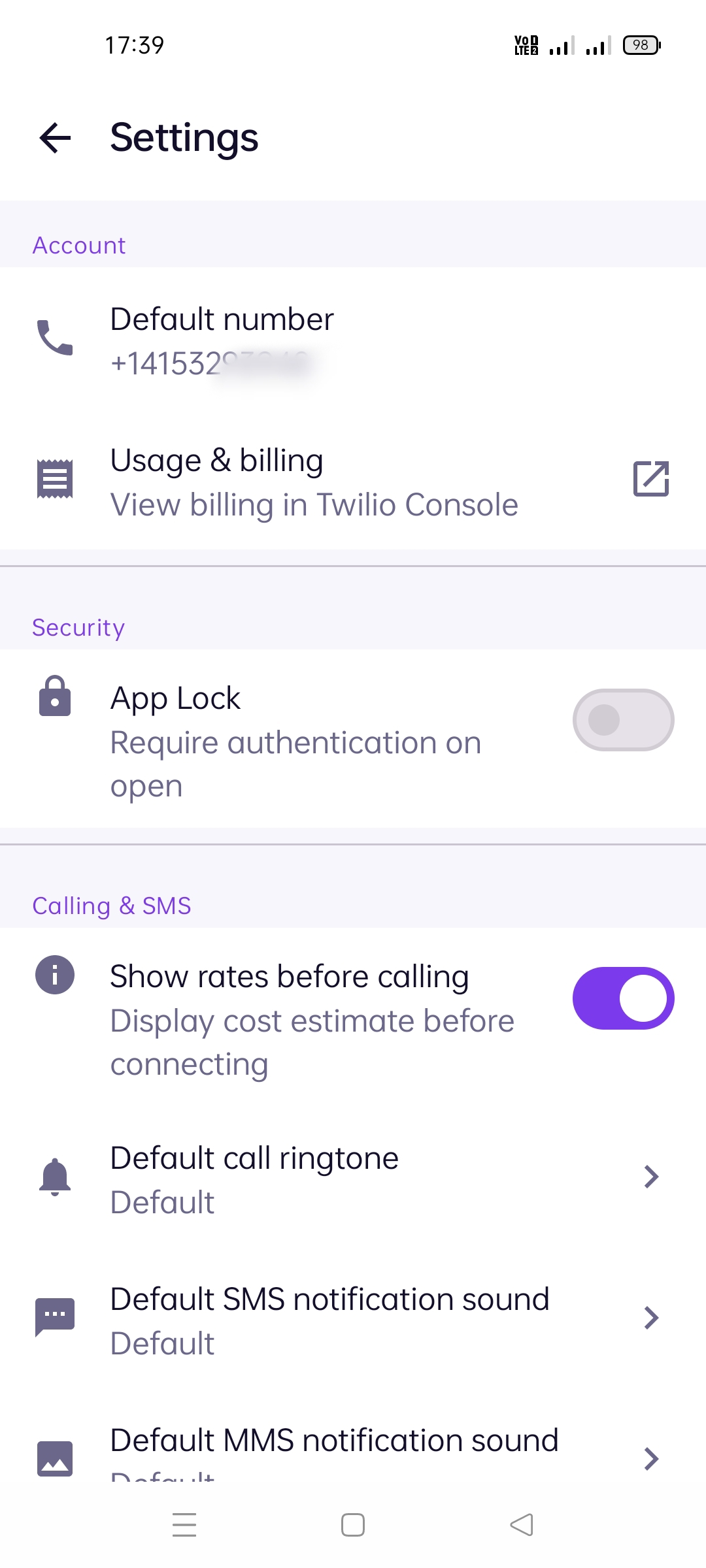
Settings
Inspiration
The telecom industry has a paradox: the infrastructure to build a personal phone number is more accessible than ever, yet the tools to use it remain locked behind developer portals and technical complexity. When Twilio retired Frontline — its consumer-facing product — it left a gap that no one had filled thoughtfully.
Existing alternatives solved the wrong problem. They built centralized backends, stored user credentials on their own servers, and charged monthly fees for the privilege. The result was a product that traded user privacy for convenience and developer simplicity for profit.
TwilBridge started from a different premise: what if the app did everything, but owned nothing? What if the user's own telecom account was the backend — and the app was simply the most elegant interface to it?
That question became a product.
What it does
TwilBridge is a full-featured Android phone app powered entirely by the user's own Twilio account. No developer servers. No credential storage. No middleman.
Users connect their Twilio API key, and TwilBridge handles everything from there — deploying backend logic into their own Twilio environment, then surfacing it through a consumer-grade mobile experience. The result is a complete second phone number: voice calls, SMS and MMS messaging, call recording, conference calling, call and SMS forwarding, phone number management, and a live rates explorer — all billed directly to the user's Twilio account at Twilio's own rates.
What makes TwilBridge different isn't the feature list. It's the architecture. The developer (me) hosts zero infrastructure, stores zero user data, and earns revenue through a Google Play subscription — while users retain full ownership and control of their telecom stack.
Competing products charge $5.99/month and store your credentials on their servers. TwilBridge charges less, stores nothing, and gives users a phone experience that feels native.
How I built it
TwilBridge was built spec-first. Before writing a line of application code, I ran a full product discovery and specification cycle — defining user personas, acceptance criteria, edge cases, and a sequenced build plan. That upfront investment directly reduced ambiguity during execution and made each development session faster and more focused.
The build itself went many versioned releases — each one shipping a defined set of capabilities, validated against the original acceptance criteria, and tested on real infrastructure. I treated the project like a product, not a prototype: subscription model designed before the app was built, legal and compliance handled before launch, Play Store listing finalized in parallel with the final feature set.
The result is a production-grade Android app — Kotlin, Jetpack Compose, Material 3 — with a live subscription, a published Play Store listing, and working calls and messaging.
Challenges I ran into
Designing for zero infrastructure meant every feature had to be rethought from first principles. Real-time push notifications, backend logic, authentication, and data persistence all needed to work without any server I controlled. Finding the right abstraction — one that felt seamless to users but touched nothing on my end — required significant design iteration.
Push notification reliability across device states is an unsolved problem in mobile development. Getting incoming call alerts to work consistently, across Android's increasingly aggressive battery management policies, required working through multiple layers of platform behavior that aren't well-documented.
Subscription model design for a product with Twilio pass-through costs required careful thinking about pricing, trial mechanics, and the free tier boundary. Getting this wrong early would have meant either undercharging (unsustainable) or overcharging (no adoption). I designed the pricing to be remotely configurable — so I can adjust without app updates — which itself required architectural decisions early in the project.
Compliance and legal — privacy policy, Google Play Data Safety, terms of service — aren't glamorous, but they're table stakes for a consumer product. Getting them right before launch, not after, was a deliberate choice.
Accomplishments that I am proud of
Shipped a production app, not a demo. TwilBridge is live on the Google Play Store with a working subscription model, real voice calls over PSTN, and a user experience that holds up against paid commercial alternatives.
Zero developer infrastructure, fully working product. The constraint that I would host nothing — no servers, no databases, no credentials — could have been a ceiling. It became a differentiator. Every feature was designed around it, and none of the features were compromised by it.
Feature parity with competitors at lower price. Competing apps charge $5.99/month and store your credentials. TwilBridge delivers a richer feature set — call recording, conference calling, MMS, per-number notification tones, a live rates explorer, SMS forwarding — at a lower price point, with stronger privacy guarantees.
92 versions, no regressions on core flows. Iterating from first scaffold to a full design system with animations, dark mode, haptics, and shimmer loading states — while keeping voice calls and messaging stable throughout — required disciplined release management.
A model for solo product delivery. This project demonstrated that one person, with the right process, can take a complex consumer product from idea to launch in a compressed timeframe. That's the result I'm most proud of.
What I learned
The biggest learning was about the relationship between planning and speed. Counterintuitively, spending more time on specification before building made the build faster — not slower. When acceptance criteria are written before code, every decision has a reference point. When edge cases are identified in the PRD, they don't become surprises during testing.
The second learning was about constraint as a design tool. The zero-infrastructure constraint didn't limit TwilBridge — it defined it. Every architectural decision flowed from it, and the result is a product with a genuinely differentiated value proposition. Constraints force creativity in ways that open-ended design doesn't.
The third was about versioning as a communication tool. Each of the 92 releases was a checkpoint — a moment to validate what was built against what was planned, and to decide what came next. That rhythm kept the project moving without losing coherence.
Finally: the original scope felt like a ceiling. Seeing the app work and evolve through versions made it feel like a floor. The features added beyond the initial plan — polish, animations, per-number tones, connectivity states — weren't scope creep. They were the dividend of a solid foundation.
What's next for TwilBridge
TwilBridge is a platform, not a point solution. The zero-infrastructure model scales — adding users doesn't add infrastructure costs, because each user brings their own.
iOS app is the immediate next milestone.
Web billing via Stripe opens TwilBridge to users without access to Google Play or the App Store — and unlocks a broader distribution channel.
Team and multi-user features — shared numbers, role-based access, team call routing — would expand the addressable market from individual users to small businesses, which represent a significantly larger revenue opportunity.
Number porting — allowing users to bring existing numbers into their Twilio account through the app — removes one of the last friction points in the onboarding flow.
Automated compliance tooling — guiding users through A2P 10DLC registration, Sender ID registration, and regulatory bundle submission for restricted countries — would make TwilBridge the most complete Twilio consumer interface available.
The market gap that Twilio Frontline left behind is still wide open. TwilBridge is the most credible answer to it.
