-
-
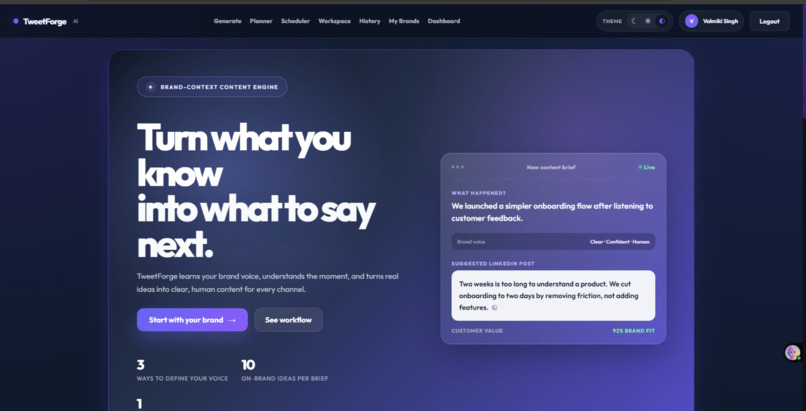
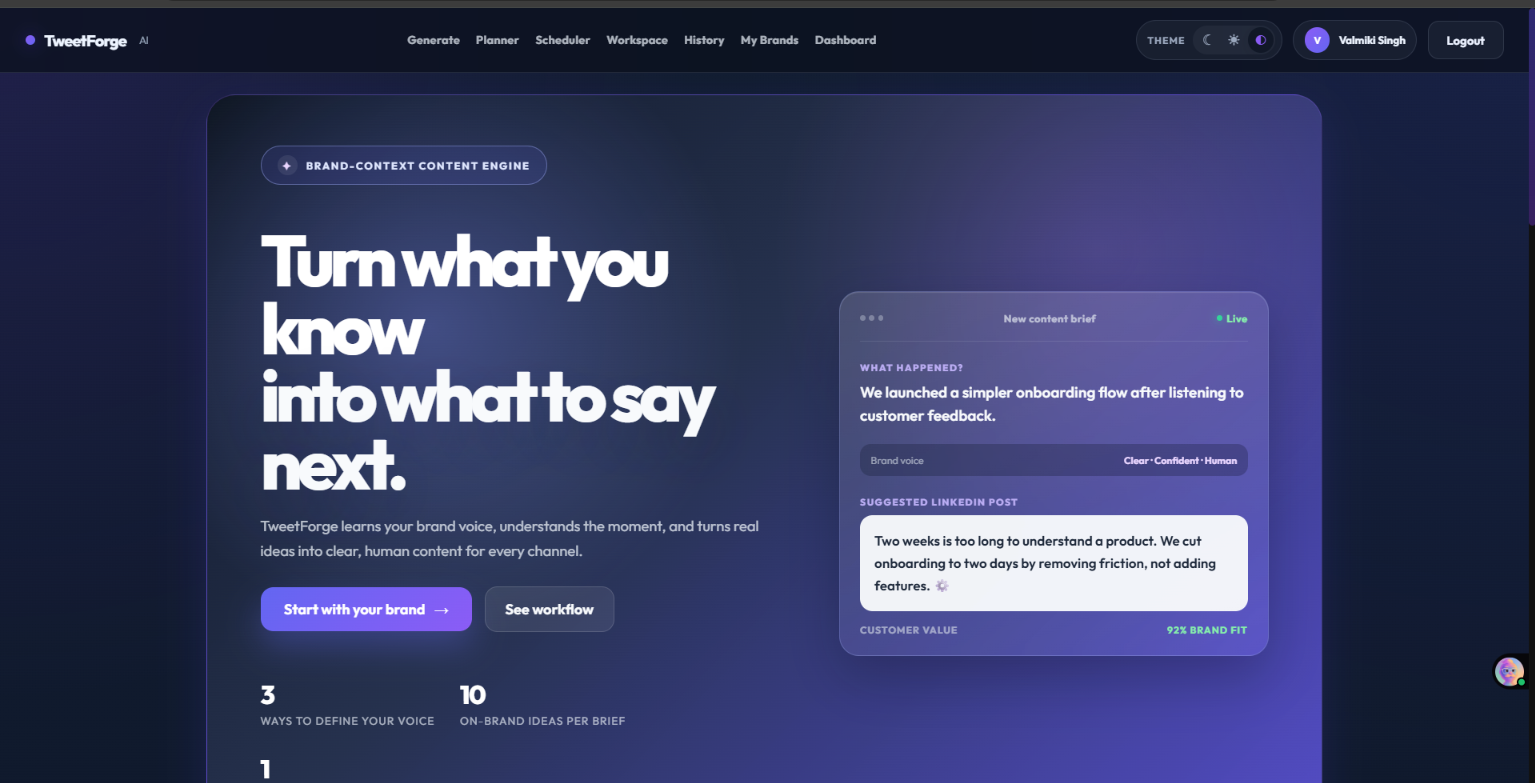
home page
-
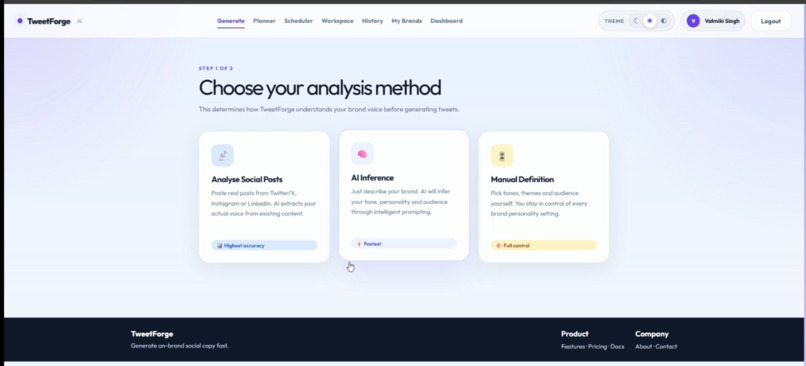
analysis methods
-
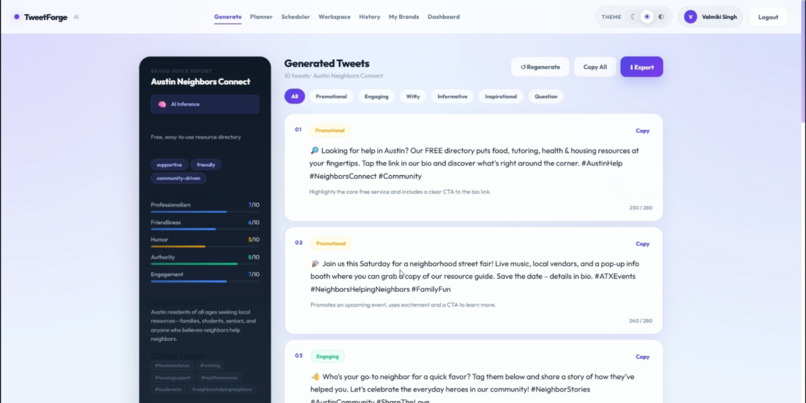
result
Inspiration
Many community organizations, school clubs, nonprofits, and local groups provide valuable resources but do not always have the time or communication expertise to promote them effectively. Important information about food assistance, tutoring, housing support, health resources, and community events can be difficult for residents to discover.
We built TweetForge AI to help these organizations communicate more clearly and consistently.
What It Does
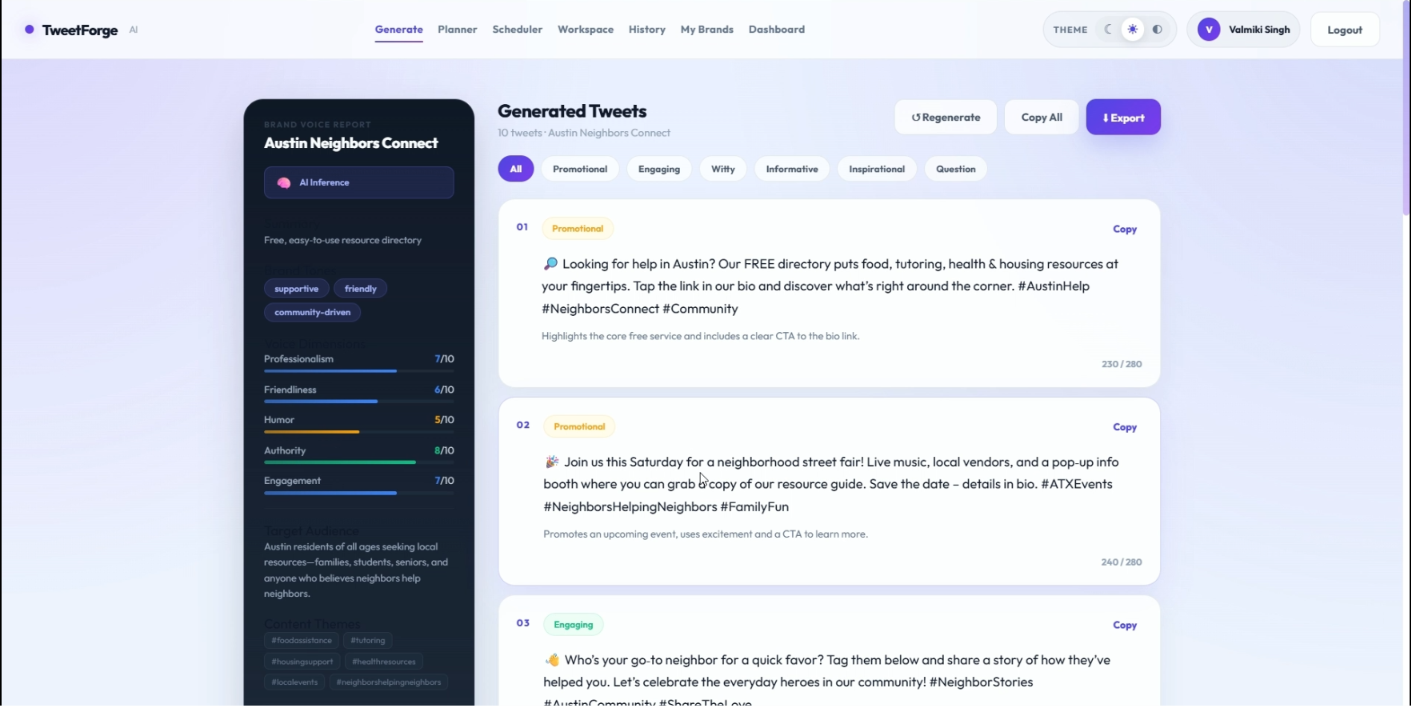
TweetForge AI turns an organization’s mission, audience, services, and goals into platform-ready social content.
Users can:
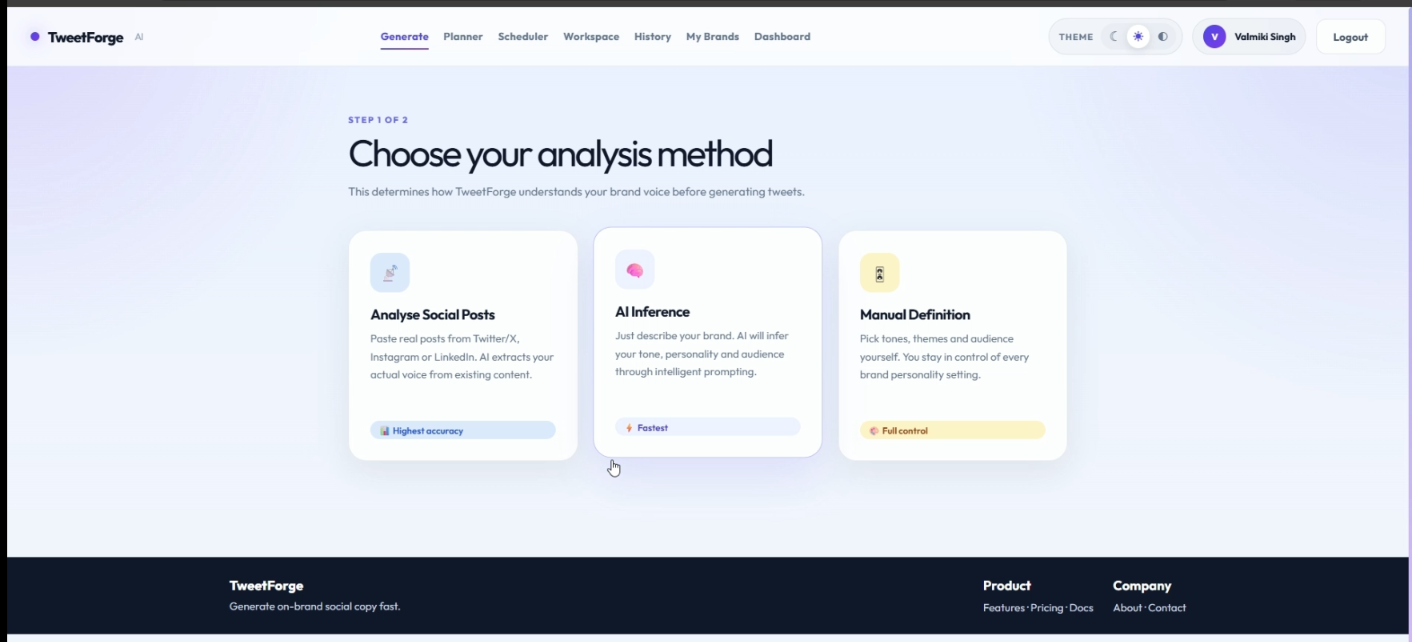
- Define their brand voice through AI inference, social post analysis, or manual settings
- Generate on-brand content for Twitter/X, LinkedIn, and Instagram
- Filter posts by style
- Copy or export generated content
- Save previous generations
- Plan campaigns
- Schedule content
- Collaborate through a shared workspace
For this project, we focused on how a small community organization could use TweetForge AI to share important resources with its audience without needing a dedicated marketing team.
How We Built It
The frontend was built with React and Vite. Firebase Authentication manages user accounts, while Firestore stores brand and generation metadata. A FastAPI backend handles authenticated requests and connects to Groq for AI-powered voice analysis and content generation.
The application is deployed with Vercel for the frontend and Render for the backend.
What We Learned
We learned that generating useful content requires more than sending a short prompt to an AI model. The quality of the result improves when the prompt includes the organization’s audience, mission, platform, tone, content themes, and campaign objective.
We also learned how important deployment configuration is. Authentication domains, CORS settings, environment variables, client-side routing, and backend hosting all need to work together for a production application.
Challenges
One major challenge was creating a consistent experience across multiple platforms while preserving the organization’s voice. Twitter/X, LinkedIn, and Instagram have different lengths, tones, and formatting expectations.
Another challenge was designing the application so that generated content could become part of a larger workflow. Instead of stopping after content generation, we added history, planning, scheduling, collaboration, and export features.
Future Improvements
Future versions could include multilingual community content, accessibility-focused writing suggestions, direct publishing integrations, analytics, and specialized templates for nonprofits, schools, emergency announcements, and public services.
TweetForge AI is designed to help organizations spend less time struggling with communication and more time serving their communities.
Built With
- api
- authentication
- fastapi
- firebase
- firestore
- groq
- javascript
- python
- react
- recharts
- render
- rest
- router
- vercel
- vite

Log in or sign up for Devpost to join the conversation.