-
-
App Icon
-
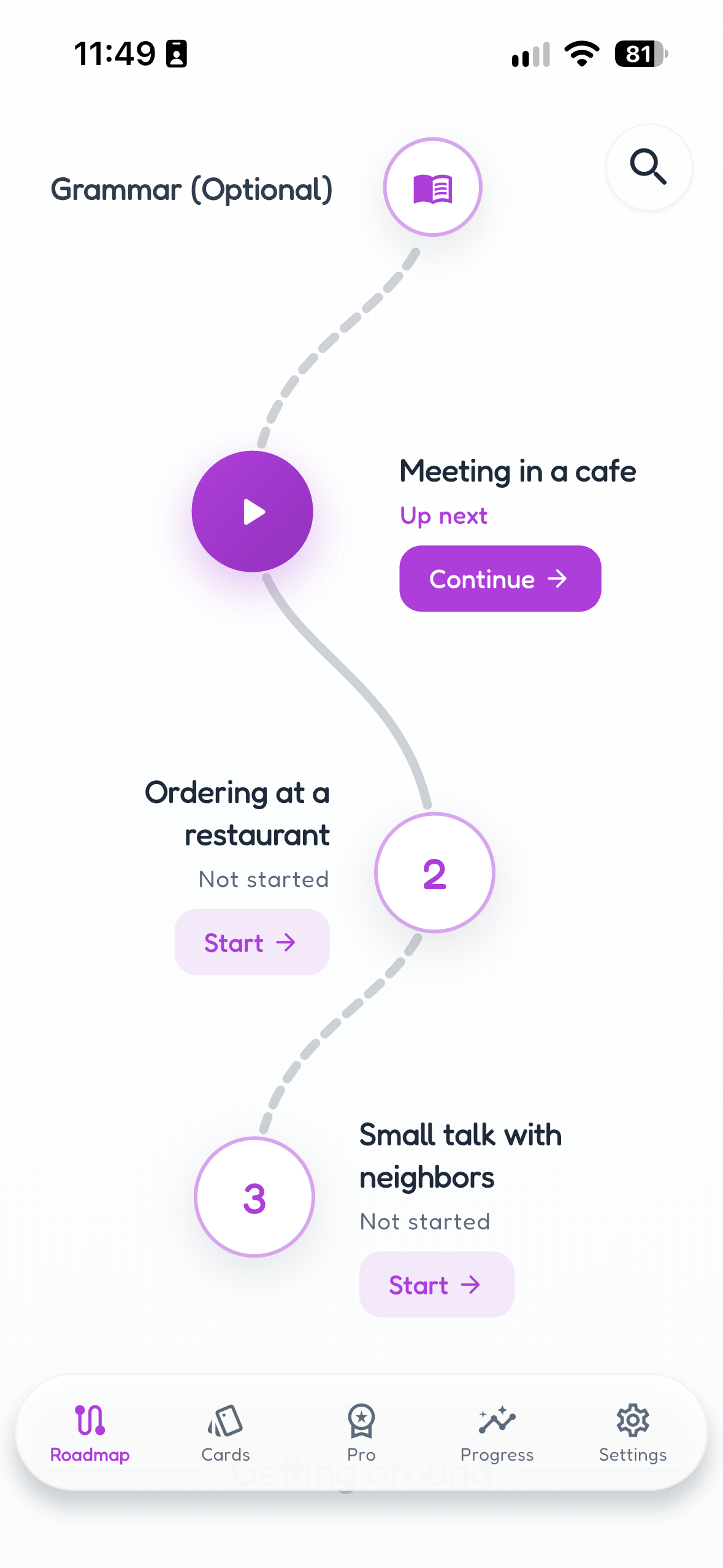
Learning Roadmap
-
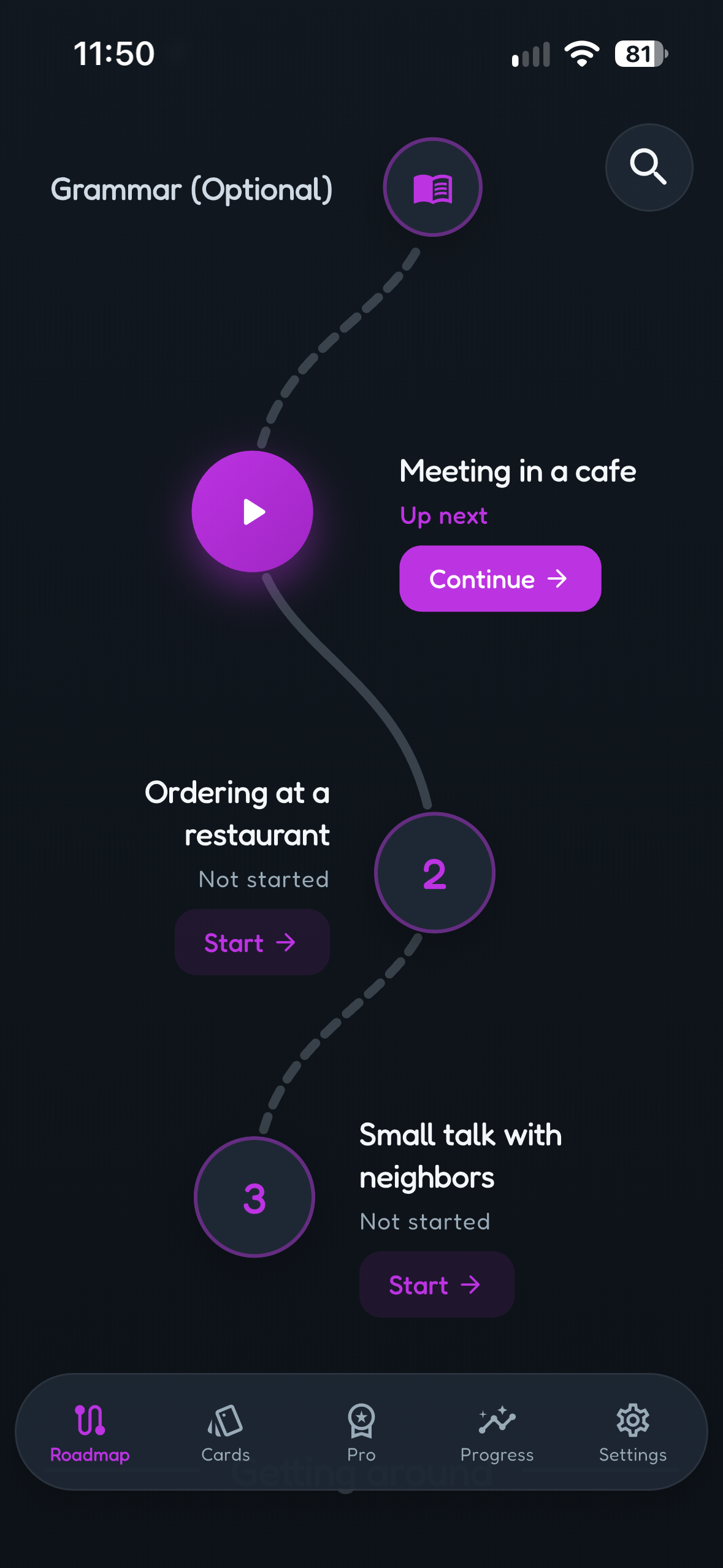
Learning Roadmap (dark mode)
-
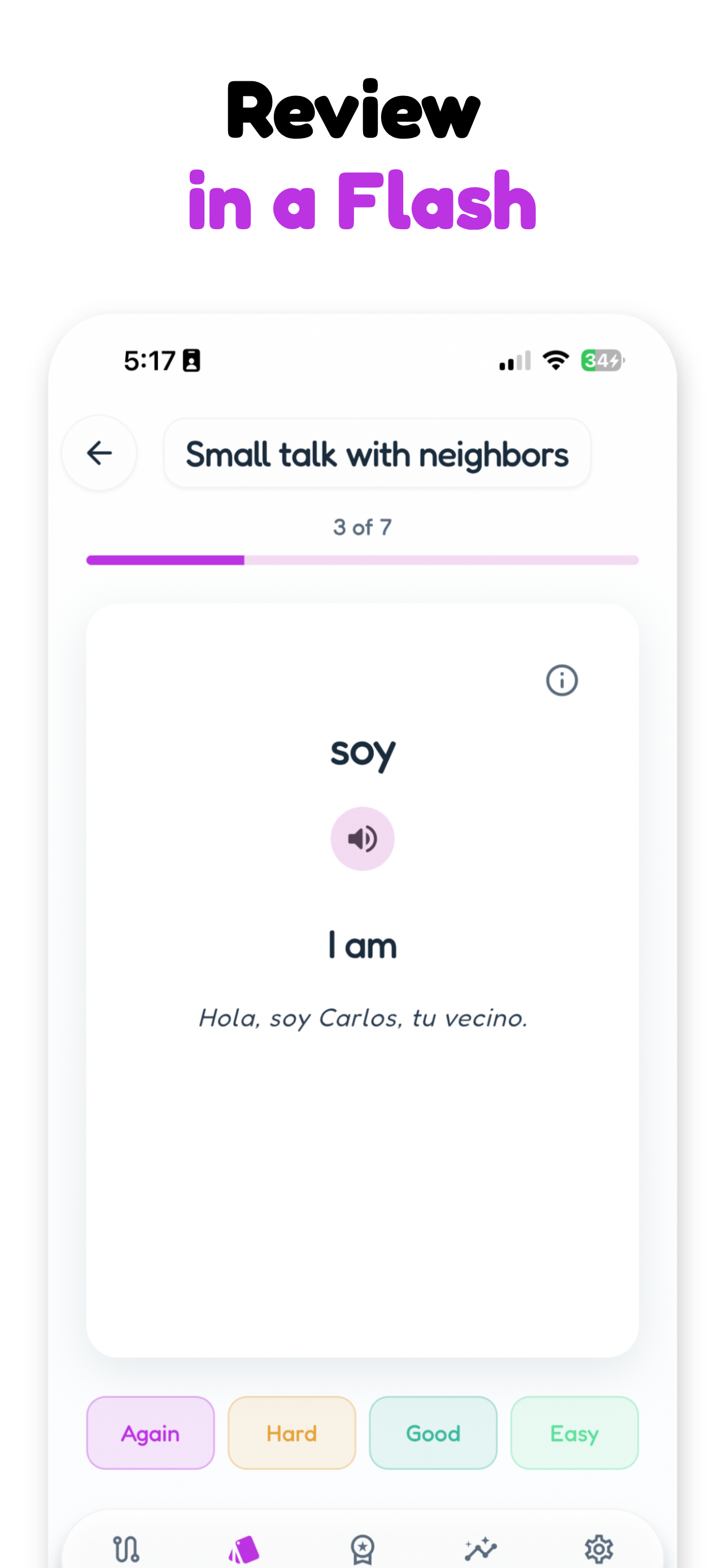
Flashcards
-
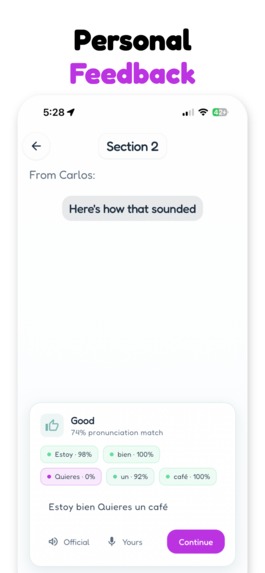
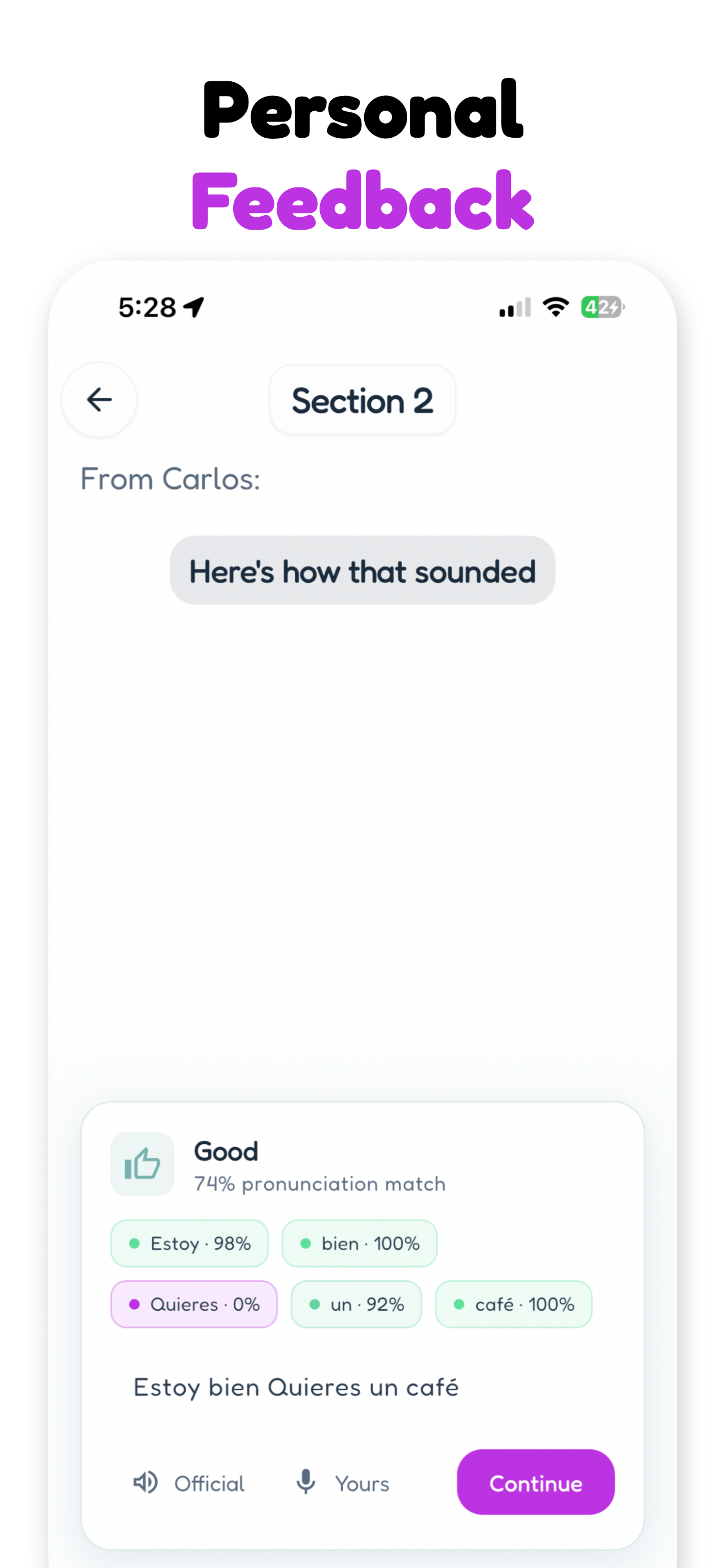
Pronunciation Feedback
-
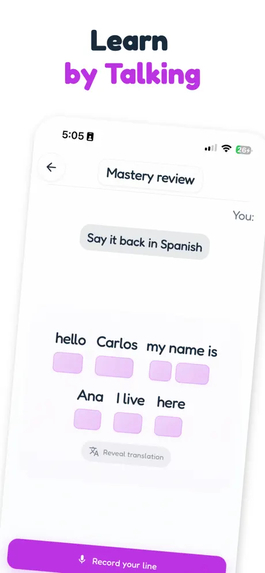
Review Screen
-
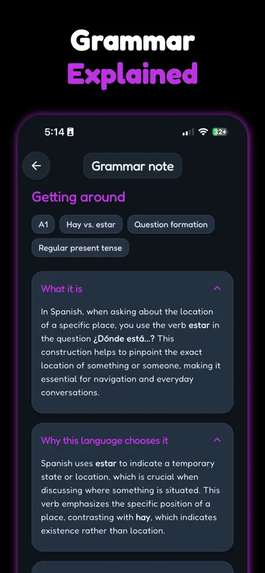
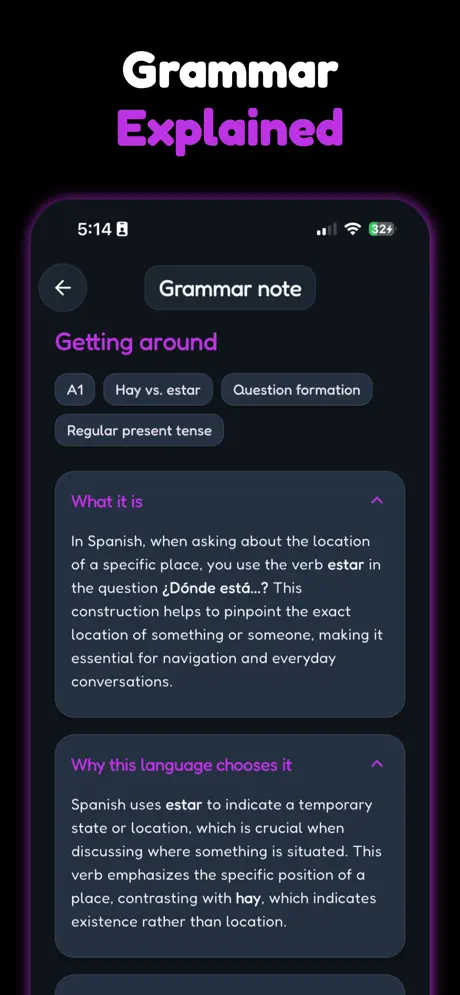
Grammar Notes
Inspiration
I took Spanish in high school. I was the best student in the class, and still couldn't speak with natives. Then I tried more than a dozen language learning apps. Some were fun. Some were beautifully designed. But the words weren’t sticking, and I still wasn’t getting the practice I needed to understand spoken language and respond.
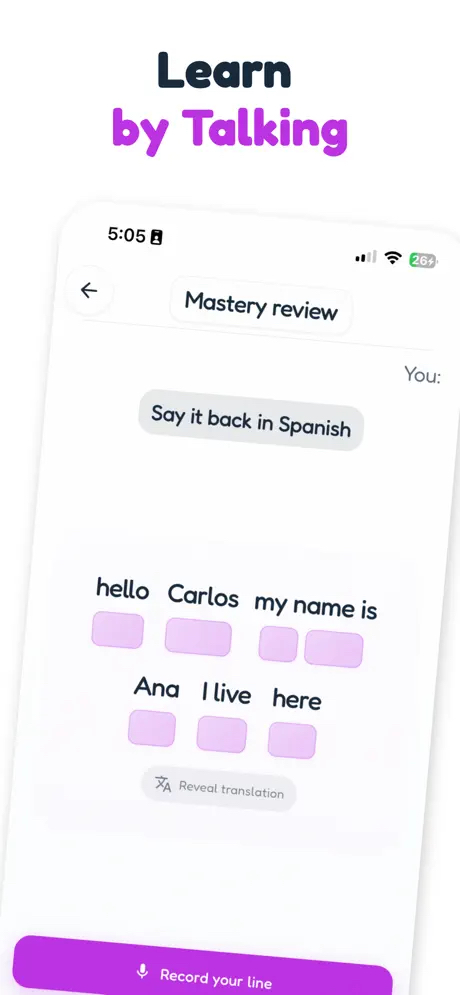
My background in Cognitive Science at Rice University gave me a starting point: I needed to practice retrieving and using words, hearing them without written clues, and saying them out loud with proper pronunciation.
Real conversations don’t come with multiple-choice answers or a text bubble to rescue you.
I built Twaddle: Learn Languages as a solo founder to create the learning experience I had been looking for.
What it does
Twaddle helps learners practice real conversation: understanding native speakers and being understood when they speak.
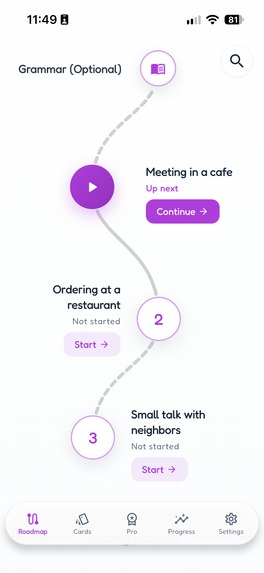
Every lesson starts with a realistic conversation, clearly marked as formal or informal, and breaks it into manageable pieces.
Learners:
- Use new words in their own sentences from day one.
- Listen and translate from audio alone, practicing comprehension without relying on written text.
- Speak out loud and receive AI pronunciation feedback for each word, with recordings they can compare directly against the native voice.
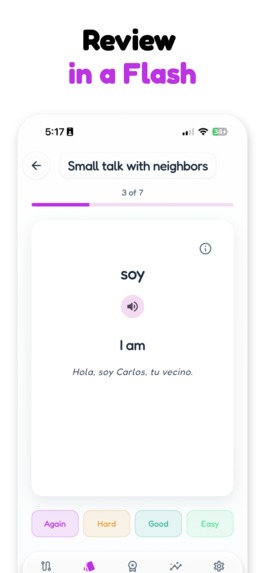
- Review vocabulary through spaced repetition, with scheduling based on how well they know each word.
Optional grammar lessons explain concepts relevant to the conversation and are custom-tailored to the learner’s native + target language combination. Searchable lesson tags let learners find a specific topic, such as the future tense.
The goal is to make the words you study available in your mind when you actually need them.
Challenges I ran into
My first approach asked too much of learners.
I initially broke a full conversation into sections and had users practice those messages. It seemed like a reasonable way to bring realistic language into a lesson. But user testing revealed that even those sections introduced too many unfamiliar words at once. People couldn’t keep up.
That feedback changed the learning design.
I went back to the drawing board, broke the material into smaller steps, and tested it again and again. Now Twaddle builds up the sentence one unknown word at a time in the user's mind. Users are allowed to mix sentences with native and foreign words to help with the process, and we ask them to form their own sentences with words that are new to them.
As a solo founder, revisiting the core experience meant reworking something I had already invested in. It was also the most important decision I made.
What I accomplished and learned
I gained empathy for my users. I stopped thinking about my needs first and started thinking about my users’ needs first. One of the main ways I did this was by realizing that most of the global demand for language learning was not from native English speakers like me trying to learn other languages, but from native speakers of other languages trying to learn English. This is why English as a target language supports the most native languages of any target language in Twaddle today.
It might have taken me 140 App Store preview images—7 for phones and 3 for tablets across 14 languages—to localize the information for 14 different languages, but it's worth it if it makes a difference by helping me reach more people.
I paid just as much attention to the experience as I did to the content. Other apps ask a myriad of questions before you can even try their lessons. Twaddle's onboarding takes just three taps, with no account required to try lessons. Learners can adjust audio speed, skip exercises, mark familiar words as already known, and resume exactly where they left off. Flashcards move on without time-wasting flip animations.
I followed through on a difficult commitment. I left a six-figure career to pursue entrepreneurship, and building Twaddle has tested me under real financial pressure. I’ve invested deeply in making it work, and I can say I gave it everything I had.
How I built it
I built Twaddle as a solo founder using Flutter and the Dart programming language. I wanted a cross-platform framework that could support fluid animations. I chose Supabase and PostgreSQL for the backend, Microsoft Azure for AI-enabled pronunciation feedback, and RevenueCat for Twaddle’s in-app subscriptions and virtual currency purchases.
I also built an entirely separate repository in Python for generating the lessons that show up in the app, and checking them for quality assurance. Translations are performed by DeepL and GPT-5.6 Luna.
I submitted Twaddle for review on the App Store and Google Play Store on Friday, September 18, 2026. I launched Twaddle on the Apple App Store for iOS and iPadOS on Thursday, September 24, 2026, and Google Play Store after that.
What’s next for Twaddle: Learn Languages
At the submission deadline, Twaddle has been live for six days.
My next priority is to understand where learners struggle, what brings them back, and how the experience can better support their speaking and listening goals.
I plan to add more languages (with quality assurance testing) and expand the conversation library while continuing to refine the lesson progression through user feedback.
I also have more features in mind - I plan to let users generate their own translations and conversations in the app, so that they can learn vocabulary specific to real-life situations that they personally encounter. This could help someone learn the specific words needed to talk to their Spanish-speaking friend about their favorite foods, for example. Instead of just being a translator, this will actually teach them their generated content using Twaddle's optimized learning design.
Twaddle began with my own frustration. I’m building it for other learners who want the language they study to become a language they can use.

Log in or sign up for Devpost to join the conversation.