Inspiration
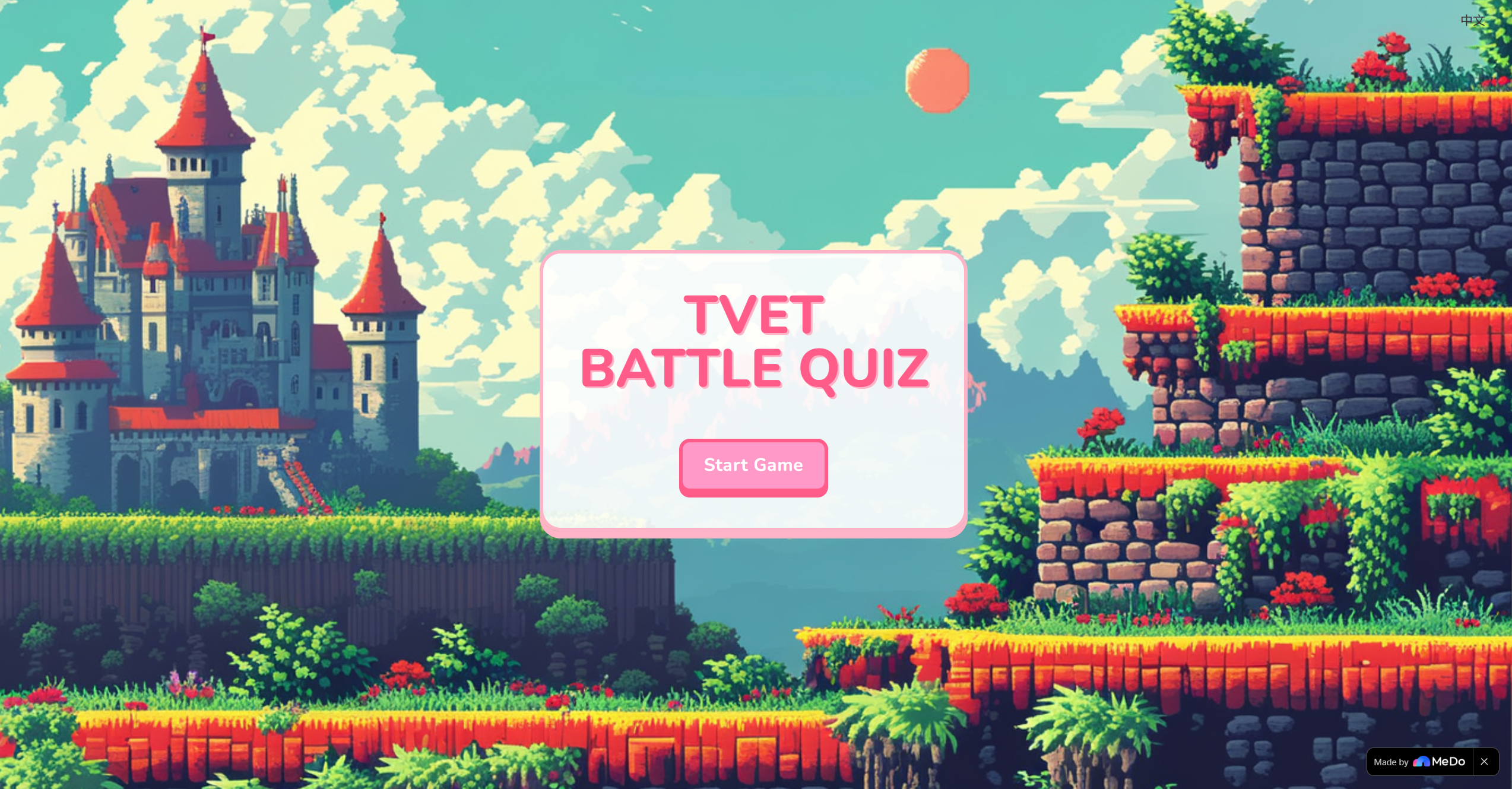
TVET and STEM subjects are often practical, hands-on, and skill-based, but many students still experience quizzes and revision as something stressful or boring. I wanted to create a learning experience that feels more like a game than a test. The idea was inspired by the excitement of Pokémon-style turn-based battles and the competitive energy of Kahoot-style quizzes. By combining both ideas into one original educational game, TVET Battle Quiz aims to make students learn through fun battles, quick thinking, and active participation.
What it does
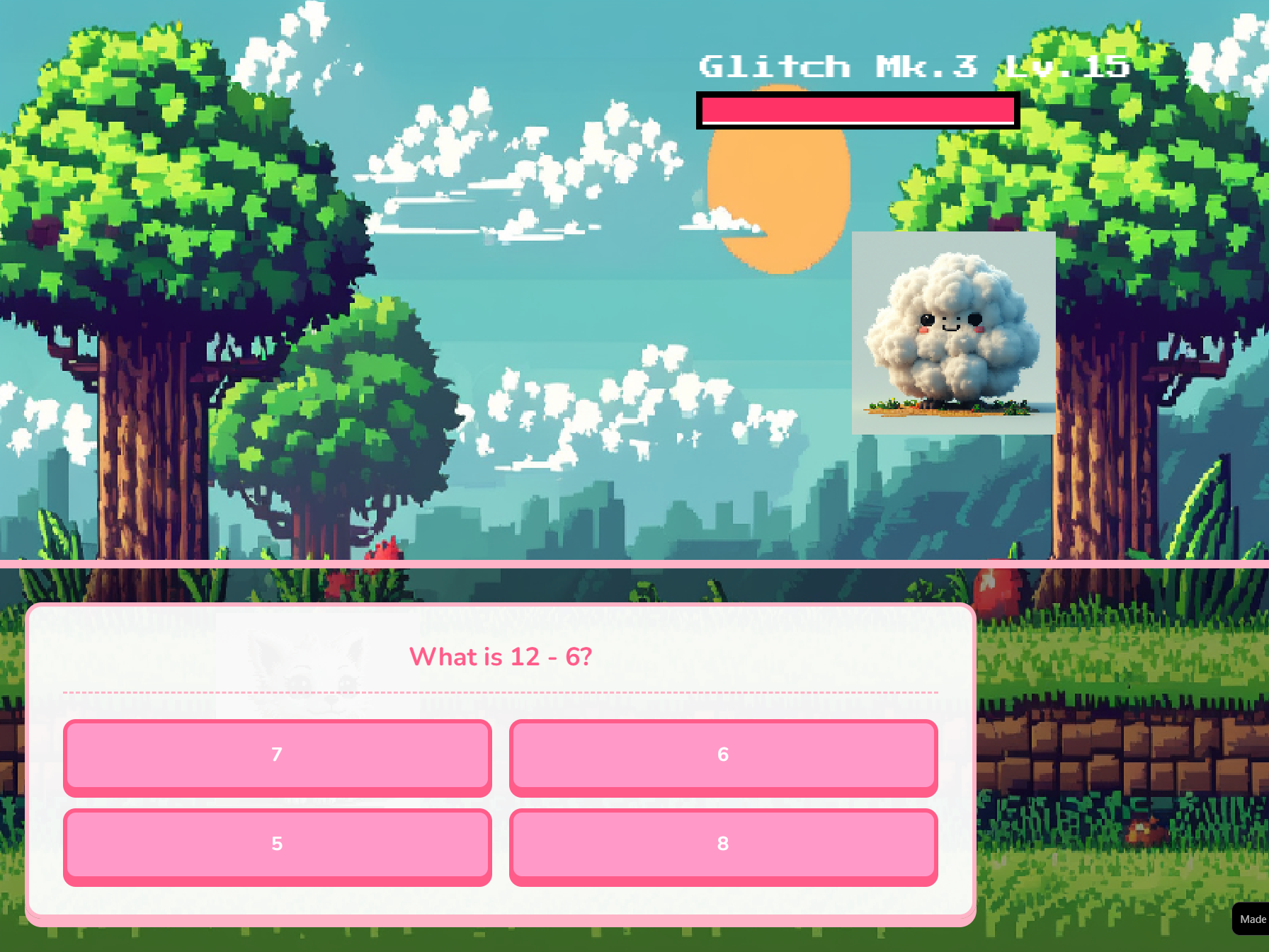
TVET Battle Quiz is a 2D pixel-art educational quiz battle game where students answer questions to attack, defend, and win battles. The player enters a battle scene with their character or learning companion, while the opponent appears on the other side. During each turn, a quiz question appears with four answer choices.
If the player answers correctly, their character performs an attack and reduces the opponent’s HP. If the answer is wrong, the attack may miss, the player may lose HP, or the opponent may counterattack. The game can include TVET and STEM topics such as electronics, robotics, programming, mathematics, science, engineering, and vocational skills.
The main goal is to turn learning into an exciting battle experience where knowledge becomes the player’s power.
How we built it
We built the project by first designing the core gameplay concept: a quiz system connected to a battle system. The game follows a simple loop: display a question, let the player choose an answer, check whether the answer is correct, trigger the battle animation, update the HP, show a short explanation, and continue until one side wins.
The visual concept uses a retro pixel-art battle style inspired by classic handheld RPG games, but with original characters, original enemies, original skills, and an educational theme. The quiz content is designed around TVET and STEM learning areas, making the game suitable for students, classrooms, and learning activities.
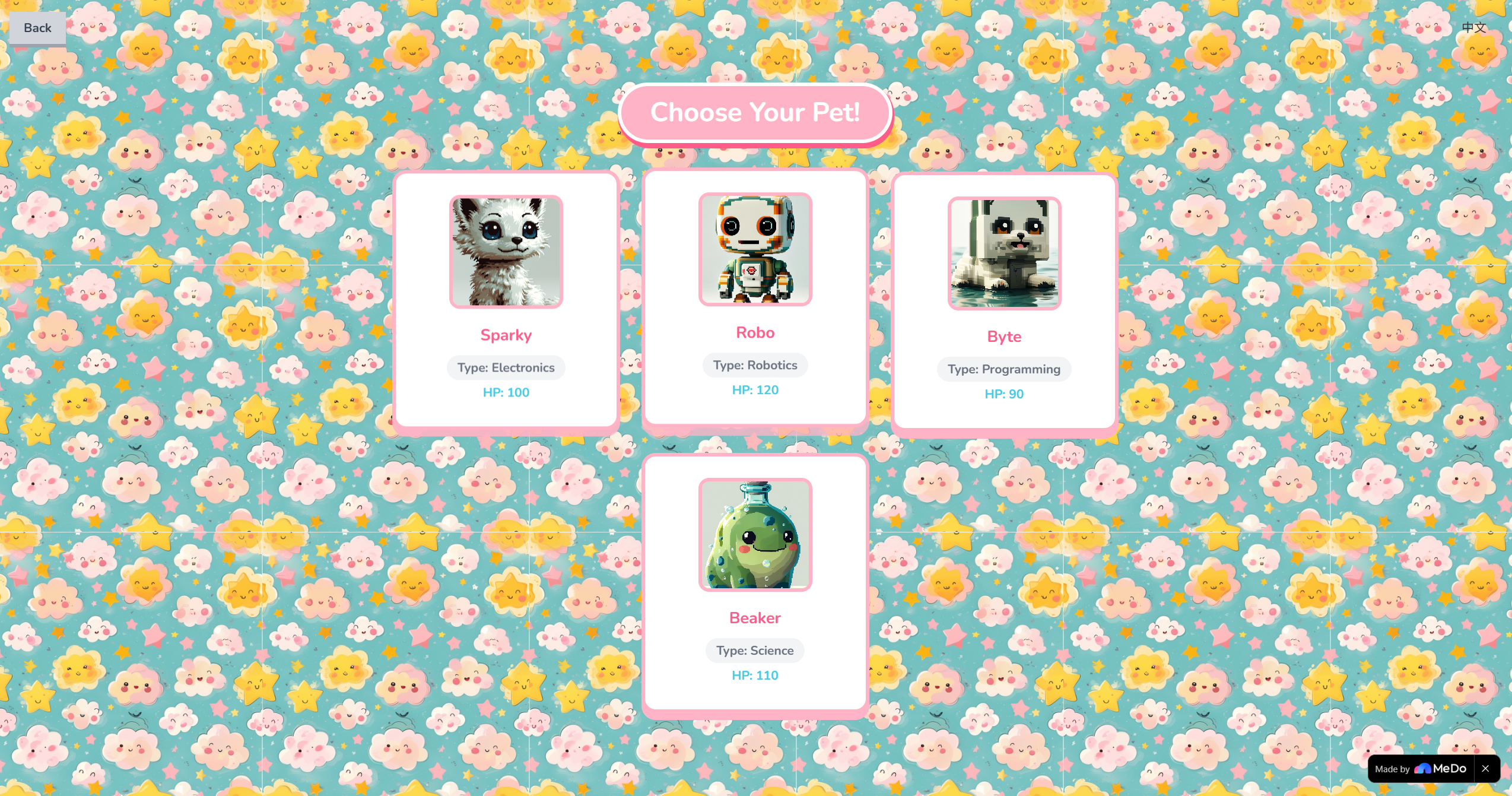
We also planned different character themes, such as electronics, robotics, programming, science, and engineering. Each theme can have its own battle skills, such as electric circuit attacks, robotic strikes, digital code blasts, experiment-based skills, and mechanical attacks.
Challenges we ran into
One of the main challenges was balancing education and entertainment. If the game feels too much like a normal quiz, it may become boring. If it focuses too much on battle effects, the learning purpose may become weak. Therefore, we had to design the game so that every attack, skill, and battle result is directly connected to answering questions.
Another challenge was keeping the idea original while still clearly showing the inspiration from Pokémon-style battles and Kahoot-style quizzes. We needed to avoid copying existing characters, names, UI, or assets, while still keeping the familiar feeling of turn-based quiz battles.
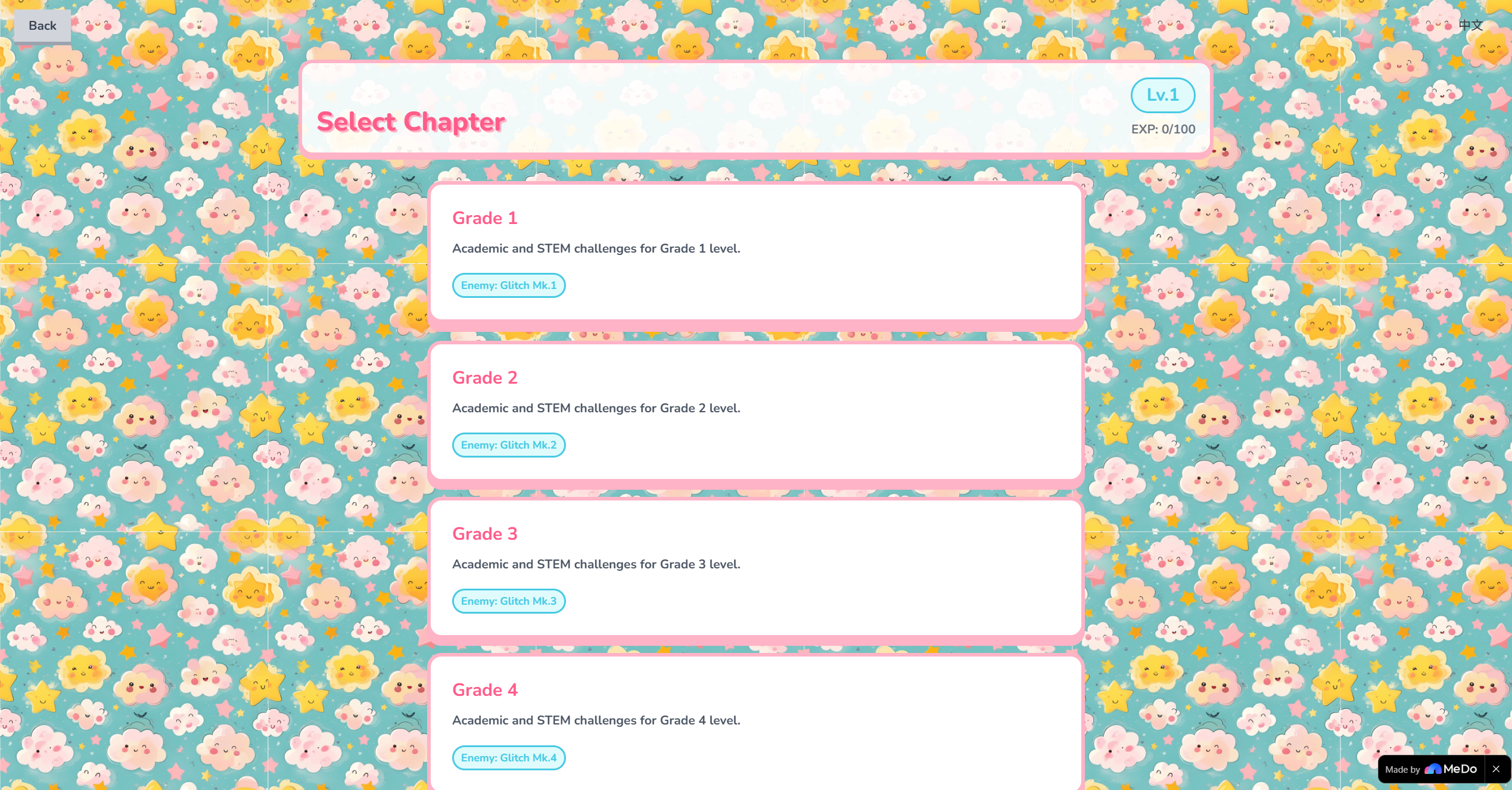
We also had to think about how to make the game suitable for TVET and STEM subjects, because these topics can include calculations, circuits, coding, tools, machines, and real-world problem-solving. This required us to design a flexible quiz system that can support different types of questions in the future.
Accomplishments that we're proud of
We are proud that TVET Battle Quiz turns a normal classroom quiz into an interactive battle experience. Instead of simply choosing answers, students can see their knowledge create attacks, combos, and progress in the game.
We are also proud of the project’s potential for TVET and STEM education. The game can be used for electronics, robotics, programming, engineering, science, mathematics, and vocational learning. It can motivate students to revise topics, compete with friends, and enjoy learning in a more active way.
Another accomplishment is creating a concept that is simple enough to understand but expandable for future development. The game can start as a basic quiz battle prototype and later grow into a larger educational RPG with more characters, skills, subjects, and classroom features.
What we learned
Through this project, we learned how important it is to design educational technology around student engagement. A good learning tool should not only deliver content, but also make students feel motivated to participate.
We also learned how game mechanics can support learning. HP bars, attacks, combos, levels, and rewards can make students more interested in answering questions and improving their knowledge. At the same time, explanations after each question are important so that students understand the correct answer instead of only focusing on winning.
This project also helped us understand how to combine different game ideas into one original concept while keeping the learning objective clear.
What's next for TVET Battle Quiz
The next step is to improve TVET Battle Quiz with more question types, more subjects, and more interactive features. Future versions can include image-based questions, circuit diagram questions, coding output questions, calculation questions, and real-world problem-solving scenarios.
We also plan to add more characters, enemies, battle arenas, skill animations, and progression systems. Each subject area can have its own character class and special skills. For example, electronics can unlock electric-based attacks, robotics can unlock mechanical skills, and programming can unlock digital skills.
In the future, TVET Battle Quiz can also include a teacher dashboard where teachers can create custom quizzes, track student progress, view scores, and use the game during classroom activities. The long-term goal is to make TVET and STEM learning more fun, competitive, and meaningful for students.

Log in or sign up for Devpost to join the conversation.