-
-
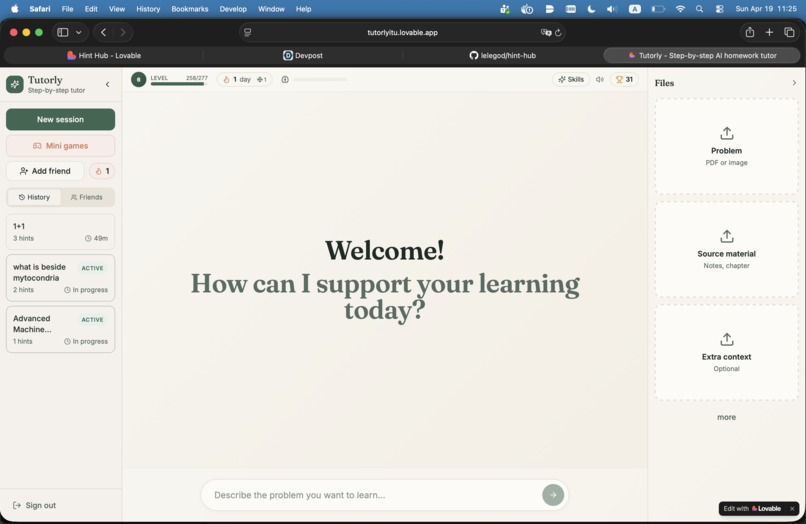
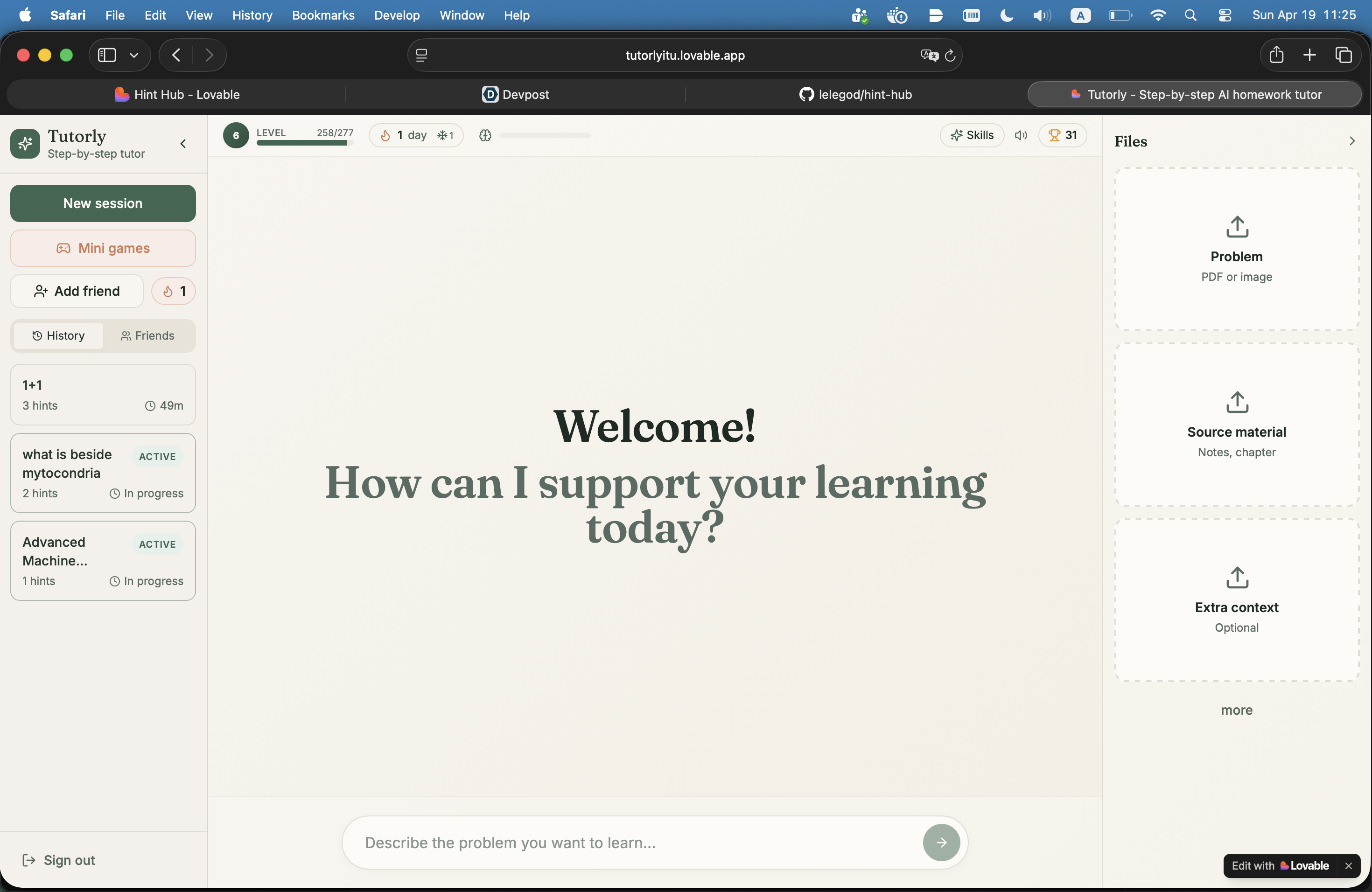
new session
-
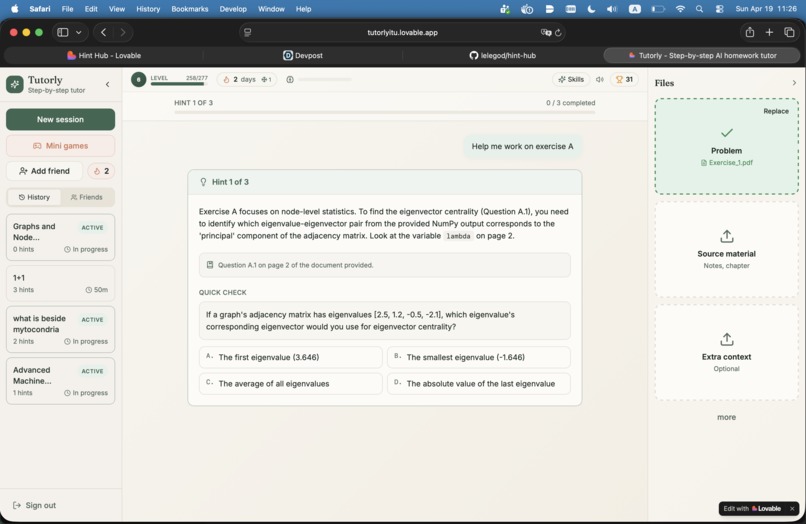
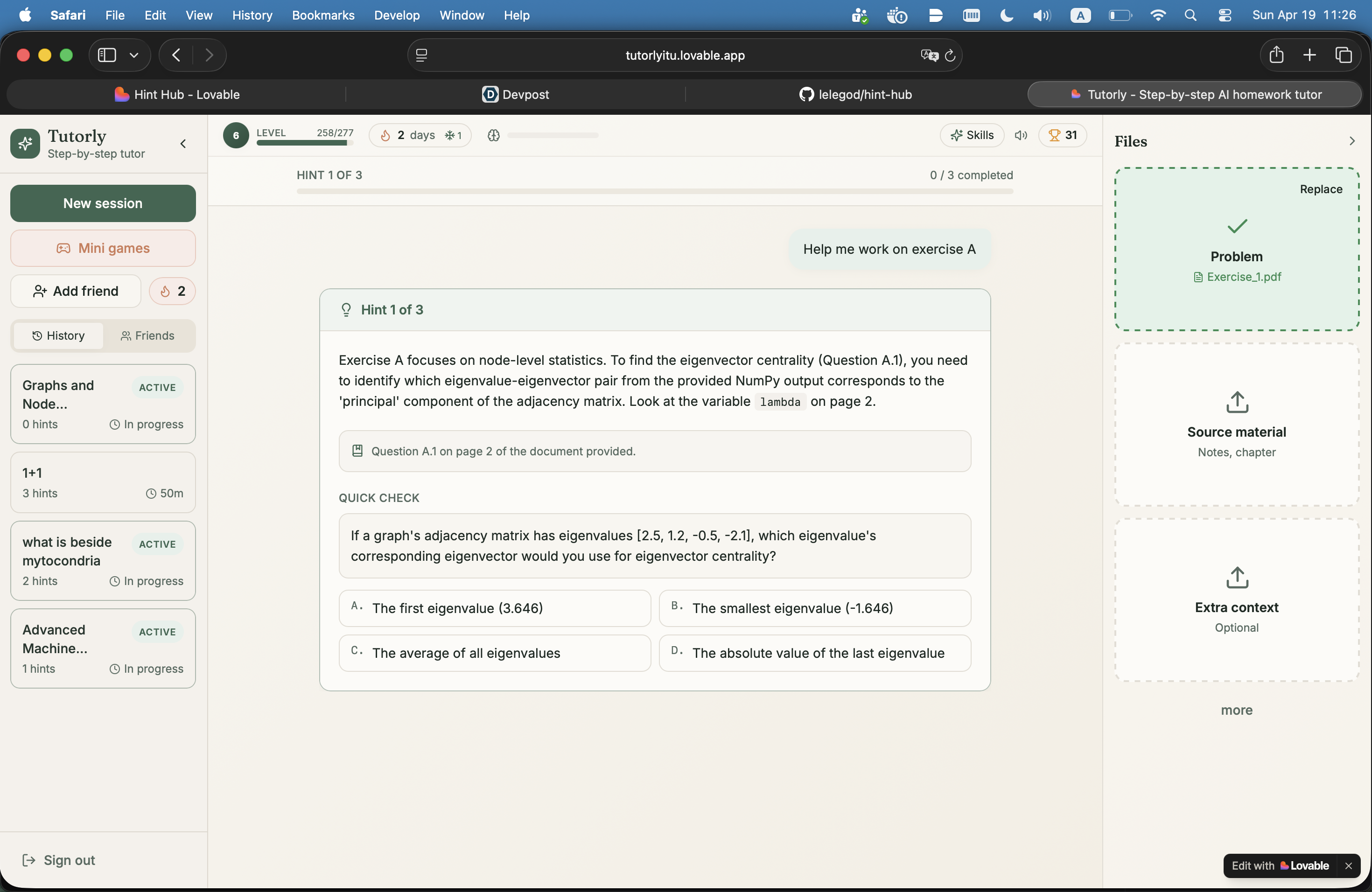
first hint
-
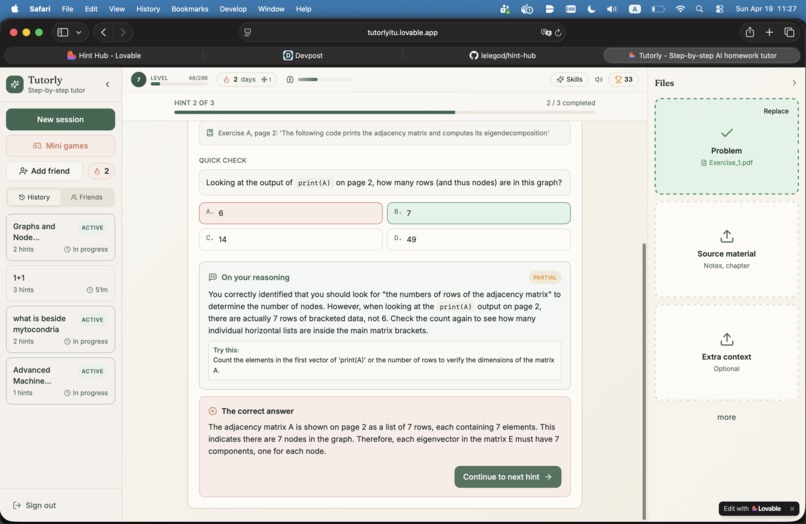
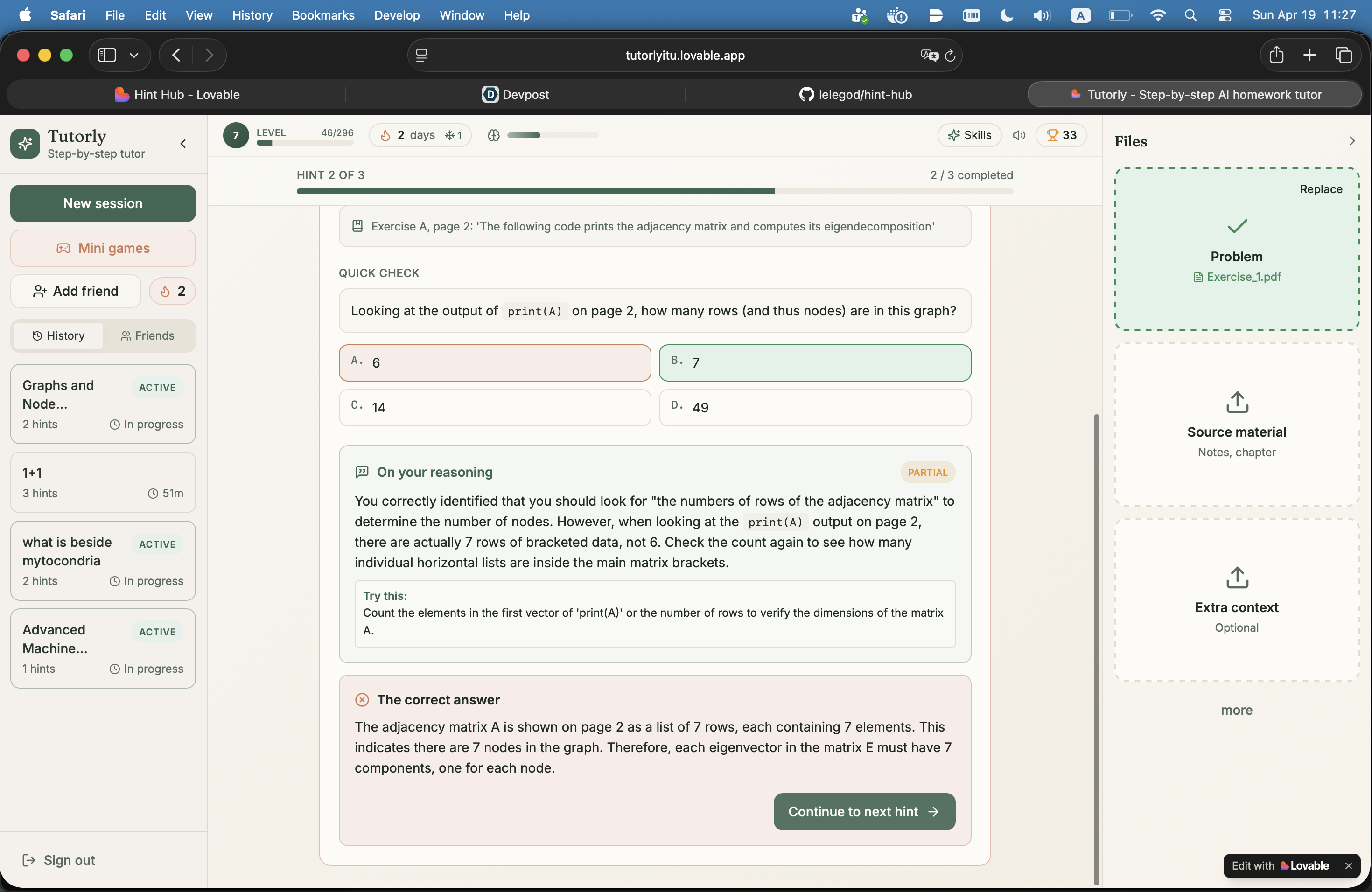
incorrect
-
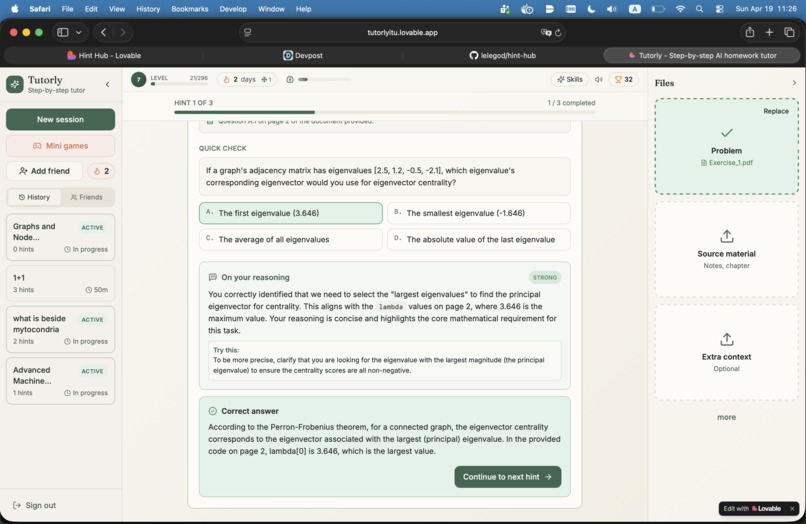
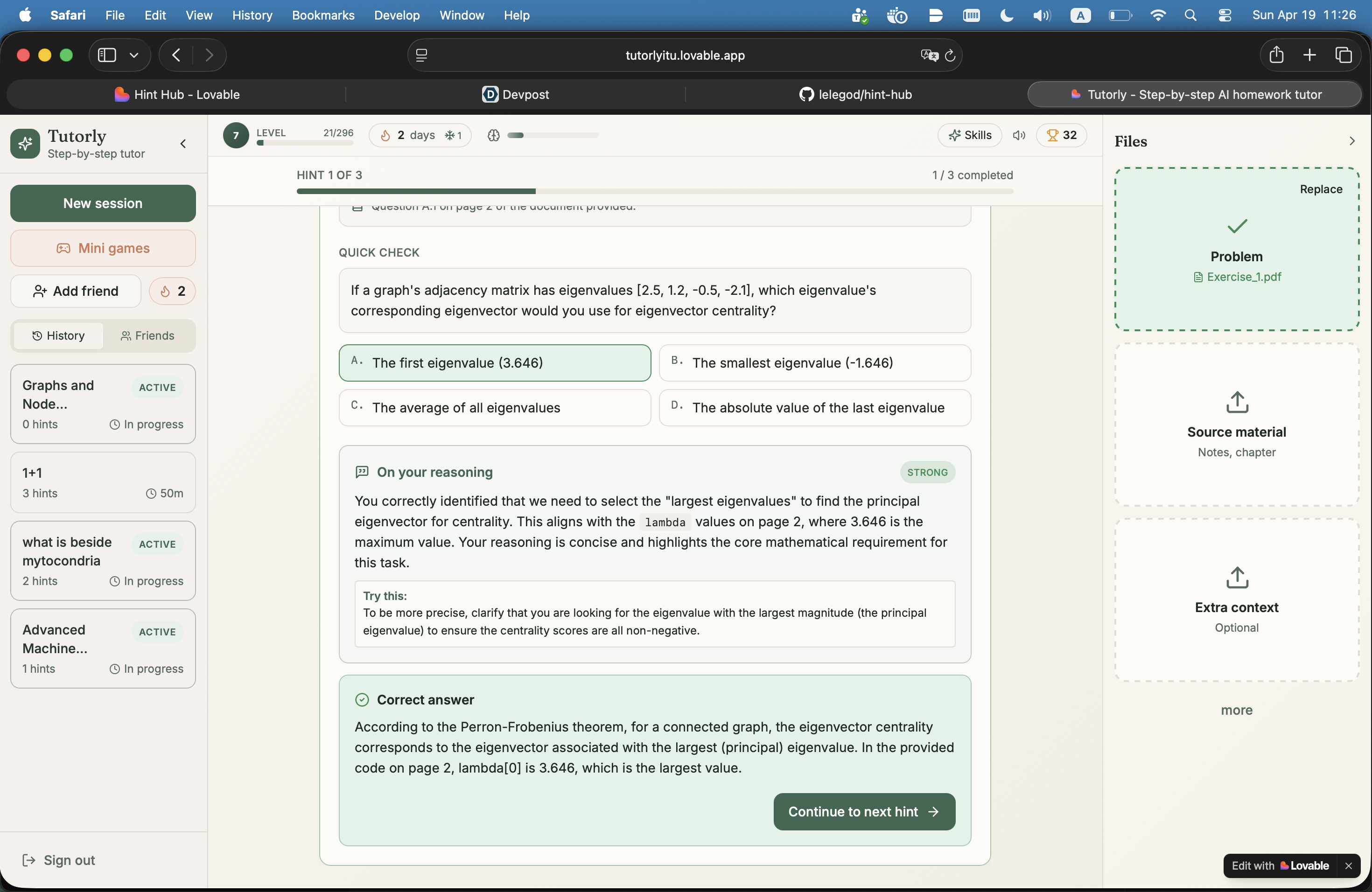
correct
Inspiration
All group members were inspired to create this project because we have personally experienced a common problem with AI in modern learning. While AI tools make it easy to get quick answers, they often replace real understanding. We found ourselves relying on AI to solve problems for us, only to realize later that we had not truly learned or retained the material.
This shared frustration motivated us to rethink how AI could support learning without removing the thinking process. We wanted to build a tool that encourages active learning, curiosity, and long-term understanding rather than passive answer consumption. That is what led to the idea behind Tutorly.
What it does
Tutorly is a personal AI teaching assistant designed to promote real understanding instead of passive answer consumption. Research in psychology and education shows that overreliance on AI tools can reduce critical thinking and long-term retention when students are given solutions too quickly. Tutorly addresses this problem by using hints, games, and guided challenges rather than direct answers. By encouraging active recall and problem-solving, Tutorly helps students retain knowledge and develop stronger learning habits.
How we built it
We built Tutorly using the Lovable platform, which allowed us to quickly transform a research-backed learning concept into a functional product. Lovable enabled smooth iteration and rapid prototyping, allowing us to focus on implementing active learning mechanics inspired by educational research. Its intuitive workflow made it possible to design adaptive games, streak systems, and hint-based guidance without technical friction.
Challenges we ran into
One of our biggest challenges was designing an AI experience that aligns with scientific findings about effective learning. Many AI systems prioritize speed and accuracy, while studies suggest that struggle, feedback, and delayed answers are essential for deep understanding. Translating these principles into an engaging and usable product required careful balancing between guidance and independence. Iteration and testing were key to solving this challenge.
Accomplishments that we're proud of
We are proud of creating a product that directly responds to a scientifically recognized problem in modern education: AI replacing learning instead of supporting it. Tutorly demonstrates that AI can be designed to strengthen critical thinking rather than weaken it. We are also proud of how effectively we used Lovable to bring a research-inspired idea to life within a short development timeframe.
What we learned
Through this project, we learned not only how powerful Lovable is as a creation platform, but also how important it is to design AI responsibly. Educational research influenced many of our design choices, reinforcing the idea that meaningful learning happens through active engagement. Lovable allowed us to implement these principles smoothly, showing us how technology can support science-backed learning when used thoughtfully.
What's next for Tutorly
Next, we want to build on scientific motivation research by increasing long-term engagement through milestone-based streak rewards. For example, students who maintain a 15-day learning streak could unlock new game modes or advanced challenges. We also plan to deepen personalization by adapting activities based on how each student learns best, further aligning Tutorly with proven learning science. Our long-term goal is to make Tutorly a daily learning companion that supports consistent, research-backed study habits.
Our goal is to make Tutorly not just a study tool, but a long-term learning companion that students want to return to every day.
Built With
- gemini
- lovable
- react
- supabase
- typescript
- vite


Log in or sign up for Devpost to join the conversation.