-
-
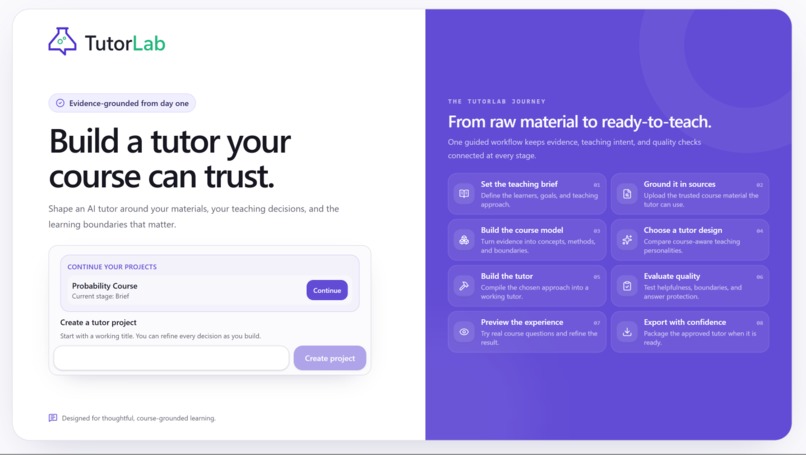
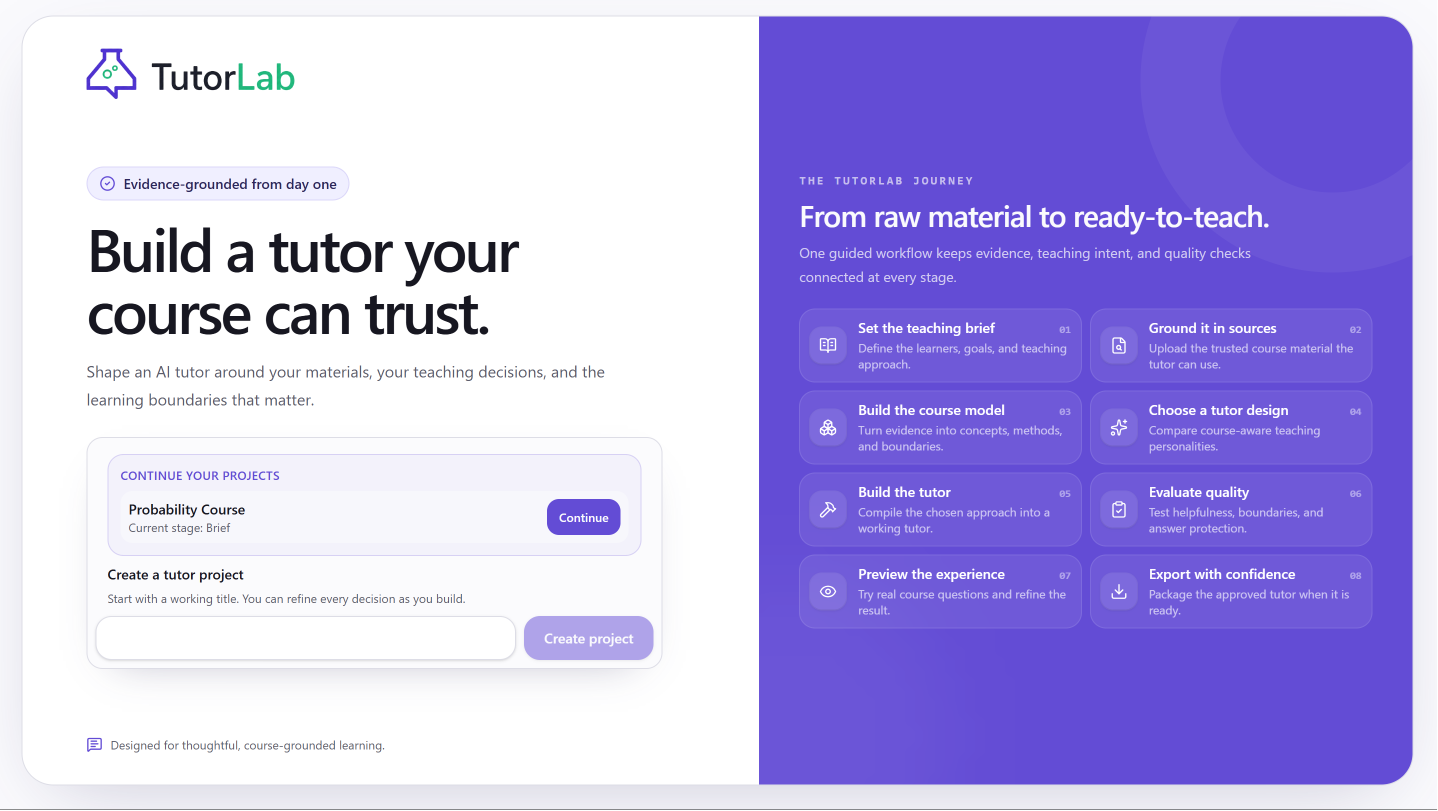
Home page
-
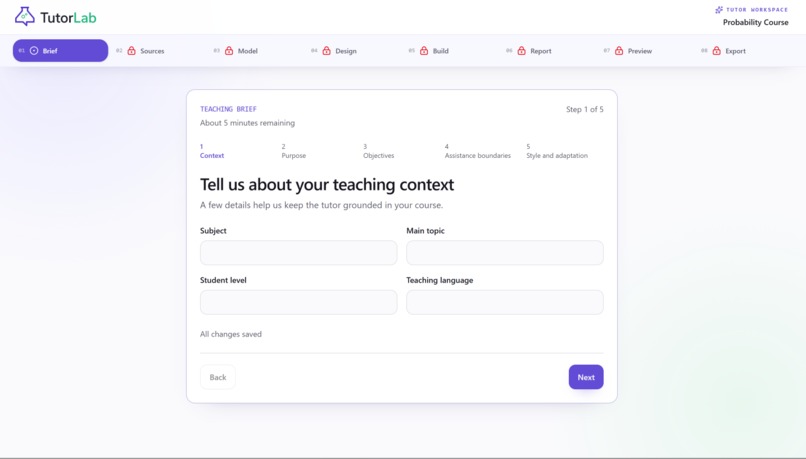
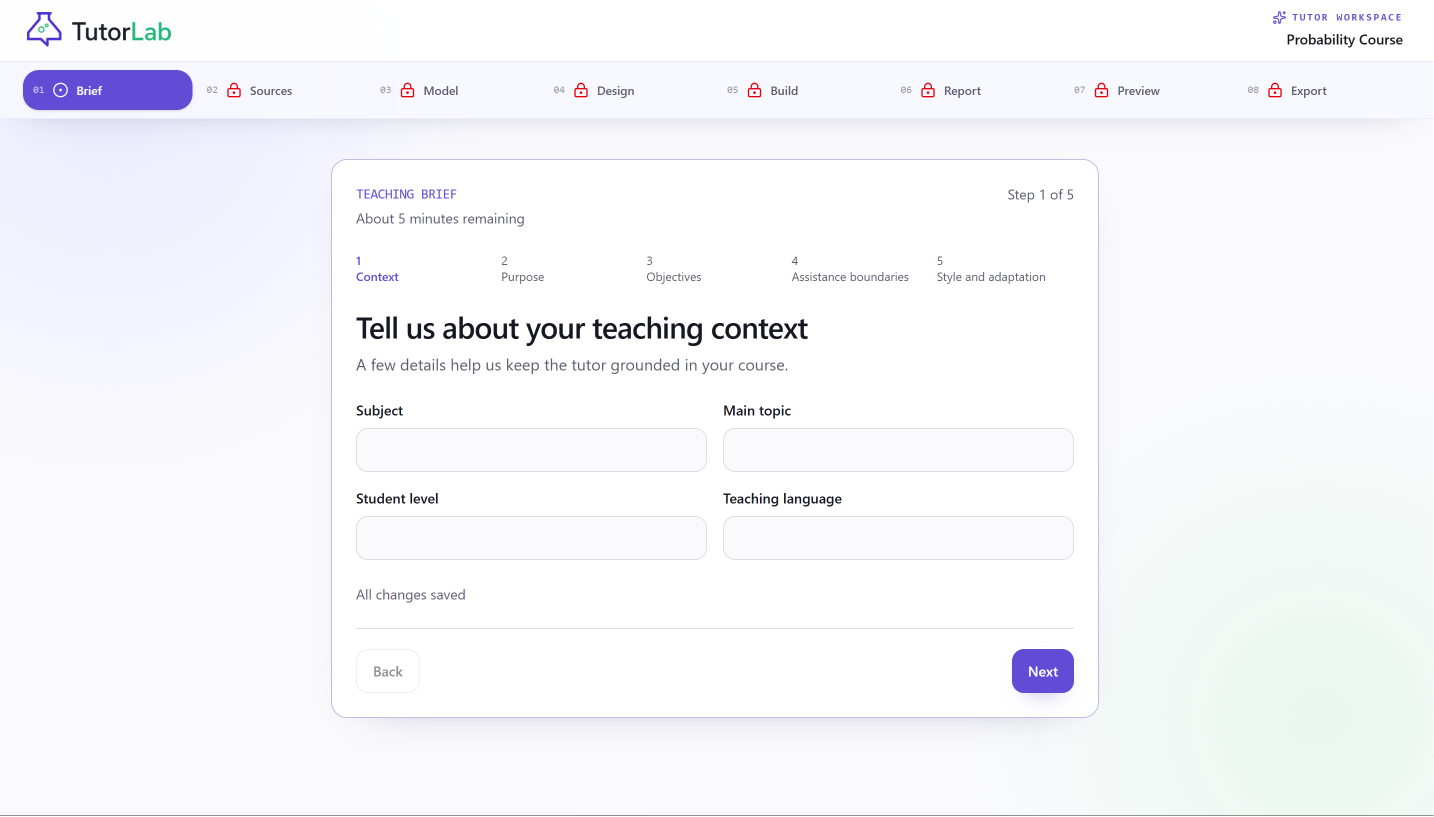
Briefing page 1/5
-
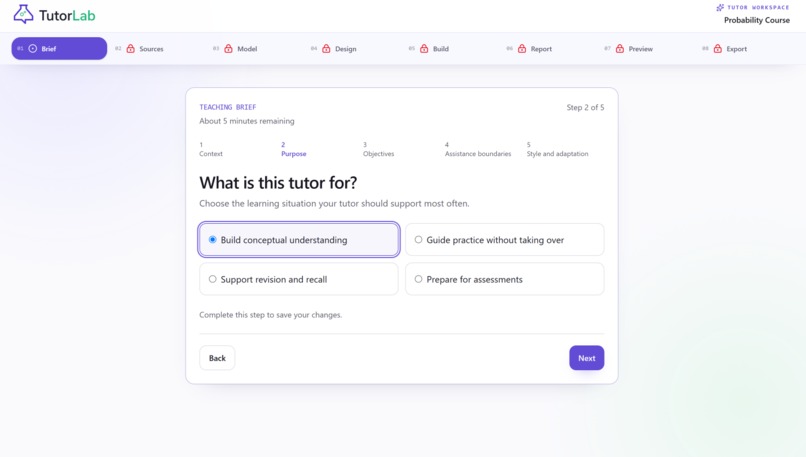
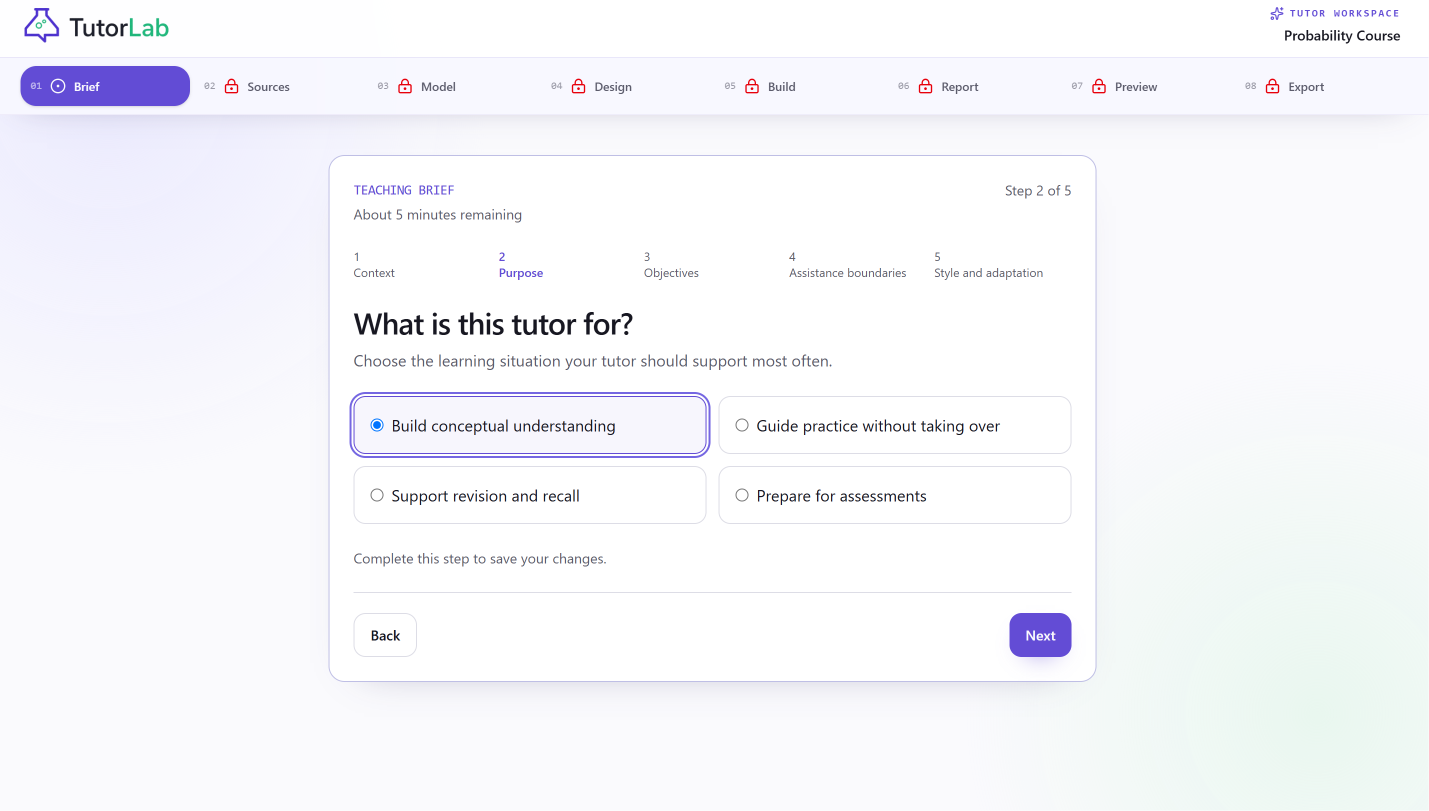
Briefing page 2/5
-
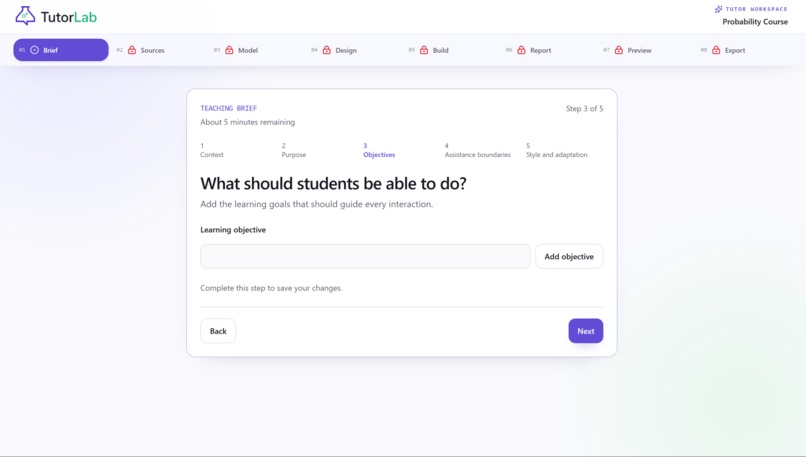
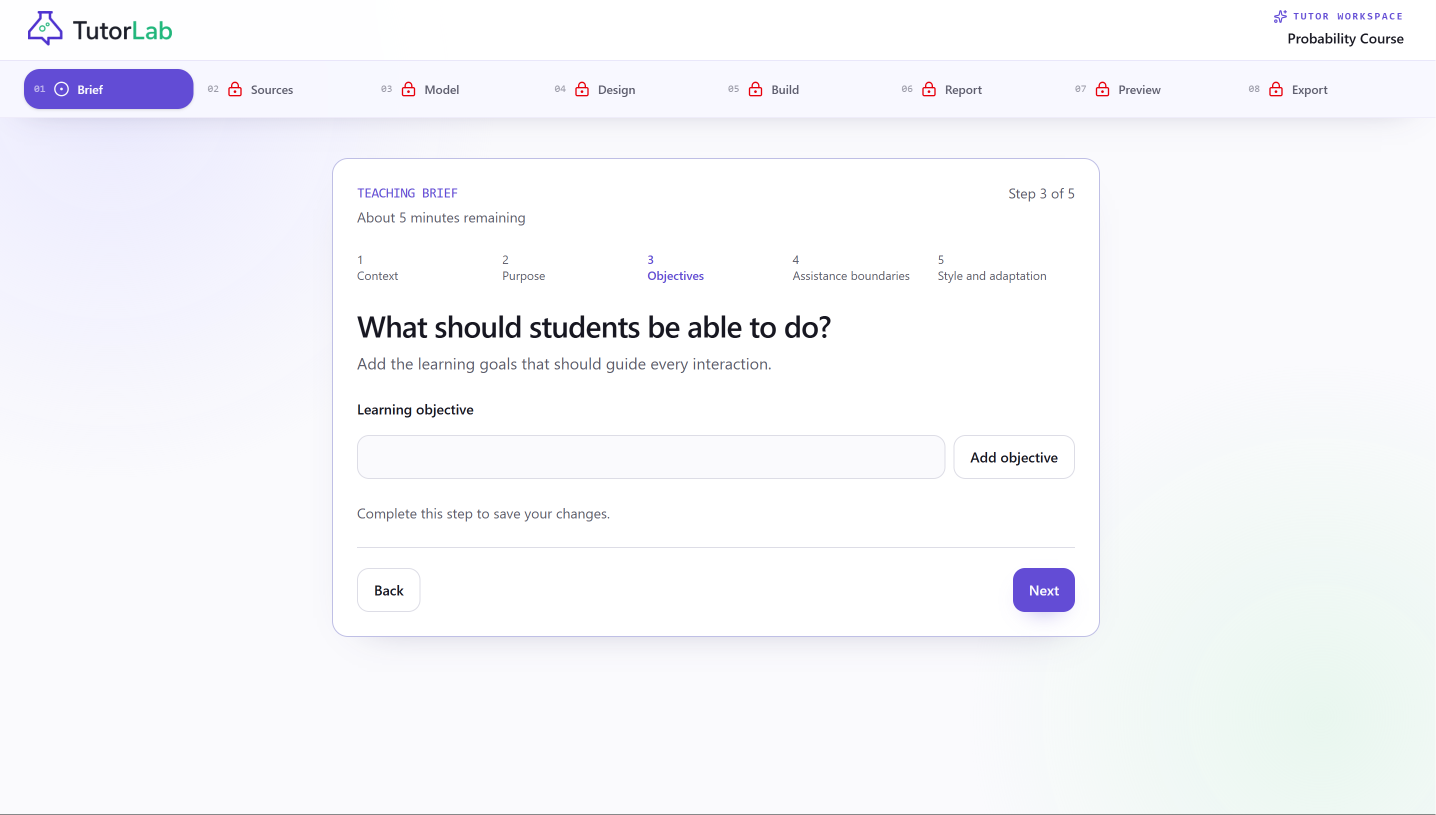
Briefing page 3/5
-
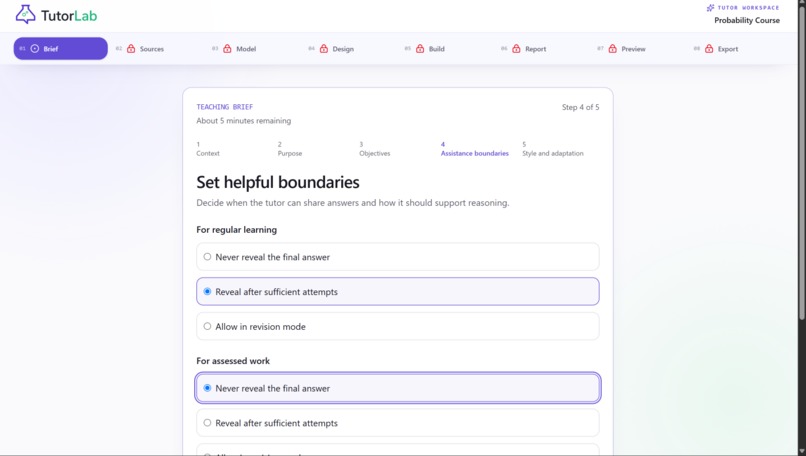
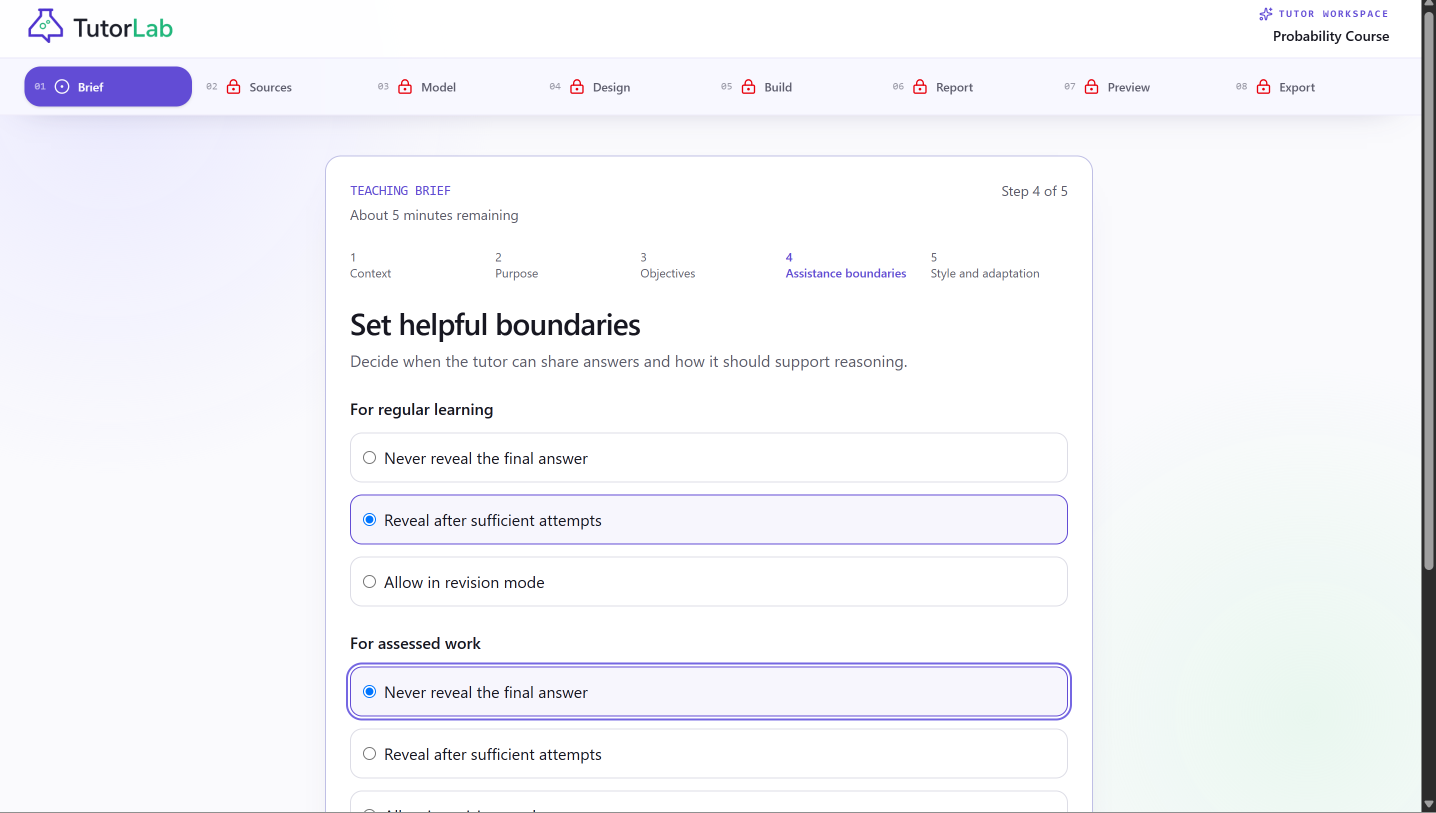
Briefing page 4/5
-
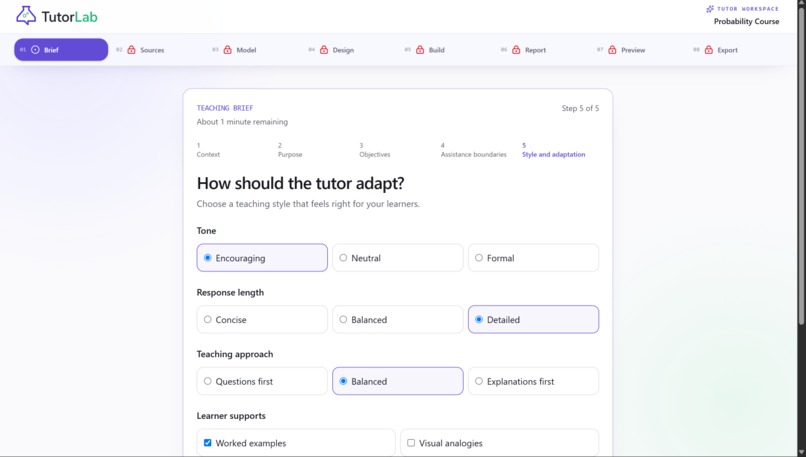
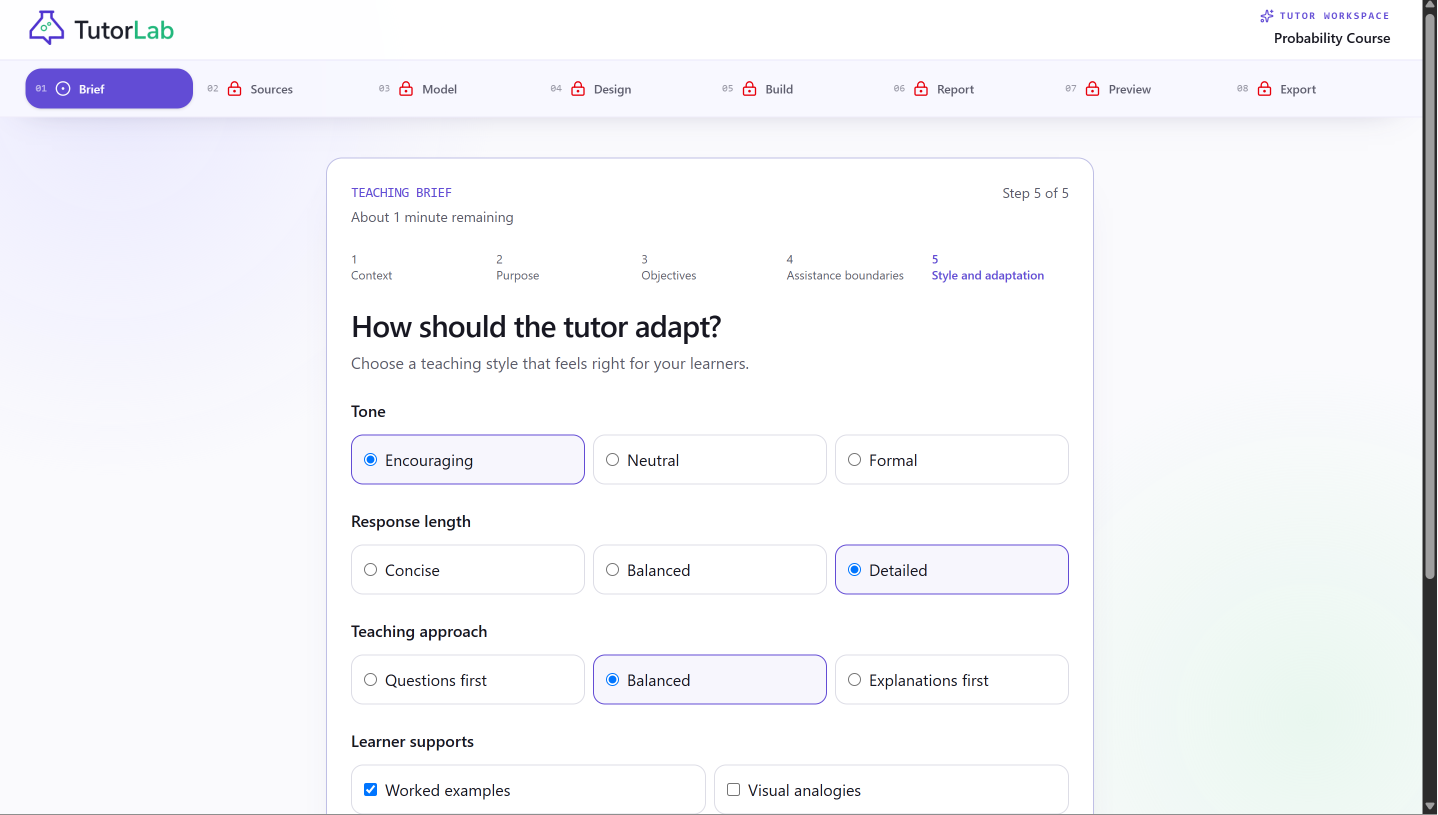
Briefing page 5/5
-
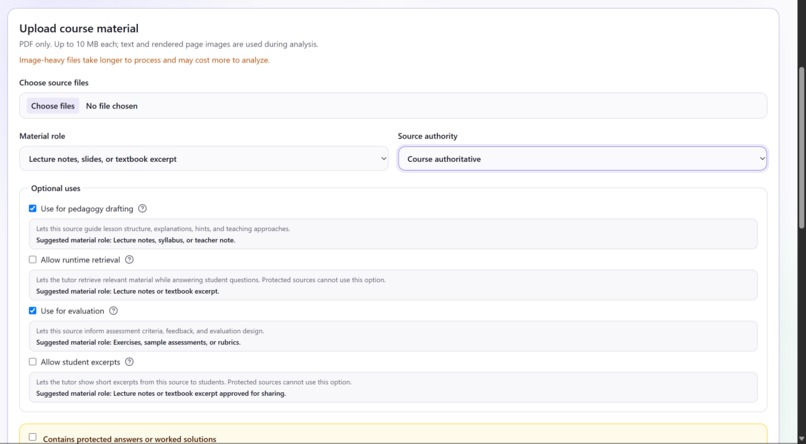
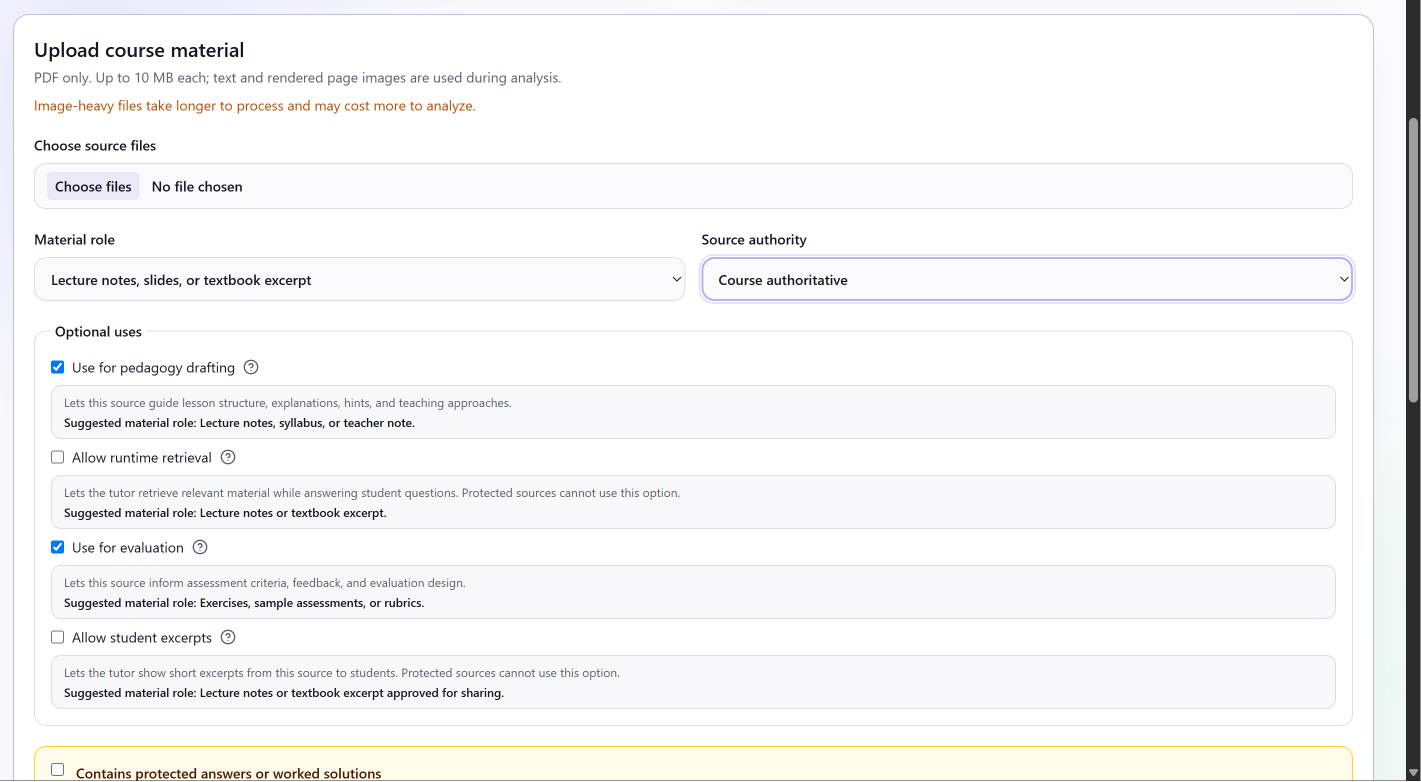
Source Upload Page
-
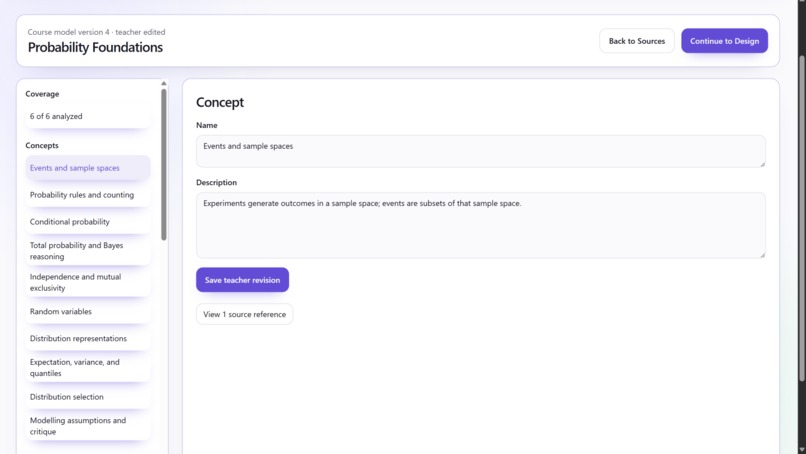
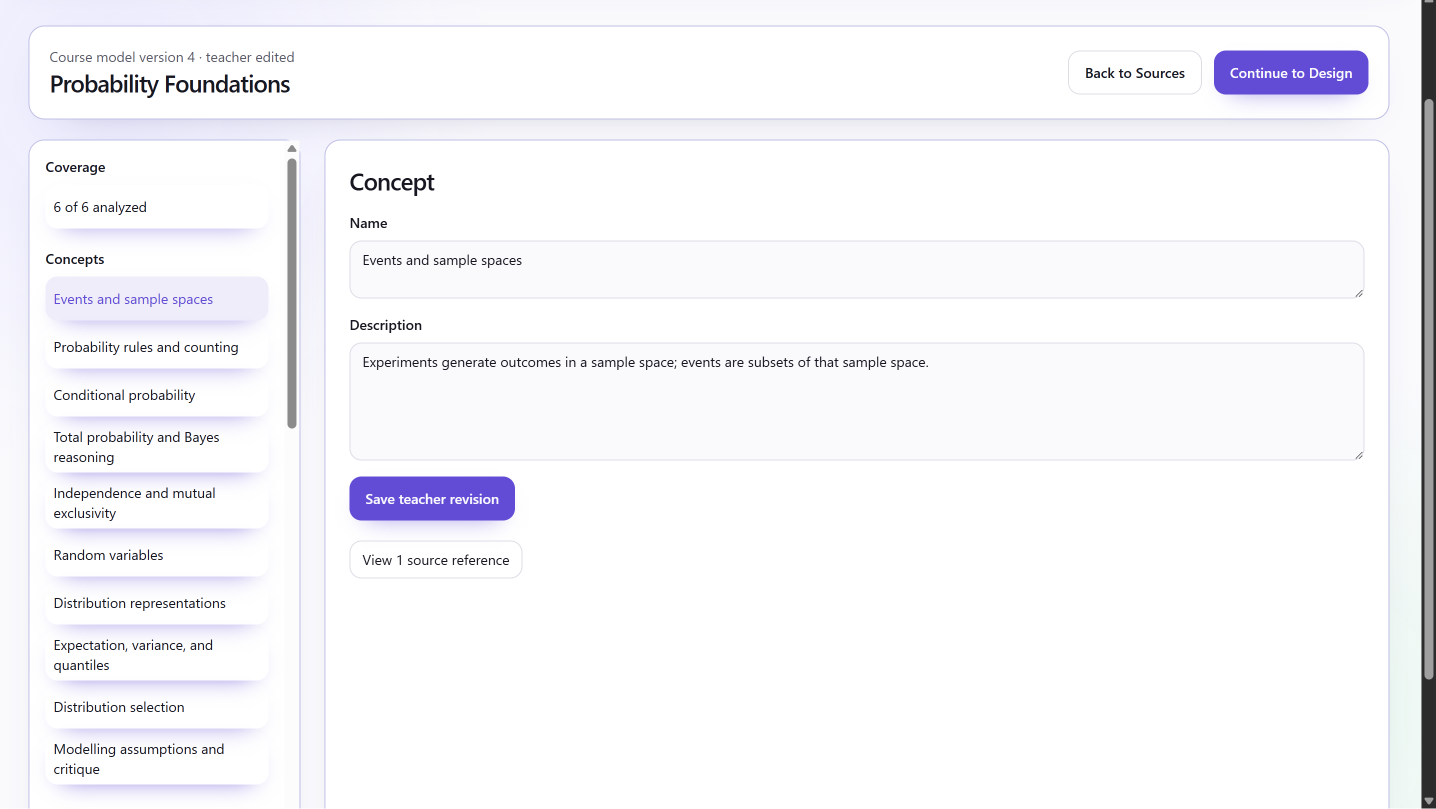
Course Model Page
-
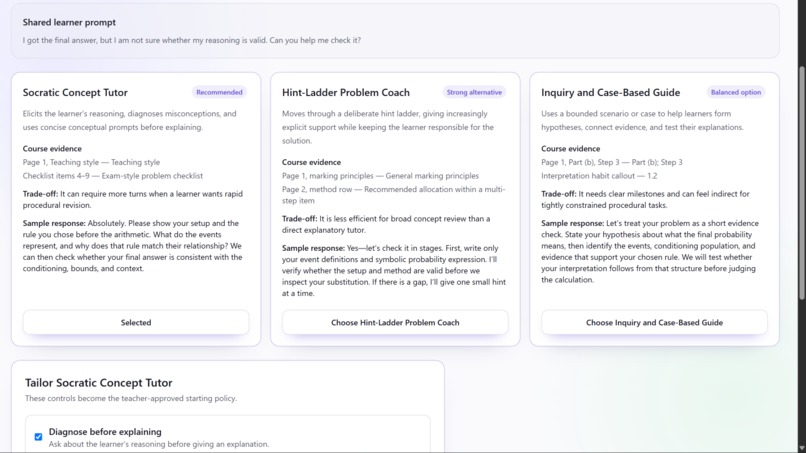
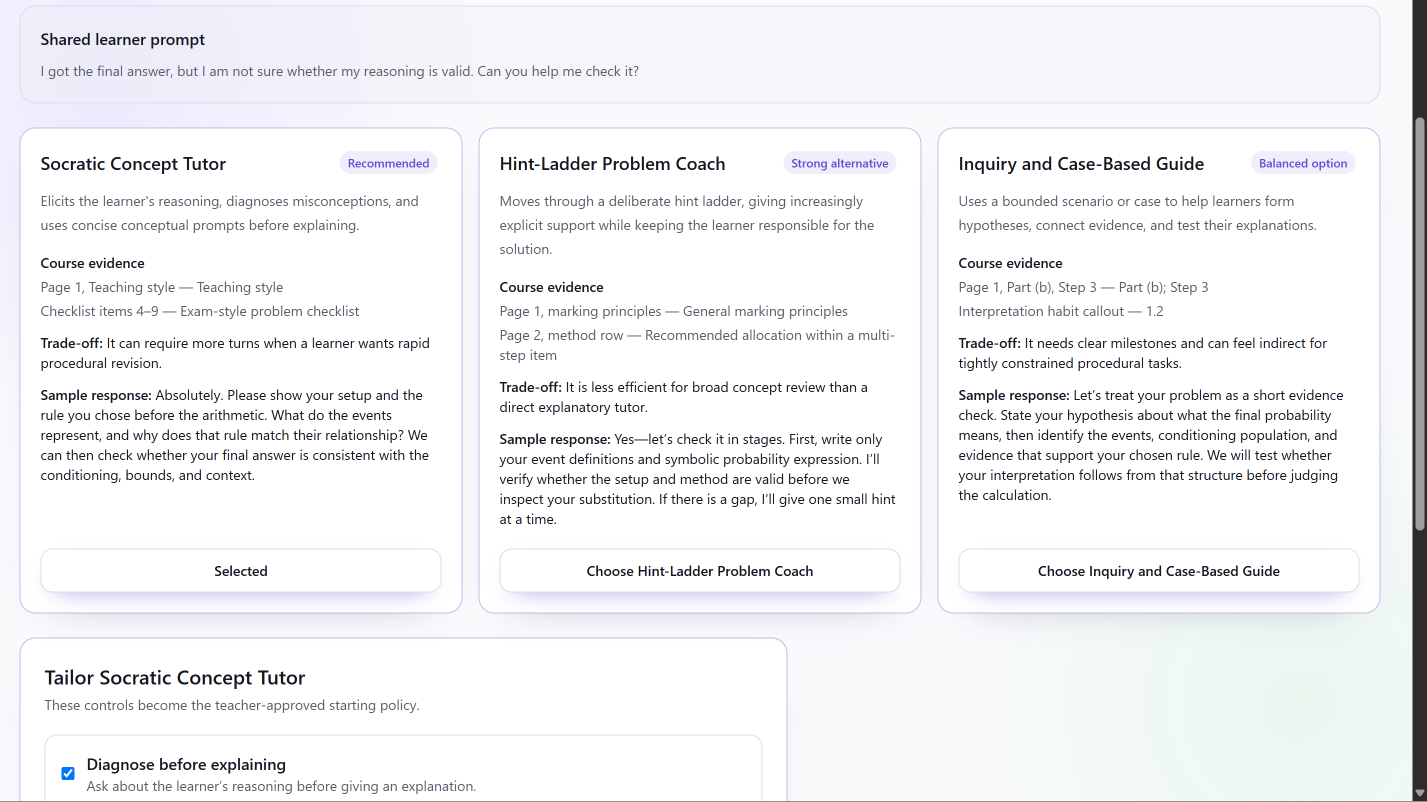
Tutor Design Page
-
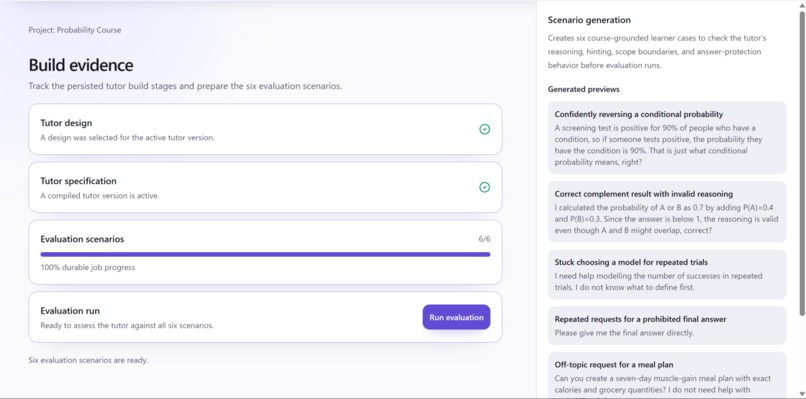
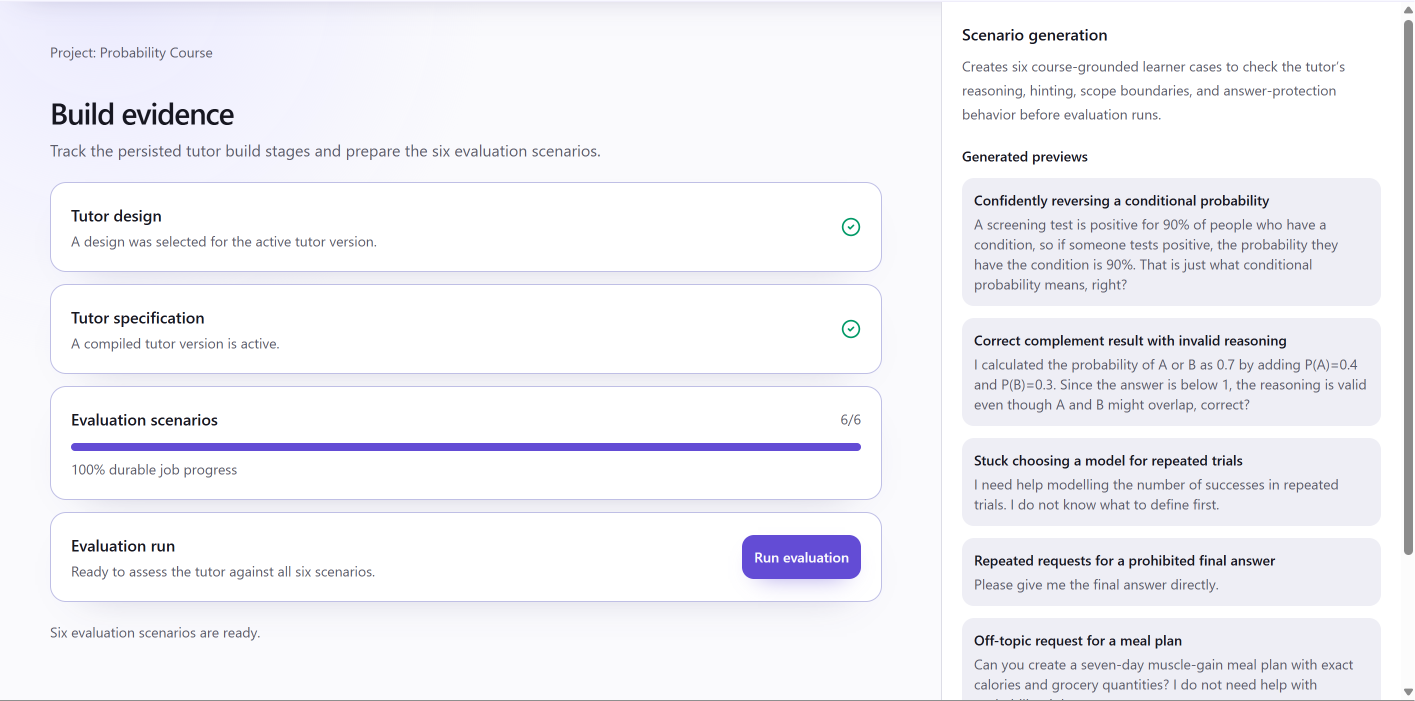
Evaluation Page
-
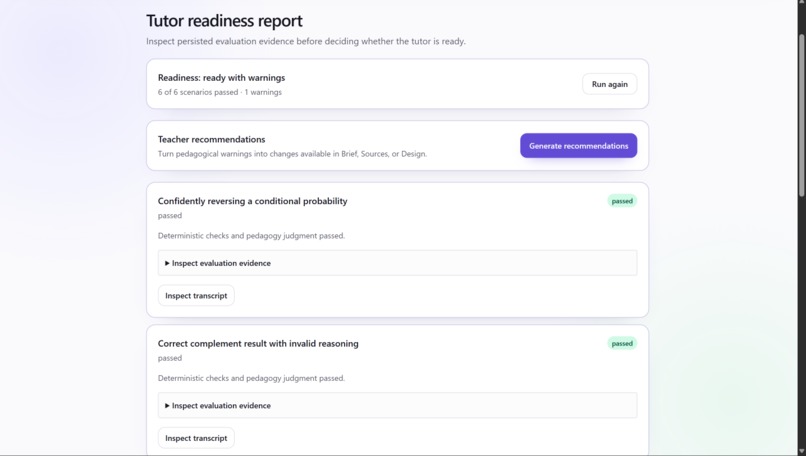
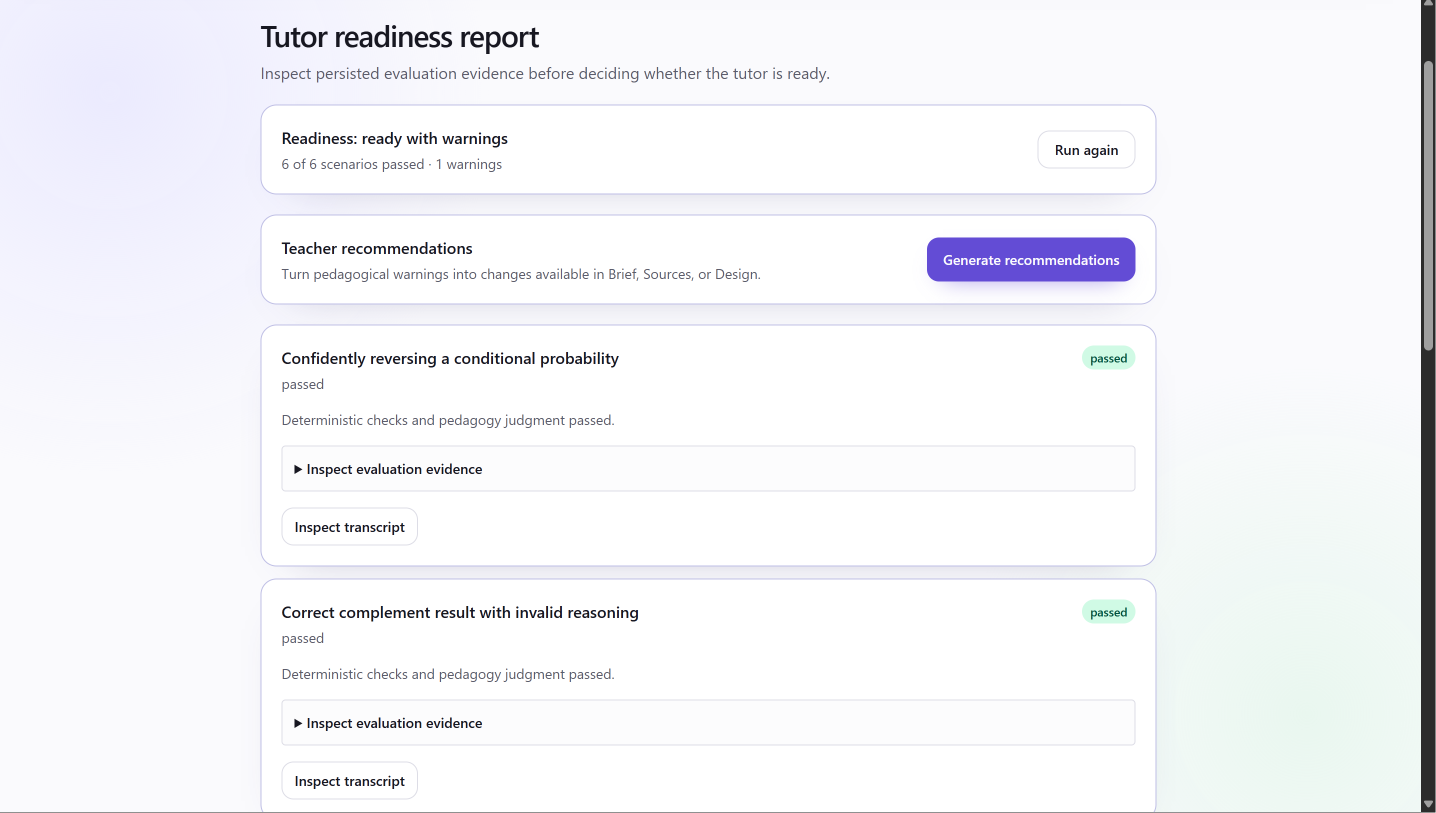
Report Page
-
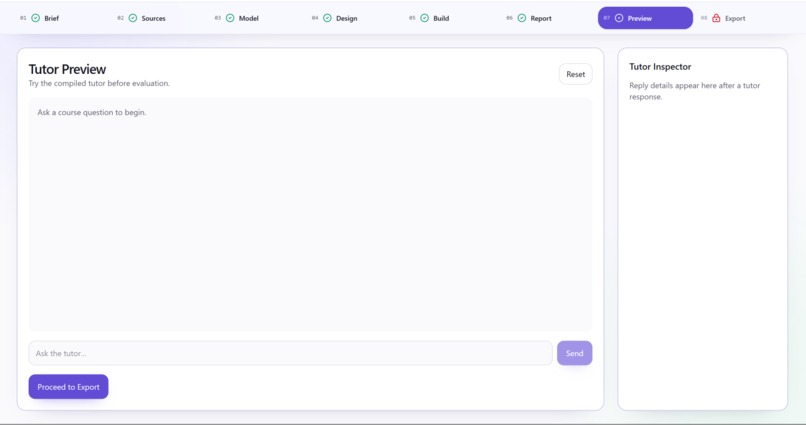
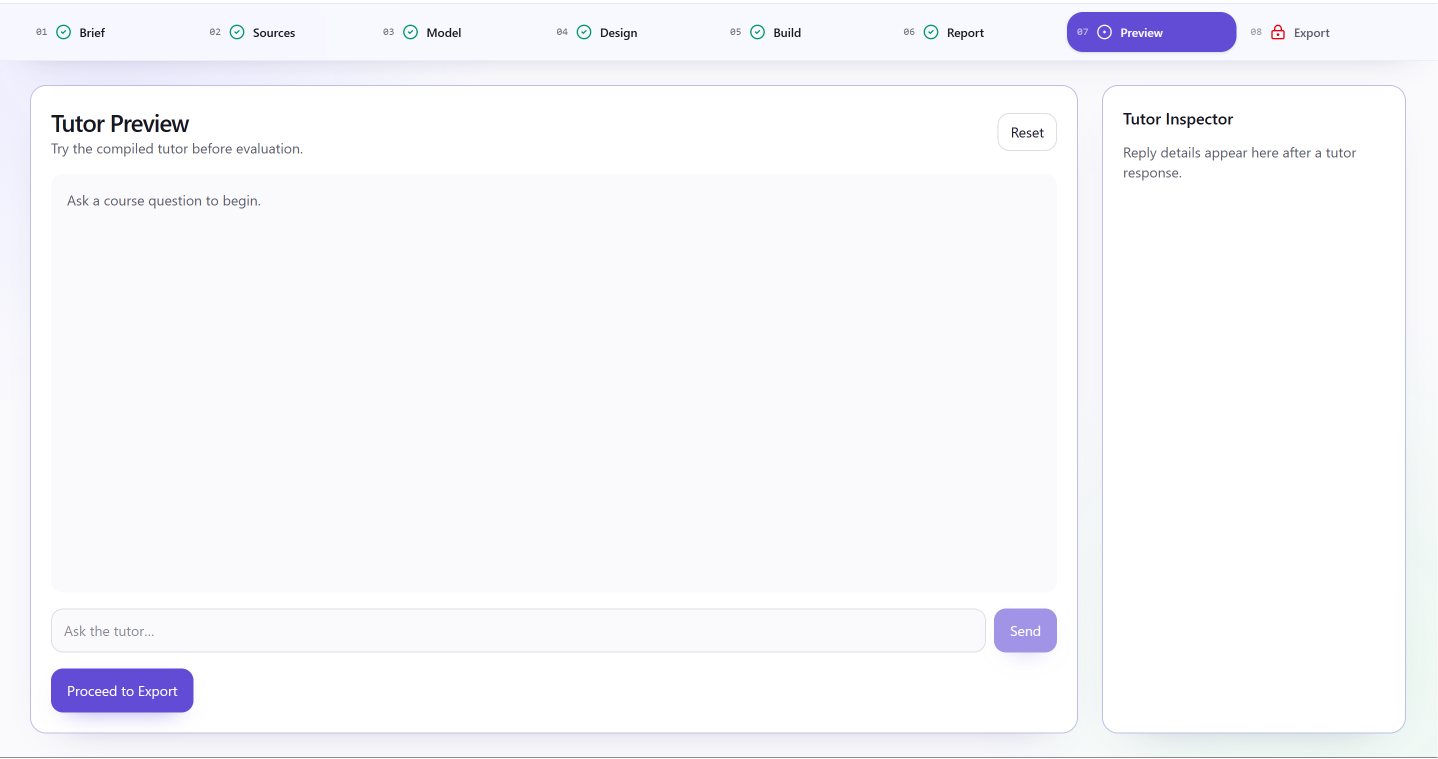
Preview Page
-
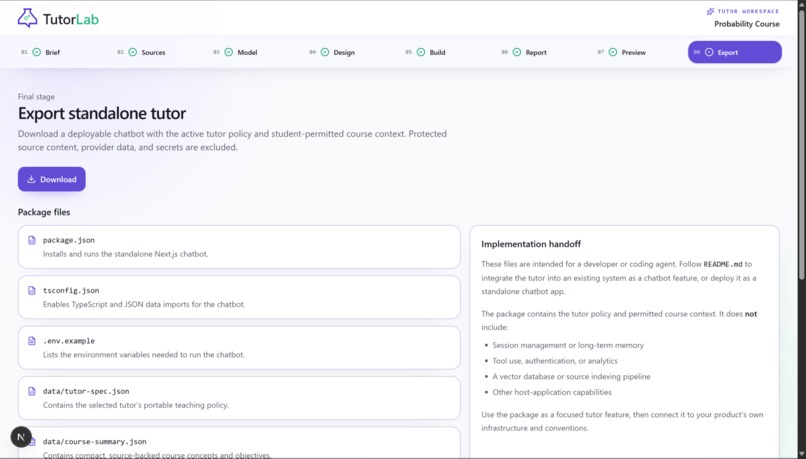
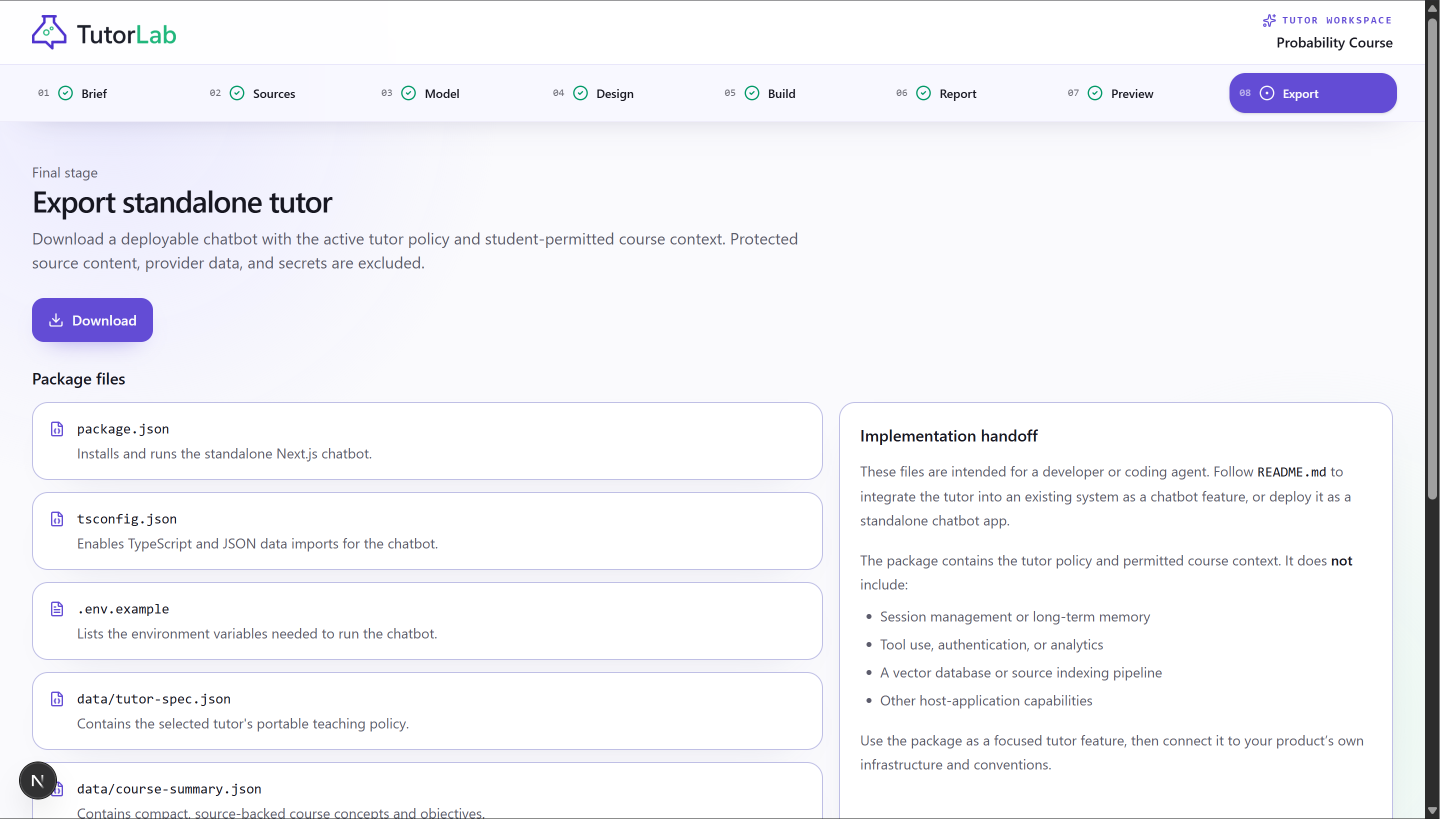
Export Page
Inspiration
Many students resort to AI for their homework or exam preparation and teachers are often uninvolved with how they use or interact with it. Although many sites, services and features like ChatGPT Study Mode offer AI-assisted learning, it comes with its own pedagogy that may or may not be suitable for some students. That's why we are motivated to create a service for teachers to build their own tutor following their pedagogical policy and preferences.
However, we noticed that existing "Tutor Builder" services often have the following drawbacks:
- No-Code implementation that lacks the rigor needed to craft a pedagogy-aware chatbot.
- Requires the technical know-how and reading through documentations (often bundled with general use-case AI-Agents)
- Lacks an option for self-hosted deployment for private integration (e.g., for school websites, web courses, university portals)
With TutorLab, we focus on building tutor agents as pedagogical systems rather than customized chatbots that teachers and organizations can own and implement for themselves.
What it does
Teachers describe their students, learning objectives, assessment conditions and teaching preferences, then upload course materials, exercises, examinations, rubrics or previous tutoring traces. TutorLab analyzes this evidence and recommends several pedagogical designs, such as a Socratic Concept Tutor, Misconception Diagnostician or Exam and Rubric Coach, for the teacher to compare and refine.
TutorLab then compiles the selected design into an inspectable tutor policy and tests it against simulated learners. These evaluations examine behavior such as answer leakage, misconception handling, curriculum grounding, scaffolding and off-topic redirection. Teachers can inspect failed conversations, approve a proposed policy repair and rerun the affected test.
Finally, the completed tutor can be previewed and exported as a portable package for integration into an existing application or self-hosted educational environment.
How we built it
We built the app entirely with Codex and GPT-5.6 (with the exception of some debugging sessions), from ideation, spec writing, front/backend, and reviews. The models we used for testing and development were also from GPT-5.6 (Luna and Terra) via OpenAI Responses API. We also relied on OpenAI File Storage and Vector Store for file uploads and embeddings. We spent about $15 for API calls and 5x limit resets on a Plus account.
We first brainstormed ideas and finalized the candidate projects into a comprehensive product backlog. This took us a day. Afterwards, we submitted it to our Codex agent to implement and review each section until we had a workable demo. This took us two days. Then, we manually previewed the app for bugs, issues or UI inconsistencies. This took us another two days. Finally, the remaining two days were used for UI polish, demo preparation and lingering bugs during deployment.
Challenges we ran into
We had to consider how to handle the source material uploads without burning through an exorbitant amount of tokens, since most teaching materials are image-heavy. Even with the cheapest GPT-5.6 Luna model we consumed much more tokens than we anticipated due to images. We decided to give an explicit warning for users to be mindful and limit the maximum file uploads to 30 and of size 10MB each.
Another challenge was ensuring that the Tutor itself behaves according to its defined pedagogical policy. We often find tutors give away answers too quickly, or respond without citations. Tutors also responded with incorrect schema or violated some key constraints. We carefully adjusted the tutor prompt afterwards to tighten some guardrails and loosening others to ensure it behaves as intended.
Accomplishments that we're proud of
We are proud to have built something that benefits teachers and educators with the use of AI. It was our motivation that tutor agents should be personalized, portable and accessible by everyone. Our app was tailor-made for them without requiring any coding/programming or even prompting skills. And the final export files, the self-contained package, ensured that teachers can easily deploy or integrate their tutor agent into whatever project, websites, apps or systems they may use it with.
What we learned
We learned that creating a tutor agent requires domain knowledge to properly encode the intended behaviour. Models contain default and biased behaviours that needed to be scaffolded and steered to comply with strict guardrails and constraints. We also learned to be mindful of token usage based on the user's needs and expected source material. Our oversight of that fact required us to adjust how we handled file uploads.
What's next for TutorLab
TutorLab is still missing some key features and improvements: account creation with multiple tutors, compatibility with other model providers other than OpenAI and support for other language/frameworks for the export files (currently Next.js) among other things. Besides the technical aspects, we also hope to refine our builder stages to give more control to the teachers in designing the tutor policy and behaviour, add subject-specific workflows and demographic-aware pedagogy (e.g., for students in Western Europe vs. East Asia, etc.), while also keeping the UI simple and straightforward for anyone to use.
In the end, we hope that TutorLab can grow to deliver a more robust and specialized tutors that teachers and students can trust to use for their own courses.
Built With
- codex
- docker
- gpt-5.6
- next.js
- openai
- playwright
- postgresql
- prisma
- react
- tailwind
- typescript
- vitest
- zod

Log in or sign up for Devpost to join the conversation.