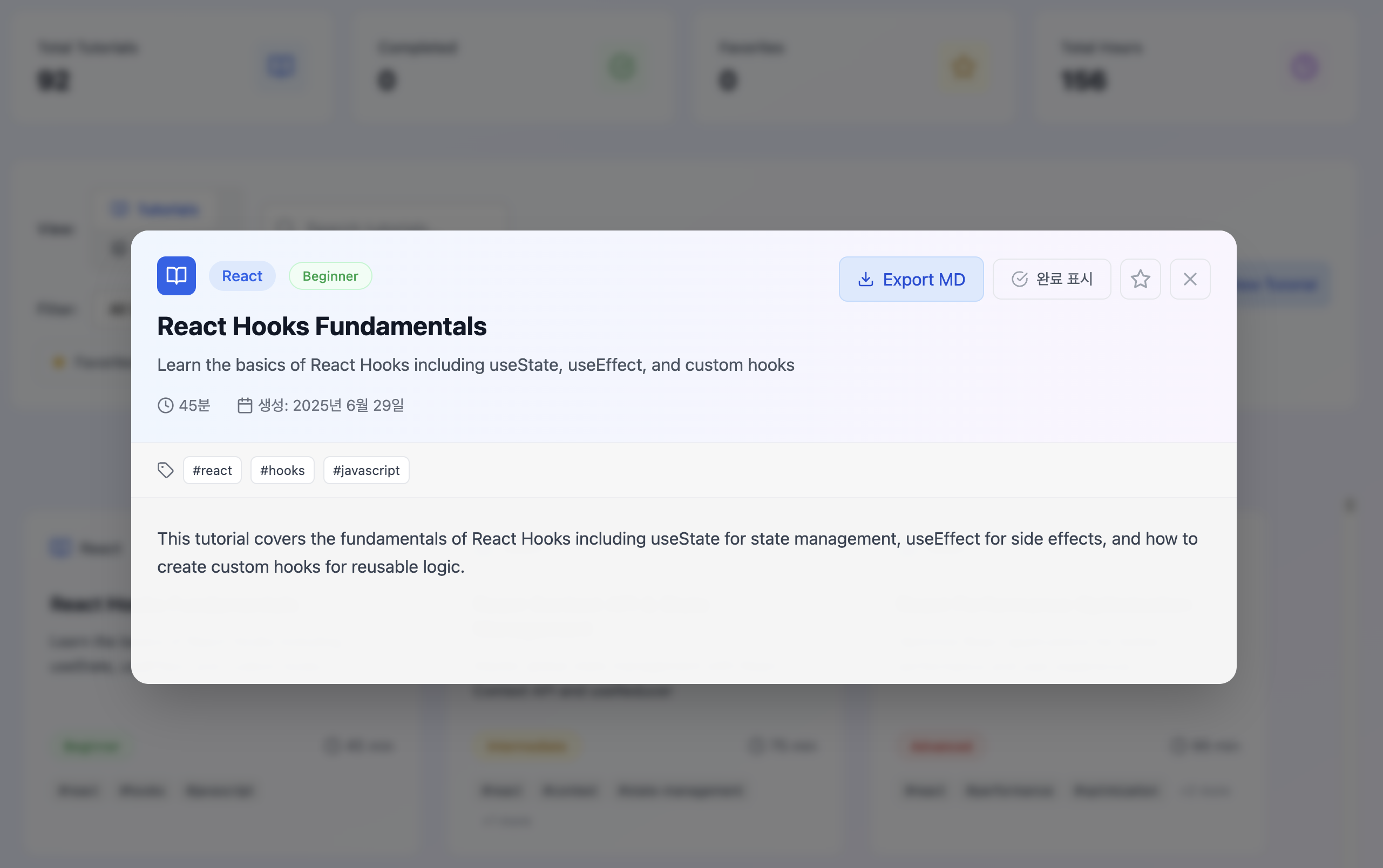
Inspiration The inspiration for TUTORIA came from the frustration of managing scattered learning resources across multiple platforms. As developers, we constantly learn new technologies, but our tutorials, notes, and progress tracking are often fragmented across bookmarks, note-taking apps, and various learning platforms. We envisioned a unified platform that could not only organize learning materials but also leverage AI to generate comprehensive tutorials and foster community knowledge sharing.
What it does TUTORIA is an intelligent tutorial management platform that transforms how developers organize and accelerate their learning journey. The platform offers:
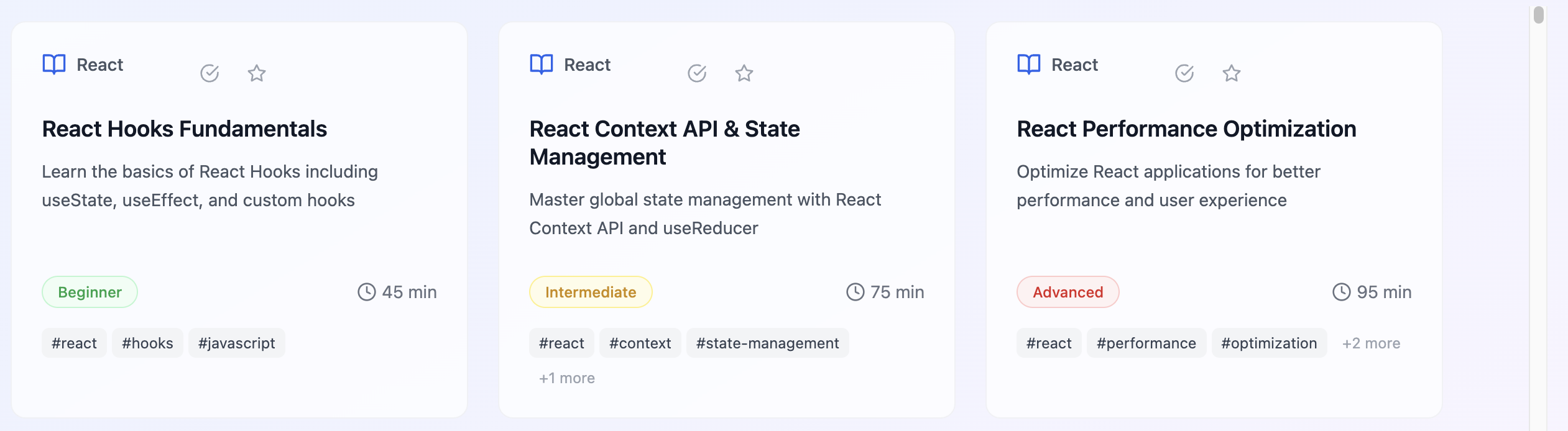
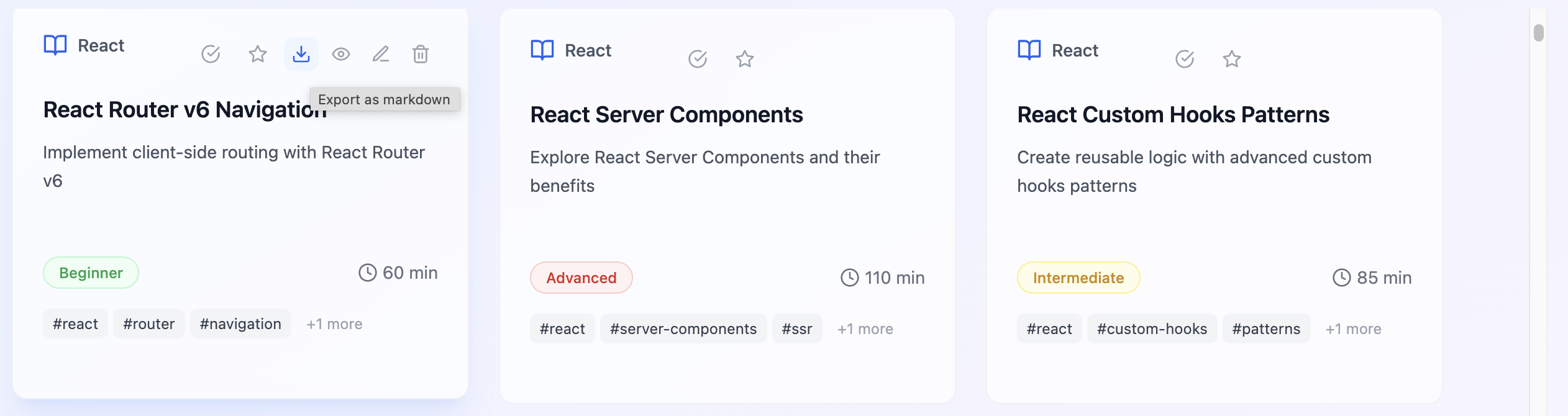
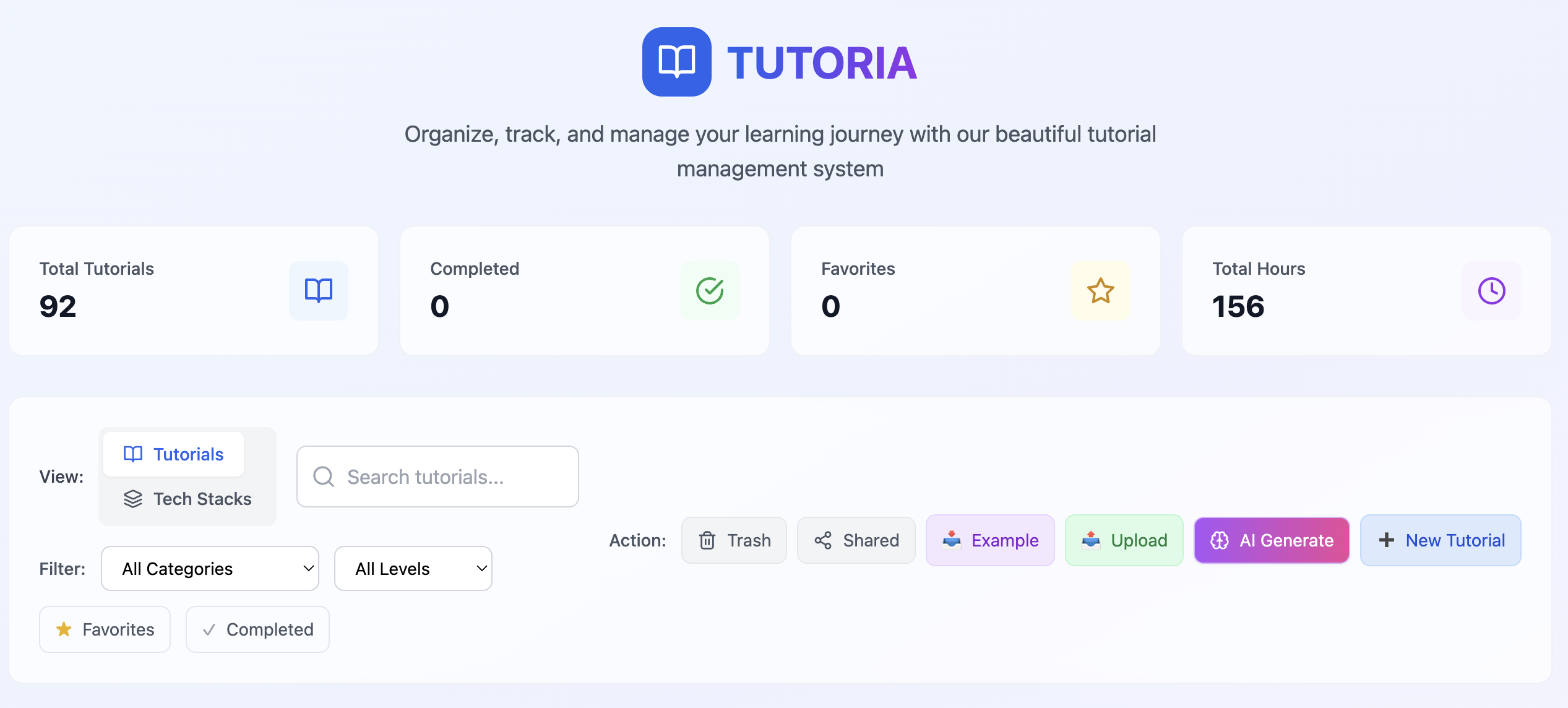
🎯 Smart Organization: Effortlessly manage tutorials across multiple tech stacks with intelligent categorization, progress tracking, and visual dashboards that show completion rates and time invested.
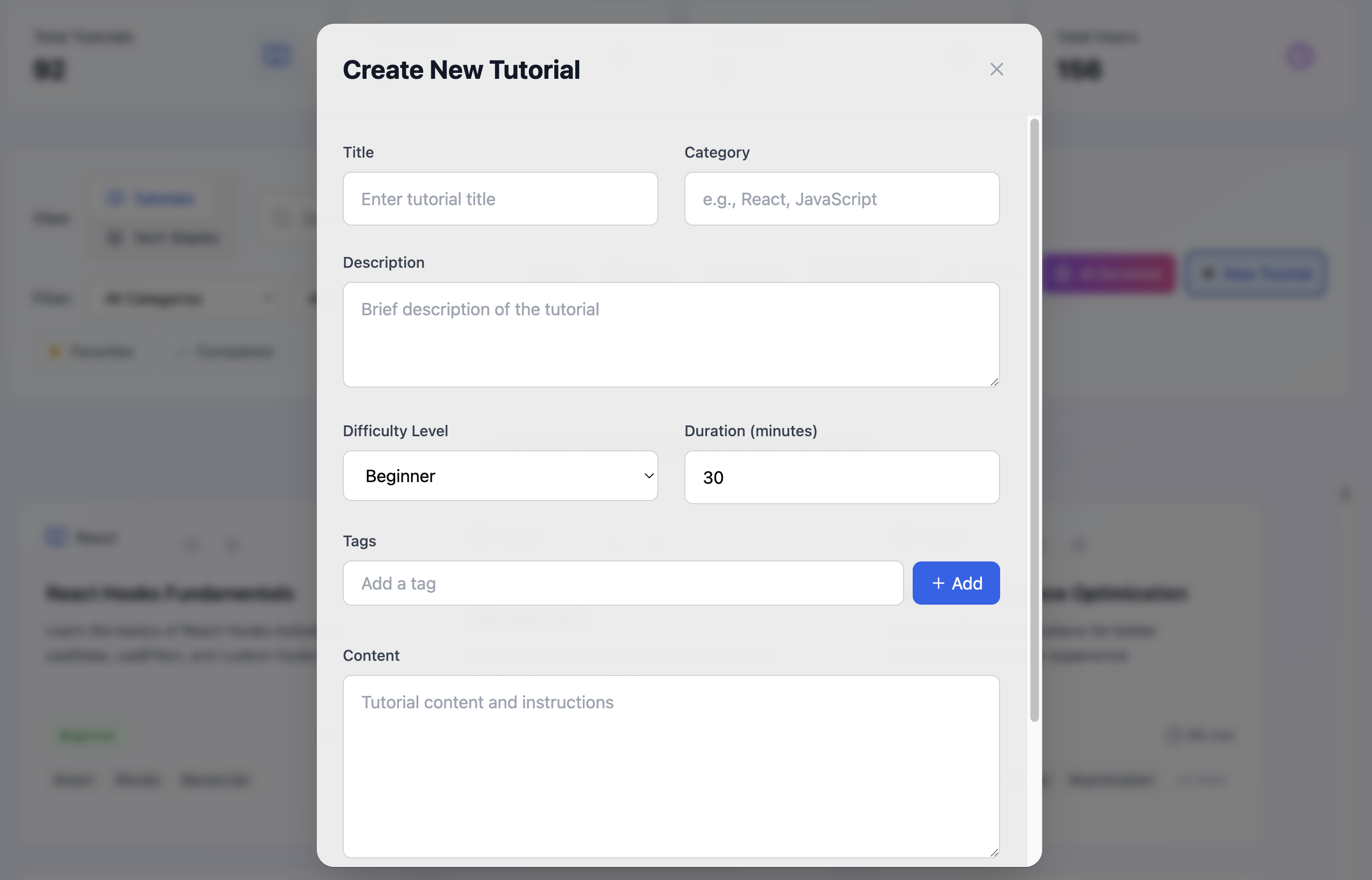
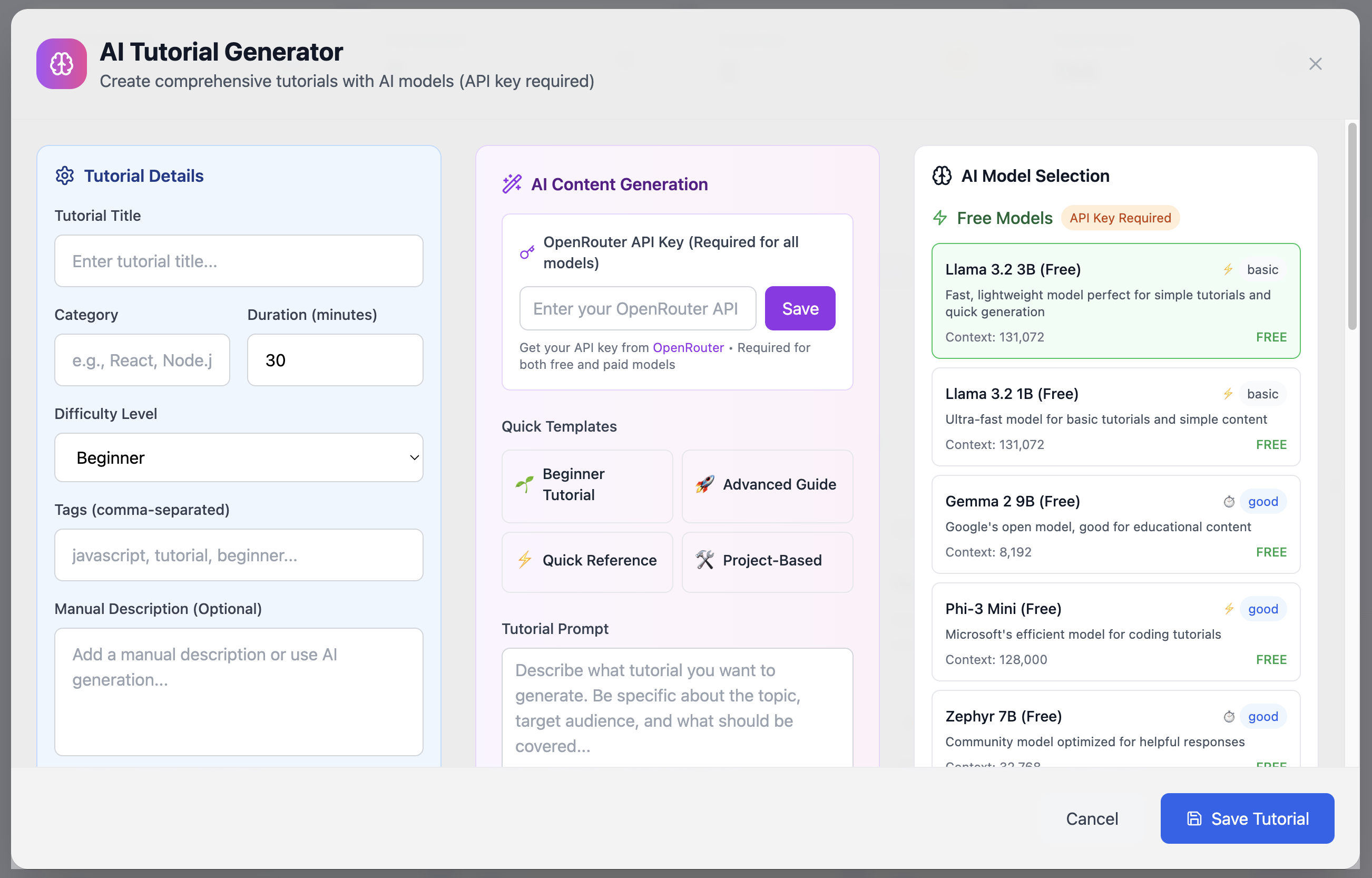
🤖 AI-Powered Generation: Create comprehensive tutorials instantly using advanced AI models from OpenRouter, supporting both free models (Llama, Gemma, Phi-3) and premium options (Claude 3.5 Sonnet, GPT-4o, Gemini Pro) with real-time cost estimation.
🌐 Community-Driven Learning: Share and discover high-quality tutorials through a collaborative markdown library where users can upload, browse, and import community-contributed content.
📊 Progress Analytics: Visual dashboards track learning progress with completion rates, time invested, skill progression, and personalized learning paths through tech stack collections.
🔧 Tech Stack Collections: Curated learning paths that group related tutorials for structured skill development, with automatic tutorial matching and progress tracking.
💾 Seamless Import/Export: Native markdown support with one-click import/export, preserving original formatting and enabling easy content migration.
How we built it TUTORIA was built using modern web technologies with a focus on performance and user experience:
Frontend Architecture:
React 18 with TypeScript for type-safe component development Tailwind CSS for beautiful, responsive design with custom gradients and animations Lucide React for consistent, beautiful iconography React Window for virtualized rendering of large tutorial lists (50+ items) SQL.js for client-side database management with full SQL capabilities Database Design:
SQLite running in the browser via SQL.js for offline-first functionality Comprehensive schema with tutorials, tech stack collections, shared markdown files, and trash management Advanced indexing for fast search and filtering across categories, difficulty levels, and completion status Automatic database versioning and migration system AI Integration:
OpenRouter API integration supporting 15+ AI models from multiple providers Intelligent prompt engineering with customizable templates for different tutorial types Real-time cost estimation for paid models with transparent pricing Support for both free community models and premium AI services Key Features Implementation:
Markdown Parser: Custom parser supporting YAML frontmatter, code blocks, tables, and rich formatting Virtualized Rendering: Performance optimization for large datasets using react-window Progressive Enhancement: Graceful degradation from premium AI models to free alternatives Local Storage: All data stored locally with export/import capabilities for data portability Performance Optimizations:
Lazy loading and code splitting for faster initial load times Debounced search with intelligent filtering algorithms Batch database operations for improved write performance Memory-efficient virtualization for handling thousands of tutorials Challenges we ran into
Client-Side Database Complexity: Implementing a full-featured database system in the browser using SQL.js presented unique challenges with data persistence, migration management, and performance optimization. We solved this by implementing a robust versioning system and optimized indexing strategies.
AI Model Integration: Balancing cost, quality, and accessibility across multiple AI providers required careful API design. We implemented a tiered system supporting both free and premium models with transparent cost estimation and graceful fallbacks.
Markdown Processing: Creating a robust markdown parser that handles various formats, code blocks, tables, and frontmatter while maintaining performance was complex. We built a custom parser with streaming capabilities and syntax highlighting.
Performance at Scale: Rendering thousands of tutorials efficiently required implementing virtualization and advanced React optimization techniques like useMemo, useCallback, and React.memo for preventing unnecessary re-renders.
Data Synchronization: Managing state consistency across multiple components and database operations required careful architecture with centralized state management and automatic refresh mechanisms.
Accomplishments that we're proud of 🚀 Production-Ready Architecture: Built a fully functional, production-worthy application with enterprise-level features including database management, AI integration, and community sharing capabilities.
⚡ Performance Excellence: Achieved smooth performance even with thousands of tutorials through virtualization, intelligent caching, and optimized rendering strategies.
🤖 AI Democratization: Successfully integrated 15+ AI models from multiple providers, making advanced AI tutorial generation accessible to users regardless of budget constraints.
🎨 Beautiful User Experience: Created an intuitive, visually stunning interface with thoughtful animations, responsive design, and accessibility considerations that rivals commercial learning platforms.
📊 Comprehensive Feature Set: Delivered a complete learning management system including progress tracking, community sharing, advanced search, categorization, and data export capabilities.
🔧 Technical Innovation: Pioneered client-side database management for learning platforms, enabling offline functionality and complete data ownership for users.
What we learned Technical Insights:
Client-side databases can provide excellent performance and user privacy when properly implemented with SQL.js AI model diversity is crucial for accessibility - offering both free and premium options serves different user needs Virtualization techniques are essential for handling large datasets in React applications Markdown standardization varies significantly across platforms, requiring flexible parsing strategies User Experience Lessons:
Progressive disclosure helps manage complex features without overwhelming users Visual feedback and loading states are crucial for AI-powered features with variable response times Community features drive engagement when seamlessly integrated into the core workflow Data ownership and export capabilities are increasingly important to users Development Process:
TypeScript significantly improves development velocity and reduces bugs in complex applications Component composition patterns scale better than monolithic components for feature-rich applications Performance monitoring should be built-in from the start, not added as an afterthought What's next for TUTORIA 🔮 Advanced AI Features:
Multi-modal AI: Integration with vision models for screenshot-based tutorial generation Personalized Learning Paths: AI-powered recommendation system based on user progress and preferences Interactive Tutorials: AI-generated quizzes and coding challenges integrated into tutorials Voice-to-Tutorial: Speech recognition for hands-free tutorial creation 🌐 Enhanced Community Features:
User Profiles: Public profiles showcasing learning achievements and contributed tutorials Rating System: Community-driven quality ratings and reviews for shared content Collaborative Editing: Real-time collaborative tutorial creation and editing Learning Groups: Team-based learning with shared progress tracking and discussions 📱 Platform Expansion:
Mobile Applications: Native iOS and Android apps with offline synchronization Browser Extension: Quick tutorial capture and organization from any webpage Desktop Application: Electron-based desktop app with enhanced file system integration API Platform: Public API for third-party integrations and custom learning tools 🔧 Advanced Features:
Version Control: Git-like versioning for tutorial content with branching and merging Advanced Analytics: Detailed learning analytics with time tracking and skill progression Integration Hub: Connections with popular learning platforms, code repositories, and productivity tools Enterprise Features: Team management, organizational learning paths, and administrative controls 🎯 Long-term Vision: Transform TUTORIA into the definitive platform for technical learning, where AI-powered content generation meets community collaboration to create the world's most comprehensive and accessible technical education ecosystem.


Log in or sign up for Devpost to join the conversation.