-
-
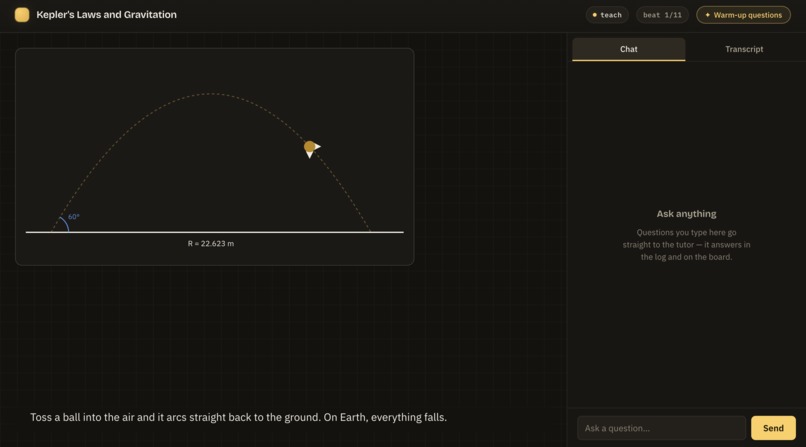
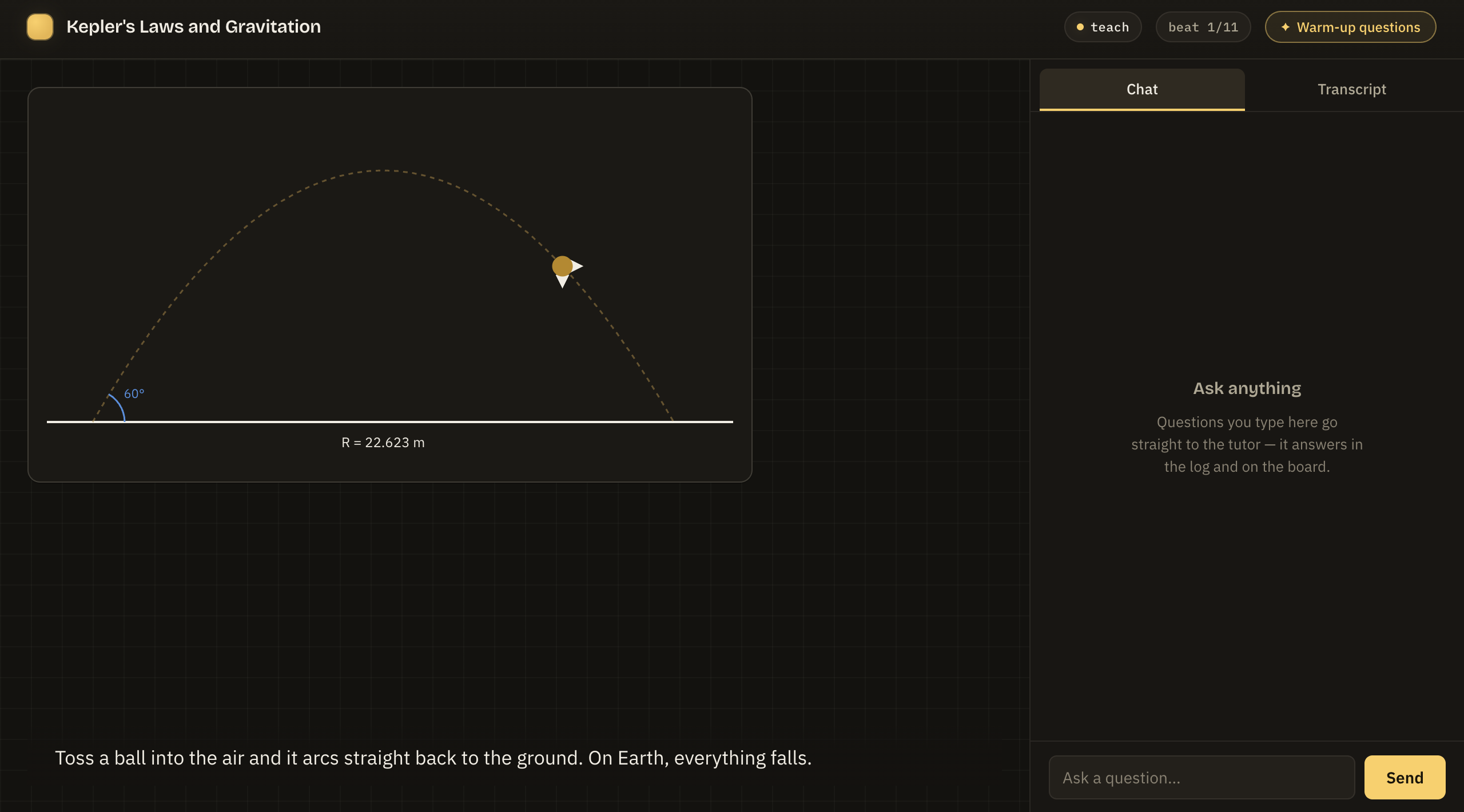
Draws diagram before it explains
-
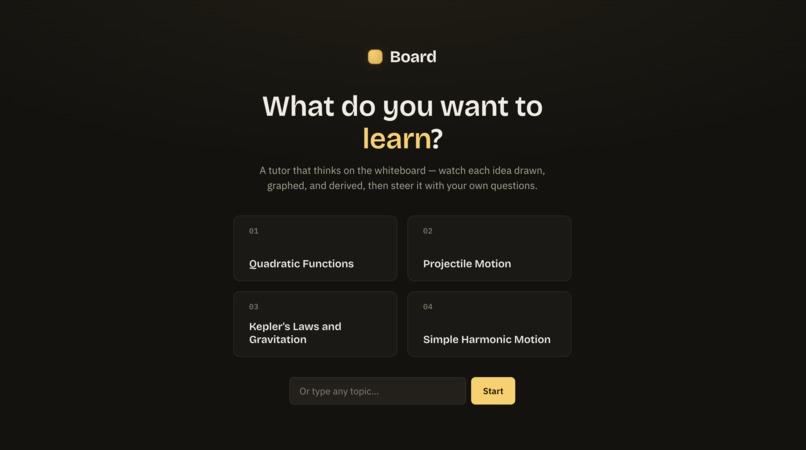
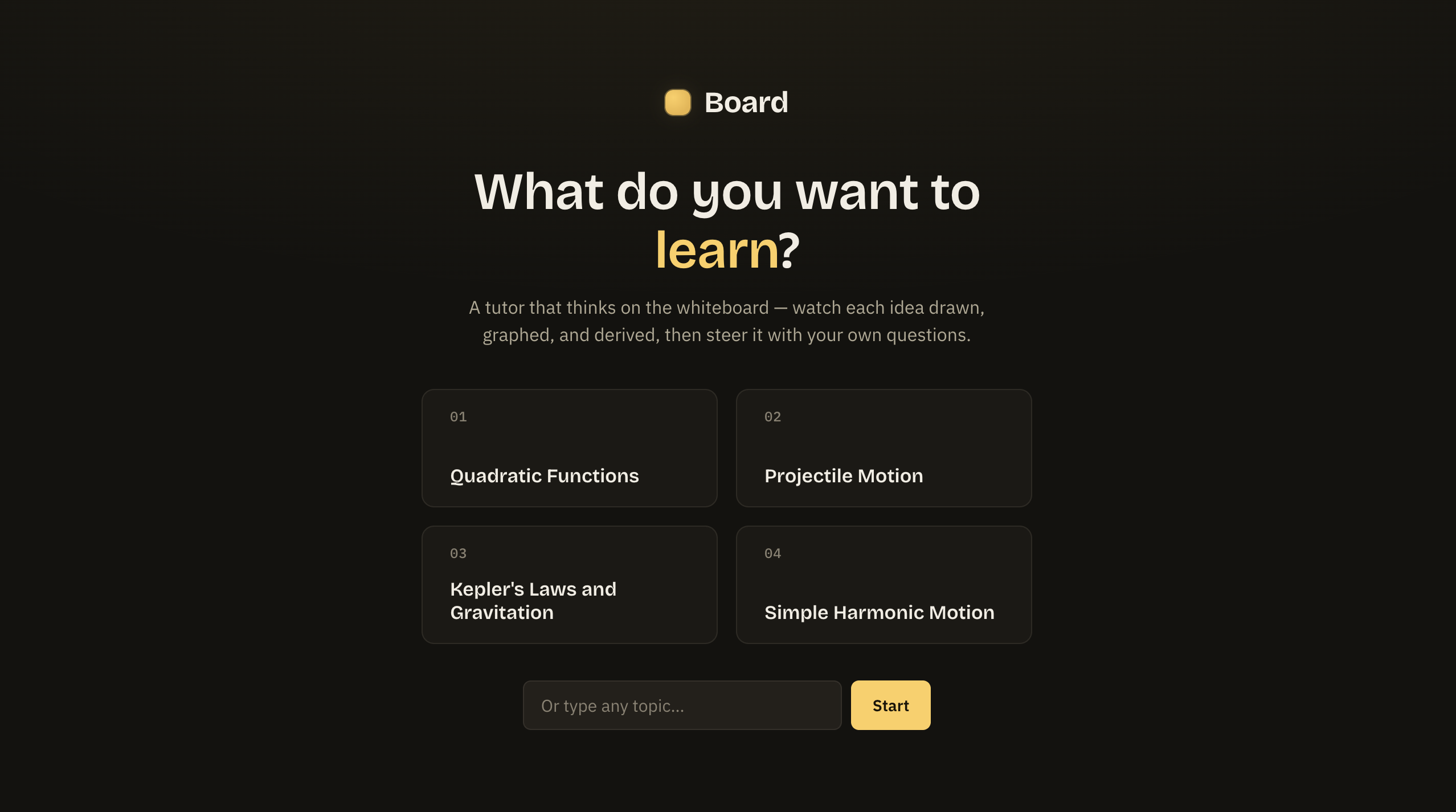
Simple start page
-
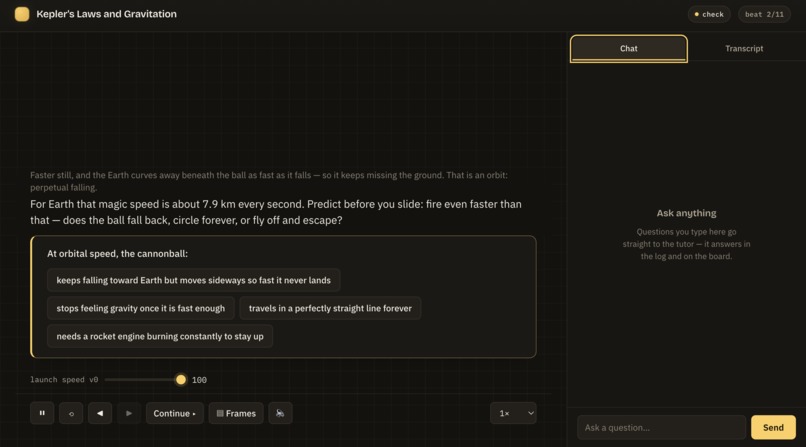
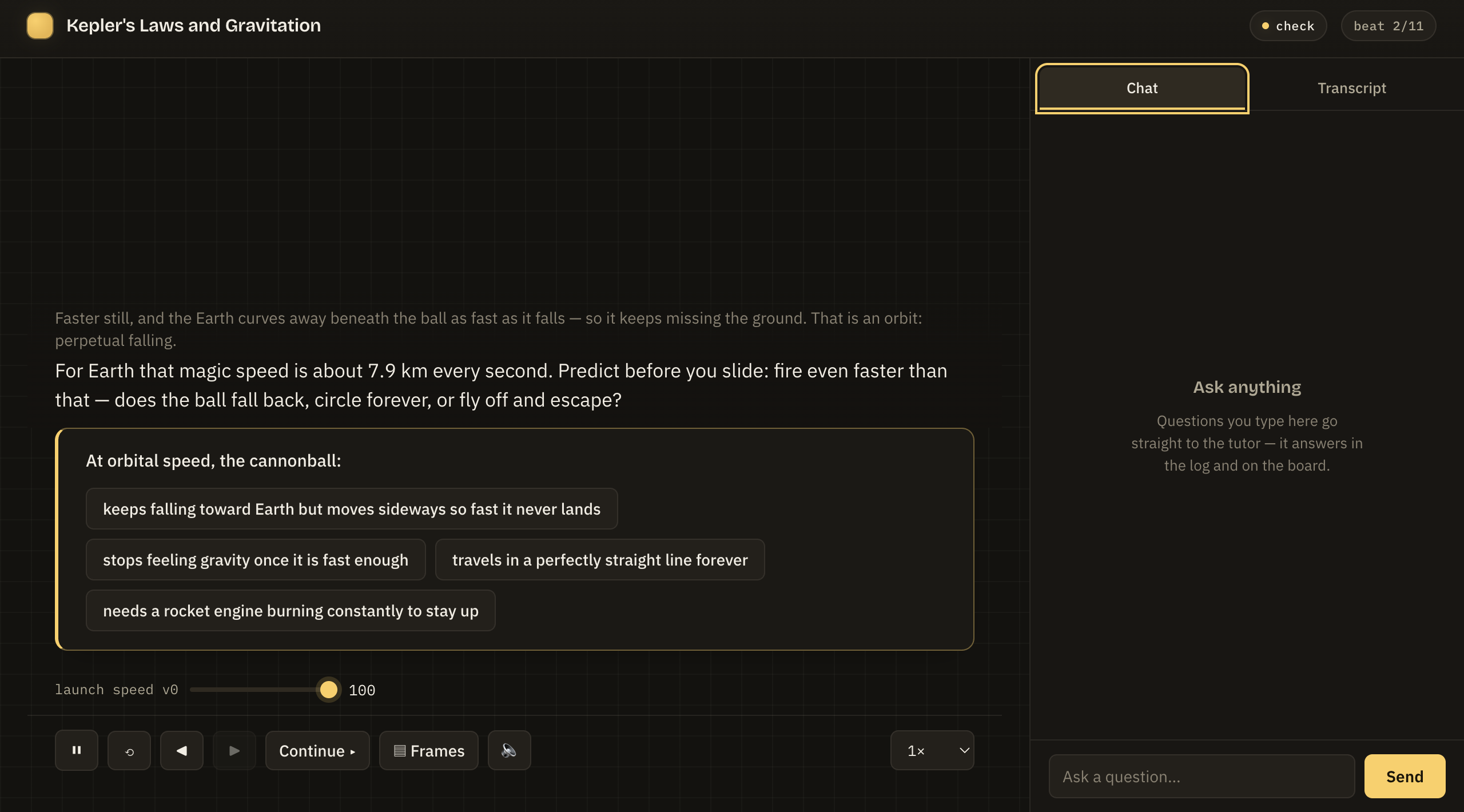
Asks questions in between to check concepts
-
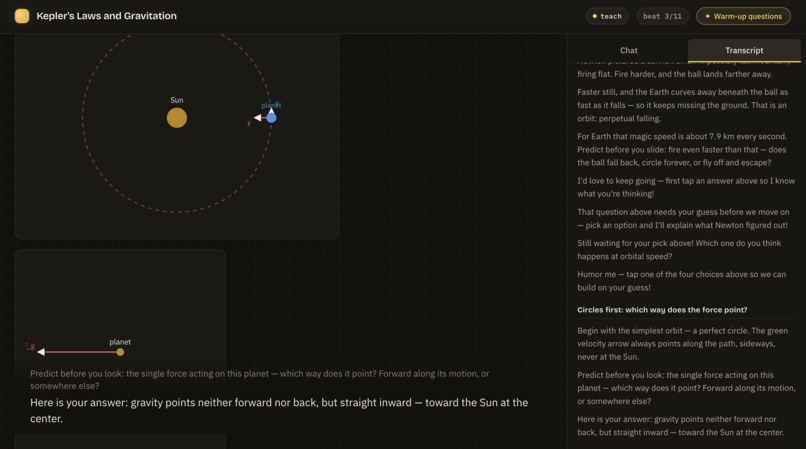
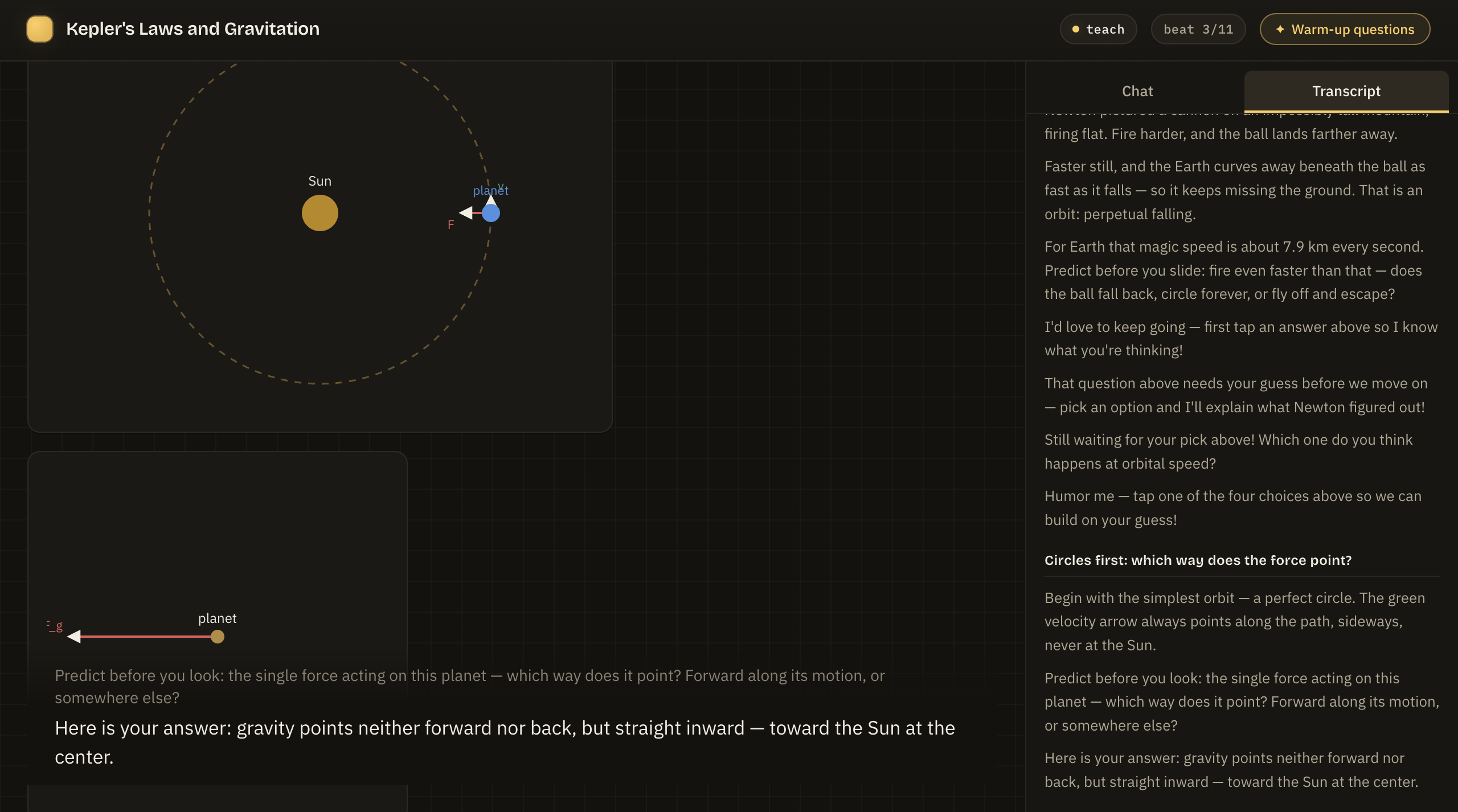
Transcript are stored in nice formatted manner for reference
Board
Inspiration
When I was prepping for my university entrance exams, some chapters just refused to sink in. I'd read the same formulas ten times and get nowhere, until a teacher stood at the blackboard and drew it out. Suddenly it clicked. But those moments were rare. Good teachers are stretched thin, classes are huge, and at 11 pm before a big test, nobody's drawing on a board for you.
Years later, my little brother hit the same wall. He'd call me with the exact questions I used to have, and the best I could do was sketch on paper and describe it over the phone. Not being able to actually show him bothered me more than my own struggles ever did. Board is the tutor I wish we both had.
What it does
Board is an AI tutor that teaches on a virtual blackboard. Pick a topic, and it draws an interactive graph or diagram you can actually play with, then pauses and asks you questions, the way a good teacher would. Instead of drawing from a blank slate, it assembles visuals from a library of pre-made tools, which makes it fast, cheap, and consistently accurate.
How we built it
The core problem was translation: how do you turn dense higher-secondary science text into a diagram, reliably? We designed a custom output format, a structured framework that maps concepts to reusable, interactive diagram components. The LLM doesn't paint pixels; it outputs instructions in our format, and the framework renders them. Constraining the model this way is what keeps it quick, cheap, and correct.
Challenges we ran into
The hardest part wasn't the drawing — it was deciding on the framework itself. It had to be expressive enough to cover physics, and maths, but constrained enough that the model gets it right every time. We went through several iterations before landing on a format that balanced flexibility with reliability.
Accomplishments that we're proud of
It works, end-to-end. Board is up and running and already covers a wide variety of science and maths topics — explaining, drawing, and quizzing like a real tutor, not a one-trick demo.
What we learned
Freeform generation is unpredictable; constrained generation is dependable. Giving the model a well-designed toolkit, rather than a blank canvas, was the single biggest unlock. We also learned that interactivity matters — students don't just want to see a diagram; they want to poke at it.
What's next for Board
Train an LLM to natively output in our custom format; that's when this really scales. Beyond that: more concepts, richer diagrams, and a smarter framework. We think students and teachers will love it, because it gives every student the 11 pm blackboard moment we never had.
Please use access code: 31ed9607 after the first page, since it uses AI in the backend.
Built With
- codex
- openai
- typescript
- vercel

Log in or sign up for Devpost to join the conversation.