Inspiration
Honestly, I got back into minecraft recently and just wanted to draft up my own take on this genre. I love the mystery and fun that can be had with primitive times. Spears, fires, sabertooths, you know, it just scratches an itch for me. I was really drawn to that stuff as a kid and frankly must still be. The fact that we really did just survive for thousands of years to get to this point where we turned rocks into computers and I used AI to build a game about it is just insane.
What it does
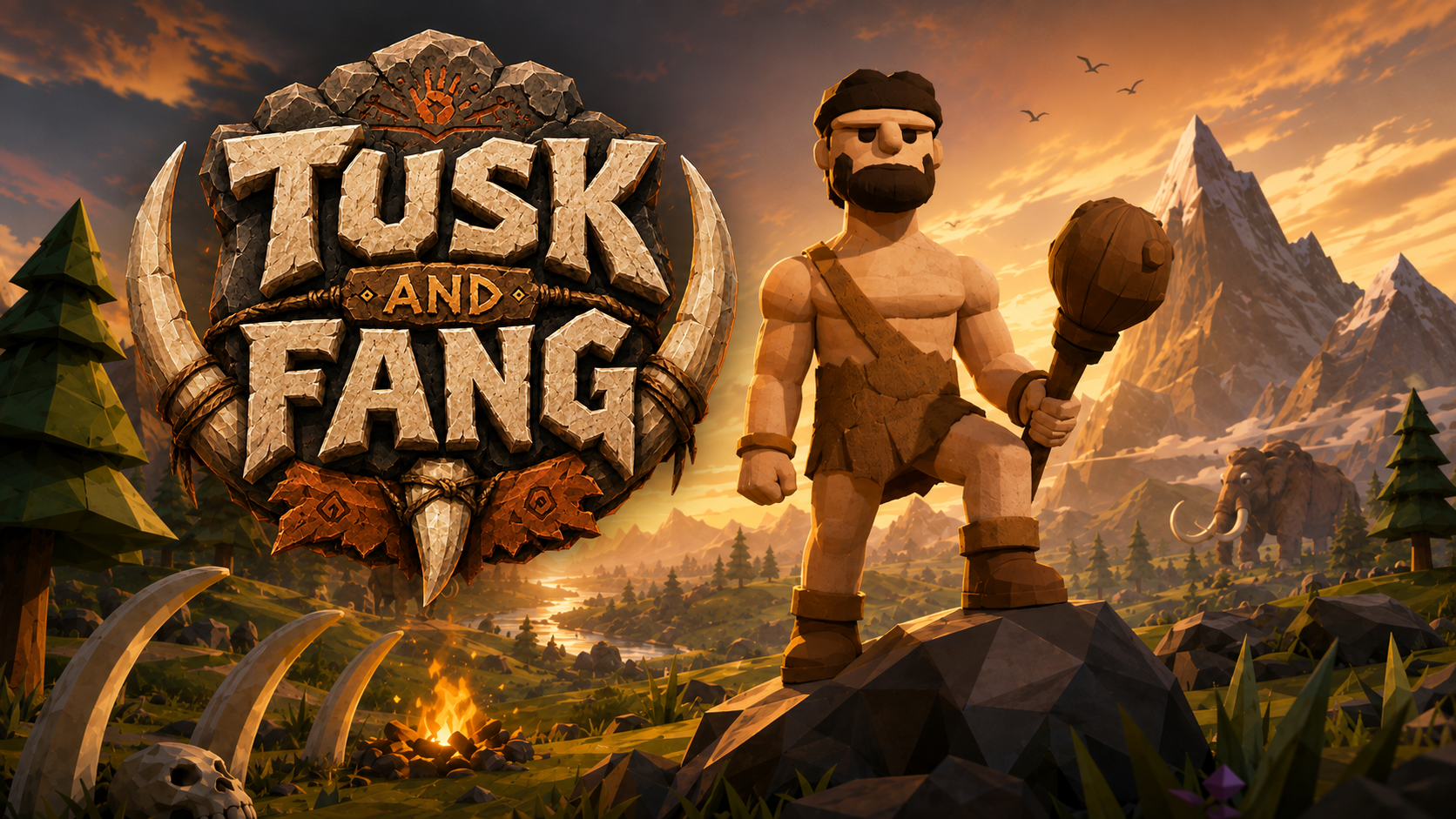
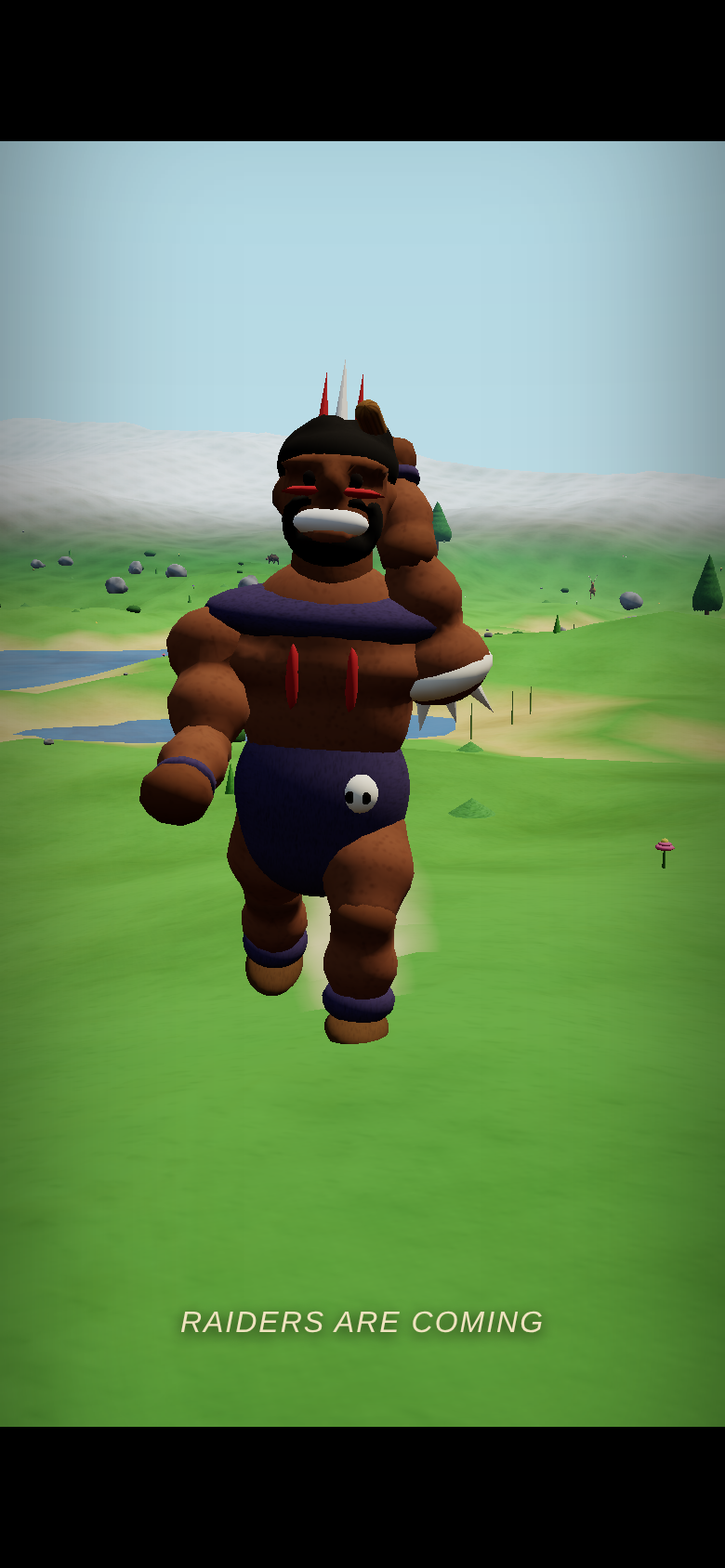
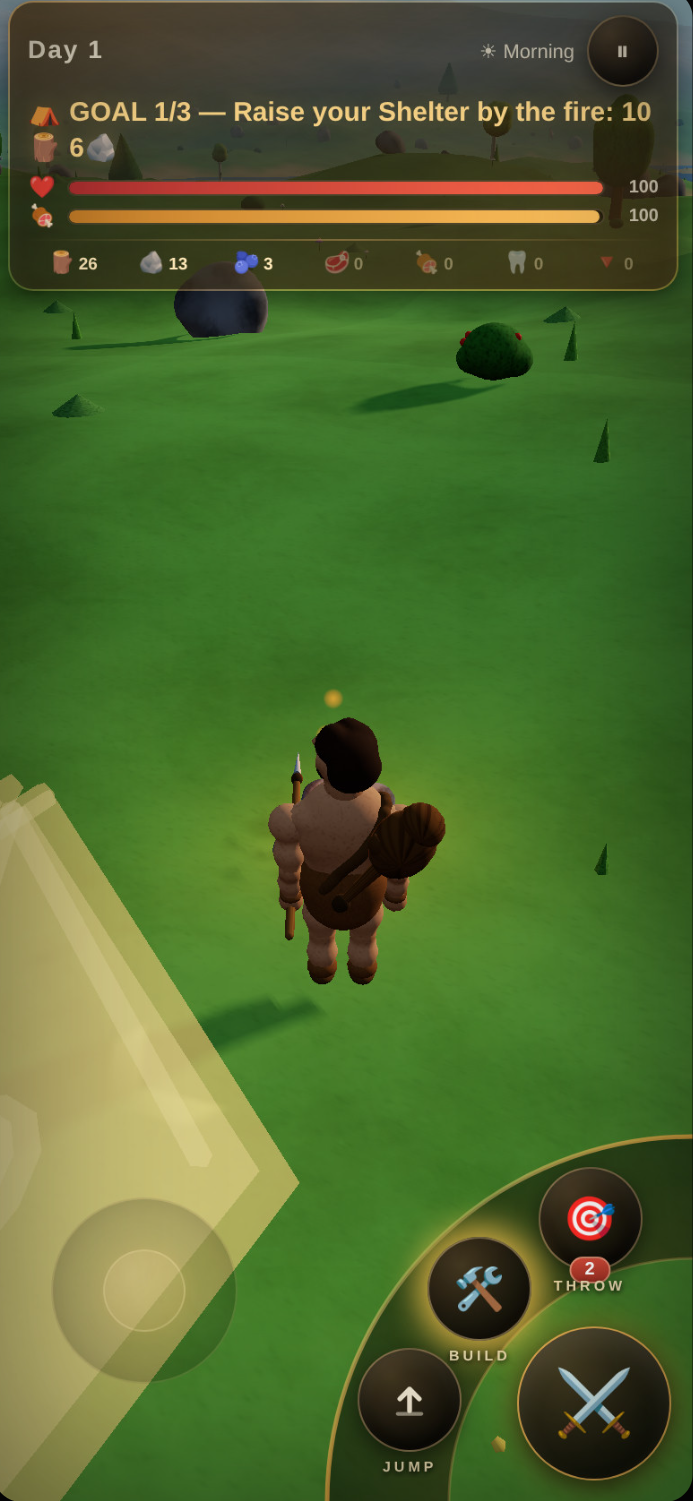
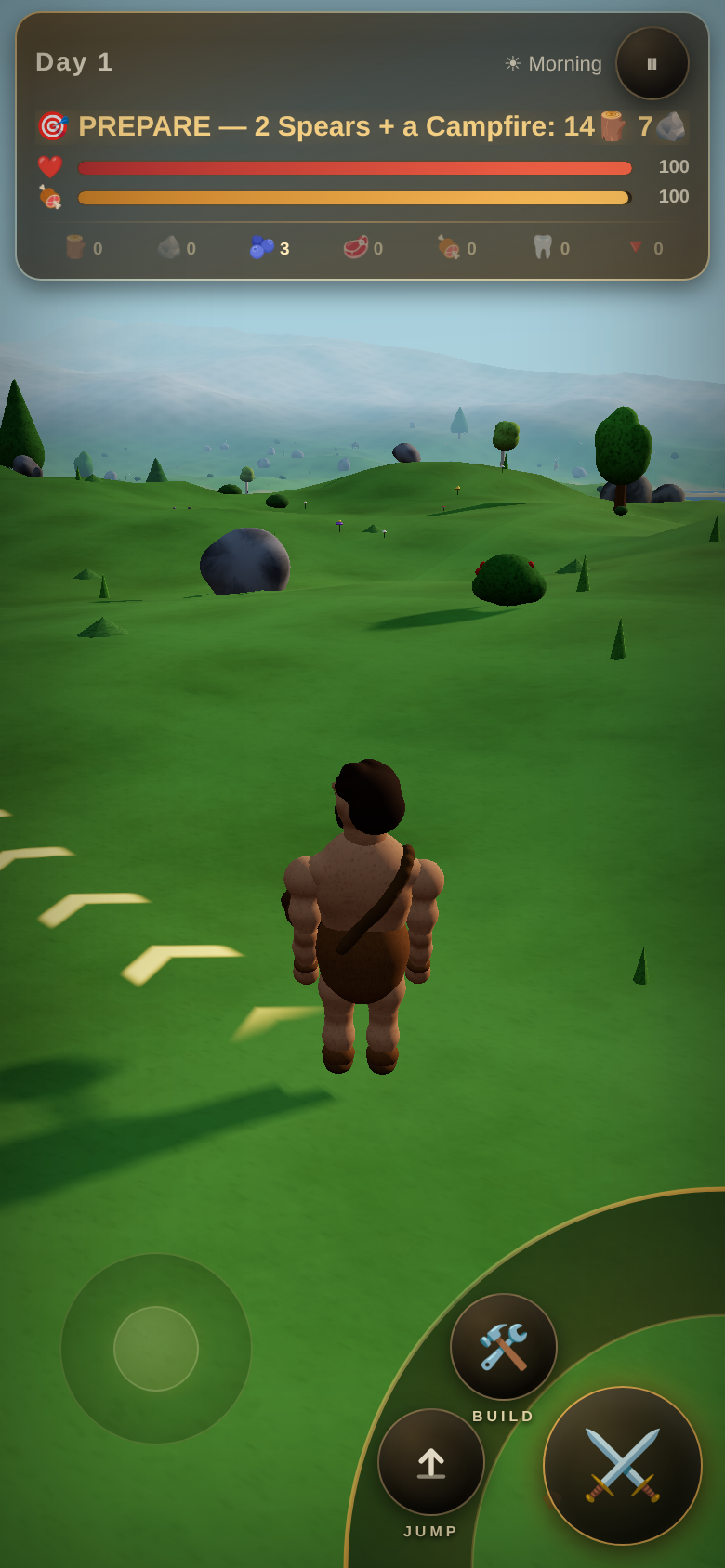
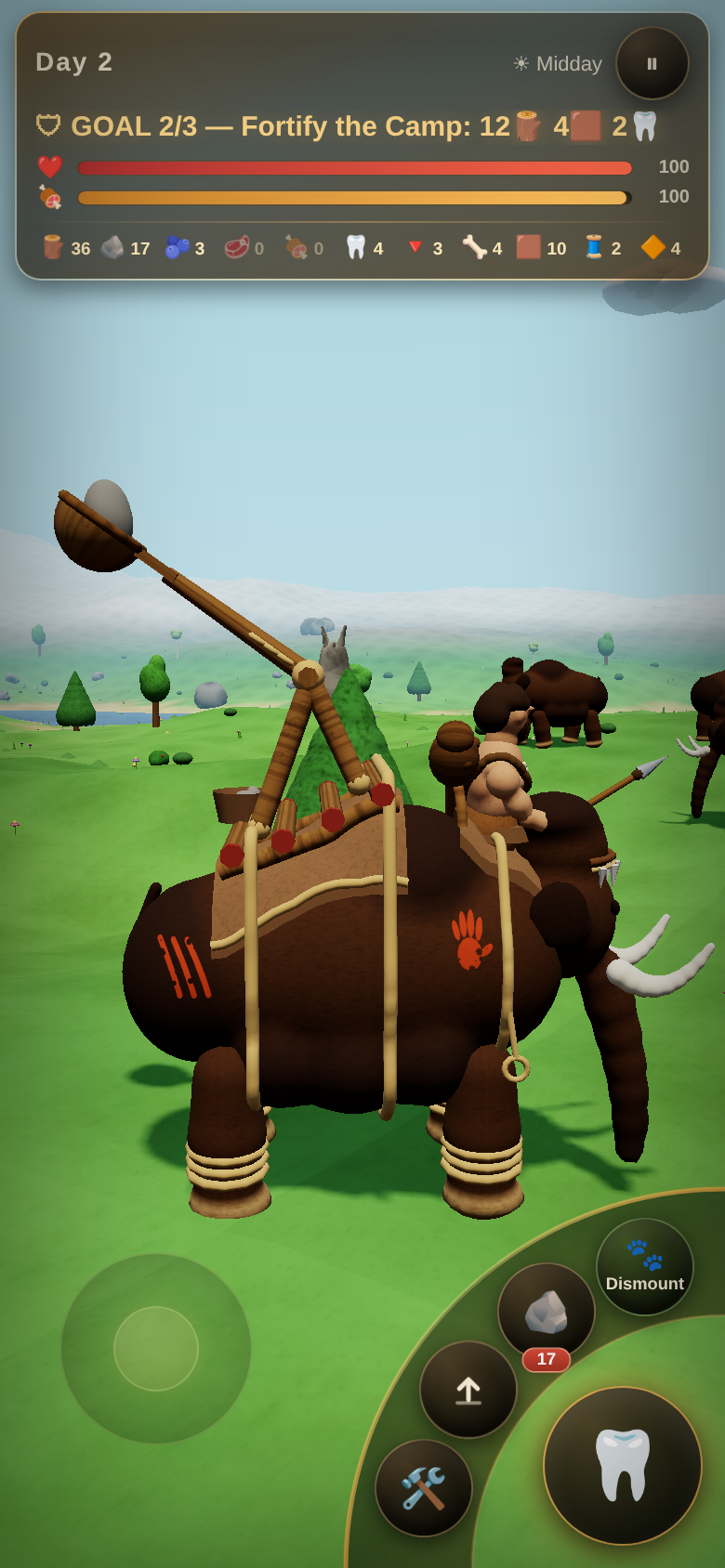
A third-person caveman survival game built for thumbs and a tall screen. The loop is a single pressure cycle: gather wood, stone and berries; craft spears, fire and camp stages; hunt mammoths and sabertooths for the hides, tusks and fangs the next upgrade demands; hold the light through escalating nights. The goal is stated before play begins and tracked on screen — fully upgrade your camp (Shelter → Fortify → Totem Crown) to claim the valley. The final stage demands the valley's two great trials: the great bear's fang and the rival tribe's war idol.
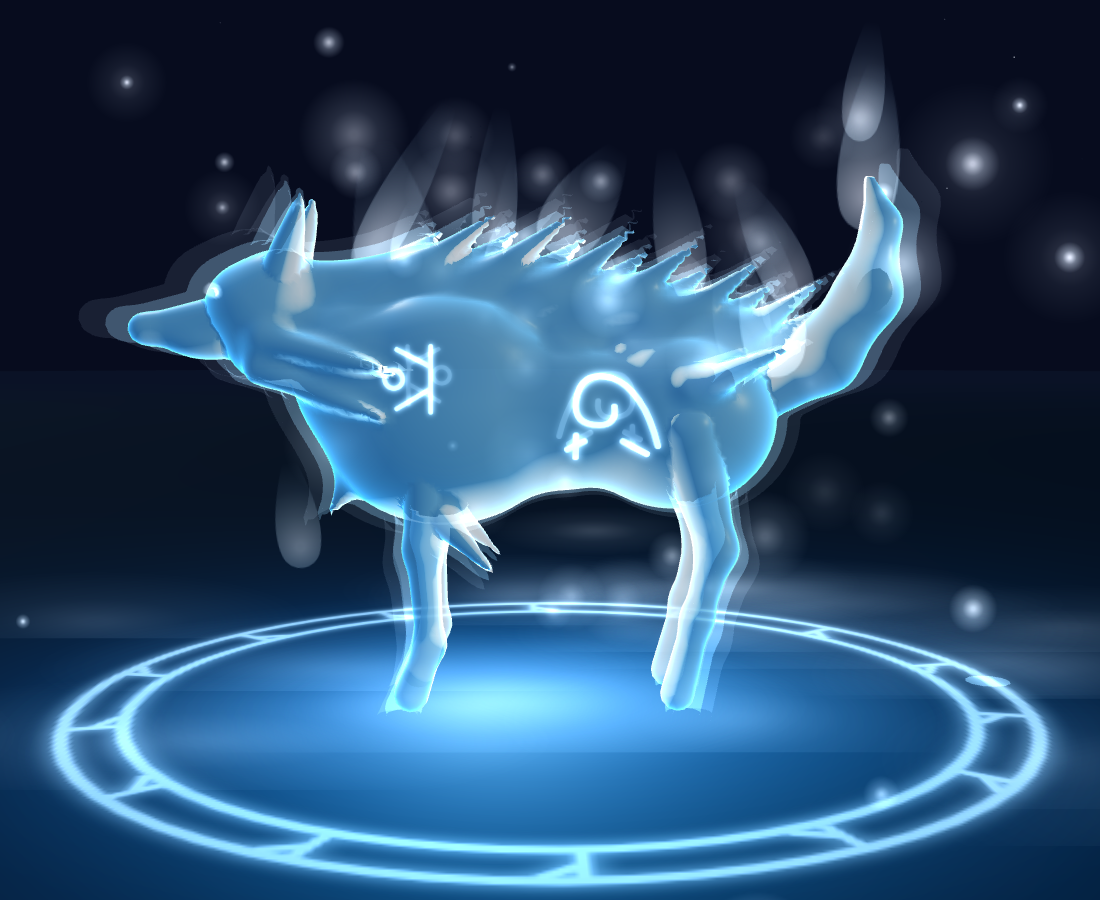
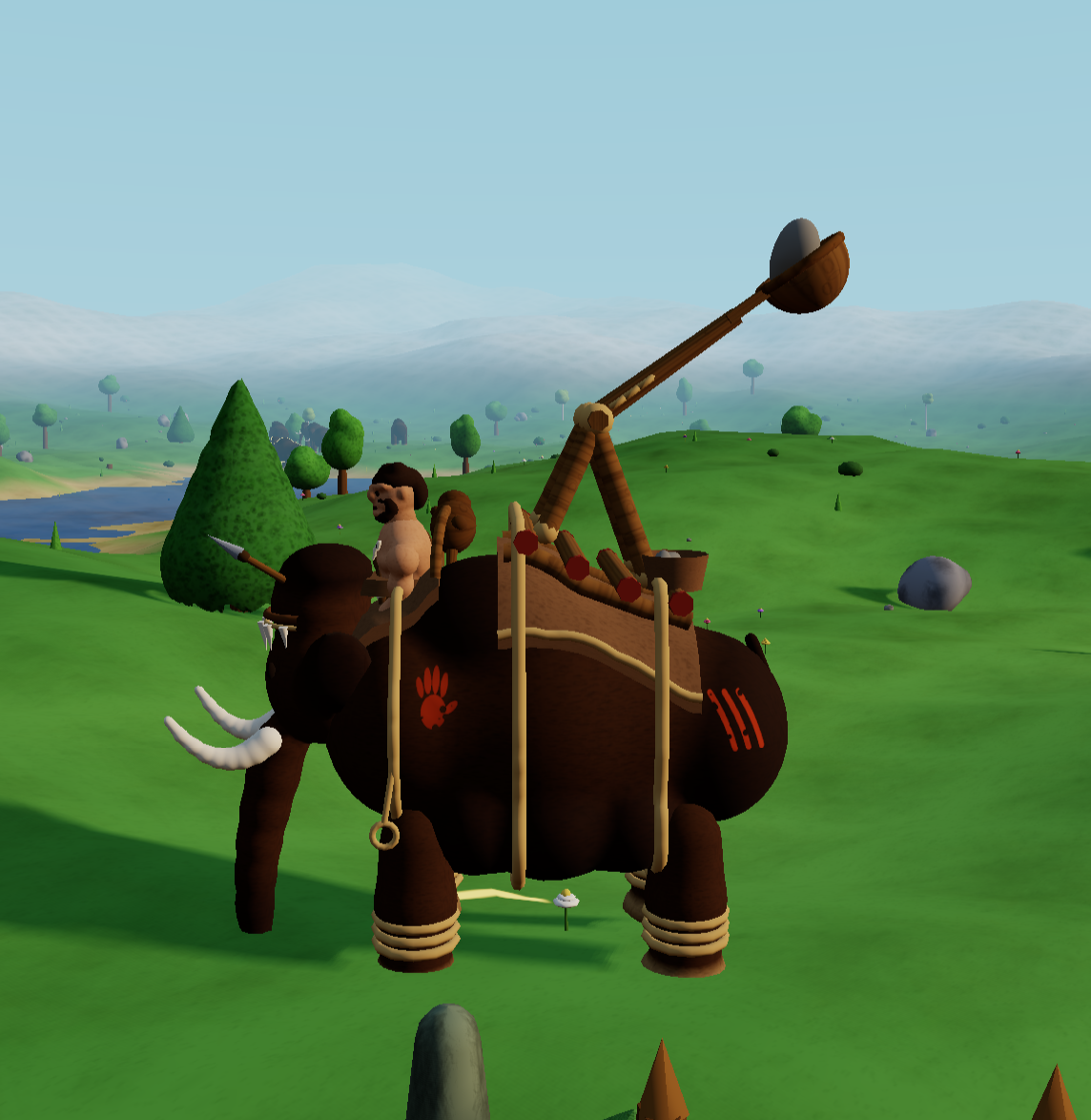
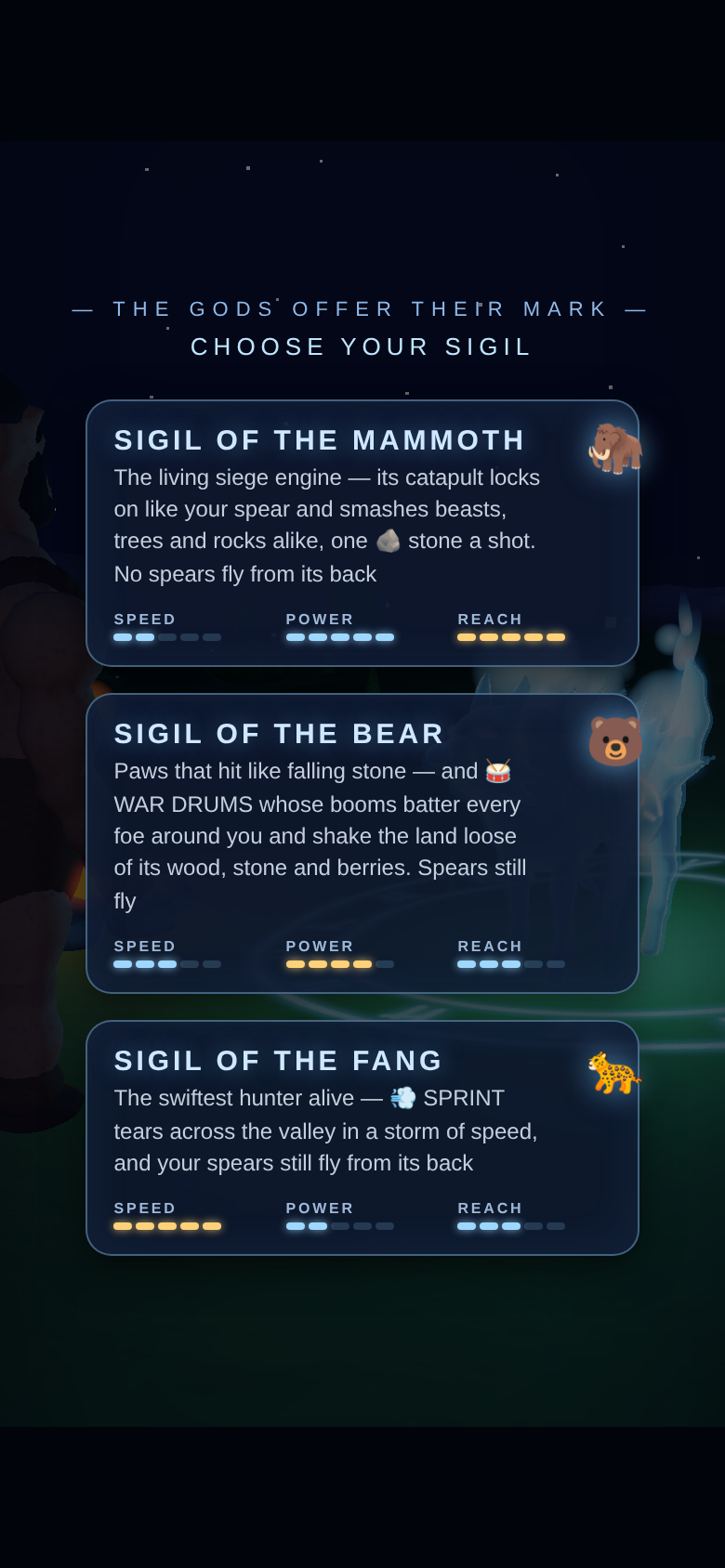
The originality hook is the Sigil. The first night at your camp, the spirit wolf SKARN arrives in lightning and offers three marks. Choose the Mammoth and the throw button becomes a stone-fed, lock-on catapult that flattens trees, rocks and beasts. Choose the Bear and you ride into fights hammering war drums that batter every foe in a ring and shake the land loose of its wood, stone and berries. Choose the Fang and you have the fastest hunter in the valley, with a sprint. The rival tribe escalates the same way — a lone scout, then a raider on a sabertooth, then a fang, a bear and a mammoth under rival saddles, with a catapult of its own.
Every run ends with a name: deaths name their cause, and wins and losses alike crown the player with an earned title from the feats of that run.
How we built it
Every line of code was AI-generated under human creative direction — the full session-by-session record is in the accompanying build log. The world is a deterministic seeded valley: every landmark owns its own random stream, so the layout has been byte-identical across dozens of sessions. Every creature, tree, rock and the spirit wolf himself is SDF-sculpted in-game (smooth-min fields through marching tetrahedra) and textured with canvases painted at boot; all sound is procedural WebAudio. There are no asset files at all — the only binary in the build is the logo, embedded as a data URI. Cinematics, the visitation, the charm and the win outro run on a frozen-world micro-cinematic system. Every change was verified with headless automated playtests — a locked layout probe, a 200+ assertion regression gate and screenshot review — before it shipped. Three.js r160, vendored locally; one readable index.html; zero network.
Challenges we ran into
The hardest part was getting the animations to feel right. Anyone can make a caveman swing a club; making it feel like the club has weight, that the spear is thrown and not spawned, that a rider is actually sitting on a beast instead of floating over it - that took round after round. A pose would look perfect in one frame and then get overwritten by the idle or the walk cycle the next, because of how the animation layers stacked. The mammoth rider sat waist-deep in the saddle for a while. The spirit wolf's head jerked at the start of every line he spoke. Each of those was a screenshot, a note, a fix, another screenshot, until it moved the way I saw it in my head.
The second was the first-time user experience. I knew what the game was, so I couldn't see it the way a stranger does. Playtests with people who had never touched it kept proving that: nobody looked at the arrow at their feet, so it became a golden trail on the ground. Nobody knew to swipe to look around, so a ghost finger teaches it. People crafted one spear, threw it, and thought it was gone. Getting a player from waking up in a cave to standing at a lit fire with a shelter behind them, without a single tutorial screen, took more iterations than any system in the game.
The third was me. Every line of code here was written by an AI, which meant my real job was putting a creative vision into words precisely enough that it came back the way I meant it. That is harder than it sounds. "Make the catapult feel like it has weight" and "make him more expressive" are clear to me and vague to a machine, and the early attempts came back close but wrong. I learned to describe what I wanted the player to feel, hand over a reference image, and say exactly which frame of the result was off and why. By the end, the loop was fast: I direct, it builds, I play it on my phone, I send a screenshot, it fixes the root cause. That working relationship was the thing I actually had to build.
Accomplishments that we're proud of
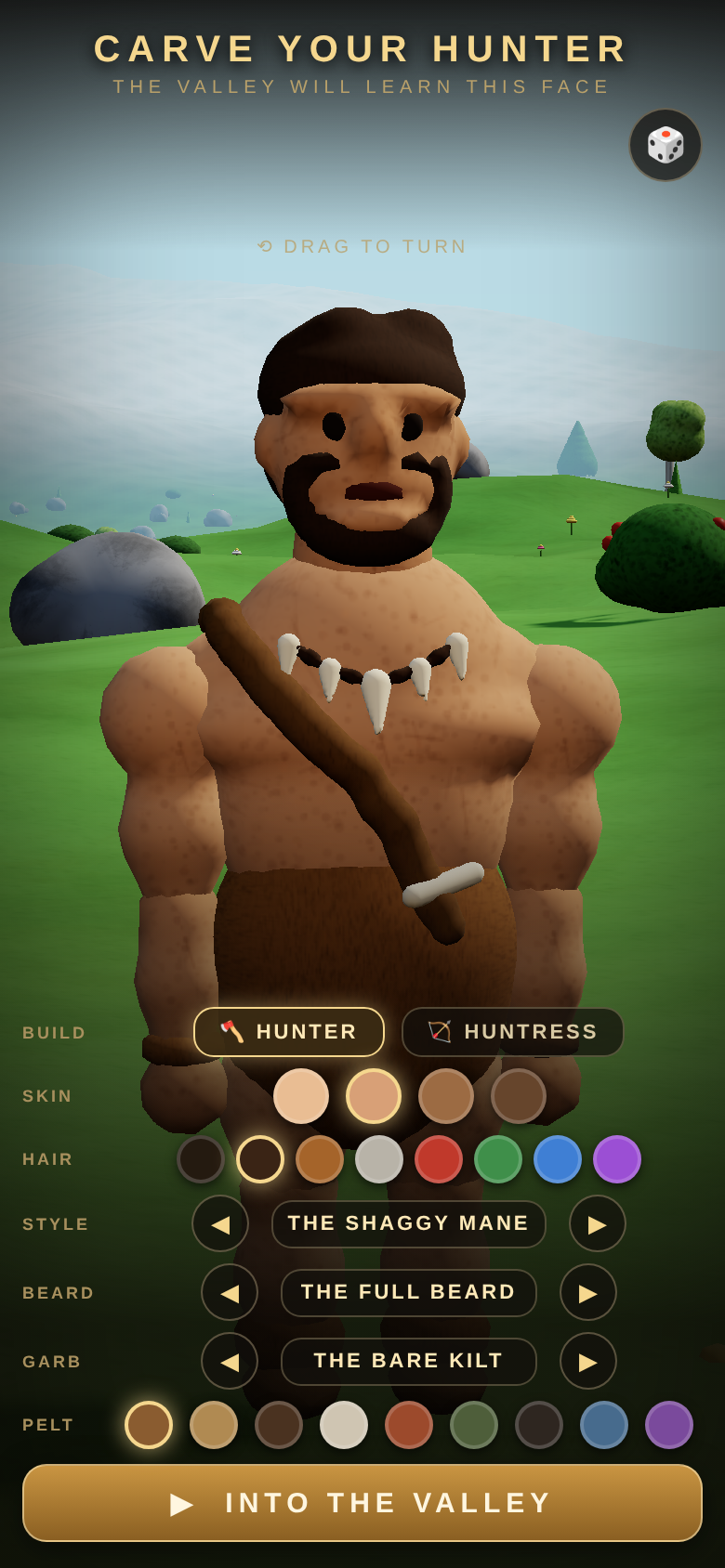
Doing absolutely everything with the AI. From the idle animations, character creation, to the tree falling and the subsequent thump, as well as the cinematics. I was very proud to really get what felt like a lot of polish into this, in such a short time frame.
What we learned
I learned just how much fun I could have, fully diving headfirst into collaboration with Claude. It really allowed me to focus on making what i want and to not be limited by technical skill or manpower.
What's next for Tusk and Fang
If we win, I really want to expand this game to the next level. I want to allow the player to build up a tribe, wage war, build more customizable caveman shelters and villages. More War beasts with different upgrade paths, different biomes, expanded map and animal variety, and just overall a lot more depth.
Built With
- claude
- three.js


Log in or sign up for Devpost to join the conversation.