-
-
Turnout. Turn the crowd outside into customers inside.
-
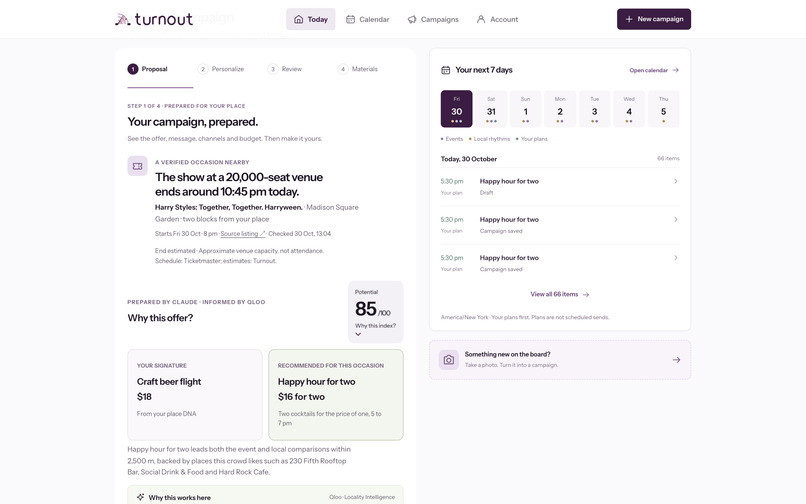
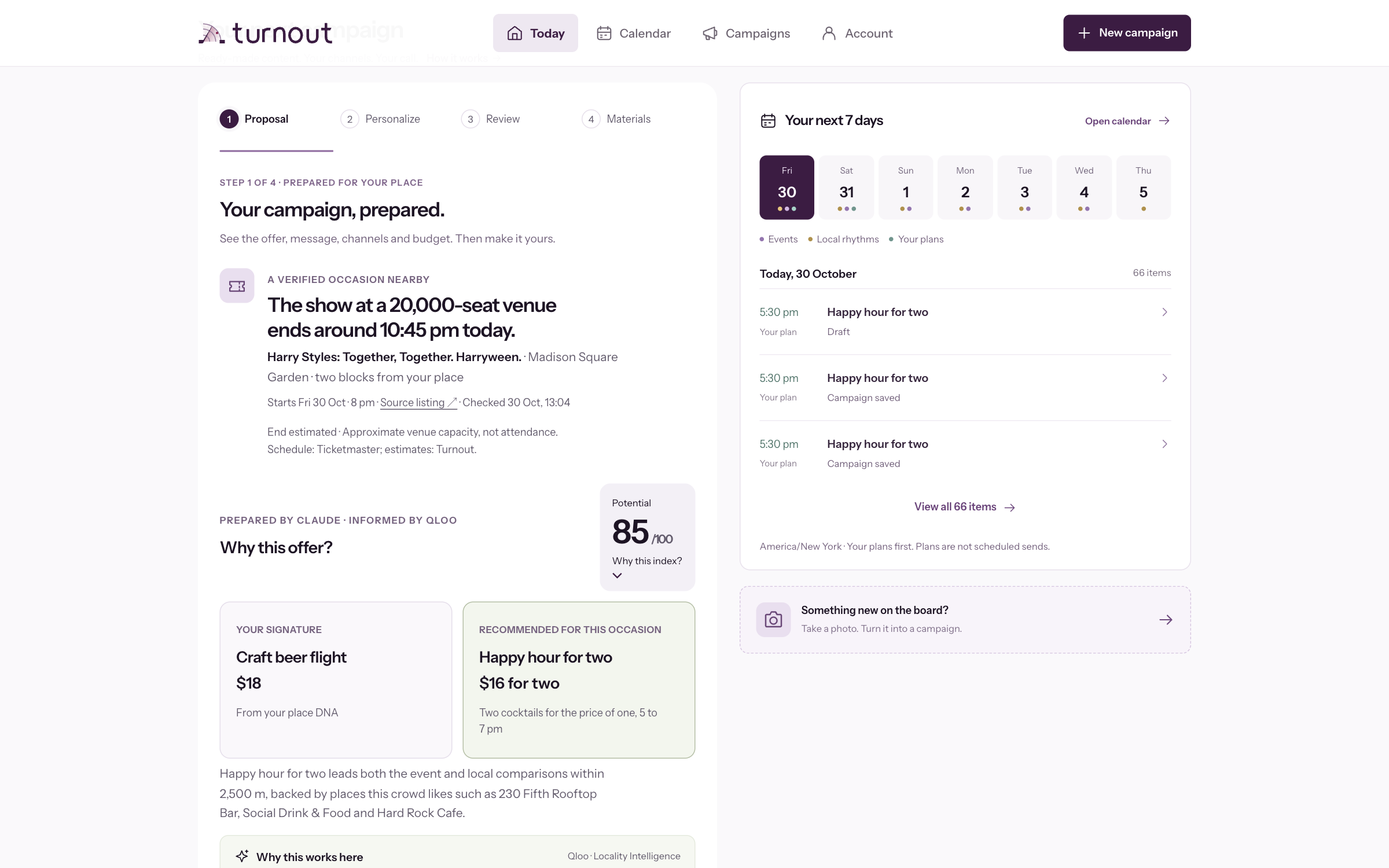
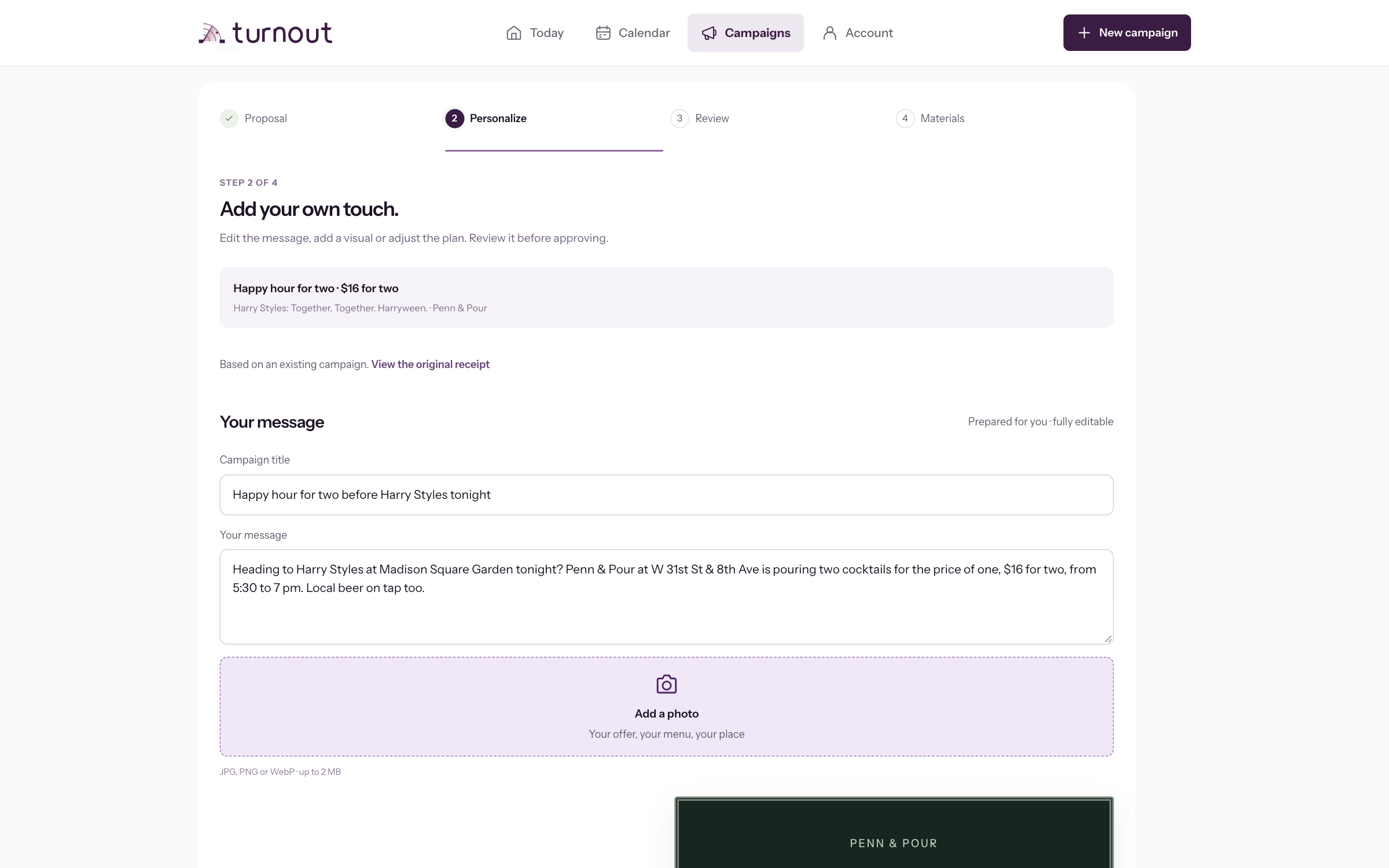
Proposal: tonight's occasion from Ticketmaster, the crowd profiled by Qloo, the offer picked against your signature.
-
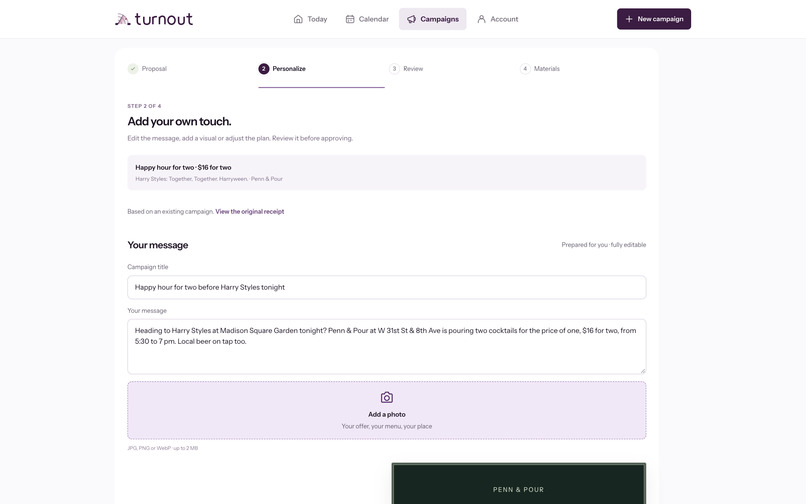
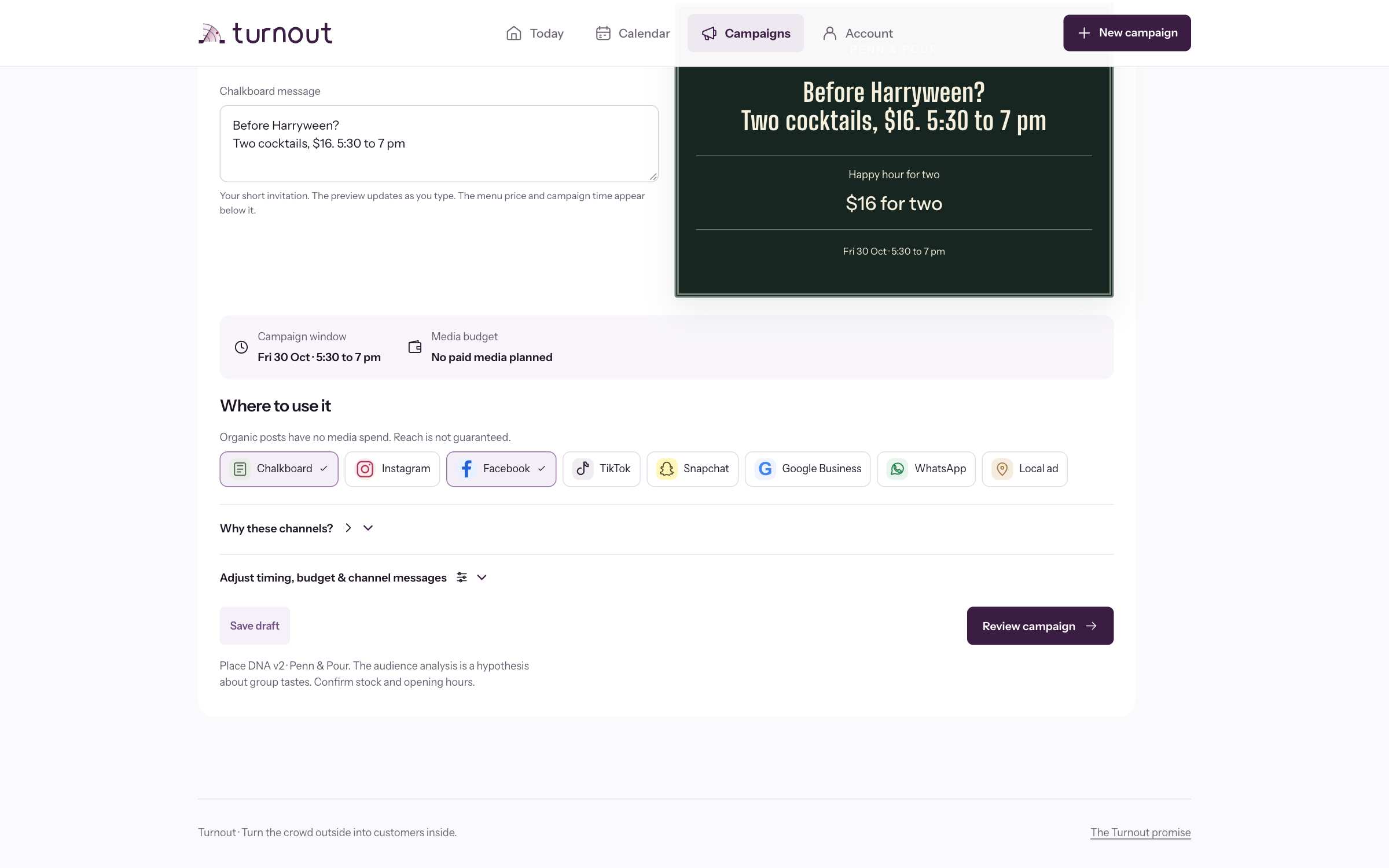
Personalize: your words on the message and the board, live preview as you type.
-
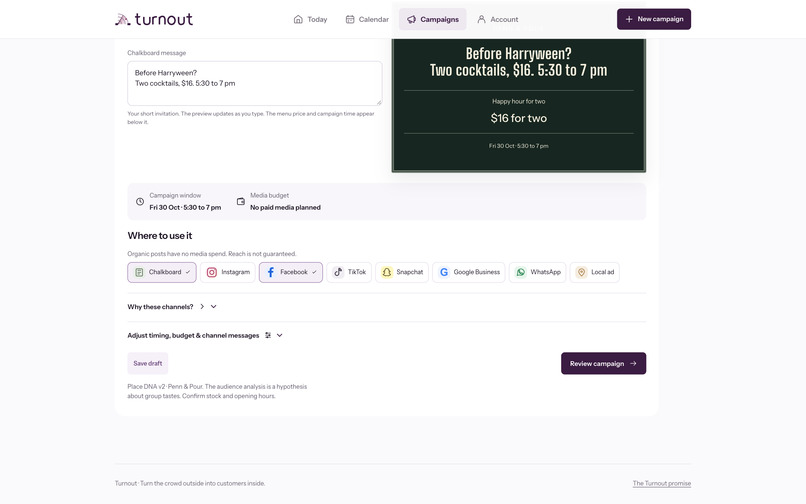
Channels and budget: the eight channels this crowd uses, a local ad a few blocks away, a cap you set.
-
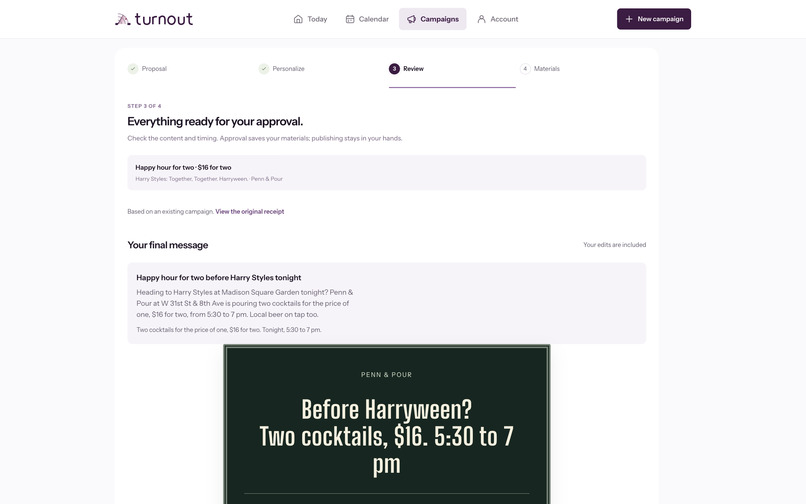
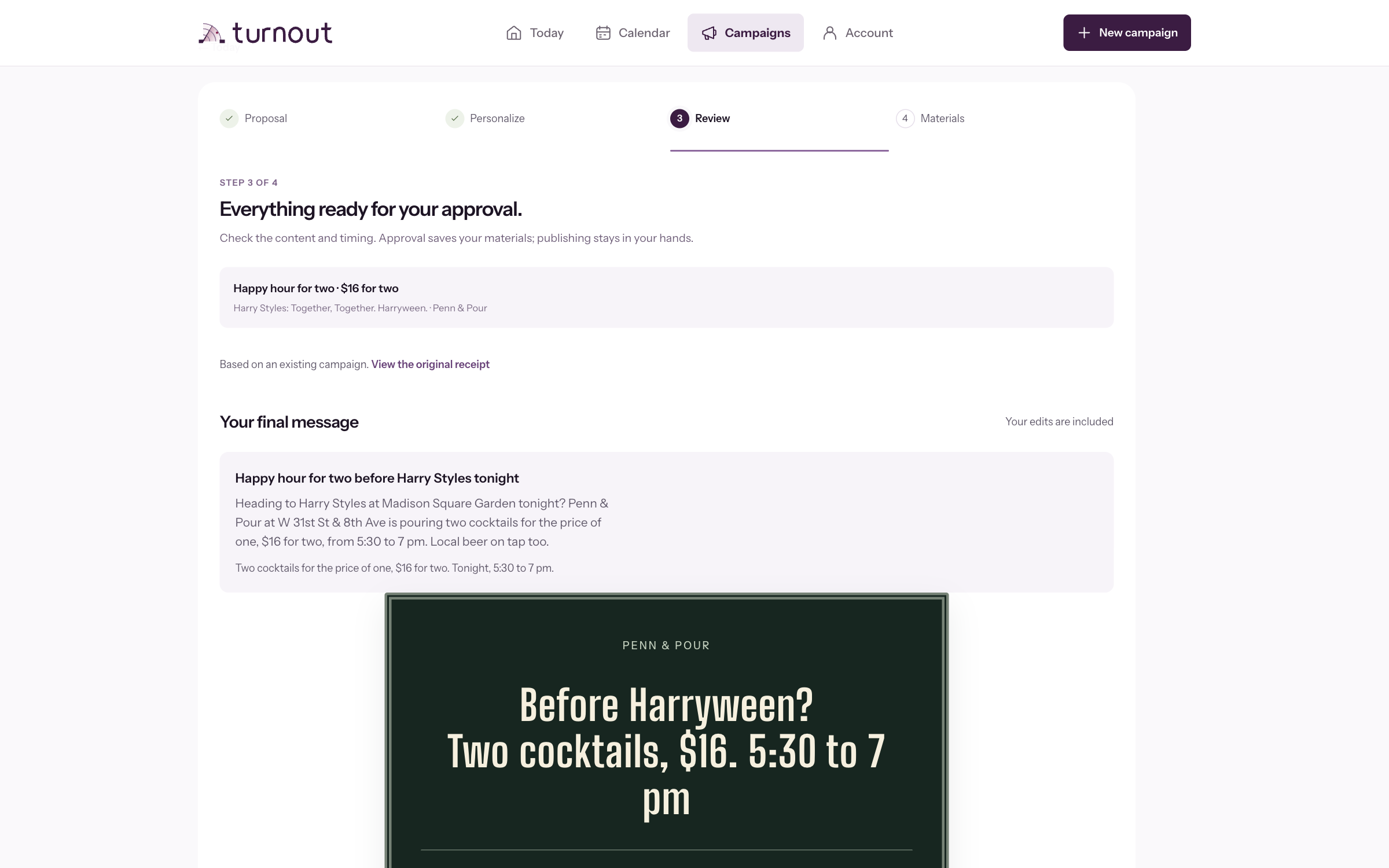
Review: everything ready for your approval, your edits included.
-
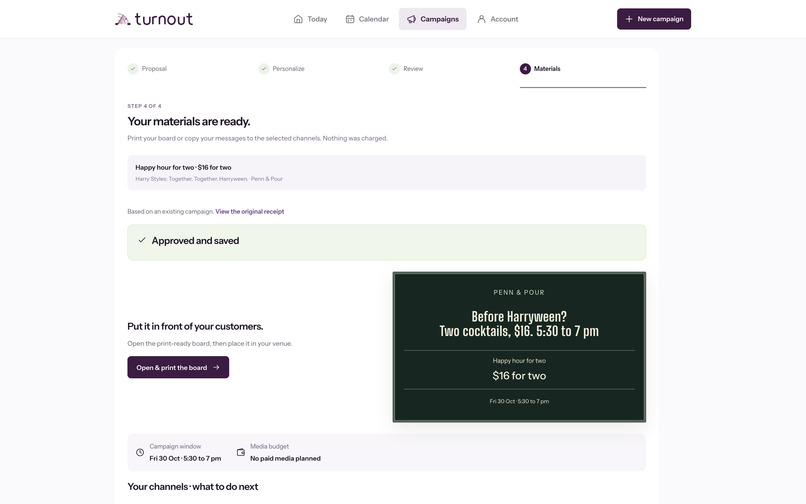
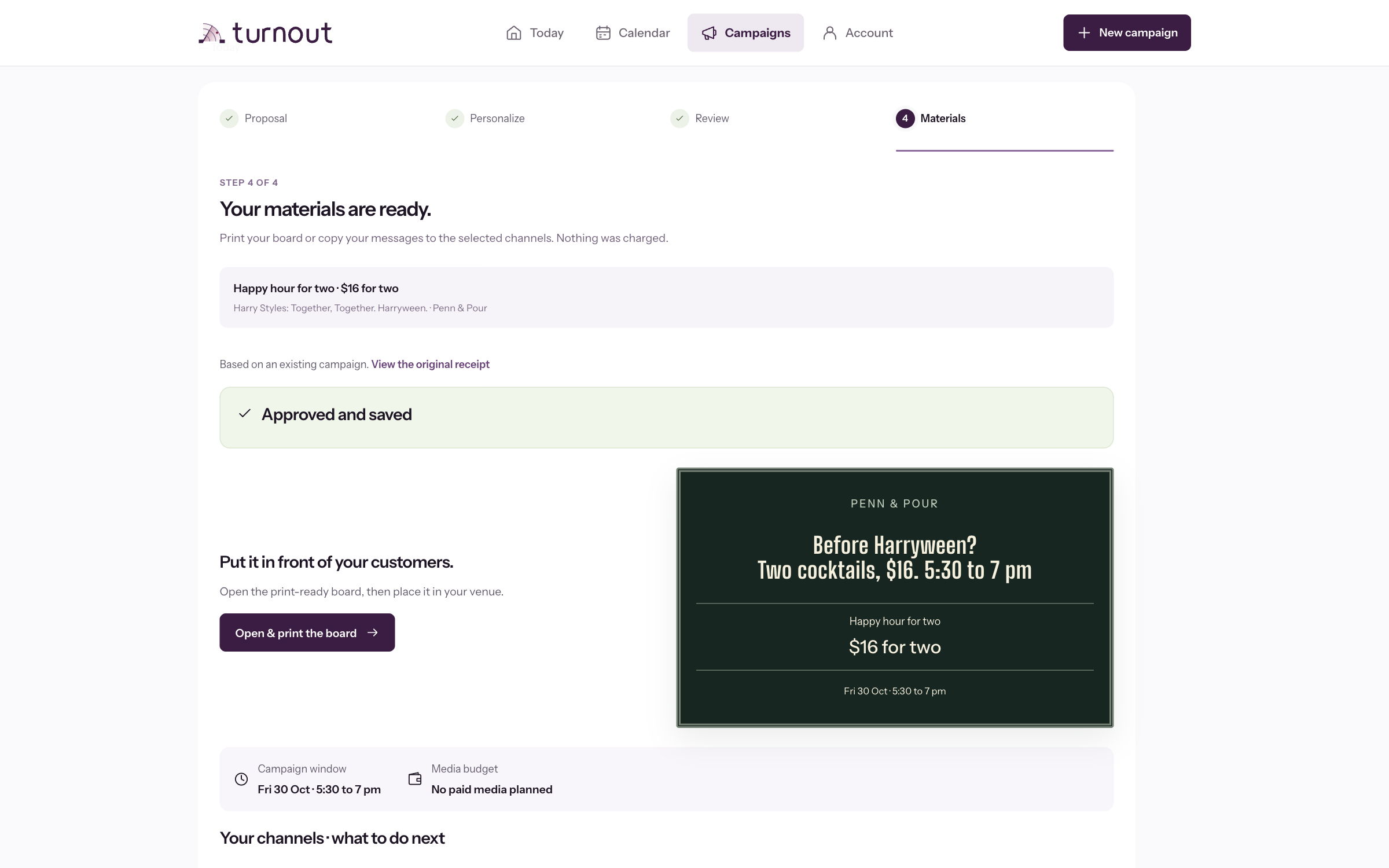
Materials: approved and saved, the board ready to print, every channel with its status. Nothing sent without you.
Inspiration
I have always loved improvising as a customer: walking out of a show and deciding, right there, where to go next, with whatever is around me. That moment is the last mile of marketing, and the places that live on it have no tools for it. The chains and the big agencies have real-time local marketing and personalization engines; the independent place has a chalkboard and a hunch. I wanted to put that engine in everyone's hands: real time, local, personal, and simple enough to use between two services.
What it does
Turnout is a marketing agent for an independent business. It watches every event around the door, big or small. When a crowd is about to be nearby, it asks Qloo who that crowd is: what they like, which brands and places they already love around you. Then it picks the one offer on your menu they will say yes to, writes the campaign, picks the channels they actually use and caps the budget. You add your words, approve with one tap, and get an exact receipt: the board at your door, the posts, the message to your regulars. Nothing goes out without you, nothing is charged. Built for the people who improvise: the right message, at the right hour, for the people who are about to walk past.
How we built it
Next.js and SQLite on Render. Ticketmaster for the events, Qloo Insights for the crowd (demographics, tags, brands, places within a walk), Claude to write the campaign from that profile and the owner's own offers. Every Qloo call is cached and logged, and every fact on screen says where it comes from and when it was checked. The demo film is a scripted recording of the live app.
Challenges we ran into
Saying only what I can prove. Capacities are seats, not people. Exit times are estimates. No footfall, no sales forecast, no "sent" unless something was sent. The second challenge was ambiguity: Harry Styles is a person, an artist, an album; the agent resolves entities deterministically and asks the owner when it is unsure, instead of guessing.
Accomplishments that we're proud of
The crossing of data. One decision is built from four sources that never met before: the event from Ticketmaster, the taste of that crowd from Qloo, the taste of the street itself, and the owner's own menu and place DNA. Not a dashboard of signals, one pick, with its evidence.
The offer comes out marketed and packaged. Not a suggestion to think about, a campaign ready to go: the offer chosen, the message written in the owner's words, the channels picked, the budget capped, the board ready to print and the materials for every channel on one receipt. From a crowd on the radar to a packaged offer at the door, in a few taps.
What we learned
Knowing who the crowd is changes the offer, not just the words. On the same street, the same night, a show's audience and a game's audience want different things; without that knowledge, the "best" offer is just the one with the best number. The hard part is not the data, it is the last mile: turning five sources into one line an owner can read in ten seconds, between two services, and trust enough to approve. And an agent earns that trust by saying only what it can prove. Seats, not people; an estimate, not a promise; prepared, not sent. Every honest limit I added made the product feel more like a partner and less like a tool.
What's next for Turnout
Go and prove it on the ground. A pilot with a handful of independent places around one venue, to measure the real value: offers out before the crowd steps out, customers who came because of them. The point to make is simple: marketing has to become real time, and with the right tools anyone can market an offer to the right people, at the right hour, right where they are. Then the next layer of the product: real sends behind the receipt. Social posts published straight from the receipt to the connected accounts, Instagram, Facebook, TikTok, Snapchat and Google Business, instead of copied by hand; a connected WhatsApp number for the regulars; a local ad account for the ad a few blocks from the venue; and an hourly scan that alerts the owner before the crowd arrives.
Built With
- anthropic
- next.js
- open-meteo
- qloo
- render
- sqlite
- ticketmaster-api
- typescript

Log in or sign up for Devpost to join the conversation.