-
-
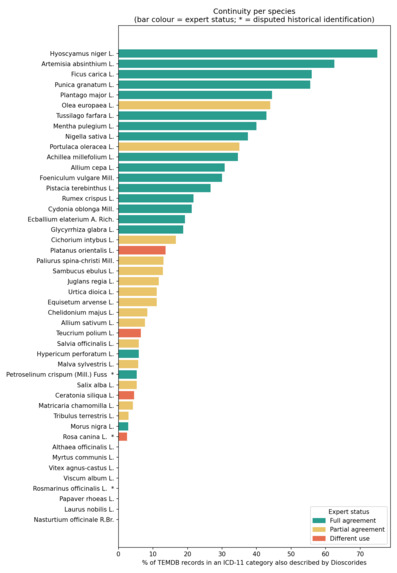
Species continuity
-
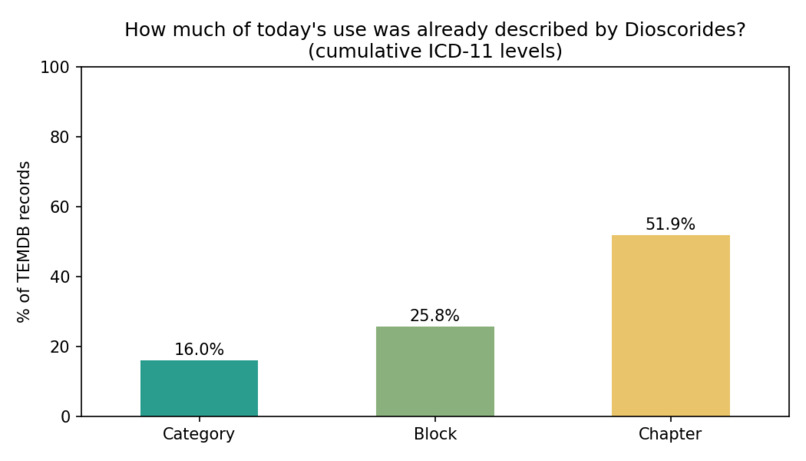
Overall continuity
-
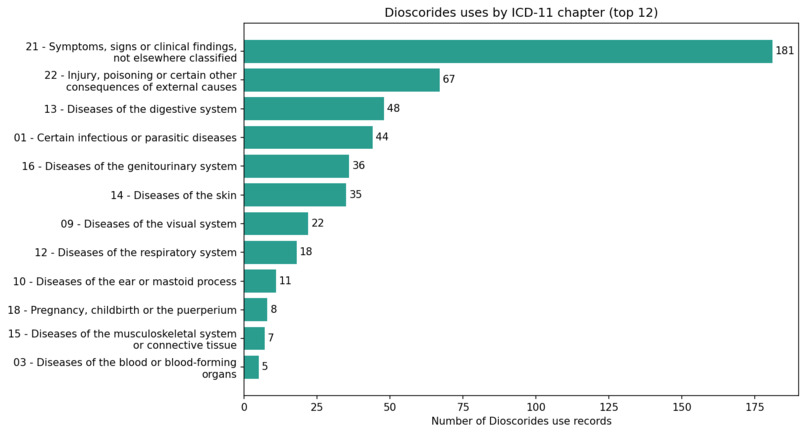
Dioscorides ICD-11 Chapters
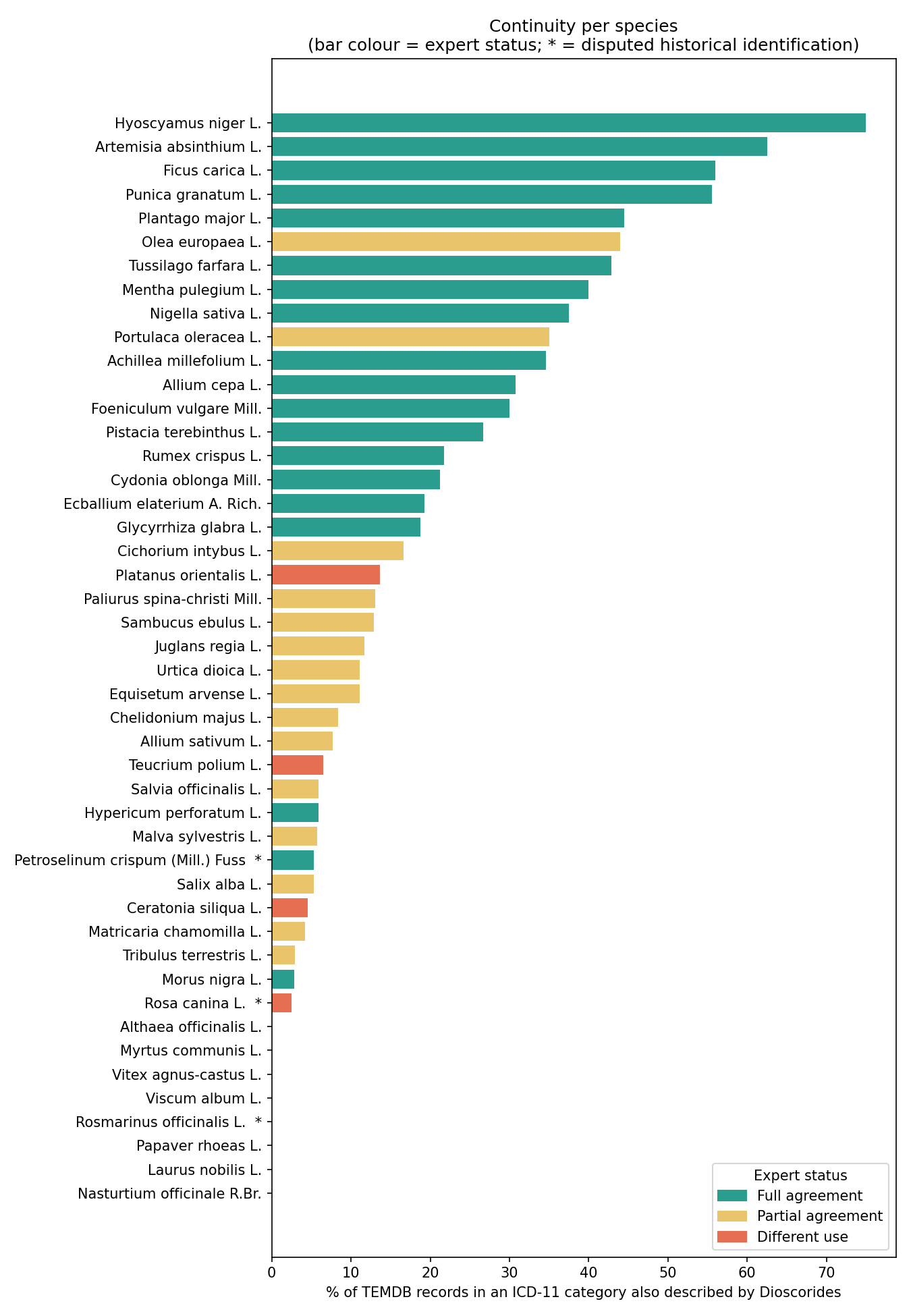
Source of Inspiration: The deep-rooted heritage of these lands, embodied in De Materia Medica-the first written text to document Anatolian medicinal plants and considered one of the foundational works of pharmacy-and its author, Dioscorides of Adana (Anazarbus). As future pharmacists and researchers, we are driven by a scientific curiosity to determine whether this botanical heritage-compiled in these lands 2,000 years ago-still persists in contemporary Anatolian folk medicine.
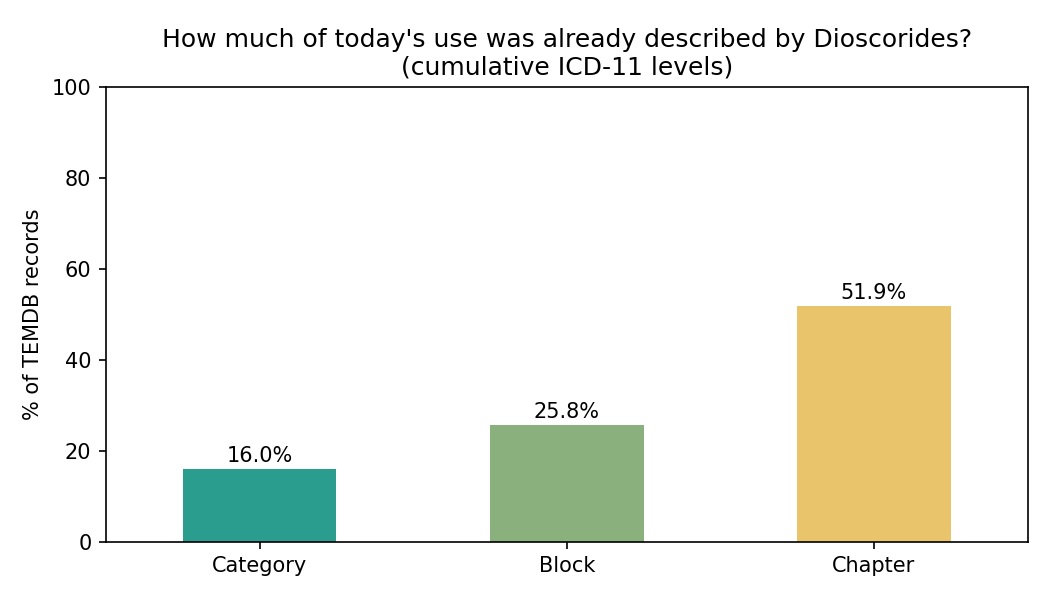
##What it does: It translates the ancient and modern uses of 46 plant species into the WHO ICD-11 common language and assesses their continuity. It shows that 19.9% of Dioscorides’ uses persist, while 16.0% of current records (51.9% at the section level) align with the categories he defined (for example, the use of yarrow for wound treatment, as a diuretic, and for intestinal complaints).
How we built it: As the primary reference, we used the TEMDB (Turkish Ethnomedicine Database), which was developed by our own team during their academic careers and which they continue to actively maintain, expand, and update outside the scope of this competition. The 606 ancient uses extracted from Sprengel’s Latin edition with the help of Artificial Intelligence (Claude) were coded in the ICD-11 system in accordance with TEMDB’s methodological guidelines. A transparent, one-click Google Colab (Python, pandas) infrastructure was built to validate all analytical metrics.
Challenges we encountered: The ambiguity of ancient plant and disease names; the adaptation to ICD-11 of effect-based terms that do not include disease definitions, such as “laxative/purgative”; and the poor OCR quality of historical Latin editions.
Accomplishments we’re proud of: Establishing the first reproducible, transparent, and methodologically sound scientific bridge between Dioscorides’ ancient prescriptions and modern Anatolian folk medicine.
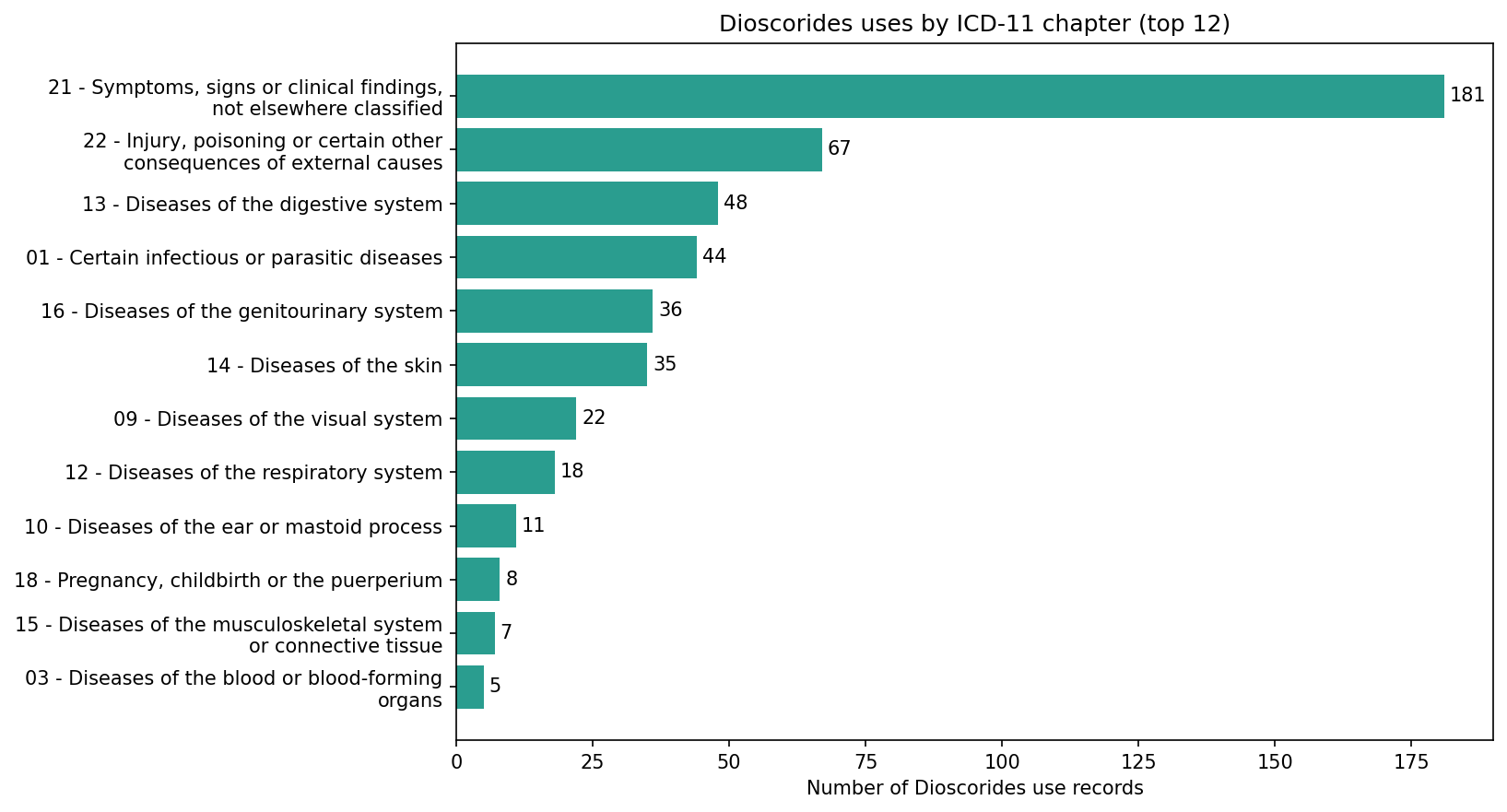
##What we learned: As pharmaceutical researchers, we discovered just how deeply rooted certain therapeutic practices such as wound healing and the treatment of digestive disorders have been in Anatolian culture for two millennia. Most importantly, we recognized the value of computational ethnobotany: Combining AI-powered text mining with standard medical coding allows us to quantitatively track the traces and evolution of traditional herbal medicine that have survived to the present day. ##What’s next for EthnoAnatolia Cross-Ref: Integrating new data years into the TEMDB, which we continue to develop academically; subjecting ICD-11 codings to manual/expert validation; and applying this methodological model to other historical medical manuscripts.
Built With
- crossref
- demateriamedica
- dioscorides
- ethnomedicine
- temdb
- traditionalknowledge
