-
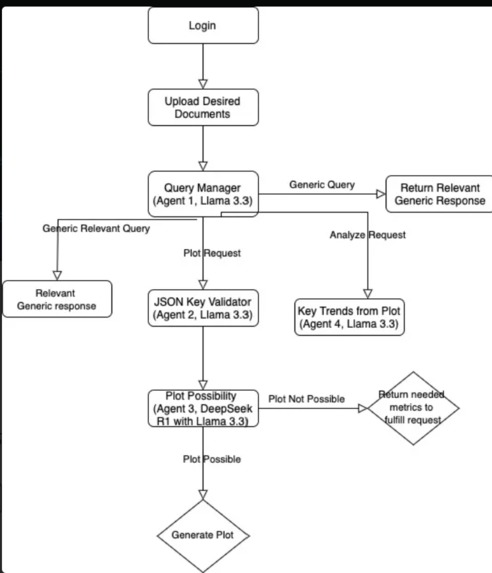
explains the workflow of the llm
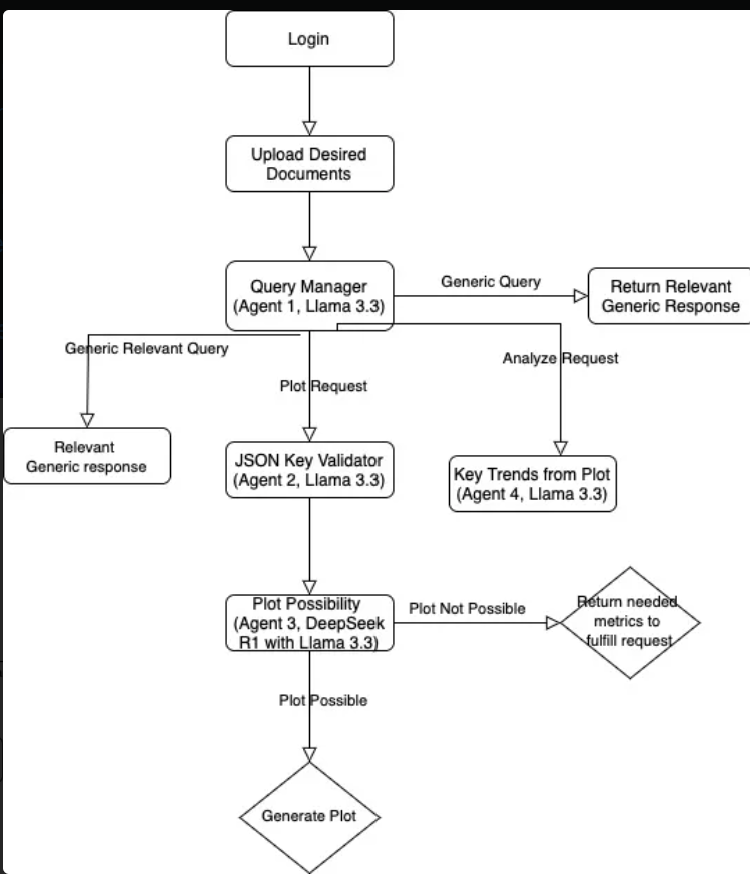
About the Project
Turbo Alpaca was developed as a collaborative effort to empower small businesses with an accessible AI-driven solution. Below is a glimpse into our journey—what inspired us, how we built our project, and the challenges we faced.
Inspiration
Small Business Needs:
We noticed that many small-to-medium enterprises spend countless hours on tasks like customer feedback analysis, content creation, and data management. This inefficiency inspired us to create a tool that could automate and streamline these processes.Emerging AI Capabilities:
With advances in large language models (like LLaMa), we saw a prime opportunity to leverage cutting-edge AI in a way that remains practical and cost-effective for smaller organizations.
What We Learned
Team Collaboration:
Coordinating across multiple tech stacks and specialties taught us the importance of clear communication and version control. Each contributor brought a unique skill set, enhancing the final product.AI Integration:
Incorporating advanced AI models such as LLaMa, along with LangChain, Hugging Face, and prompt-engineering techniques, underscored the value of a robust, flexible architecture.Efficient Data Retrieval:
We discovered how critical it is to have an effective vector store for quick and accurate lookups. Using Pinecone for vector embeddings allowed us to handle context-aware queries smoothly.
How We Built the Project
Our tech stack combined multiple tools and frameworks to ensure a cohesive and scalable solution:
Backend & AI Integration
- Python for the core logic and AI integration.
- LangChain for building modular pipelines to manage prompts, chain LLM calls, and handle context.
- LLaMa for powerful language model capabilities, providing context-aware responses.
- Hugging Face libraries for leveraging pre-trained models and transformers.
- Python for the core logic and AI integration.
Database & Data Management
- SQL for structured data storage.
- Pinecone for vector database functionality, enabling efficient similarity searches and contextual lookups.
- SQL for structured data storage.
Web Framework & Interface
- Django for a robust backend and quick, organized development of web services.
- JavaScript, CSS3, and HTML5 for crafting a user-friendly front-end interface that remains straightforward for small business owners.
- Django for a robust backend and quick, organized development of web services.
Deployment & Scalability
- Groq (inspired by hardware acceleration approaches) to explore potential optimizations in AI computation and inference (though this is still an exploratory piece of our tech stack).
Prompt Engineering
- Fine-tuned prompts to ensure that the AI model generated relevant, accurate, and helpful responses for various small-business scenarios (e.g., customer service, marketing suggestions, and operations).
Challenges Faced
Balancing Complexity and Accessibility:
We wanted to leverage advanced AI technologies without overwhelming end users. Striking this balance demanded careful UI/UX planning and iterative feedback sessions.Data Privacy & Security:
Small businesses often deal with sensitive customer information. Ensuring data protection and compliance with regulations (e.g., GDPR) required meticulous design and robust security measures.Real-Time Performance:
AI computations can be resource-intensive. Optimizing queries (especially with vector embeddings in Pinecone) and exploring potential hardware accelerations (inspired by Groq) were critical to providing near-instantaneous responses.
-Frontend-Backend Integration Complexity Bridging the gap between a dynamic frontend and an AI-powered backend posed architectural challenges. Efficient API design, asynchronous processing, and seamless data flow were necessary to ensure smooth interactions between the user interface and AI models.
Conclusion
Turbo Alpaca embodies our mission to democratize AI for smaller organizations. By combining a powerful tech stack—ranging from LangChain to Django, Pinecone, and LLaMa—we’ve built a solution that automates text-heavy tasks, enhances decision-making, and ultimately frees up valuable time and resources.
Together, our team tackled the complexities of modern AI, learned how to efficiently manage data, and created a product that transforms how businesses handle their day-to-day operations. We believe this is just the beginning of AI’s potential to reshape the small business landscape.


Log in or sign up for Devpost to join the conversation.