-
-

logo
-
-
-
-
-
-
-

Inspiration
The inspiration for this project came when I couldn't afford to pay for my Claude AI subscription in Q3.
Over the last 12 months, I had always paid for either ChatGPT Pro or Claude Pro ($20/month). But when I missed a month of payment, I realized that Claude Code no longer allowed me to access my previous sessions until I renewed my subscription.
This made me realize that the major reason I was paying for Pro wasn't just access to the models. It was the agentic harness and the context I had built around it.
So I switched to Hermes Agent. I initially set it up locally on my Windows PC before later moving it to a private VPS. I set up my development environment and installed all the tools I needed. After doing this, I realized I didn't miss much from my previous setup.
I connected Hermes to Discord for my personal tasks and connected it to a work Slack channel for work-related tasks.
Since then, I have been using Hermes to manage different parts of my personal and work life — from daily briefings and scheduled jobs that run three times a day to working on React Native and backend projects.
The setup worked well for a while, but I eventually got tired of using Discord and wanted more control over my agent. The frustrating part was that I could use Hermes through the terminal, web interfaces, or existing messaging apps, but there was no official Hermes mobile app.
Over time, I realized that the bottleneck wasn't necessarily having access to the most capable models. It was having the right setup, tools, workflows, and context around the agent.
That realization became the foundation for Tupliq Agent.
What it does
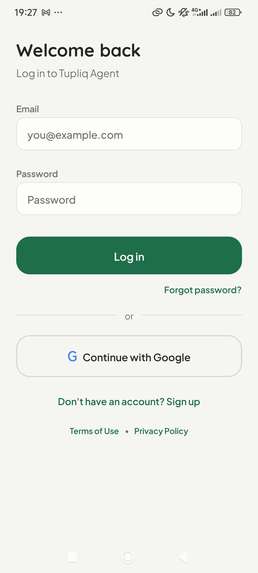
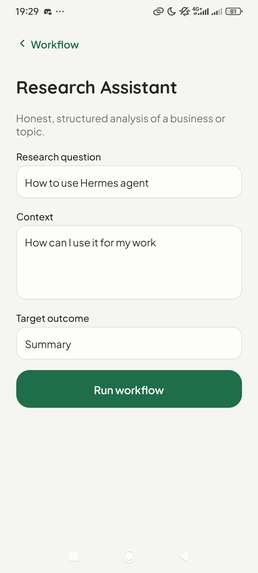
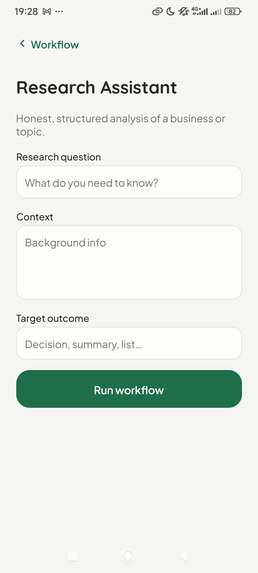
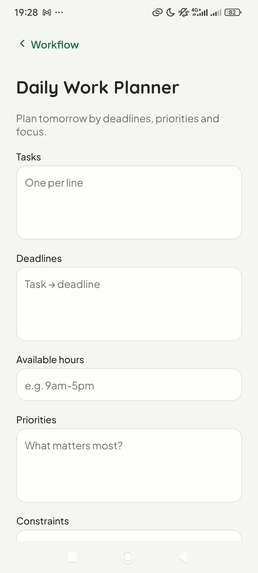
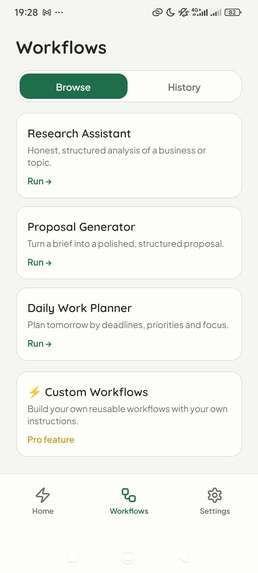
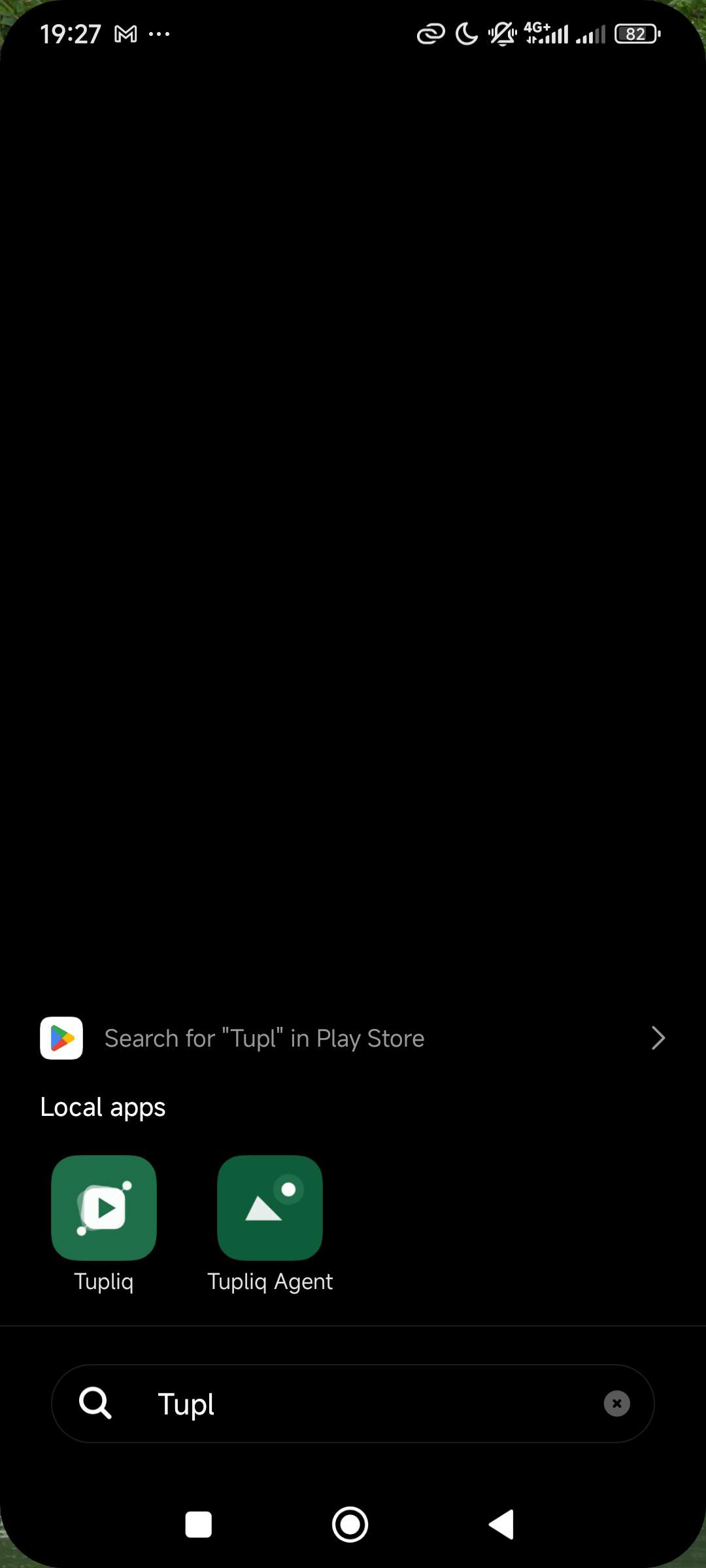
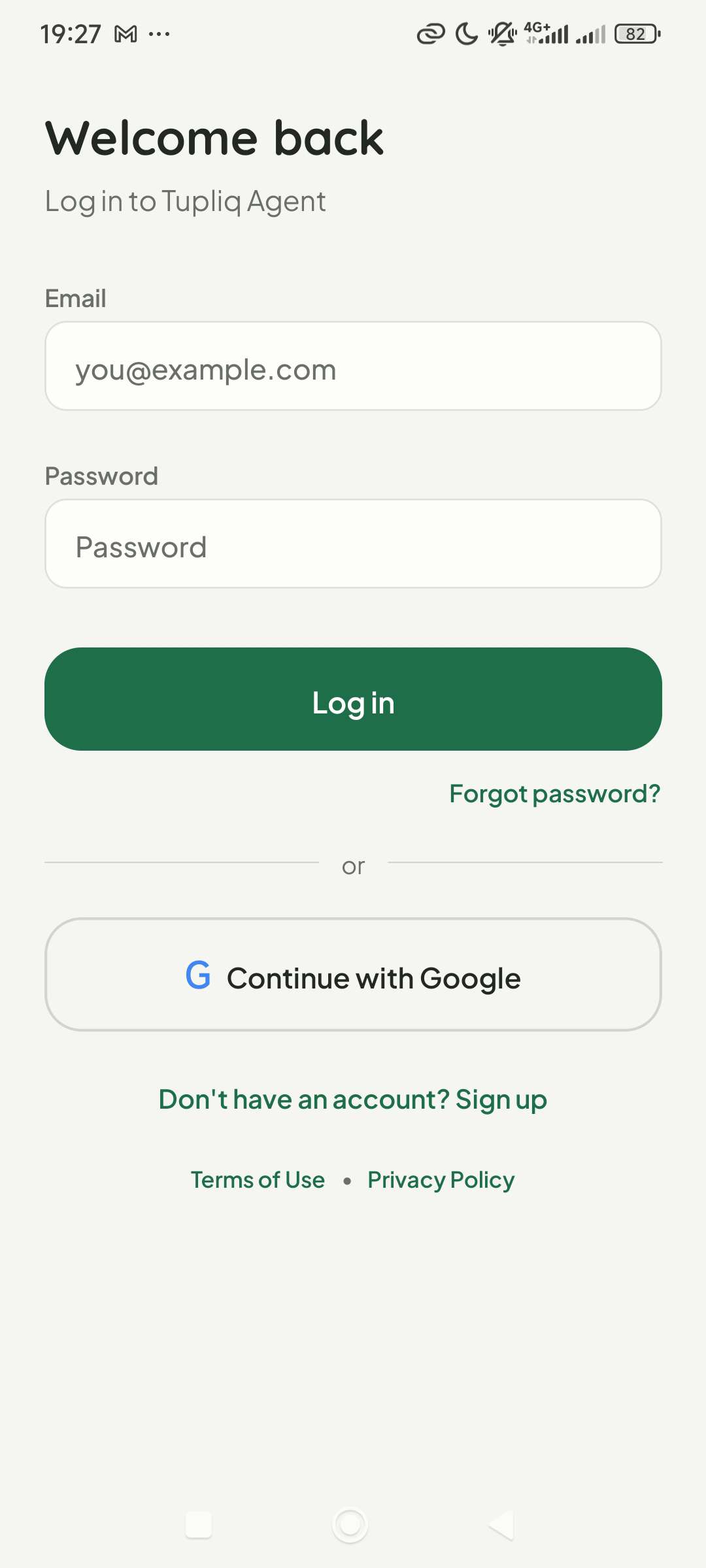
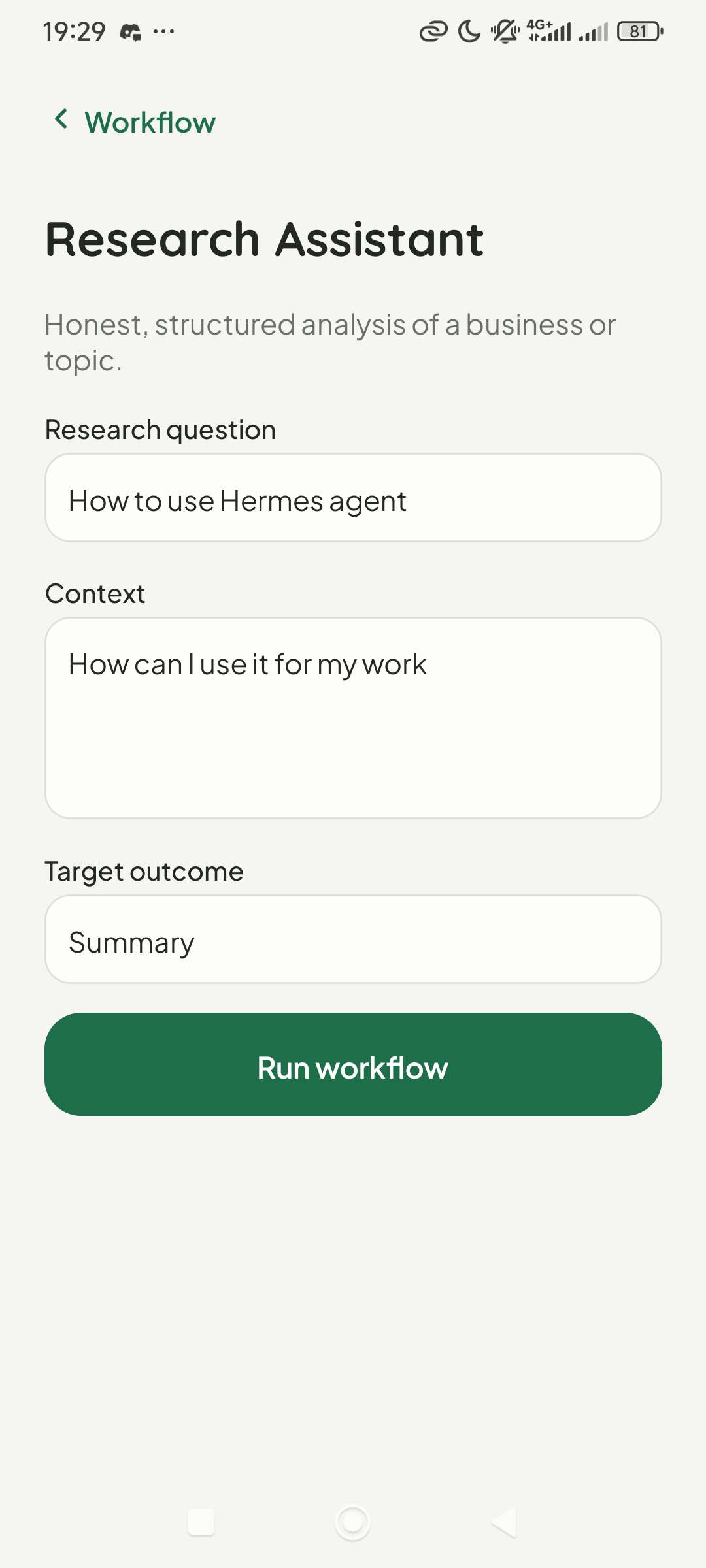
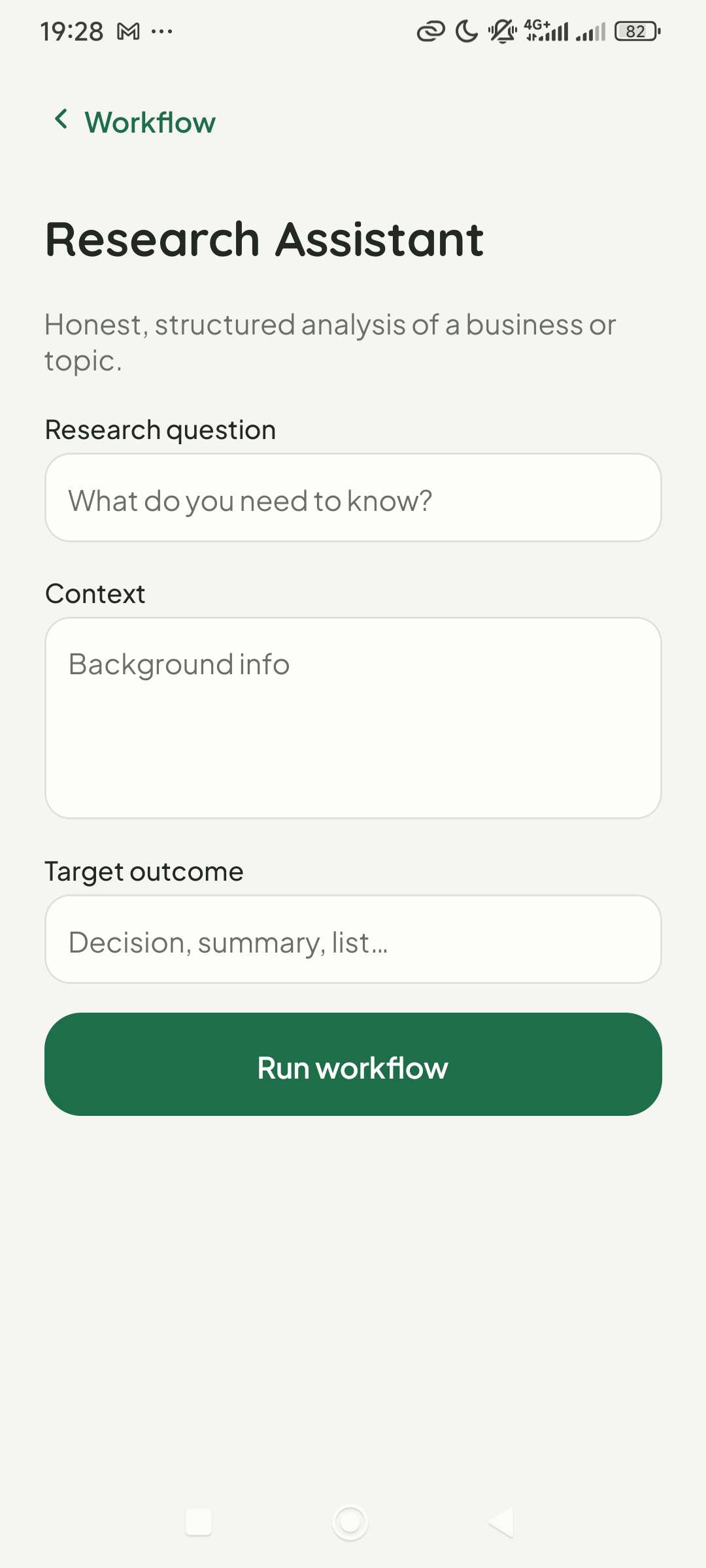
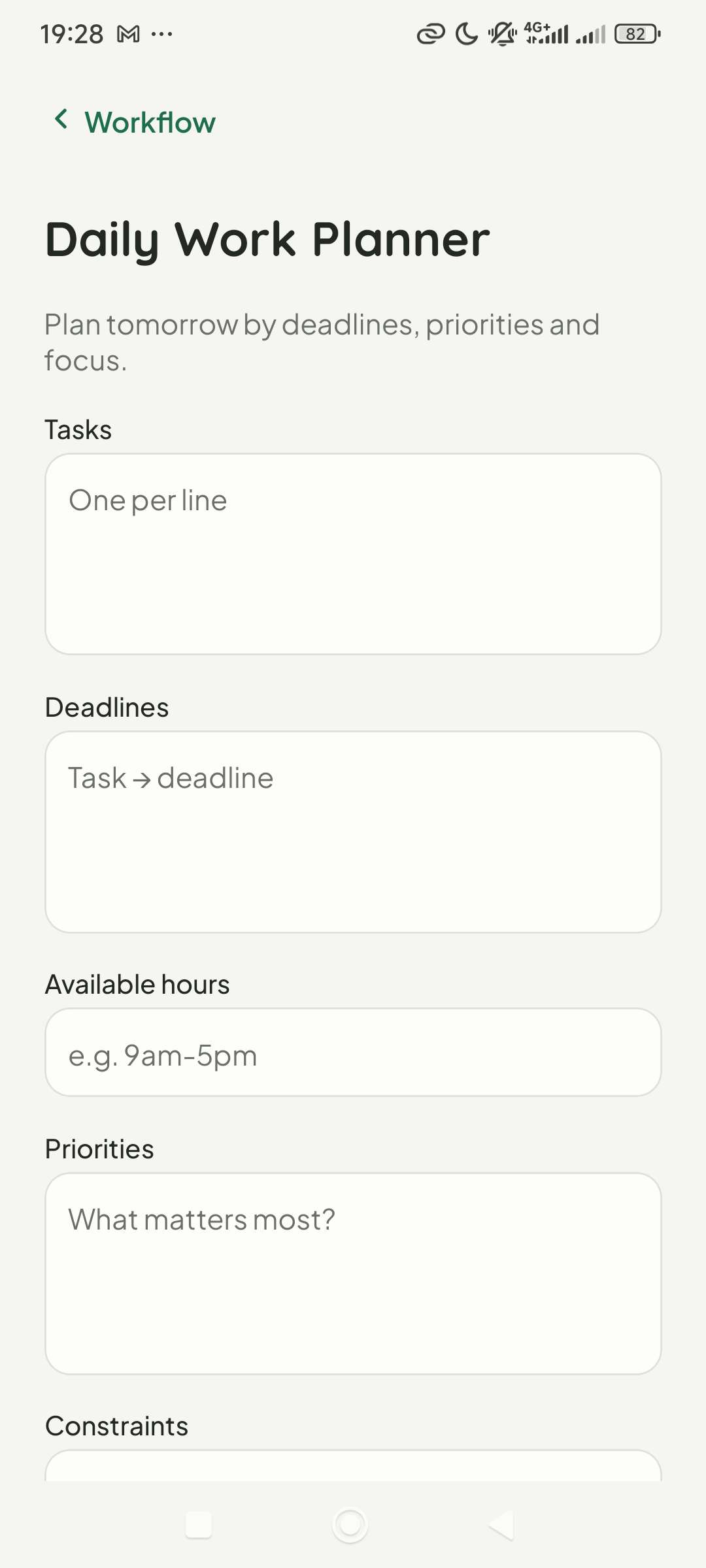
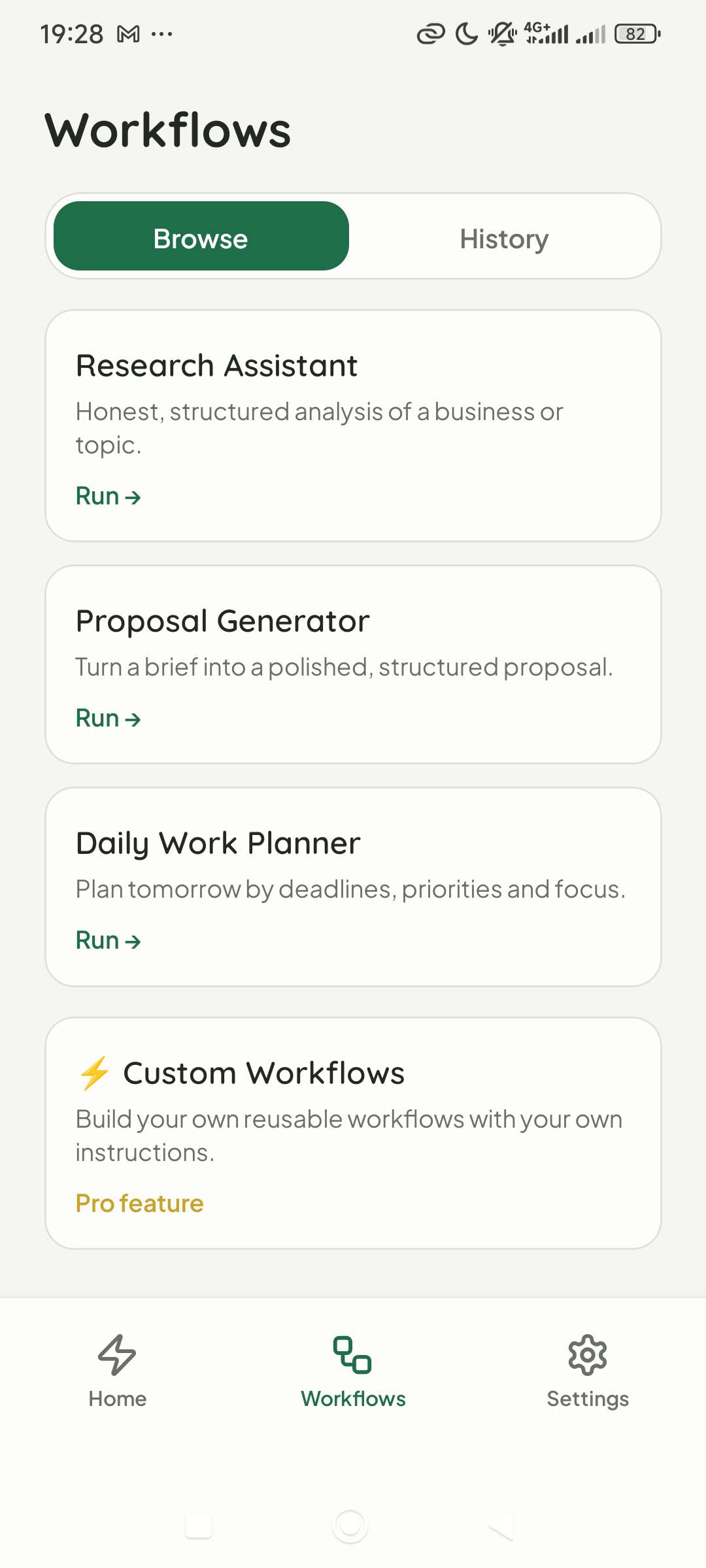
Tupliq Agent is a lightweight mobile interface for Hermes Agent that lets you clearly see and run workflows for your personal and professional life.
Instead of interacting with an agent through a terminal or a general-purpose chat interface, you can select a workflow, provide structured input, and get a structured outcome.
The goal is to make agentic workflows easier to use, repeat, and manage from a mobile device.
How we built it
I built Tupliq Agent using React Native, with Node.js (Nest.js) on the backend, and hosted the backend on my VPS. The database is powered by Supabase, while model inference uses OpenRouter, making it easy to swap between different models and providers.
One of the most interesting parts of the development process is that about 80% of the app was built from my phone.
I use Termius and Tailscale to SSH into my VPS, while Hermes on Discord acts as my coding agent. After making changes, I can ask the agent to serve the development build, open the URL on my phone, and immediately see the changes as I build.
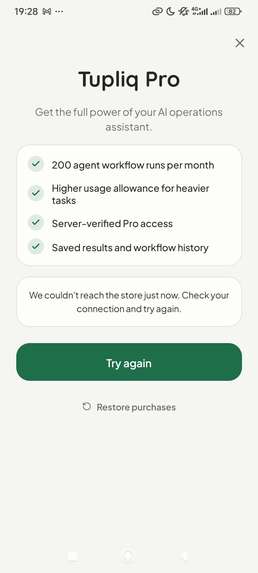
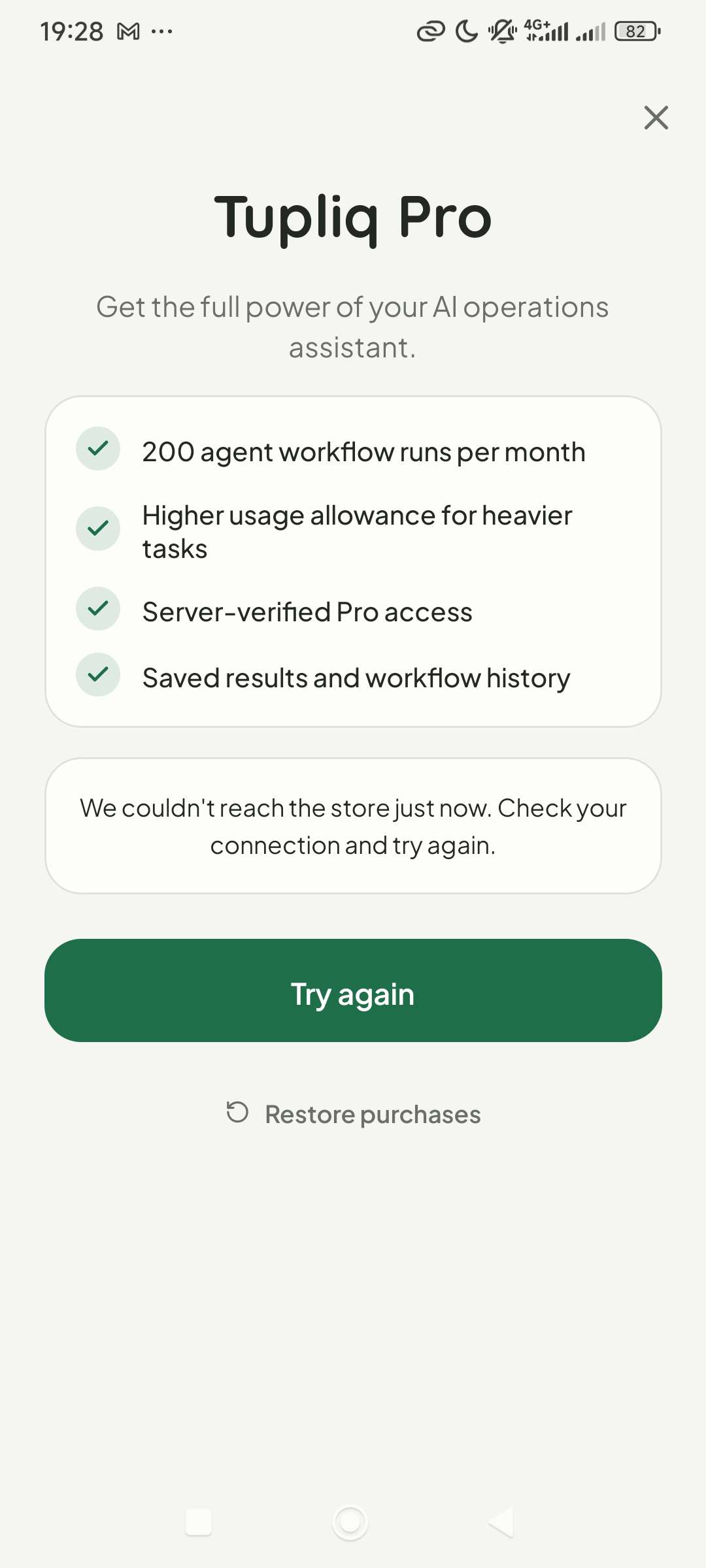
I also integrated Sentry for error monitoring and RevenueCat for mobile payments and subscriptions.
Challenges we ran into
One of the biggest challenges was setting up RevenueCat. I had to configure and verify my payment profile in Google Play Console. After that, I tried linking my RevenueCat entitlement to the product in Google Play, but it failed several times because I needed a production-compatible build before I could properly test the integration.
This meant I couldn't test payments for a while until I generated the appropriate production build.
Another challenge was figuring out how to provide a generous free tier for model inference without burning through credits. The solution was to use DeepSeek for the free tier because of its lower inference cost.
A third challenge was finding people who had the same problem and would actually use the app.
I initially assumed that people who use AI agents would be willing to pay for another app. However, I learned that many users are already comfortable paying directly for ChatGPT, Claude, or Gemini and may be hesitant to pay a third-party application on top of those subscriptions.
One potential solution is the recent OpenAI announcement around signing in with ChatGPT, which could allow users to use their existing ChatGPT account and limits for model inference rather than paying for another model subscription.
Accomplishments that we're proud of
What I'm most proud of is being able to build the app end-to-end, with about 80% of the development done from my mobile phone.
I'm also proud of successfully integrating mobile payments and getting my payment profile approved on Google Play.
More importantly, this setup has helped me shift my focus from simply building features to thinking about whether people will actually pay for and use what I'm building.
What we learned
This hackathon was when I finally understood what AI agents could really be.
I learned how to customize an agent around my own workflows and, more importantly, how to turn that experience into a product that other people can use.
I also discovered new tools such as OneSignal and Noise that can significantly improve distribution and user engagement. This reinforced an important lesson for me: building the product is only one part of the job. Getting the product into the hands of users is just as important.
So during the Shipaton period, I focused on building Version 1 and getting Tupliq Agent onto the Google Play Store rather than trying to build everything at once.
What's next for Tupliq Agent
The next step for Tupliq Agent is to onboard the first 100 users who are passionate about Hermes Agent and want a more accessible mobile interface without being locked into a single AI provider.
I want to use those users to understand which workflows are genuinely valuable, improve the product around real usage, and continue building Tupliq Agent into a practical mobile interface for personal and professional AI agents.
Built With
- docker
- hermes
- nextjs
- react
- react-native
- supabase

Log in or sign up for Devpost to join the conversation.