-
-
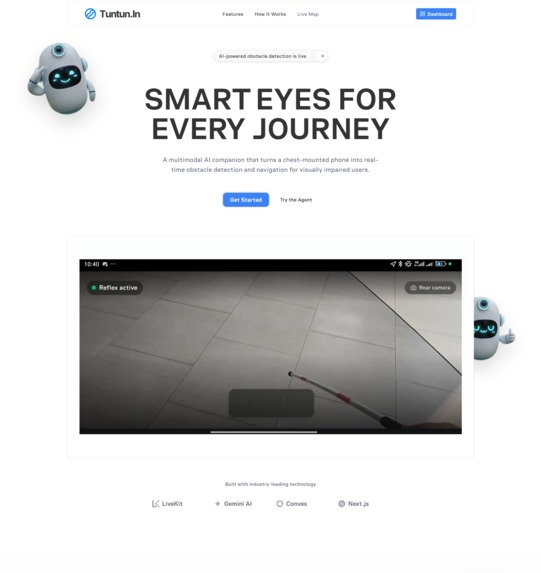
Landing Pages
-
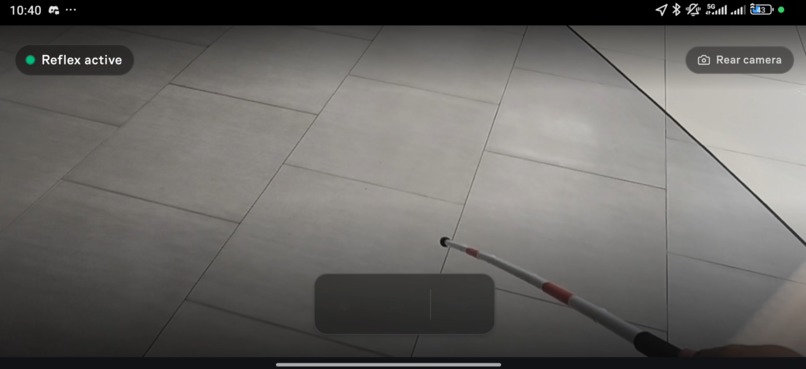
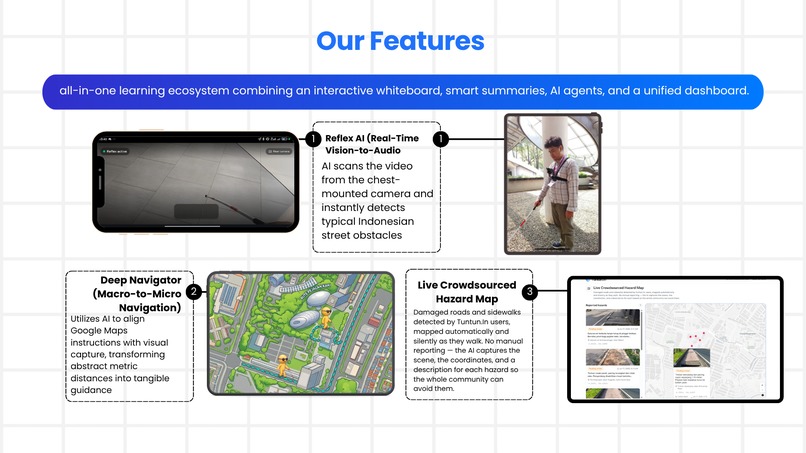
Reflex AI + Deep Navigator
-
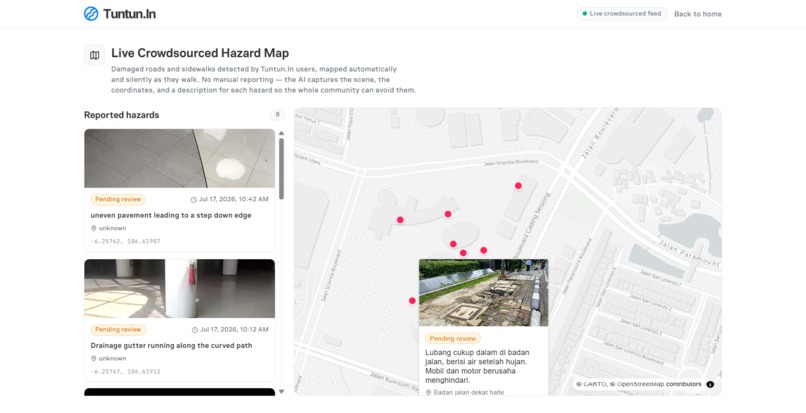
Live Crowdsourced Hazard Map
-
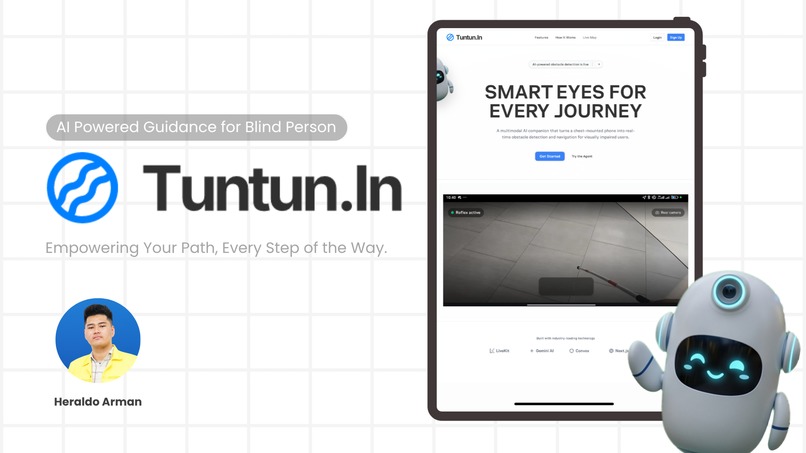
slide 1
-
slide 2
-
slide 3
-
slide 4
-
slide 5
-
slide 6
-
slide 7
-
slide 8
-
slide 9
-
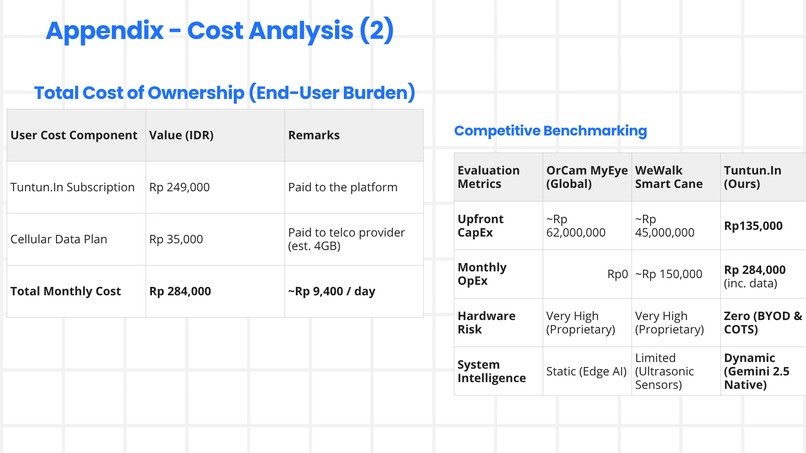
slide 11
-
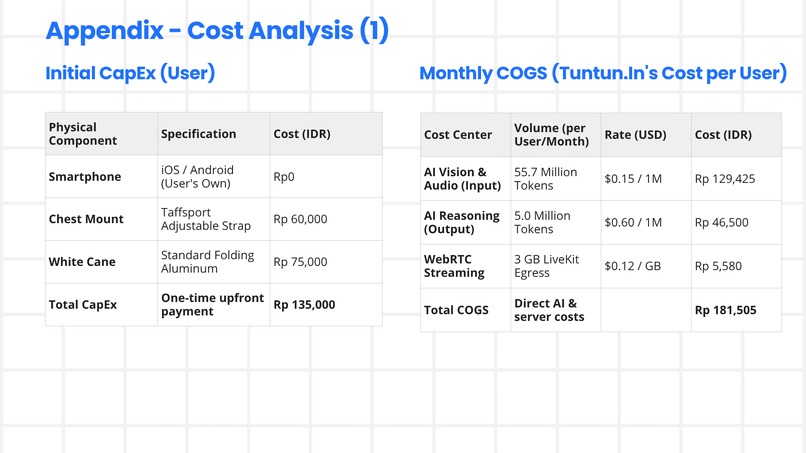
slide 10
-
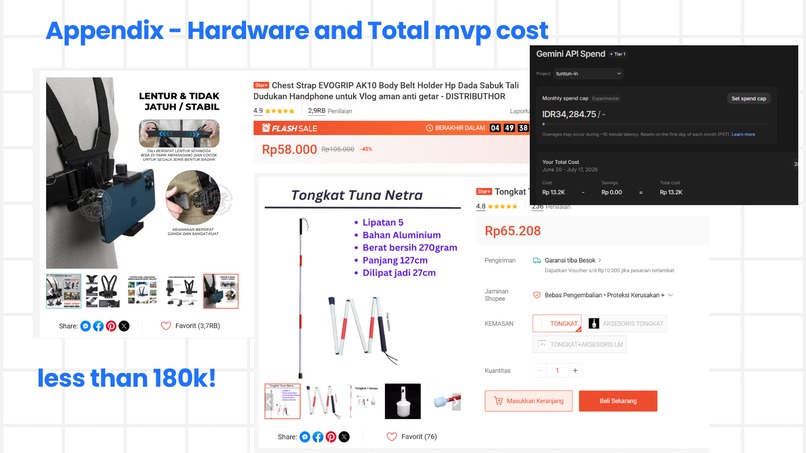
slide 12
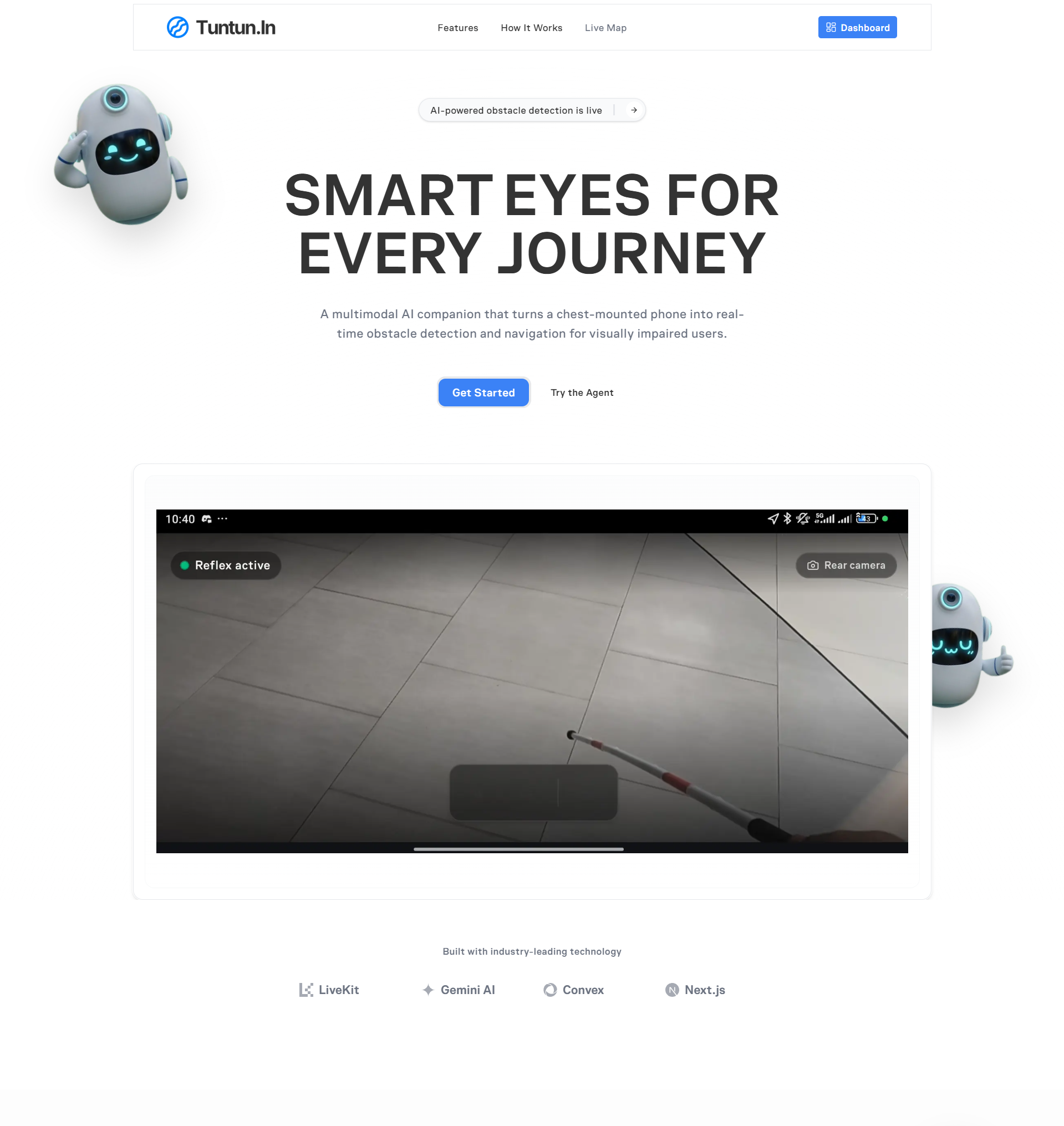
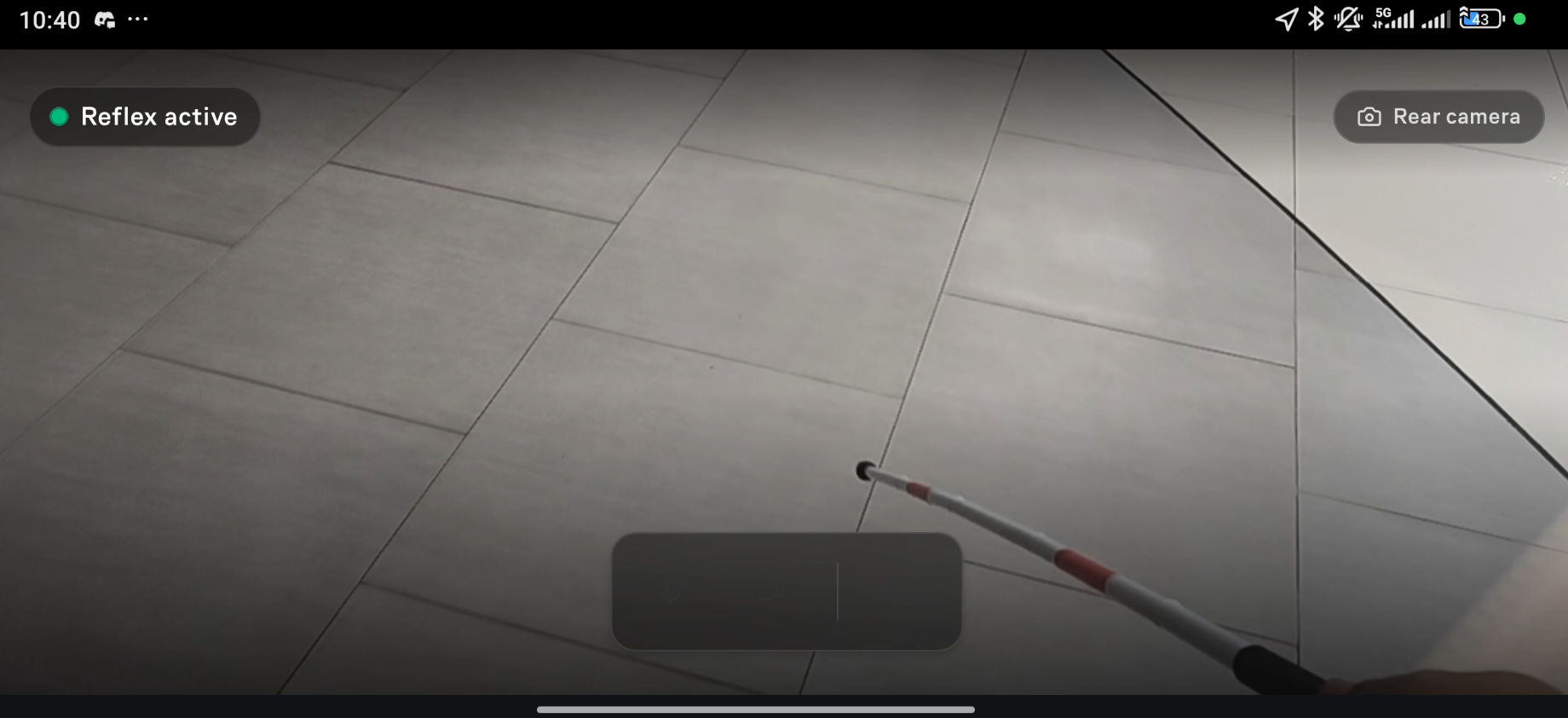
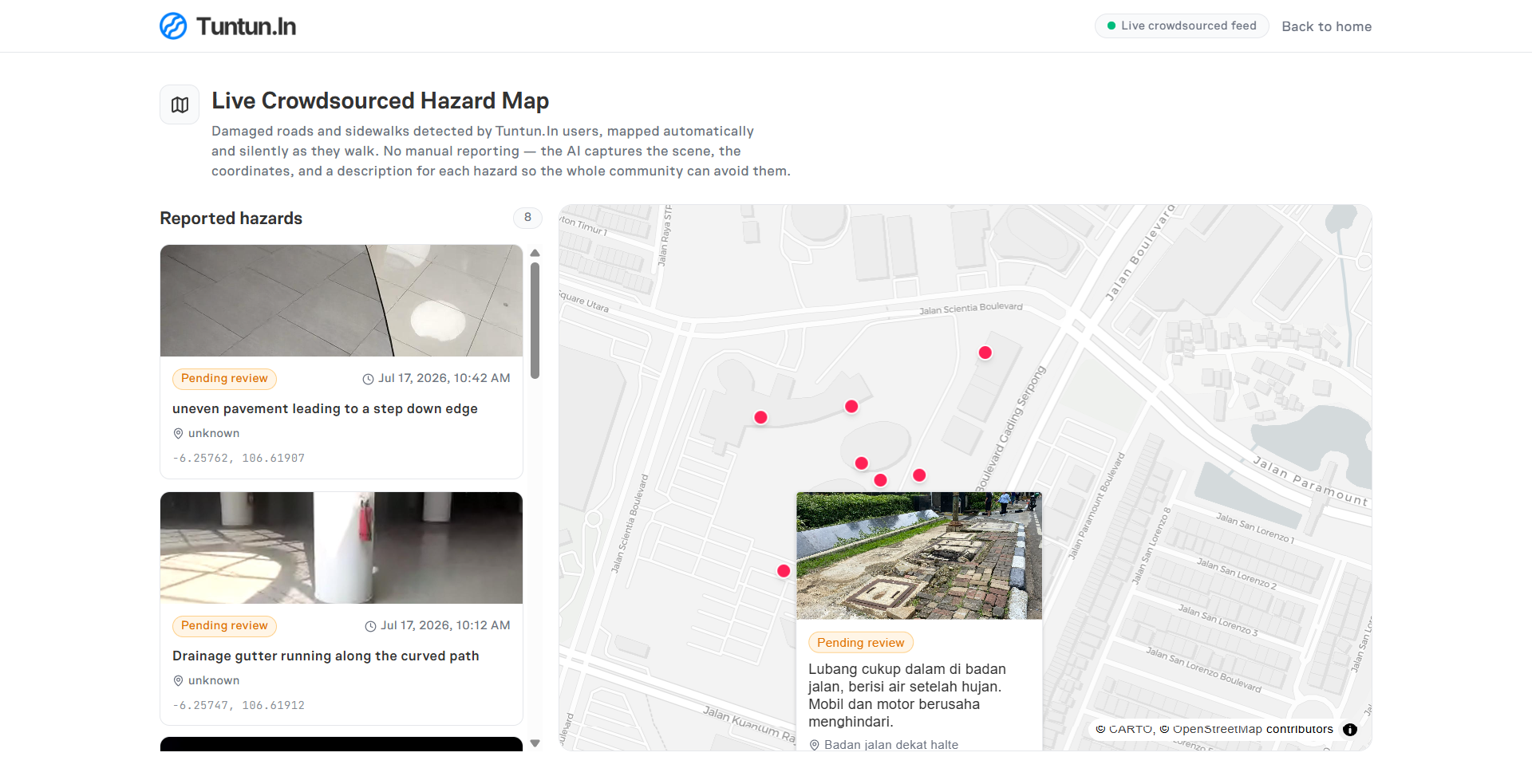
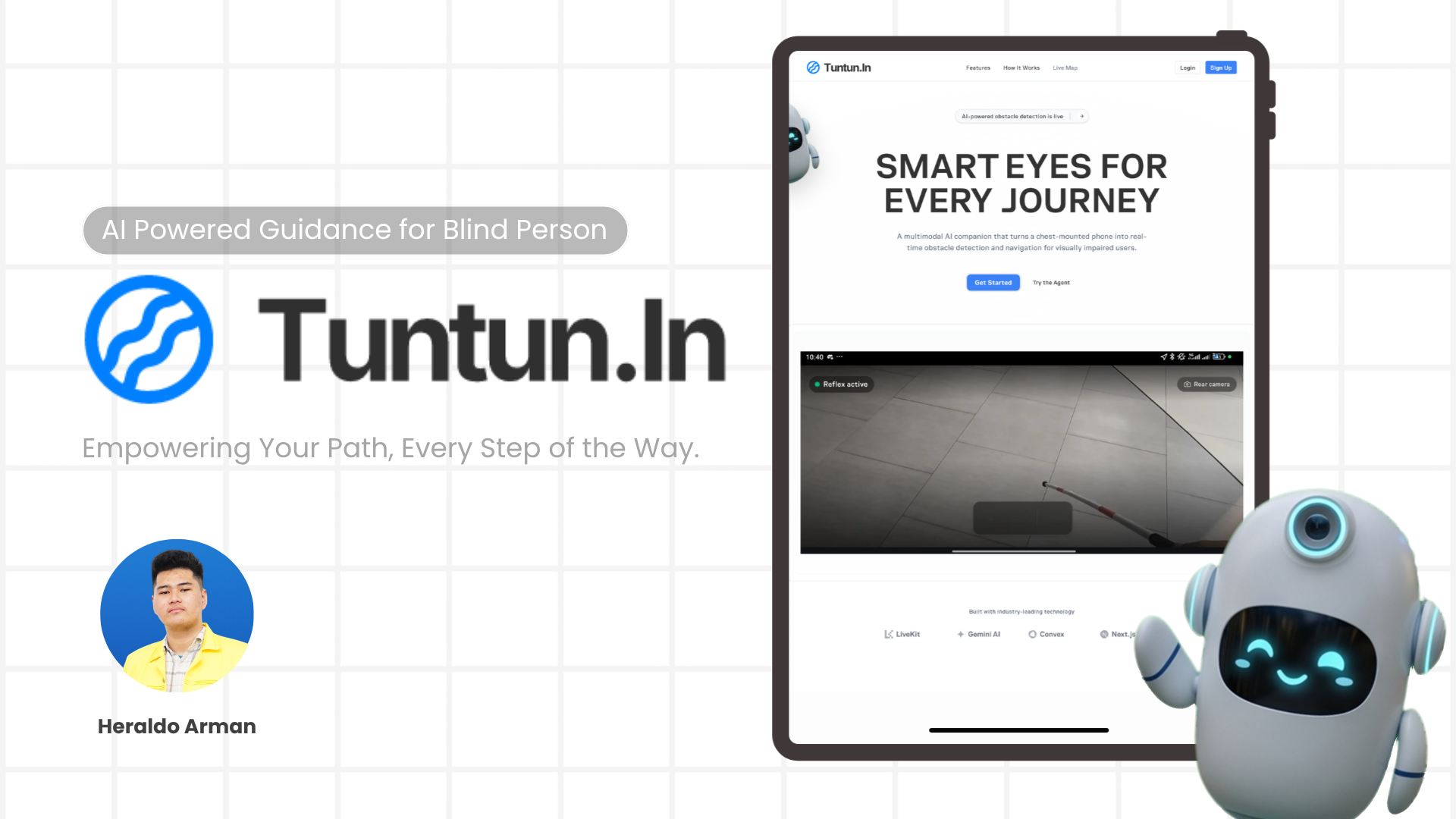
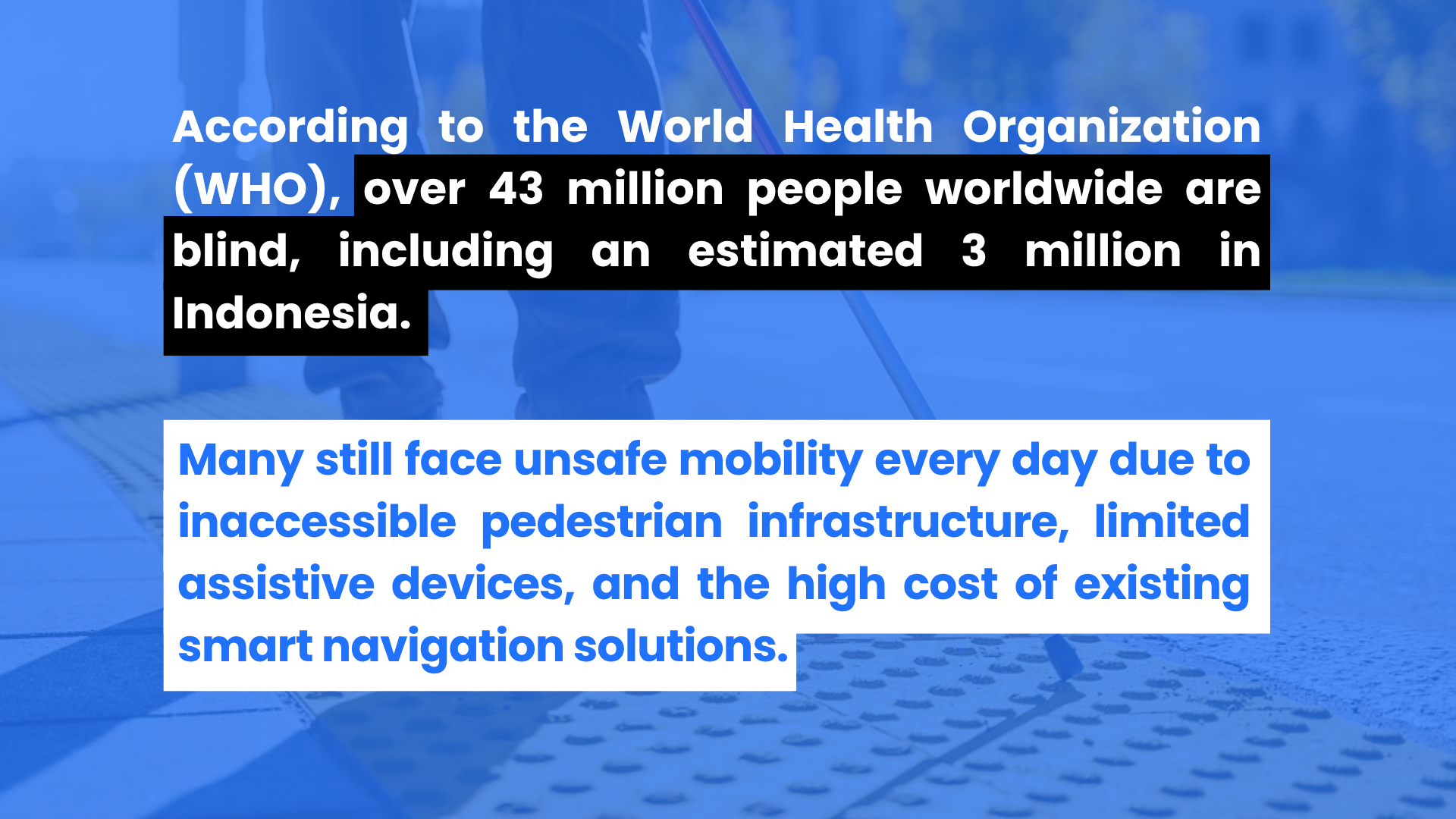
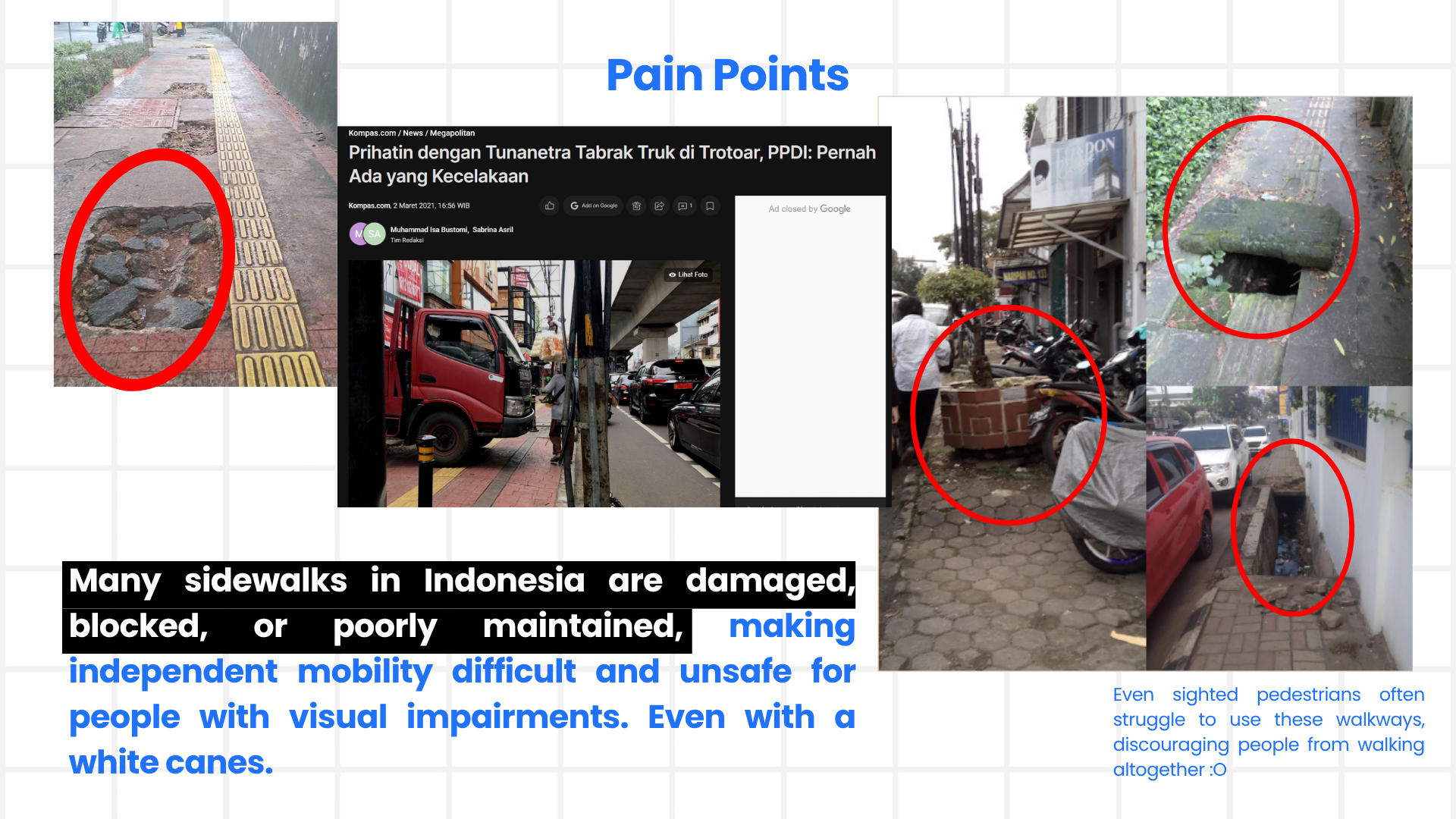
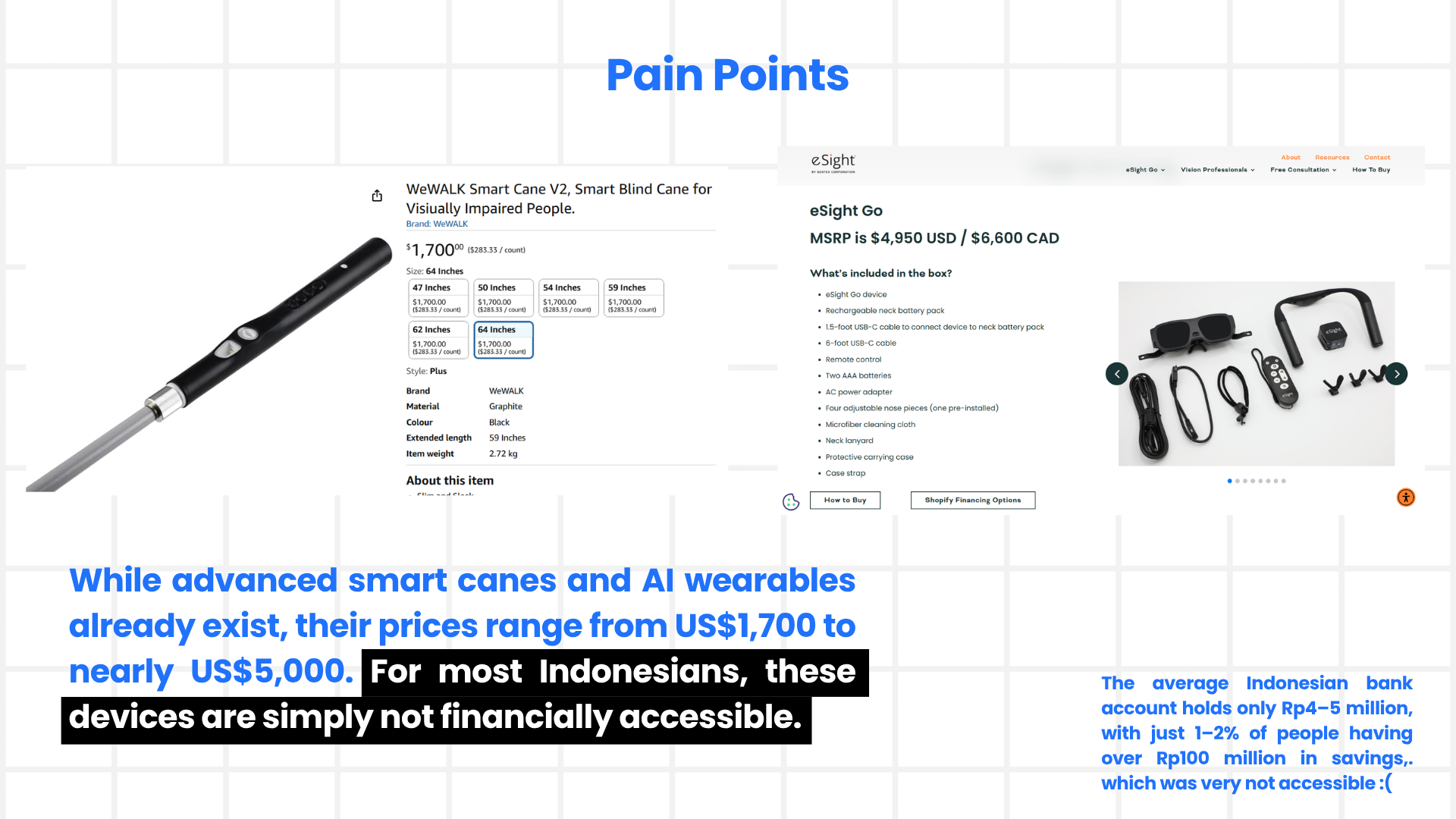
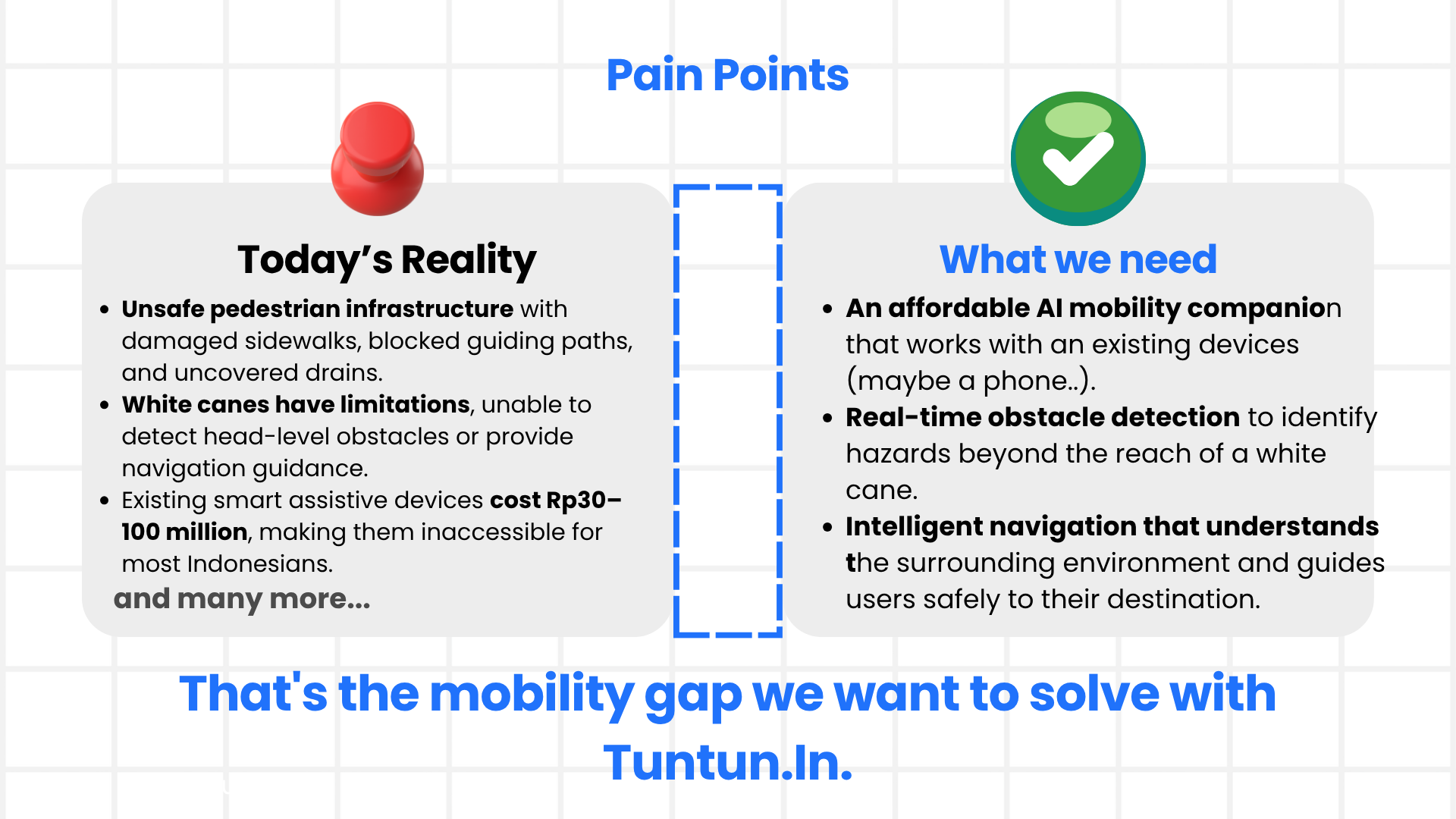
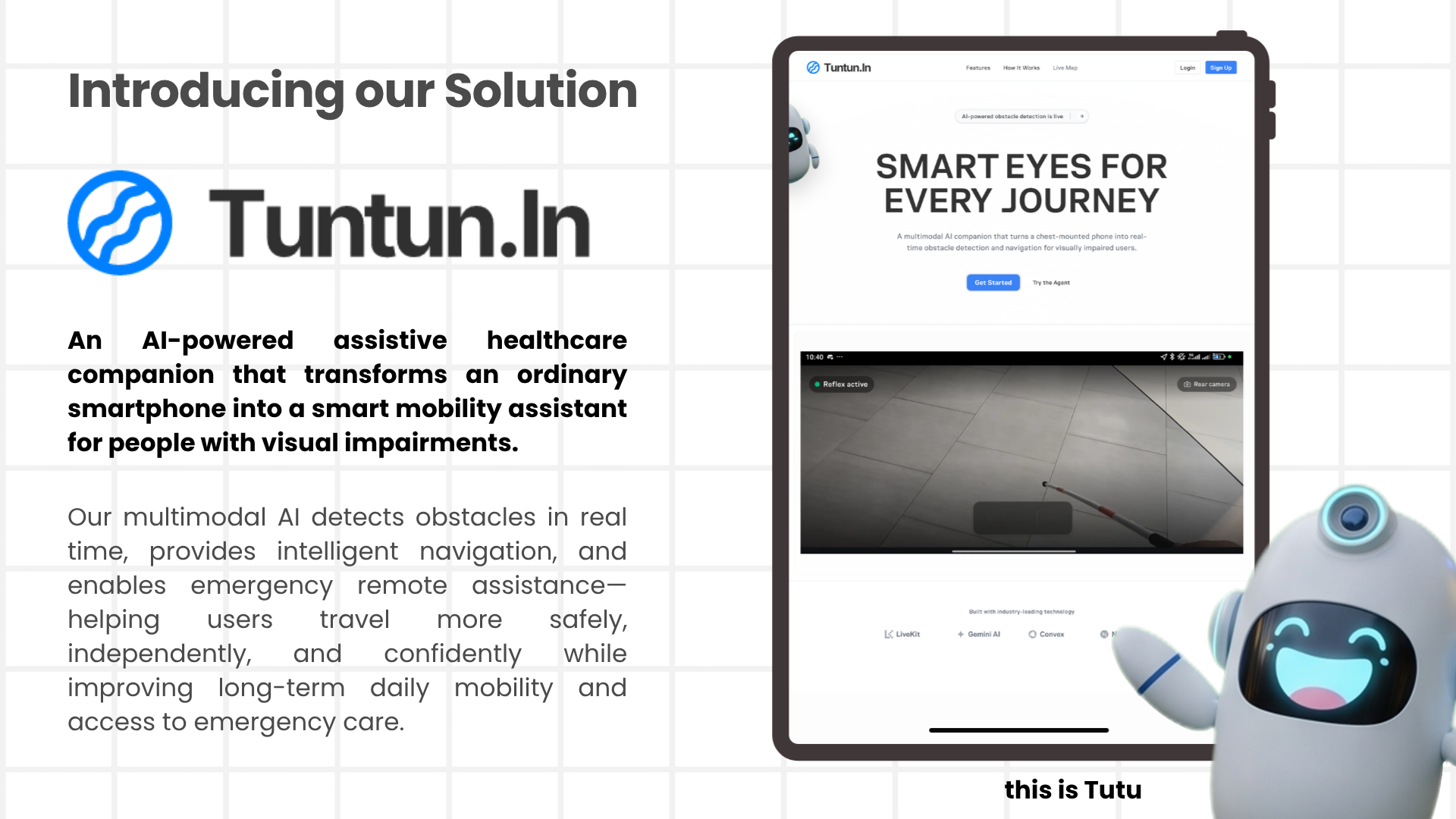
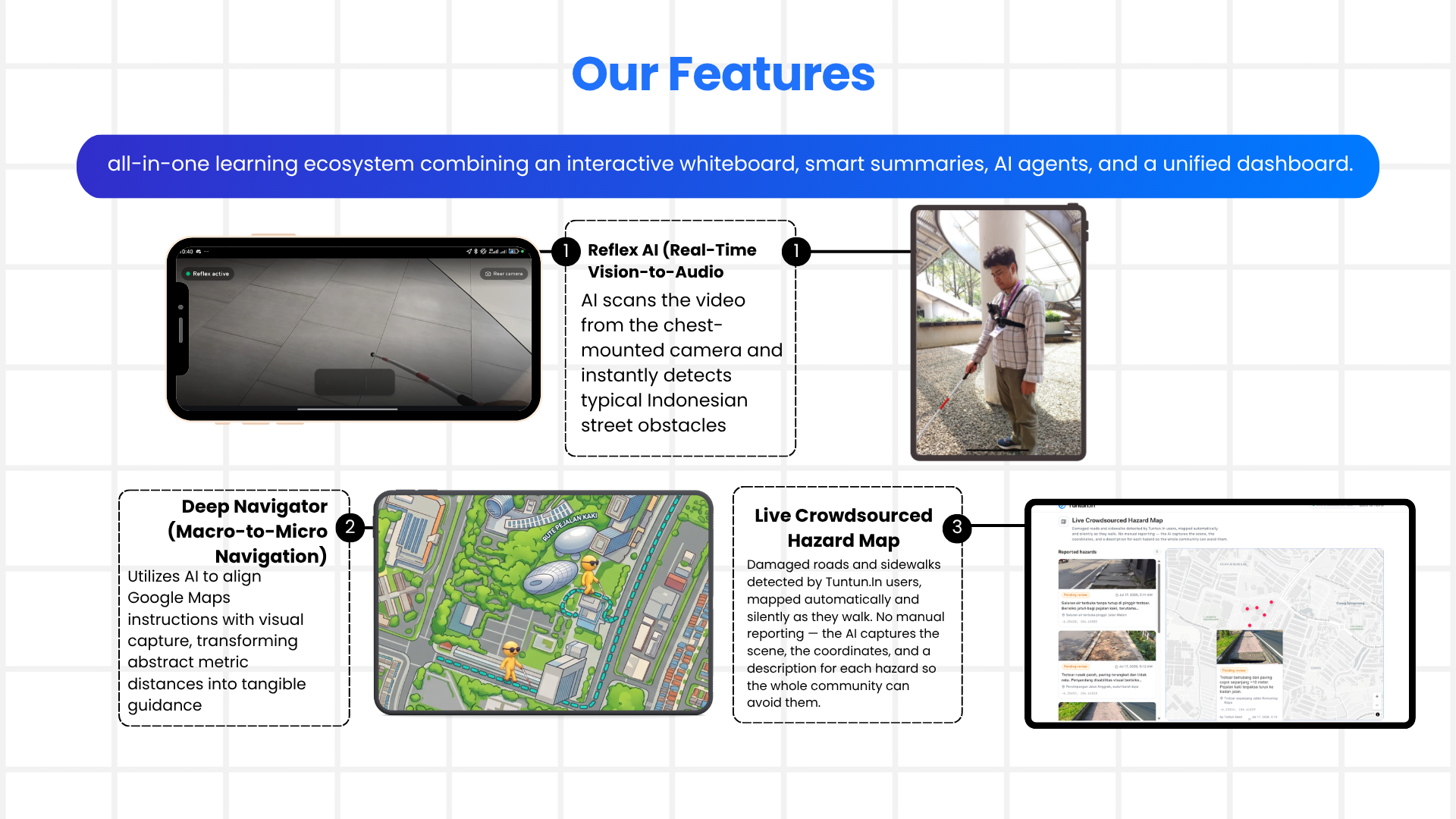
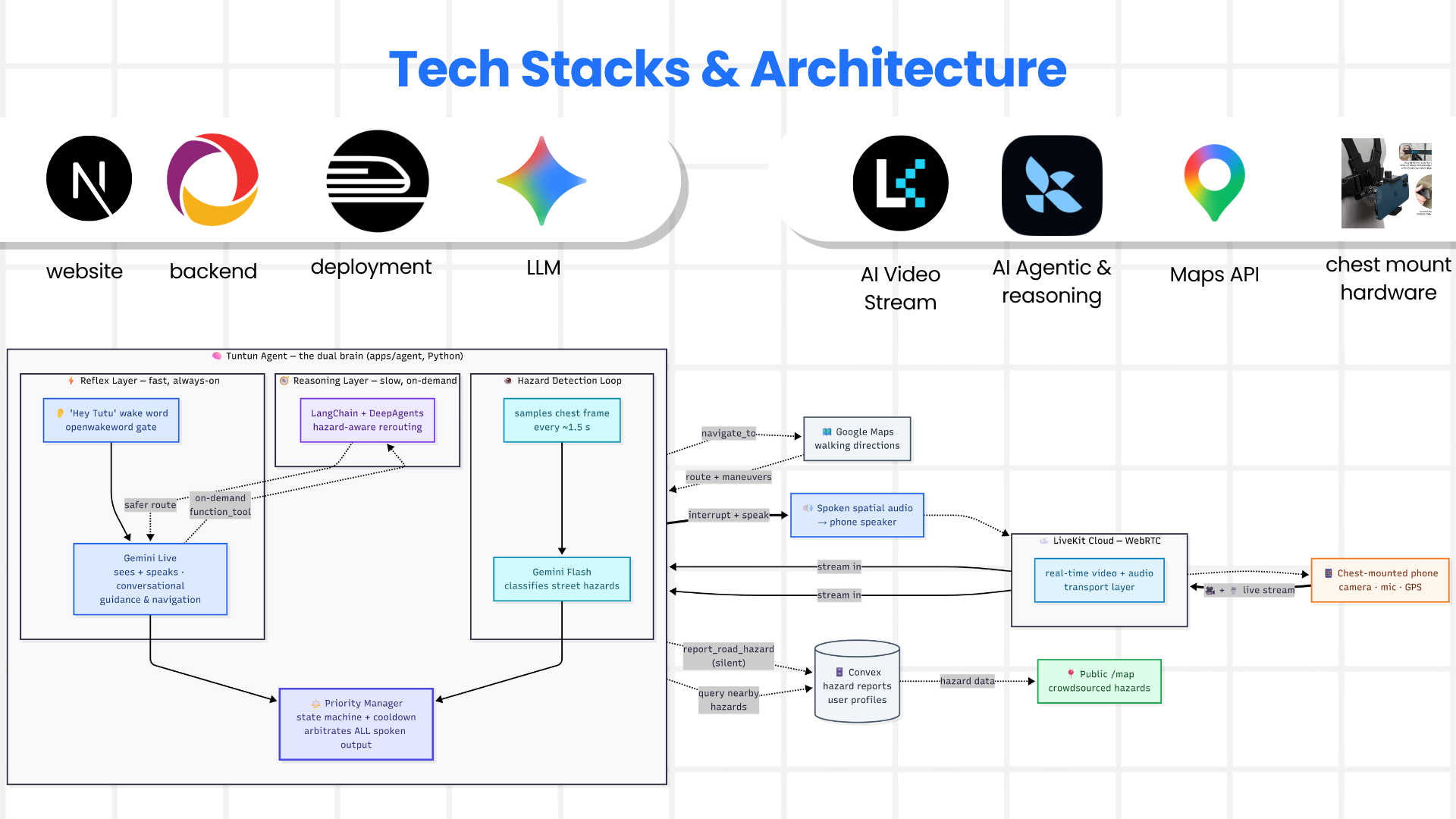
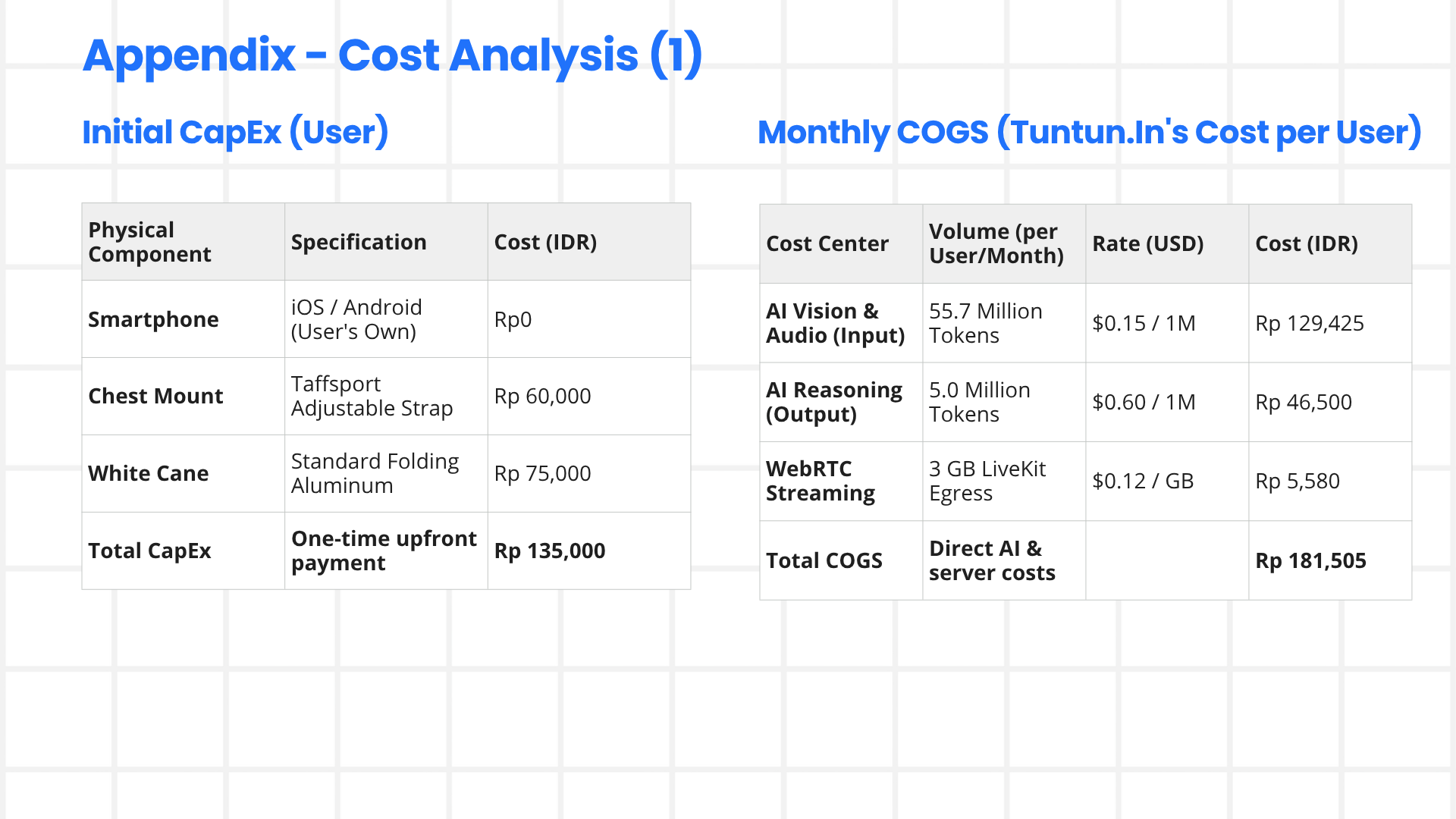
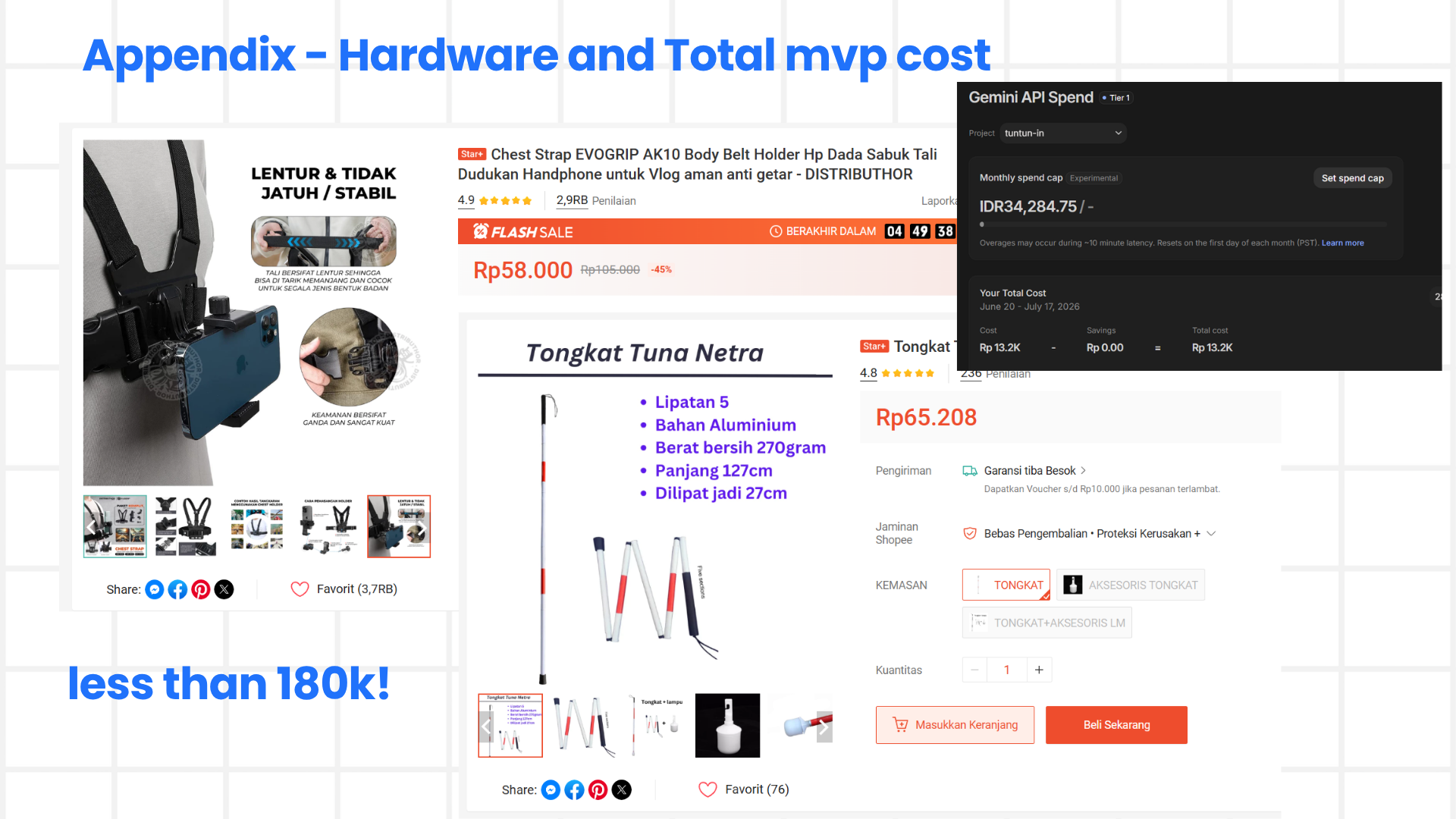
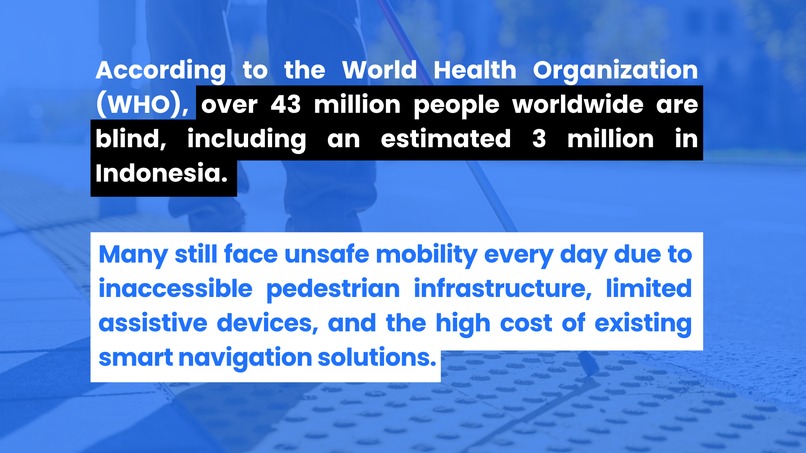
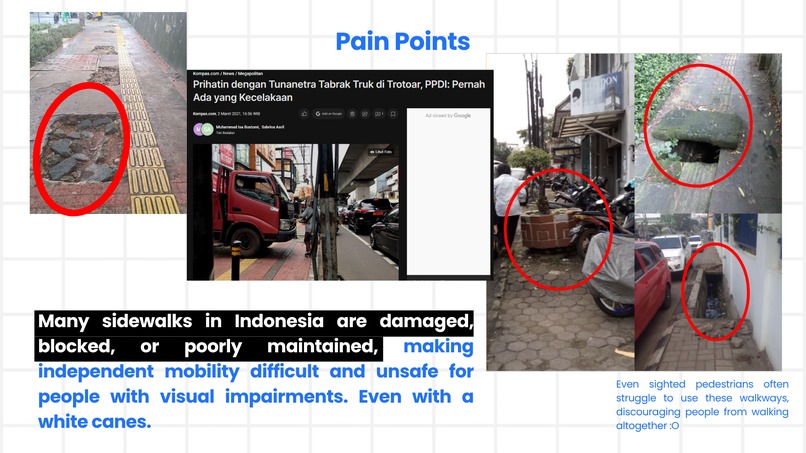
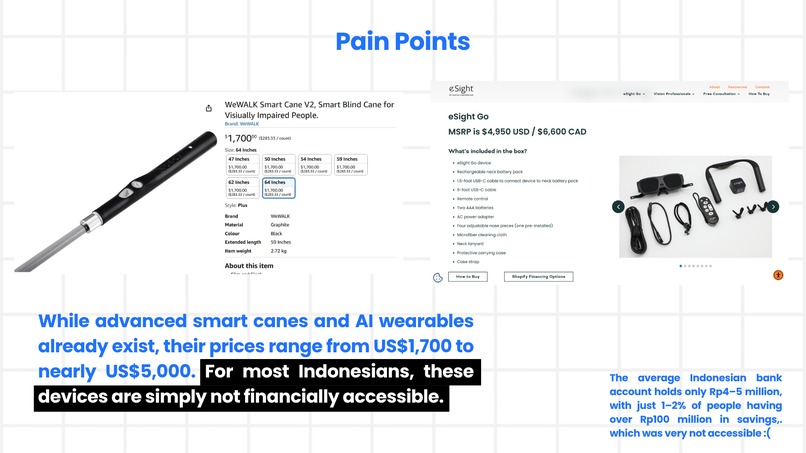
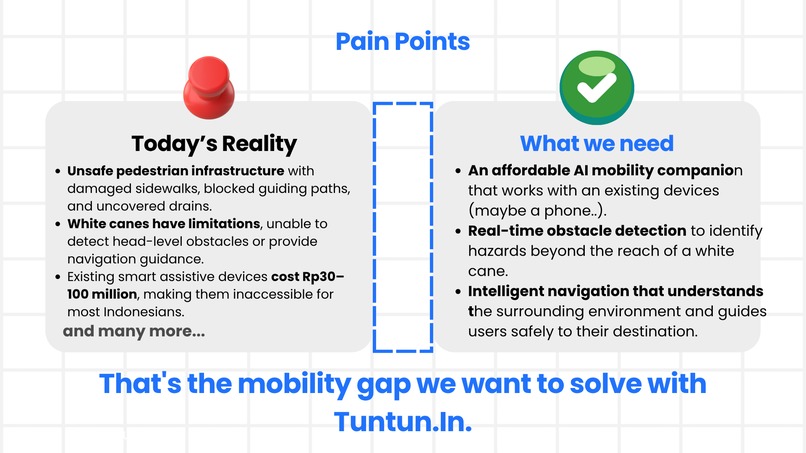
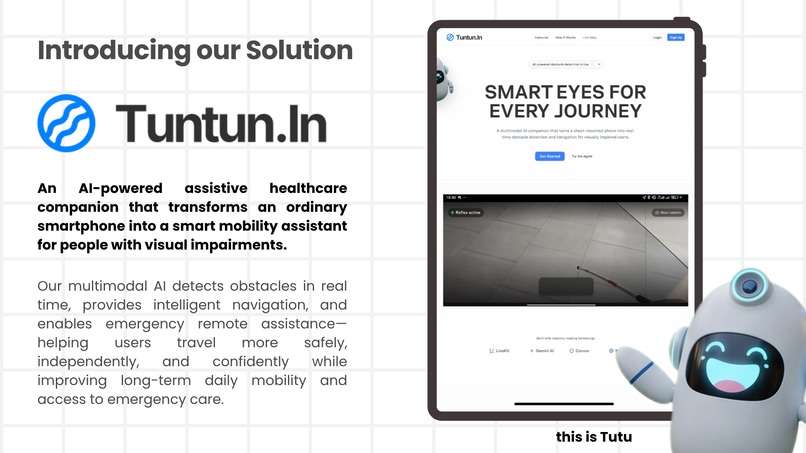
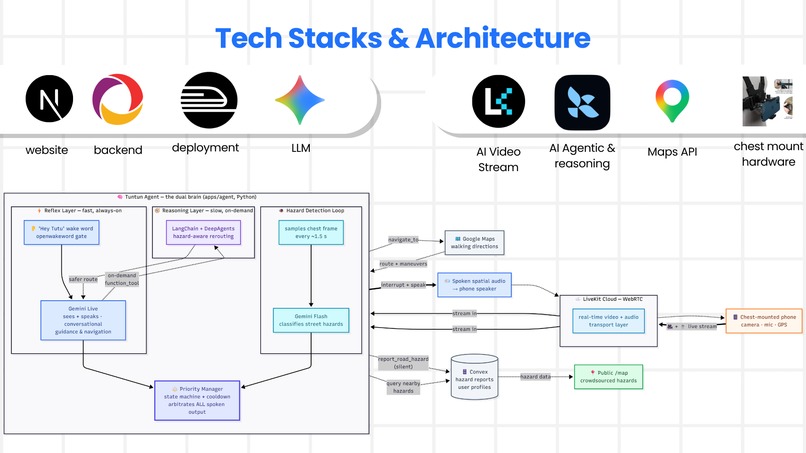
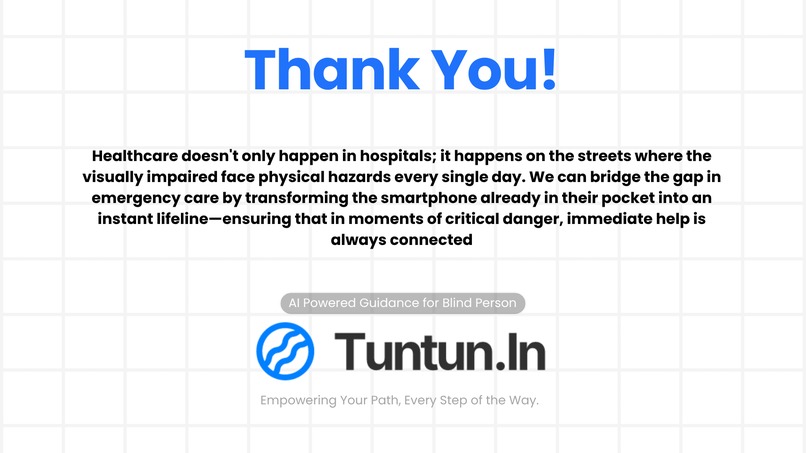
In Indonesia, most adult blindness is progressive and lifelong, diabetic retinopathy, glaucoma, cataract complications, and low-vision and mobility rehab is concentrated in a handful of city hospitals, so a blind person in a regency or rural area effectively has no specialist to see. The assistive devices that restore independent movement cost $1,700 to $4,950, which for a developing country means they do not reach the people who need them, and the cost is paid instead in falls, fractures, ER visits, isolation, and accelerated physical and mental decline. We reframe how we deliver that care using the device every blind person already owns: a phone. Worn on a chest mount, the phone streams its live camera and mic to a cloud AI agent over WebRTC that watches the road and, in under a second, speaks landmark-grounded injury-prevention cues like "manhole ahead, step right," guides the user to their own Puskesmas, dialysis, or pharmacy by what the camera actually sees ("turn left just past the blue food cart," never a compass heading), and silently logs every broken sidewalk to a public crowdsourced map that doubles as a passive injury-surveillance feed for the next patient and the city's public-health office. Built on a dual-brain architecture, a fast Gemini Live reflex for instant fall prevention and a slow LangChain DeepAgents reasoner for route planning, orchestrated through a priority state machine so a warning is never dropped, with Next.js, LiveKit, Convex, and Google Maps on Railway, we hold the warning path sub-second and fetch a route in about 0.5s, turning a phone into a daily chronic-care companion that needs no clinic visit and reaches the underserved from day one.
Built With
- chest-mount-hardware
- convex
- gemini-live-api
- google-maps
- langchain-deepagent
- livekit
- next.js
- railway

Log in or sign up for Devpost to join the conversation.