Inspiration
Anyone who has spent a weekend at a track day or late nights in the garage tuning a project car knows the frustration of staring at raw datalogs. After pulling a 20-minute session off a standalone ECU, you end up with massive CSV spreadsheets filled with dozens of sensor channels. Trying to spot a slight lean condition, an intermittent misfire, or an erratic throttle position sensor reading requires squinting at endless rows of numbers or setting up complicated desktop math filters.
We wanted to build something that acts like a digital crew chief or race engineer sitting next to you in the paddock. The goal was simple: let drivers upload their ECU logs, ask direct questions in plain English, and immediately see clear answers, charts, and troubleshooting steps based on their specific car setup.
What it does
TuneWorks is an AI-powered ECU log analysis platform built for performance drivers, self-tuners, and project car builders.
Key capabilities include:
- Instant CSV Analysis: Users can upload datalogs directly from Haltech ECUs to get an automated breakdown of engine vitals, potential sensor anomalies, and fueling behavior.
- Interactive AI Conversations: Drivers can ask natural follow-up questions about their data, such as why a fuel trim spiked at high RPM or what caused a timing dip on a specific pull.
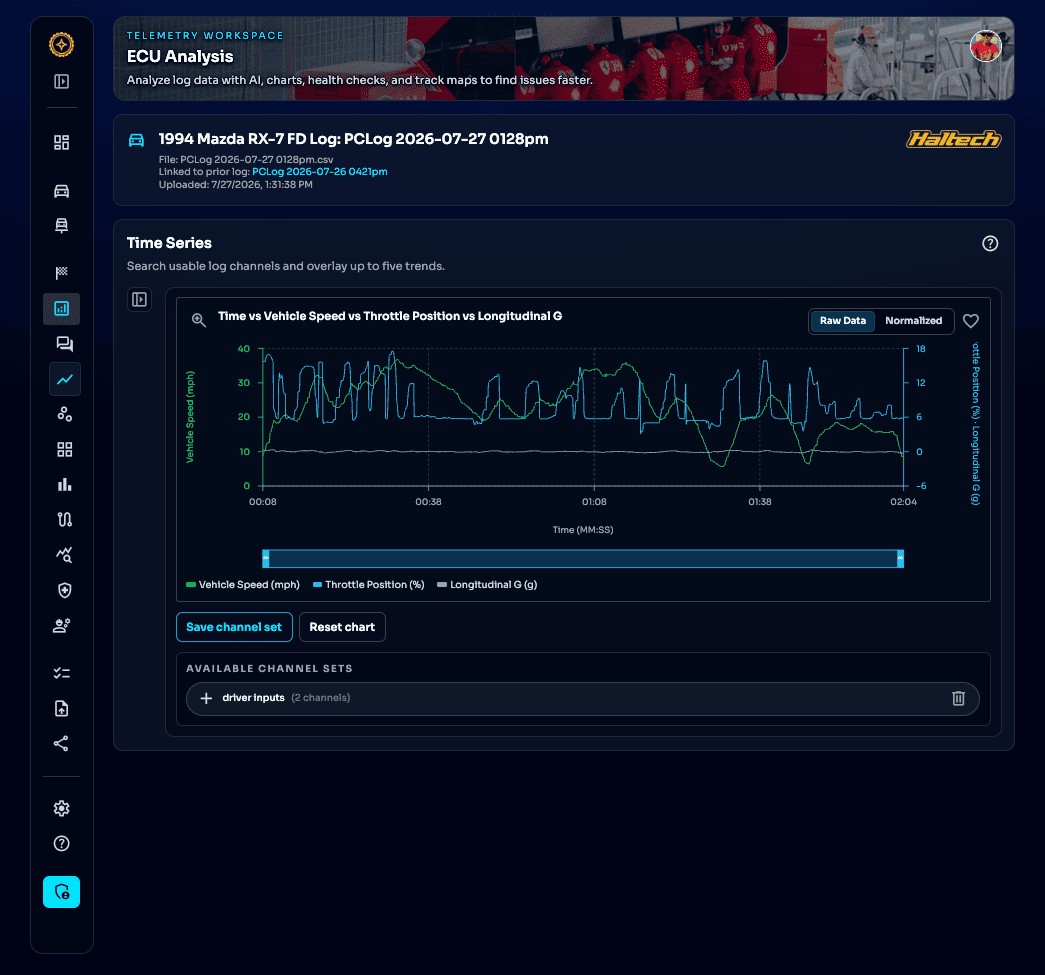
- Log Overlays and Charting: Compare multiple runs side by side to see how changes to boost, timing, or ambient conditions impacted performance.
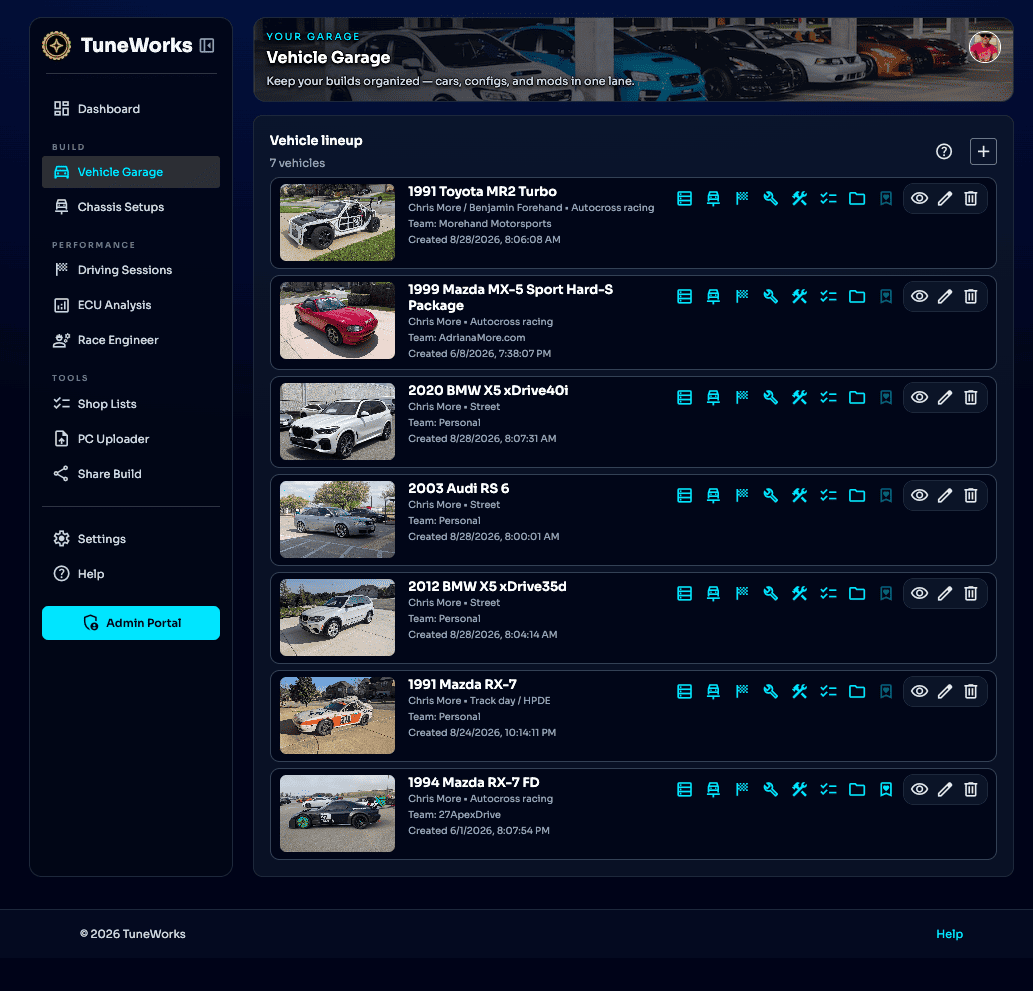
- Unified Garage and Build Logging: Track vehicle modifications, suspension setups, alignment specs, tire pressures, and maintenance records in one place so the AI provides advice tailored to the exact build.
- Flexible Credit Pricing: Free to start with pay-as-you-go analysis credits starting at $10, avoiding recurring monthly software subscriptions.
How I built it
The platform was designed from the ground up for fast telemetry ingestion and intuitive browser-based interaction.
- Frontend: Built with Next.js and Tailwind CSS to ensure a responsive, clean workspace that works just as well on a laptop in the paddock as it does on a desktop in the shop.
- Data Processing: Custom CSV parsers extract high-frequency sensor channels from Haltech exports, normalizing timestamps, RPM, manifold pressure, air-fuel ratios, and throttle position.
- Large Language Model Integration: Sensor telemetry is processed and structured into contextual summaries that an AI model evaluates alongside the car's modification history and session notes.
- Visualization: Interactive charting tools allow users to zoom, scrub, and overlay telemetry channels directly alongside conversational suggestions.
- Backend and Storage: Scalable cloud infrastructure manages user garages, build logs, and secure datalog storage.
Challenges I ran into
- Managing Datalog Density: High-frequency ECU logs can contain tens of thousands of data points across 30 or more channels. Passing raw data directly into an LLM causes token bloat and sluggish responses. We had to build intelligent downsampling, anomaly detection, and windowing algorithms to isolate critical engine events (like wide-open throttle pulls or sharp AFR spikes) before sending context to the model.
- Eliminating False Positives: Every engine setup is different. A rich fuel mixture on cold start is normal, but under heavy boost it could indicate a failing sensor or boost leak. Tuning the AI prompts and context windows to understand build-specific baselines was a major hurdle.
- Cross-Referencing Build Details: Connecting a CSV log to a user's specific modifications required designing a relational data schema that links physical parts, tire specs, and track conditions to telemetry points.
Accomplishments that I'm proud of
- Creating a natural conversational interface that can reliably pinpoint engine irregularities from a raw Haltech CSV log within seconds.
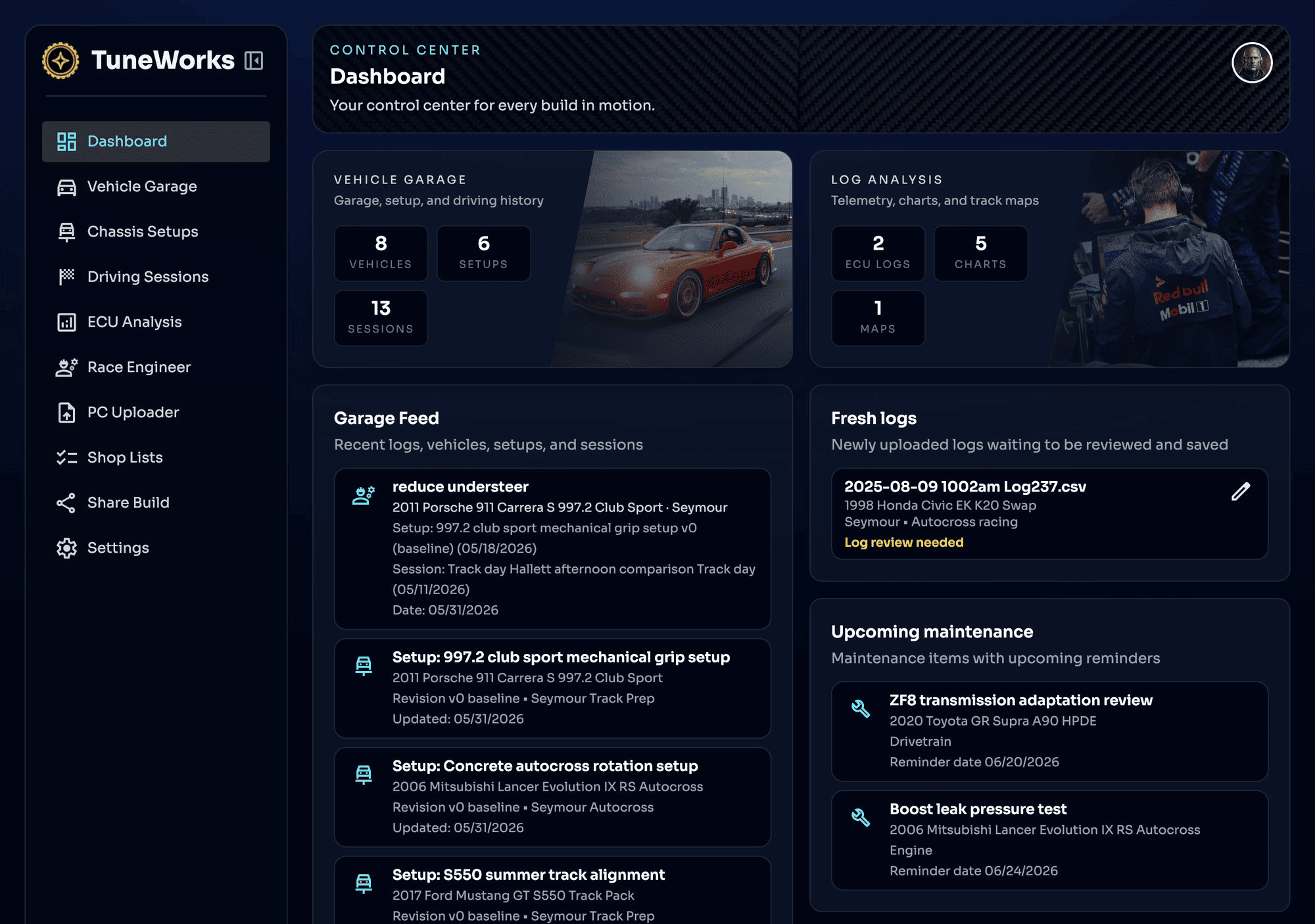
- Developing a unified build management dashboard where track notes, suspension setups, and ECU data live together instead of being scattered across notebooks and spreadsheets.
- Keeping the platform accessible by choosing a pay-as-you-go model rather than forcing grassroots racers into expensive monthly software subscriptions.
What I learned
- High-frequency telemetry requires heavy server-side preprocessing before AI models can deliver meaningful insights. Clean data ingestion is 90% of the battle in automotive machine learning.
- User trust is paramount when dealing with expensive engines. The AI must explain its reasoning with clear chart references and physical inspection recommendations rather than making vague assertions.
- Community feedback from grassroots autocross and time attack drivers provided vital insights into which sensor combinations matter most during trackside diagnosis.
What's next for TuneWorks
- Support for Additional ECUs: Expanding log ingestion beyond Haltech to include Link, MoTeC, ECUMaster, and Megasquirt formats.
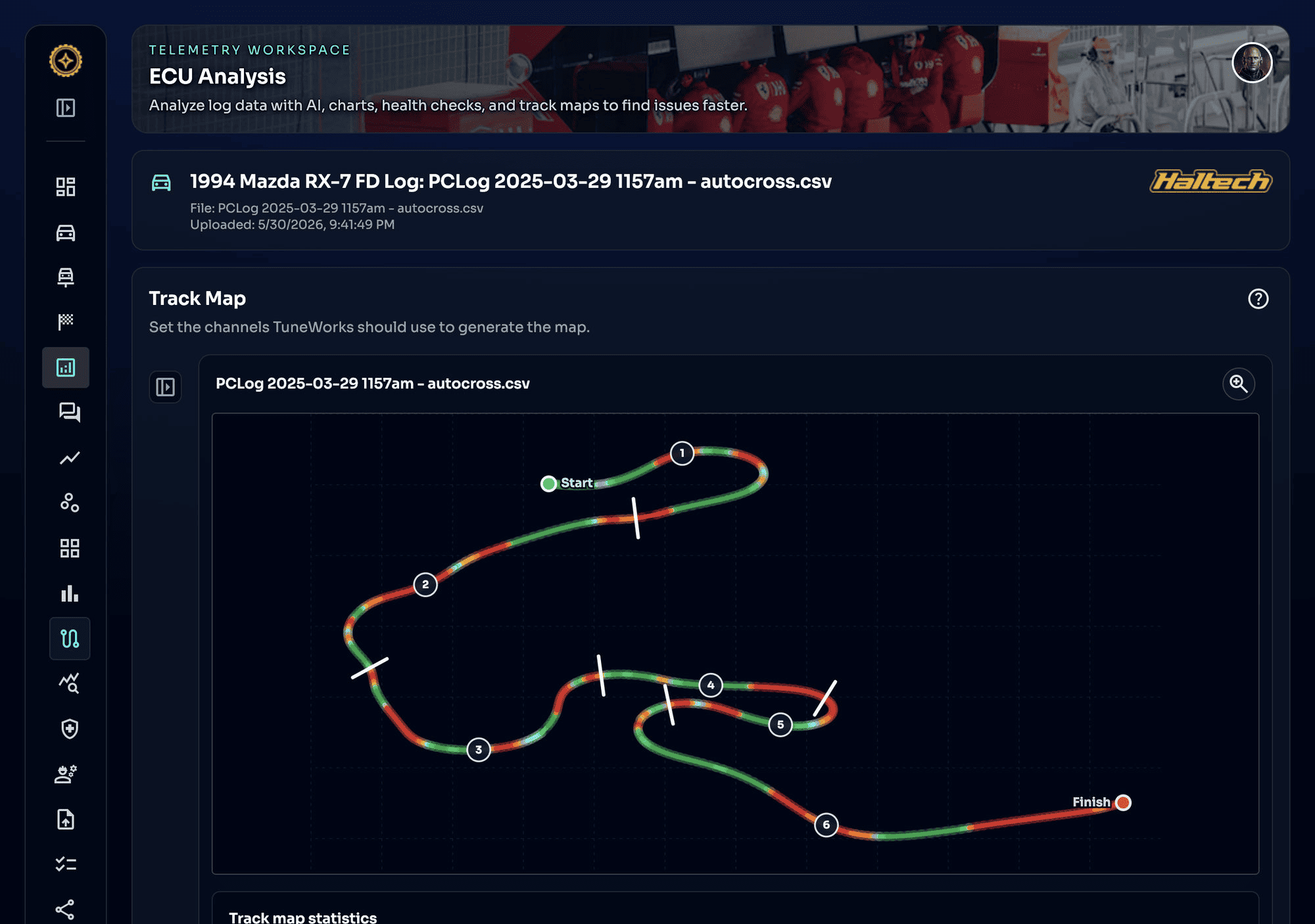
- Lap Time and GPS Integration: Linking GPS track maps and sector times directly to engine data to help drivers see where setup adjustments gain or lose track time.
- Predictive Mechanical Warnings: Training models to detect early signs of mechanical wear, such as dropping oil pressure trends or creeping coolant temperatures across multiple sessions.
- Mobile-Optimized Quick Capture: Making it faster to log tire temperatures, shock clicks, and track impressions straight from a smartphone between track heats.
Built With
- nextjs
- postgresql
- vercel
