-
-
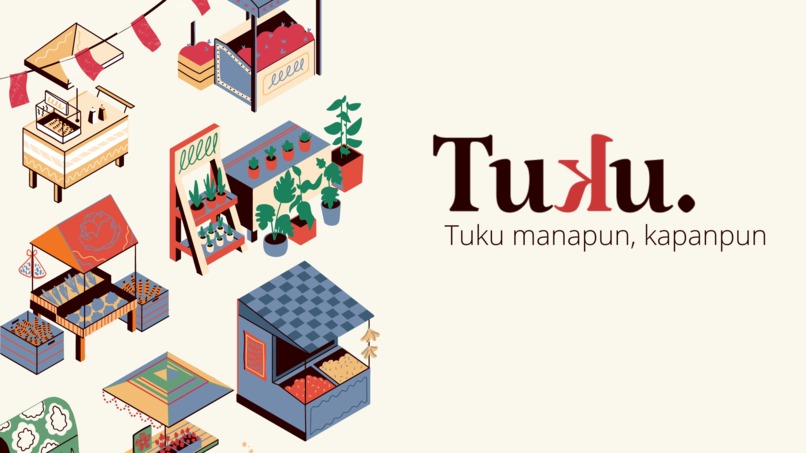
Tuku manapun, kapanpun.

Inspiration
We knew that whatever form the final product took, it would be dedicated to supporting local Indonesian craftsmen and showcasing the diversity and creativity of Indonesian culture. Initially, we were planning to provide a streaming service, but we pivoted entirely after noticing the online traction Indonesian e-commerce has shown. We decided that our e-commerce must have a catchy name that symbolizes our local heritage and mission: Tuku. Tuku is the Javanese word for "buy", and the phrase "manapun, kapanpun" is meant to encapsulate our focus to showcase local handicrafts anywhere and anytime.
What it does
Tuku is an e-commerce where local craftsmen can leverage digital platforms to sell their handicrafts to a wider consumer base. Tuku connects Indonesian handicraft enthusiasts and local craftsmen through a sophisticated and user-friendly interface.
How we built it
After deciding on an e-commerce platform, we developed our brand identity and concept through several rounds of brainstorming. We then used Figma to design the wireframe for Tuku. In our web design, we made sure to include a number of features that complement the e-commerce experience, such as filters, sort, and product carousels UIs. We are currently working on a prototype that uses React, Next.js, Node.js, CSS and HTML.
Challenges we ran into
Transitioning to an entirely new concept was a hard adjustment because of the setback in progress. We had to re-consider or scrap various metrics we had set for the previous idea. However, our efforts paid off with the fruition of a more promising and realistic product. Another aspect we had difficulty with was the product’s branding. We were unsatisfied with several iterations before settling on Tuku’s image. We recognized that aesthetics play an important role in how online shoppers would respond to our site. Thus, creating an identity that was both effective and consistent with our objective took considerable effort.
Accomplishments that we're proud of
We are proud of the wireframe and deck aesthetic because it exemplifies the importance of appearance in the e-commerce industry. Most importantly, we are proud of a product that showcases the creativity and variety of local handicrafts to reinforce our heritage.
What we learned
We learned that the vision behind the product is just as important as the implementation.
What's next for Tuku
In Indonesia, we plan to include more local craftsmen in remote places to Tuku by increasing the accessibility and ease of use. Looking ahead, we anticipate that Tuku will also include the local handicraft of other SEA countries thereby creating a more conducive international market.


Log in or sign up for Devpost to join the conversation.