-
-
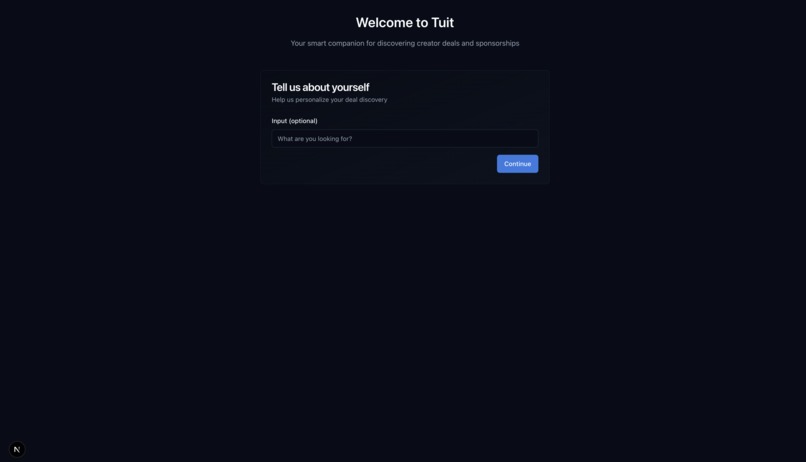
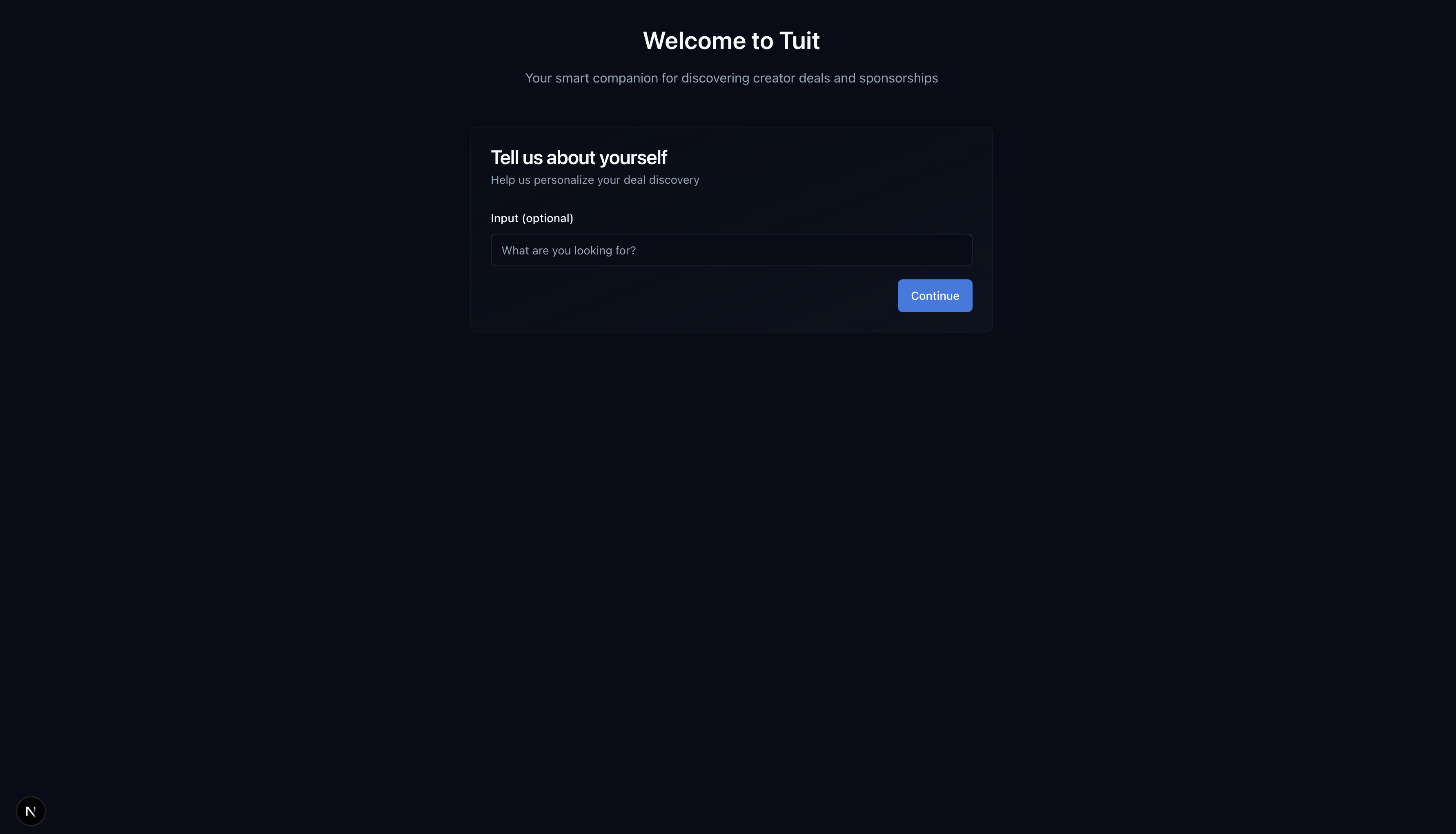
Onboarding screen
-
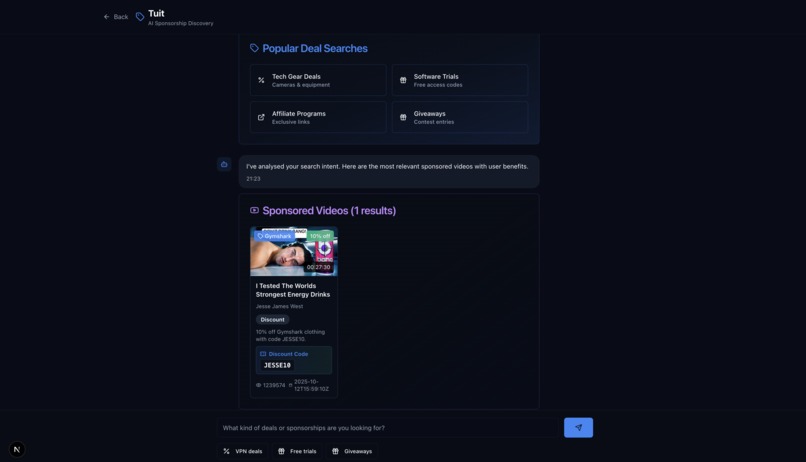
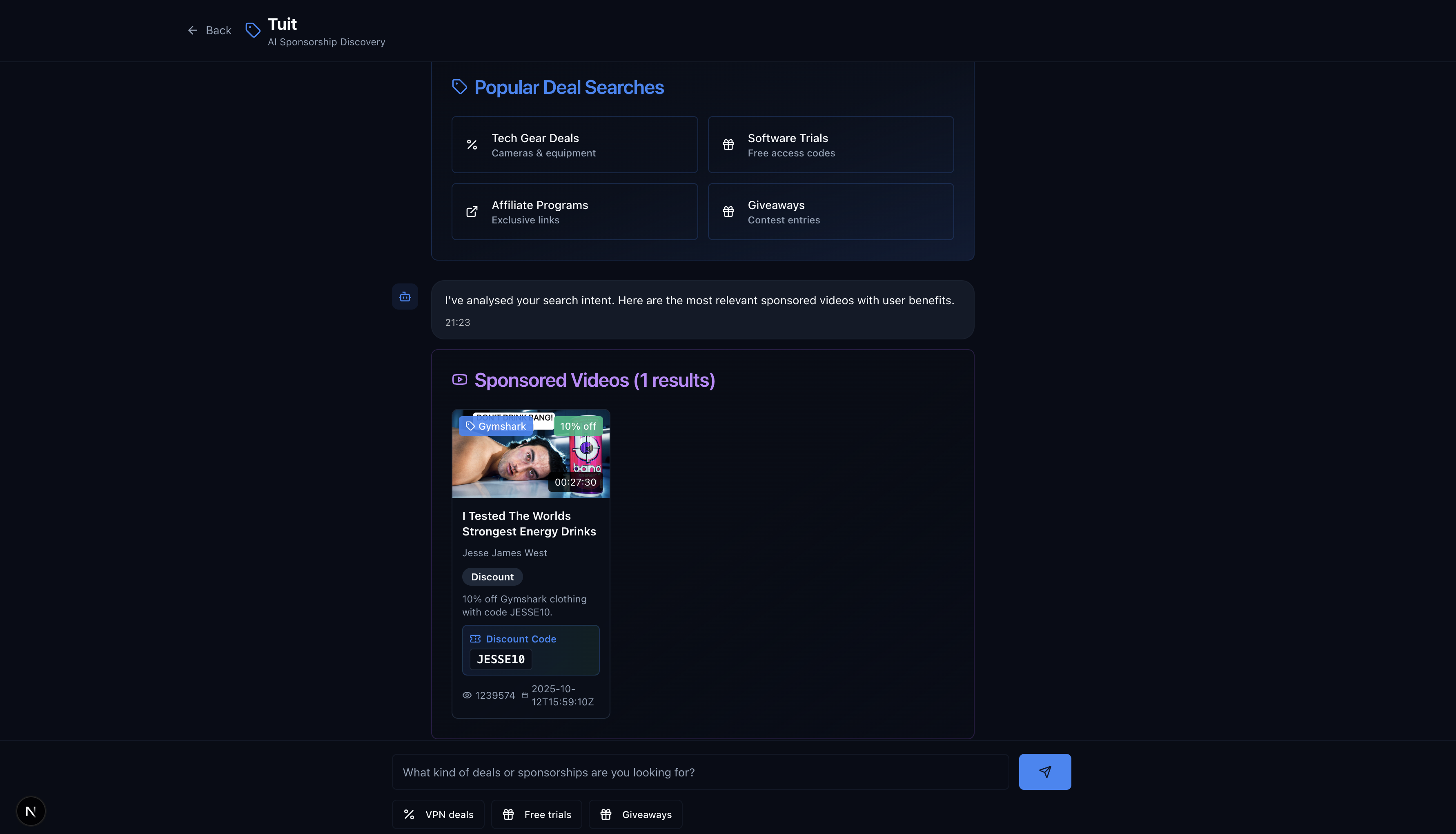
Video discovery chat system
Tuit
An AI-powered search engine for YouTube sponsorships with real user benefits. Find discount codes from creators.
Inspiration
I built Tuit after noticing how difficult it is to find YouTube sponsorship deals when you actually need them. Creators mention discount codes and giveaways in their videos, but there's no way to search for "tech sponsorships with active discount codes" or "VPN deals from trusted creators". The information exists but remains buried in videos
What it does
Tuit is an AI-powered search engine for YouTube sponsorships with real user benefits. I built it to understand natural queries like "show me productivity tool sponsorships with free trials" and return videos with active discount codes. It extracts the actual sponsor codes from videos, validates deal freshness (within 3 months).
How I built it
I implemented an intelligent hybrid search system using Next.js, Elasticsearch with vector embeddings, and Google Gemini 2.5. The architecture prioritises an Elasticsearch-first strategy: when a user queries, I use Gemini to extract intent and expand the query semantically to enrich the original input context, then search cached enriched videos with both text and vector similarity (1536-dimensional embeddings). If cached results are insufficient (<5 videos), the system falls back to YouTube Data API, filters for sponsored content, uses Gemini 2.5-flash to read the videos and find the timeframe where the creator mentions the sponsorship deal to extract discount codes and sponsor details, additionally, extract potential sponsor & discount information from the video description, then indexes everything for future queries.
Challenges I ran into
The primary challenge was extracting discount codes from video content reliably. YouTube's API doesn't expose sponsorship metadata, so I integrated Gemini's multimodal capabilities to analyse video files directly and identify when codes are mentioned. I also struggled with Elasticsearch query performance—balancing text search precision with semantic vector search required careful field boosting (title^3, sponsor^2) and combining multiple search strategies with deduplication by video ID.
Accomplishments that I'm proud of
- I implemented semantic search that understands user queries' semantics through vector embeddings & hybrid search. The AI extracts structured sponsorship data (code, description, sponsor URL, reveal timeframe) from unstructured video content.
- Smart use of Gemini to read video data
What I learnt
I gained deep experience with vector search implementation—understanding how cosine similarity with dense vectors complements traditional text search. Working with Gemini's video analysis capabilities taught me how to structure prompts for reliable structured output extraction. I also learnt that search relevance isn't just about matching keywords—it's about understanding user intent through semantic expansion and combining multiple ranking signals.
Built With
- aisdk
- elasticsearch
- gemini
- nextjs
- radixui
- tailwind
- typescript
- youtube
- zod

Log in or sign up for Devpost to join the conversation.