Inspiration
For eight years I have been the sole caregiver for three loved ones: my mother, my aunts (one with dementia), and now my 86-year-old father. The thing that nearly broke me was never the tasks. It was being blindsided, over and over, because nobody keeps the whole picture in view and nobody tells you what is coming next.
Professional geriatric care managers solve exactly that problem for $100 to $150 an hour, which prices out the median family. Sixty-three million Americans are family caregivers; the 59 million caring for an adult provide over $1 trillion a year in unpaid care. The expertise gap, not the labor gap, is what crushes them. I built the tool I needed on day one.
What it does
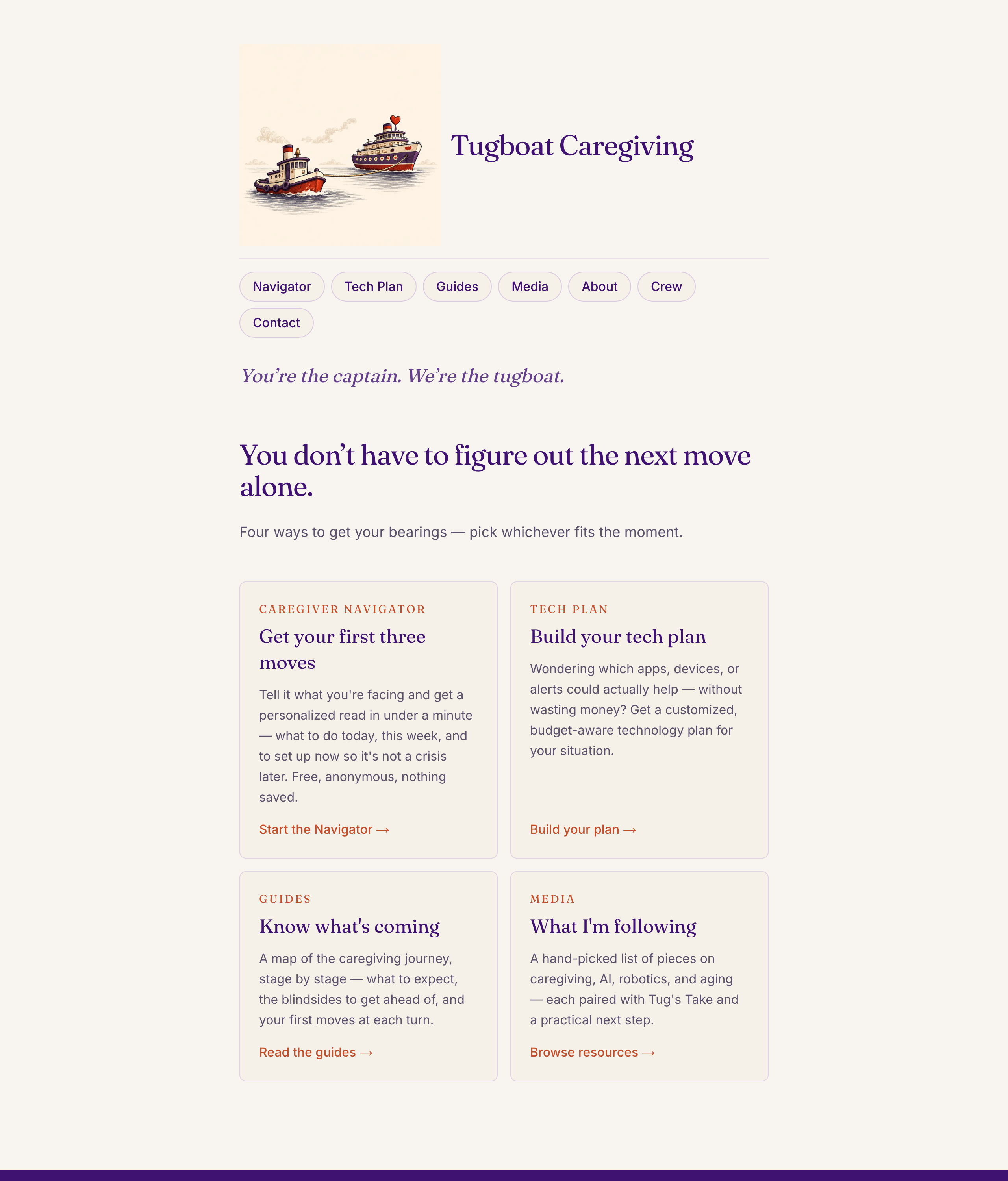
Tugboat is one connected product that looks like several tools, because a caregiver's journey has a shape: orient, keep a living record, equip the home, connect to local help, defend against denials, check your own strain.
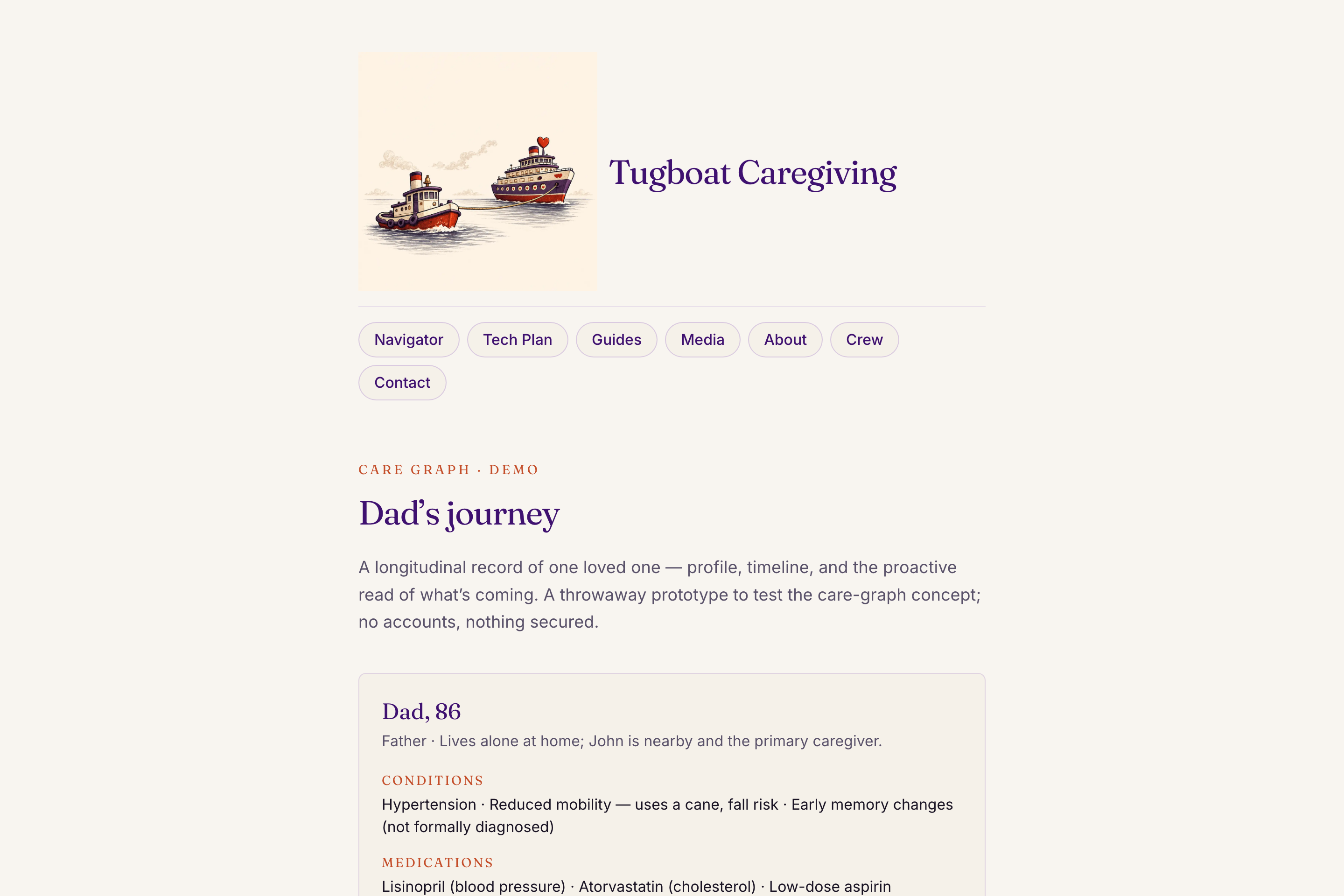
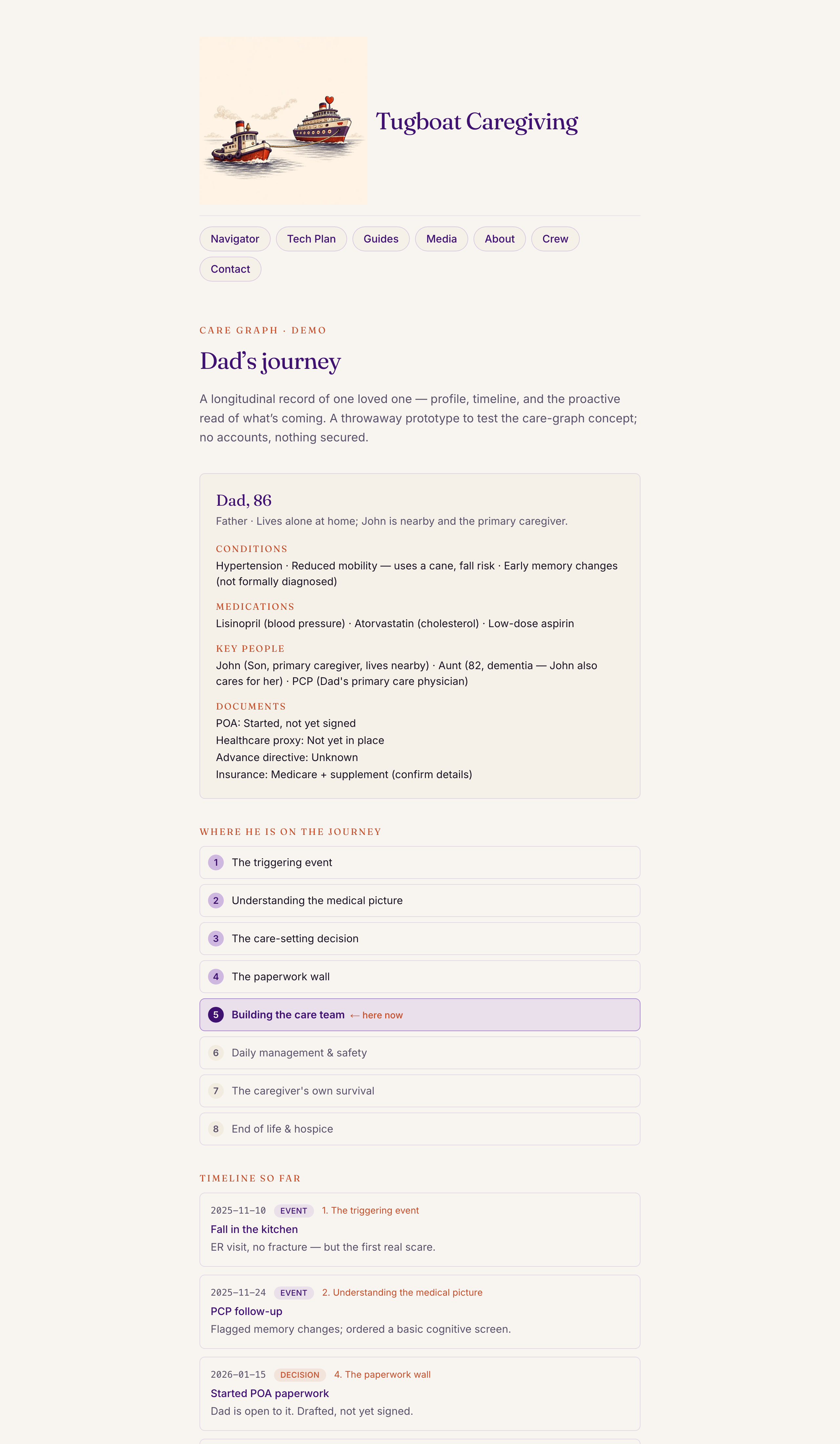
The paid core is the Care Graph: a private, longitudinal record of a loved one (conditions, medications, key people, documents, journey stage). A Gemini-powered proactive monitor reads the whole graph and produces a next-90-days outlook: the specific decisions, paperwork, and conversations coming, each with a first move, refreshing as life changes. That is the work a human care manager charges by the hour to do, for $9.99 a month.
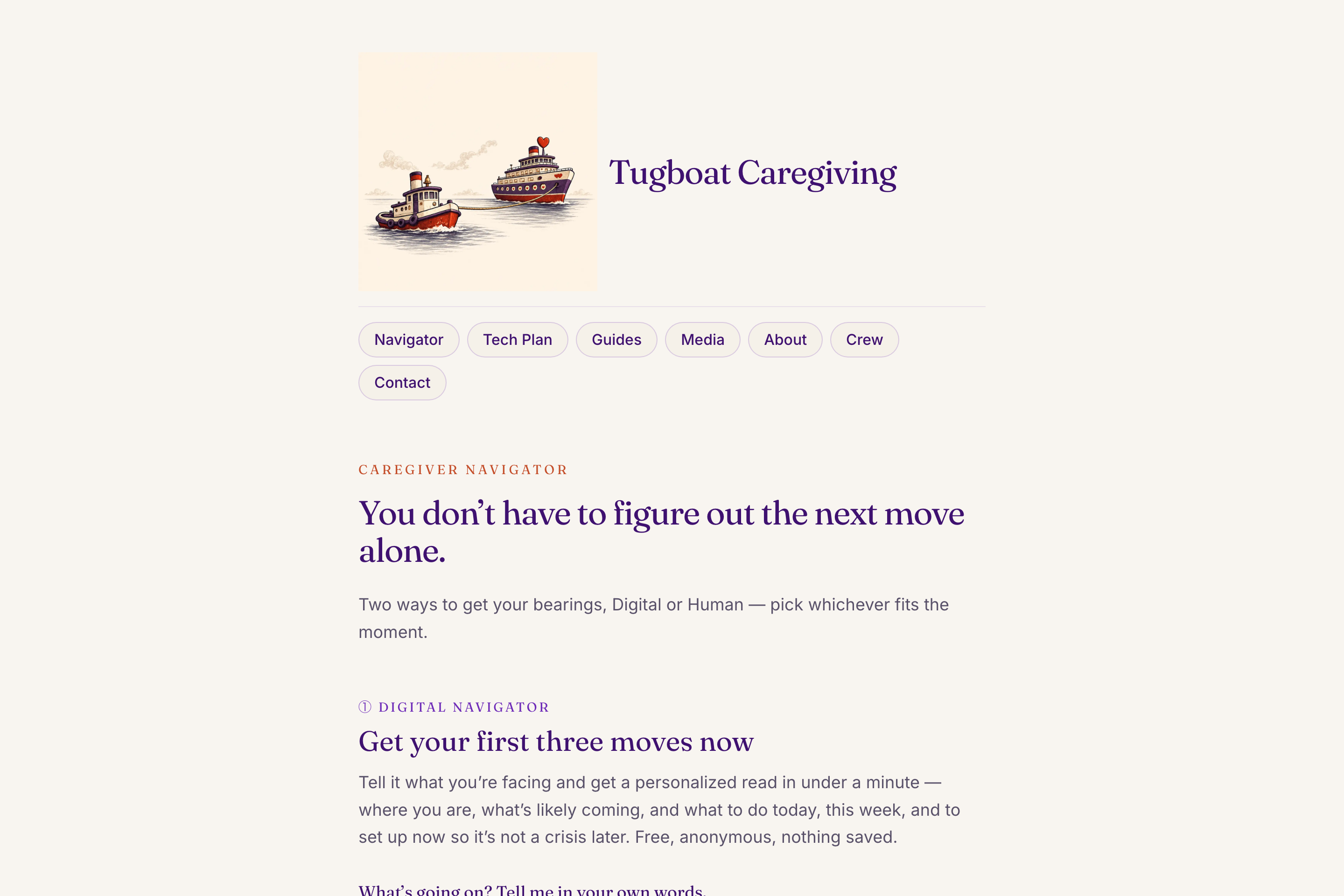
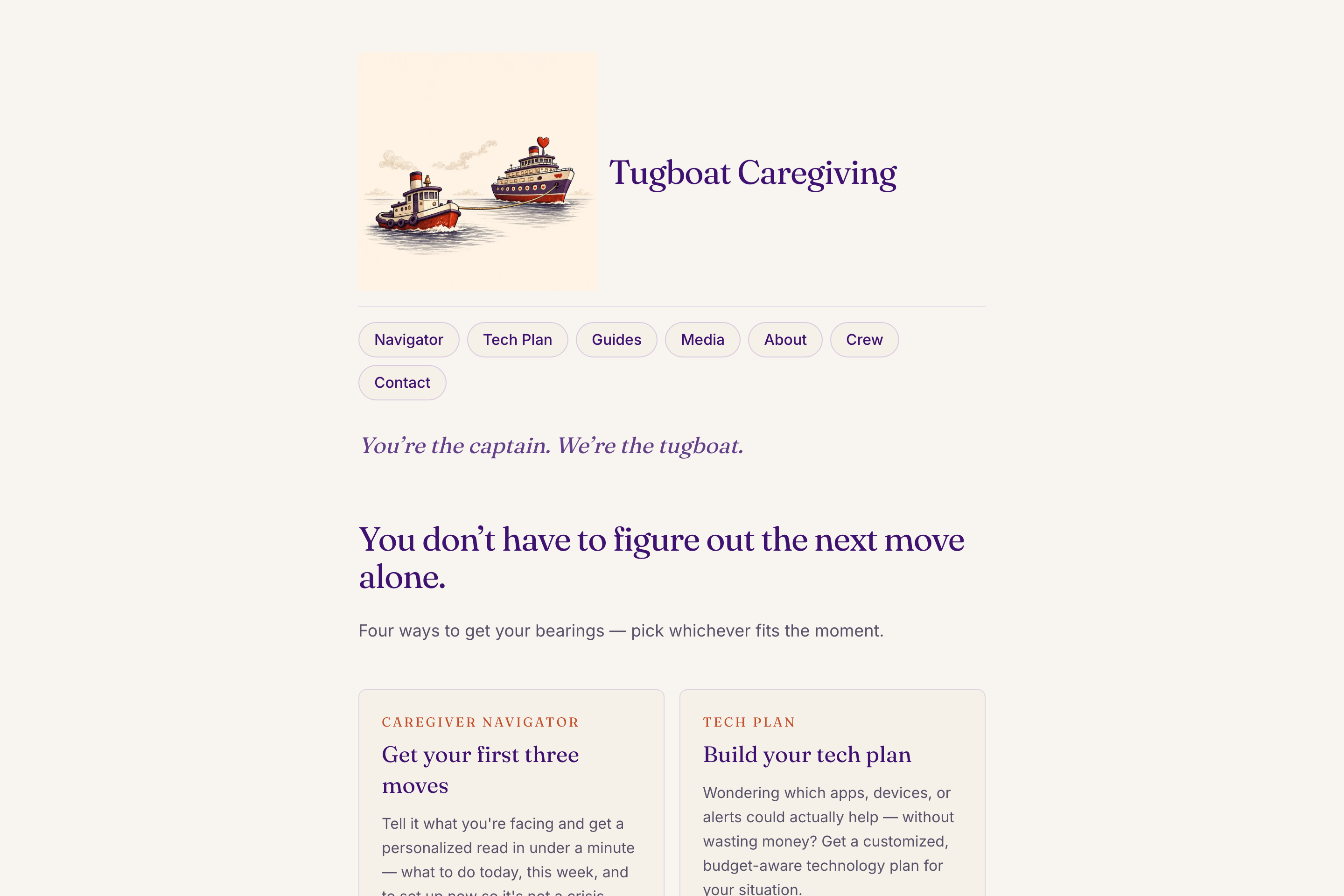
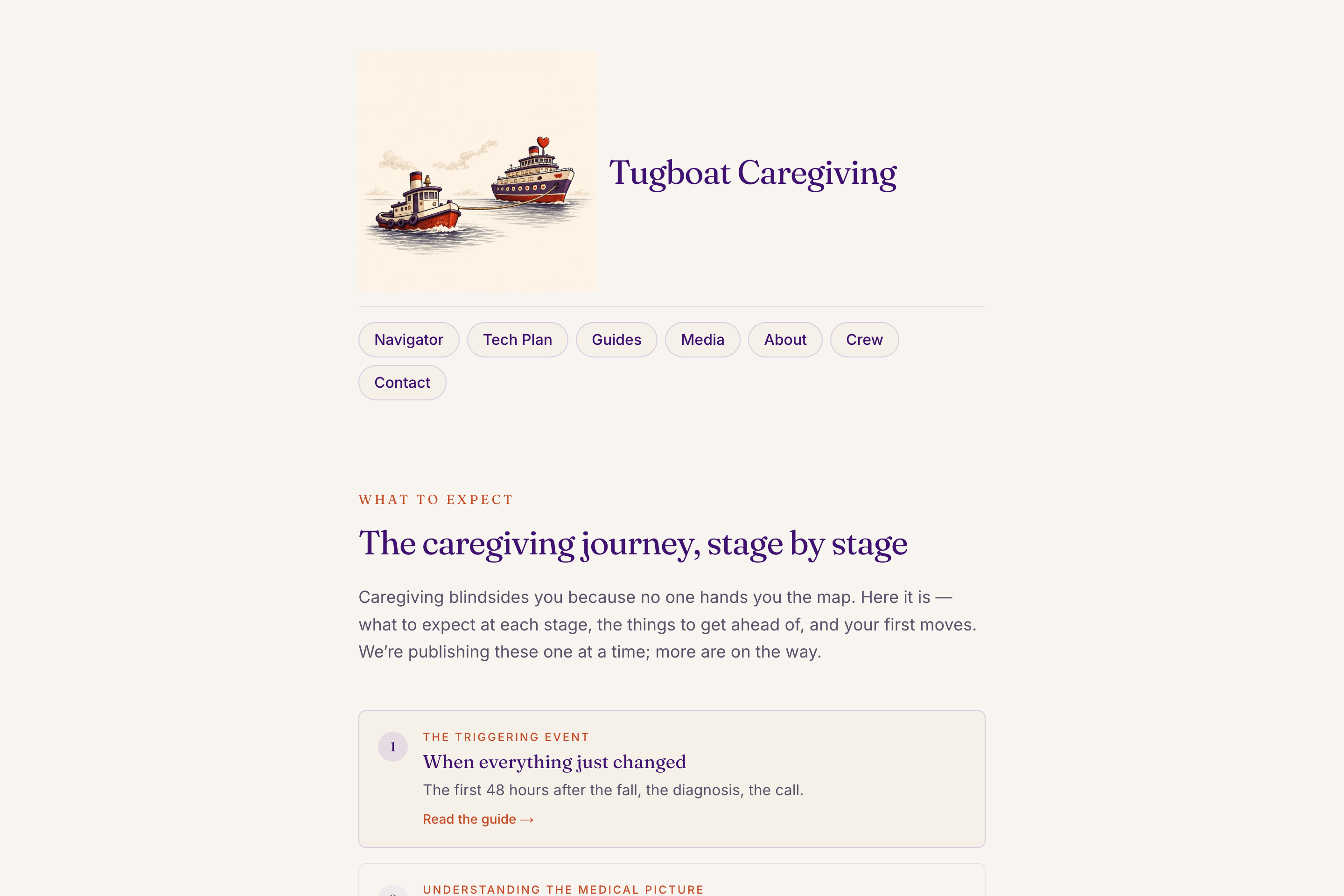
Around it, a free journey: the Caregiver Navigator (first three moves for any situation), the Tech Plan (budget-aware home-technology plan with verified prices), the Appeal Drafter (a ready-to-sign Medicare appeal), the Resource Finder, the Caregiver Check-In (an honest read on the caregiver's own strain), and ten stage-by-stage guides. The Bridge connects them: any free-tool result becomes, with one click and an explicit review step, the seed of a free Care Graph. Consent is structural: the anonymous tools store nothing, and a result is saved only when the caregiver confirms exactly what carries over.
How we built it
Gemini 2.5 Flash (structured output) is the load-bearing proactive-monitor call. Google Cloud Firestore holds care graphs, entitlements, and PII-free ops logs; Firebase Auth handles accounts; Stripe runs the $9.99/month membership (live in production since June 5, 2026); Next.js 15 on Vercel. Anthropic Opus powers five tuned tool brains (Navigator, Tech Plan, Appeal Drafter, Resource Finder, Check-In).
The company itself is AI-native: seven production agents execute real decisions, logged publicly at tugboatcaregiving.com/ops (95 decisions, 97% success, 7 agents since launch), with per-call token metering in a private admin console. Total fleet AI spend at current volume: about $0.46 per 30 days, metered per call. A scheduled autonomous content pipeline (6 AM briefing agent, a picks-prep agent with dedup and declined-list guardrails, a human gate) has produced 82 curated articles and 82 original Takes in about twelve weeks, plus a 17-region Global Caregiving Atlas and a verified care-provider database slice (~14,600 rated providers, US + UK, every record carrying provenance).
Challenges we ran into
No-fabrication is the hard constraint of this category. A hallucinated phone number or invented price is not a bug for a caregiver, it is a 2 a.m. betrayal. Every Opus brain is eval-gated before shipping and stress-tested against fabrication traps (Appeal Drafter 8/8 scenarios zero fabrication; Resource Finder 6/6, including the never-invent-a-local-org trap). The same discipline extends to data: the provider database is built from official registries (CMS, CQC), never generated.
Accomplishments we're proud of
Real production billing for over two months. A public ops dashboard that excludes build-era noise on principle. An admin funnel that counts arms-length users only: it excludes the founder's own accounts, so the company's dashboard refuses to flatter itself. Honestly reported: arms-length paying members stand at zero today, with eight tracked founding-member asks in flight through a warm-network motion that matches the published adoption science (social influence is the strongest predictor of caregiver tech adoption).
What we learned
Peer-reviewed work confirmed our thesis: 53% of dementia caregivers name resource access as their top unmet need, and the evidence on care robots shows they move mood, not memory. The gap is navigation, and navigation is software.
What's next
First arms-length paying members. The verified care-provider database becomes Resource Finder v2 (build starts August 18). An elder financial-protection pillar. And the same promise throughout: anticipation over reaction, for the 63 million people doing this work in the US and the 2.1 billion people over 60 the WHO projects worldwide by 2050.
Built With
- anthropic-claude
- firestore
- gemini-api
- google-cloud
- next.js
- react
- resend
- stripe
- tailwind-css
- typescript
- vercel

Log in or sign up for Devpost to join the conversation.