-
-
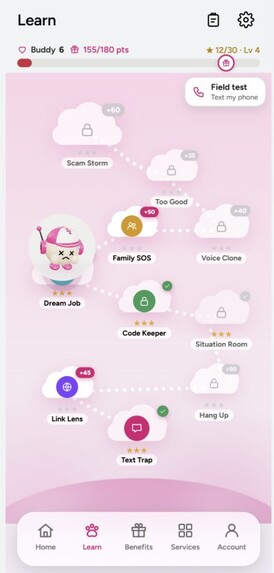
Gamified Learning Experience
-
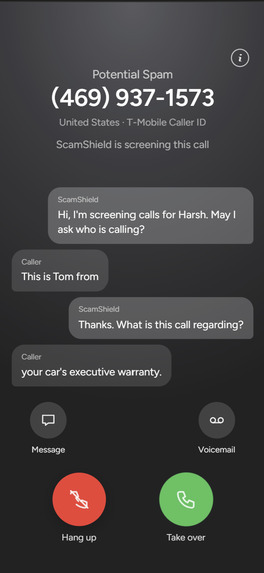
Screening Agent
-
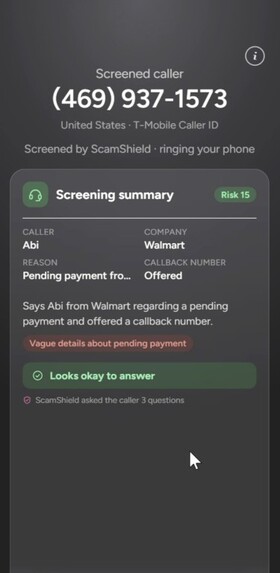
Call Summary from Screening Agent
-
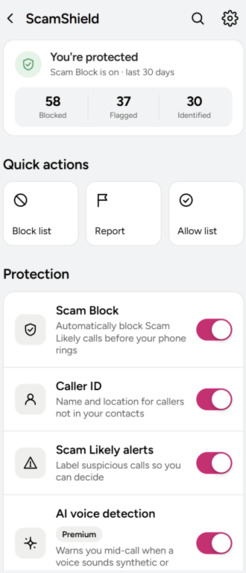
Filters
-
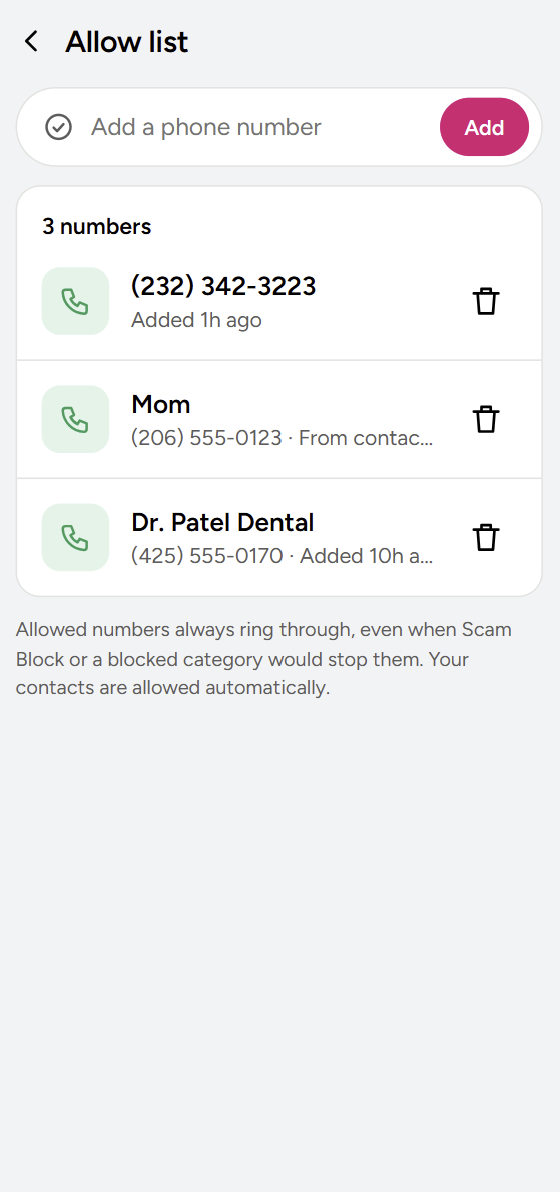
Allow List
Inspiration
Scams are becoming more personal, more convincing, and harder to spot and it is especially true for older adults and families who may not recognize an AI-generated voice, a spoofed caller ID, or an urgent request for money. We wanted to make scam protection feel proactive instead of reactive. Not just a warning after something goes wrong, but a trusted safety layer built into the phone experience people already use as T-Mobile emphasizes trust for it.
What it does
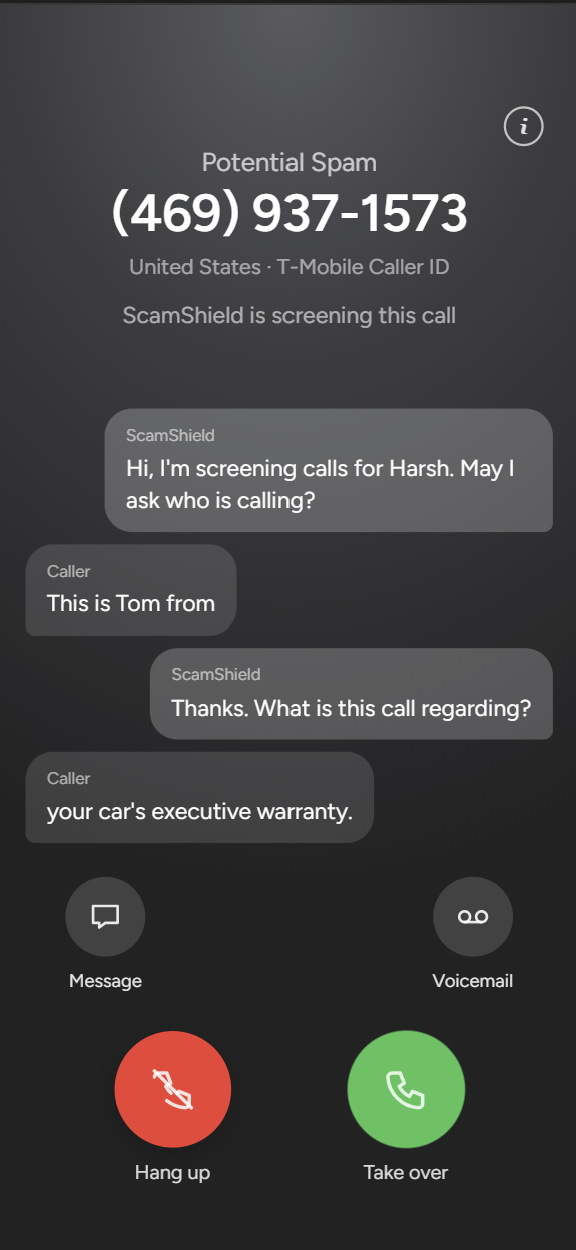
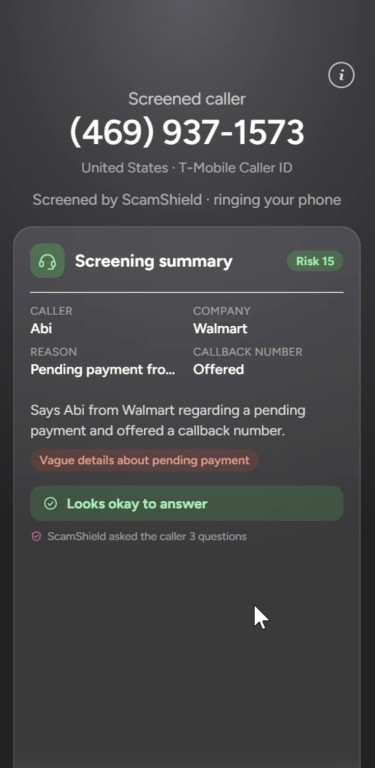
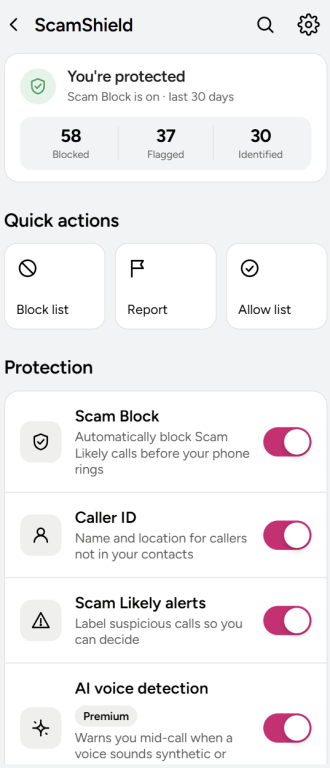
SafeT brings intelligent scam protection into a T-Life-inspired experience. It identifies suspicious callers, blocks likely spam before the phone rings, detects AI voice and fraud signals during calls, and lets users screen unknown callers before answering.
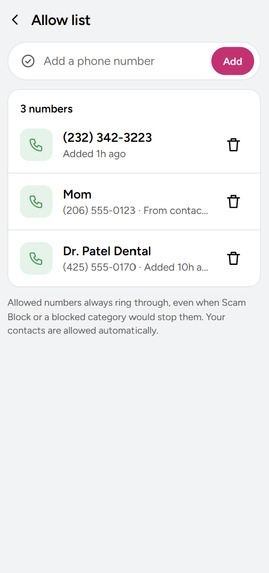
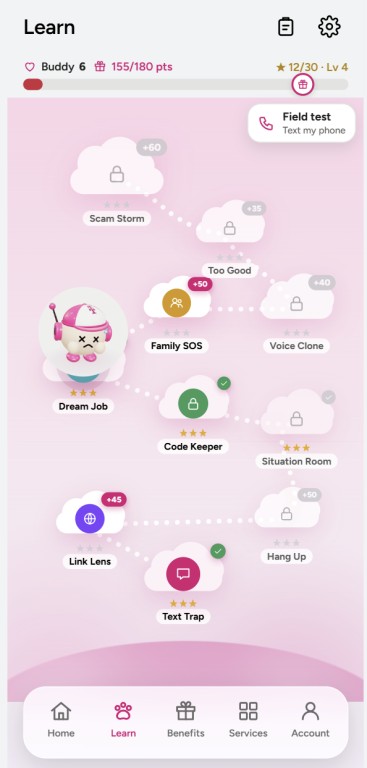
Users can also look up numbers, report scams, manage block/allow lists, review call activity, and protect family members through guardian alerts. SafeT includes a Safe Signal gamified learning experience that lets people practice recognizing realistic scam texts in a safe environment before encountering one in real life.
How we built it
We built the client experience with HTML, CSS, and JavaScript, using a polished T-Life-inspired mobile interface. The backend is a Node.js service built with Hono and PostgreSQL/TigerData for storing lines, call events, scam reports, preferences, and time-series protection data.
We integrated Gemini for scam classification, transcript analysis, embeddings, and personalized learning feedback. We also designed support for Twilio phone calls, Deepgram transcription, Photon messaging, and Server-Sent Events for real-time updates. The app still includes rule-based fallbacks so the core demo remains useful even when optional AI services are unavailable.
Challenges we ran into
One of our biggest challenges was balancing powerful protection with user trust. A system that flags too many harmless calls becomes frustrating, while one that misses scams can be dangerous. We designed the experience around clear explanations, caller context, configurable controls, and human choice.
We also had to connect a polished frontend to real backend state instead of relying only on static mock data. Building a database model for call history, reporting, family lines, and scam-learning sessions along with keeping the demo responsive required careful consideration design. Finally, integrating real-time calling, transcription, AI analysis, and messaging services meant planning for unavailable credentials and graceful fallbacks.
Accomplishments that we're proud of
We are proud that SafeT is more than a concept screen. It is an end-to-end experience with persistent user settings, seeded call history, real backend APIs, simulated live calls, call screening, reporting, number lookup, family protection, and interactive scam-learning flows.
We are especially proud of the Safe Signal feature. Rather than only telling users to “be careful,” it gives them a low-pressure way to practice identifying red flags and learn from mistakes. We also built the product around the idea that safety should feel simple, reassuring, and integrated into everyday phone use.
What we learned
We learned that effective security products are as much about communication and empathy as they are about detection. People need to understand why something may be risky and feel in control of what happens next.
Technically, we learned how to combine AI-assisted classification with reliable rule-based behavior, model time-series call data, connect external communication services, and design real-time experiences that still work when integrations are unavailable. We also learned the importance of privacy-aware design when working with sensitive call and message data.
What's next for SafeT
Next, we want to connect SafeT to live reputation data and expand real-device testing with users across different age groups. We would improve our fraud-detection models with more scam categories, multilingual support, confidence explanations, and feedback loops from user reports.
We also want to deepen family protection with customizable alert preferences, trusted-contact workflows, and clearer emergency escalation paths. Ultimately, we see SafeT becoming a proactive digital safety companion that helps people recognize threats, make confident decisions, stay ahead of malicious intent, and stay connected without fear.
Built With
- css
- deepgram
- gemini
- html
- javascript
- love
- photon
- twilio
- typescript


