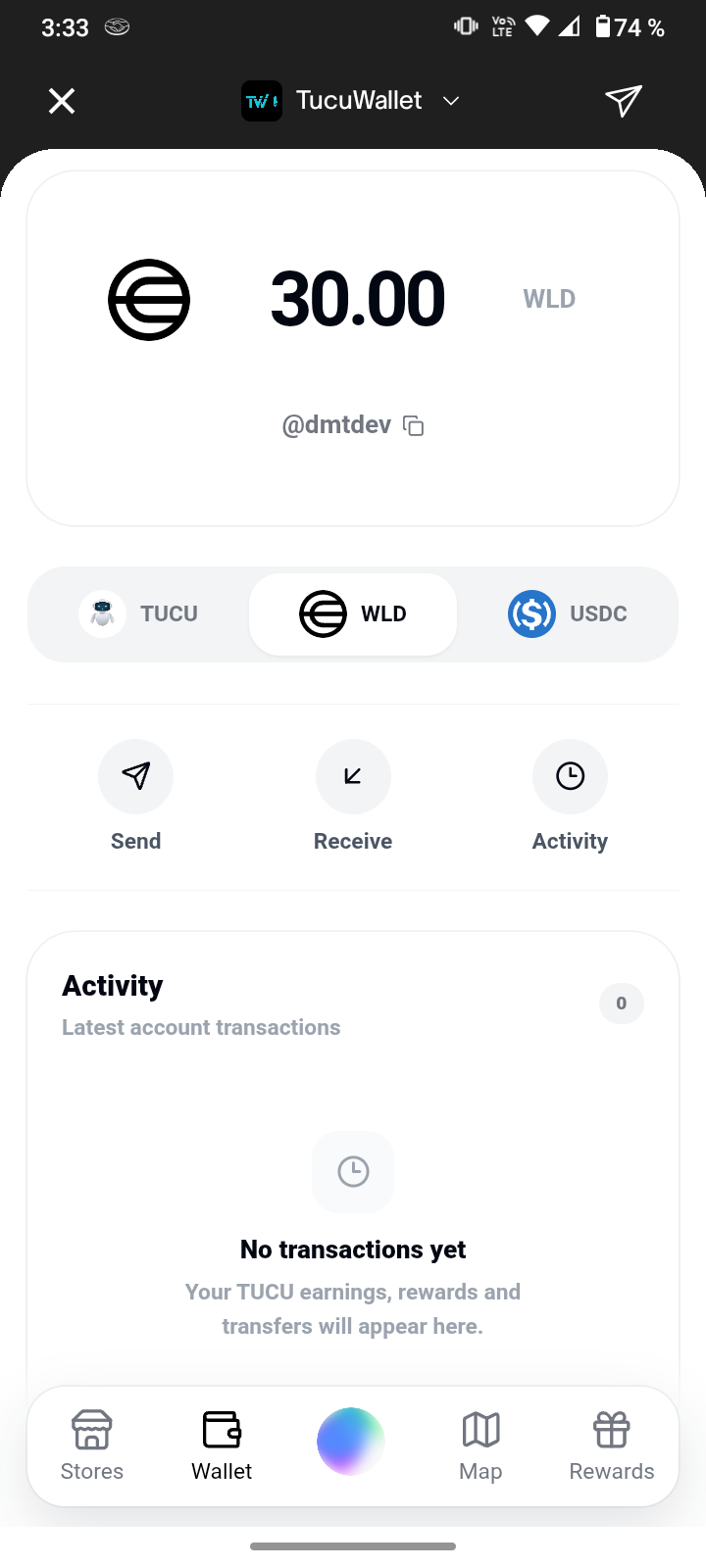
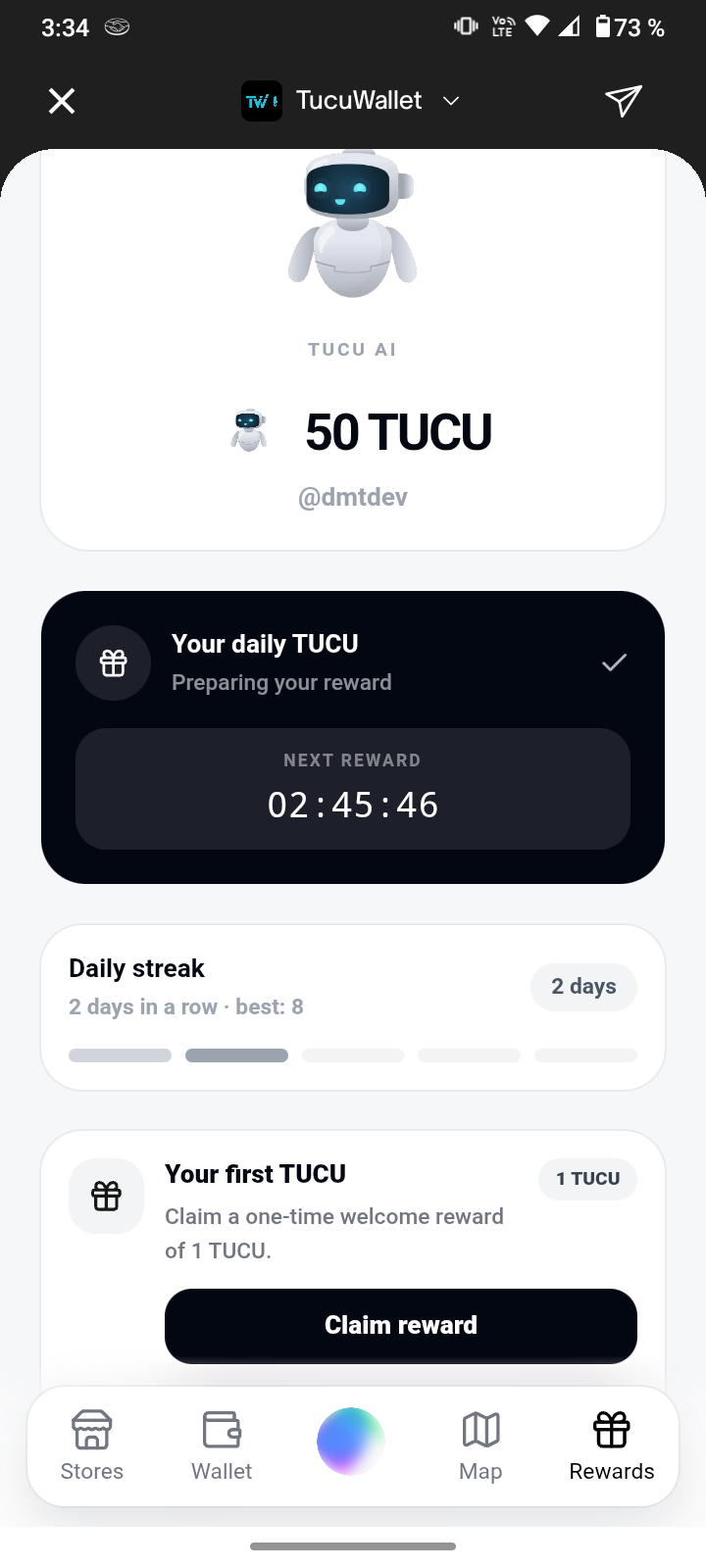
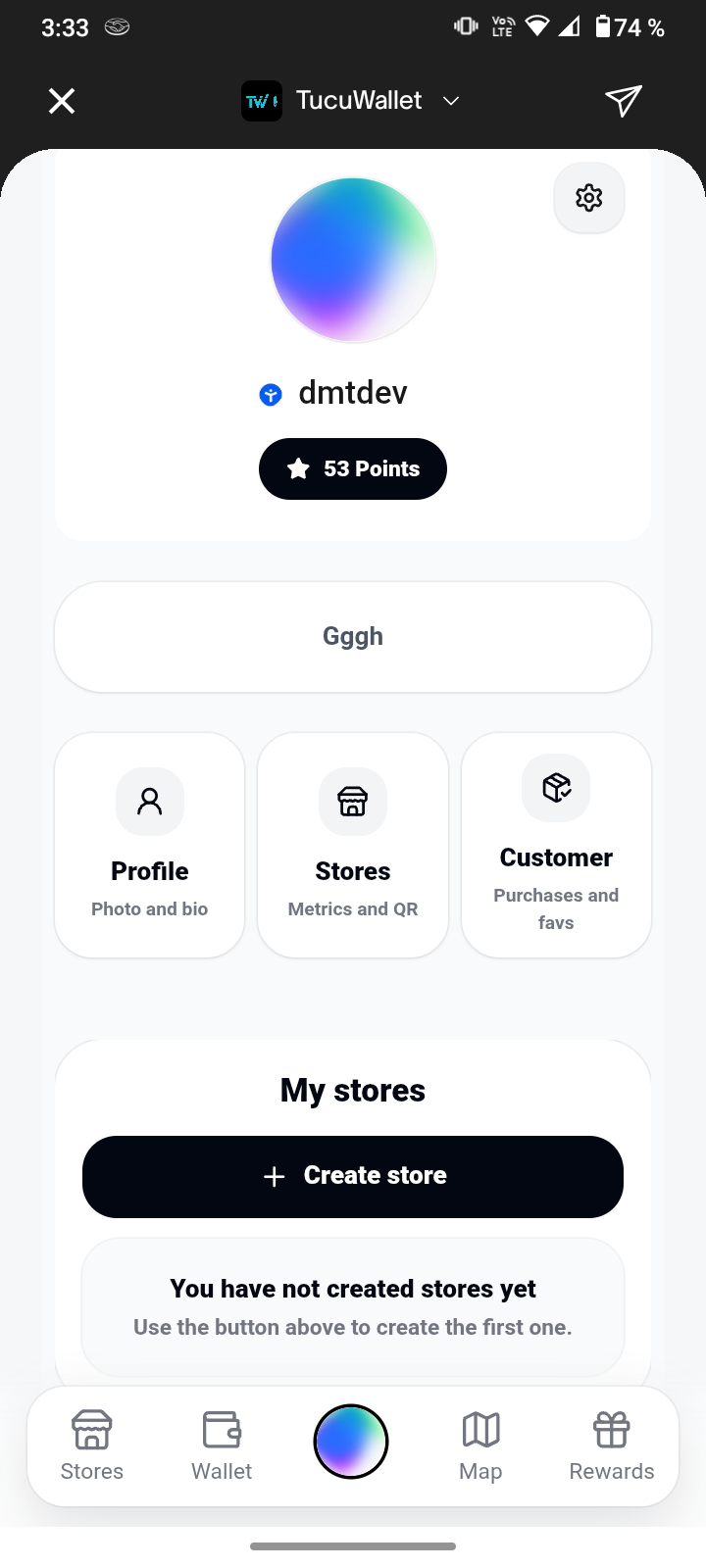
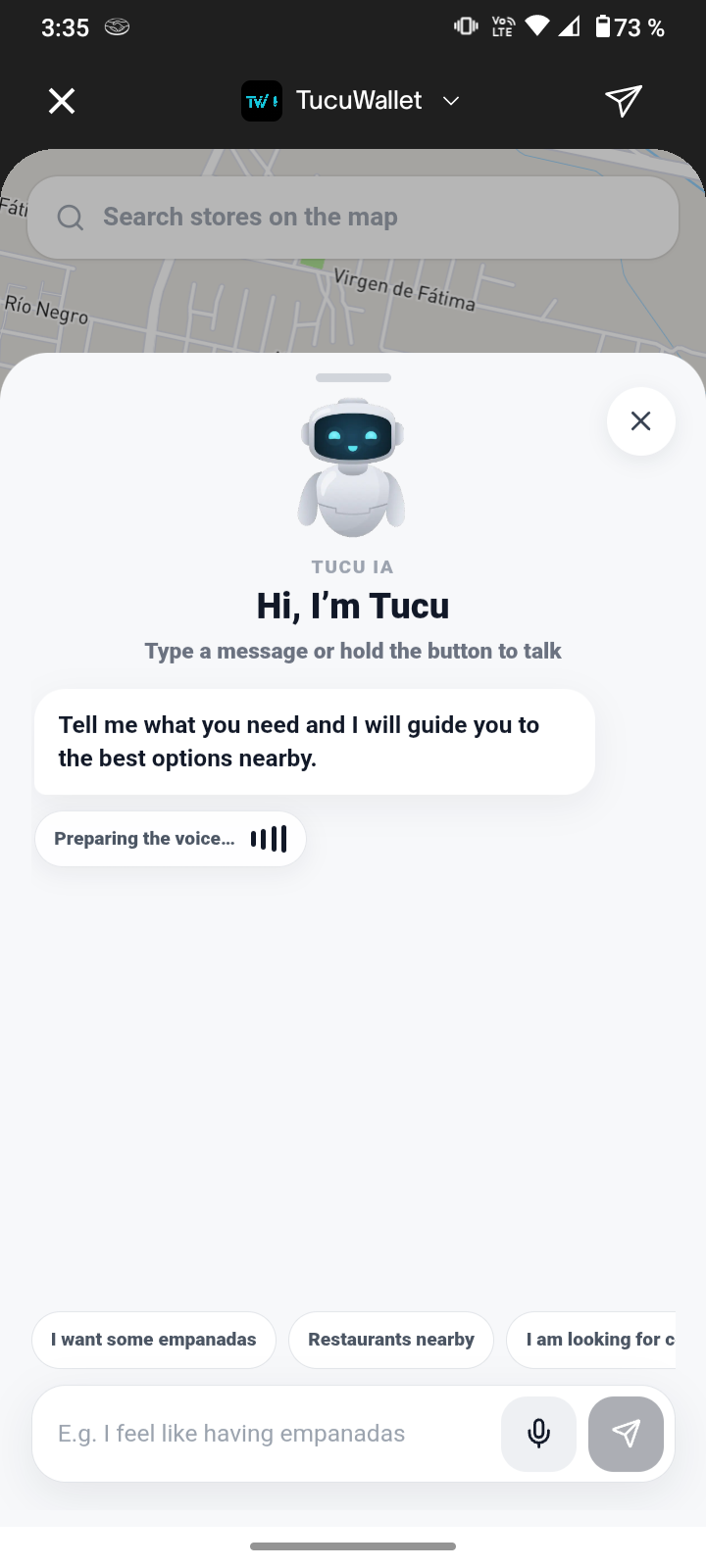
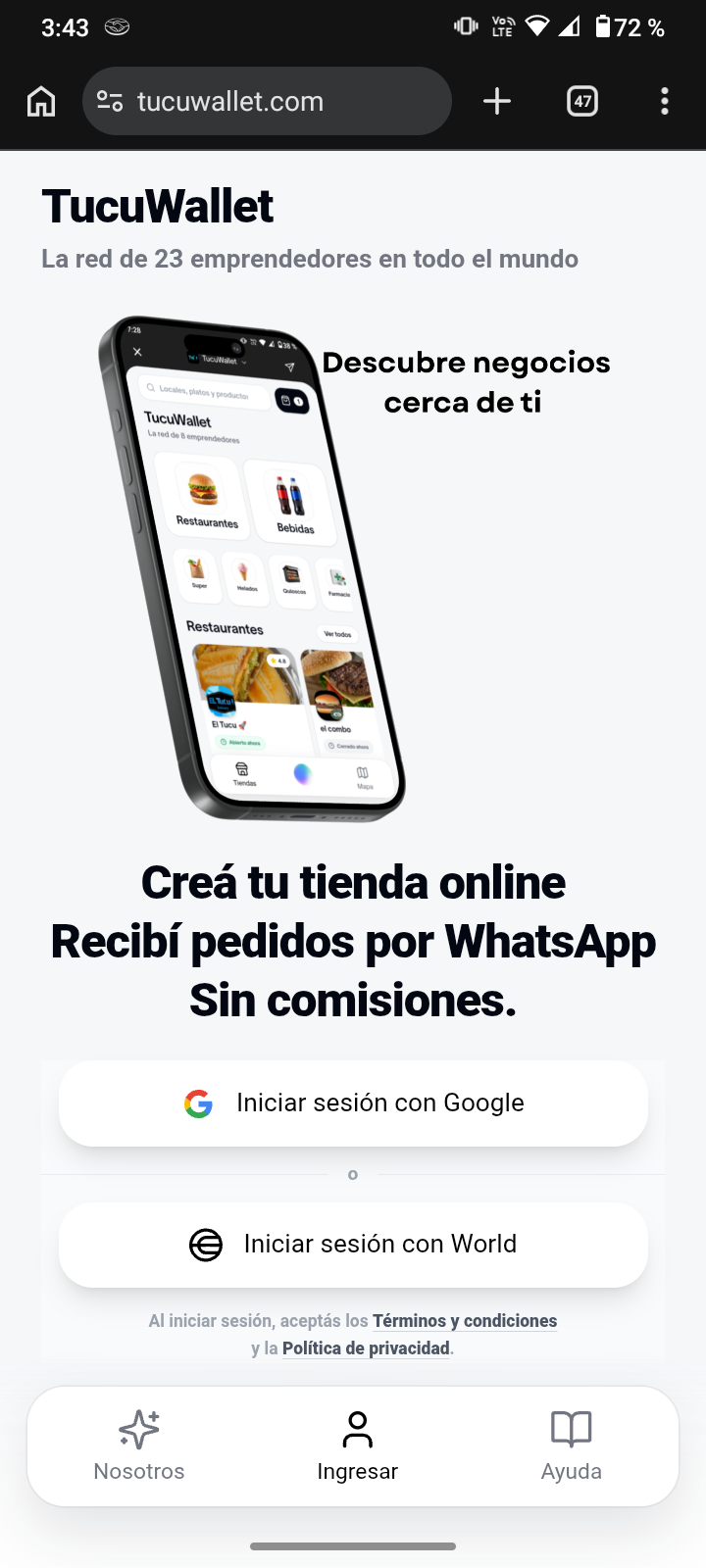
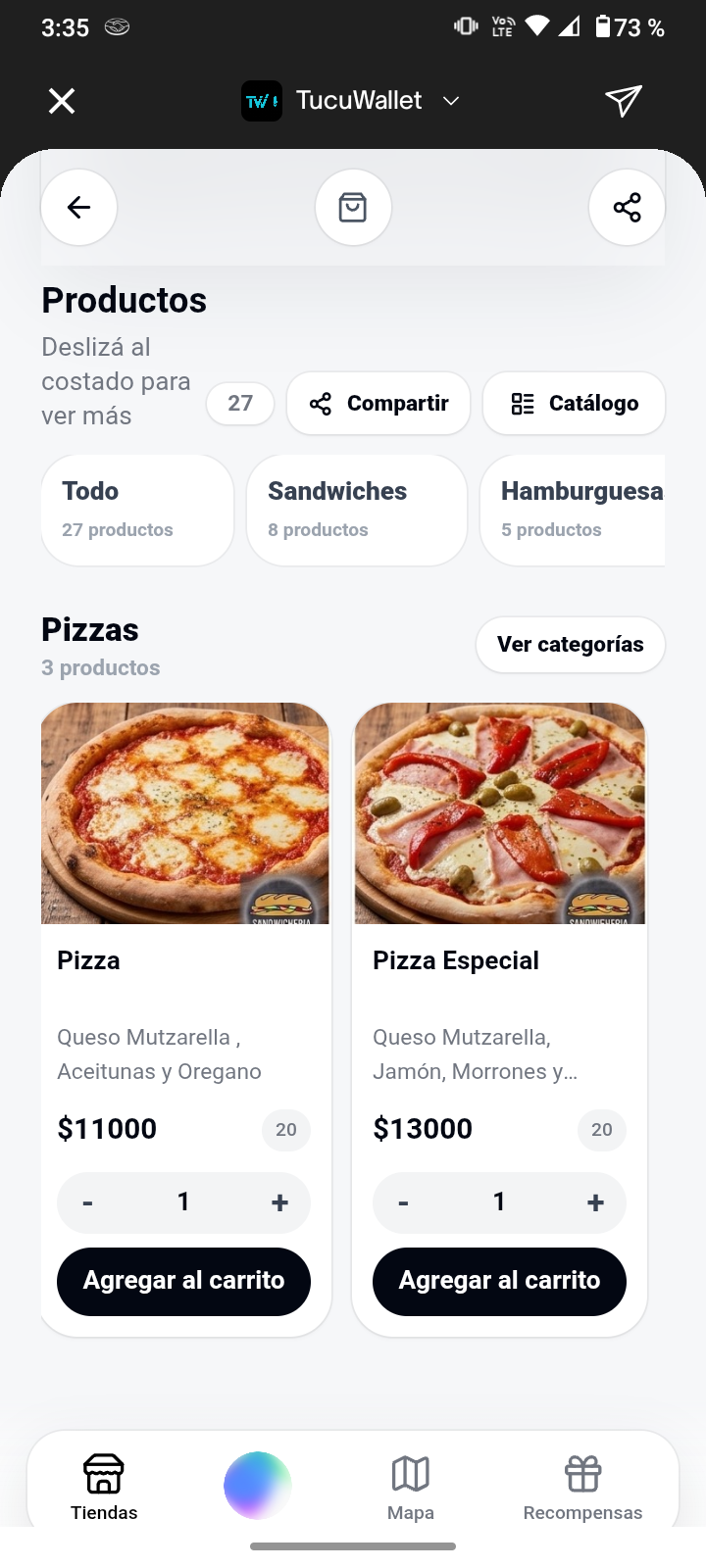
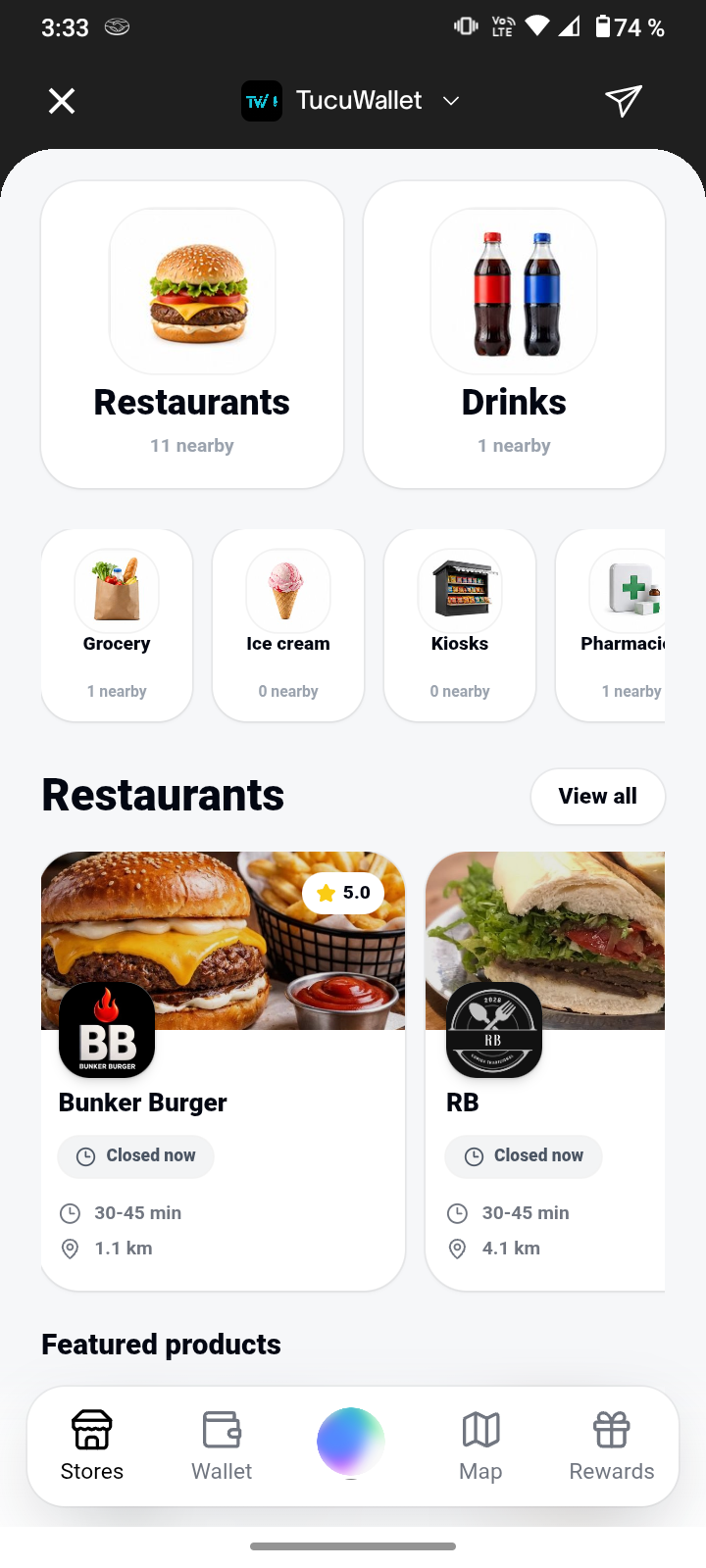
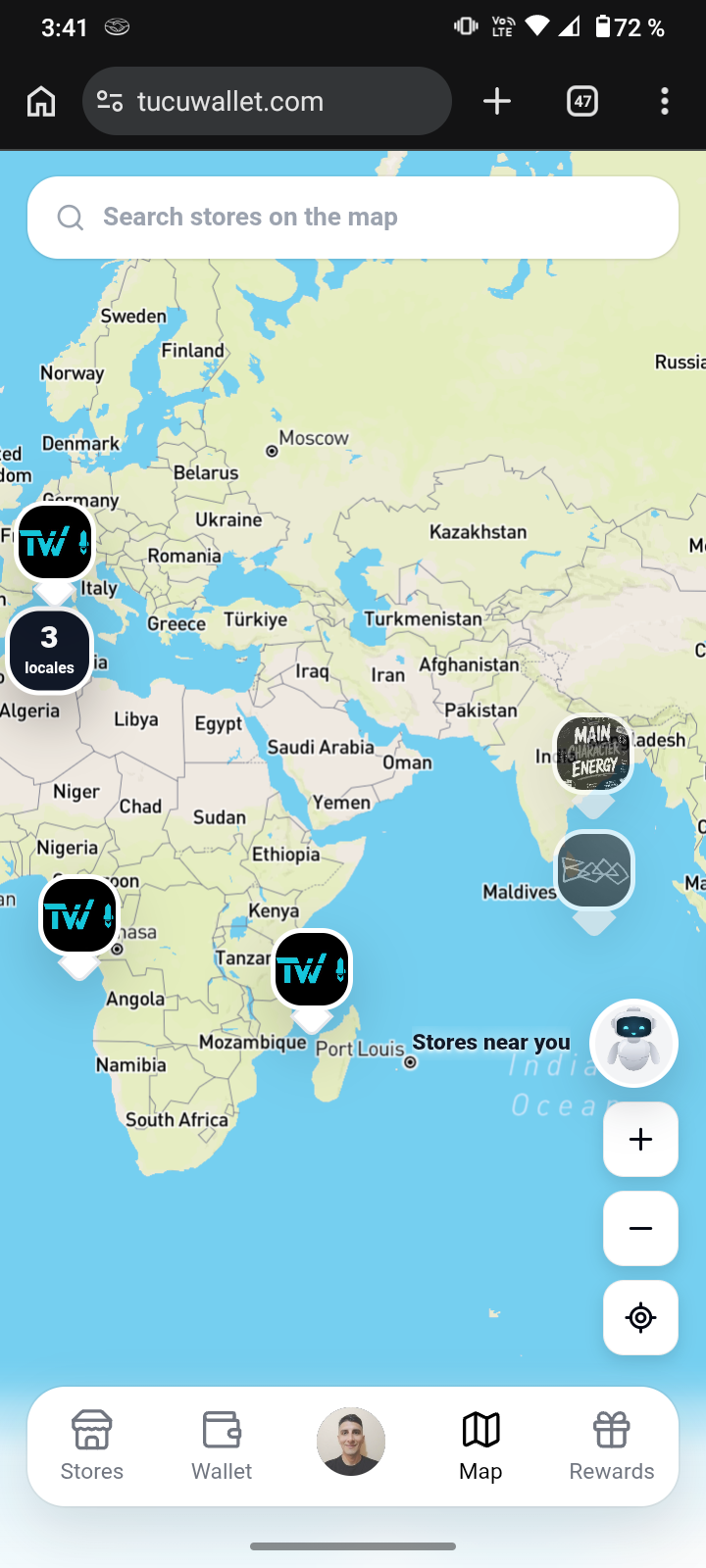
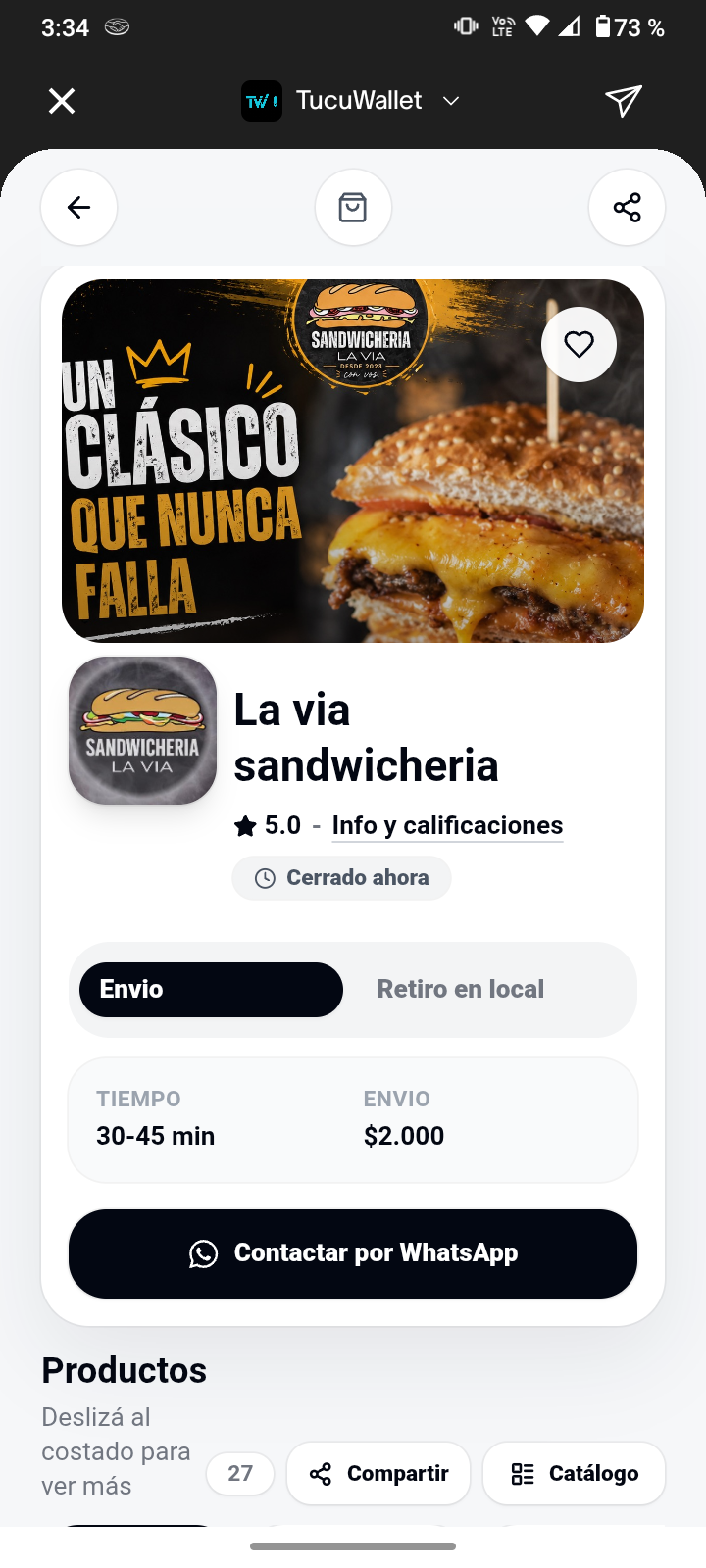
Inspiration TucuWallet was born in Tucumán, Argentina, after seeing how many local entrepreneurs depend entirely on social media and WhatsApp to sell. Many small businesses do not have the time, technical knowledge, or budget to build a website, organize a digital catalog, appear on a map, or integrate artificial intelligence into their sales process. Our goal was to make these technologies accessible through a simple product that works with tools people already understand. TucuWallet gives every entrepreneur a digital store and helps customers discover nearby products and businesses through Tucu, an AI-powered conversational assistant.
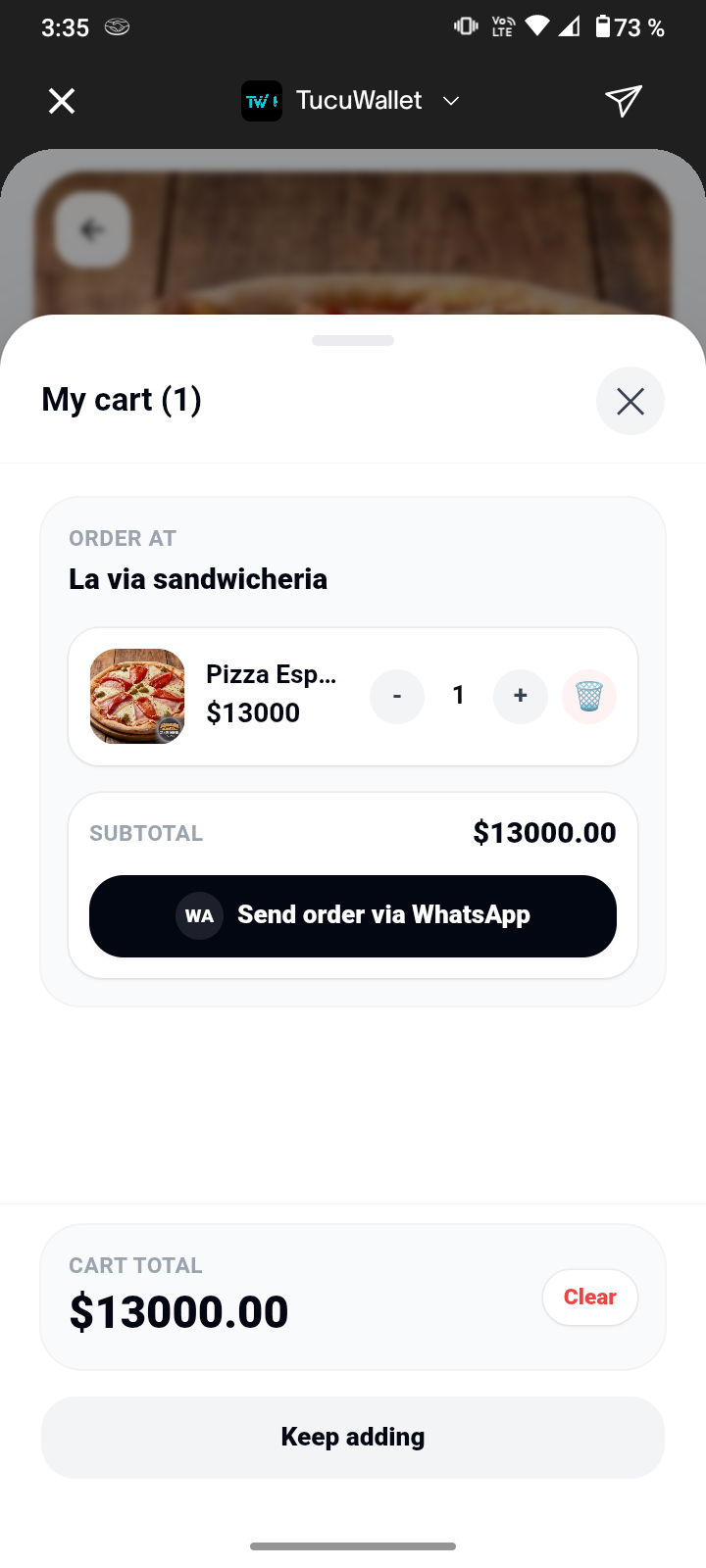
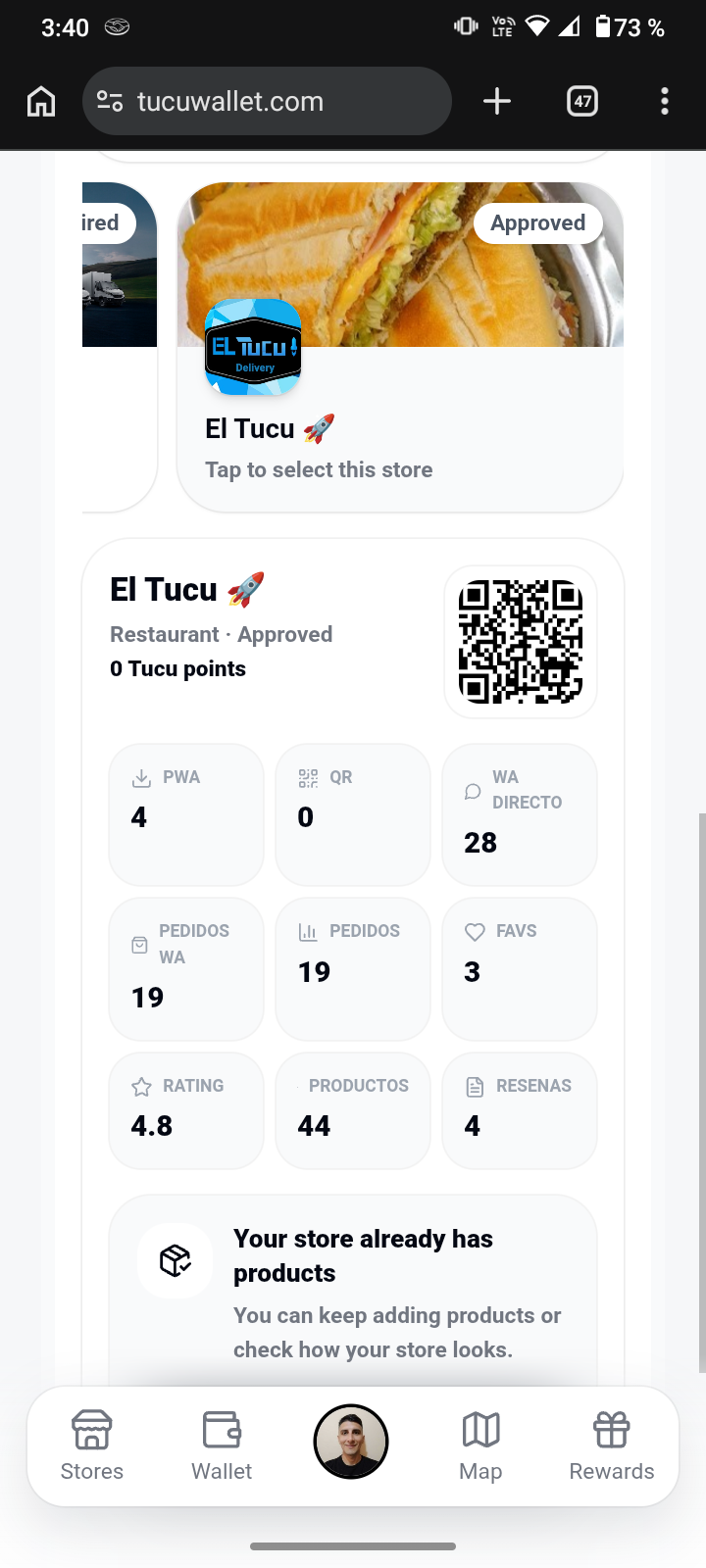
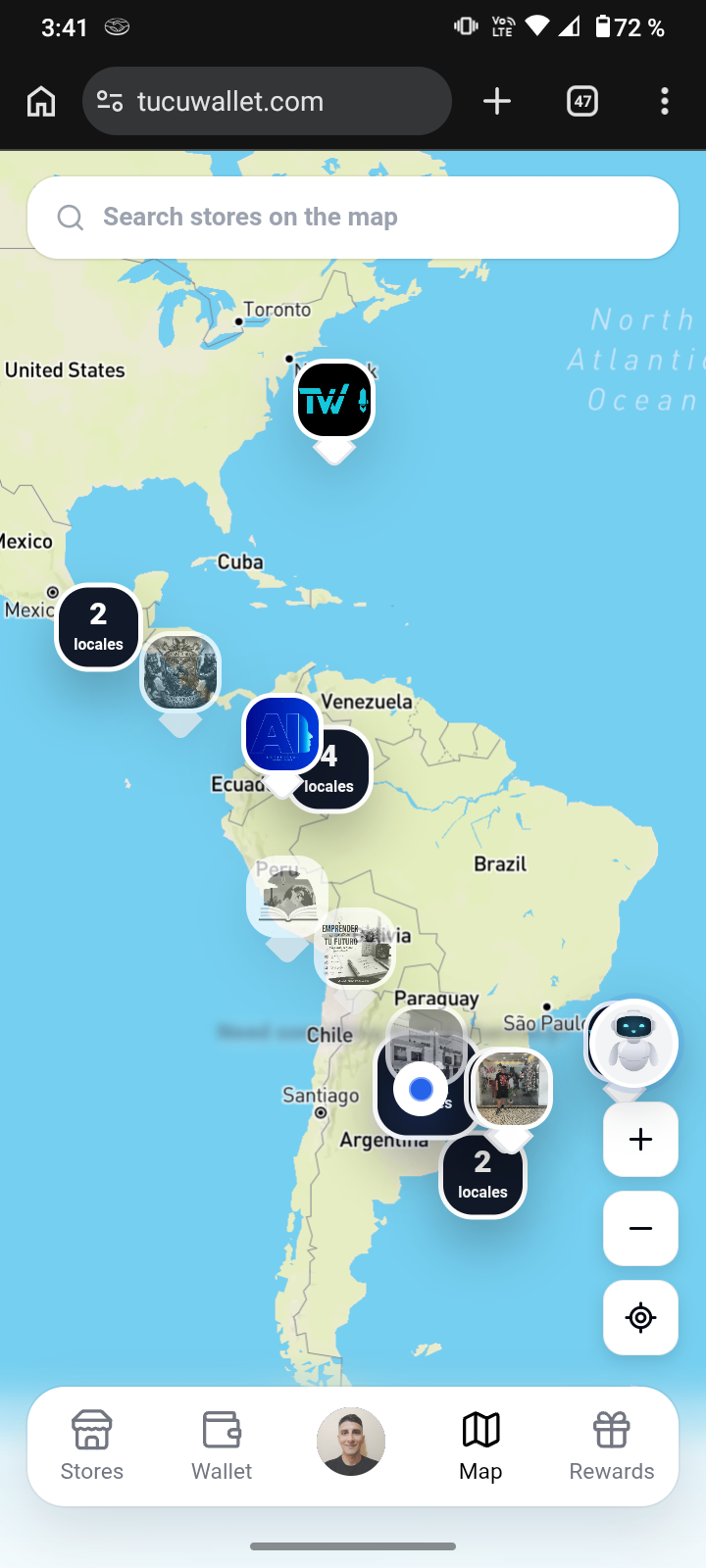
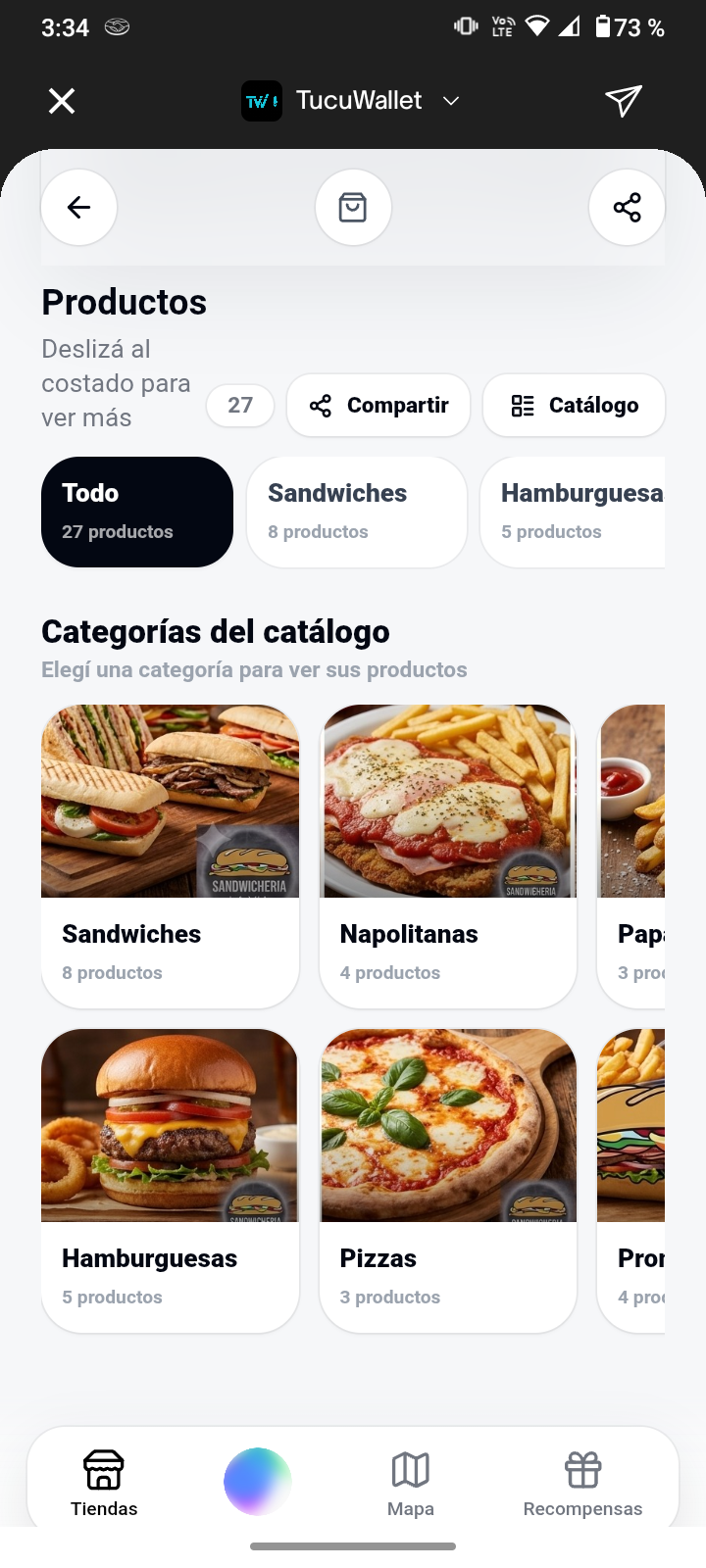
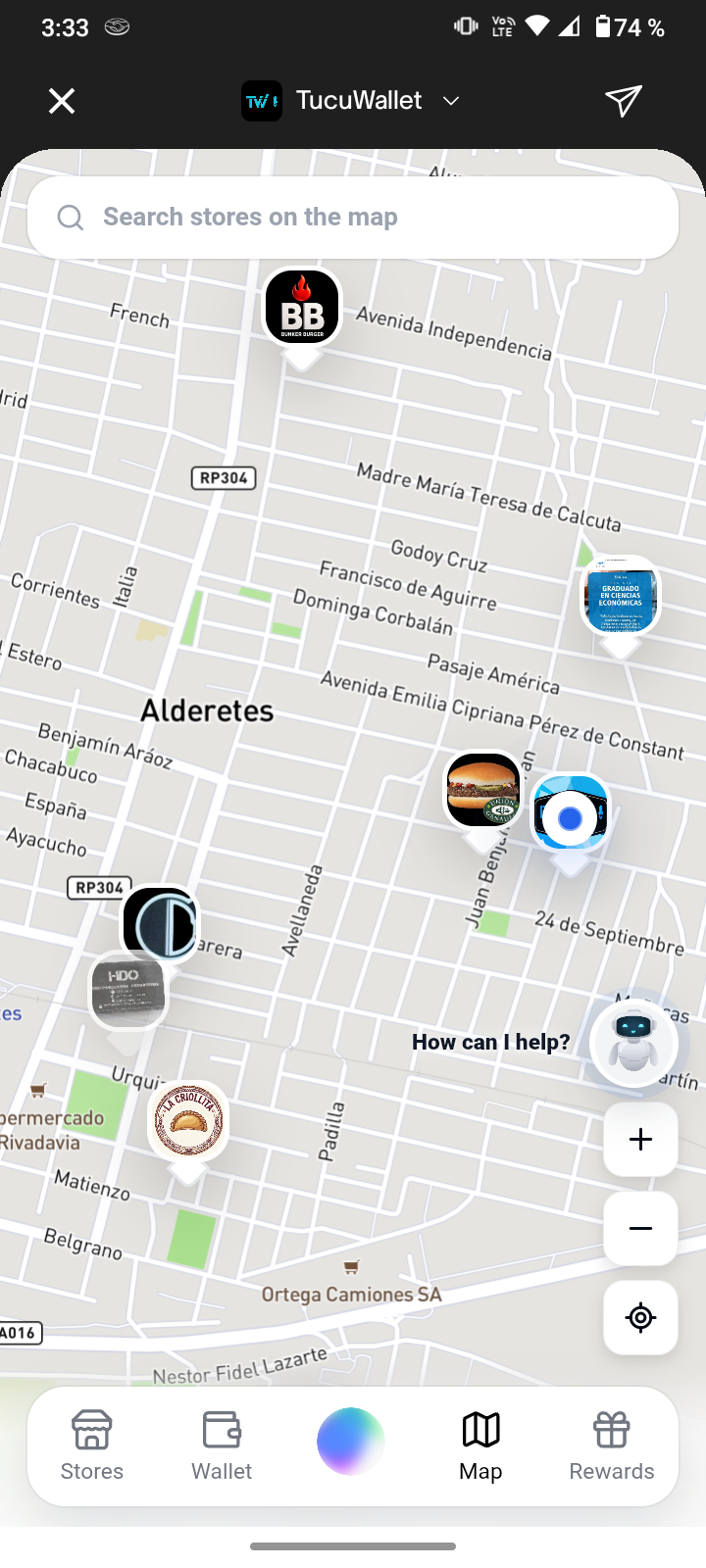
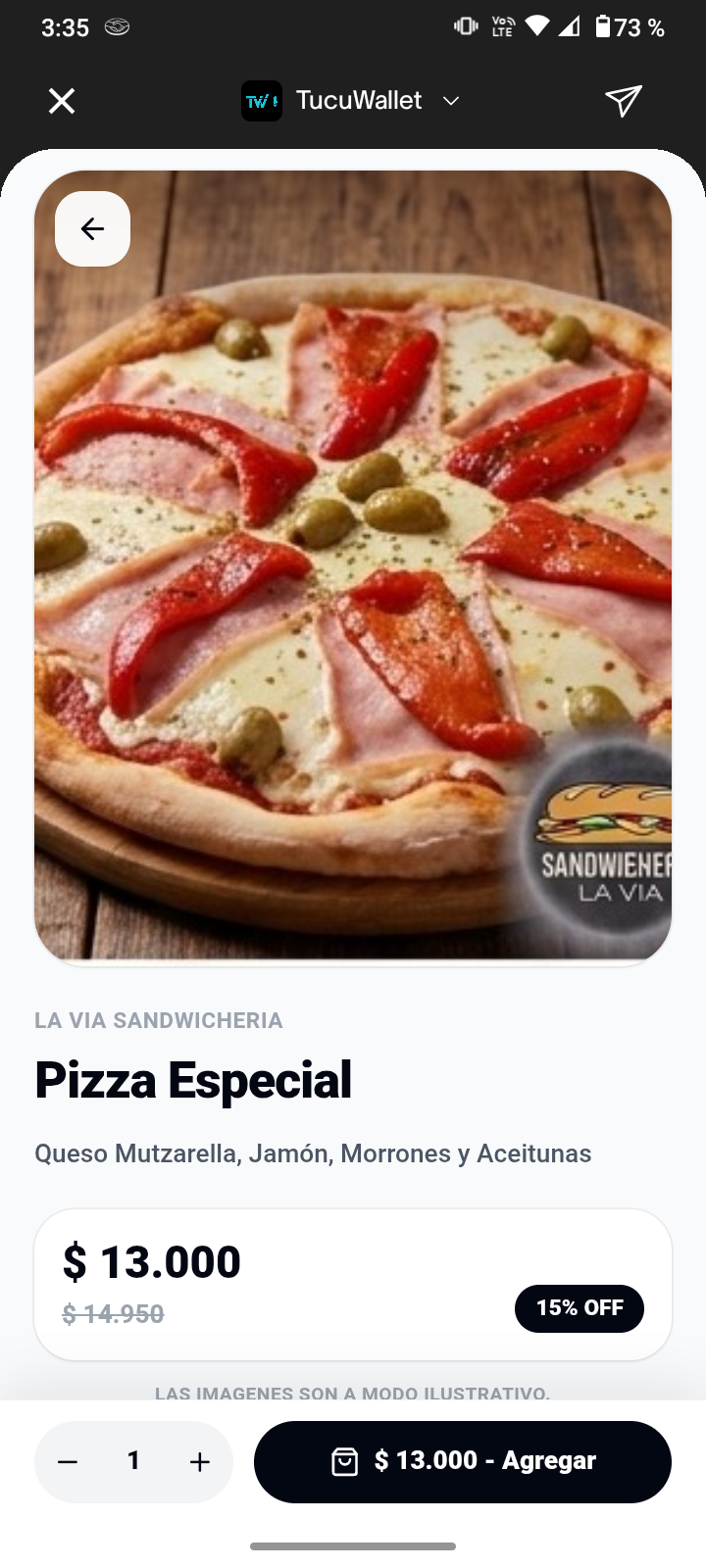
What it does TucuWallet is a platform for creating digital stores and discovering local businesses, products, and services. Entrepreneurs can create a store, upload a logo and banner, organize products into categories, publish prices and business hours, configure their location, generate a QR code, and receive orders through WhatsApp. Each store can be shared through a direct link or QR code. Customers can explore nearby businesses, view products, save favorites, build a shopping cart, and send a complete order to the merchant through WhatsApp. Gemini powers Tucu, the conversational assistant inside TucuWallet. Users can speak or write naturally to request something they want to buy. Tucu interprets the request and searches the real TucuWallet catalog for relevant businesses and products within a maximum radius of 40 kilometers. Tucu does not invent stores or return generic internet results. Its recommendations are connected to products and businesses registered in TucuWallet. Tucu supports Spanish, English, and Portuguese. It understands written and spoken requests, responds in the selected language, and reproduces its answers using natural voice. Tucu also connects conversational discovery with the purchasing workflow. A user can request a product, receive nearby recommendations, open the selected product, choose the quantity, add it to the cart, and continue to WhatsApp with the complete order prepared for the merchant.
How we built it The frontend was built with Next.js, React, TypeScript, Tailwind CSS, and a responsive mobile-first interface. The backend uses Node.js, Express, and MongoDB to manage users, stores, products, carts, rewards, payments, and location data. Gemini is integrated through a protected backend service. The server receives the conversation, selected language, location, and available catalog context, then generates a grounded response. This architecture keeps credentials outside the client and controls which business information is provided to the model. TucuWallet also integrates Google authentication, Google Maps, WhatsApp ordering, Mercado Pago, Google Play Billing, World ID, World Chain, and WLD payments. Challenges
Challenges we ran into One of the main challenges was connecting generative AI with real commerce data. A useful shopping assistant must understand the user while remaining grounded in products that actually exist. We also worked on multilingual consistency, location-aware recommendations, natural voice generation, audio playback across different mobile browsers, voice recording, authentication flows, and creating a simple experience for people who may never have used an AI assistant before. Another challenge was combining Web2 and Web3 without making the product confusing. TucuWallet preserves a familiar Google and WhatsApp experience while also providing access through World App and blockchain-based features.
Accomplishments that we're proud of We built a working platform where entrepreneurs can create and manage real digital stores and customers can discover nearby products through Gemini. Tucu can receive text and voice requests, respond in three languages, speak its answers, recommend registered products, and connect those recommendations with a real purchasing workflow. TucuWallet has already been used to create stores for real entrepreneurs. The project demonstrates that AI can provide immediate practical value to small businesses instead of remaining an isolated chatbot or experimental feature.
Built With
- express.js
- gemini-api
- google-ia-studio
- google-oauth
- google-pay
- ispeech-text-to-speech
- javascript
- mercadolibre
- mongodb
- next.js
- node.js
- pwa
- react
- render
- typescript
- vercel
- web-speech-api
- web3
- wld
- world-app
- world-chain
- world-id


Log in or sign up for Devpost to join the conversation.