Inspiration
Classic Sudoku is easy to understand, but its moment-to-moment interaction can feel slow and visually repetitive. We wanted to keep the logic of a traditional (9 \times 9) Sudoku while turning each decision into a faster, more focused action.
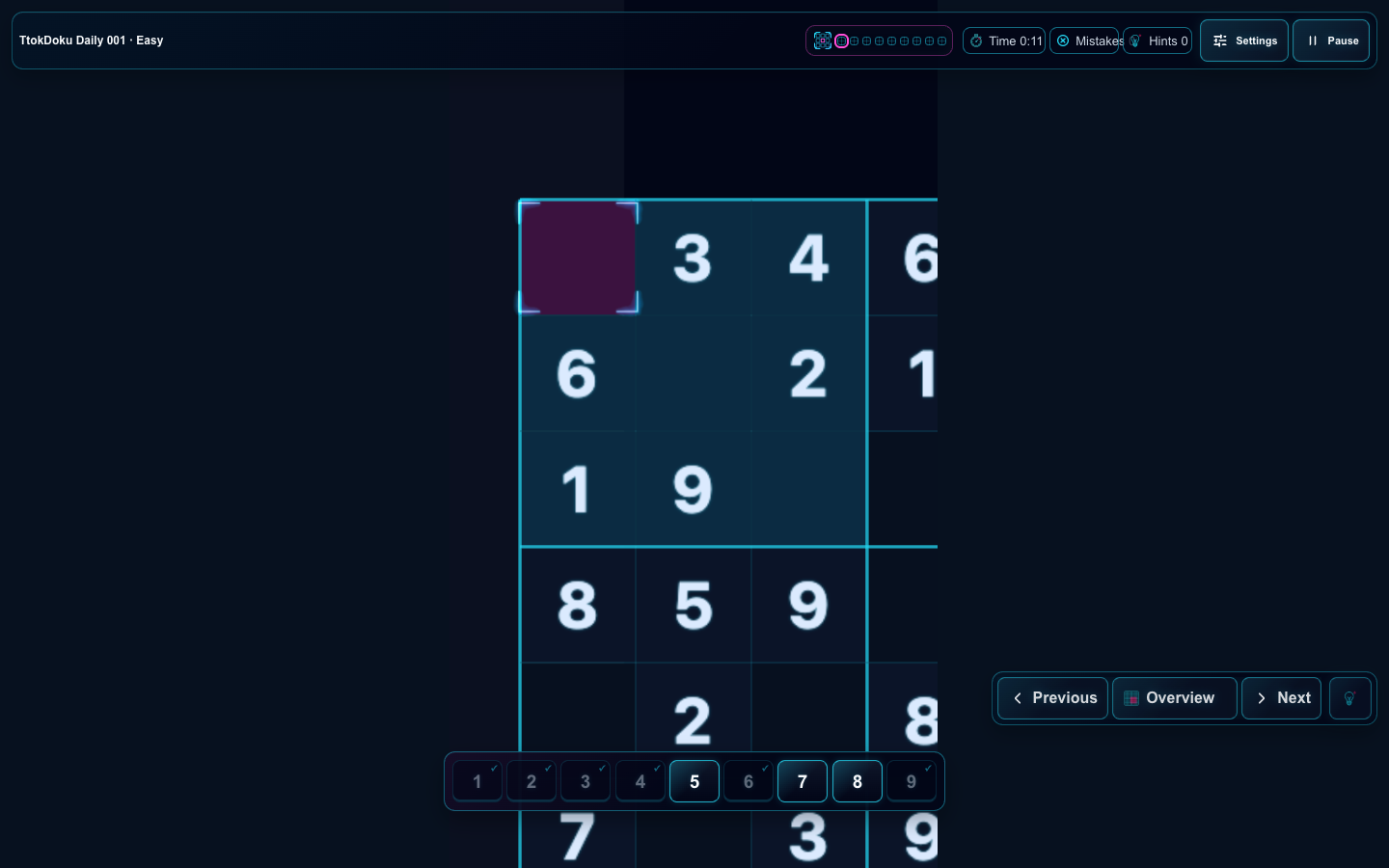
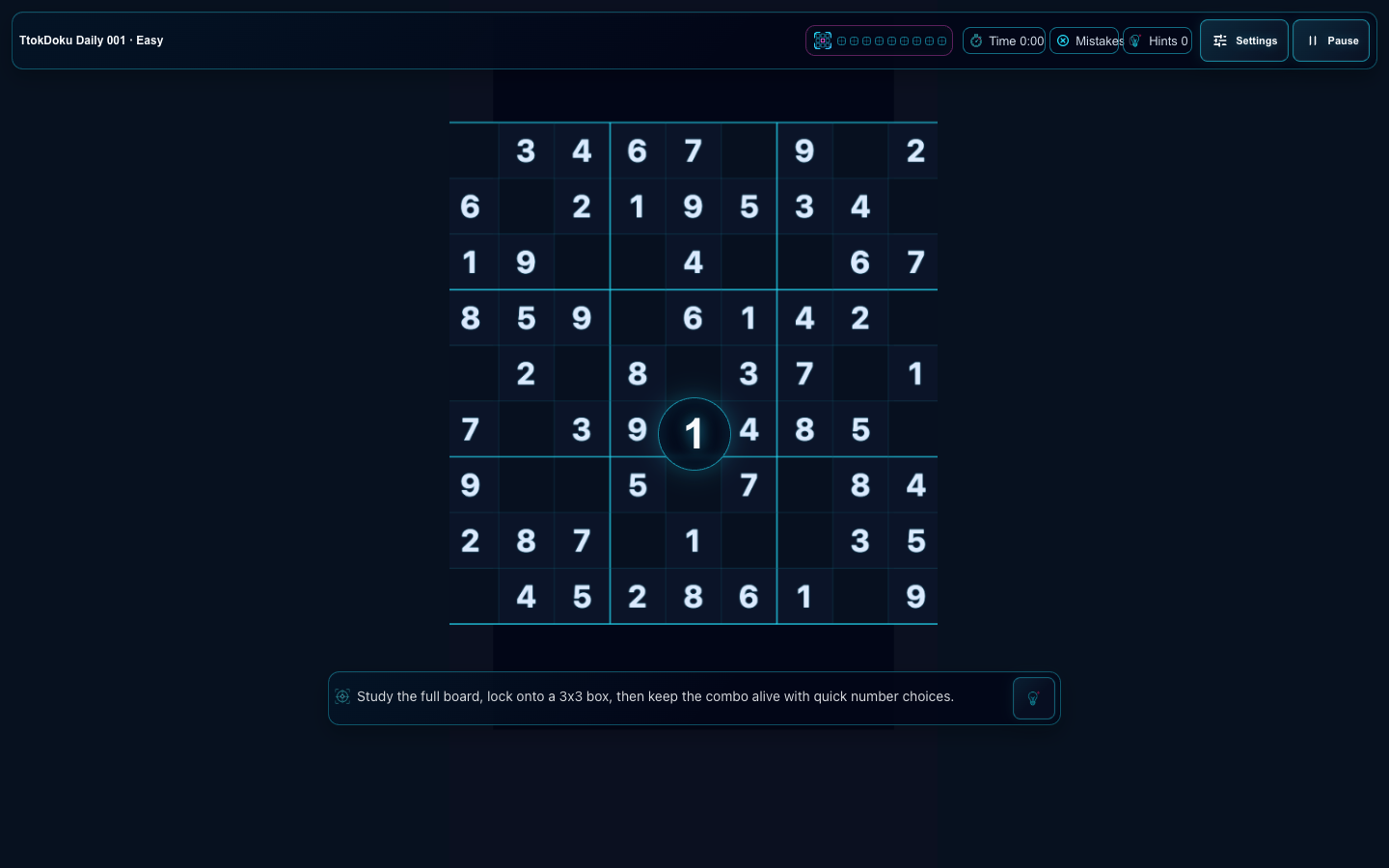
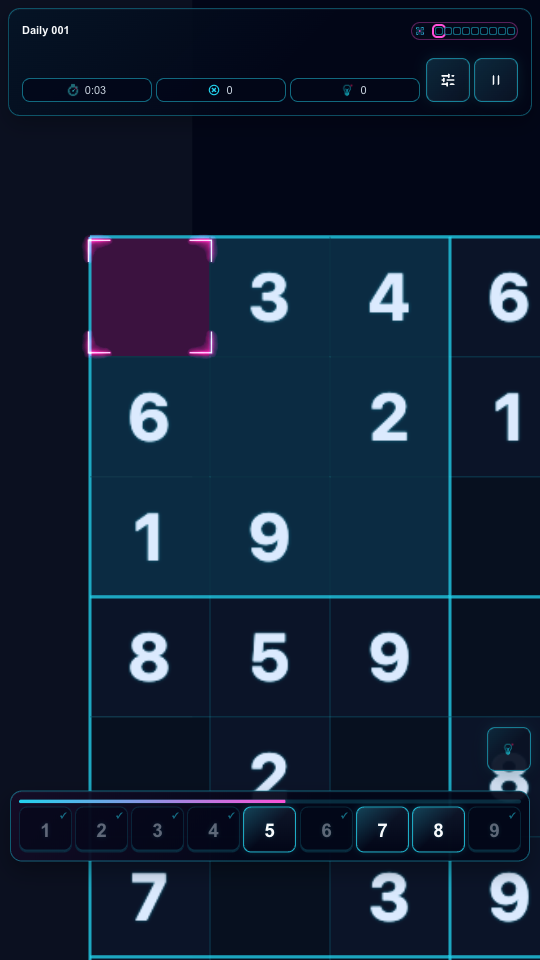
That led to the central idea behind TtokDoku: instead of asking players to manage the entire board at once, the game focuses attention on one (3 \times 3) box at a time. This creates a rhythm of observing the full puzzle, zooming into a box, choosing a number, and quickly moving to the next decision.
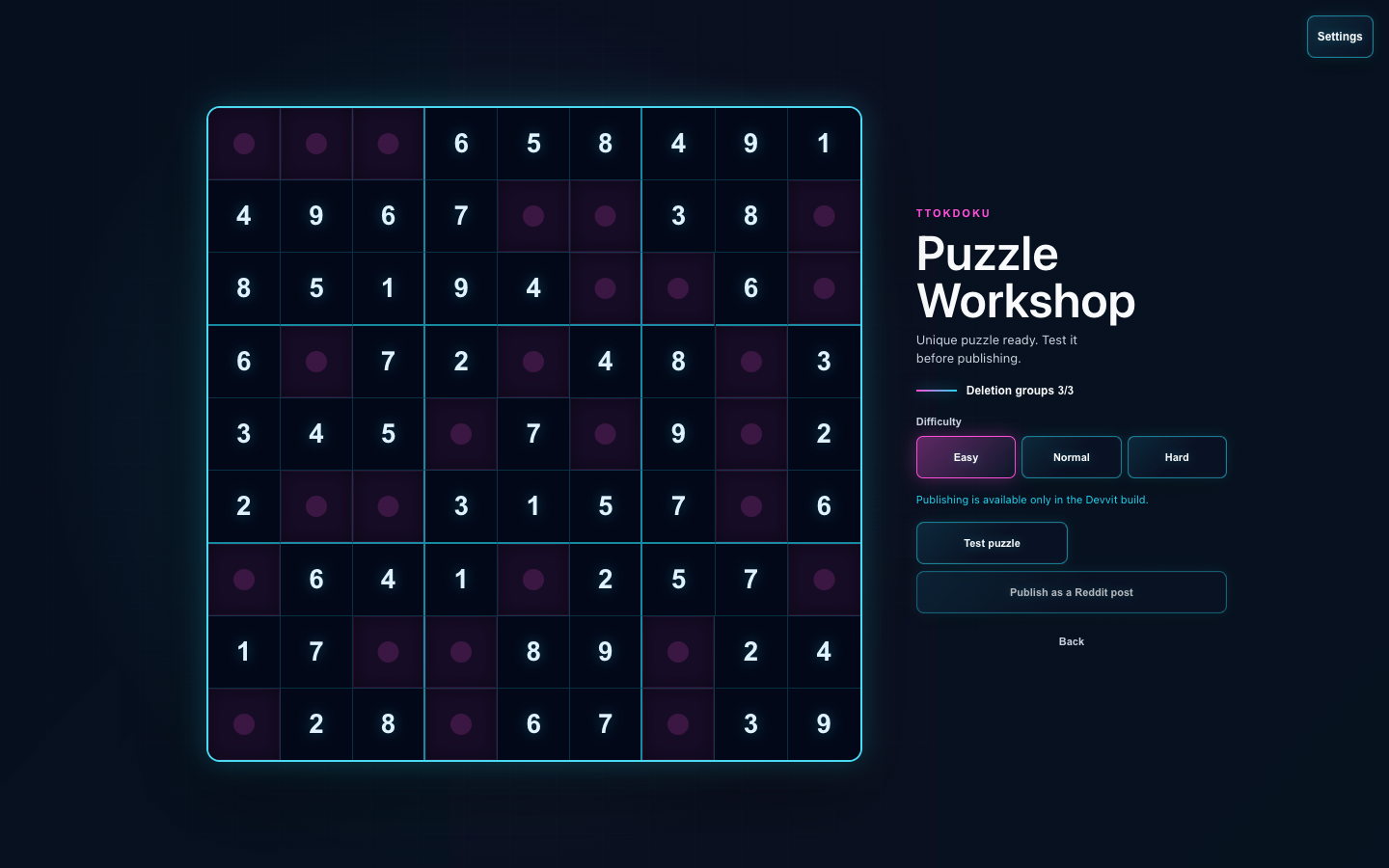
Reddit also inspired the social side of the project. Puzzle communities already enjoy comparing solutions, sharing challenges, and discussing strategies, but posting a completed board can easily reveal answers. We wanted to build a Reddit-native puzzle experience where communities could compete and share results without spoiling the puzzle itself.
What it does
TtokDoku is a fast, focused twist on classic (9 \times 9) Sudoku.
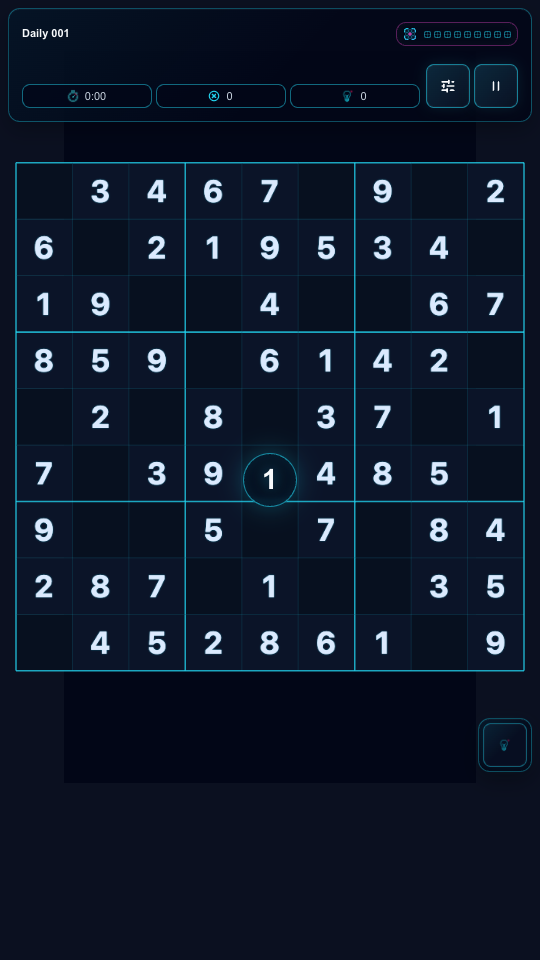
Players solve the puzzle one (3 \times 3) box at a time. The active cell is clearly highlighted, available numbers are presented as quick choices, and a combo timer rewards confident consecutive answers.
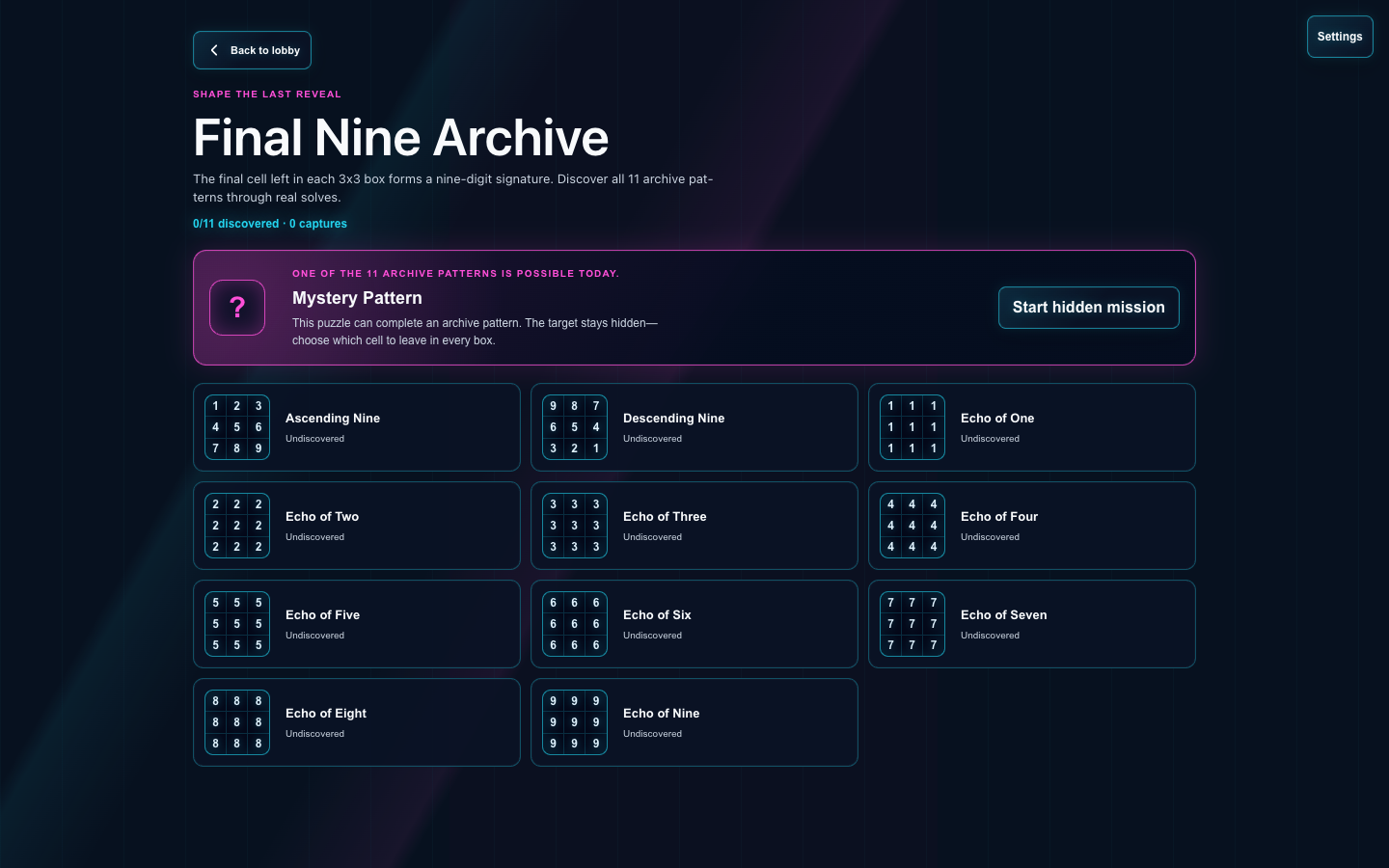
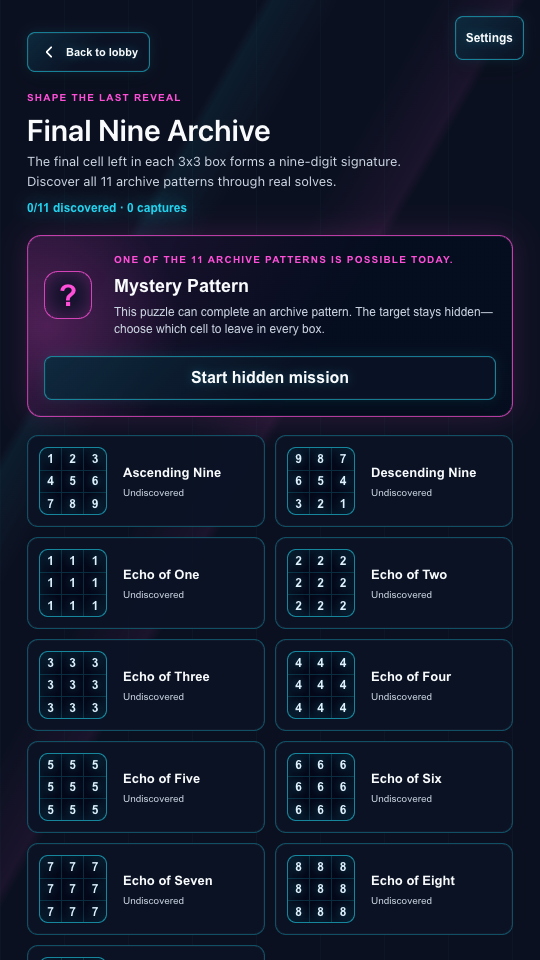
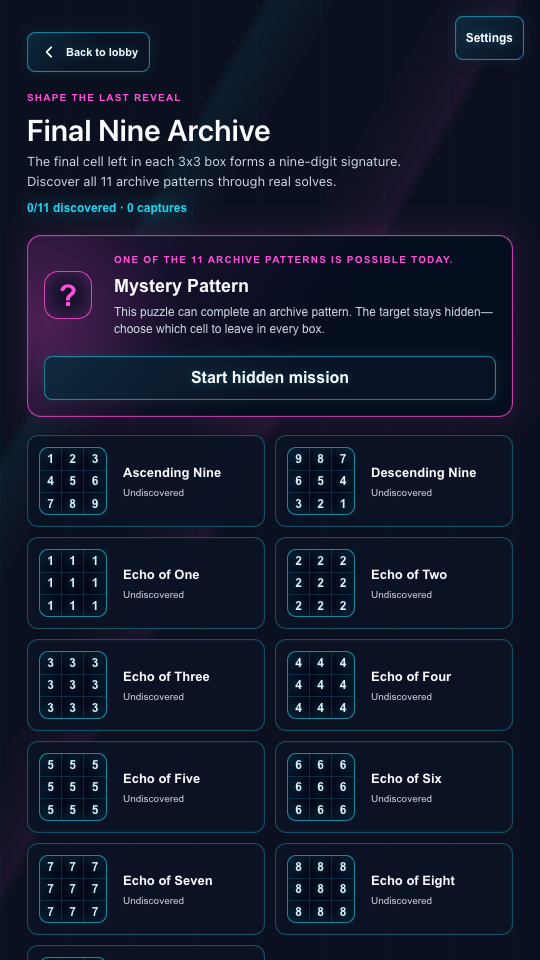
The puzzle does not end through a normal final input. Once every (3 \times 3) box has only one unresolved cell remaining, TtokDoku triggers the Final Nine reveal, completing the board with a short finishing sequence.
The project also includes:
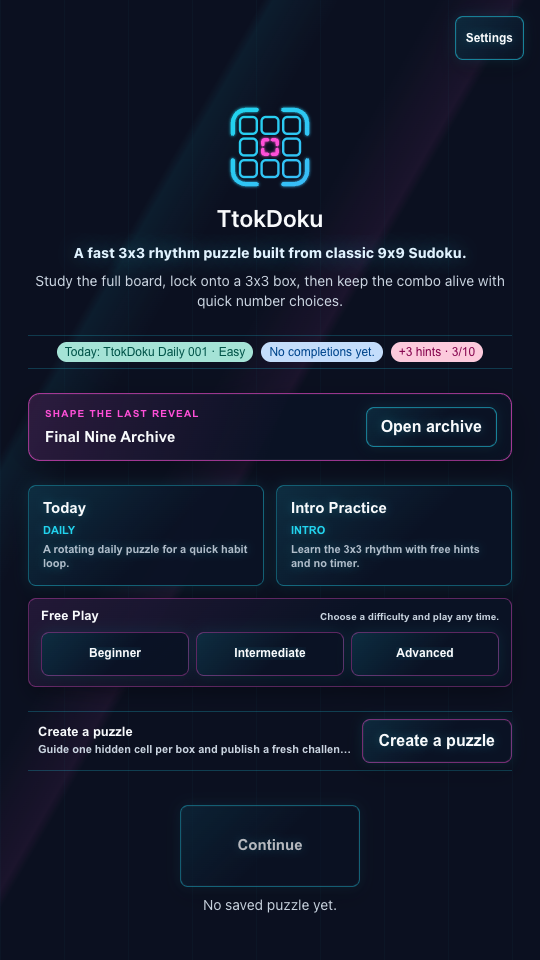
- A daily puzzle with one ranked attempt
- Verified results based on actual game state
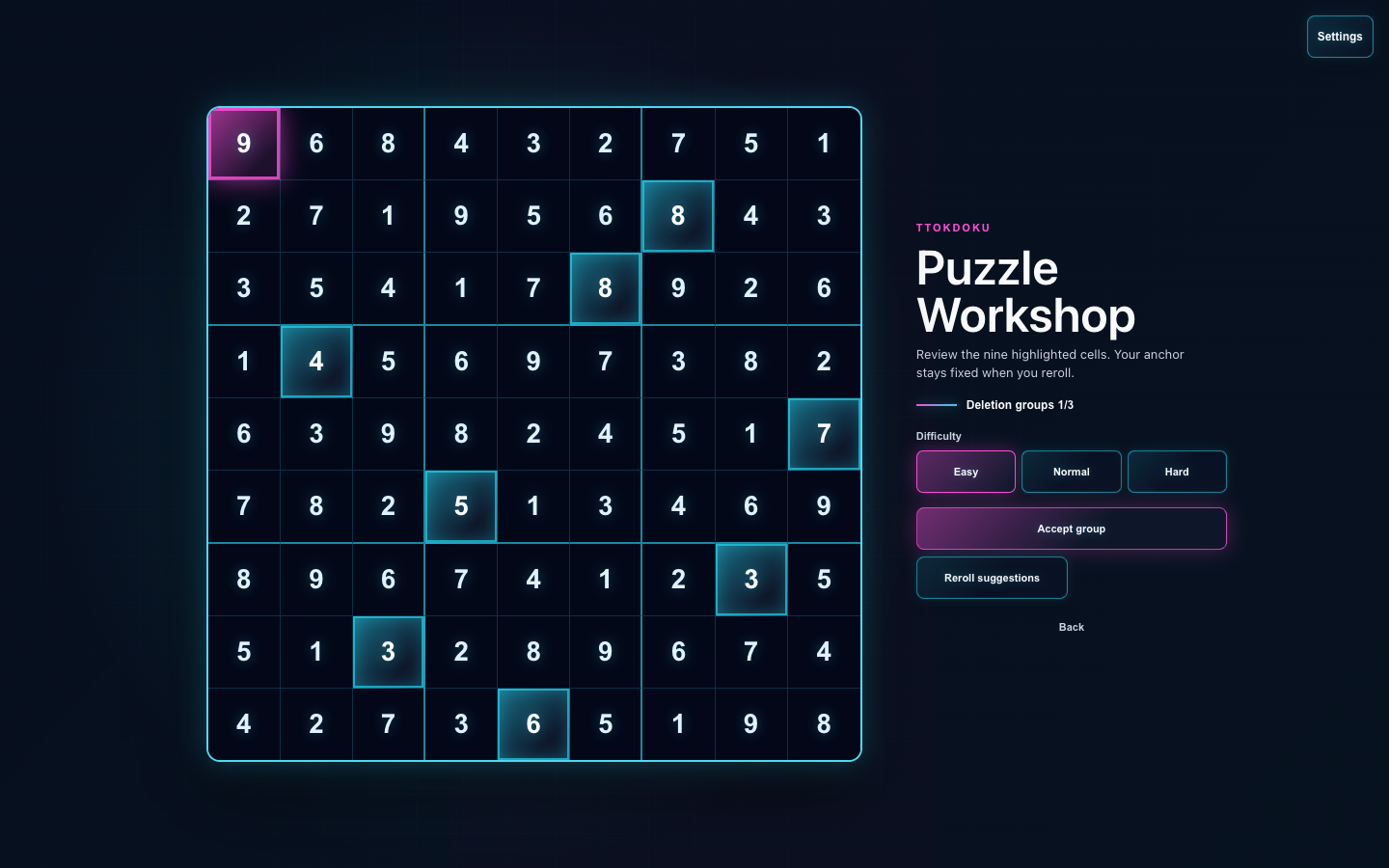
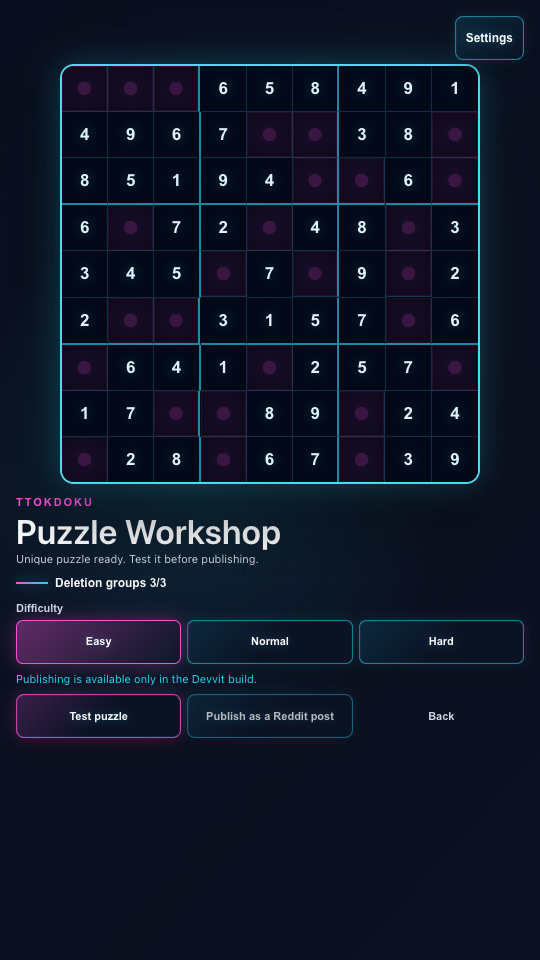
- Community-created structured challenges
- Difficulty-based free play and tutorial modes
- Mistake, hint, completion-time, and combo tracking
- Spoiler-free result sharing
- Leaderboards designed for Reddit communities
- Replay and puzzle-review tools
The goal is to make Sudoku feel faster and more social without removing the reasoning that makes the original puzzle satisfying.
How we built it
We began by separating the project into two main systems: a reusable Sudoku engine and a Reddit-focused game layer.
The puzzle engine handles board generation, solution validation, legal number candidates, difficulty data, player progress, mistakes, hints, and completion conditions. We added additional rules for TtokDoku’s box-focused structure, including the transition between the full-board view and the active (3 \times 3) view.
The gameplay itself was organized as a state-driven flow:
- Study the full board
- Select or enter an active box
- Focus on the current missing cell
- Choose from the available numbers
- Validate the answer
- Continue the combo or return to the overview
- Trigger the Final Nine reveal when all boxes are ready
We created responsive layouts for both desktop and mobile viewports. The board remains the main visual element, while the timer, mistake count, hints, box progress, and number controls adapt to the available space.
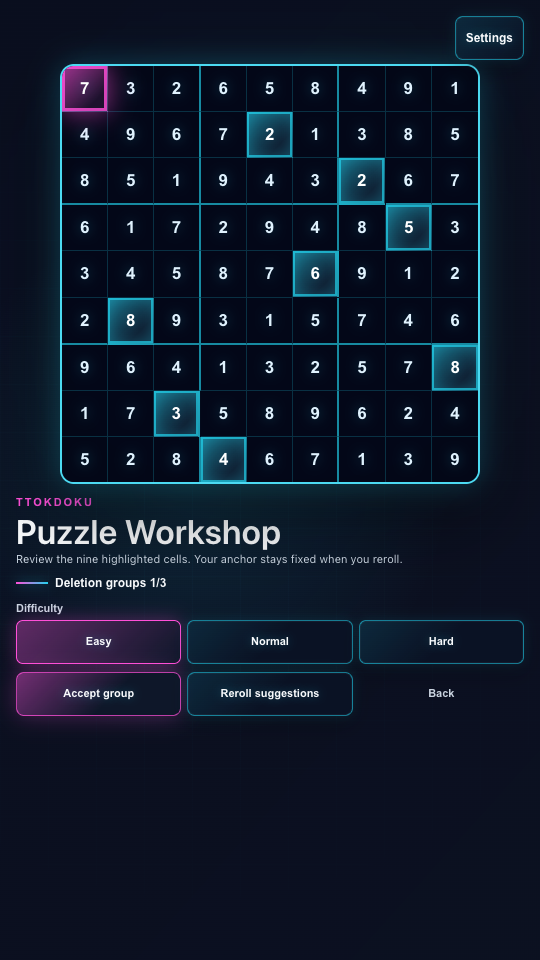
For the visual direction, we used a dark navy interface with cyan grid lines and magenta focus brackets. The app icon uses the same visual language: a rounded (3 \times 3) grid, an outer focus frame, and a highlighted center cell.
On the Reddit side, we designed the game around daily participation, community-created challenges, ranked results, and spoiler-free sharing rather than treating Reddit as a simple link destination.
Challenges we ran into
One of the largest challenges was making the game feel different from standard Sudoku without making the rules confusing.
The focused (3 \times 3) interaction had to remain connected to the full (9 \times 9) puzzle. Players still need to reason across rows and columns, so the game frequently returns to an overview and provides enough surrounding information to support the next decision.
We also had to define a custom completion rule. TtokDoku stops active input when each box has one cell remaining, which means the game must verify that the remaining nine values are logically determined before starting the Final Nine reveal.
Another challenge was responsive board presentation. A large Sudoku grid works naturally on desktop, but zoomed gameplay, number controls, status information, and hint actions can compete for space on smaller screens. We had to treat the board as a dedicated game stage and carefully control camera position, safe areas, overlays, and touch-target sizes.
Ranked one-shot puzzles introduced additional design concerns. A result only feels meaningful when attempts, hints, mistakes, puzzle identity, and completion state can be validated consistently.
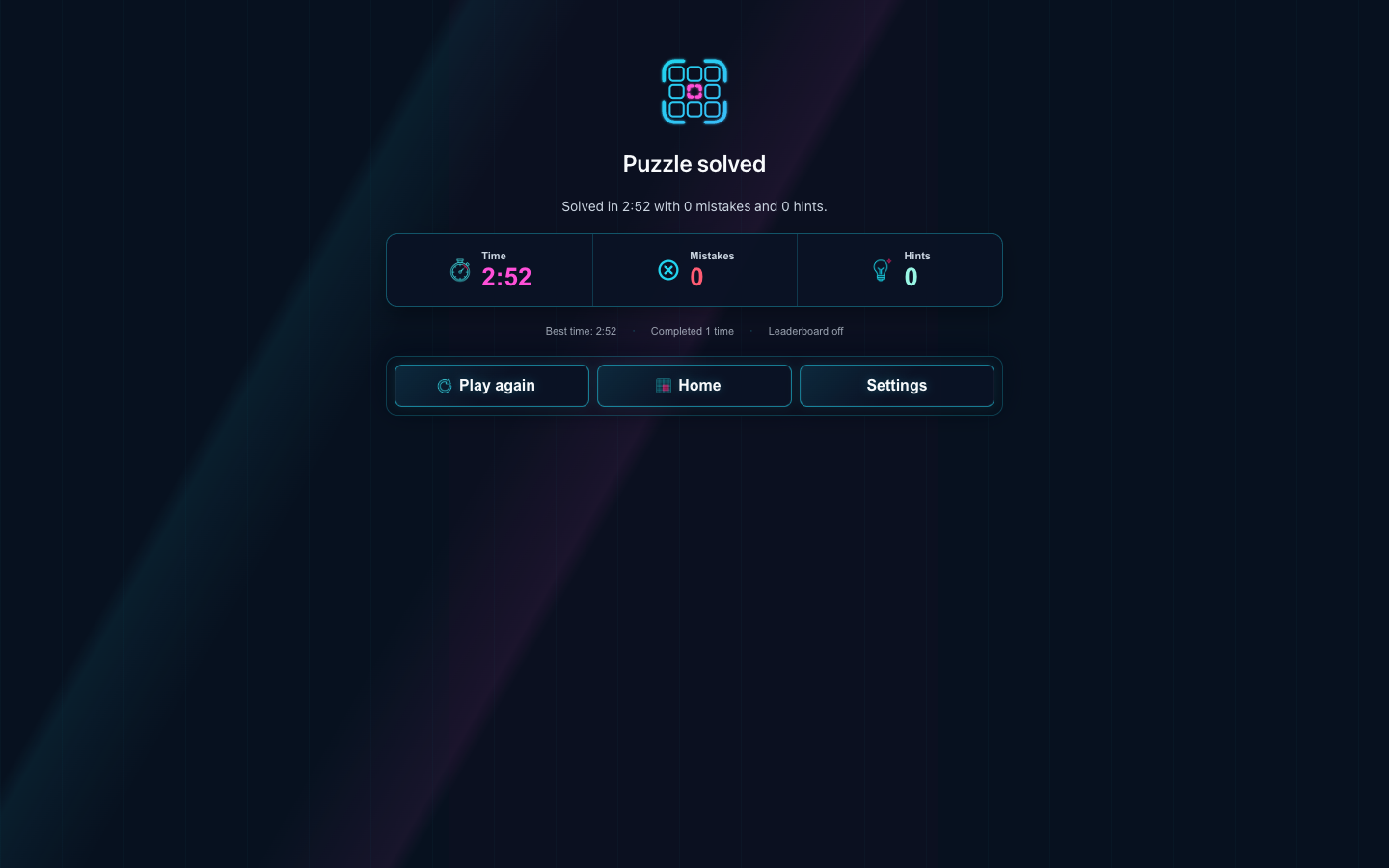
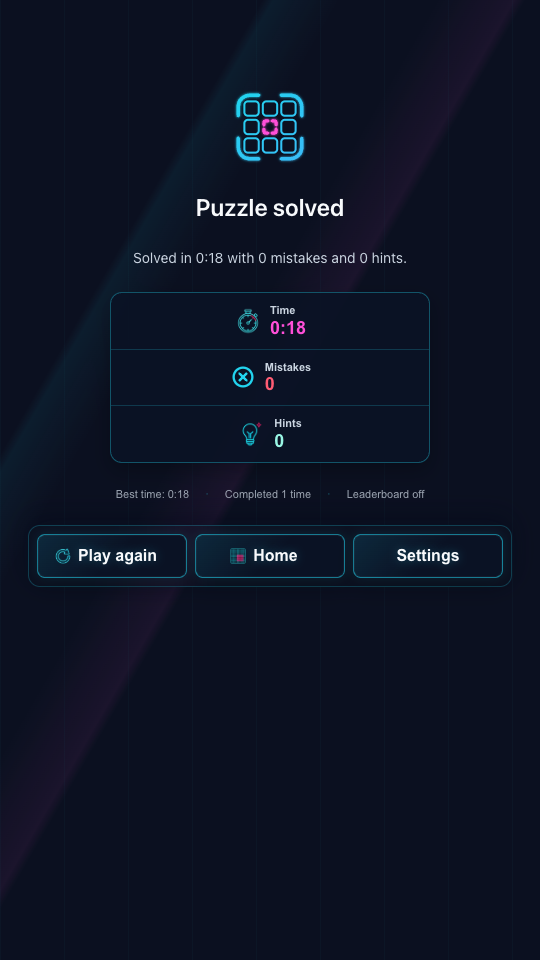
Finally, spoiler-free sharing required us to communicate achievement without exposing the completed grid. We focused result cards on time, mistakes, hints, streaks, rank, and challenge identity rather than the solution itself.
Accomplishments that we're proud of
We are most proud that TtokDoku has developed its own recognizable gameplay loop instead of feeling like a visual reskin of Sudoku.
The combination of box-focused play, quick number selection, combo pressure, full-board observation, and the Final Nine reveal gives each puzzle a clear beginning, rhythm, and ending.
We are also proud of:
- Preserving the logic of classic Sudoku while changing how it is played
- Building a visual system that connects the app icon, active cell, board focus, and progress indicators
- Supporting both desktop and mobile layouts
- Creating a one-shot daily mode that gives each result more weight
- Allowing communities to create structured challenges
- Designing verified, spoiler-free results suitable for Reddit discussions
- Turning the final unresolved cells into a memorable completion sequence
What we learned
We learned that changing the way information is presented can transform a familiar puzzle more effectively than adding complicated new rules.
The (3 \times 3) focus system works because it reduces visual overload while still requiring awareness of the complete board. However, every reduction in visible information must be supported by clear transitions and feedback.
We also learned that competitive puzzle design depends heavily on trust. Daily attempts, leaderboards, hints, mistakes, and replays all need to come from a consistent underlying game state.
Another important lesson was that social features work best when they are part of the core loop. Community challenges and spoiler-free result sharing are not separate promotional features; they are natural extensions of solving and comparing puzzles on Reddit.
Finally, we learned to keep visual effects purposeful. Cyan represents structure and navigation, magenta represents the current focus or primary action, green confirms a correct answer, and red is reserved for mistakes. Establishing those roles made the interface easier to understand.
What's next for TtokDoku
The next step is to expand TtokDoku from a single-player daily puzzle into a community puzzle platform.
Planned features include:
- Asynchronous duels using the same puzzle
- Open challenges such as “Beat my time”
- Subreddit-based weekly leagues
- Win streaks, promotions, and seasonal rankings
- Improved challenge creation and moderation tools
- More detailed replay and performance analysis
- Additional accessibility and reduced-motion options
- Better onboarding for players unfamiliar with Sudoku
- New puzzle variations built around the focused-box system
- Cross-platform versions using the same core puzzle engine
Our long-term goal is for each subreddit to have its own recurring puzzle culture, while keeping every challenge quick to enter, fair to compete in, and safe to discuss without spoilers.
Built With
- astryx
- codex
- devvit
- mpgd-kit
- phaser4
- playwright
- react
- ts7
- ttsc
- typescript
- vite
- xstate
