-
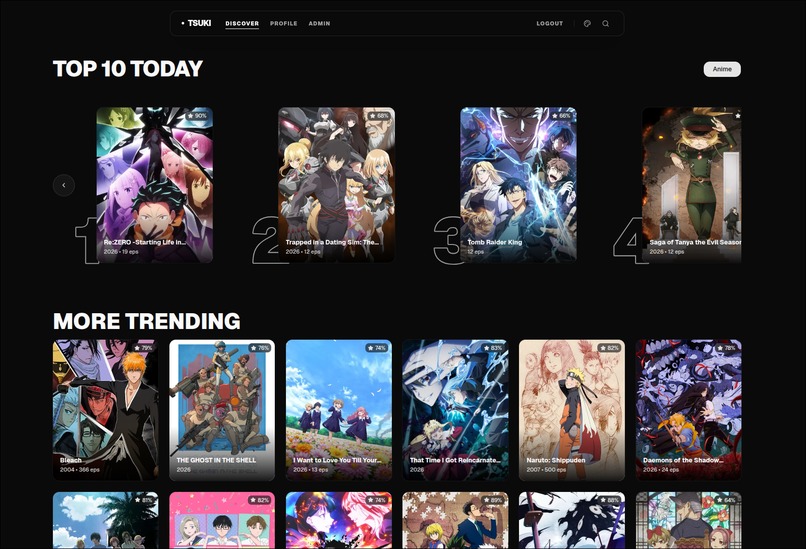
Home ~ Anime
-

Home ~ Manga
-

Anime Details
-
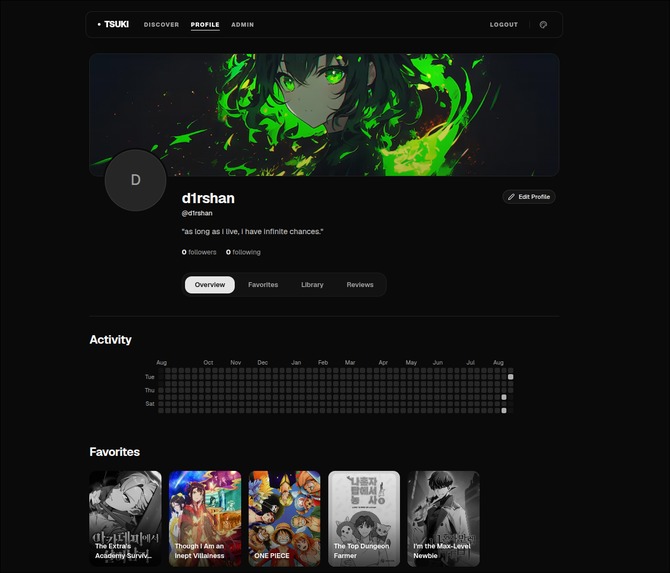
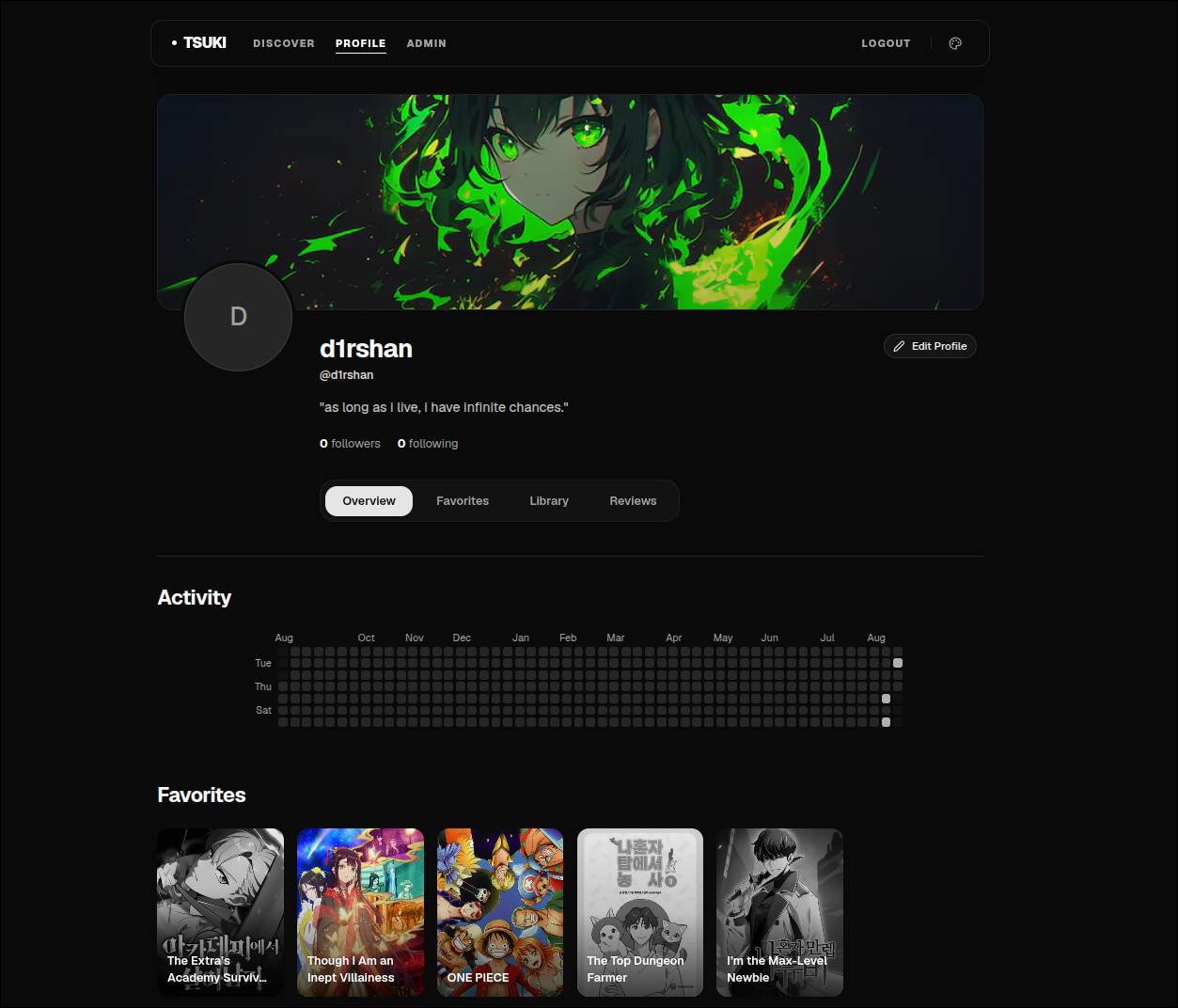
Profile



Inspiration
I'm a huge anime fan, but existing tracking platforms often feel outdated, especially their UI/UX. I also wanted something open source, which is something I strongly believe in.
Tsuki is my take on what a modern anime and manga tracker should feel like.
What it does
Tsuki lets users discover and track anime and manga through a fast, modern, and highly customizable interface.
It features smooth search, customizable themes, and a growing social layer where users can follow each other.
How I built it
I built Tsuki solo with Next.js, Elysia, Bun, PostgreSQL, Drizzle ORM, Better Auth, and the AniList API.
A major focus was making the app feel fast while working within AniList's strict API limits. I built a caching strategy that keeps frequently used data available without unnecessarily hitting the API.
Challenges I ran into
AniList's strict rate limits forced me to think carefully about how data is fetched and cached.
I also had to learn Next.js 16.3's new caching model while building the app. It had a learning curve, but gave me a much better understanding of modern Next.js.
Accomplishments I'm proud of
I'm proud of taking Tsuki from an idea to a complete, production-oriented application entirely on my own.
More importantly, I learned how to properly architect and build a real application instead of just putting features together.
What I learned
Building Tsuki taught me a lot about product development, architecture, and making technical decisions around real-world constraints.
It also gave me a much deeper understanding of Next.js and how to build applications that can grow over time.
What's next for Tsuki
Tsuki is still just getting started. Users can now follow each other, and I have more social features planned.
More customization, a deeper social experience, and eventually a mobile app are all on the roadmap.
The goal is to build an open source anime and manga platform that I'd actually want to use.
Built With
- elysia.js
- next.js


Log in or sign up for Devpost to join the conversation.