-
-
-
-
-
-
-
This image is currently processing. Please be patient...

Inspiration
Most virtual try-on tools render a look and stop. The shopper has to trust that the render suits their skin. TryProof treats the render as a claim and checks it against the same skin analysis that produced the recommendation.
What it does
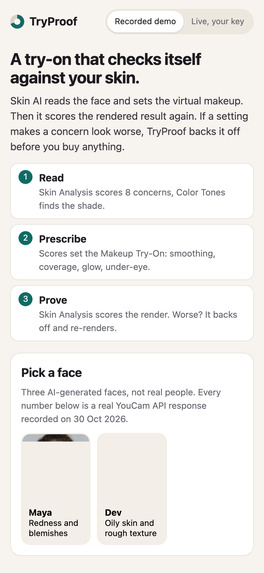
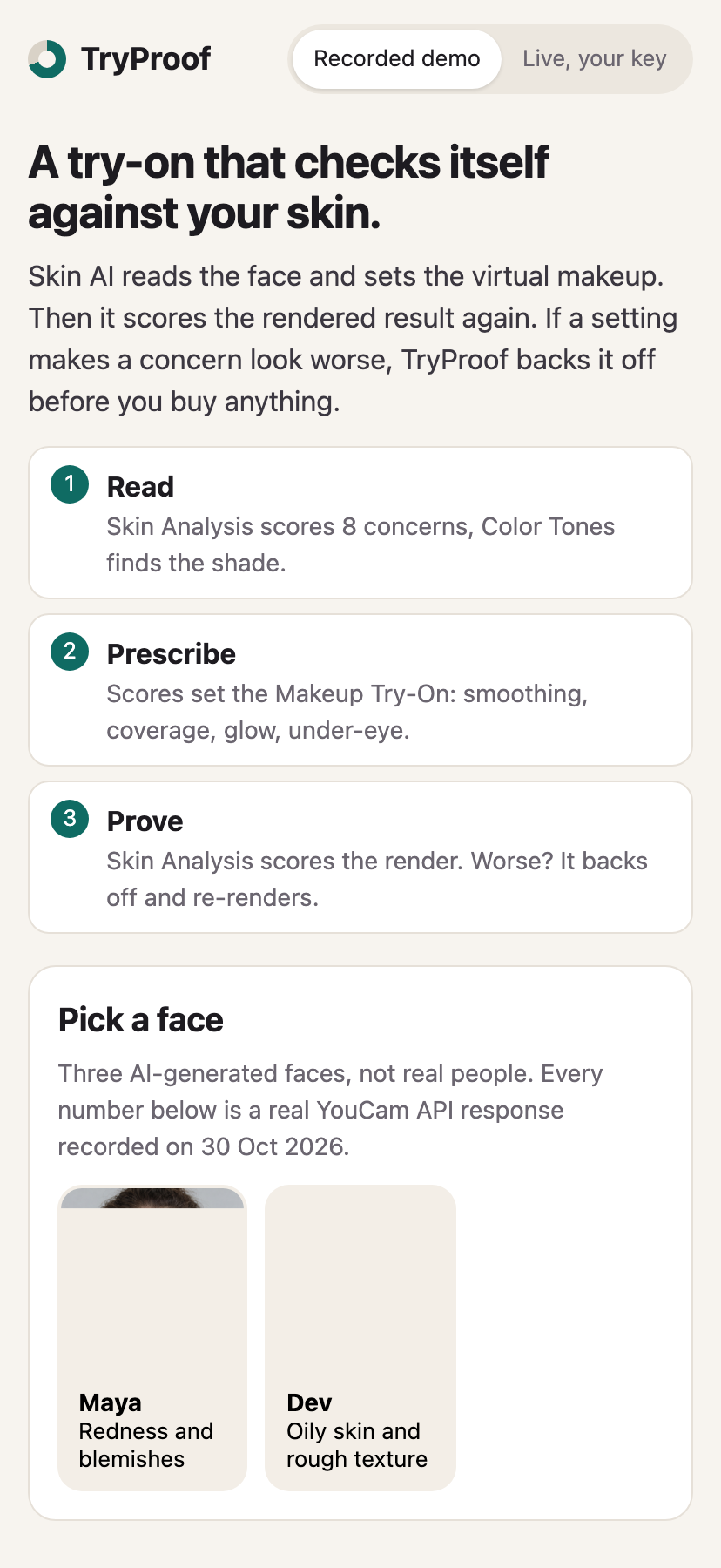
TryProof is a mobile-first web app with three steps.
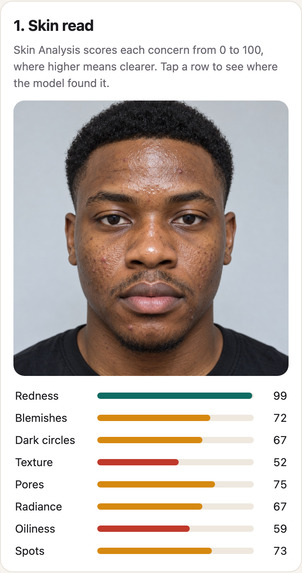
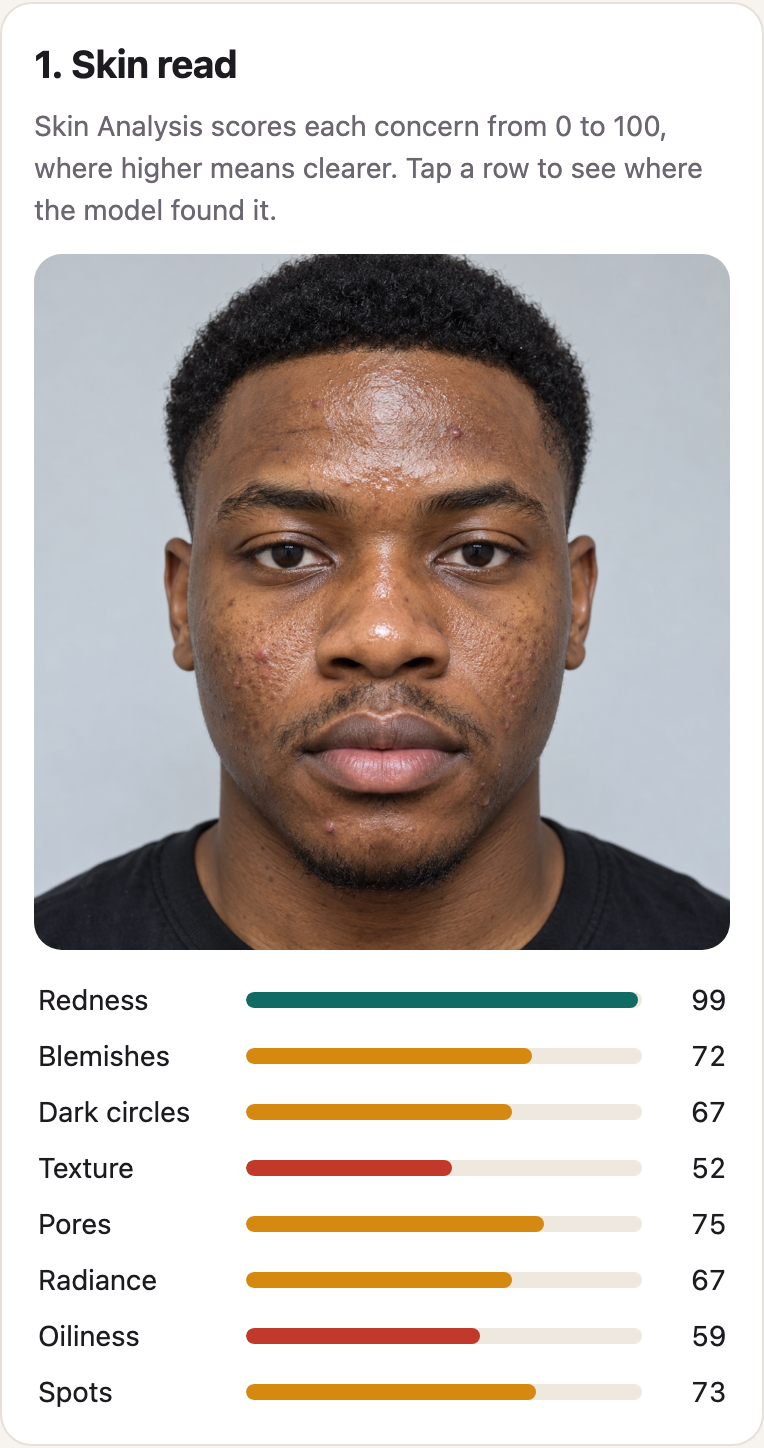
- Read. YouCam Skin Analysis scores eight concerns (redness, blemishes, dark circles, texture, pores, radiance, oiliness and spots). YouCam Facial Color Tones finds the skin shade.
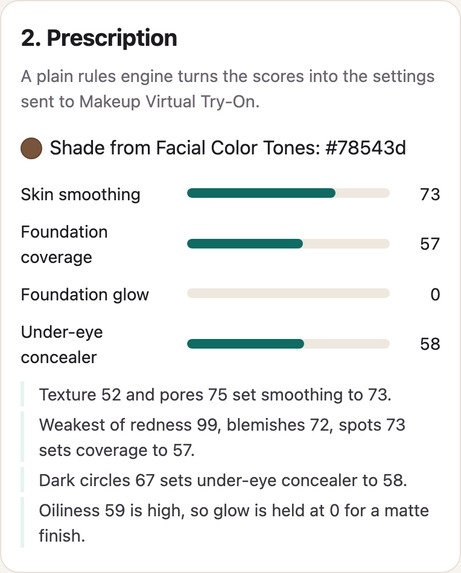
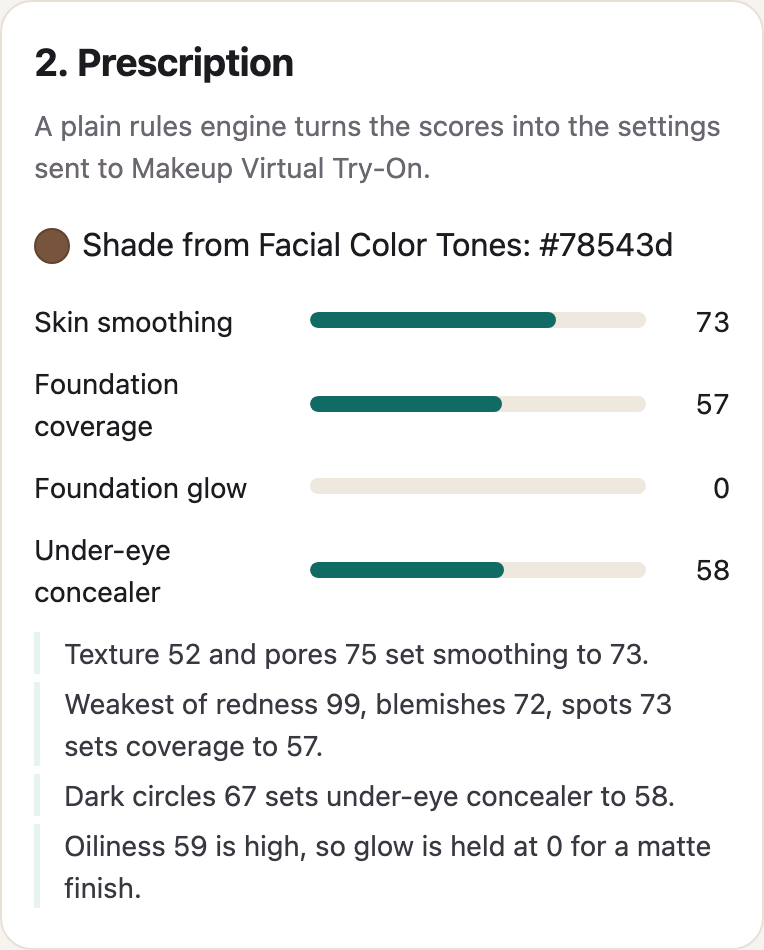
- Prescribe. A small rules engine turns those scores into settings for YouCam Makeup Virtual Try-On: smoothing strength, foundation coverage and glow, and under-eye concealer strength. Each setting shows the reason it was chosen.
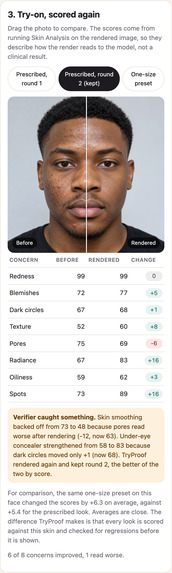
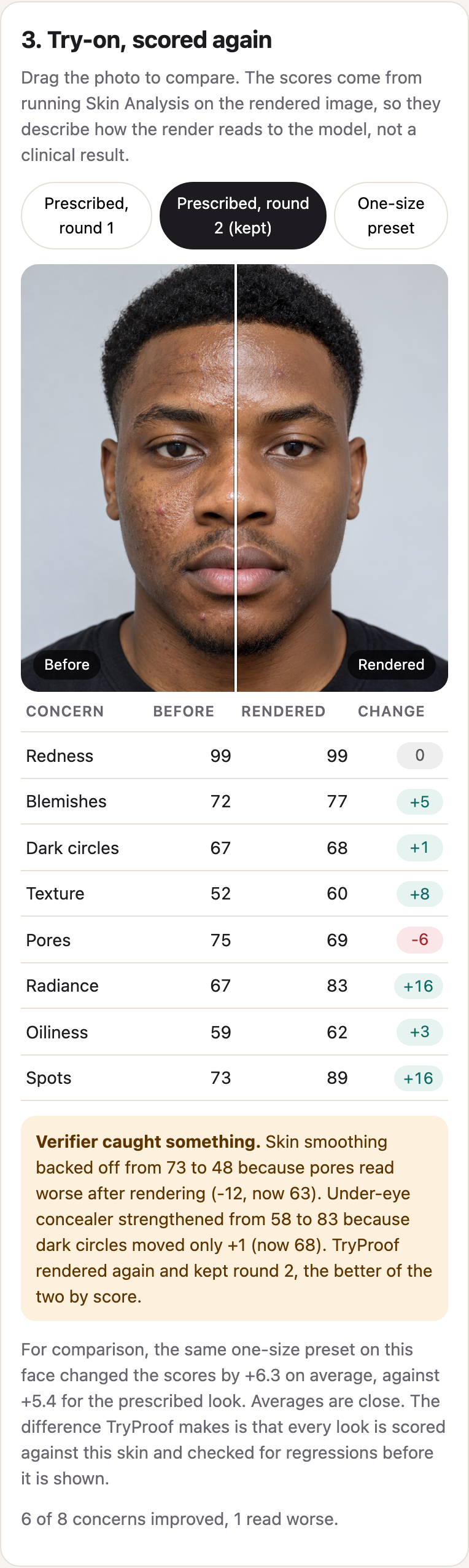
- Prove. The rendered image goes back through Skin Analysis, so every concern gets a before and after score. If a setting made a concern read worse, TryProof backs that setting off and renders again. It keeps the round that scores better overall.
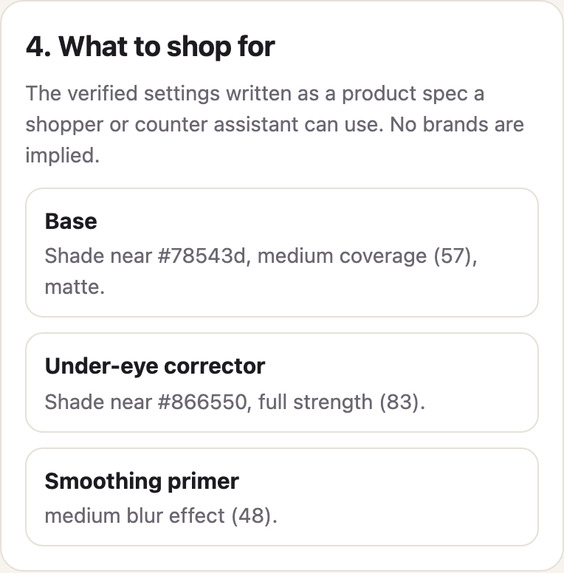
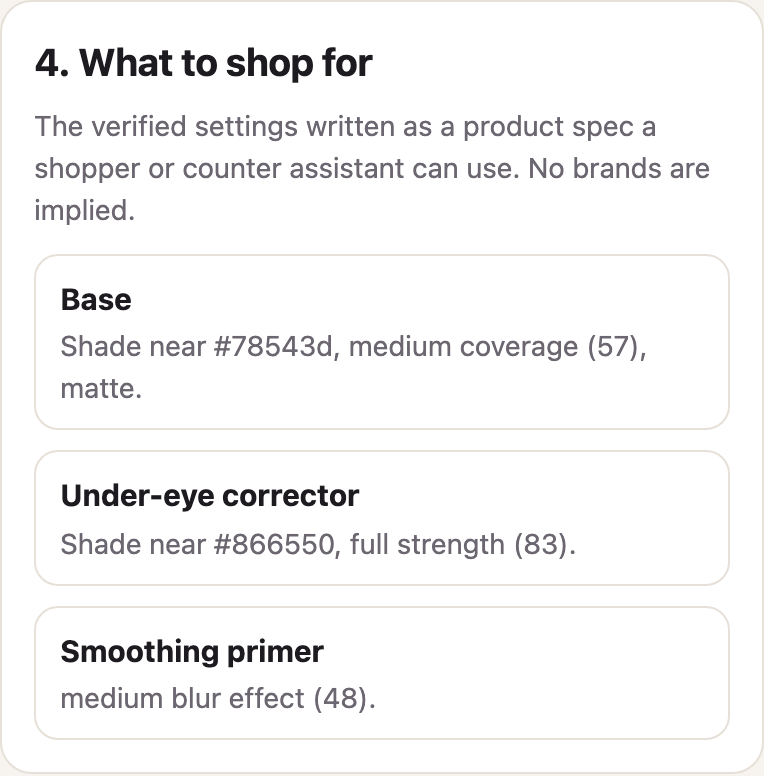
The verified settings are written as a plain product spec (shade, coverage, finish) that a shopper or a counter assistant can use.
How I built it
The front end is a static app with no build step. A small allow-listed serverless proxy on Vercel forwards upload, start and poll calls to the YouCam API. The same pipeline code runs in Node and in the browser. Demo mode replays real API responses recorded on 30 October 2026 for three AI-generated sample faces. Live mode takes the visitor's own YouCam API key for each request, so a public deployment cannot spend anyone's units. The rules engine has unit tests that run with node --test.
APIs used: AI Skin Analysis, AI Facial Color Tones Analyzer, AI Makeup Virtual Try-On and the File API.
Challenges
Skin Analysis could not fetch a try-on result from its signed URL, so TryProof downloads each render and re-uploads it through the File API before scoring it. The sample faces also needed visible concerns, because Perfect Corp's public sample selfie scores near the top on every concern and leaves nothing to improve.
What the recorded results show
Skin Analysis scores moved after the try-on on every sample face. The kept look improved 8 of 8 concerns on two faces and 6 of 8 on the third. The prescribed look and a one-size preset score about the same on average, so the value of TryProof is the per-face check and the ability to catch regressions, not a larger number. On one face the first render made pores read worse, and the second round fixed part of that. The regression is shown in the app. Scores describe how the image reads to the Skin Analysis model. They are not medical advice, and a rendered look is a simulation.
Disclosures
The sample faces were generated with an AI image model, and no photo of a real person appears in the demo. The code was written with help from an AI coding assistant (Claude) during the submission period.
What's next
A shade-matched shopping step that maps the product spec to real catalog items, and more concerns in the adjust loop.
Built With
- javascript
- node.js
- skin-analysis
- vercel
- virtual-try-on
- youcam-api
