-
-
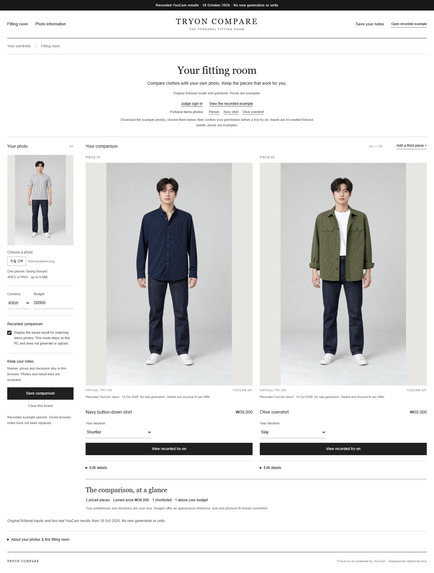
Desktop comparison: two real YouCam Clothes V4 results, explicitly replayed from an earlier live generation.
-
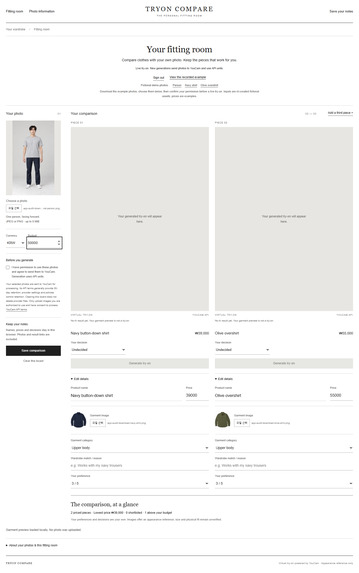
Live judge workspace: fictional input previews selected; consent unchecked and no new generation in this screenshot.
-

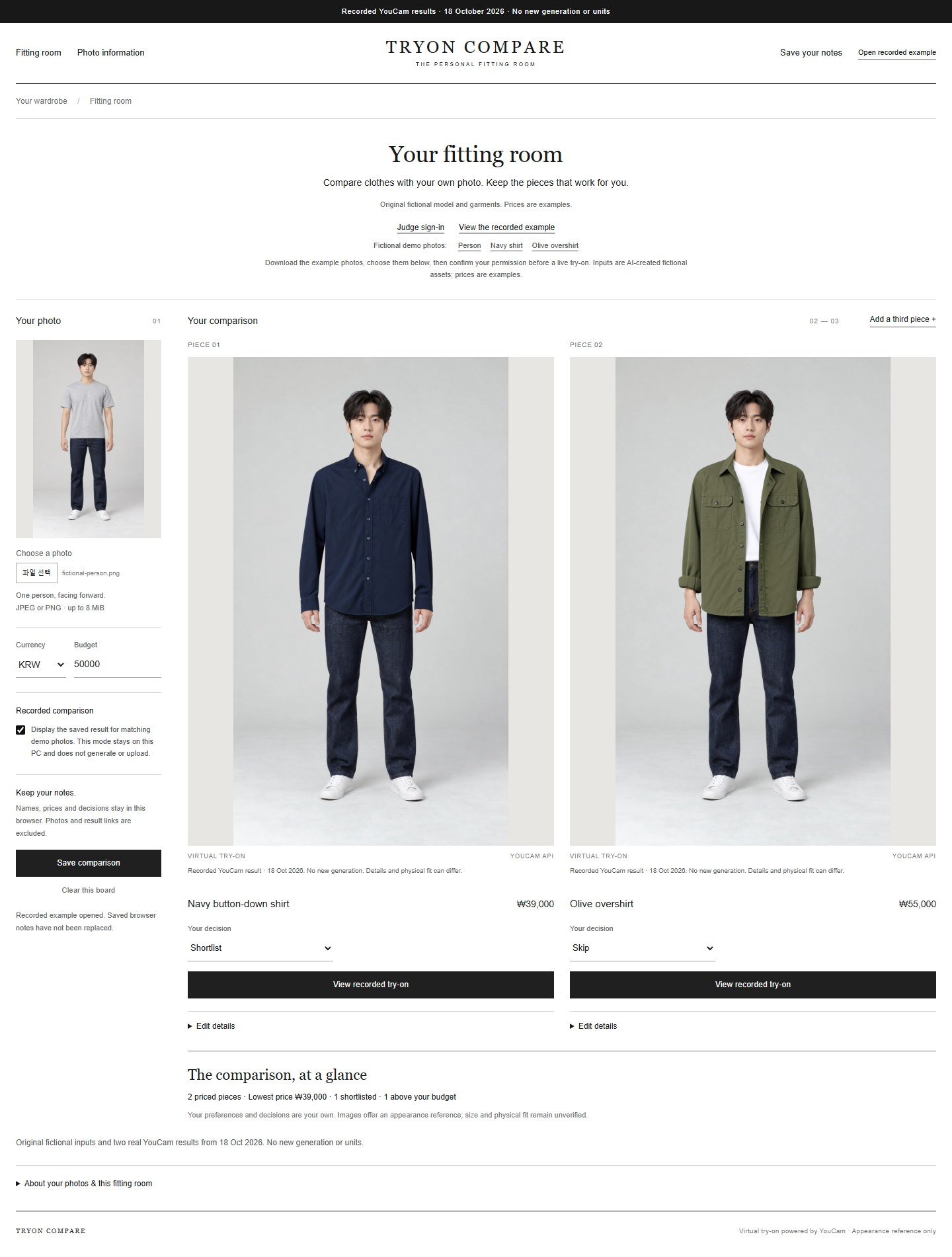
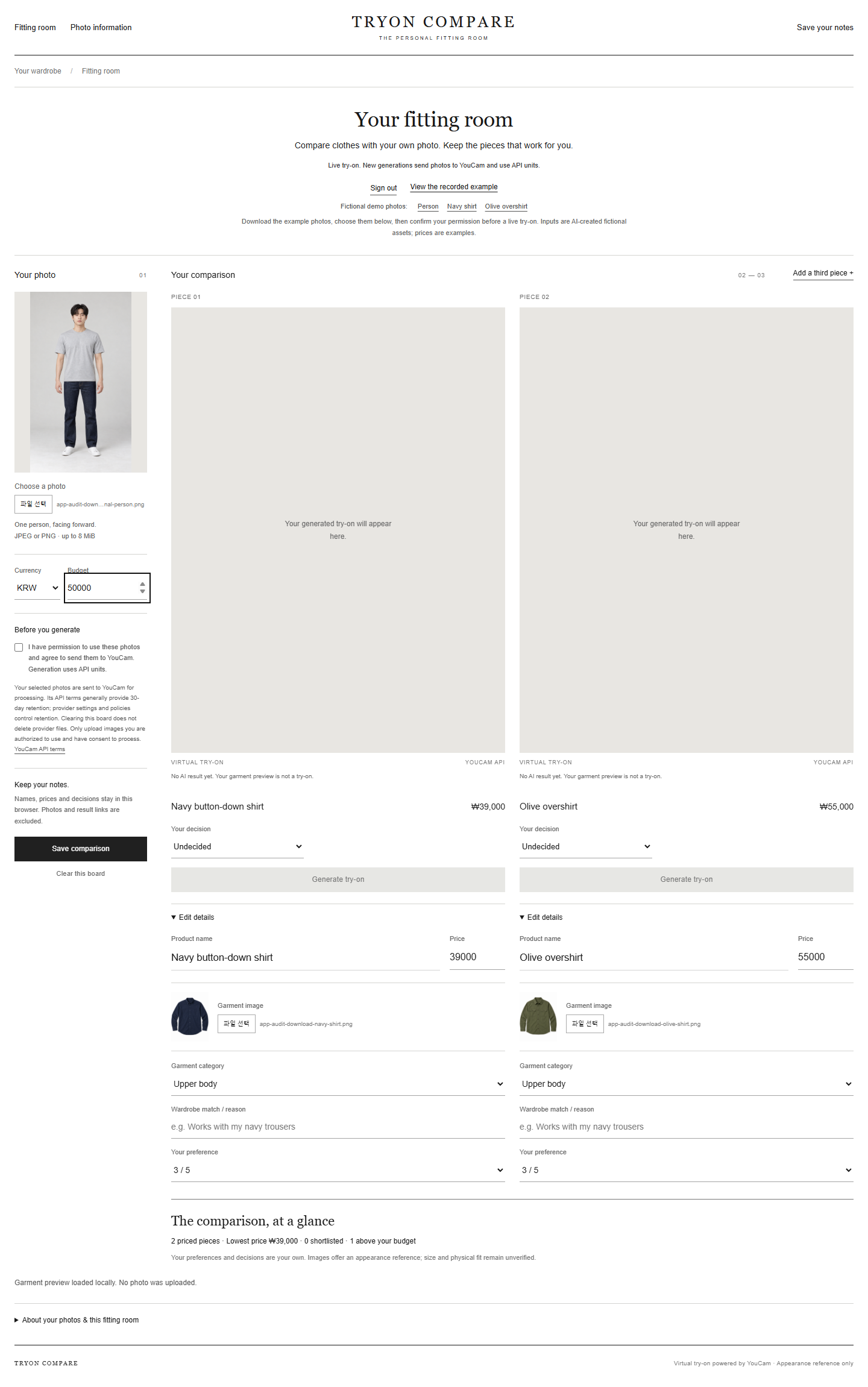
Recorded comparison at a 375px browser viewport. Notes, budget and Shortlist/Skip remain alongside the images.

Inspiration
A virtual try-on image answers only part of a shopping question. A shopper still needs to consider price, clothes they already own and personal preferences. TryOn Compare keeps those decisions beside the images instead of ending the experience at generation.
What it does
TryOn Compare places two or three garment candidates on a decision board. Each has a price, wardrobe note, personal preference and Shortlist or Skip decision. A budget summary identifies the lowest price and candidates above the chosen budget. Save restores these comparison notes after reload; it excludes photos, generated-image links, task IDs and credentials.
With explicit upload consent, the live integration sends a person photo and a garment photo through the server to YouCam Clothes V4. It registers and uploads the files, creates a task, polls it and displays the returned image after browser decoding. Replacing a person photo invalidates every result; replacing a garment invalidates that candidate's result.
The linked 80.2-second English-captioned video explicitly replays two earlier real YouCam results in the redesigned interface. Replay creates no new task and spends no units. A separate production test of the published app completed a live task, decoded its image and restored comparison notes. Replay and live generation are separate modes.
How we built it
The interface uses browser JavaScript. The judging deployment uses Sites/Vinext on a Cloudflare Worker with D1-backed sessions and a cumulative request ledger. The provider key stays on the server. Live requests require a judge access code, upload consent, same-origin requests and a session-specific CSRF token. Tasks and result images belong to their creating session.
Each accepted live attempt reserves two units before provider upload; failed attempts remain in the ledger. Existing-task checks do not automatically regenerate. The hosted live allowance is finite. The recorded example and comparison board do not require a provider key or a new generation.
This project was created in October 2026 during the hackathon submission period. The source is public under MIT for the original application code, with third-party notices retained. AI assistance was used for code, documentation, tests and original fictional demonstration inputs. The image-generation tool did not expose its backend model name.
Challenges we ran into
A successful task response does not mean the shopper can see an image. We separated task completion from browser image decoding, handled broken or delayed images and preserved existing-task recovery without automatic regeneration. We also needed to keep results aligned with the selected photos and prevent one signed-in session from reading another session's task or result.
Accomplishments that we're proud of
On 18 October 2026, two real Clothes V4 tasks produced two 941 × 1672 images that decoded in the desktop browser. The measured balance changed from 40 to 36 units. A later production test used the published app and changed the official balance from 36 to 34 units. That later navy result matched the earlier navy JPEG; it verified the live task and charge, rather than a new visual variation.
The demonstration compares a KRW 39,000 navy shirt with a KRW 55,000 olive overshirt against an example KRW 50,000 budget. The shopper shortlists or skips and saves their own decision. These prices and choices are demonstration inputs, not live retail offers or measured customer outcomes.
What we learned
The olive result changed the original gray undershirt to white and rolled the sleeves. Generated appearance can differ from the source garment. Physical fit, size, fabric behavior, purchase satisfaction, returns and time saved have not been validated. Clear limits, consent and user-controlled decisions matter alongside the generated image.
What's next for TryOn Compare
Test with consenting shoppers, expand real-device coverage and measure whether the comparison board helps actual purchase decisions. Any broader live rollout needs an explicitly funded operating plan and further privacy and reliability work. The submitted prototype makes no unlimited-generation promise.
Built with
JavaScript, TypeScript, YouCam Clothes V4 API, Cloudflare Workers, Cloudflare D1, Vinext, React, Sites.
Current access check
On 23 October 2026, a fresh authenticated browser reached the live workspace and previewed the original fictional input photos with upload consent unchecked. No photo was uploaded and no provider task was created. Read-only inspection confirmed 28 units remained in the server's cumulative allowance. The official provider dashboard separately confirmed a balance of 34 bonus units, no subscription and automatic refill off. This check verifies access, available allowance and local previews, not a new generated result.
Built With
- cloudflare
- javascript
- react
- vinext
- youcam
