-
-
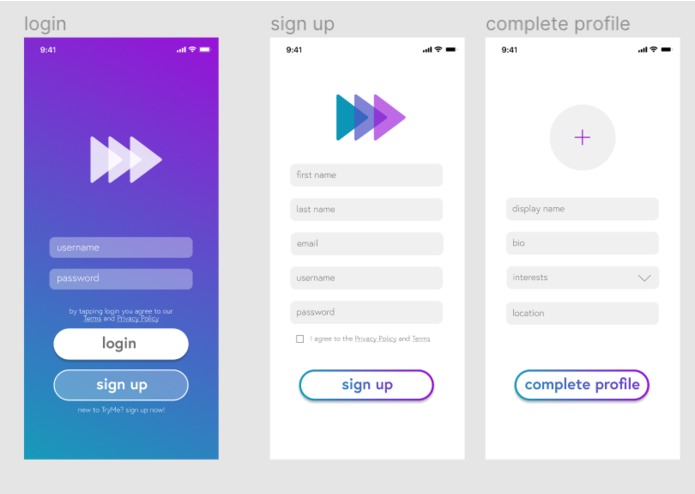
User Login
-
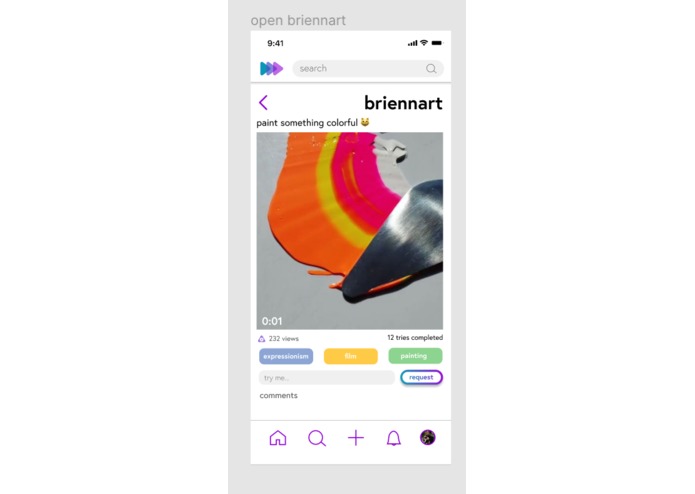
Respond to posts
-
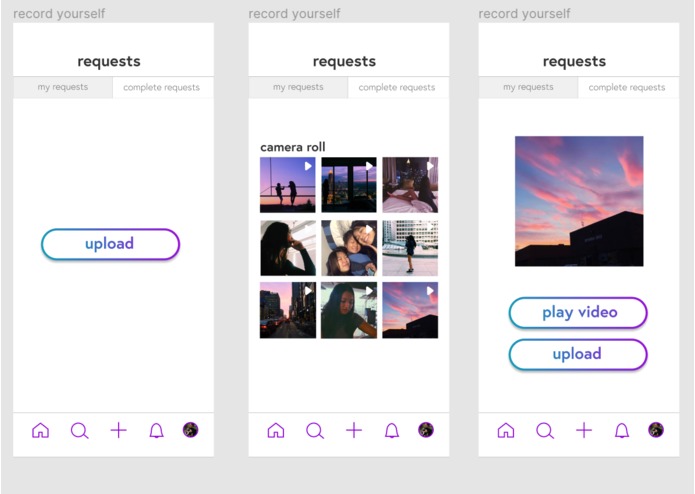
Create requests or upload videos
-
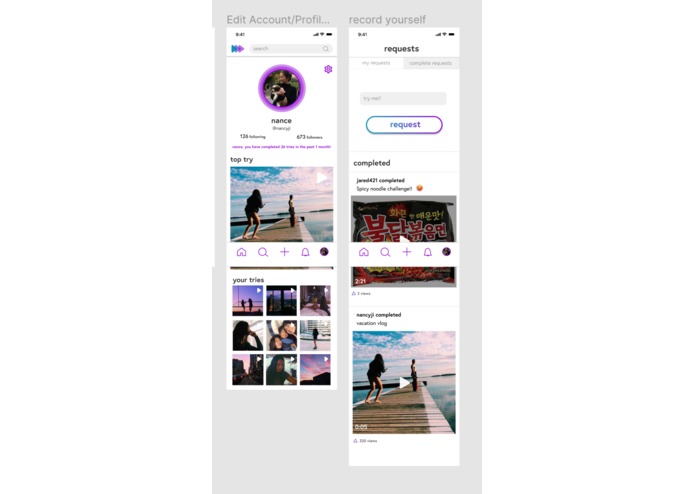
User Profile and Feed
-
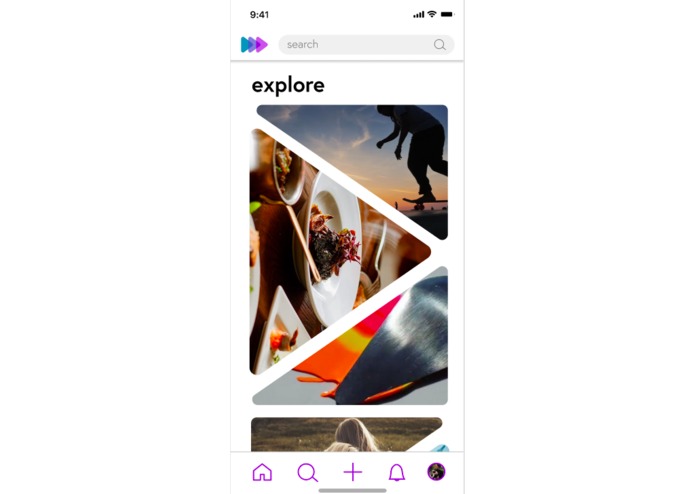
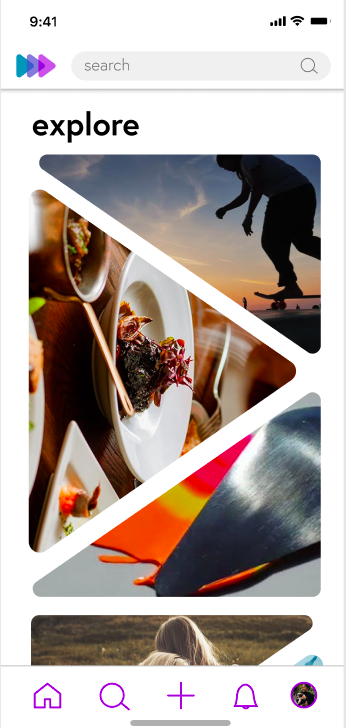
Explore page
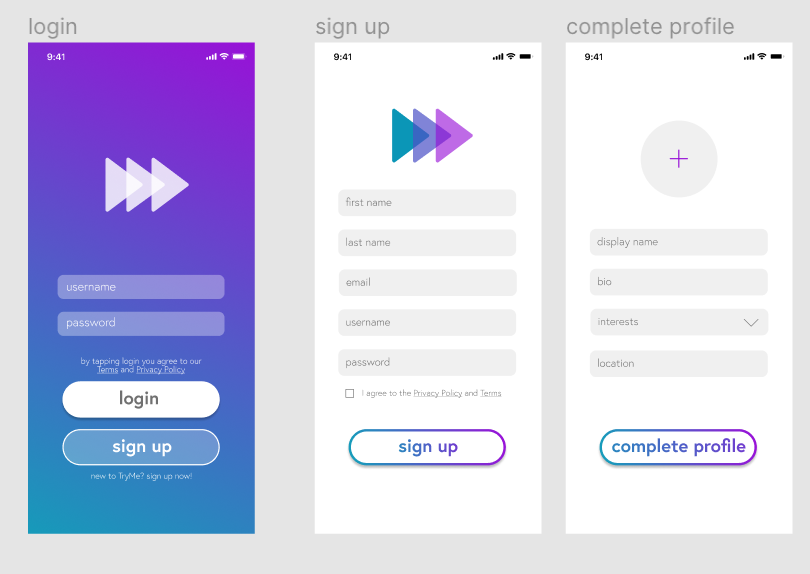
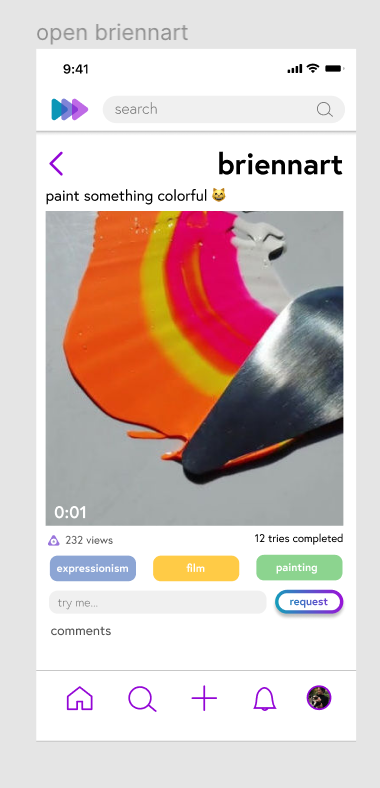
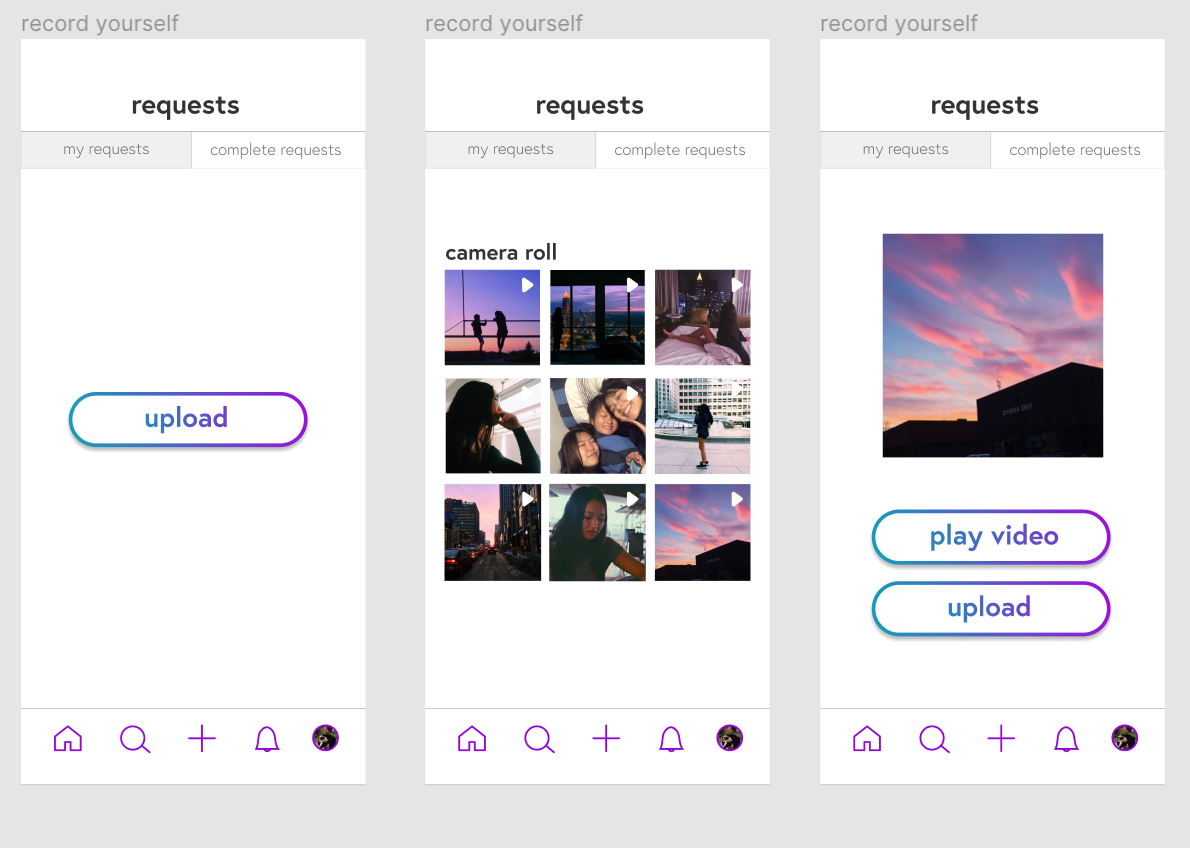
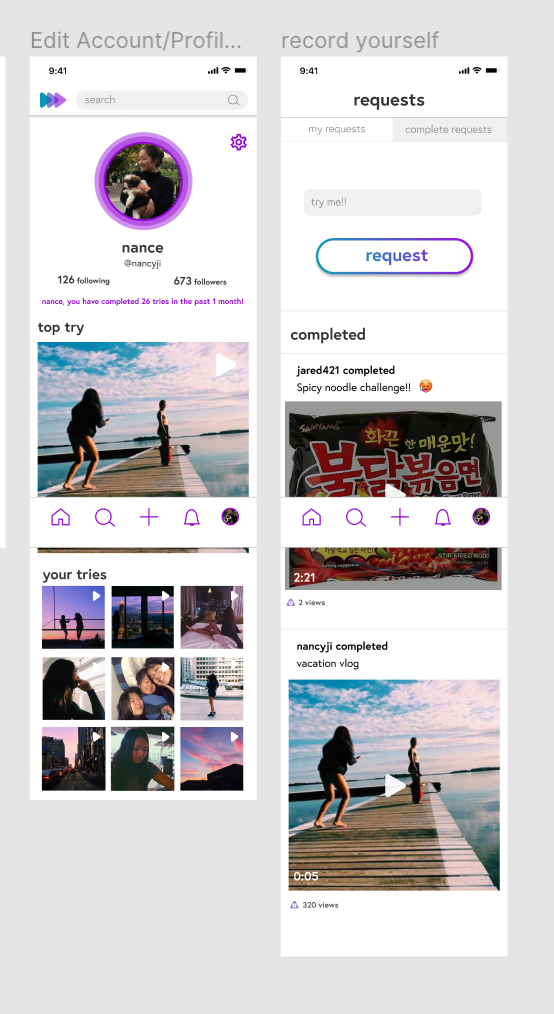
TryMe is a video sharing platform that strives to personalize and encourage content creation by way of creator-viewer collaboration. Users interact with our app in two ways: submit requests onto a public feed for videos that they would like to see created, or respond to requests by posting their own content.
Creators are faced with the trade-off between pleasing their audience and trying new things. Views and attention take dominance over genuine curiosities. We wanted to create a personalized ecosystem for people with similar interests to share and experience entertainment.
With the pressure that comes with the power of social media, users are faced with social barriers - added pressure of judgment and acceptance that prevent them from trying. We want to fight that and connect people who want to view, with people who want to create. Whether you wake up wanting to watch videos of random cats running on treadmills, or whether you’ve always wanted to make one yourself, viewers are connected to creators directly to do either.
We are inviting users to try new things together every day.
We built our user interface using Figma. To store user data and TryMe requests, we created SQL databases using Cockroach Labs clusters on their Cloud service. As for video uploading and distribution, we used the Eluv.io API on a Node.js back end. We chose to use Eluv.io because they offer high-quality video distribution without requiring the internet space of other platforms like Youtube. Additionally, if we could further develop our program, their blockchain ledger smart contracts offer immense possibilities in terms of monetization of the video content.
Being relatively new to full-stack development, we found it difficult to bridge the different components of our code. Using the APIs was also a learning curve, as we found it difficult to understand how each service worked. Additionally, since a lot of our front-back end communications depended on HTTP requests, the spotty Internet impeded our ability to integrate the final product. Thus, our server ended having to be run on a local device.
As first time hackers, we are proud to walk away from CalHacks 6.0 knowing we learned an immense amount about IOS development and having implemented new APIs to fulfill the vision we had set out for our app. From Googling “what are servers” to personal attention from CalHack mentors, solving problems within our code proved to be a rewarding experience. Feeling empowered to create something over the course of two days as a part of an incredible community of hackers, volunteers, sponsors, mentors and everyone who made this possible.
Built With
- cockroach
- eluv.io
- figma
- javascript
- node.js
- sql


Log in or sign up for Devpost to join the conversation.