-
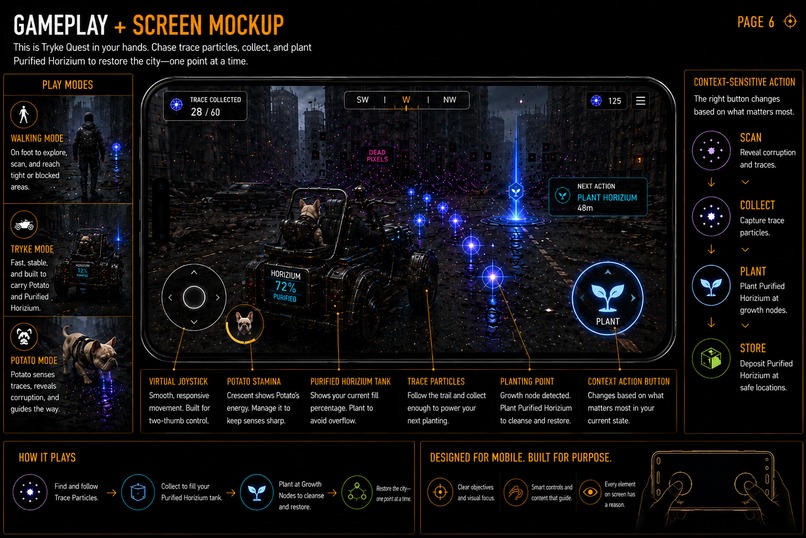
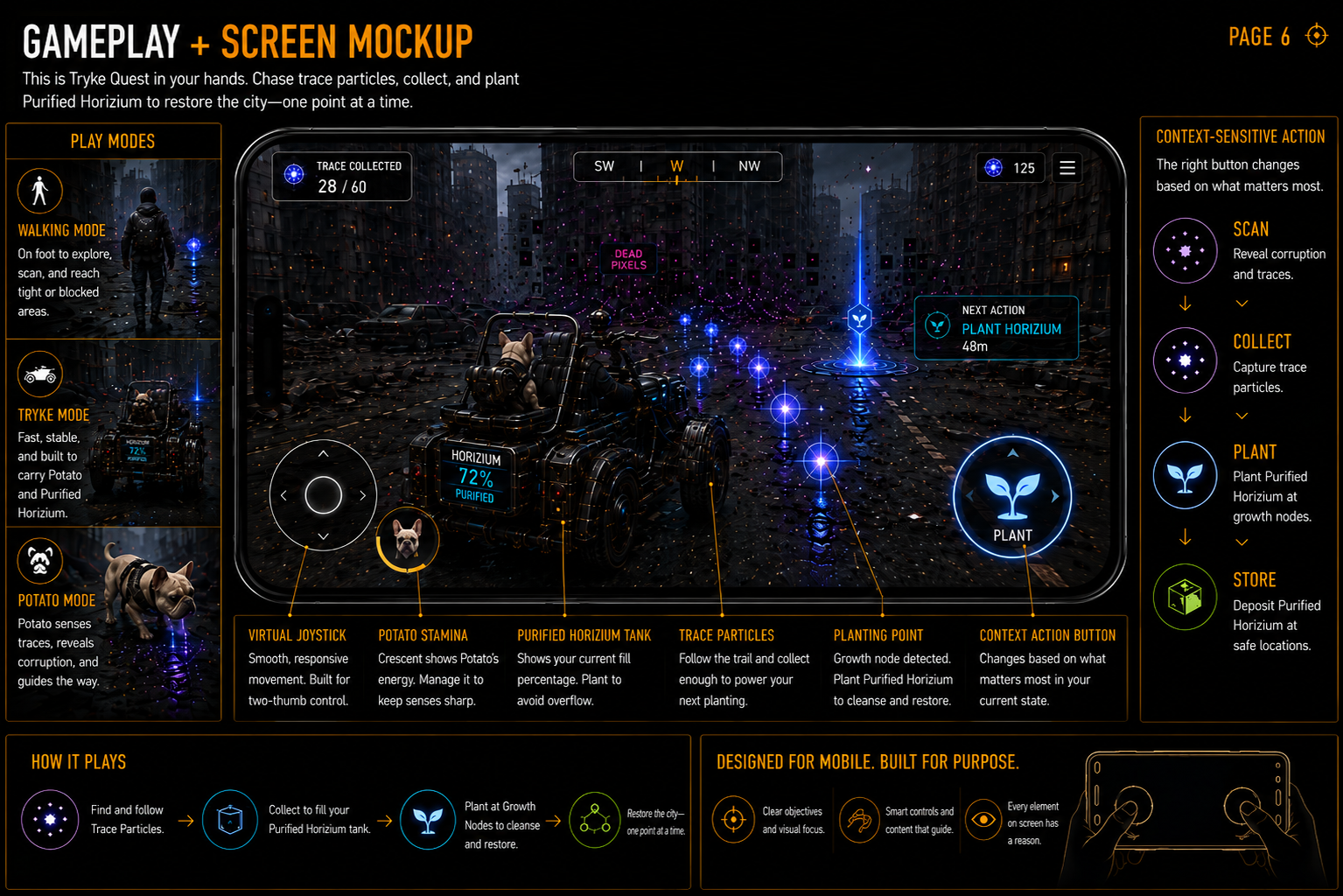
Mobile-first gameplay mockup: chase Trace Particles, avoid Dead Pixels, plant Purified Horizium, and reopen the route.
-
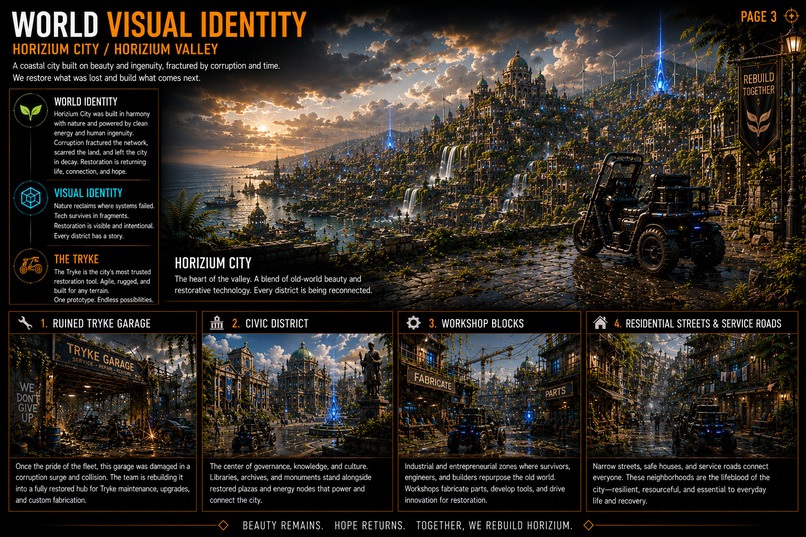
Hopeful city restoration meets digital corruption — glowing Horizium, toxic Dead Pixels, and routes players bring back to life.
-
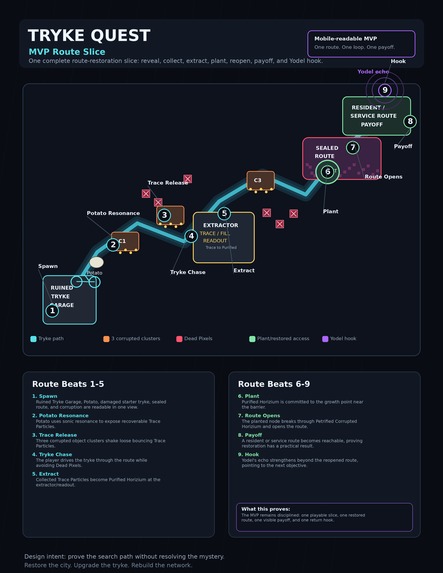
MVP playable slice: one route, one loop, one restored access point, one Yodel hook.
-
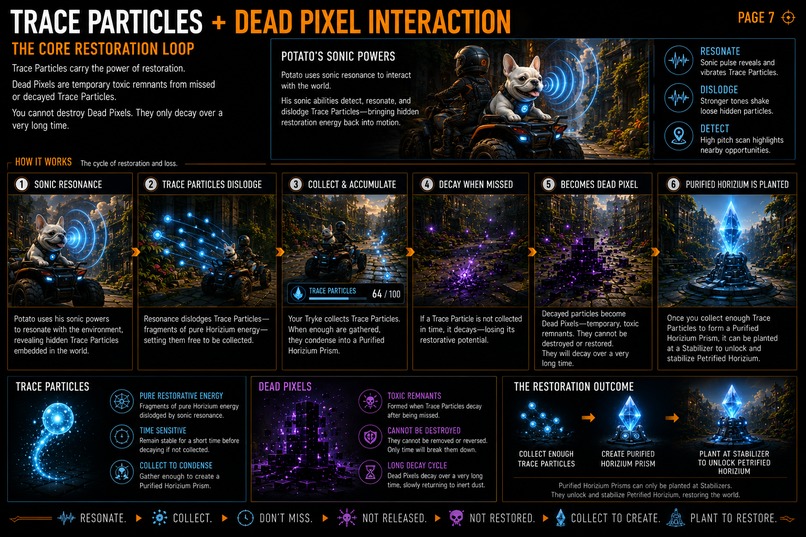
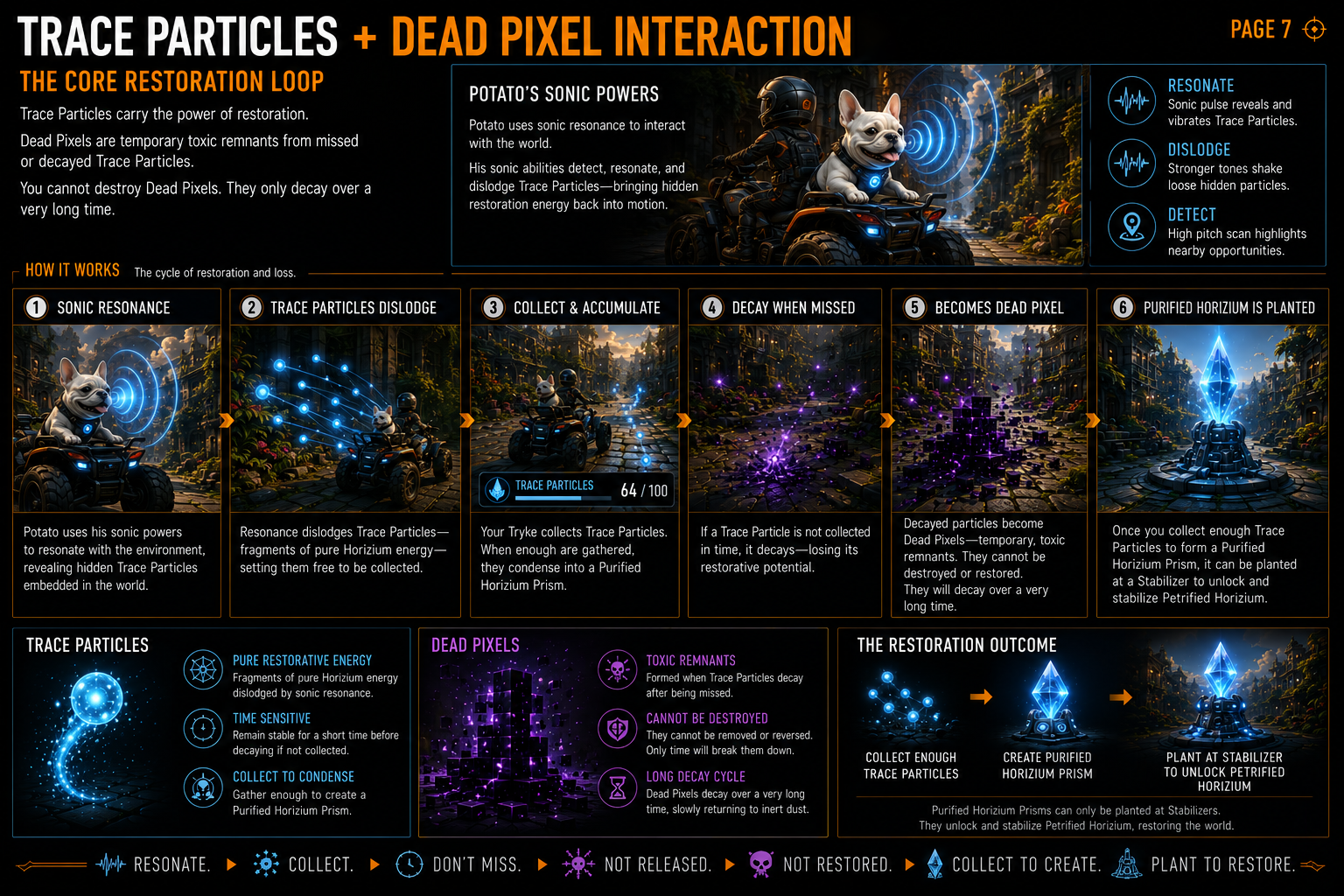
Potato’s resonance releases Trace Particles—collect them fast before missed energy decays into toxic Dead Pixels.
-
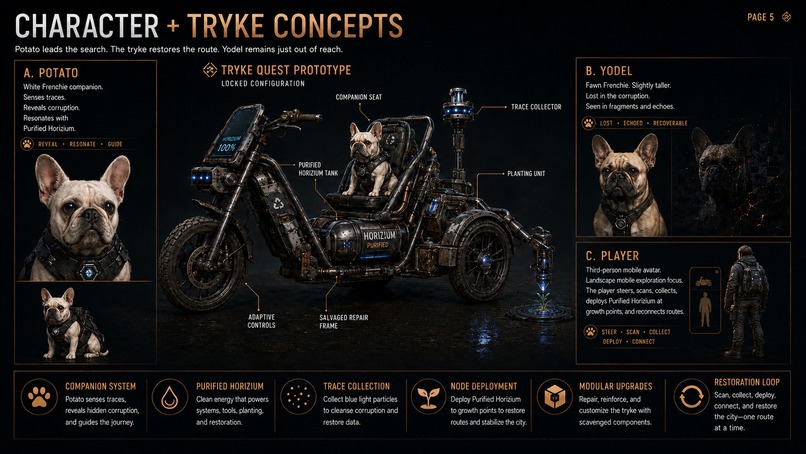
Potato reveals the path. The tryke restores it. Yodel gives the journey its emotional pull.
-
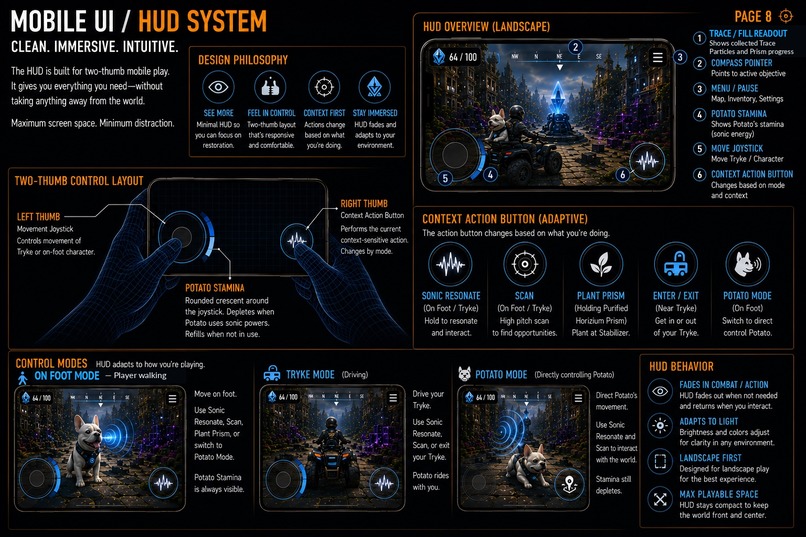
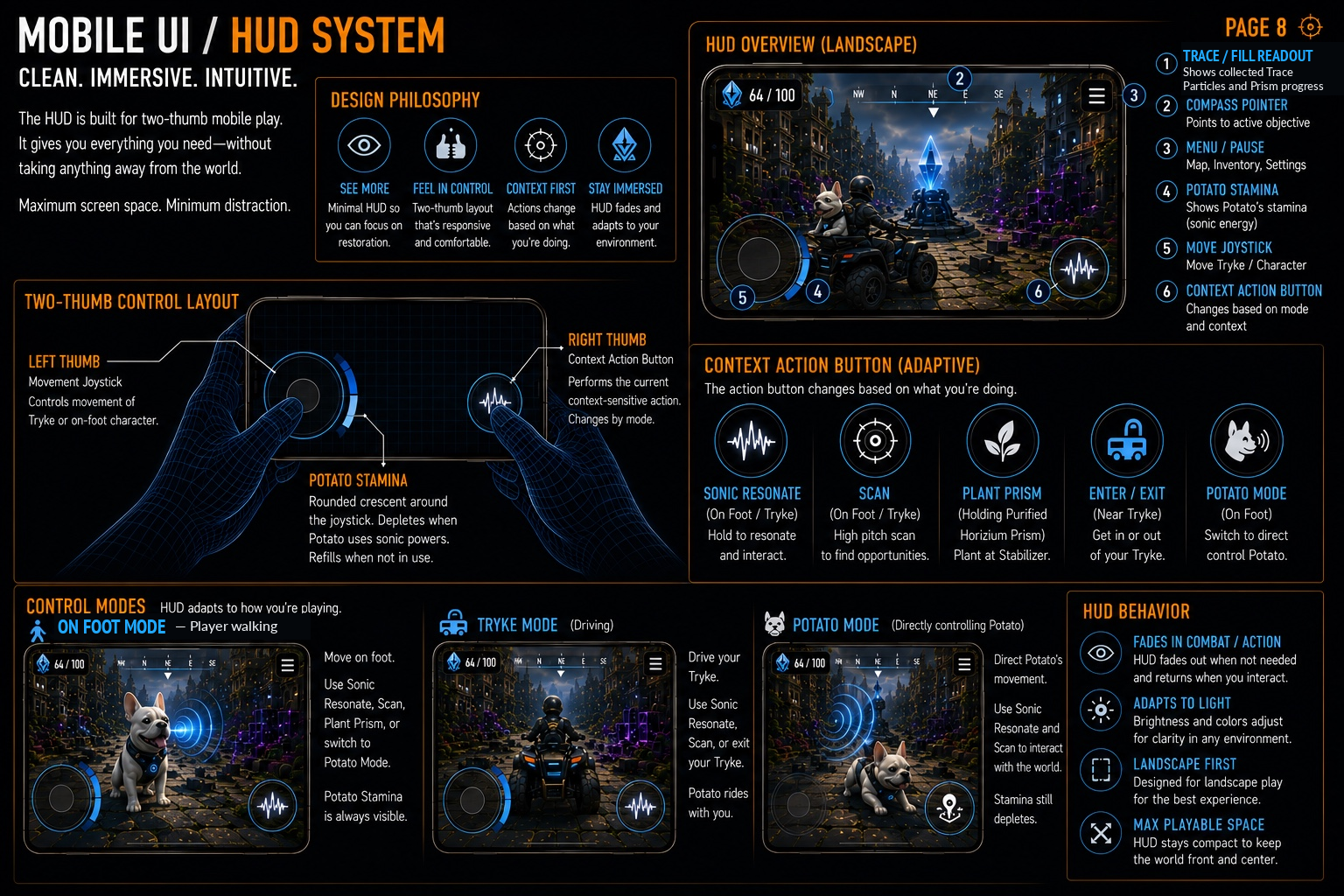
Landscape mobile HUD with two-thumb controls, adaptive actions, clear progress readouts, and maximum screen space.
-
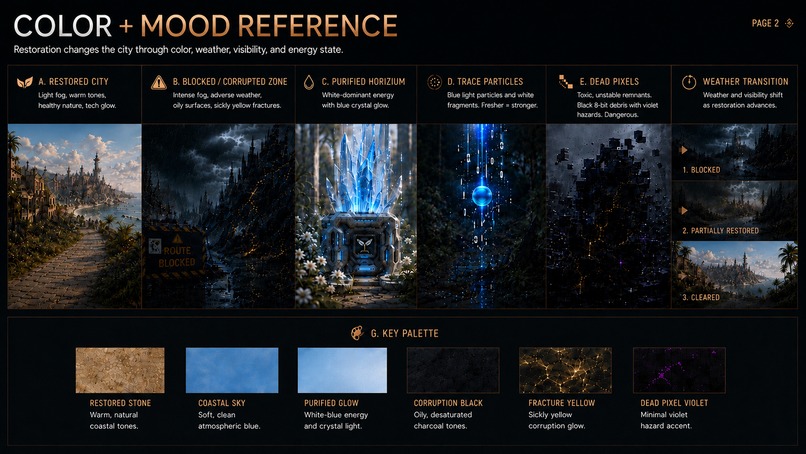
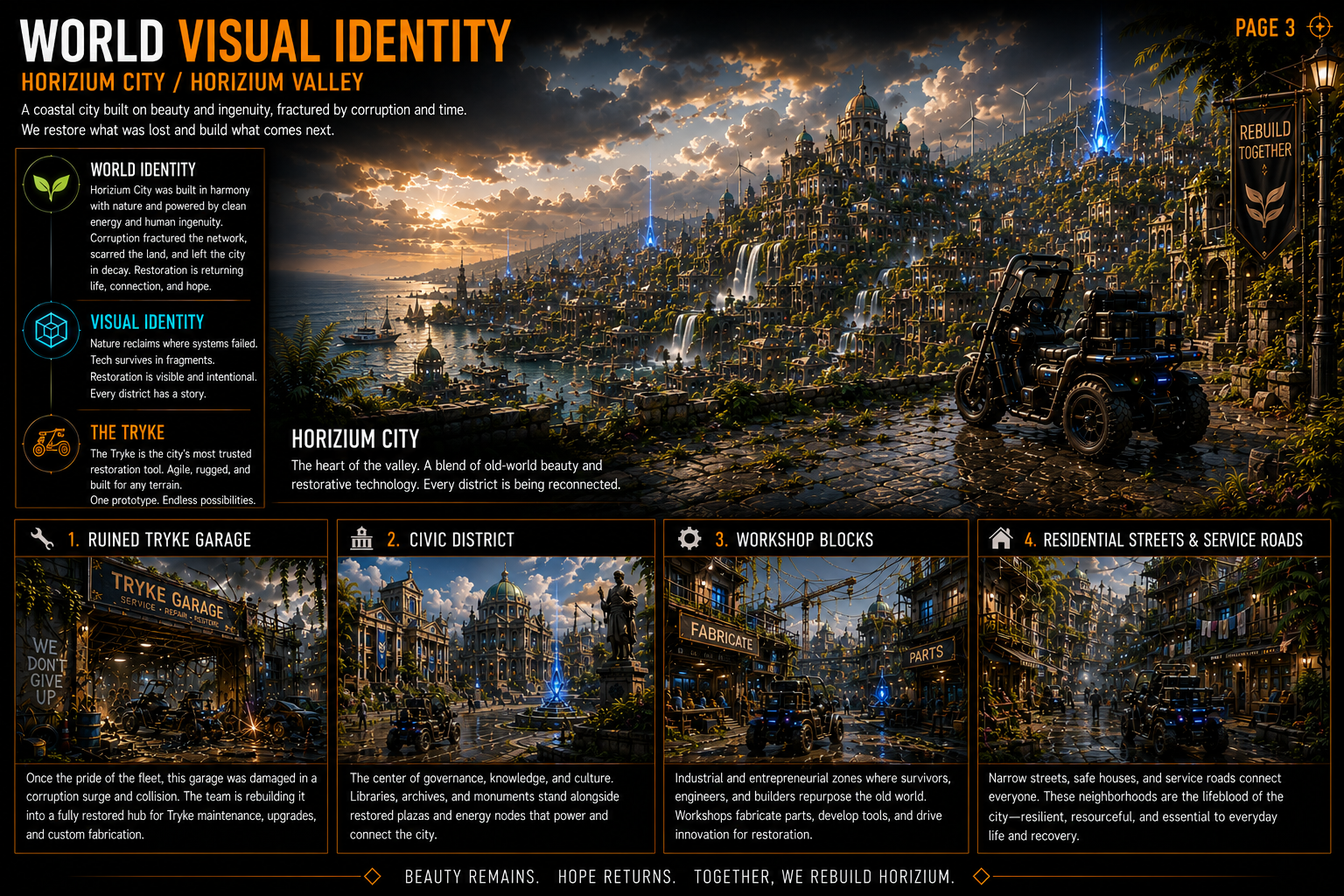
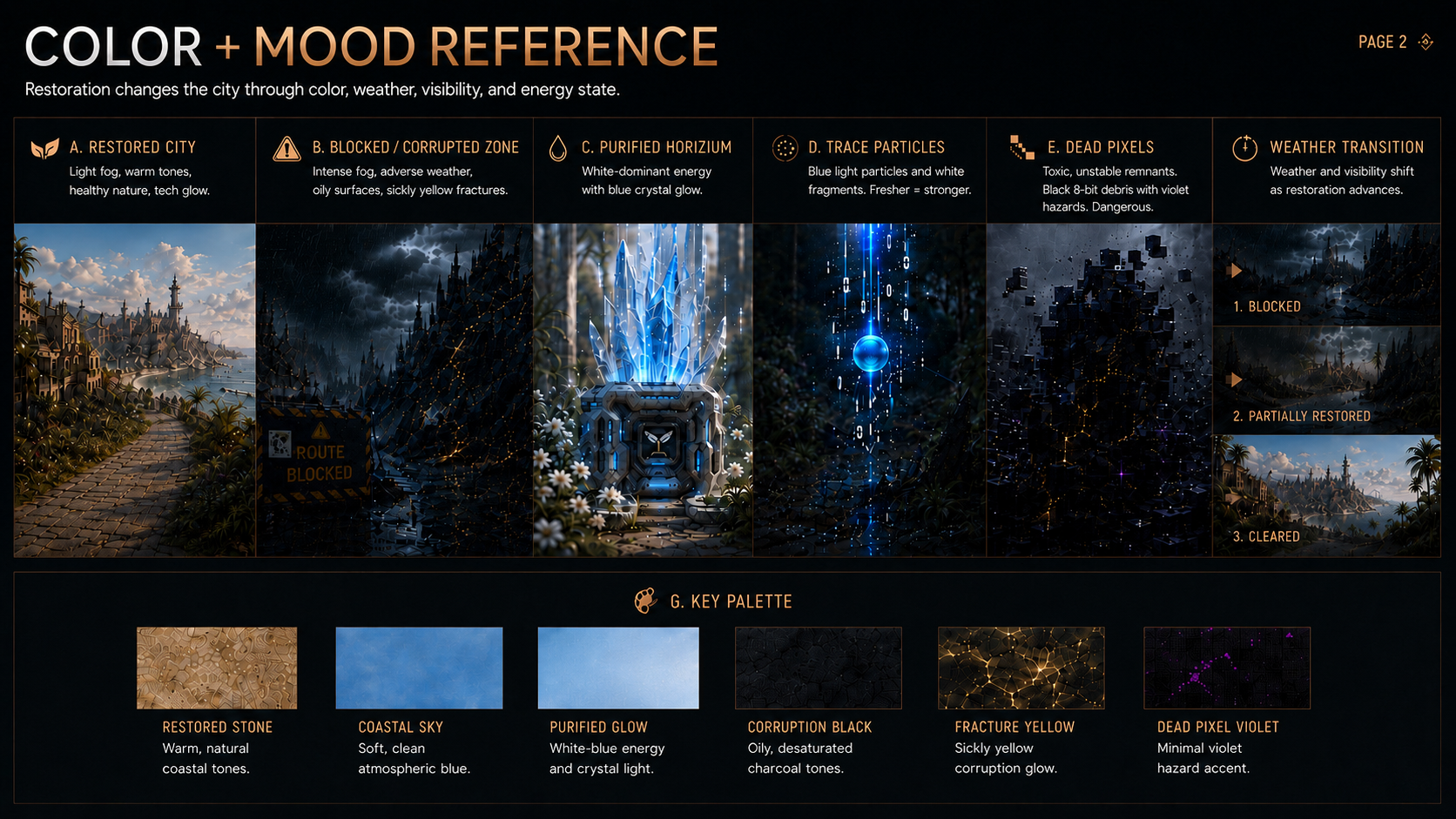
Visual language: restoration shifts the city from blocked, toxic, and fractured to clear, bright, and connected.
Inspiration
Tryke Quest is inspired by the real-world idea that mobility creates access, independence, and connection.
The game turns that idea into a restoration adventure. Horizium City is not a place waiting to be conquered. It is a damaged but recoverable city where streets, service routes, supply paths, and neighborhoods have been cut off by corrupted Horizium.
The fantasy is practical heroism: doing useful work, opening paths that matter, and helping people reconnect before the city fully understands what the player and Potato are trying to prove.
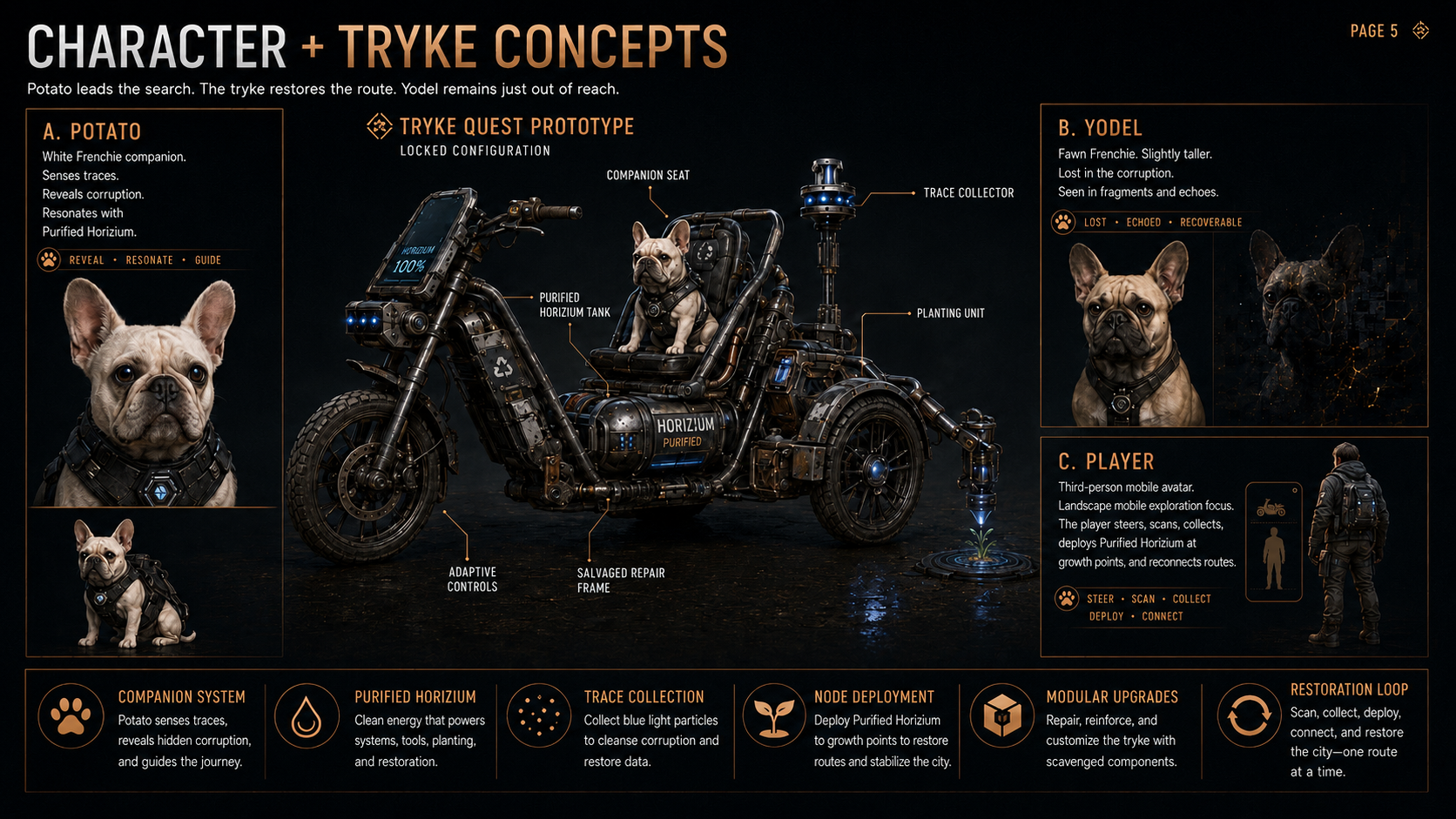
Potato, the player’s sonic-sensing companion, believes his missing brother Yodel discovered a real way to reverse the corruption. The player becomes the one person willing to take Potato seriously.
What it does
Tryke Quest is built around one clear restoration loop:
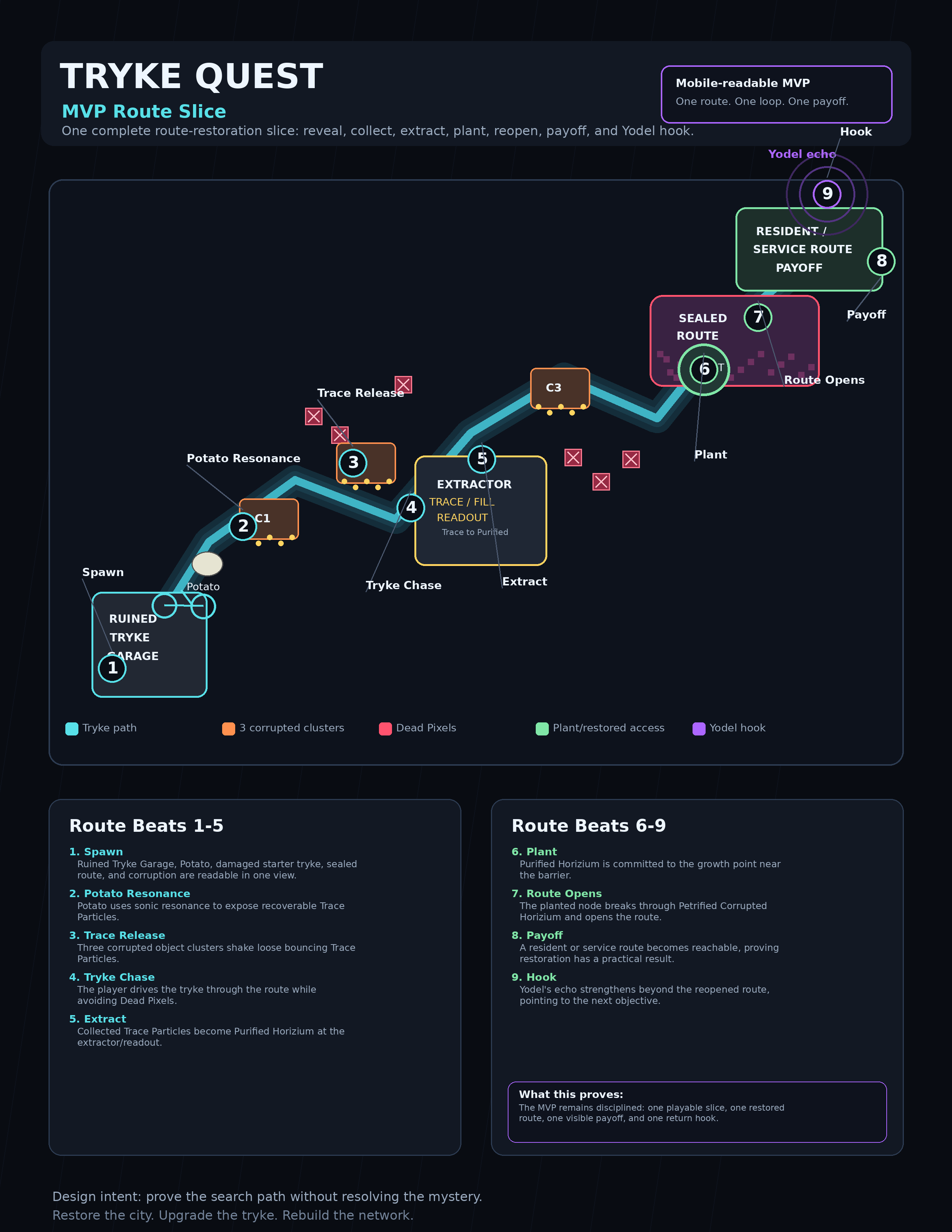
Potato reveals hidden Trace Particles. The tryke collects and processes them. The player plants Purified Horizium. A blocked route reopens. Horizium City begins to reconnect.
In the first playable slice, the player begins at the ruined Tryke Garage with Potato and a damaged starter tryke. A nearby civic route is sealed by Petrified Corrupted Horizium.
The player inspects the blocked route, uses Potato’s sonic resonance to reveal recoverable Trace Particles, drives the tryke through a short collection path, avoids Dead Pixels, extracts enough material into Purified Horizium, plants it at a growth point, and watches the first route reopen.
That first restored route creates the payoff: a resident, supply path, shortcut, or stronger Yodel signal becomes reachable.
How we built it
We built Tryke Quest as a complete game design package, starting with one clear playable proof: a damaged garage, one blocked route, a sonic companion, a custom tryke, hidden energy to harvest, and a planting action that restores access.
From there, we developed the project in layers.
The Game Design Document locked the core loop, world rules, play modes, sonic encounters, progression structure, and future expansion path.
The Player Journey Map tested the first 15 minutes from the player’s point of view, showing how the player moves from curiosity to action to restoration payoff.
The Visual Concept Package established the look of Horizium City, the tryke, Potato and Yodel, corrupted zones, restored routes, Trace Particles, Dead Pixels, mobile HUD systems, and the overall visual language of recovery.
The Production Plan reduced the idea into a realistic MVP with build phases, testing signals, scope control, technical dependencies, and a clear first playable route.
The biggest build decision was scope control. Instead of designing the entire valley as the first version, we focused on one complete route-restoration slice that could prove the whole game:
Reveal. Collect. Extract. Plant. Reopen. Reconnect.
Challenges we ran into
The biggest design challenge was keeping the game emotionally clear while staying mechanically focused.
Potato needed to matter as a companion without becoming a combat weapon. His role became sensing, revealing, resonating, and guiding rather than defeating enemies directly.
The tryke needed to feel like both a practical mobility vehicle and a restoration tool. That meant the tryke could not just be transportation; it had to collect Trace Particles, process them, carry Potato safely, and plant Purified Horizium at growth points.
The hazards needed to create pressure without making the game feel hostile or combat-first. Dead Pixels became temporary route hazards that force timing, steering, and safer path choices without trapping the player or turning the experience into a fight.
The city needed to feel damaged but recoverable, not hopeless. Every blocked route had to suggest a practical payoff: a resident reached, a supply path opened, a shortcut restored, or a stronger Yodel signal revealed.
Scope was another major challenge. The world can support many regions, upgrades, residents, and storylines, but the first build needed to stay disciplined. The final production plan focuses on one complete route-restoration slice instead of trying to build the whole world at once.
Buildability / First Playable Translation
The Visual Concept Package defines the target identity, not the full Phase 1 asset load. The first playable Horizon build would translate that look into a lightweight, mobile-readable route slice: one greyboxed Tryke Garage, one sealed route, three corrupted object clusters, simple Trace Particle effects, one Dead Pixel hazard pattern, one plant node, one route-opening state, and one resident or service-route payoff.
The first technical goal is not to build the full city. It is to prove the playable risk: landscape touch controls, third-person camera distance, Potato’s resonance cue, particle release and decay, Trace / Fill readout, route-state persistence, and readable performance on a phone-sized screen.
If any part runs too heavy, the fallback is built into the scope: reduce particle count, simplify corruption shaders into flat animated materials, use fewer active hazards, and keep the route slice readable before expanding districts.
Why this design stands out
Tryke Quest is designed around a simple promise: restoring movement restores connection.
The game stands out because the tryke is not just transportation or decoration. It is the core restoration tool. It collects Trace Particles, processes them into Purified Horizium, carries Potato safely, and plants the material that reopens blocked routes.
Potato gives the game its emotional hook without taking over the mechanics. He senses, reveals, resonates, and guides, but the player and tryke still do the work of restoring the city. That balance keeps the companion meaningful while preserving player agency.
The first playable slice proves the full design in miniature: one blocked route, one companion signal, one collection challenge, one Dead Pixel routing pressure, one planting action, one restored access point, and one Yodel hook.
That makes the project both focused and expandable. Future districts can add new layouts, residents, upgrades, hazards, and story branches without replacing the core loop.
Tryke Quest is built to be readable on mobile, achievable as a first Horizon slice, and emotionally clear from the first minute: help Potato prove Yodel was right, reopen the path, and make the city move again.
Reveal. Collect. Extract. Plant. Reopen. Reconnect.
Accomplishments that we're proud of
The strongest accomplishment is that Tryke Quest now has a clear identity across every part of the submission.
The project defines:
A readable core loop.
A focused MVP.
A distinctive companion mechanic.
A tryke-based restoration system.
A farming-inspired harvest-and-plant structure.
A first 15-minute player journey.
A visual language for corruption and recovery.
A realistic production path.
The final concept proves the game through one simple idea:
Reveal the energy. Plant the energy. Reopen the route. Grow the city back to life.
What we learned
The strongest version of Tryke Quest is not the biggest version.
The concept works best when the first restored route is treated as the proof target.
One strong route can show the whole game: the companion’s signal, energy harvesting, hazard pressure, tryke collection, planted restoration, visible city recovery, and the emotional pull of the missing-person trail.
That focus made the game easier to understand, easier to scope, and stronger as a submission.
What's next for Tryke Quest
The next step is building the first playable slice in Meta Horizon: a lightweight, mobile-readable route that proves the restoration loop, validates touch controls, confirms Potato’s mechanical role, and shows that reopening one path can make the city feel alive again before expanding into larger districts.
Planned build sequence:
Greybox the ruined Tryke Garage and first blocked civic route.
Implement third-person camera and landscape mobile tryke controls.
Add the companion’s sonic resonance trigger.
Add energy reveal, dislodging, and collection behavior.
Add temporary hazards from missed or unstable energy.
Add restoration fill state and planting readiness.
Add growth point planting.
Reopen the first route with visual, audio, and gameplay feedback.
Test the first 5–8 minute slice with fresh players.
After the first playable slice, Tryke Quest expands by scaling the same core loop rather than replacing it. New routes reuse reveal, collect, extract, plant, reopen, and reconnect while adding different district layouts, safer-versus-faster route choices, stronger Dead Pixel patterns, upgraded tryke tools, resident requests, and Yodel signal branches.
Built With
- chatgpt
- metaai
- metahorizon


Log in or sign up for Devpost to join the conversation.