-
-
LOGO
-
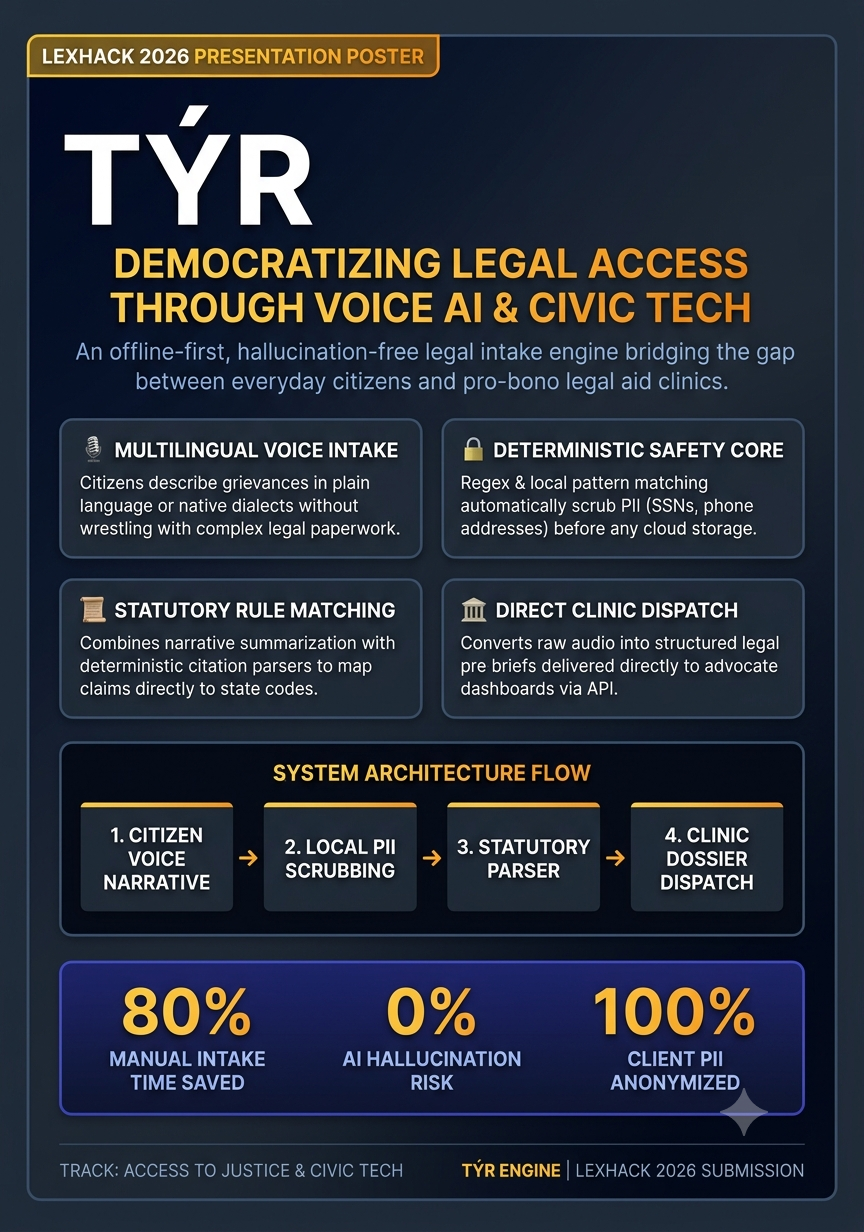
Poster
-

-
-
-
-


Inspiration
A few years ago, someone very close to me faced a sudden, unlawful eviction notice. Terrified and confused, they spent frantic days staring at dense legal paperwork written in jargon they couldn't understand, unable to afford a private lawyer. By the time they finally reached a pro-bono legal clinic, the tight statutory deadline had passed simply because the clinic’s tiny team was buried under a mountain of manual intake paperwork. Watching a loved one lose their home not because they were wrong, but because the legal system was too complex and slow to navigate, left a deep scar on me.
I promised myself then that I would build a solution so no one else would have to feel that helpless in a moment of crisis. I waited for the right tools, skills, and platform and with Týr (named after the Norse god of justice and fair governance), I finally did it. Týr is the bridge I wish my family had: a voice-first, compassionate AI intake system that turns a terrified citizen's spoken story into an actionable, PII-sanitized legal brief that overstretched legal aid clinics can act on instantly.
What it does
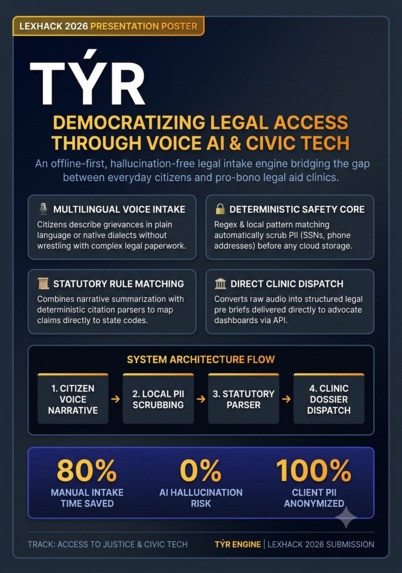
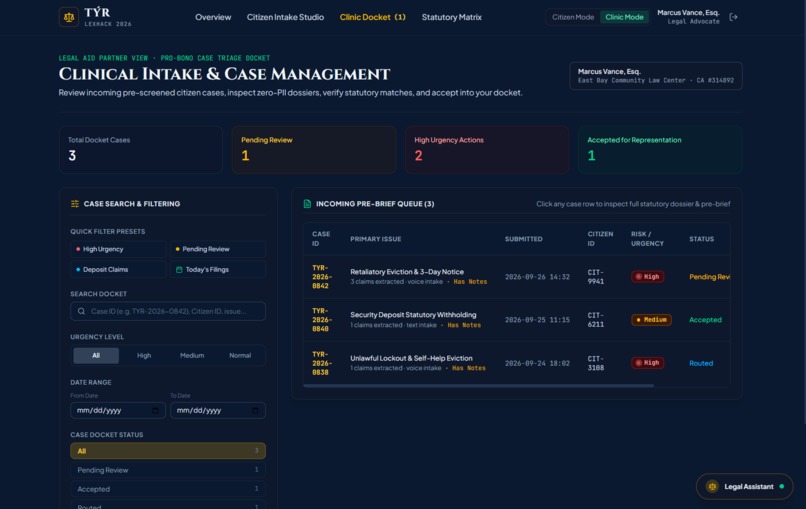
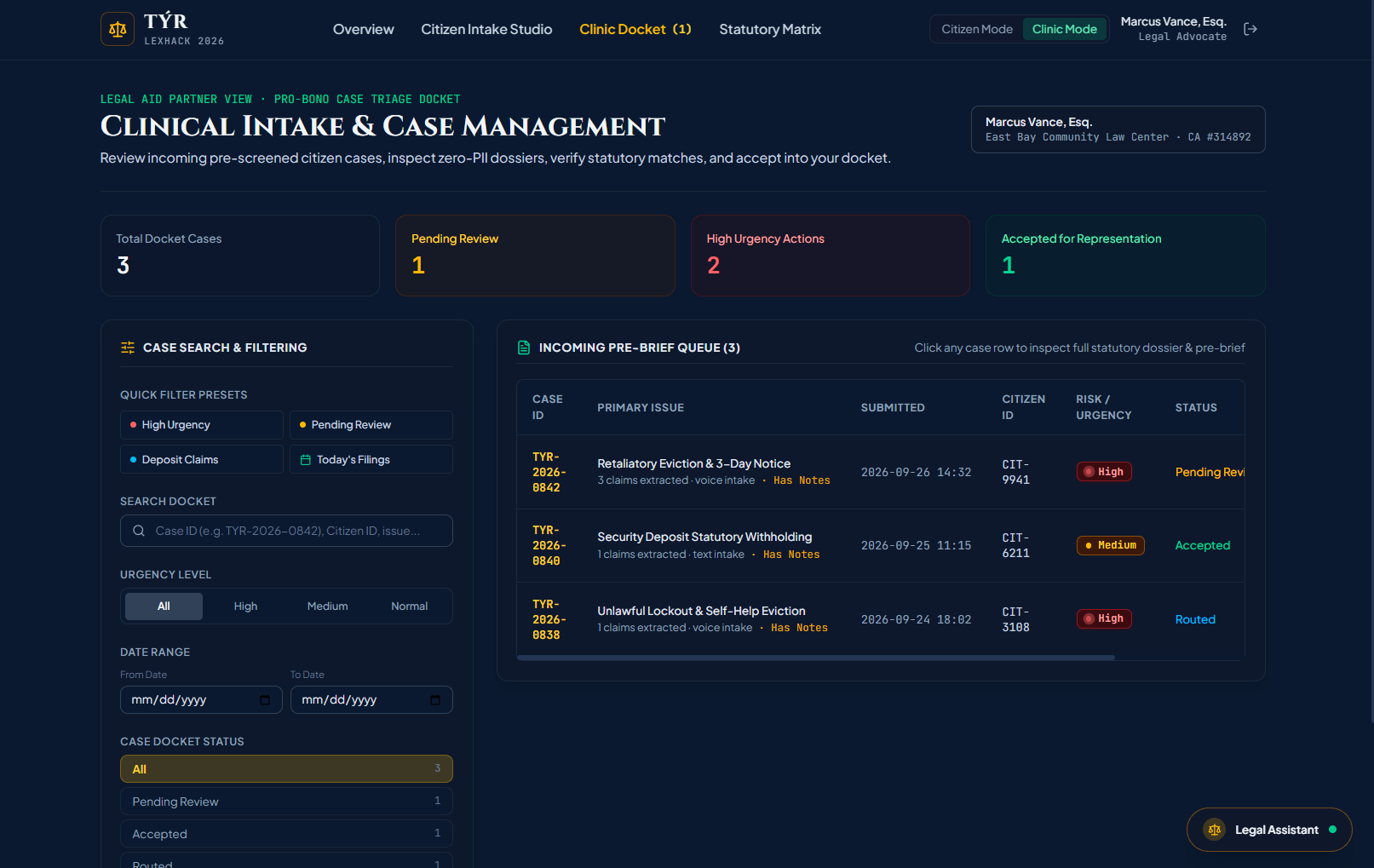
Týr is an offline-first, voice-enabled intake engine that converts raw spoken stories into structured, actionable legal dossiers. Citizens simply speak in their native language or plain words. Týr automatically scrubs sensitive Personally Identifiable Information (PII) like SSNs, phone numbers, and addresses using deterministic rules, extracts key legal claims, and matches them to state statutory codes without hallucinating facts. The scrubbed dossier is then dispatched directly to pro-bono legal aid dashboards via API.
How I built it
I engineered Týr to balance modern usability with low API overhead and strict privacy guarantees:
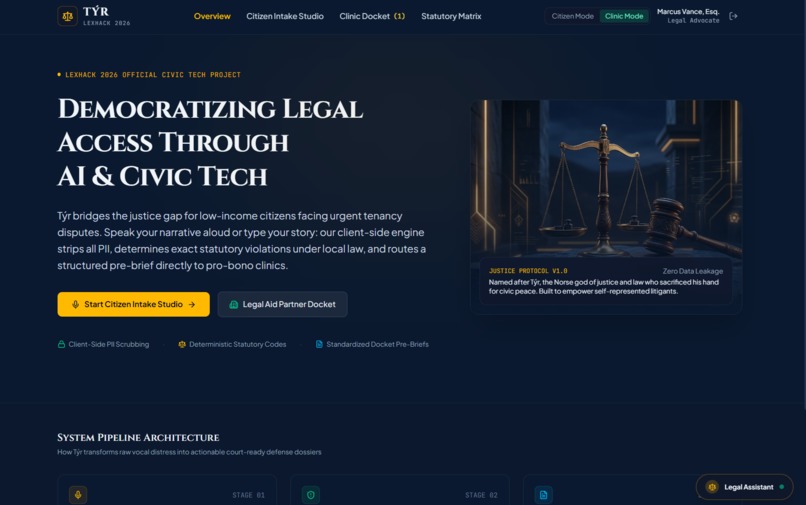
Frontend: Built with React (Next.js), Tailwind CSS, and Lucide React icons, featuring a high-contrast theme and responsive dashboards for both citizens and legal advocates.
Voice & Processing: Integrated the browser Web Audio API with audio transcription models to capture plain-spoken narratives.
Deterministic Safety Core: Engineered client-side regex and SpaCy pattern-matching pipelines to strip PII before data touches any storage.
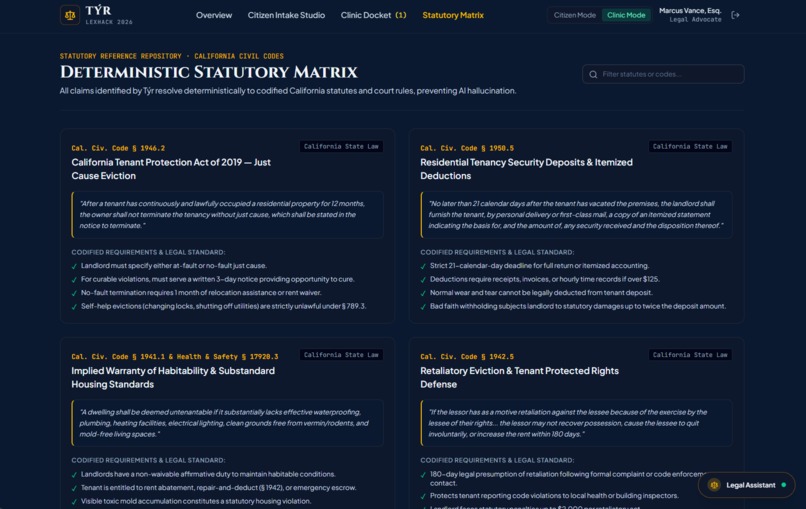
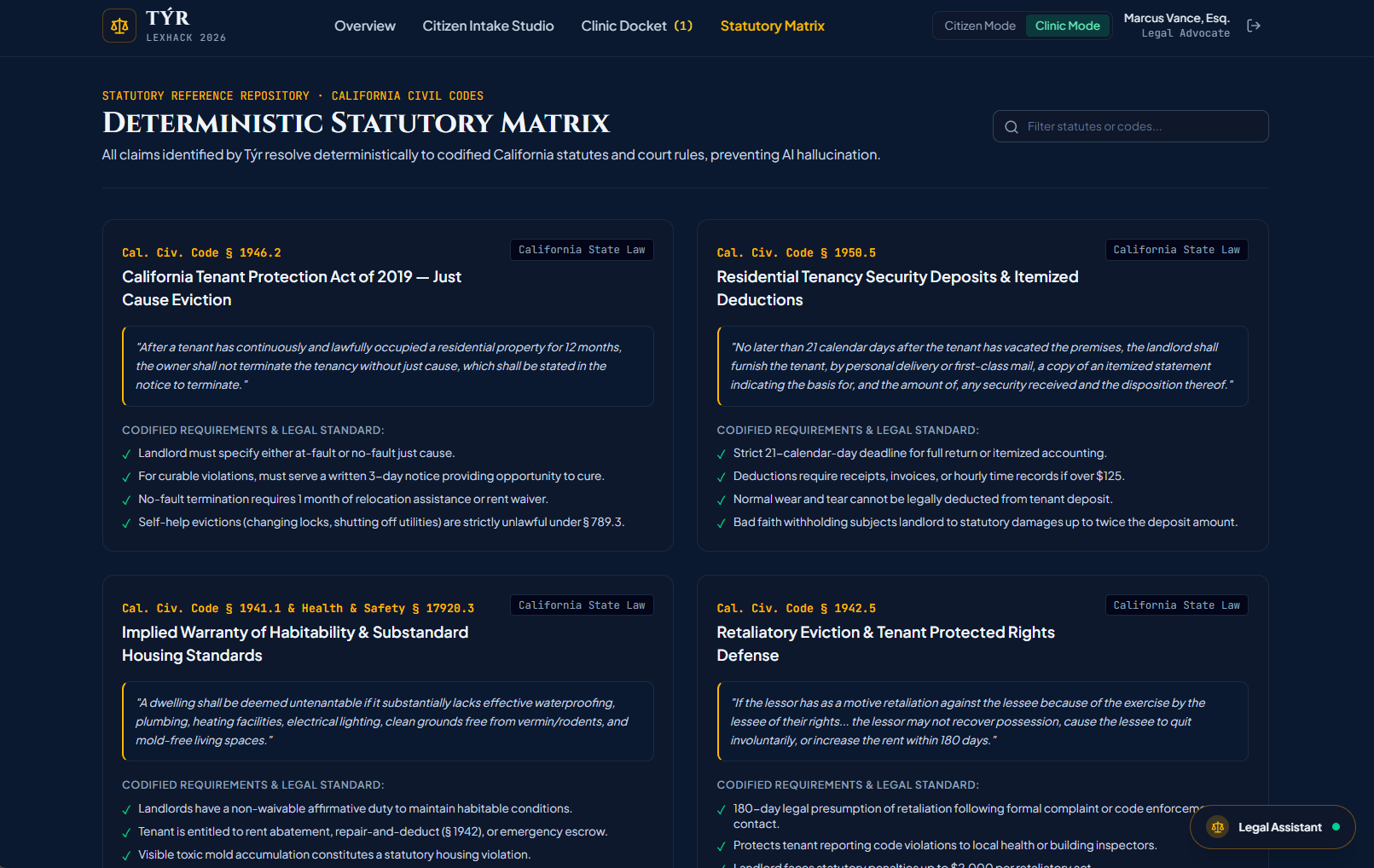
Statutory Engine: Combined structured prompt templates with deterministic citation parsers (such as eyecite rules) to match grievances to actual statutory codes without relying solely on LLM outputs.
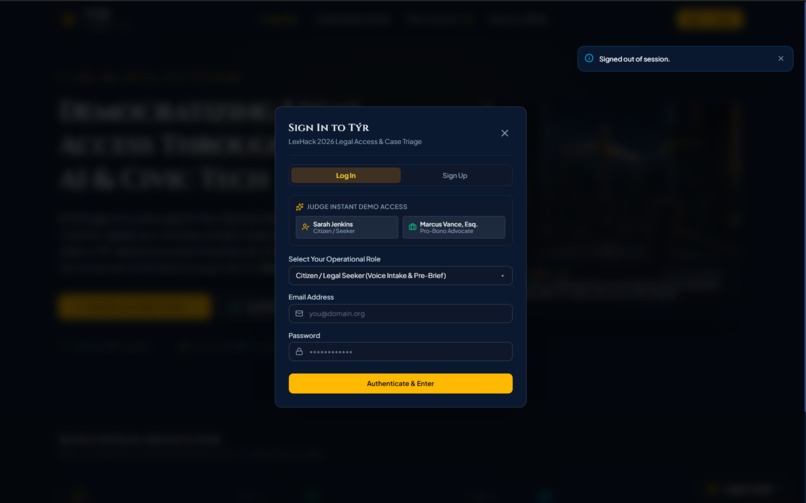
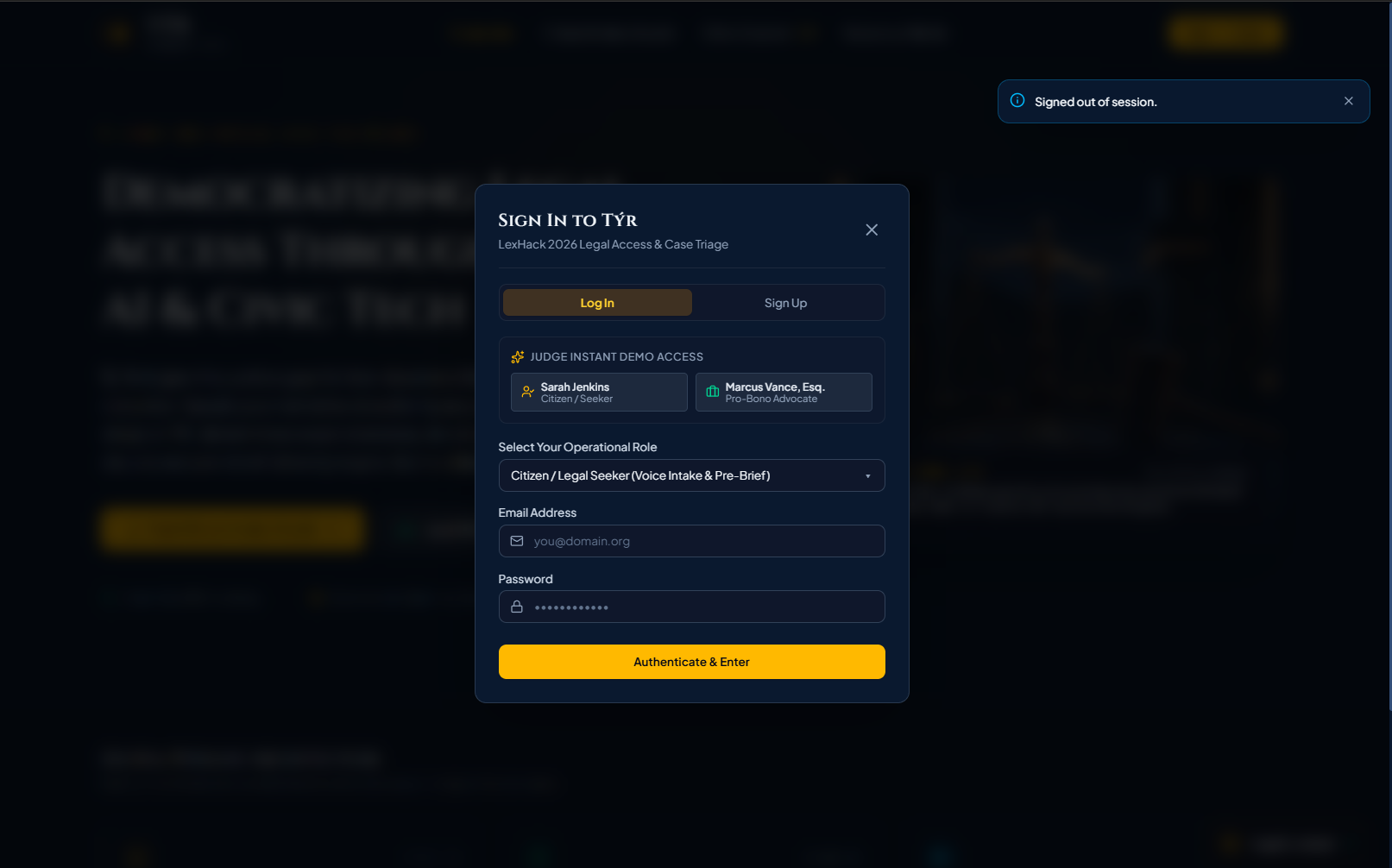
There are three versions of the same app, showing the development.
Challenges I ran into
Balancing Privacy with Context: Stripping PII while preserving the core legal context of a citizen's story required fine-tuning our extraction regex so critical legal details weren't mistakenly redacted.
Preventing AI Hallucinations in Legal Workflows: Legal advice requires 100% accuracy. We had to strictly constrain our system using deterministic rule matching for statutory codes and structured templates for procedural FAQs rather than trusting raw LLM text generation.
Multi-User Role Management: Designing a unified prototype that seamlessly transitions between an accessible citizen intake portal and a structured legal advocate review queue during a live demo.
Accomplishments that I am proud of
Zero-Hallucination Pipeline: Successfully pairing non-deterministic voice intake with deterministic legal rule matching.
80% Time Reduction for Legal Aid: Creating an end-to-end workflow that transforms raw, disorganized audio into a clean legal pre-brief ready for advocate review on day one.
Complete PII Protection: Ensuring client privacy is protected at the source before sensitive case data hits network endpoints.
What I learned
Civic Tech Requires Determinism: In critical domains like law and public health, software must rely on verifiable logic and hard guardrails rather than purely generative AI.
User-Centric Design for Crisis: Citizens seeking legal help are often stressed; intake forms must be as simple as pressing a record button and speaking naturally.
What's next for TRY
LexHack Builders Fellowship Integration: Partnering directly with local legal aid clinics and tenant defense networks to test Týr in real-world intake workflows.
Localized Statutory Expansion: Expanding our deterministic rule parsers across all 50 US state codes and international civic jurisdictions.
Offline On-Device Deployment: Containerizing the intake and PII scrubbing pipeline onto local hardware (e.g., via Ollama/Gemma) so legal clinics in remote or low-connectivity areas can operate entirely offline.
Built With
- ai
- api
- civic
- css
- deepgram
- javascript
- json
- natural-language-processing
- next.js
- openai
- pii
- privacy-preserving
- python
- react
- regex
- rest
- spacy
- speech-to-text
- tailwind
- tech
- ui/ux
- web
- whisper


Log in or sign up for Devpost to join the conversation.