


TRVL
Inspiration
Travel planning can be overwhelming—sifting through countless blogs, reviews, and scattered information across the internet takes time and effort. We wanted to simplify this process by automating itinerary creation based on the user’s specific needs, allowing them to focus on the experience rather than the research.
What it does
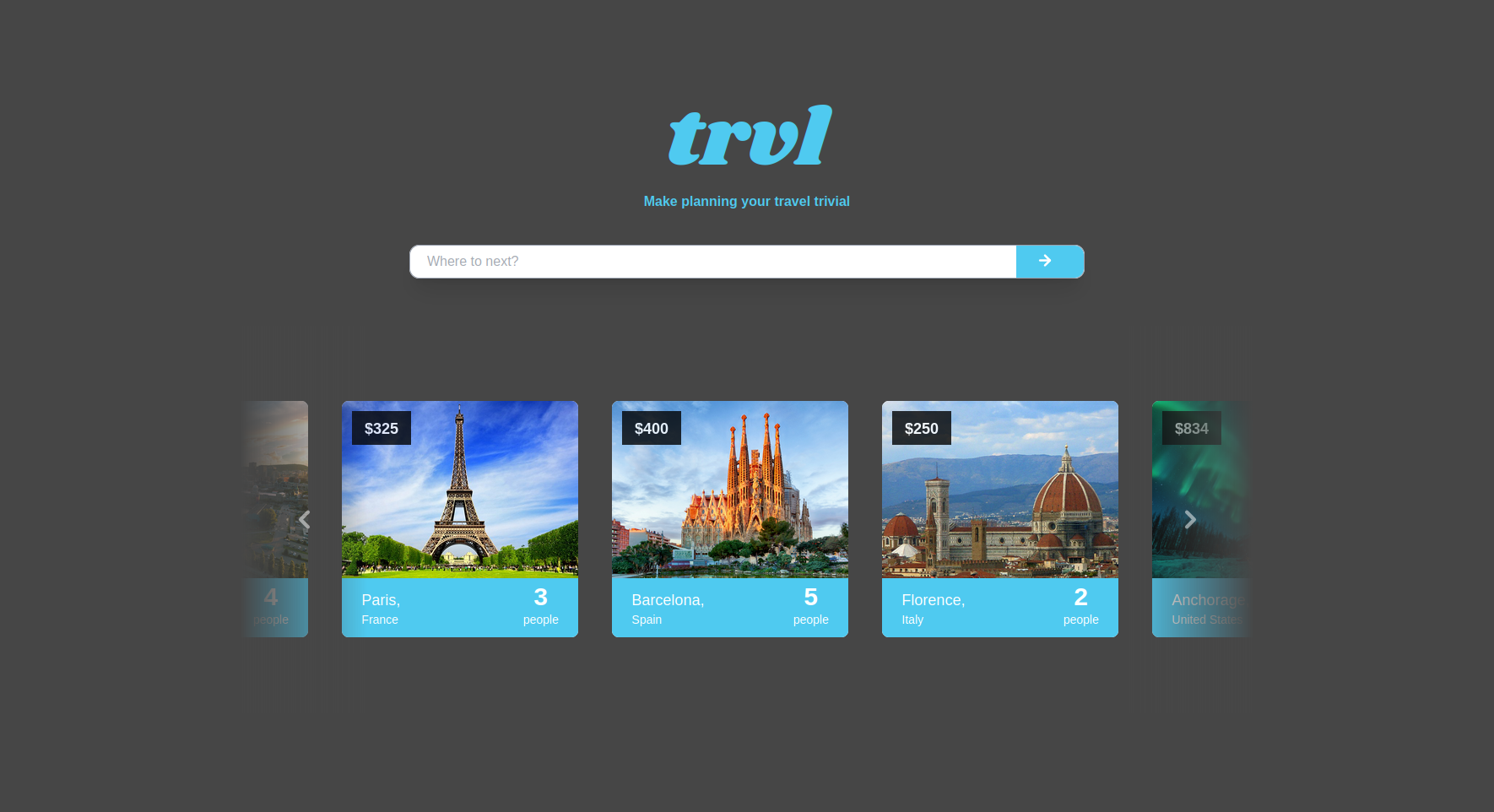
TRVL is an intelligent trip planner that curates a personalized itinerary by analyzing reviews, blogs, and online data. It takes into account user preferences, budget constraints, and travel dates, providing a structured plan tailored to the traveler.
How we built it
TRVL consists of a Next.js frontend styled with Tailwind CSS and a Flask backend that processes user queries. The backend leverages a Retrieval-Augmented Generation (RAG) model powered by Cohere’s LLM. We used Playwright and Gemini for automated web scraping to curate relevant travel data. Pinecone acts as our vector database to efficiently retrieve information, while PostgreSQL is used for structured data storage.
Challenges we ran into
Each component worked well in isolation, but integrating them posed a challenge. Since we divided tasks among team members, ensuring seamless communication between the frontend, backend, and AI pipeline required careful debugging and synchronization. Additionally, handling the scale of web scraping while maintaining response efficiency was another hurdle we had to overcome.
What's next for TRVL
We aim to enhance TRVL with real-time pricing and booking integrations, allowing users to finalize their trips within the platform. Implementing multimodal AI capabilities for image-based recommendations and voice input could further improve the user experience. Additionally, we plan to refine our scraping methods to ensure more accurate and up-to-date travel suggestions.
Built with
Python
Flask
Next.js
Tailwind CSS
Cohere (RAG LLM)
Pinecone
PostgreSQL
Gemini
Playwright
Try it out
Built With
- cohere
- flask
- gemini
- next.js
- pinecone
- postgresql
- python
- rag
- tailwindcss

Log in or sign up for Devpost to join the conversation.