-
-
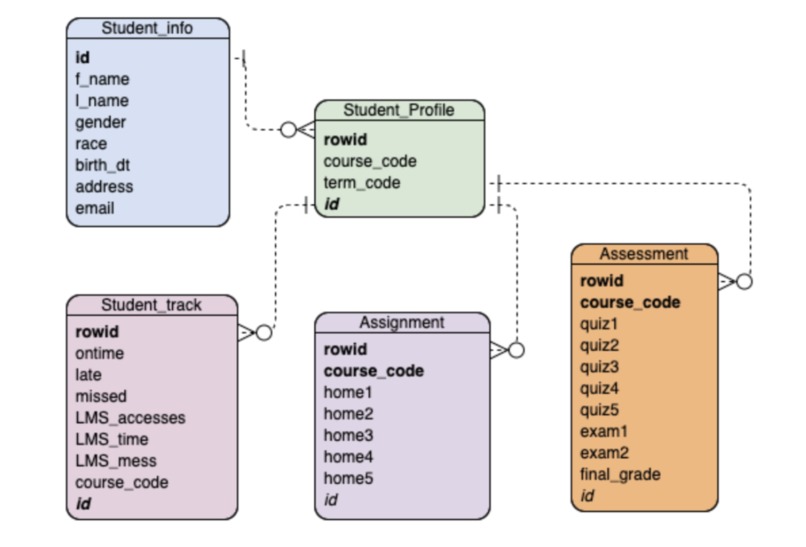
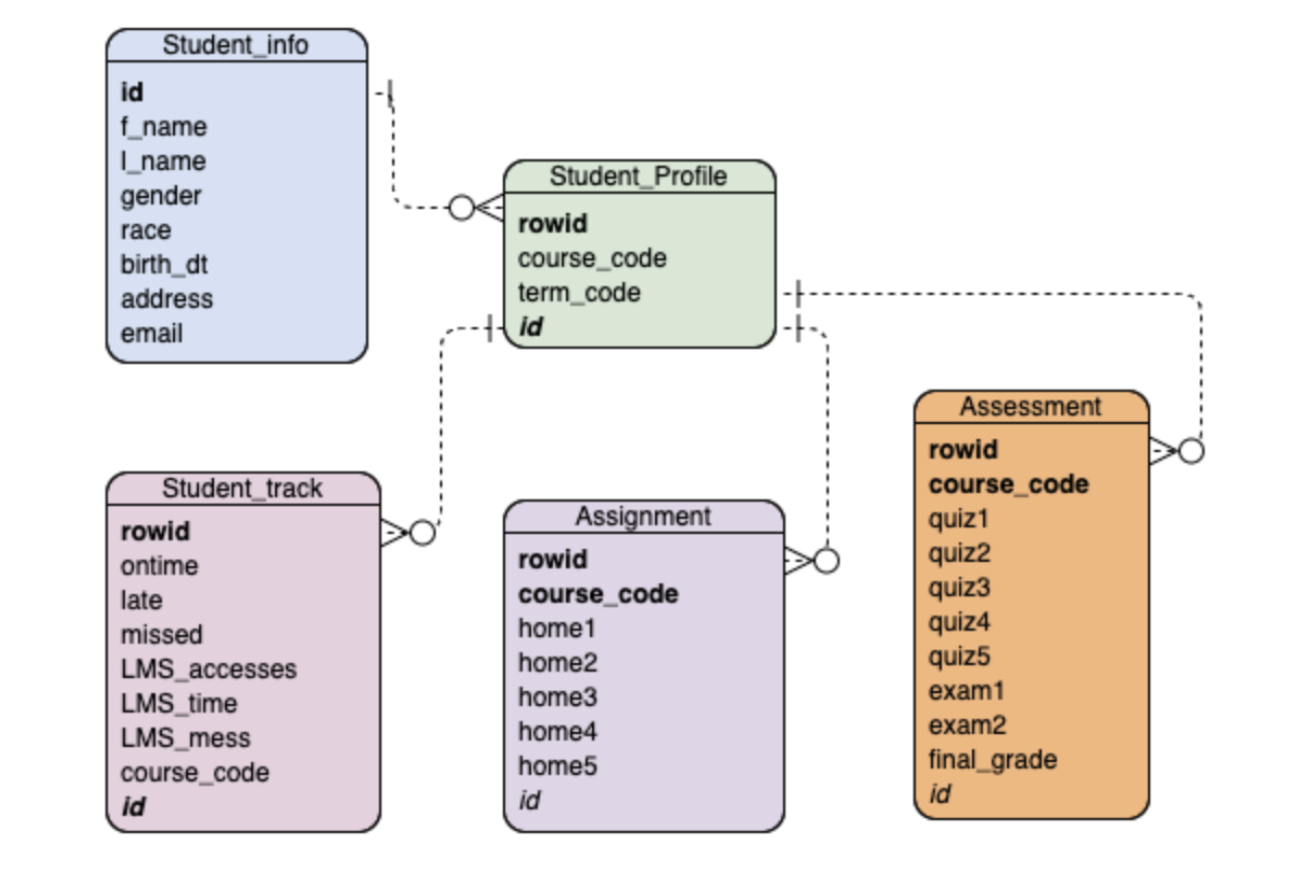
Database Schema
-
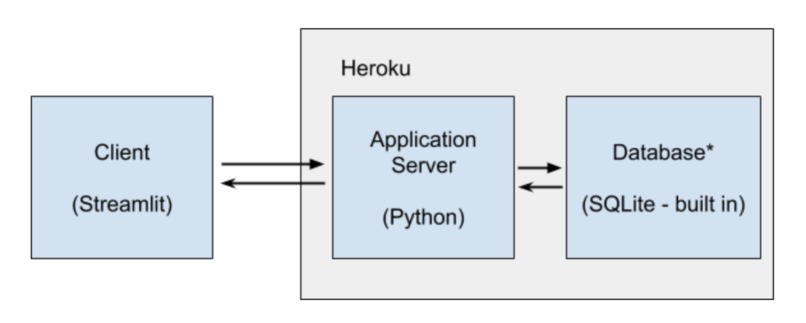
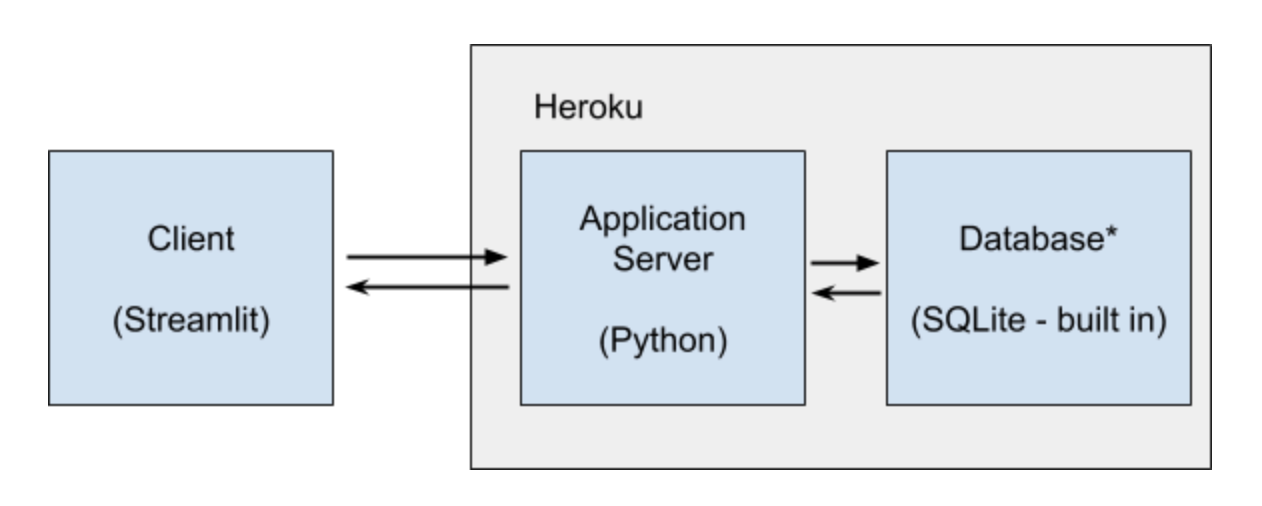
Web Application Architecture
-
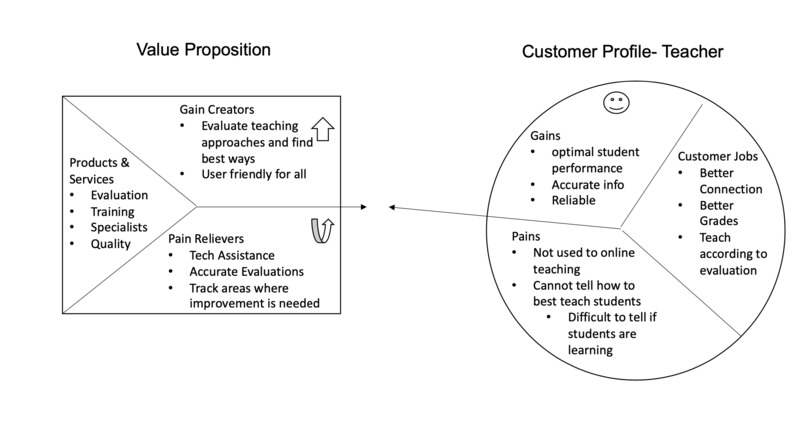
Value Proposition Canvas
-
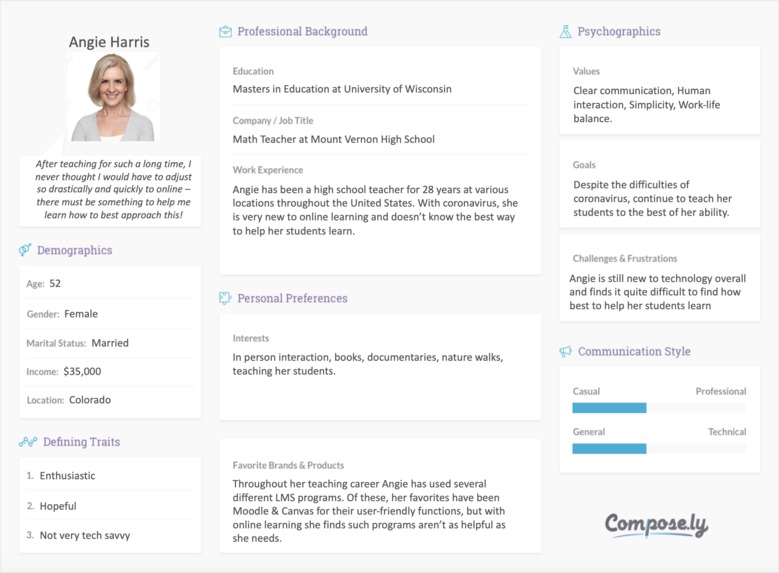
User Persona
-
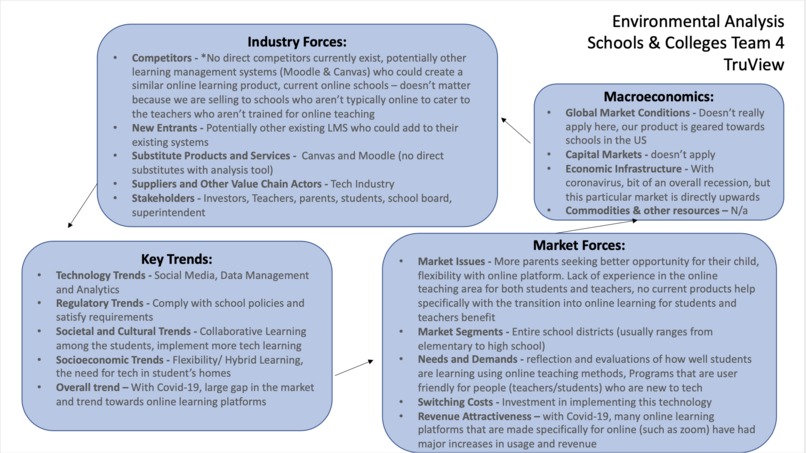
Environmental Analysis
-
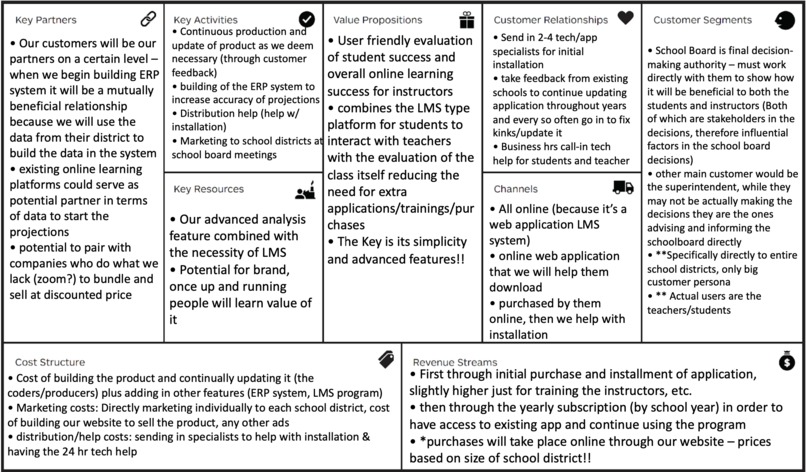
Business Model Canvas
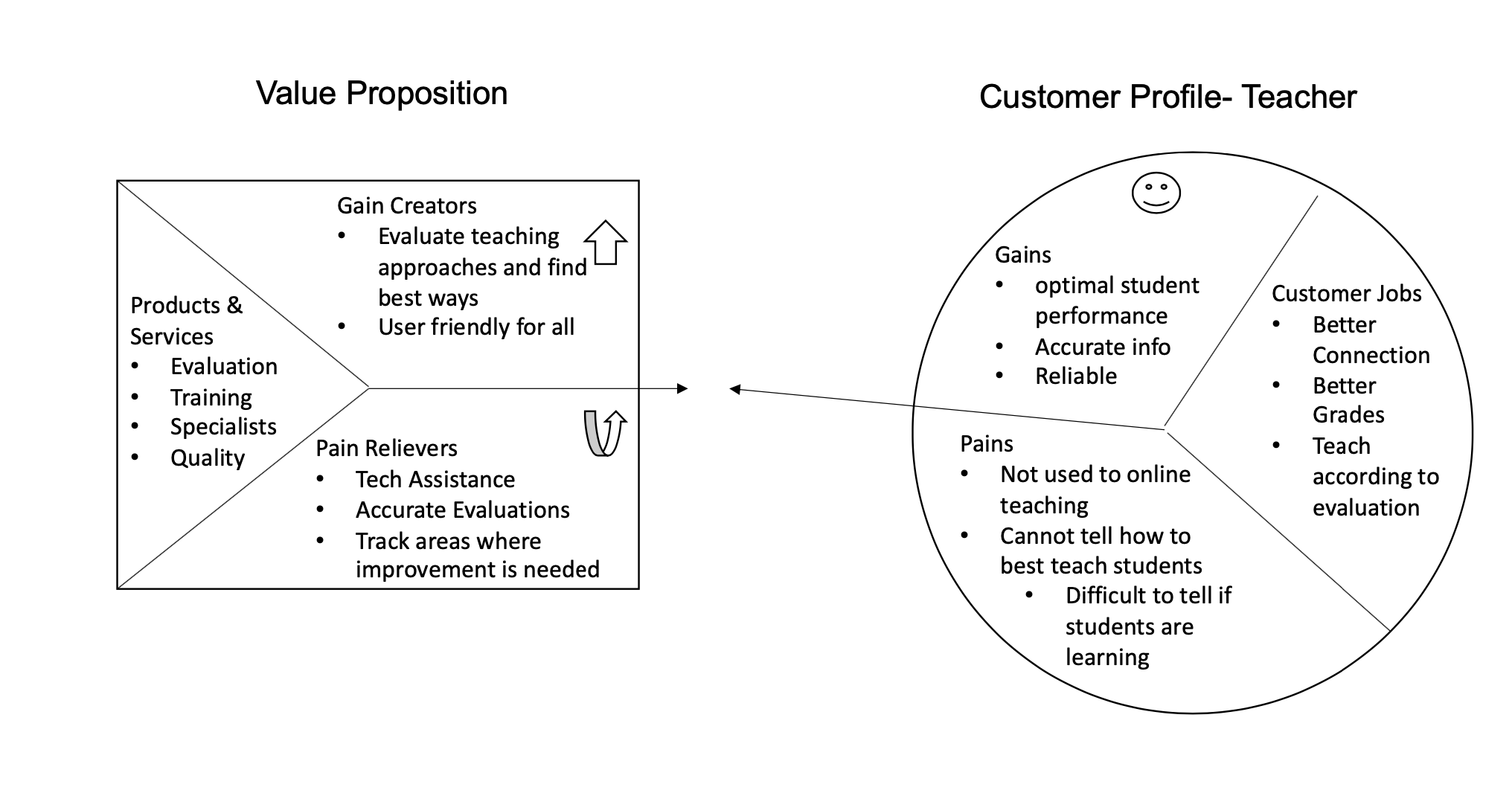
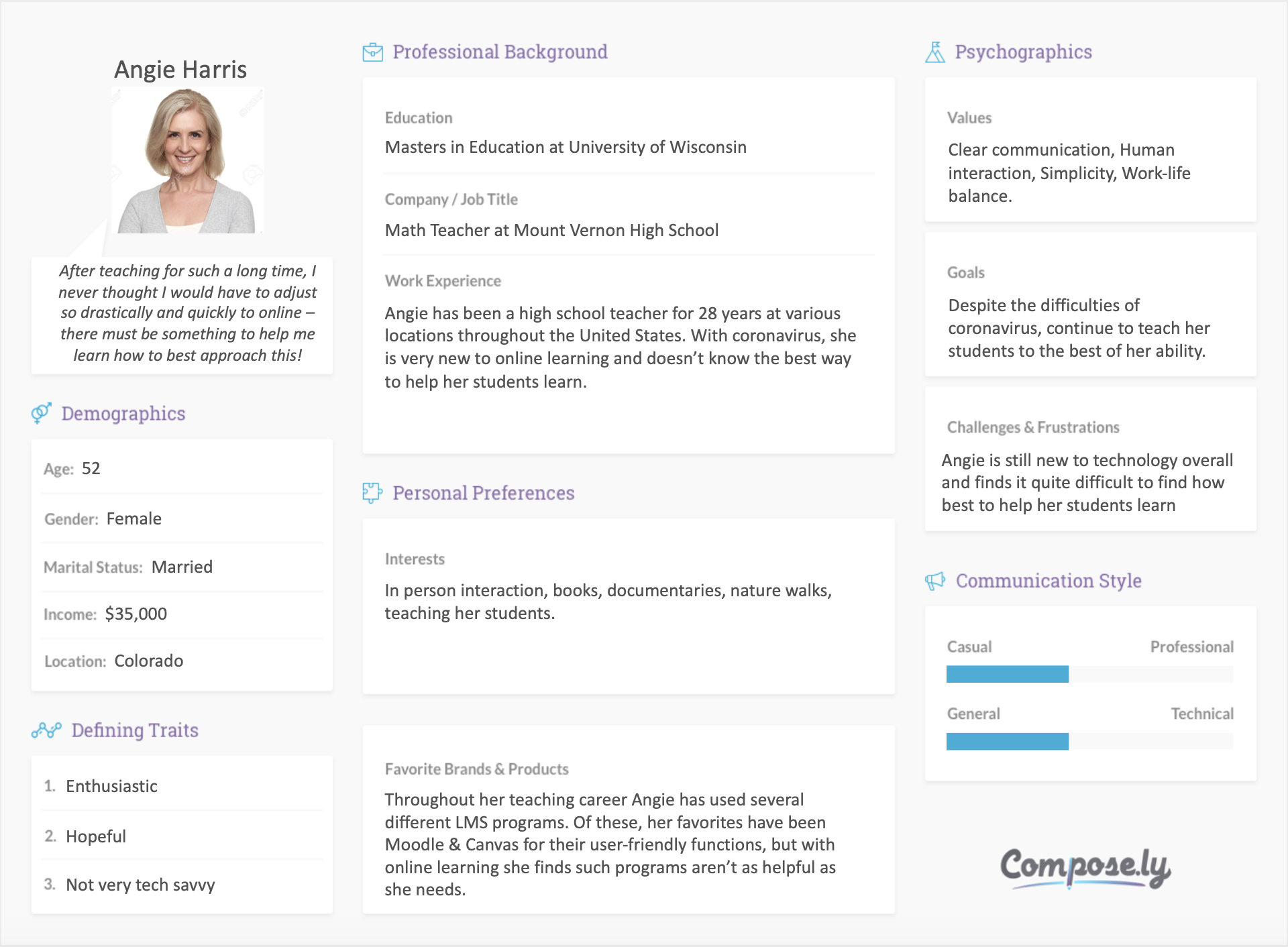
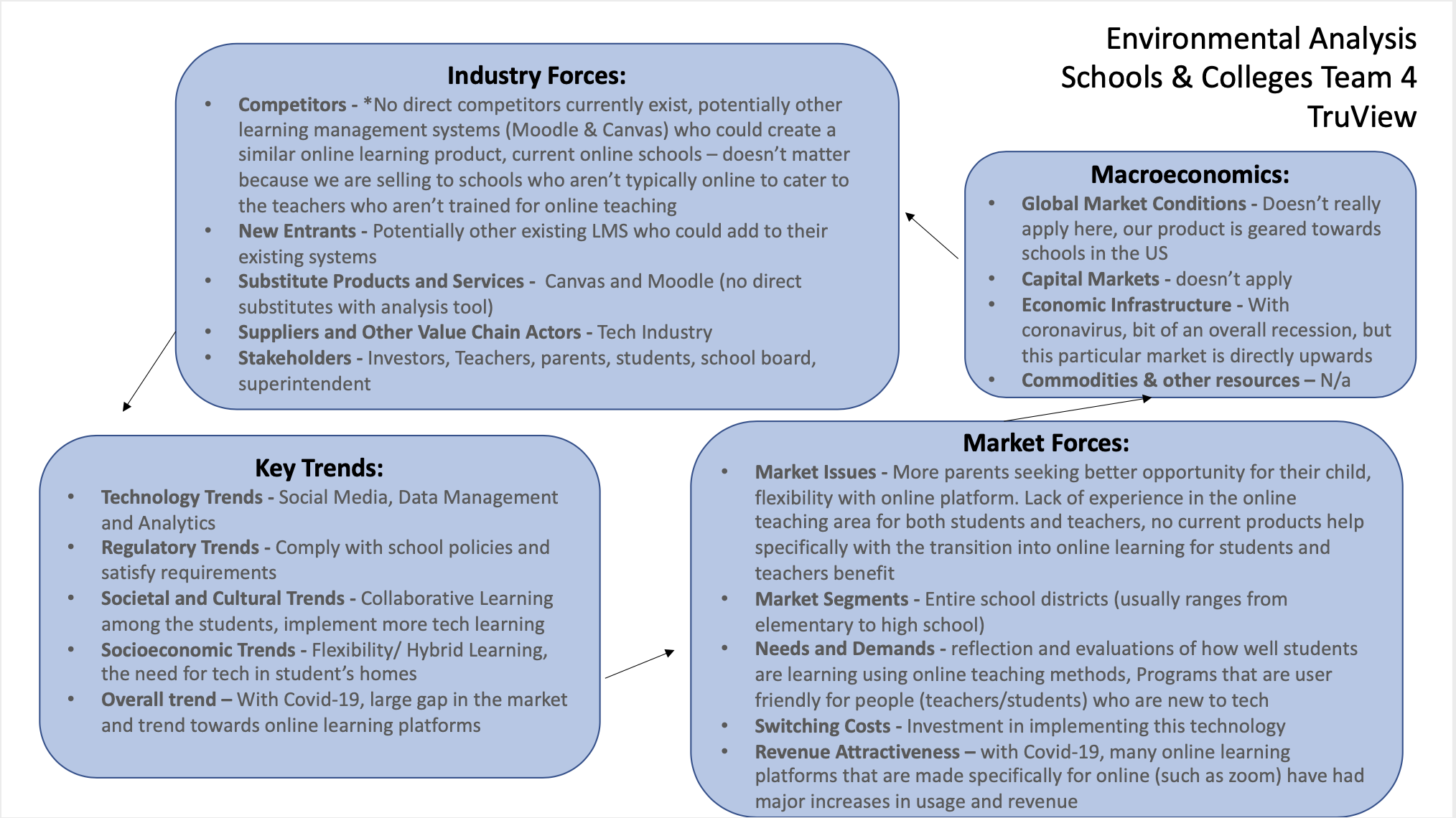
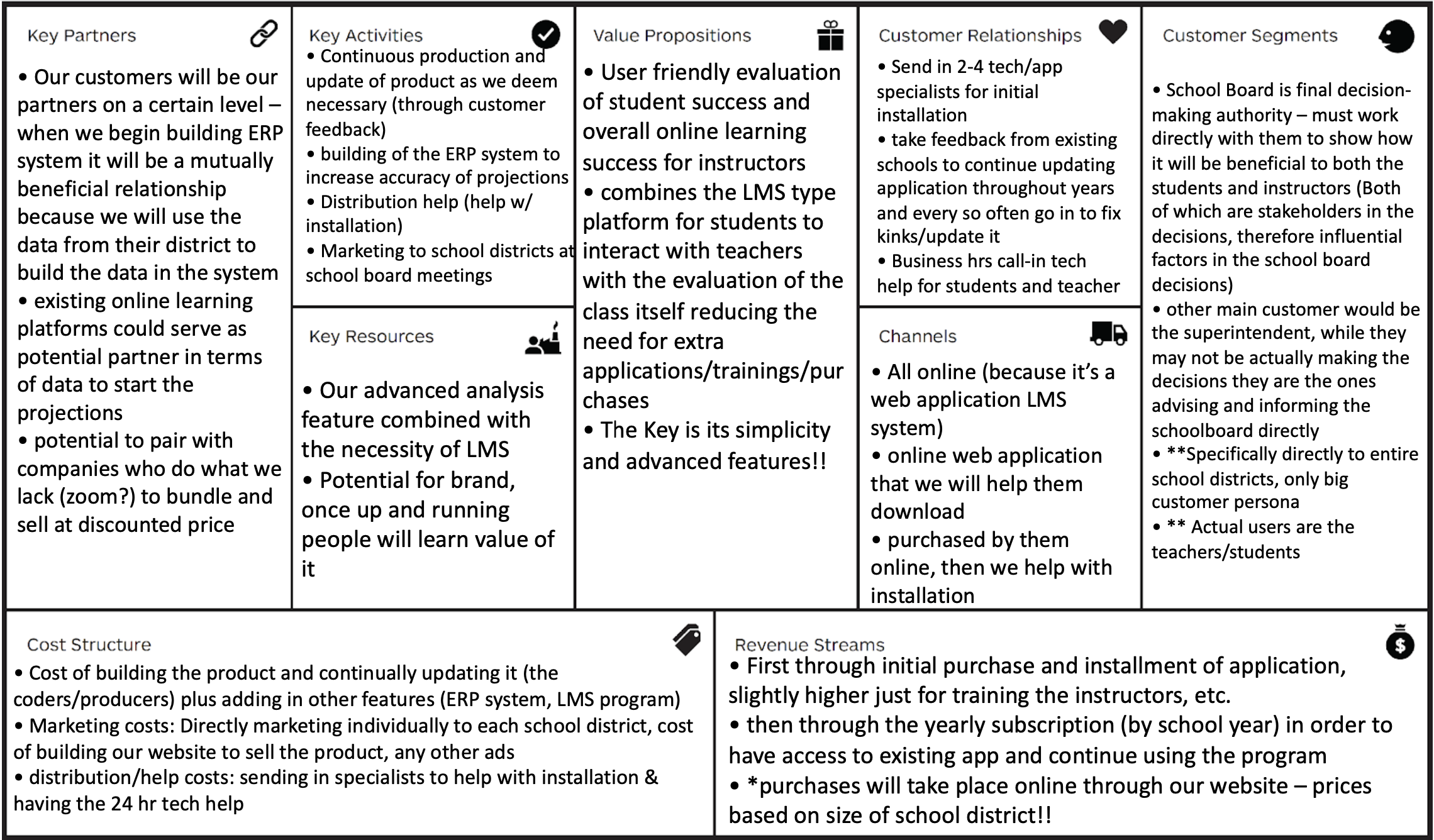
TruView Schools & Colleges Team 4
Overview
The COVID-19 pandemic has affected educational systems worldwide, leading to the temporary closures of schools and colleges due to difficulty in maintaining social distancing in school environments. As schools are planning to reopen with online classes, there is a need to evaluate and improve students’ engagement. TruView is intended to be an innovative Learning Management System (LMS), which not only helps schools in the administration and delivery of training programs, but also provides them with suggestions on enhancing students' performance.
Team Members
Maggie Slaughter (Risk and Insurance Major, Actuarial Science Minor - Go Squad) Maggie was our Project Manager, so she did most of the logistical planning including task assignments, meeting coordination and organization, contact with team coaches, and big picture encouragement. Furthermore, as a member of the Go Squad, she was responsible for the business models, most of the presentation, and the many smaller tasks throughout the five weeks.
Johnny Moranchel (Accounting Major - Go Squad) Johnny worked with business models, specifically the environmental analysis and value proposition canvas. He also worked with researching customer needs.
Dong Cao (Computer Science Major - Pro Squad) Dong was responsible for simulating testing data. He also designed and built the web application that analyzes this data by implementing interactive visualization and modeling data using Machine Learning techniques.
Anteneh Zeleke (Computer Science Major, Human Centered Computing concentration - Pro Squad) Anteneh worked on data packages to make and test the web interface, making it more palatable for the user.
Shruthi Bidarikere (Applied Data Science graduate - Pro Squad) Shruthi helped plan and design with the Pro Squad. She worked on database guideline design and also created the database using the SQLite database system, implementing functions that interact with the database.
Talia Eraci (Informatics Major, Security Minor - Pro Squad) Talia worked with the web planning and creation, User Interface design, and error correction. Specifically, she created the login page and home page using HTML and CSS. Talia also assisted in project planning assistance.
How did you decide on this customer segment, problem, and solution?
While researching, we find that online education is important and sometimes inevitable during a pandemic, but this learning method has some limitations. There is little to no face to face interaction. This leads to students’ reduced engagement and makes it harder for teachers to track students’ progress.
To overcome these limitations, we designed a web application which aims to improve the online experience for both students and instructors. Besides having the functionalities of a traditional LMS, our product provides instructors with visualized reports of students’ overall performance and uses Machine Learning to predict their final grades.
How did your team build and iterate on the solution?
Our team came up with the idea of a student academic tracking system to help teachers during pandemic like situations. Members of the project met regularly in a zoom meeting to discuss requirements, design, and progress every week.
In the initial meeting, we assigned a project manager and decided a 5-week project timeline and assigned tasks for each team member. During the first two weeks of the timeline, we focused on planning, deciding on the frameworks to use, and simulating testing data.
In the later weeks, the team started to implement a database for storing the data. As the database was set up, we began building the app with features of visualization and data modelling using Machine Learning. Another group focused more on the front end design and the user experience. In weekly coach meetings, we discussed the current status of the project, short demos on the previous week's work, and plan for the upcoming week. We also took suggestions from coaches for any feature update and implemented them in the following week.
Technical Architecture:
Database schema:

Web application architecture:

Note: Though our database has been fully constructed, there are still configurations to be made for it to smoothly connect with the application. For the sake of easy and quick testing, our data is still read from a spreadsheet. That being said, the long-term goal would be to interact with a client - server database rather than use an embedded database to simulate that interaction.
Key Tools, Libraries, and Frameworks
All of our work is written in Python because the whole pro team has experience with it. We also use several Python libraries:
- SQLite and SQLAlchemy for constructing the DataBase
- Streamlit for building the web app
- Pandas for data manipulation and analysis.
- Altair, Bokeh, and Plotly for interactive visualization
- Scikit-learn and Statsmodels for Machine Learning and data modelling techniques
For collaboration and version control, we use Git and GitHub.
If you had another 5 weeks to work on this, what would you do next?
Business:
- Interview current teachers and see what they need in order to transition smoothly into online learning for a whole year. More in depth research on why they might prefer other services based on price and quality.
- Research whether TruView works for higher education and explore options that accommodate for such change. These accommodations include looking at larger classrooms and if there would be an additional fee since more students will access our service. As well, other research includes considering price decreases for schools who receive lower funding so that TruView is inclusive and accessible to everyone.
- In an effort to appeal to a wider demographic, we intend to be as inclusive as we can to gage interest and push revenue.
Product:
- Better the application’s interaction with a database, especially a client-server one.
- Make a login page with secured authentication.
- Find a workaround to customize the front end of the website (Streamlit doesn’t support this yet).
- Develop the features of a traditional LMS like Moodle/Canvas: posting and submitting assignments, grades reporting, etc.
- Allow the students to track and predict their individual performance.
- Implement an ERP system to increase dataset efficiency. The ERP system is a way of planning business processes in conjunction with real time software updates. This helps increase the accuracy of the evaluation of online learning in a more fast-paced, effective manner.
Checklist of Completed Items
Environmental Analysis - Yes
Business Model Canvas - Yes
Value Proposition Canvas - Yes
Customer Persona(s) - Yes
Built With
- altair
- bokeh
- pandas
- plotly
- python
- scikit-learn
- sqlalchemy
- sqlite
- statsmodels
- streamlit


Log in or sign up for Devpost to join the conversation.