-
-
Title
-
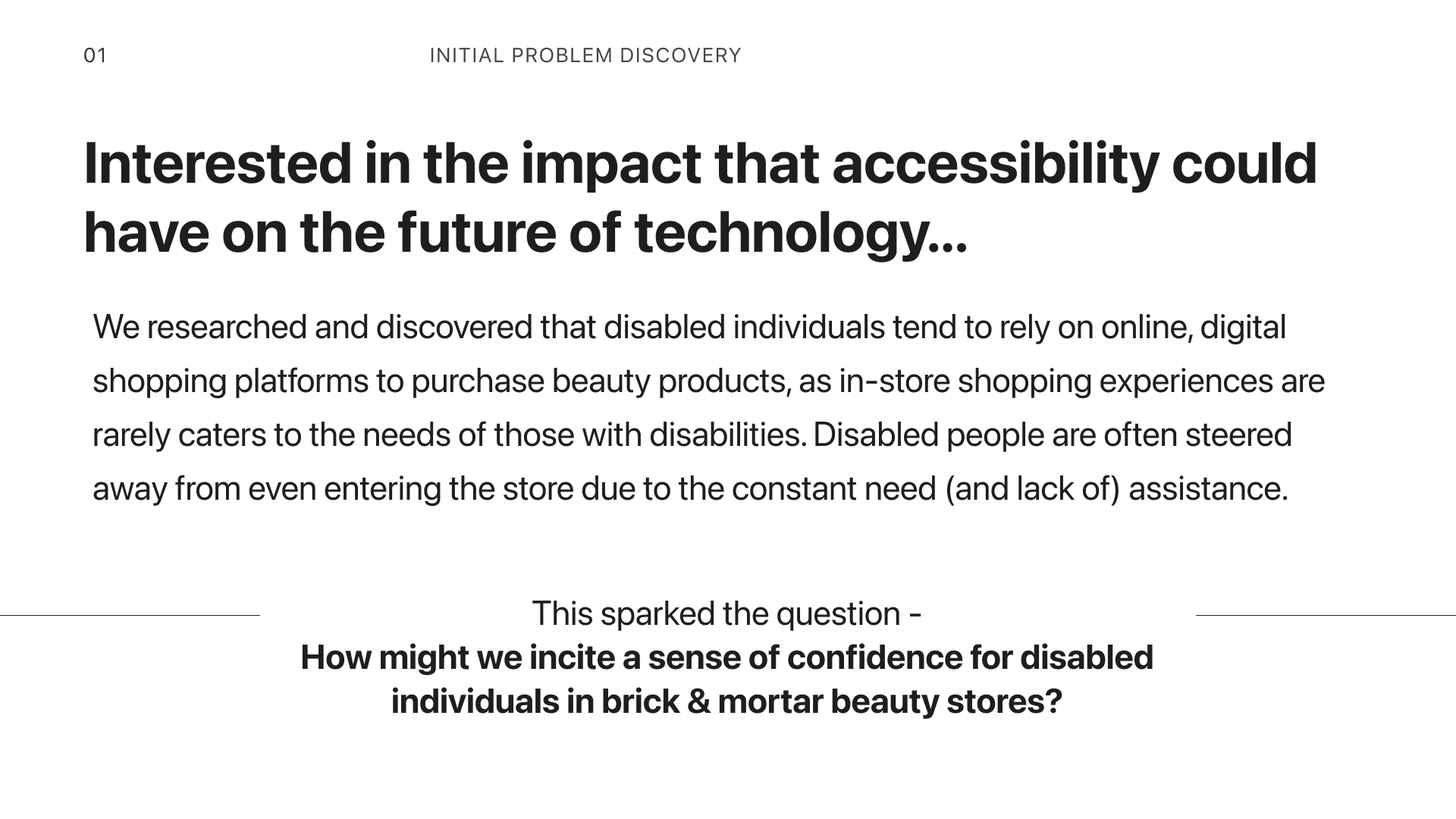
Initial Problem Discovery
-
Solving the Problem
-
Research Insights
-
Our solution
-
Userflow
-
Competitive Landscape
-
Brainstorming + Prototyping
-
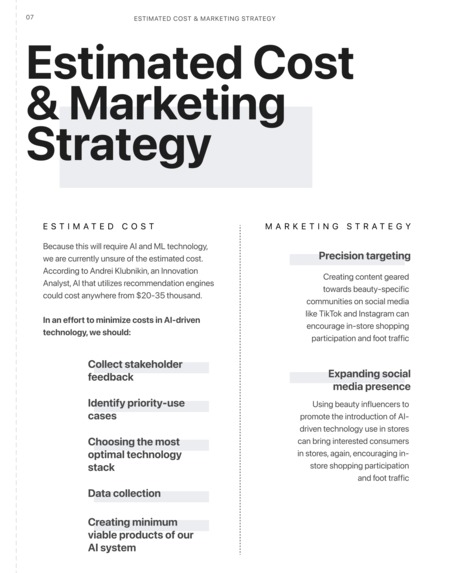
Estimated Cost and Marketing Strategy
-
Meet the Team
-

Sources

Describe how your solution addresses an accessible beauty challenge!
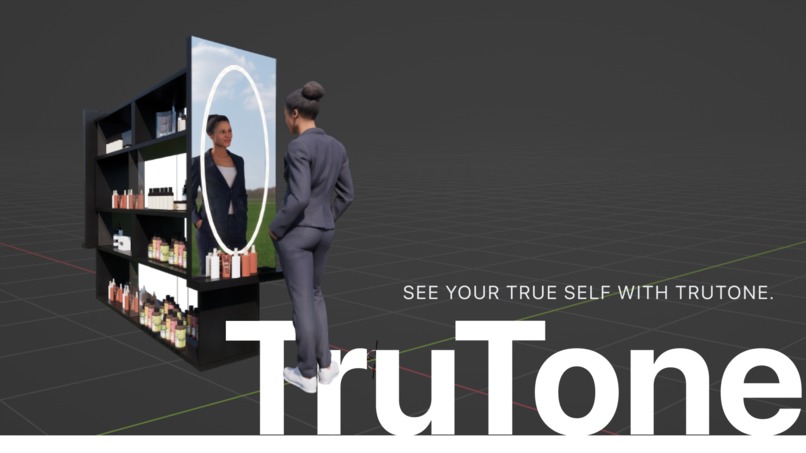
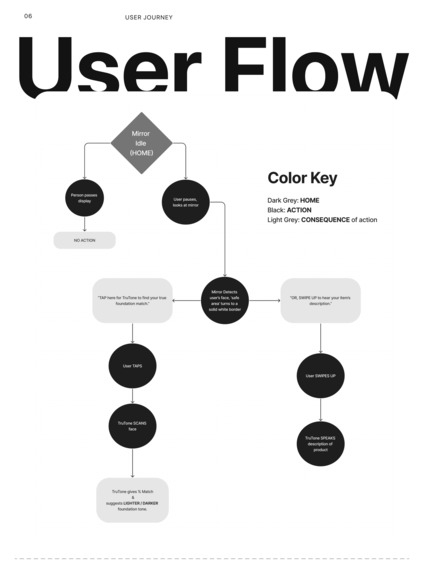
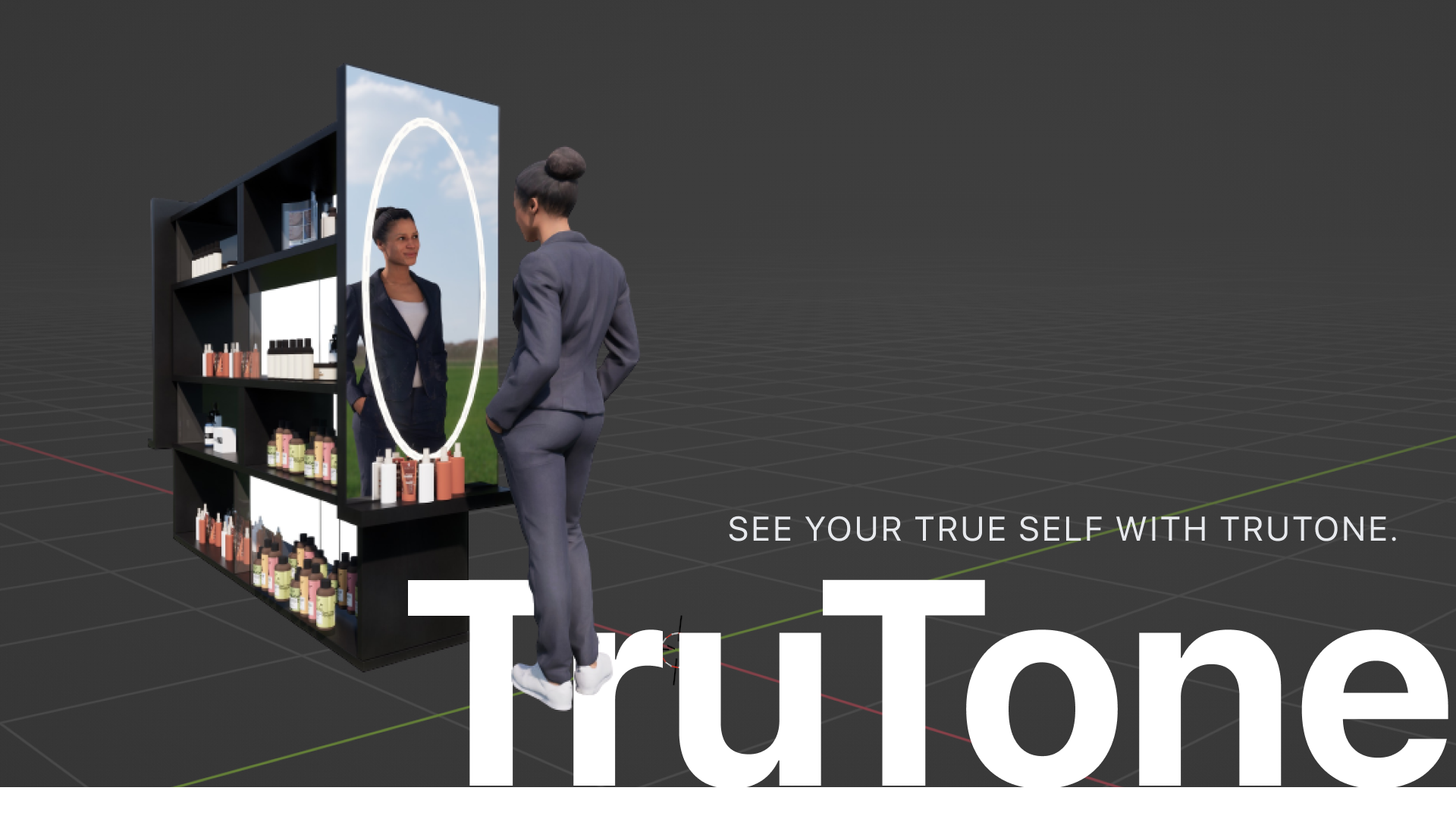
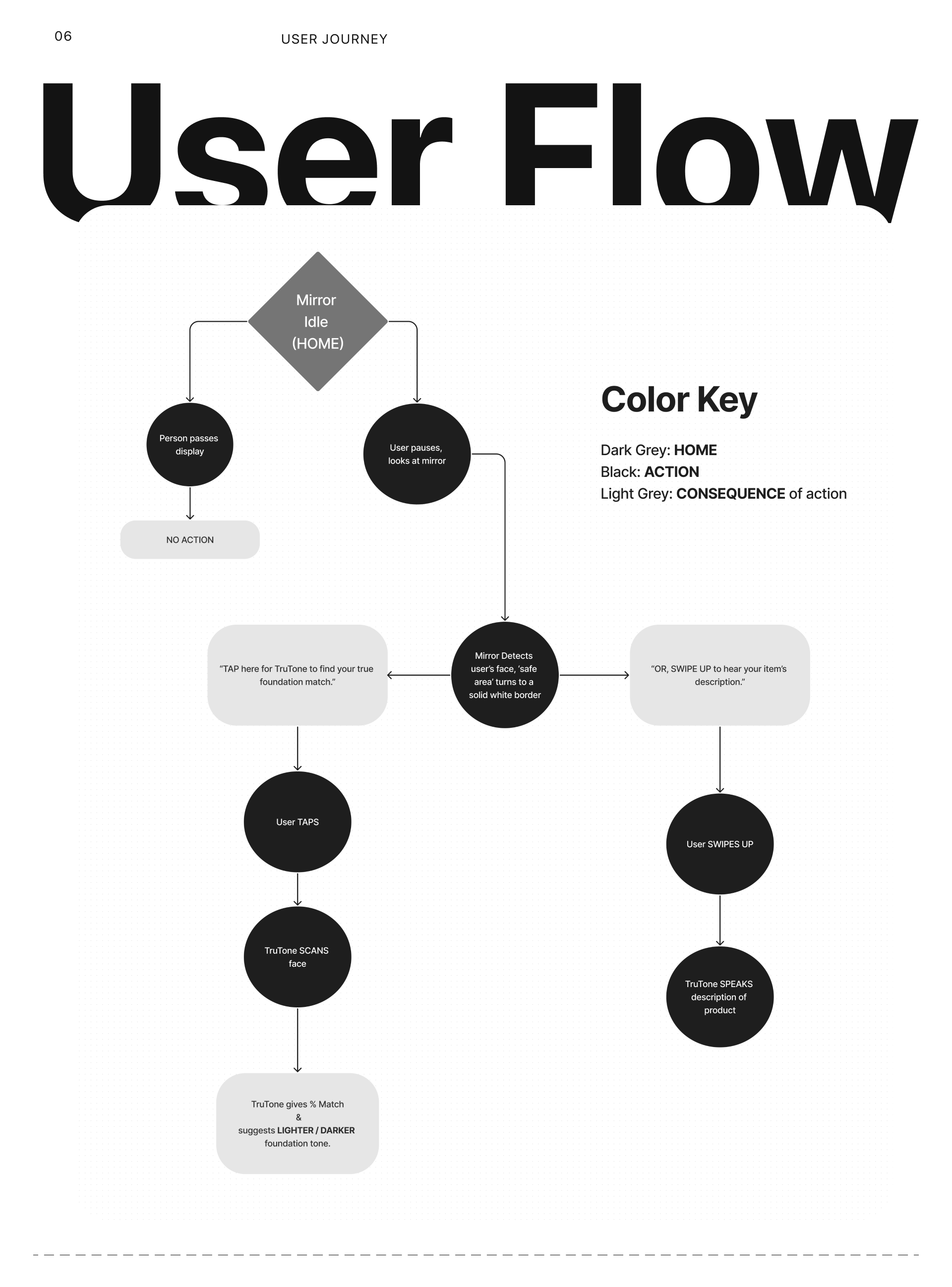
Our solution, TruTone, addresses an accessible beauty challenge that tackles foundation matching for visually impaired users: in-store. Our product goes further beyond catering to visually impaired and blind users, as we have created a device that is accessible to deaf, ambulatory-disabled, and colorblind individuals as well. TruTone is at first glance, a mirror. Through our user flow in the Pitch Deck, we have identified where our technology will distinguish itself from a regular mirror, and instead, become a customer’s way to check if their foundation matches their skin color. With deep-learning AI, plug-and-play facial recognition, and more, TruTone aims to accessibly enhance the in-store Estée Lauder shopping experience. Through our research, we found that foundation is by far, the most common makeup item that beauty consumers spend their money on in cosmetics, and even then, many admit to having bought the wrong foundation shade. TruTone detects a user’s presence in the mirror, and asks if they would like to scan a foundation item to see if the shade would match their skin color, or, if they would like to swipe up the mirror to see suggested products in their shade range. Catering to not only disabled individuals but allowing for inclusivity in shade ranges, our technology transcends the standards for the present in-store beauty experience. We believe that to make the beauty world more inclusive and accessible, we need to eliminate the barriers that prevent the disabled community from having the same experience of beauty as able-bodied individuals.
Inspiration
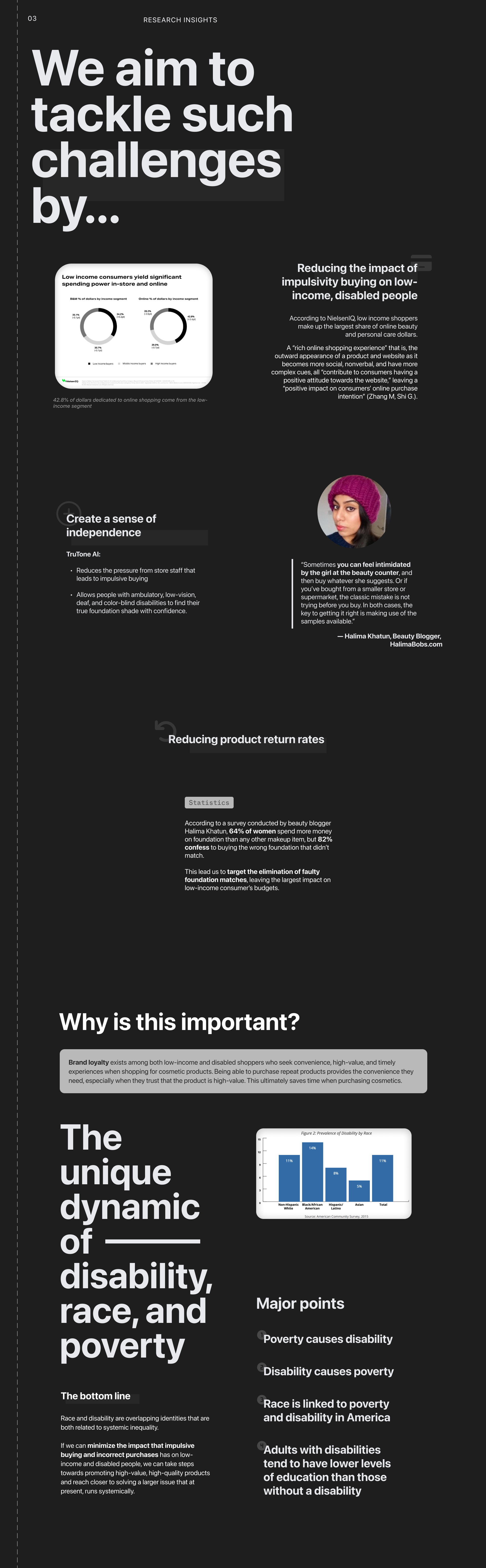
We were deeply inspired by the disabled beauty influencer community. Learning about the problems that exist within the beauty industry due to a lack of accessibility in-store, we felt that a reimagined cosmetic brick-and-mortar shopping experience could bring consumers to shop for beauty products that make them _ feel _ beautiful. Oftentimes, online shopping results in procrastinated returns when the product does not meet the consumer’s expectations, mostly in situations where a color does not match a person’s skin tone.
What it does
The TruTone color match mirror detects a customer’s unique skin tone to find their perfect foundation match through AI. A deep learning AI algorithm detects a full range and spectrum of skin tones ranging from all color grades, light to dark, with thousands of shades that can match true undertones from warm, to olive, to cool.
How we built it
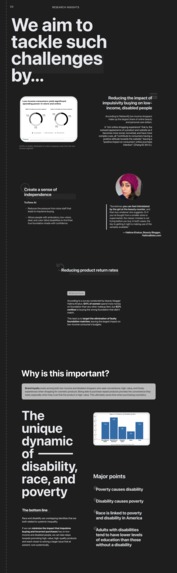
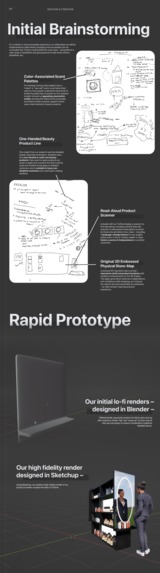
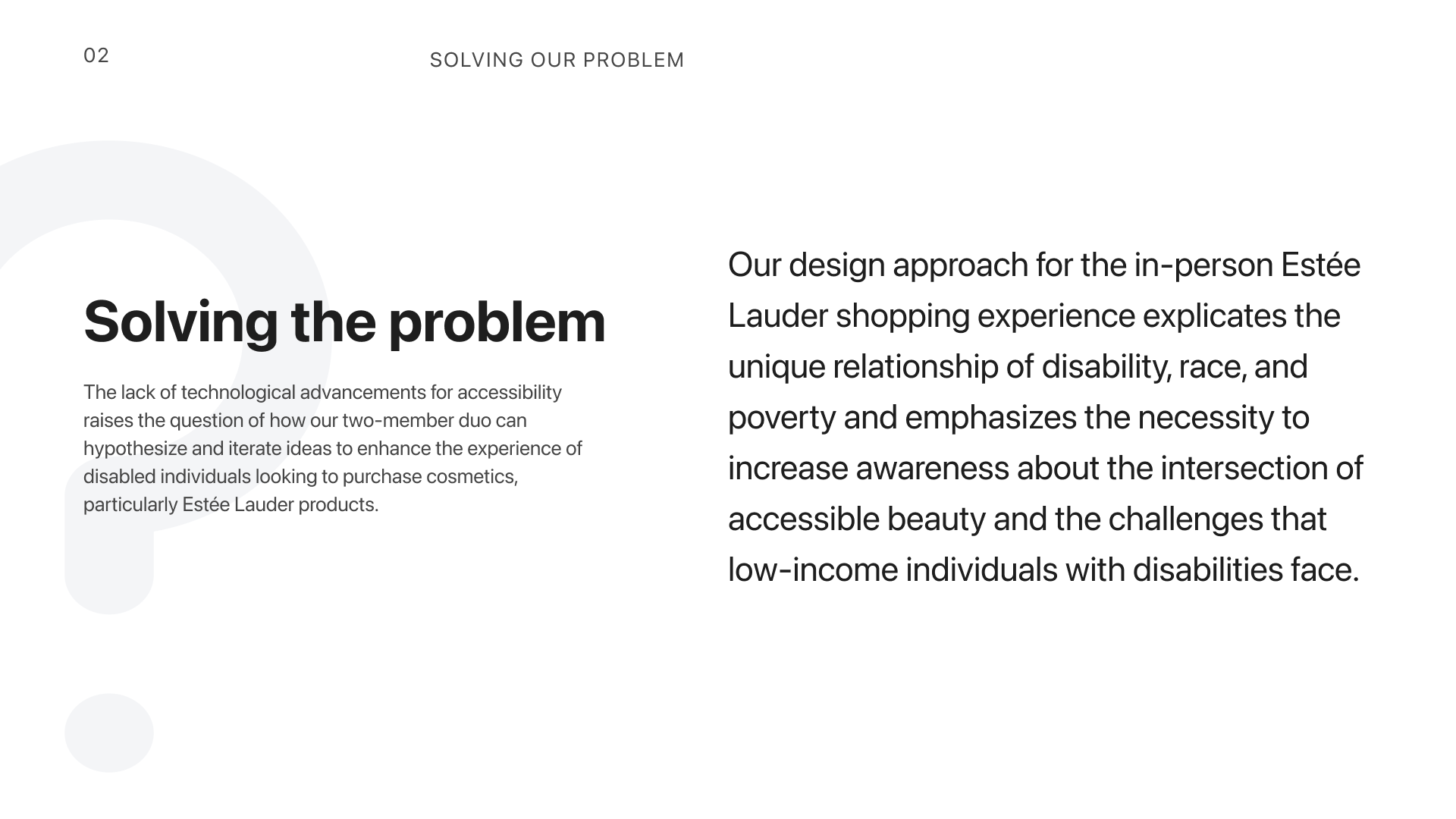
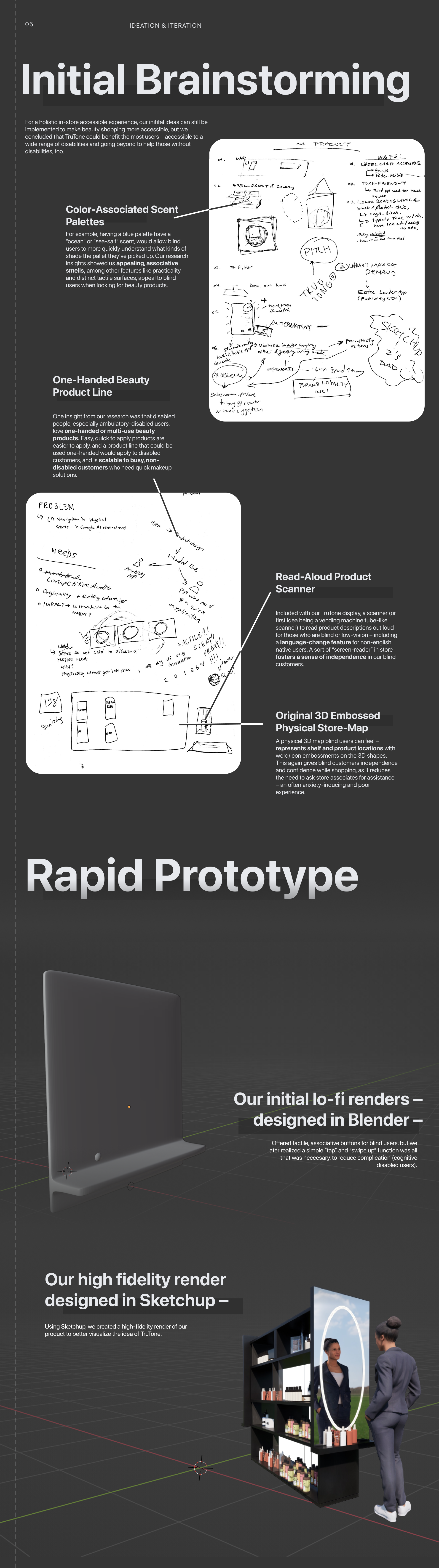
Originally, we wanted to revitalize the online experience. As aspiring UI/UX designers, we felt that this was an area that we were comfortable with. But as we researched more, we found that online shopping increases the rate of impulsivity buying, an issue that can put individuals who may be restrained by their expenses further into poverty. While not all disabled people are low-income, the poverty rate for adults with disabilities is more than twice the rate of adults with no disability (27% compared with 12%) (CDC Health Disparities & Inequalities Report). With the needs of disabled individuals in mind, we created a prototype of the TruTone mirror through both Blender (low-fidelity prototype) and Sketchup (high-fidelity prototype).
Challenges we ran into
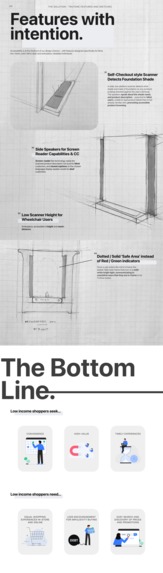
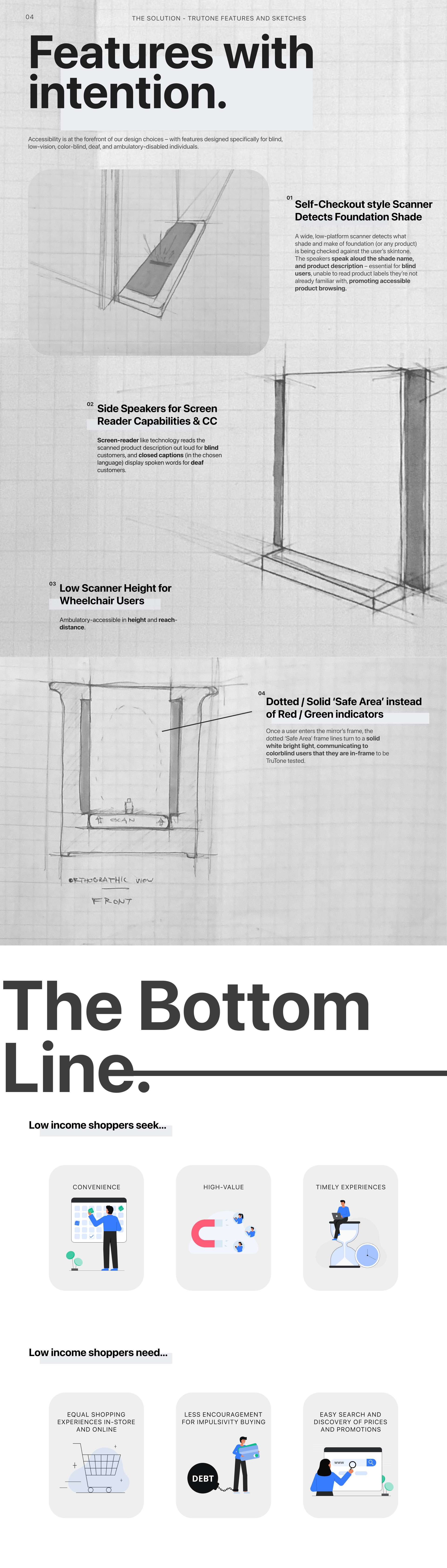
We ran into challenges when figuring out what works for everyone. We kept in mind that our product doesn’t exclusively focus on one disability, as we wanted to make it accessible for everyone, regardless of what disability they have. This then brought forth our features, a wide self-checkout scanner detects the selected foundation shade of the product that the customer has chosen, and our side speakers use screen-reader-like technology to read the scanned product description out loud for visually impaired customers. Additionally, we’ve added closed captions for deaf consumers. The entire device also has a low scanner height, perfect for wheelchair users. Lastly, we’ve added a dotted/solid “safe area” instead of red and green indicators that would be inaccessible to colorblind customers.
Accomplishments that we're proud of
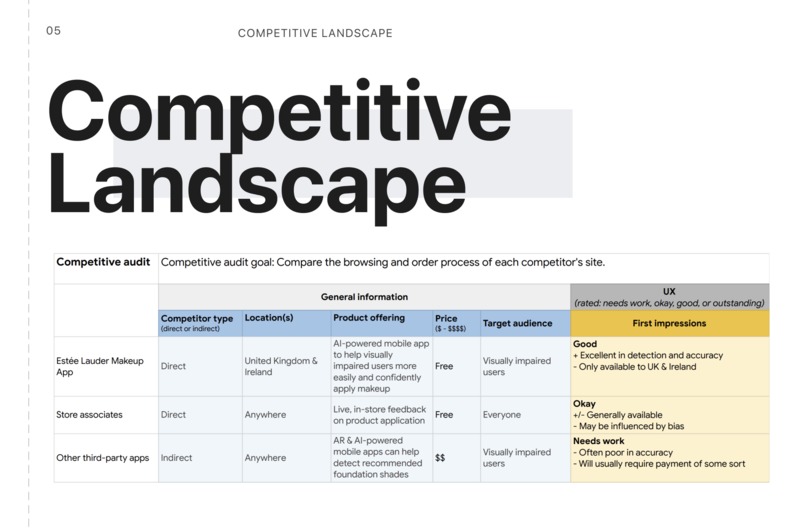
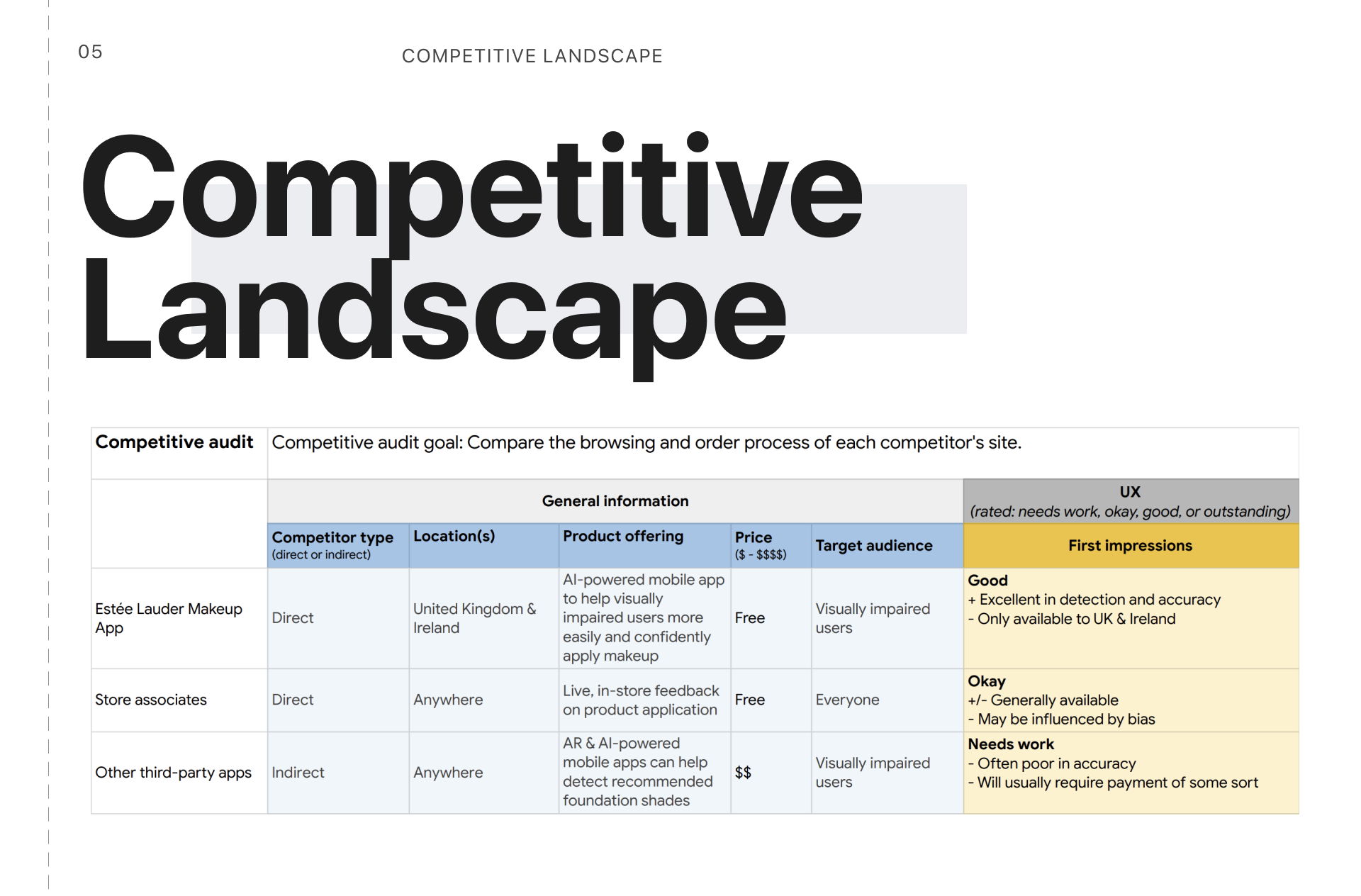
We’re extremely proud of how viable this solution is. We compared other products and services such as the actual Estée Lauder app catered towards visually-impaired users, other apps that use deep-learning AI and recommendation engines to make decision flows, and even in-store staff!
What we learned
We feel especially moved by the stories of disabled individuals over our research period. Beauty is oftentimes referred to as an “emotional purchase” because it’s usually fueled by the an individual’s desire to feel a certain way: confident, beautiful or healthy. One thing we remembered throughout this entire process was that disabilities result from interactions and barriers, and that disabilities aren’t inherent to the person; a disability is a result of the environment not being adaptable to the person. Our product has the ability to take steps toward making the beauty world more inclusive and accessible.
What's next for TruTone
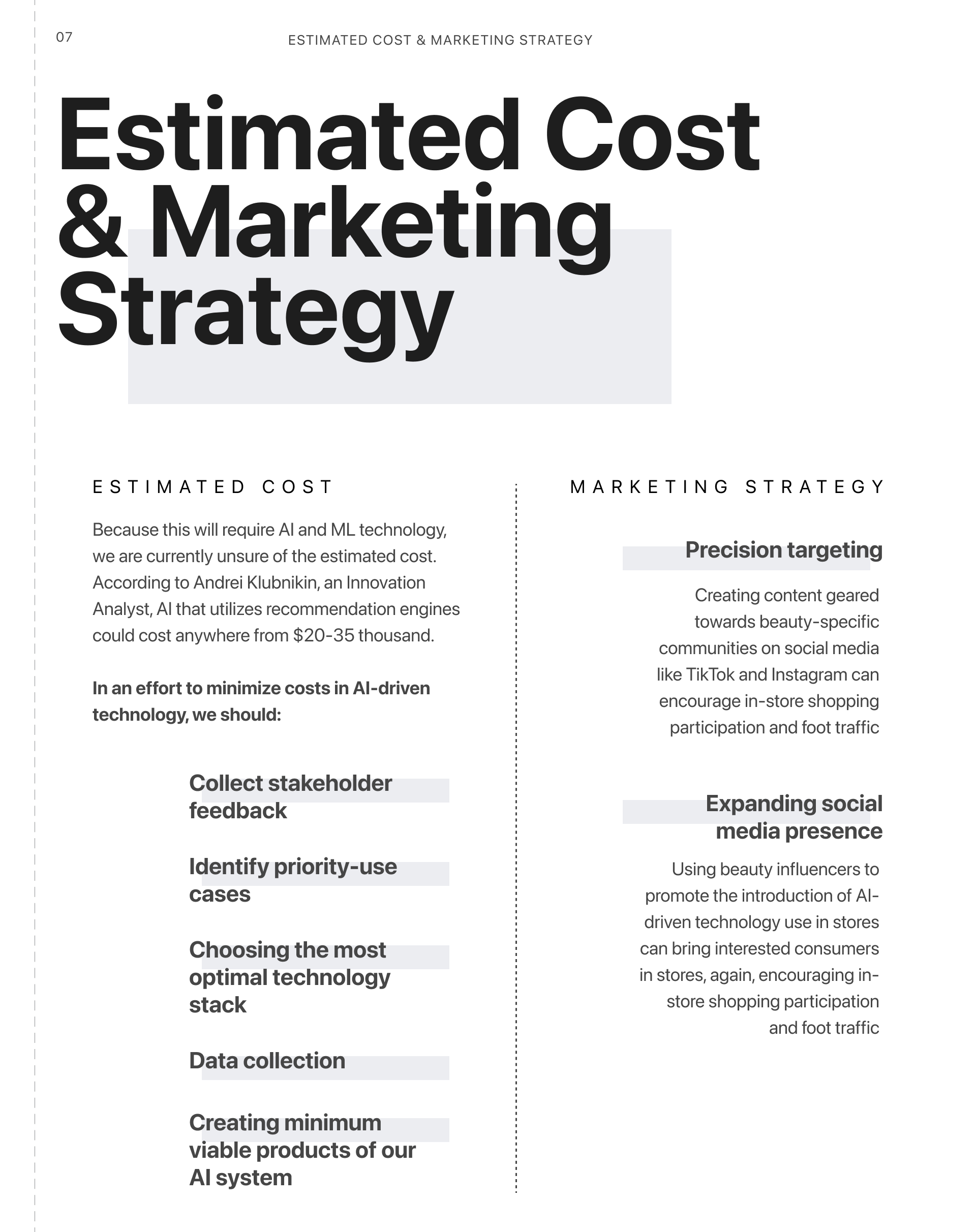
We would love to use AI, ML, and APIs with existing frameworks to create TruTone. We would also love to hear from ELC employees who may have a disability and ask what they think of our product!
Built With
- blender
- figma
- sketchup

Log in or sign up for Devpost to join the conversation.