-
-
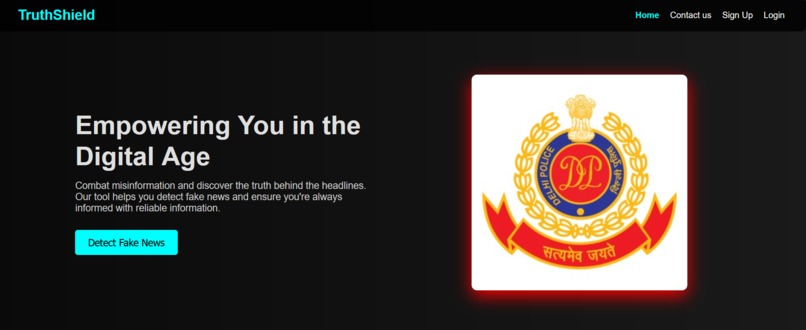
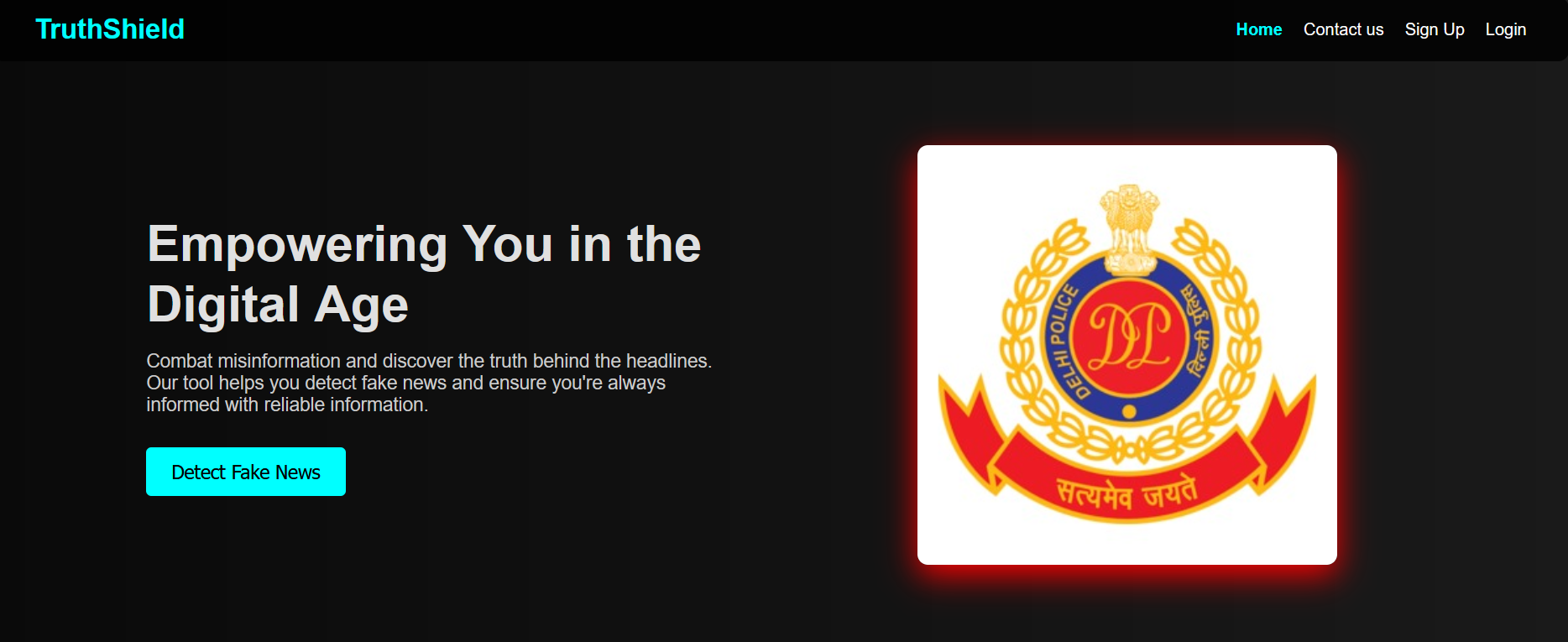
The Website
-

-
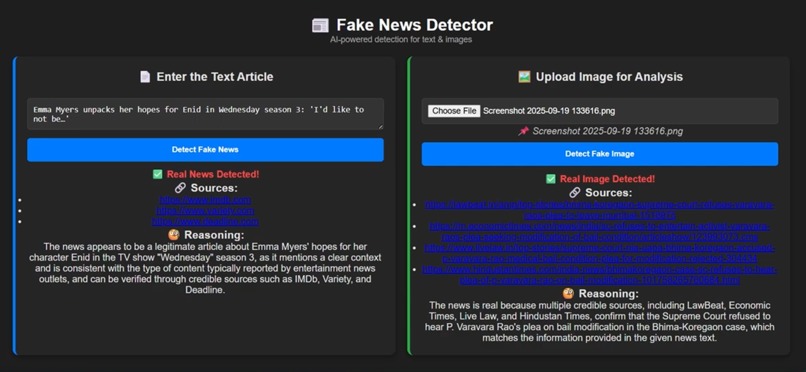
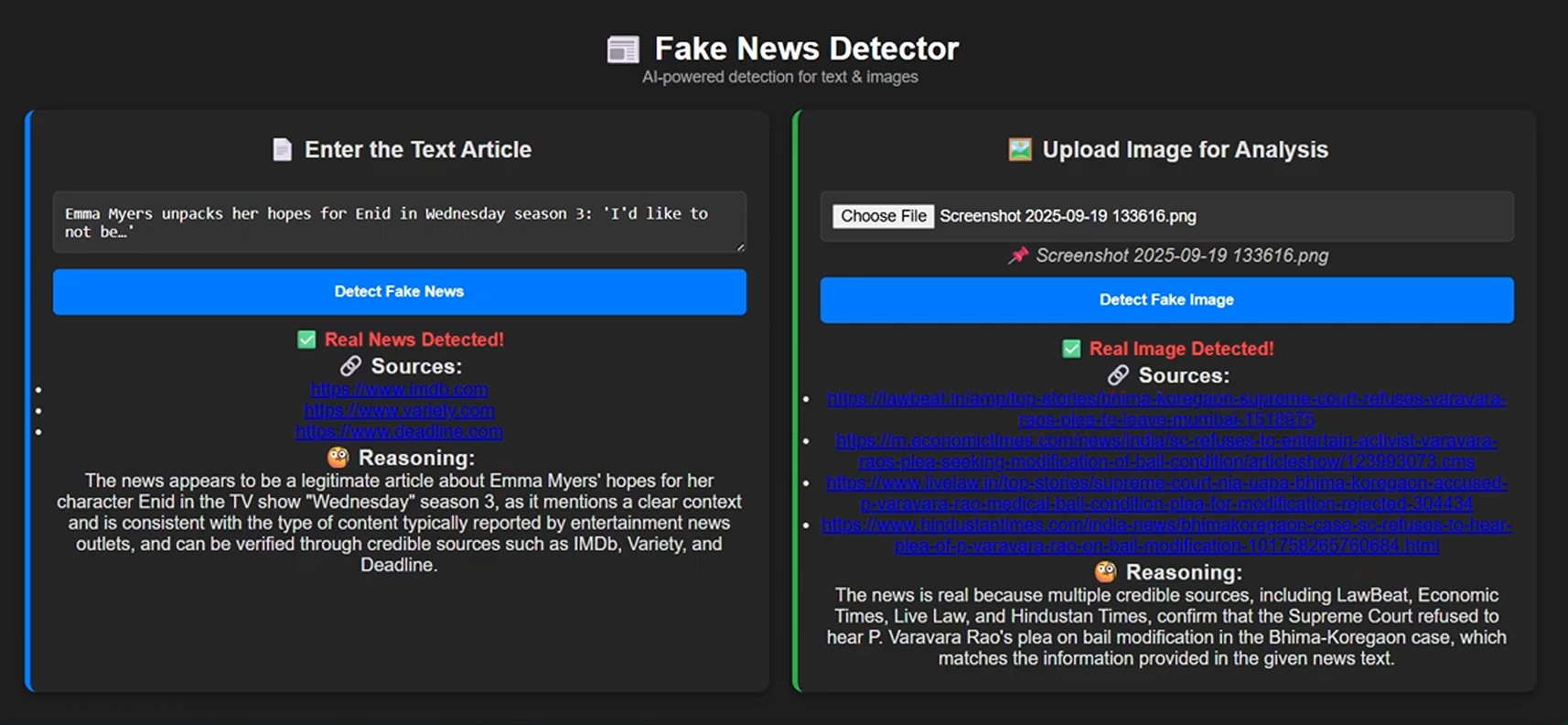
Fake News Detection on Website
-
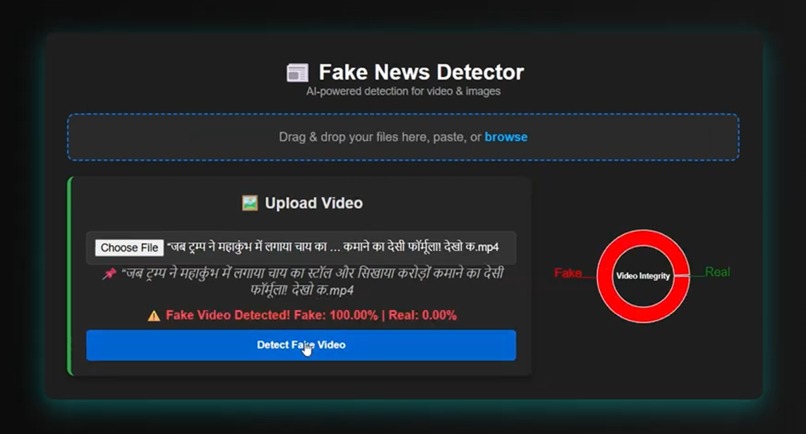
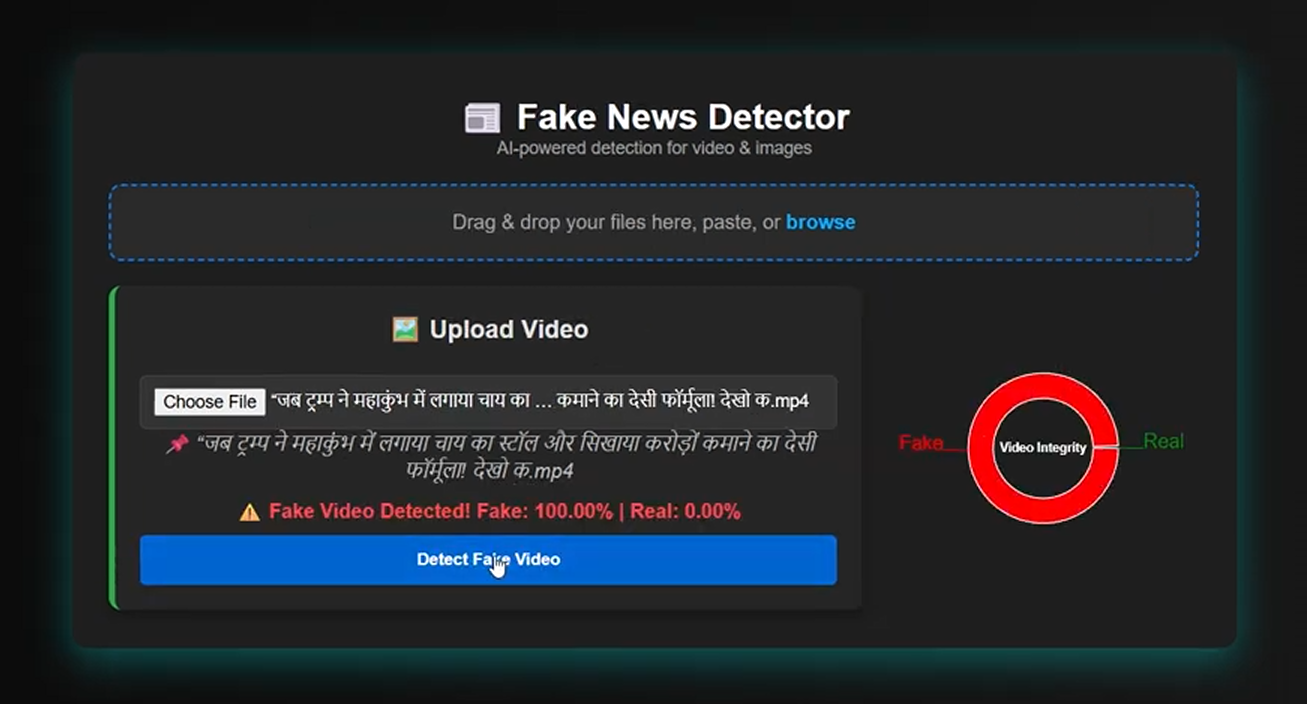
GenAI & Deepfake Video Detection on Website
-
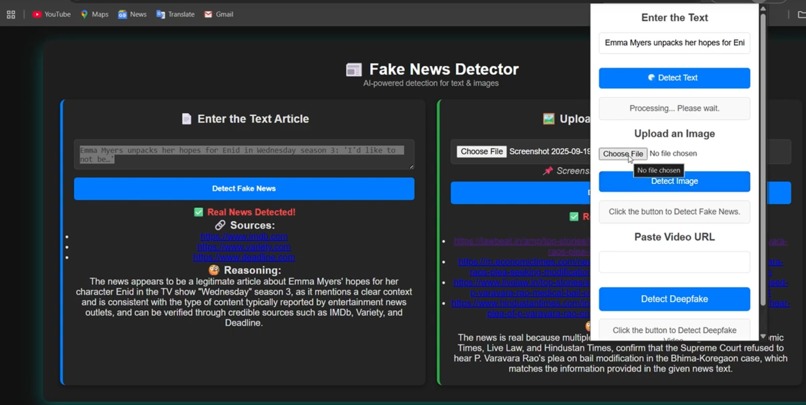
Fake News Detection on Extension
-
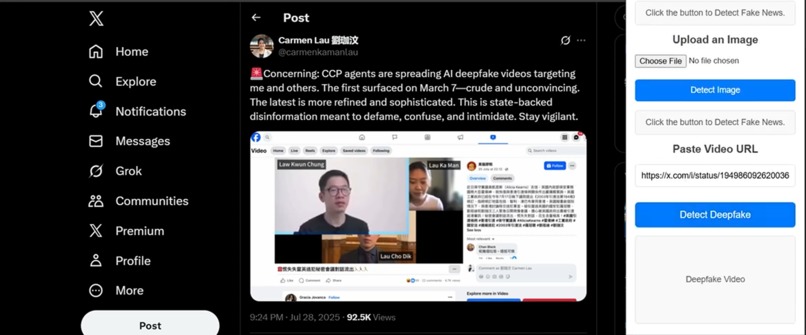
Deepfake Video Detection on Extension

Inspiration
Our main inspiration to develop this project was to provide real information regarding fake deepfake videos and fake news against Indians on social medias to promote racism against Indians.
What it does
TruthShield is a two-part platform designed to help users verify the authenticity of online content quickly and accurately.
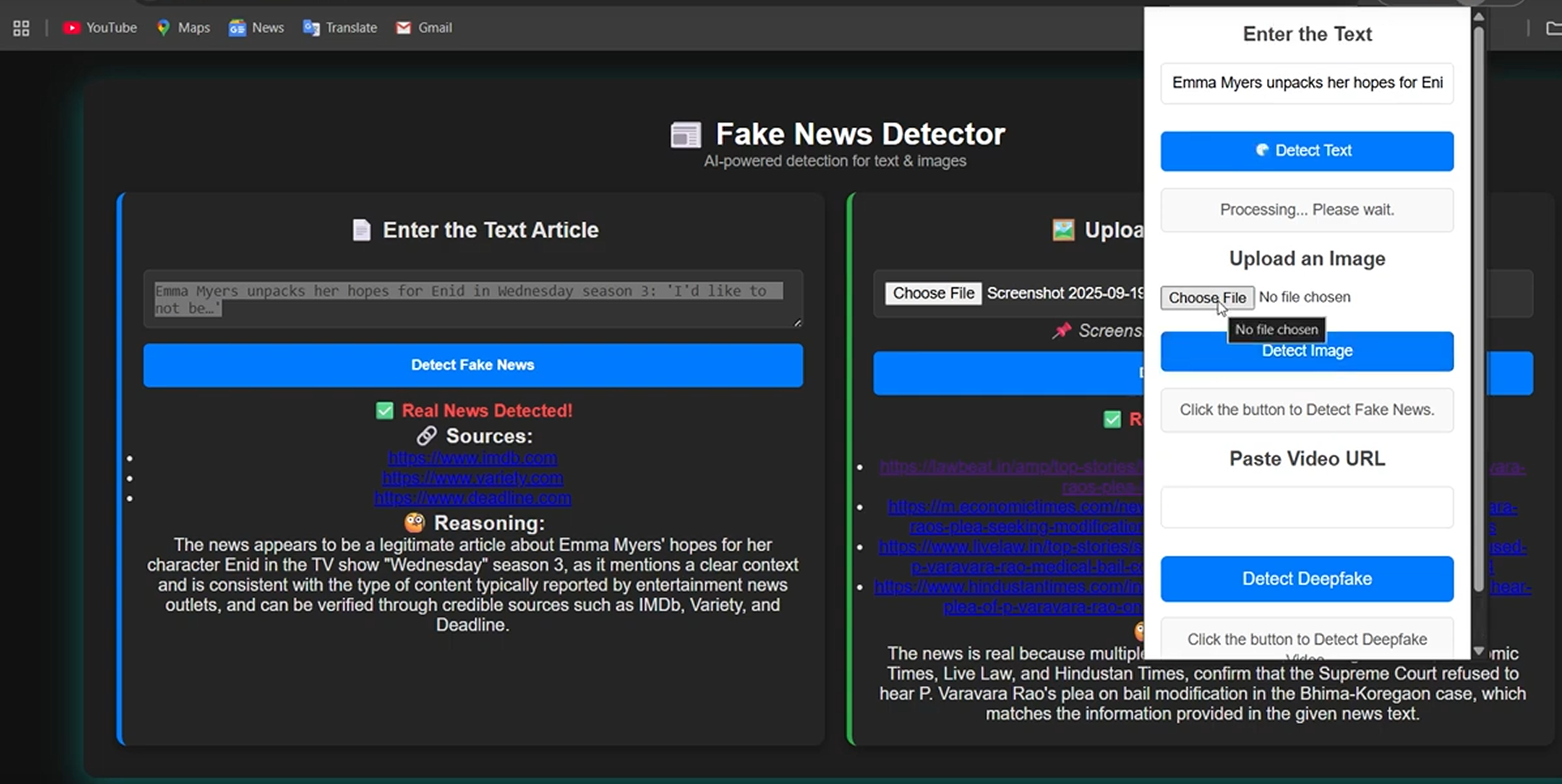
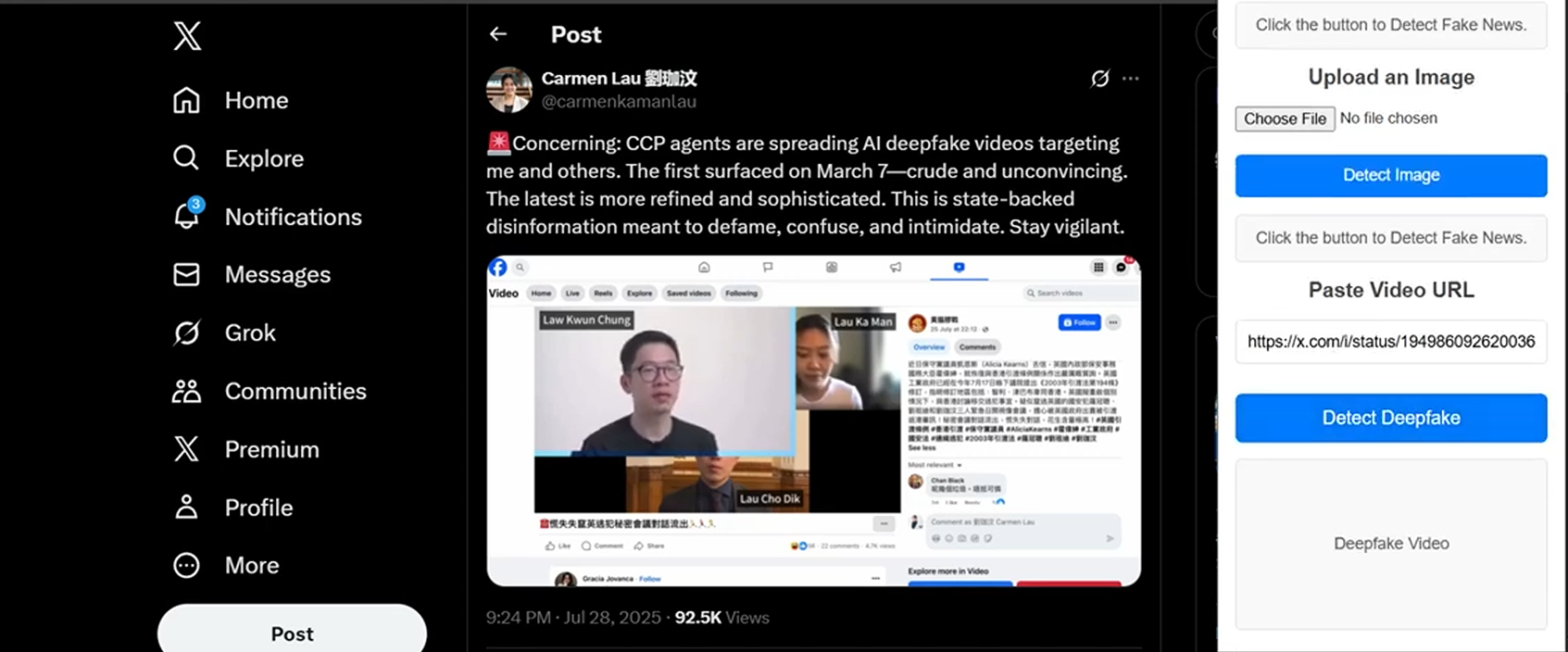
Website: On the TruthShield website, users can do two main things. Either Verify News Articles: Upload a text-based article or a screenshot of one, and TruthShield will analyze it to determine whether the news is true or fake. It also provides verified sources and clear reasoning behind its conclusion or Detect Deepfakes and AI Manipulation: Upload a video to check whether it contains deepfake or generative AI manipulation. Results are displayed visually, including a pie chart showing the proportion of real vs. manipulated content.
Browser Extension (TruthShield’s USP): TruthShield’s main unique feature lies in its browser extension. Since most users don’t have time to visit a website and upload files manually, the extension provides instant verification within the user’s browsing experience. You can simply copy and paste a news article or upload a screenshot directly through the extension to check its authenticity.For video verification, just paste the video link, and the extension will analyze it for deepfake or generative AI manipulation, presenting the results instantly.
How we built it
We built TruthShield using a combination of custom data pipelines, machine learning models, and real-time information sources. We developed a custom web scraper that gathers verified information from trusted news outlets such as Fact-Checker, Hindustan Times, and Times of India (the scraper code is not hosted on GitHub). To enable real-time information verification, we integrated the Grok API, allowing TruthShield to cross-check claims dynamically. For deepfake detection, we trained a ViT Base model from scratch using a custom dataset combining Indian, European, and American videos that include both deepfake and authentic samples. Finally, we integrated all these capabilities into a Chrome Web Extension—TruthShield’s main USP—enabling users to verify articles, screenshots, and videos directly from their browser.
Challenges we ran into
Web Scraping daily was a cumbersome task so we had to link Grok API for refinement and dynamic cross-checking of the web scraping. Another challenge was training the CNN Model since our GPUs were quite lacking so we had to settle for a lesser refined ViT Base Model and train it from scratch.
Accomplishments that we're proud of
The successful completion of our web extension USP is definitely the accomplishment we are proud of.
What we learned
Throughout the development of TruthShield, we gained valuable insights into the challenges of misinformation detection and deepfake analysis. We learned how difficult it can be to gather reliable datasets, especially when combining regional and international sources to train models that generalize well across cultures and contexts. Working with the Grok API taught us the importance of integrating real-time data to ensure that fact-checking systems remain up to date. Training the ViT Base model from scratch deepened our understanding of transformer-based architectures and how they can be fine-tuned for visual authenticity detection. We also learned how to optimize performance and scalability when deploying machine learning models through a browser extension, ensuring that users receive fast and accurate results without compromising user experience or privacy.
What's next for TruthShield
To deploy the Deepfake and GenAI detection model to AWS in order for it to give faster responses and to add Fake Audio Detection on calls too.


Log in or sign up for Devpost to join the conversation.