-
-
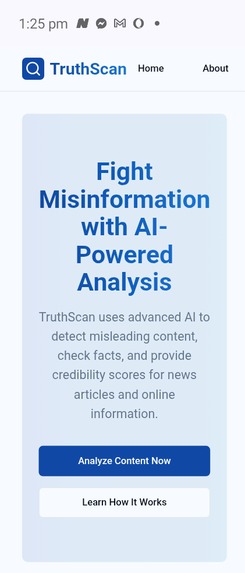
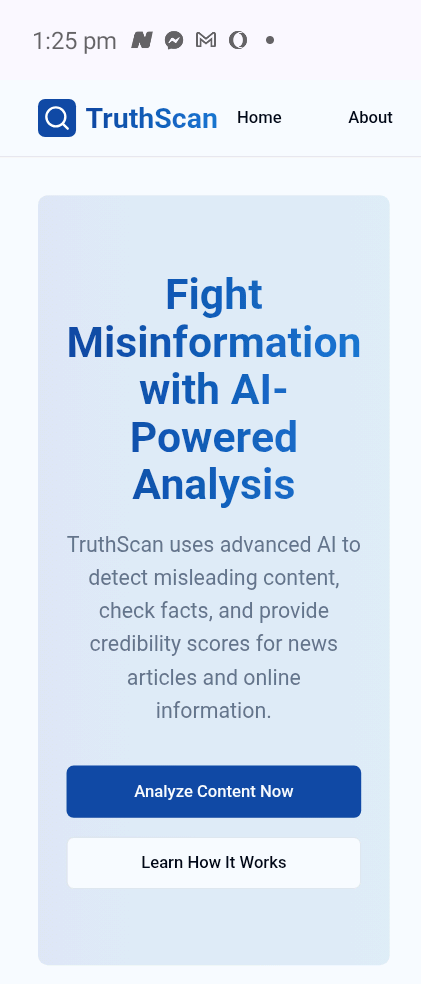
Home section view
-

Home section
-
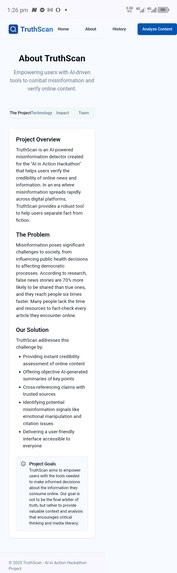
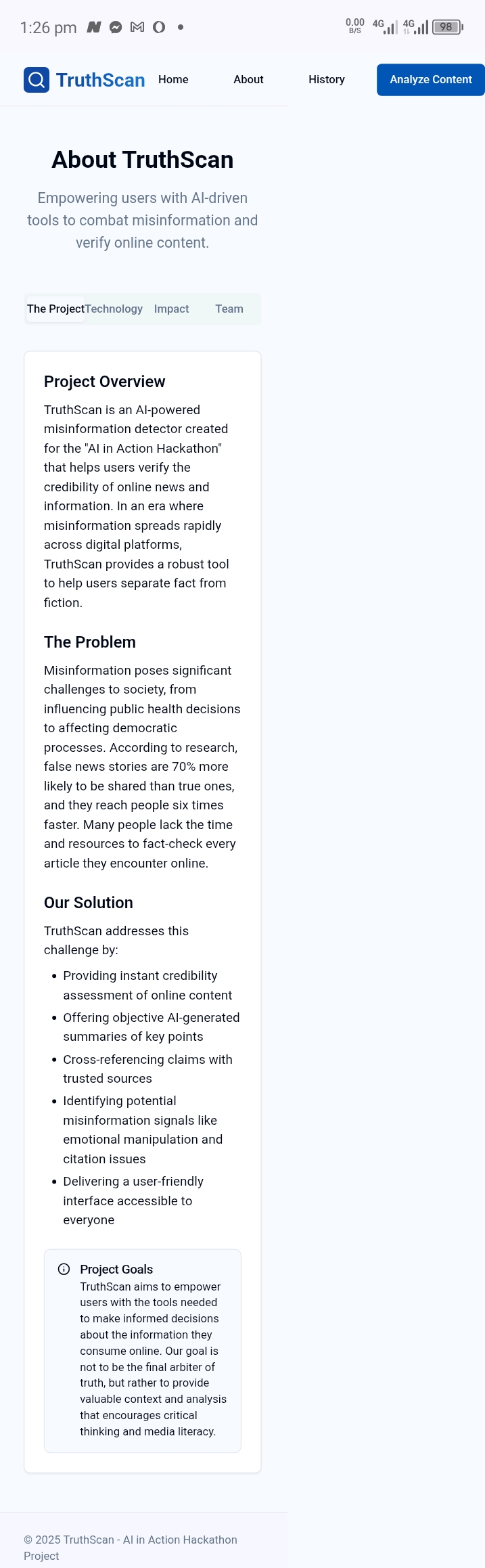
About section
-
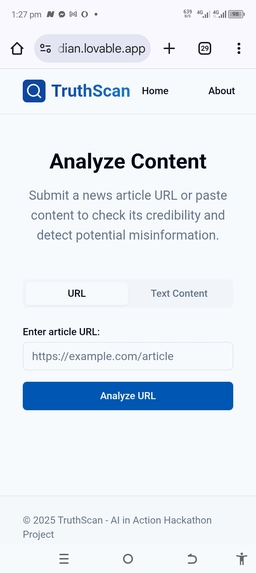
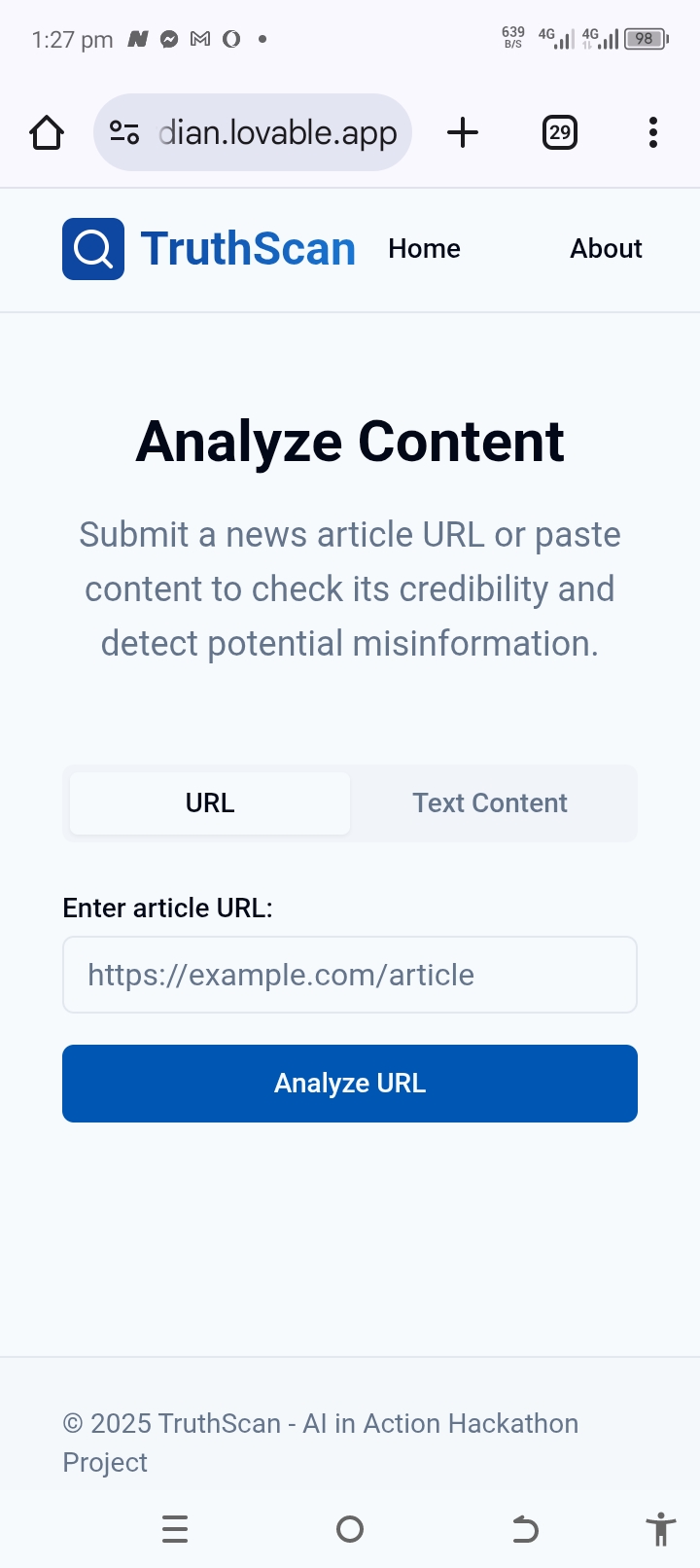
Analyze content section
-
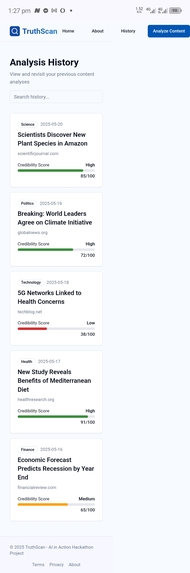
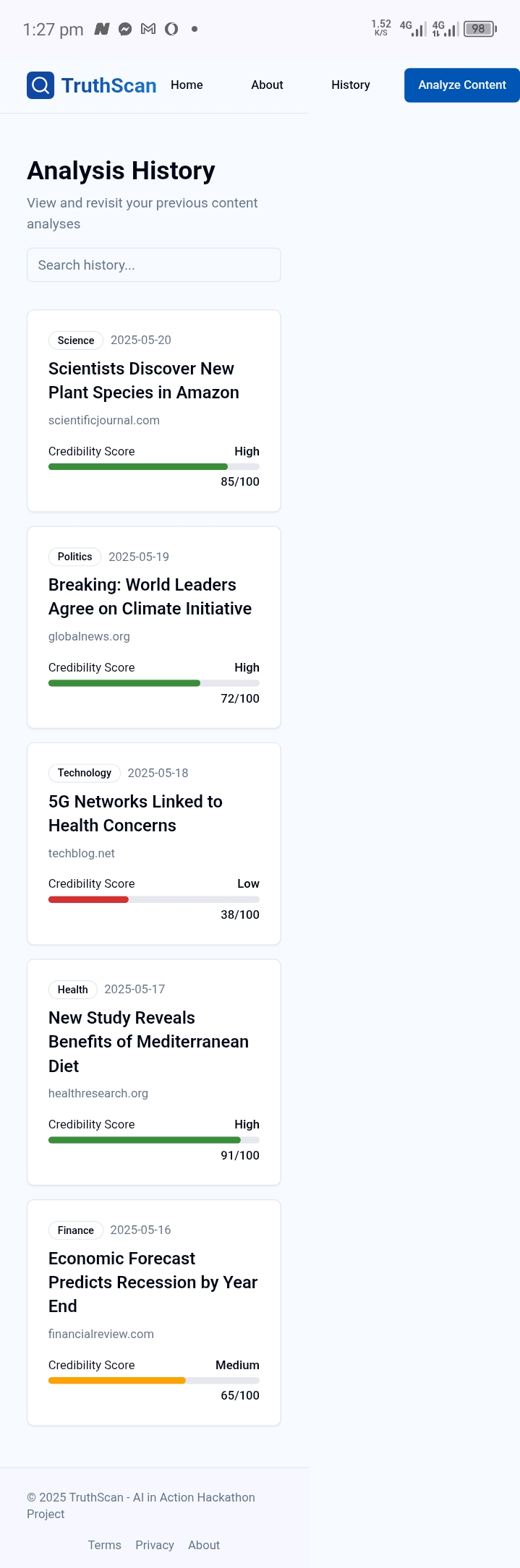
History section

Inspiration
The rise of AI-generated content and misinformation across the internet inspired us to build a tool that empowers users to verify the credibility of what they read. With TruthScan, we wanted to address the growing challenge of digital deception by making fact-checking accessible, fast, and AI-powered.
What it does
TruthScan is an AI-powered misinformation detection web app. Users can input news headlines, article URLs, or custom text, and the app provides a credibility analysis using natural language processing. It helps identify potential bias or misinformation, enabling users to make more informed decisions.
How we built it
TruthScan was built using Google Cloud and MongoDB, in alignment with the hackathon challenge tracks. We used Google Cloud’s natural language APIs and hosting infrastructure to power the core AI functionality, allowing us to process and analyze user-submitted content with scalable performance.
For the MongoDB track, we selected a publicly available dataset of news articles and fact-checking sources. We used MongoDB Atlas and its vector search capabilities to store and semantically index the dataset. This allowed our app to compare user input against verified sources and detect misinformation patterns in real time.
On the front end, we used Lovable to rapidly build and deploy the interface, leveraging its full-stack capabilities. We connected our UI to Google Cloud Functions for AI processing and to MongoDB Atlas for dynamic search and data retrieval.
The entire application stack was deployed in the cloud, ensuring scalability, reliability, and compliance with the hackathon’s technical requirements.
Challenges we ran into
- Balancing speed and accuracy when assessing news content.
- Working within the constraints of a no-code platform while customizing AI behavior.
- Integrating external data sources to enhance credibility scoring in a short timeframe.
Accomplishments that we're proud of
- Successfully launching a working product during the hackathon window.
- Building an accessible tool that could genuinely help users navigate misinformation online.
- Learning to leverage Lovable, Google Cloud, and MongoDB together for rapid and effective development.
What we learned
- How to integrate natural language models into cloud-native applications using Google Cloud.
- Best practices for deploying applications that handle dynamic, user-generated content.
- The power of MongoDB Atlas’s vector search for semantic data matching and misinformation detection.
- The importance of clear design and UX in building user trust around AI-generated outputs.
What's next for TruthScan
- Expanding to support image and video misinformation detection.
- Introducing a browser extension for real-time fact-checking on the web.
- Incorporating deeper analytics powered by MongoDB vector search and additional datasets.
- Enabling community feedback and crowdsourced credibility ratings to strengthen trust signals.
Built With
- github
- googlecloudfunctions
- googlecloudnaturallanguageapi
- googlecloudplatform
- googlecloudstorage
- javascript
- lovable.dev
- mongodbatlas
- mongodbatlasvectorsearch
- sql
- supabase
- vercel


Log in or sign up for Devpost to join the conversation.