-
-
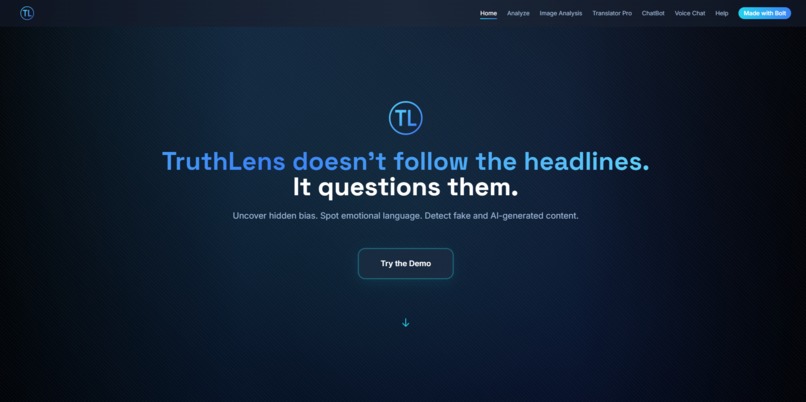
Bold landing page introducing TruthLens as a tool to question headlines, not just read them.
-
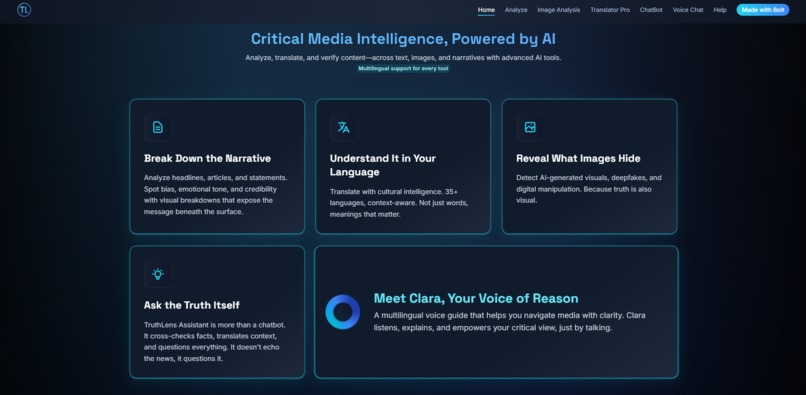
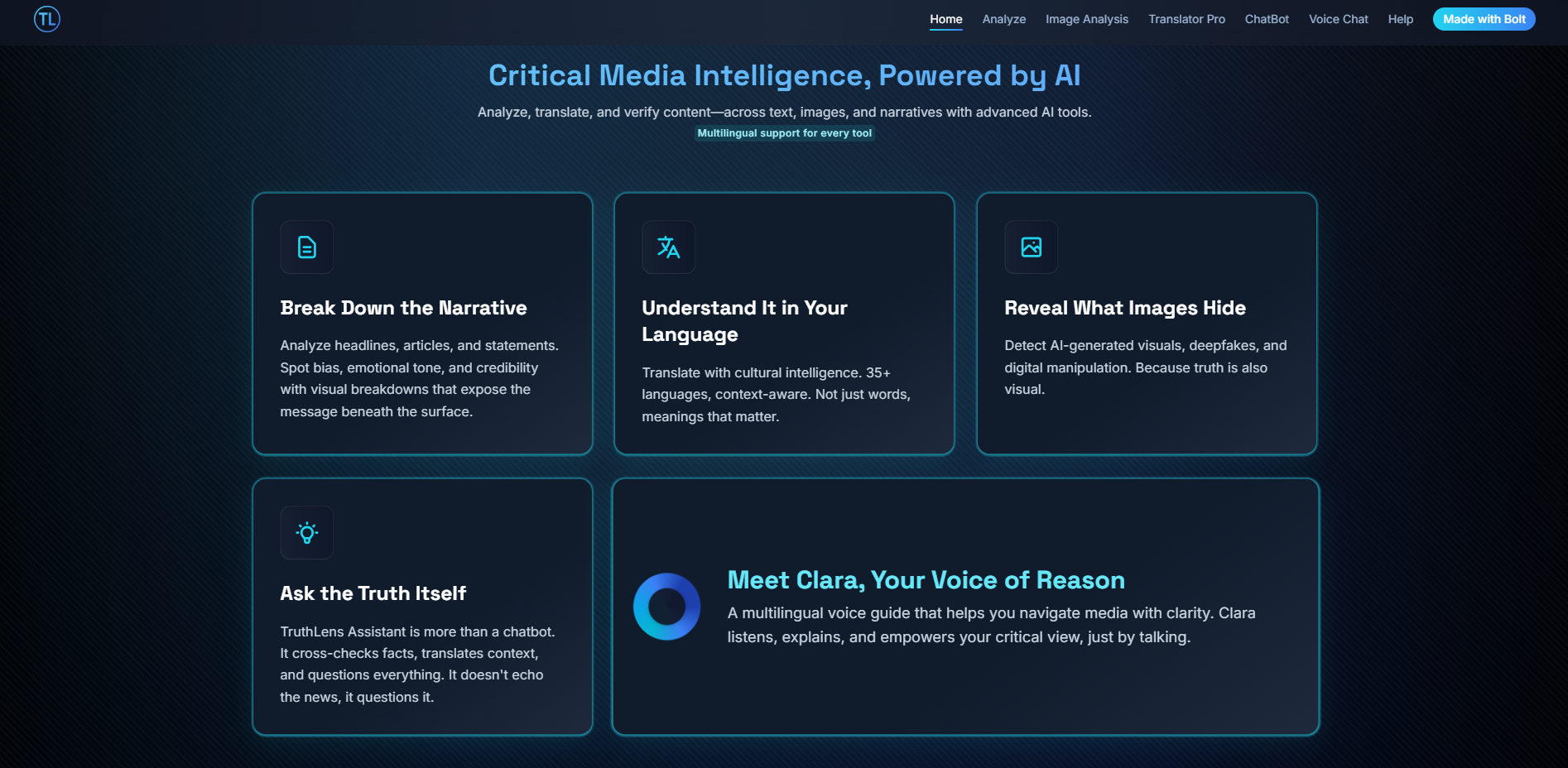
Overview of key tools: bias detection, AI image forensics, multilingual assistant, and more.
-

Includes official Bolt badge and public deployment proof—compliant with all hackathon rules.
-
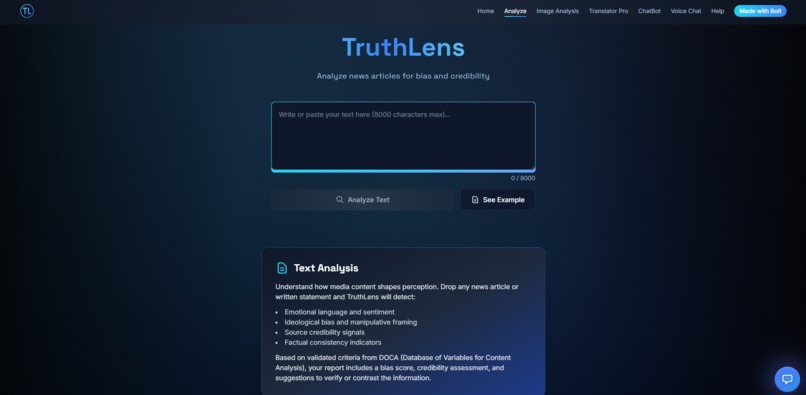
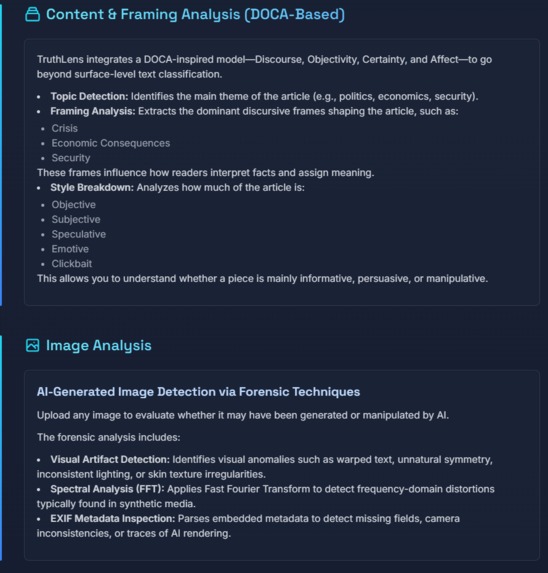
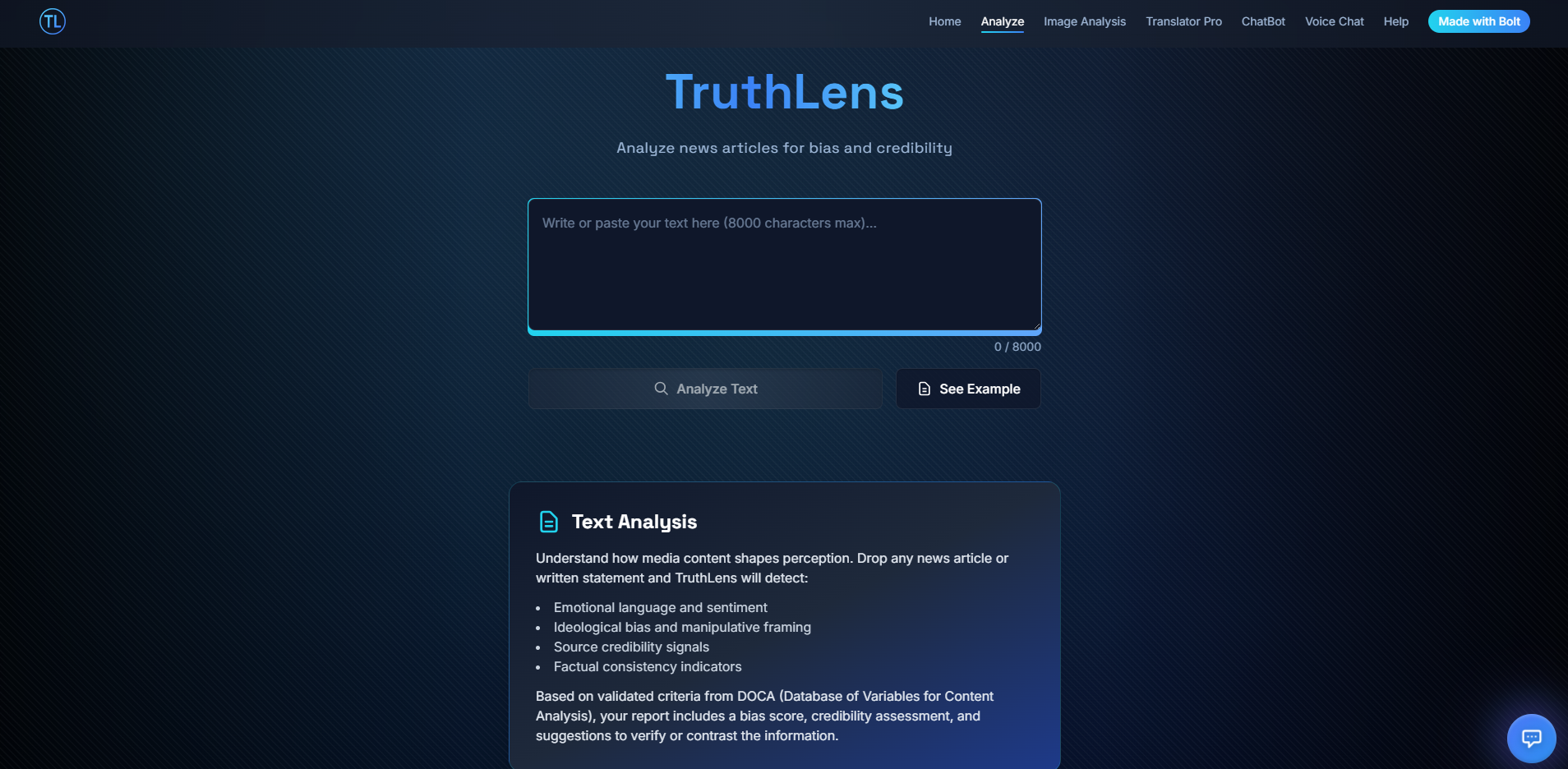
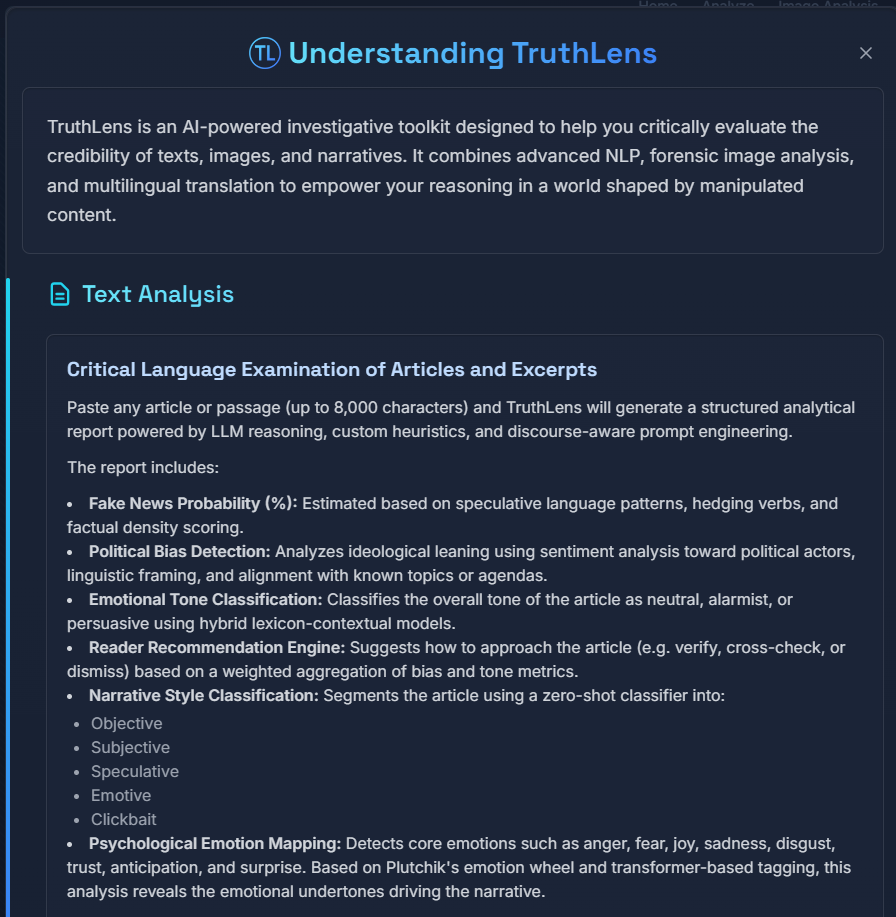
Users paste articles to get AI-powered analysis of bias, tone, and misinformation risk.
-
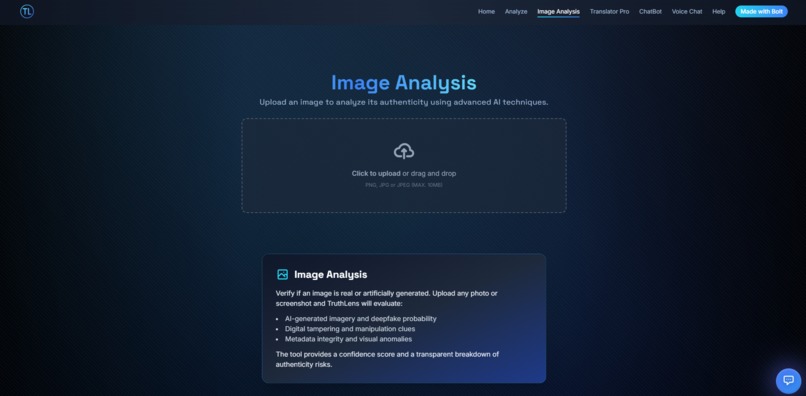
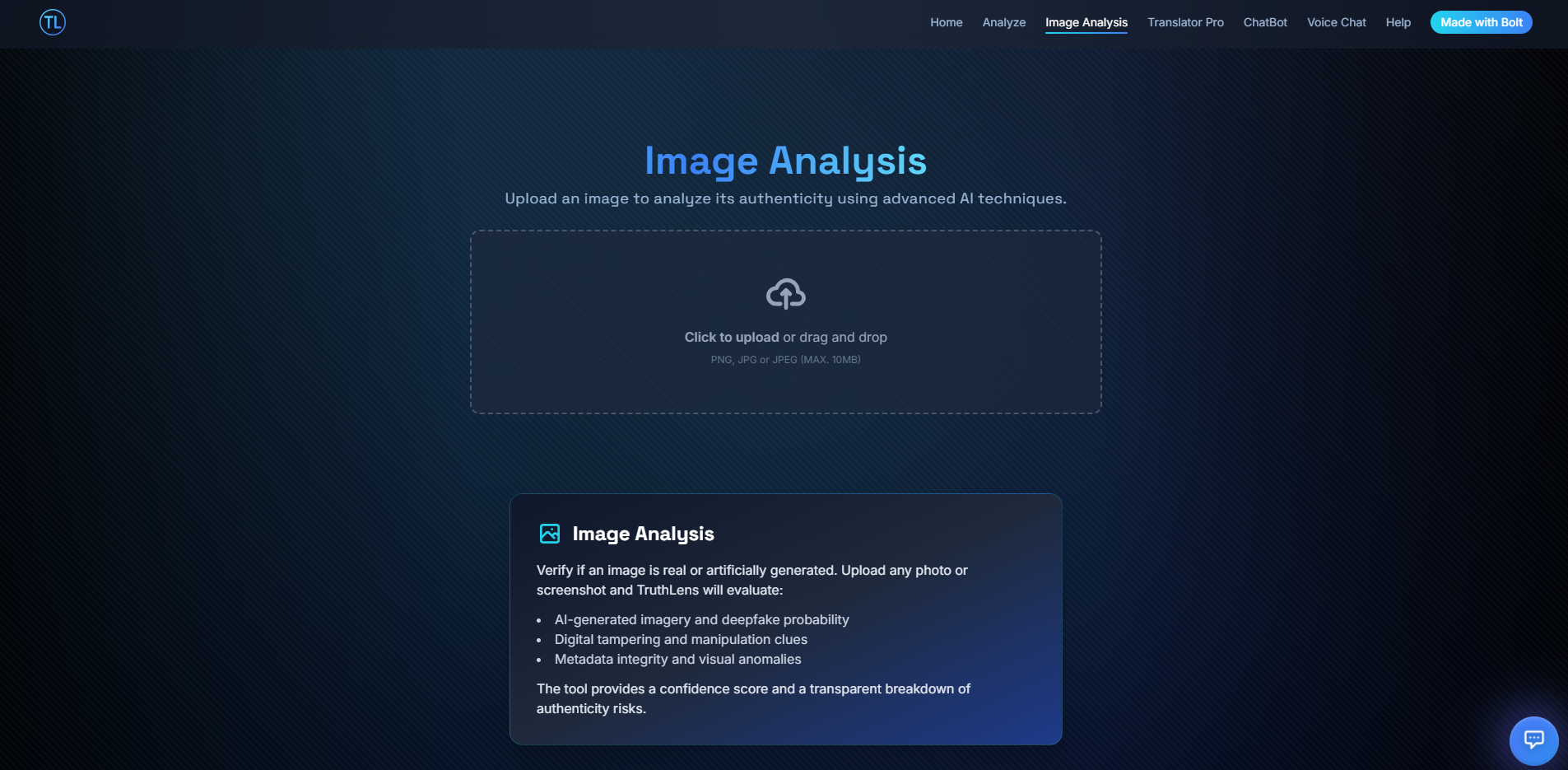
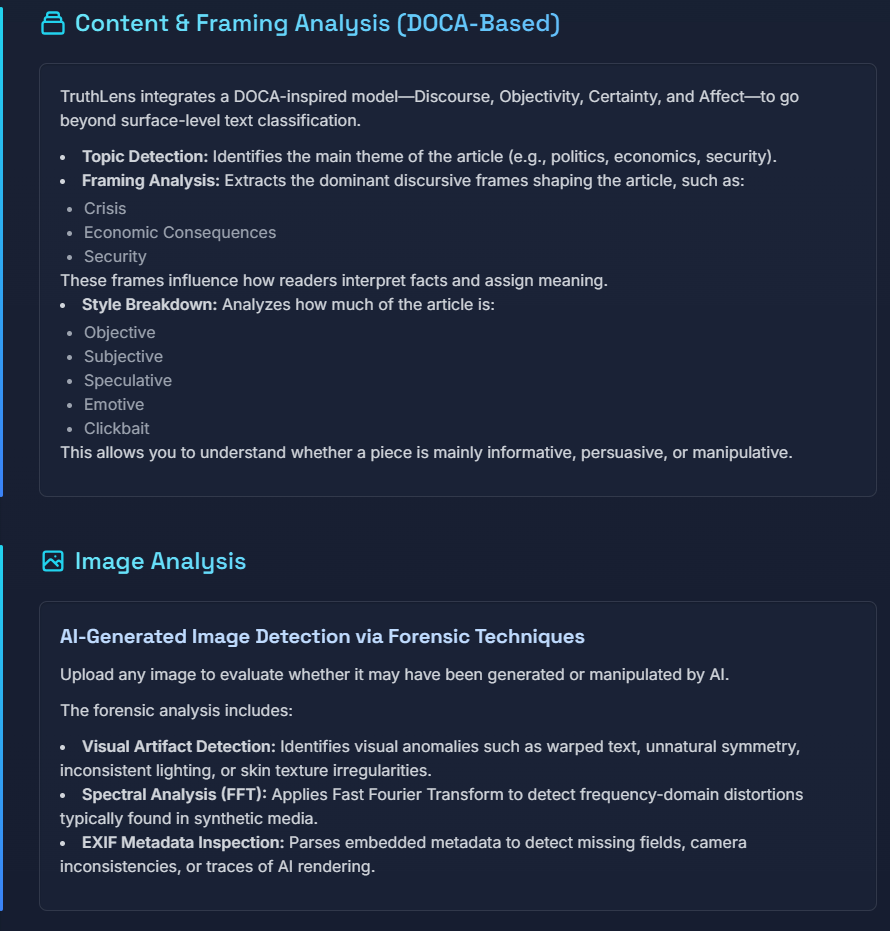
Upload any image to detect signs of manipulation or AI generation using FFT + GPT.
-
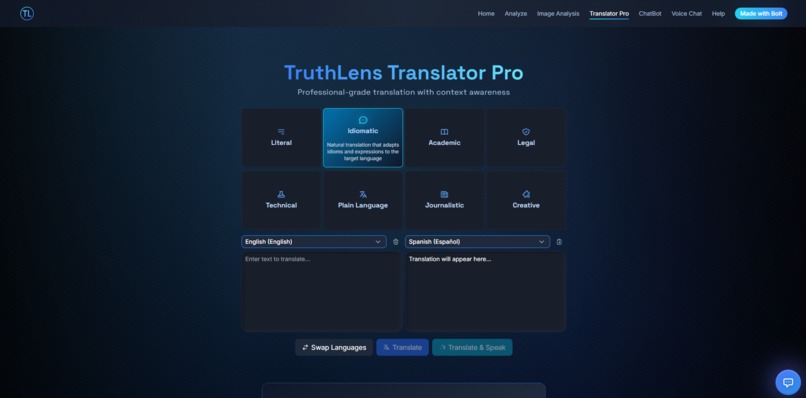
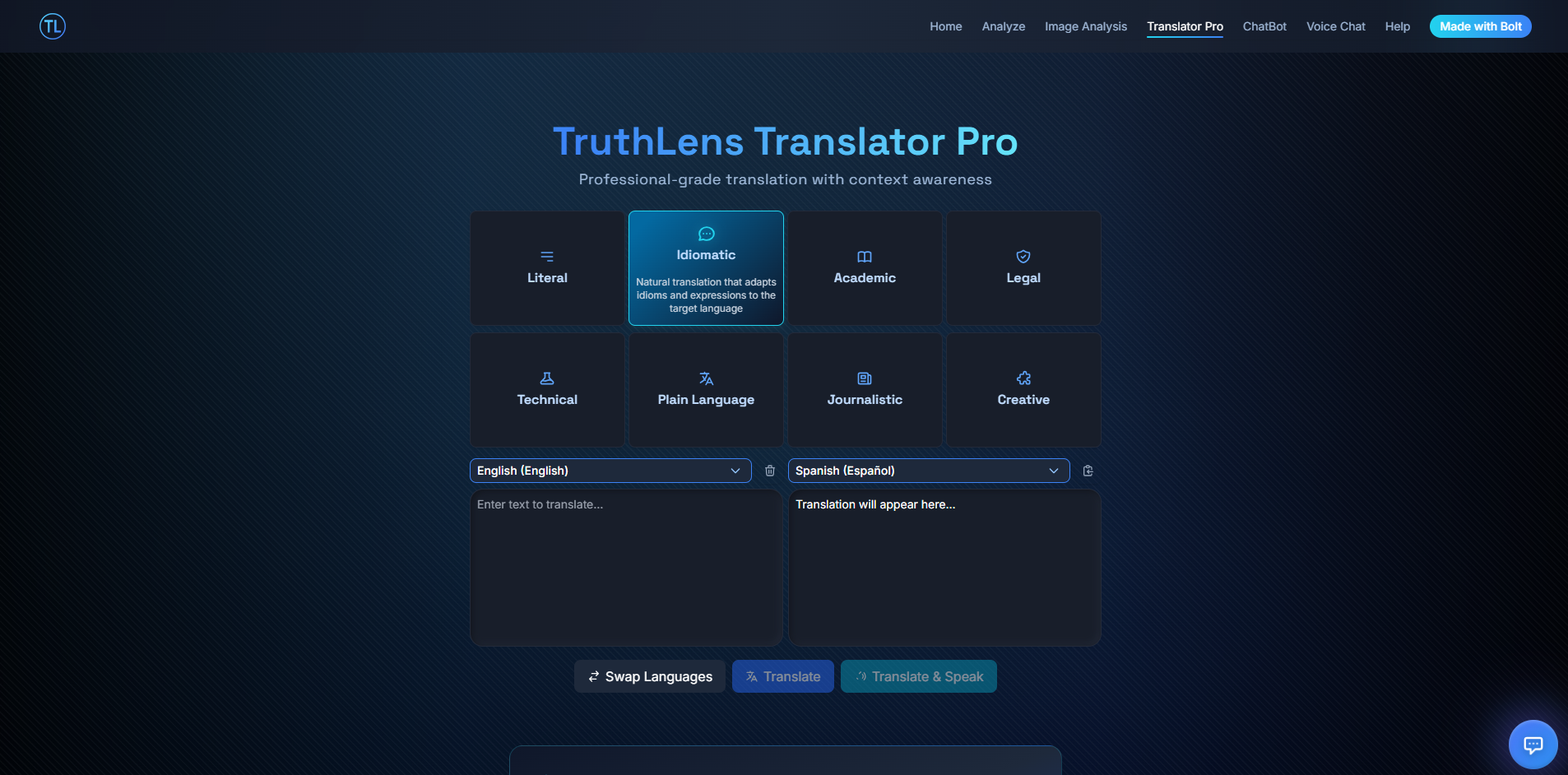
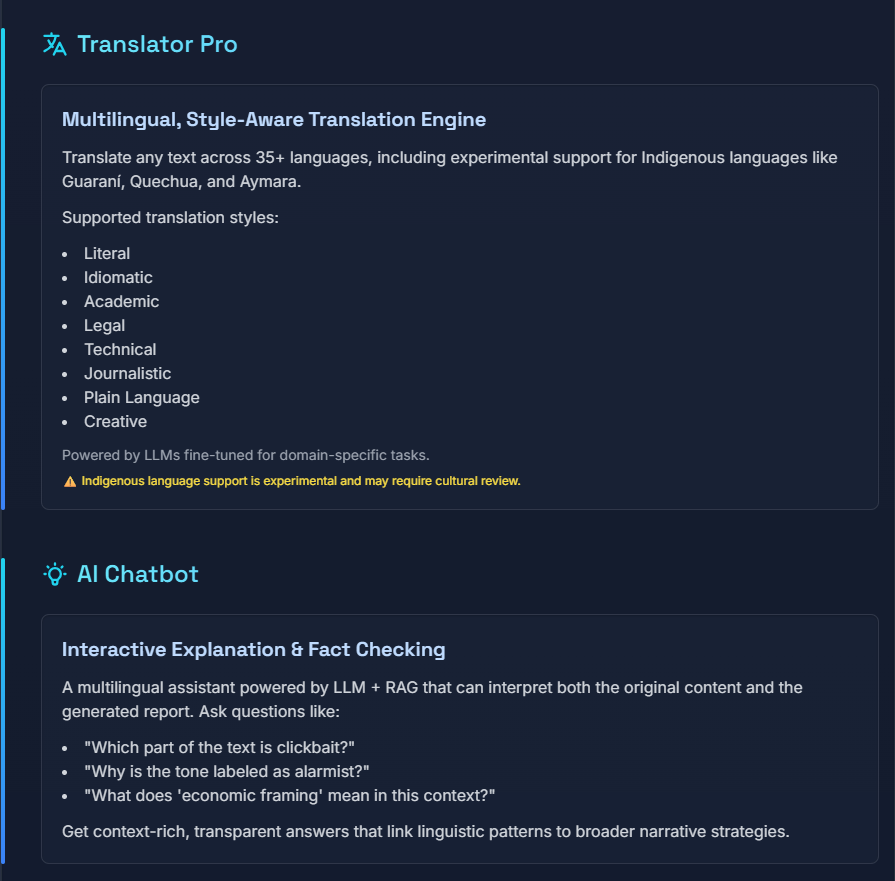
Translator view
-
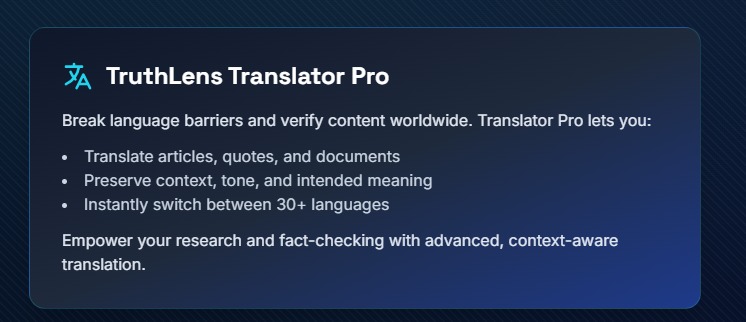
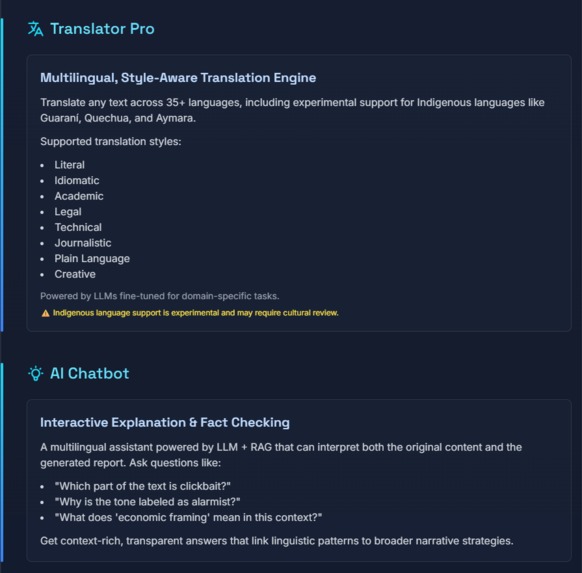
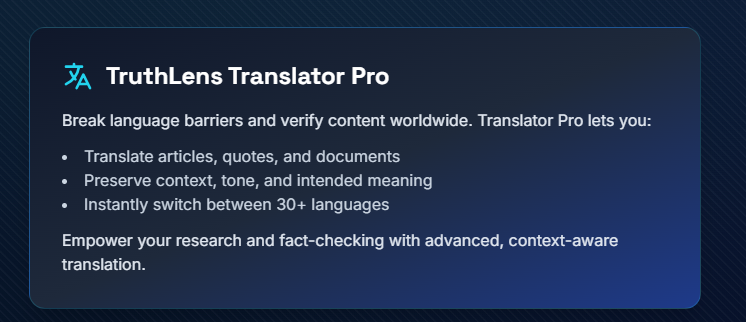
translator pro info
-
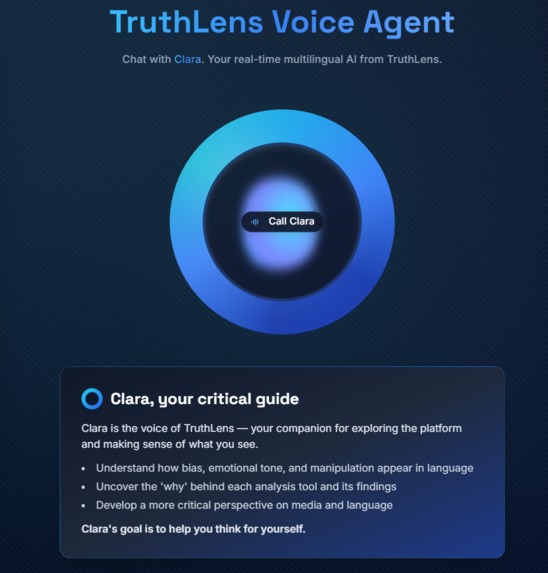
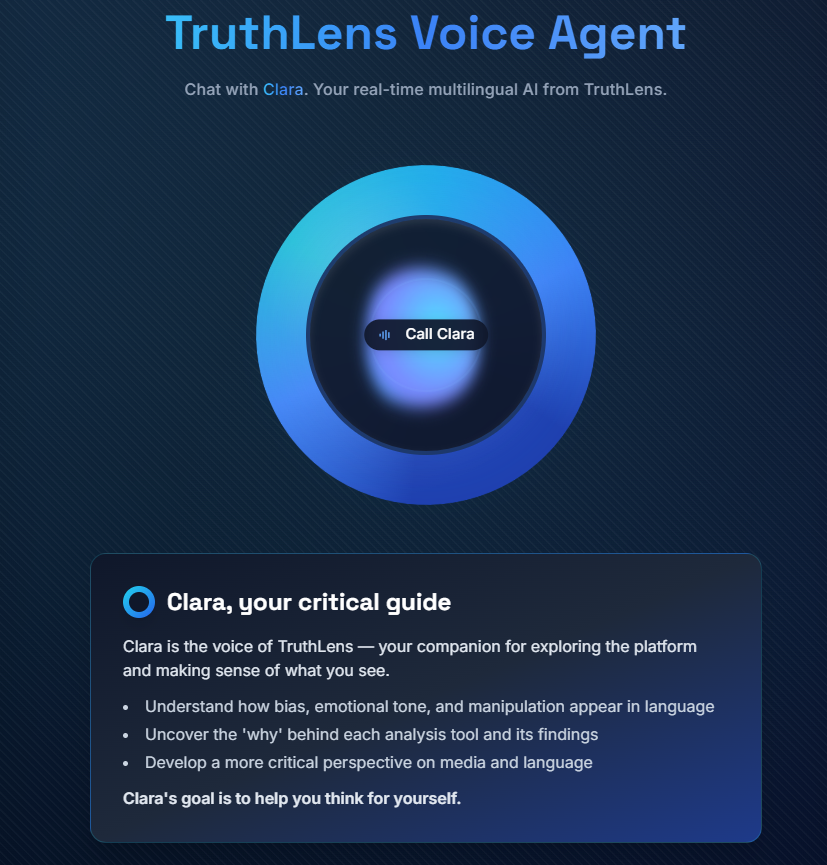
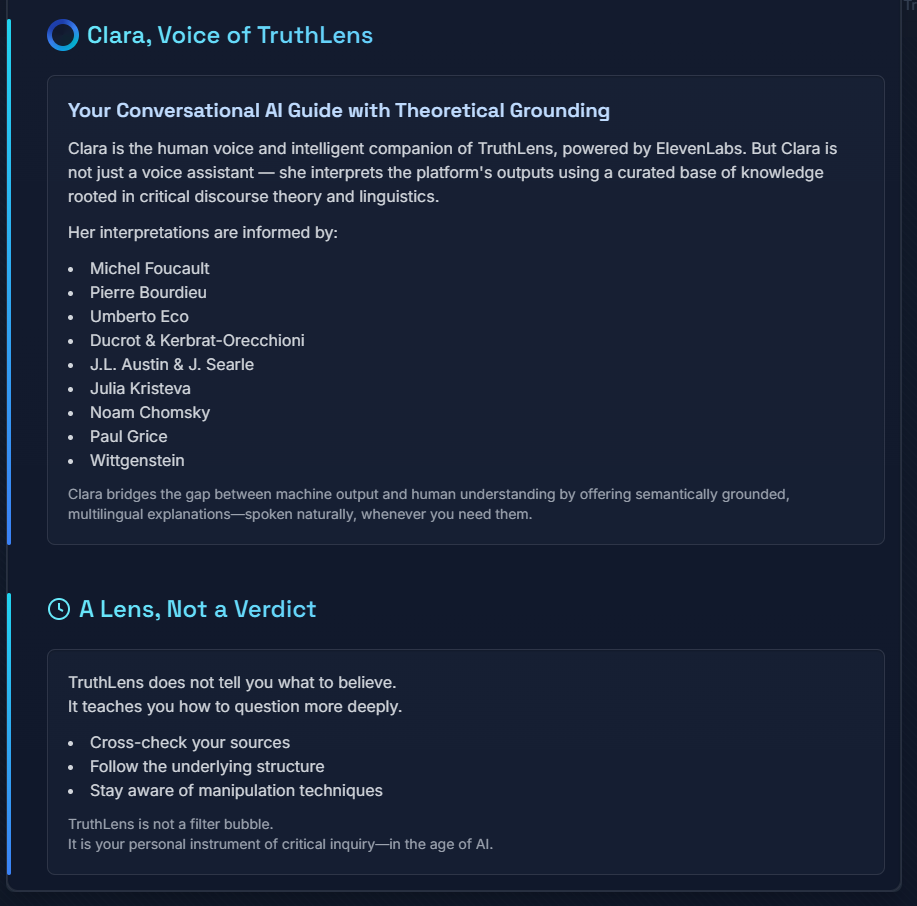
Clara voice AI interface: multilingual critical guide
-
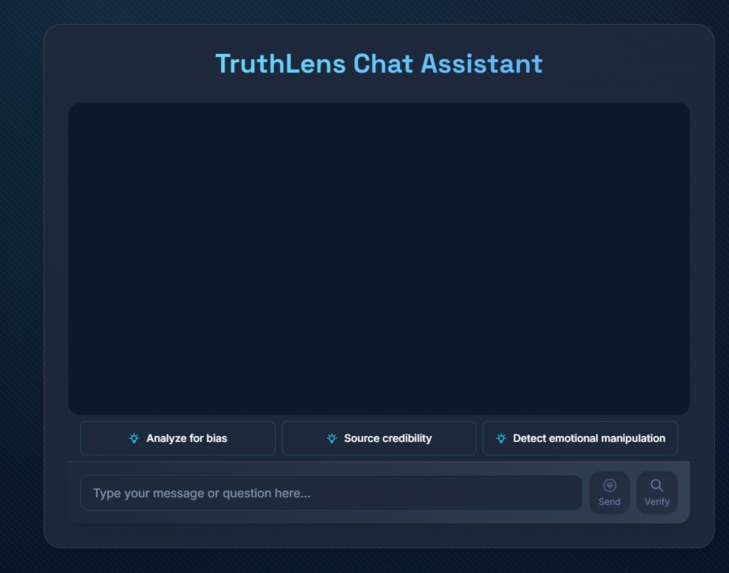
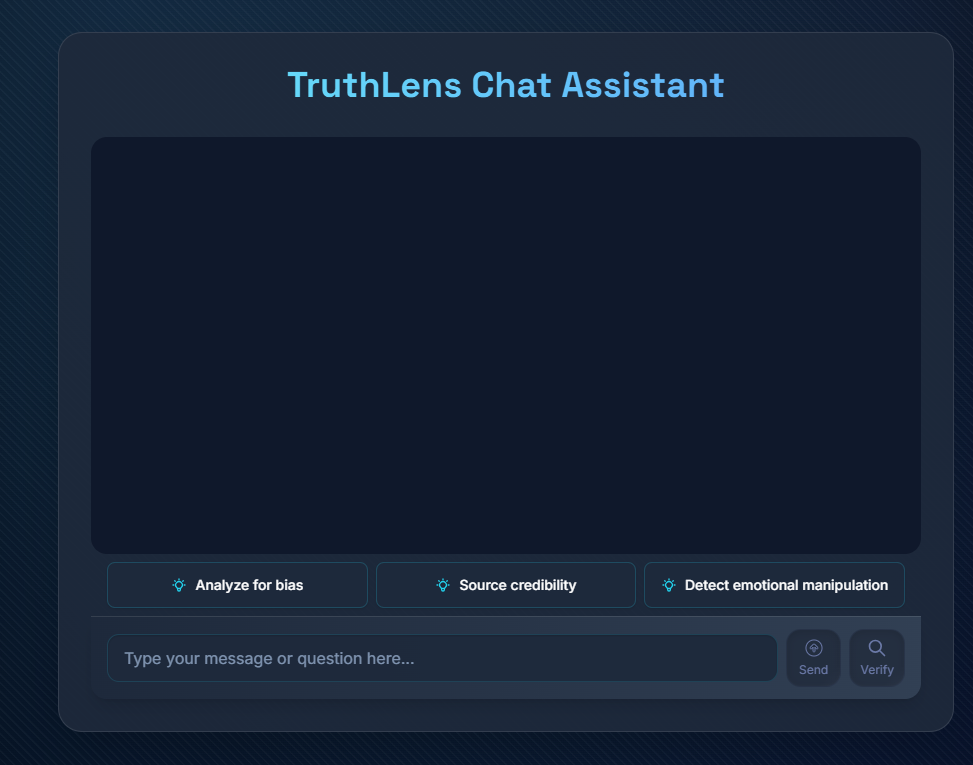
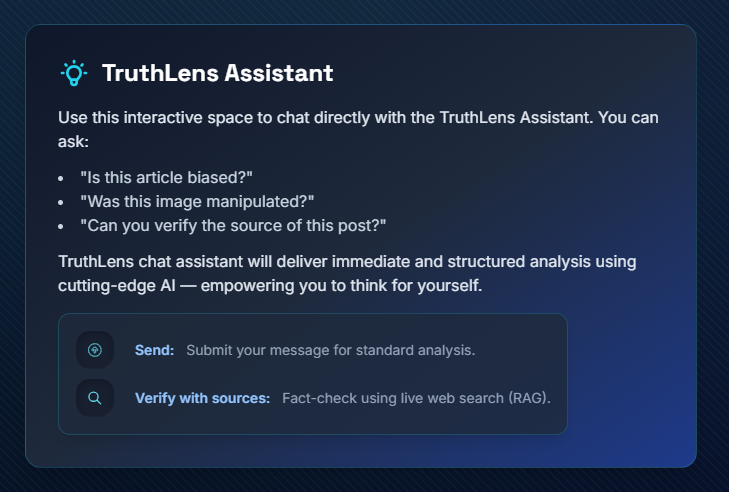
Chatbot powered by GPT-4 with RAG and explanations
-
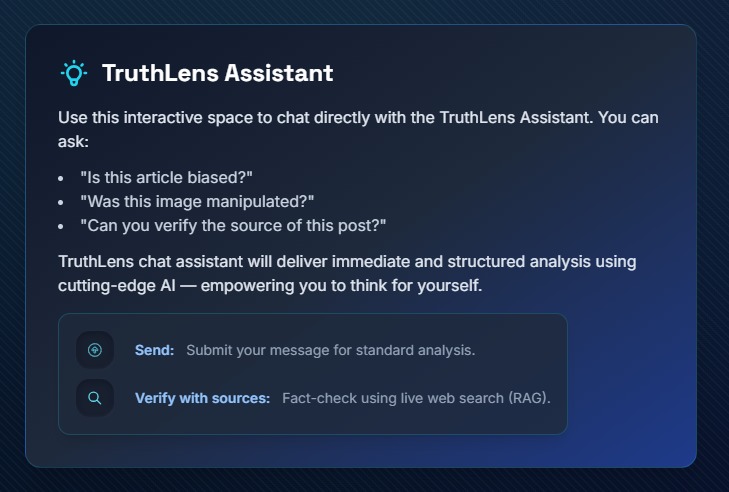
TruthLens asistants info
-
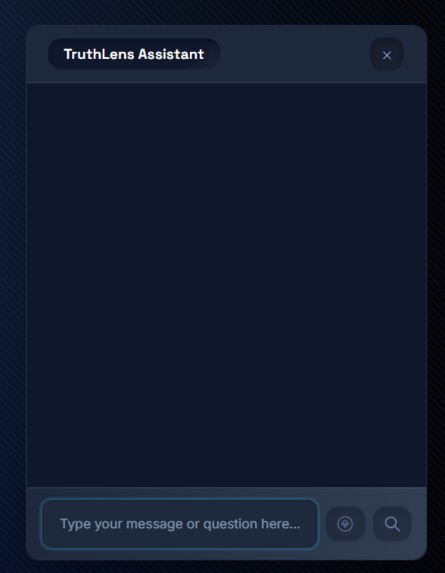
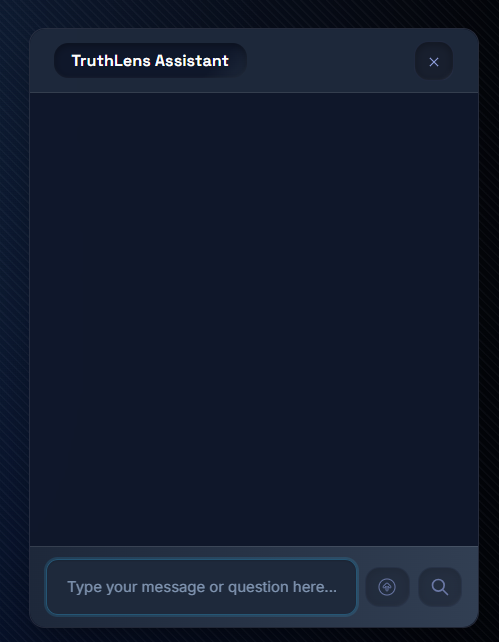
Chatbot fast access button in any view
-
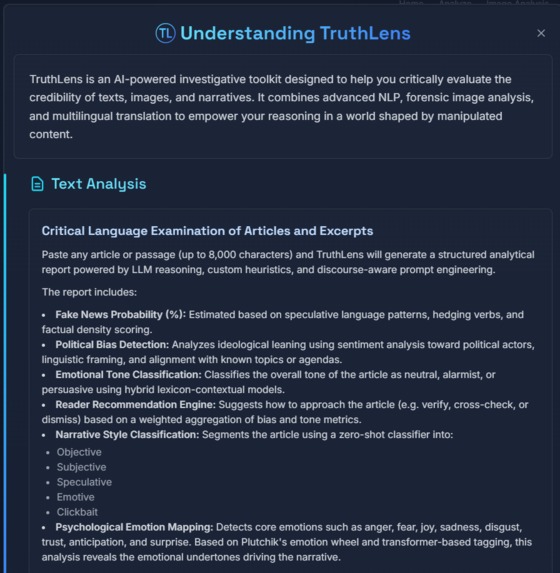
Instructions
-
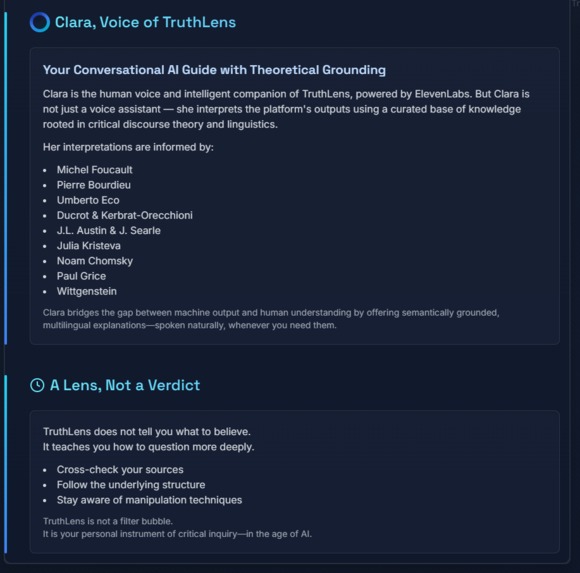
Instructions
-
Instructions
-
Instructions

Inspiration
In an era dominated by fast-moving headlines and synthetic content, it’s easy to feel overwhelmed, misled, or manipulated. TruthLens was born from a simple idea: what if people had a tool that helped them see through the noise—without telling them what to think? I built this project solo, driven by the need for transparency in AI-driven media and a deep frustration with how easily narratives can be shaped and weaponized.
What it does
TruthLens is a full-stack AI platform that analyzes news and public content using multiple lenses:
- Fake news risk detection
- Political bias estimation
- Emotional language analysis
- Image authenticity forensics
- Smart multilingual translation
- Voice-enabled assistant ("Clara")
It helps users question what they read and see, instead of passively consuming it.
How we built it
TruthLens was initially conceptualized and prototyped using Bolt.new, as part of the World’s Largest Hackathon. The core idea, UI foundation, and component logic were first developed on the Bolt platform. After validating the concept, I extended it into a full-stack application using Vue, FastAPI, and additional infrastructure for deployment and advanced functionality. TruthLens was built from scratch after May 30, 2025, using:
- Frontend: Vue 3 + Vite + Tailwind CSS
- Backend: FastAPI with GPT-4 for text reasoning and multimodal analysis
- Voice AI: ElevenLabs (used both for Clara assistant)
- Storage and infra: Supabase (database), Railway (API), Netlify (frontend)
- AI techniques: spectral analysis (FFT), EXIF metadata parsing, symbolic prompting for LLMs
Challenges we ran into
- Integrating voice synthesis into a full-stack pipeline without bloating the frontend.
- Designing a UI that felt modern but also served complex results in a clear way.
- Building a usable visual bias-highlighting engine for text with dynamic tooltips.
- Balancing performance and transparency: making the AI’s decisions understandable, not just accurate.
Accomplishments that we're proud of
- Created a fully working prototype solo within a few weeks, from backend to UI and voice integration.
- Developed an explainable image forensics module using FFT and GPT-4—not just a black-box model.
- Integrated a RAG-powered assistant with multilingual understanding.
- Built a system that aligns with real-world concerns about media trust without relying on censorship.
What we learned
- Building an ethical AI tool is as much about communication and UX as it is about model accuracy.
- Open-ended prompting combined with structured descriptors can unlock more useful and interpretable answers from LLMs.
- Voice and visual feedback dramatically improve user engagement when exploring serious content.
What's next for TruthLens
- Deploying a live browser extension to analyze content in real time.
- Expanding support for deeper source verification using RAG pipelines.
- Adding offline mode and accessibility features.
- Open-sourcing the core analysis engine for public trust and auditability.
Built With
- elevenlabs-api
- exif-parsing
- fastapi
- fft-(numpy)
- gpt-4-(openai-api)
- markdown
- netlify
- pydantic
- python
- railway
- serper-api
- supabase
- tailwind-css
- typescript
- uvicorn
- vite
- vue.js


Log in or sign up for Devpost to join the conversation.