-
-
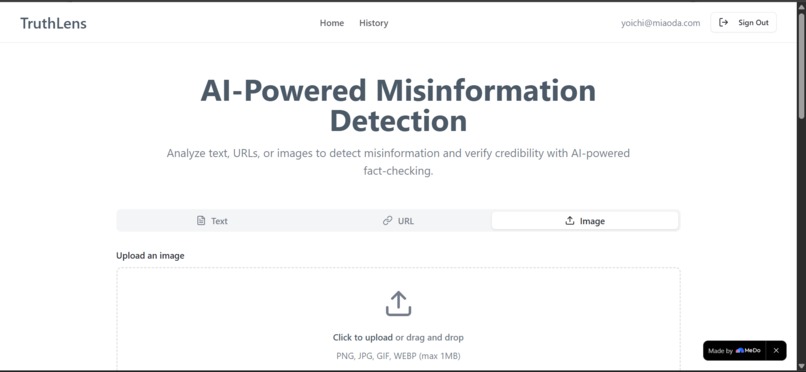
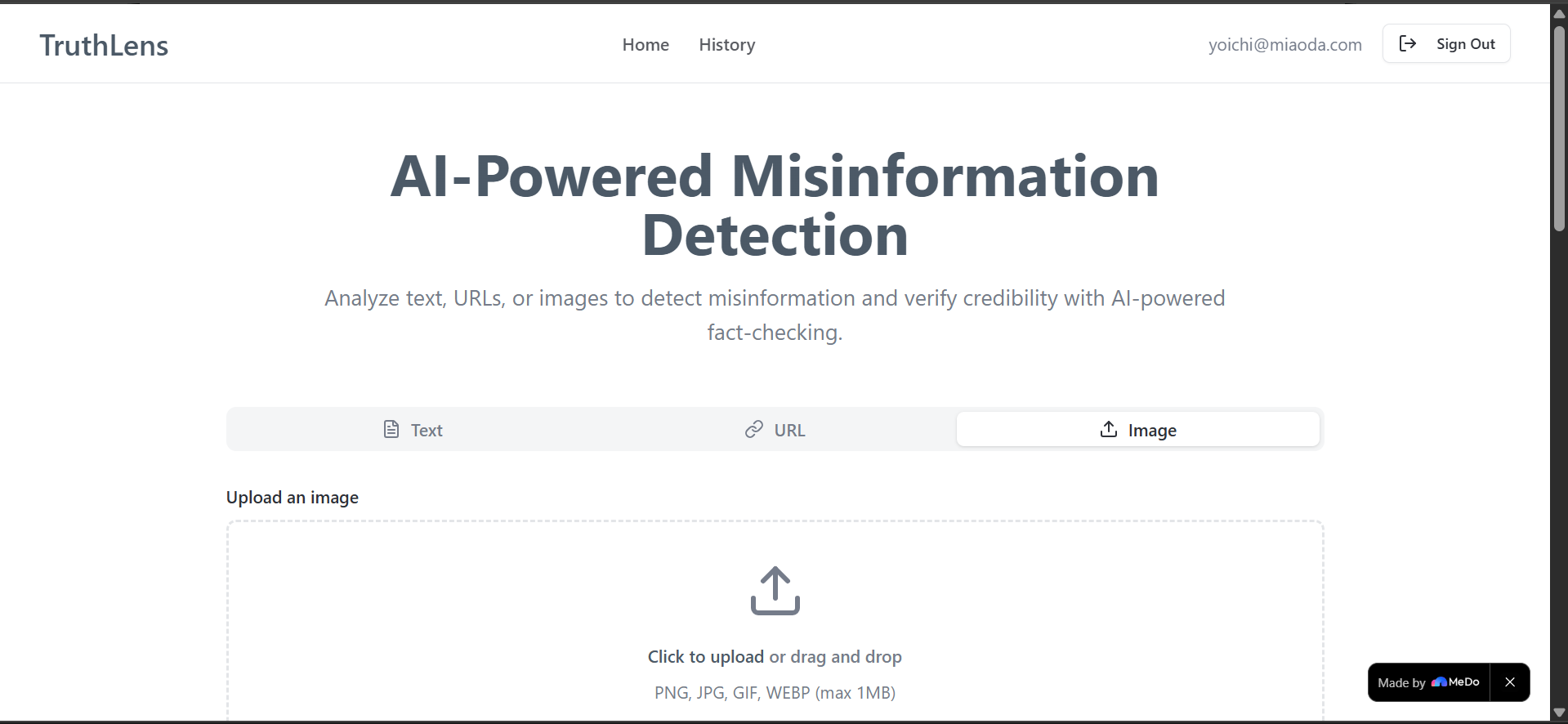
image page
-
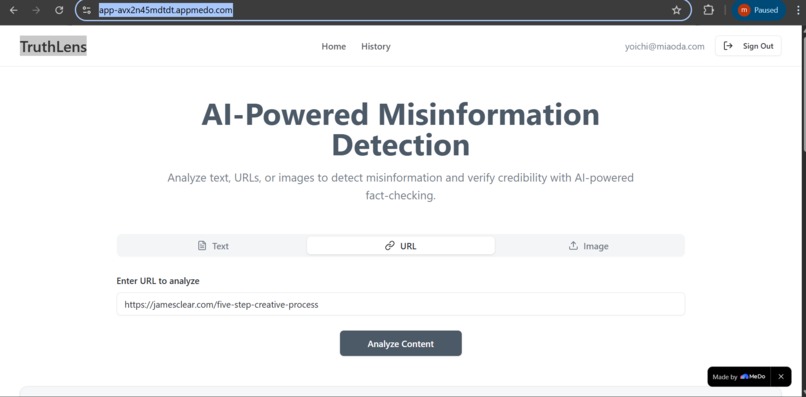
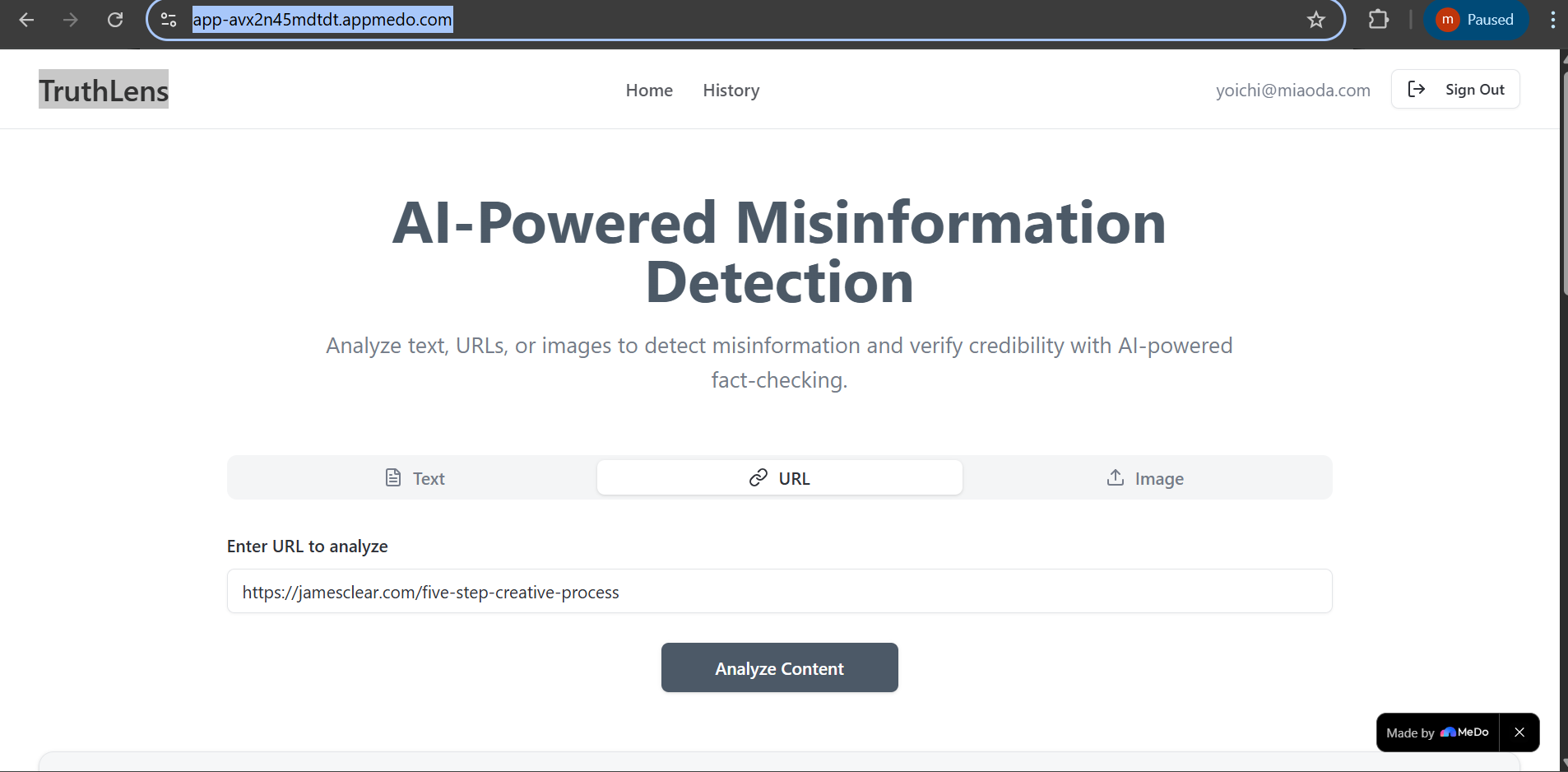
url page
-
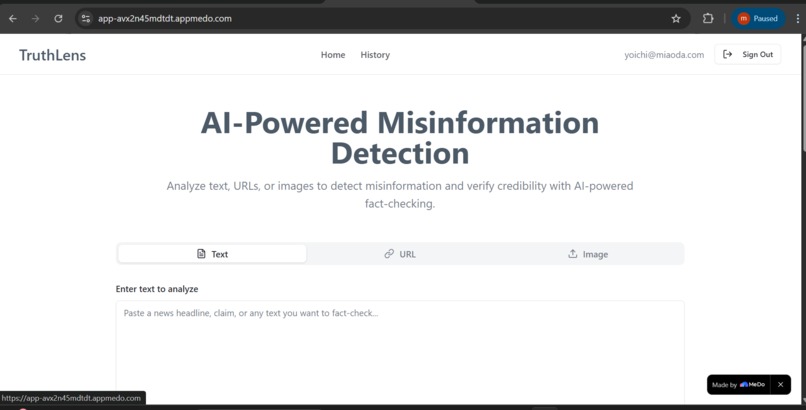
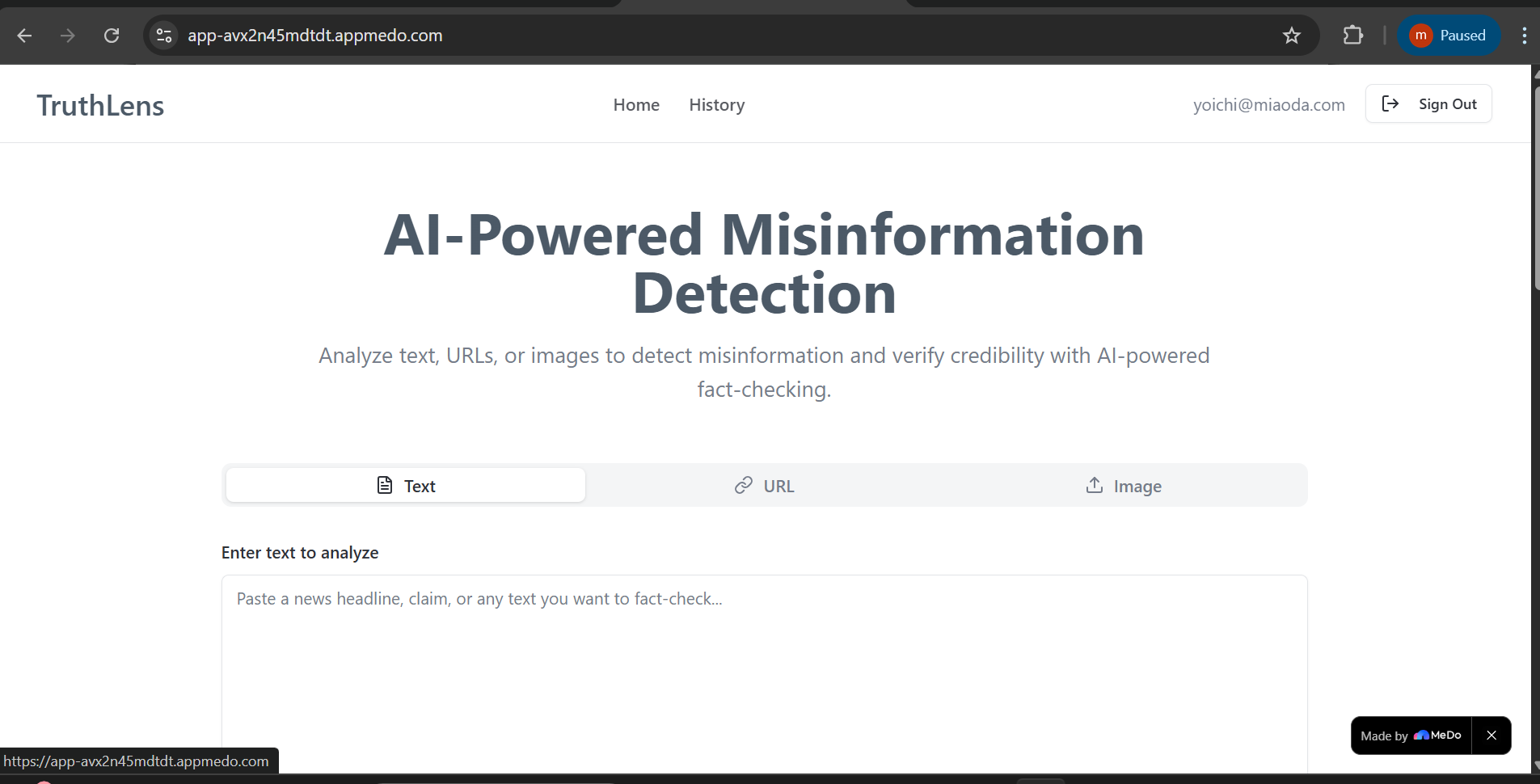
text page
-
-
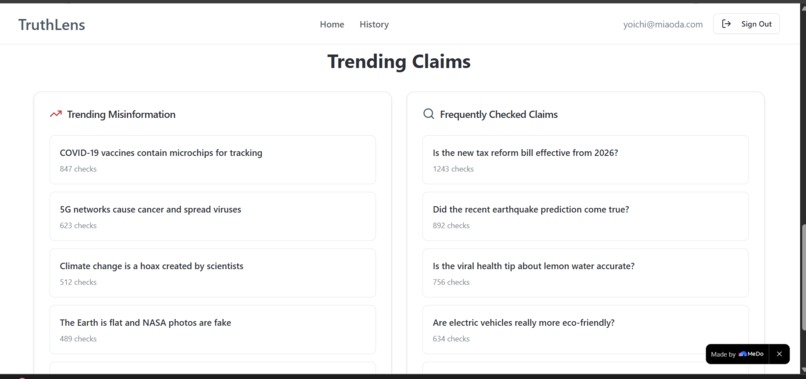
trending topics page
Inspiration
The rapid spread of misinformation—especially through social media and messaging platforms—makes it difficult for people to distinguish fact from falsehood. Many users lack tools that not only flag suspicious content but also explain why it may be misleading. TruthLens was inspired by the need for a system that promotes clarity, critical thinking, and trust in information.
What it does
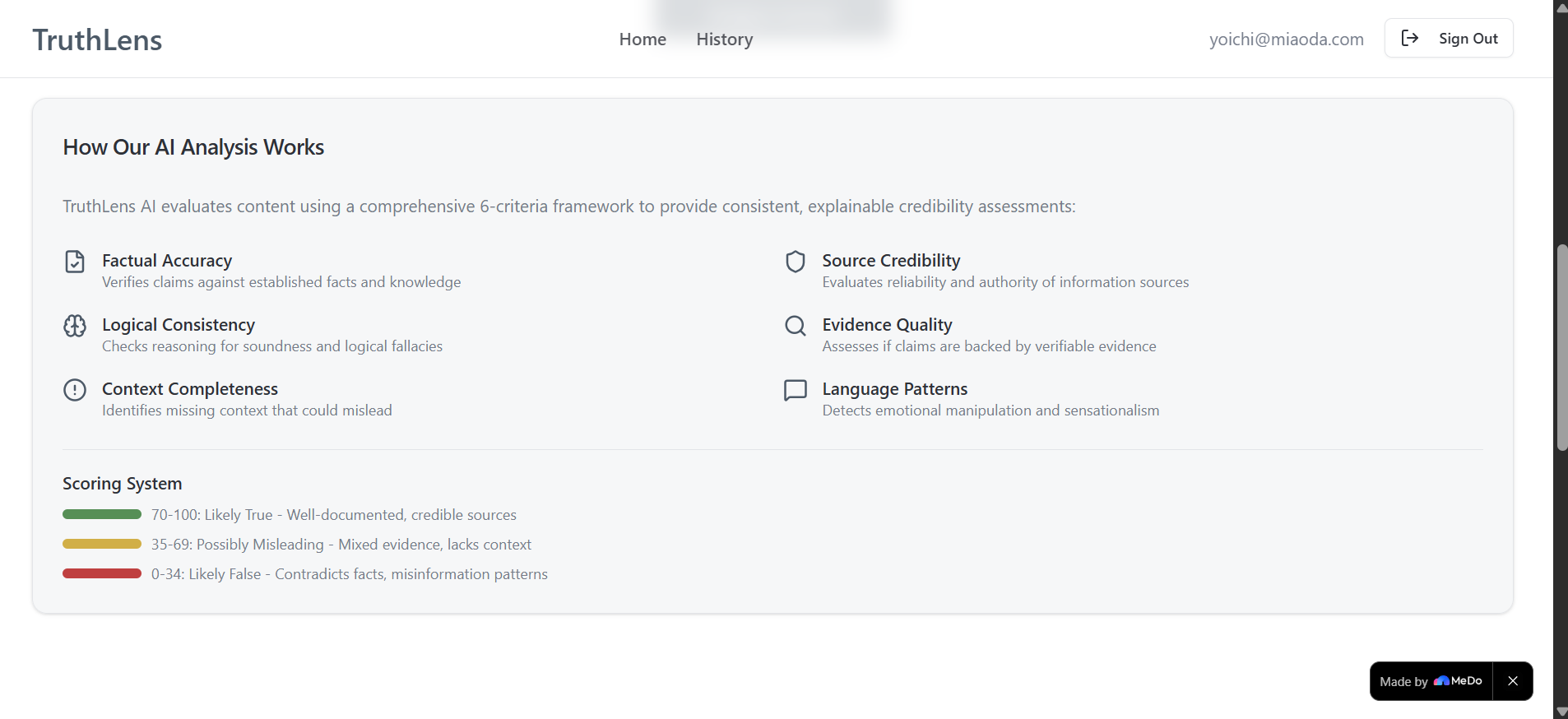
TruthLens is an AI-powered platform that analyzes text, URLs, and screenshots to determine the credibility of information.
It:
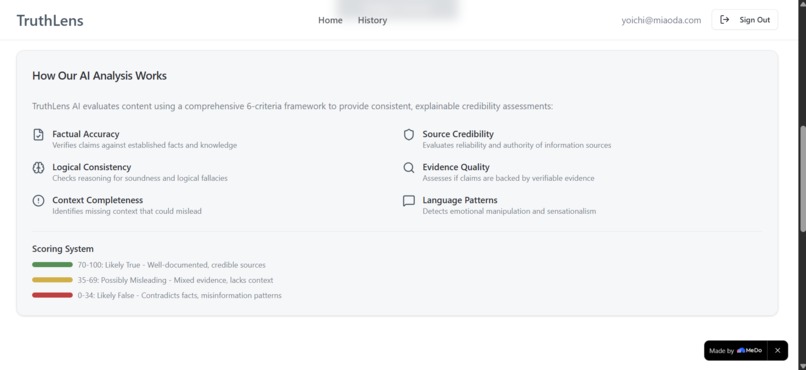
Assigns a truth score (0–100%) Classifies content as Likely True, Possibly Misleading, or Likely False Breaks down claims and highlights suspicious phrases Generates clear, human-readable explanations Presents supporting and contradicting evidence Extracts and analyzes text from uploaded images Allows users to track past analyses (for registered users)
How we built it
We developed TruthLens as a full-stack web application with:
A responsive frontend centered around a search-style input experience A backend system handling content processing, scoring logic, and data storage A database for storing user accounts and analysis history An AI logic layer that performs: content extraction (text, URL, image) rule-based credibility scoring claim analysis and explanation generation
The system was designed to prioritize explainability and consistency, ensuring users understand why a result was produced.
Challenges we ran into
Ensuring the AI output was consistent and believable, not random Designing explanations that are clear, not overly technical Handling different input formats (text, URLs, images) in one unified flow Simulating meaningful fact-checking behavior without external APIs Balancing simplicity of the UI with complex backend logic
Accomplishments that we're proud of
Building a multi-input AI analysis system (text, URL, image) Implementing a structured truth scoring and classification engine Creating an explanation-first AI experience rather than just scores Designing a clean, intuitive interface that feels like a real AI tool Delivering a system that is both functional and socially impactful
What we learned
The importance of explainable AI in building user trust How to structure AI systems around real-world use cases Designing scalable workflows for processing different data types Turning a complex problem like misinformation into a usable product Prioritizing clarity and usability over unnecessary complexity
What's next for TruthLens
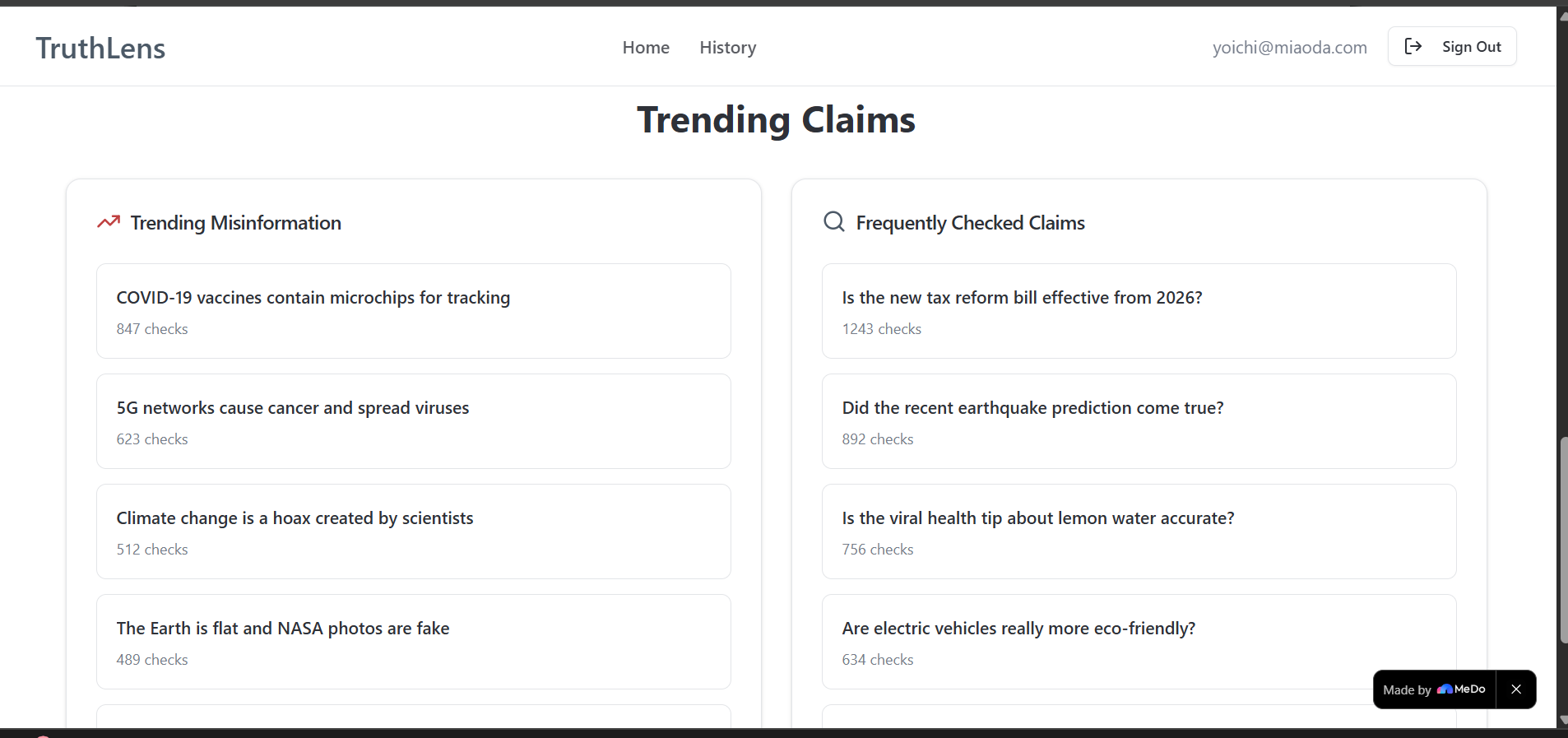
Integrating real-time fact-checking APIs and trusted data sources Improving accuracy with advanced AI/NLP models Expanding the claim breakdown feature for deeper analysis Launching a browser extension for real-time content verification Adding multi-language support for global accessibility Enhancing the trending system to detect viral misinformation patterns

Log in or sign up for Devpost to join the conversation.