
About the Project
The Problem
False and misleading information can spread across the internet within minutes. A viral post, headline, or claim can be shared thousands of times before people have a chance to check whether it is actually true. We wanted to make the process of investigating these claims faster and easier for everyday users.
Our Inspiration
TruthLens, also called Viral Facts Explorer, was inspired by the growing difficulty of distinguishing reliable information from viral misinformation online. Instead of expecting users to manually search through many websites and decide which sources are relevant, we wanted to create a tool that could help them investigate a claim and discover supporting evidence in one place.
The idea was simple: don't just tell users an answer — help them explore the evidence behind it.
How We Built It
We built TruthLens as an AI-powered web application that combines artificial intelligence with web search and real-world online sources.
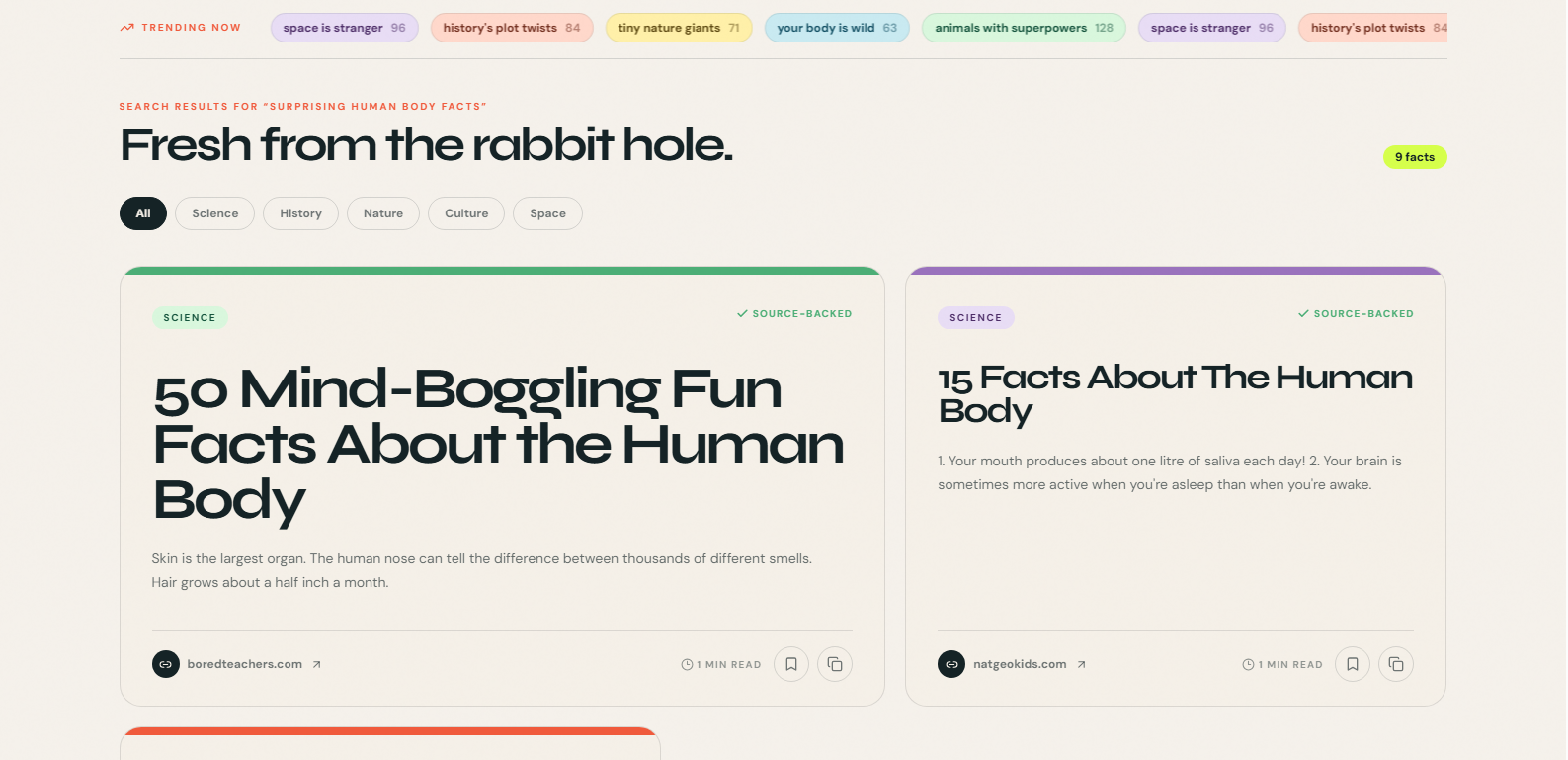
A user begins by entering a claim or viral statement. The application searches for relevant information, analyzes the available evidence, and presents the findings in an easy-to-understand format. It also provides resources that users can explore themselves instead of asking them to blindly trust an AI-generated conclusion.
The project was built using modern web technologies, including React, TypeScript, Node.js, Express, APIs, and PostgreSQL, with AI and web-search capabilities integrated into the application.
What Makes It Useful
TruthLens is designed around evidence-based exploration. Rather than treating an AI response as the final authority, the application helps users discover relevant sources and understand the information surrounding a claim.
This makes it useful for students, researchers, social-media users, and anyone who wants to investigate information before accepting or sharing it.
Challenges We Faced
One of the biggest challenges was making the application reliable when the available web information was limited or insufficient. Search results do not always provide enough trustworthy evidence to confidently evaluate a claim, so we had to design the experience to communicate uncertainty instead of presenting unsupported conclusions as facts.
We also faced challenges with integrating APIs, handling asynchronous searches, managing the application flow, and preparing the application for deployment. Testing the complete process helped us identify issues that were not obvious during development and improve how the application handles different situations.
What We Learned
Building TruthLens taught us that creating an AI application is not only about connecting an AI model to a user interface. The quality of the information going into the system is equally important.
We learned about working with APIs and real-world web data, handling incomplete search results, designing user-friendly AI experiences, and thinking carefully about how an application communicates uncertainty.
Most importantly, we learned that AI should help people investigate information, not replace their judgment.
The Goal
Our goal with TruthLens is to make online information easier to investigate. In a world where misinformation can become viral within seconds, we believe people need tools that encourage curiosity, verification, and evidence-based thinking.
TruthLens turns a viral claim into an opportunity to explore the facts behind it.
Built With
- ai
- api
- drizzle-orm
- express.js
- fact-checking
- node.js
- postgresql
- react
- serpapi
- typescript
- web-search

Log in or sign up for Devpost to join the conversation.