-
-
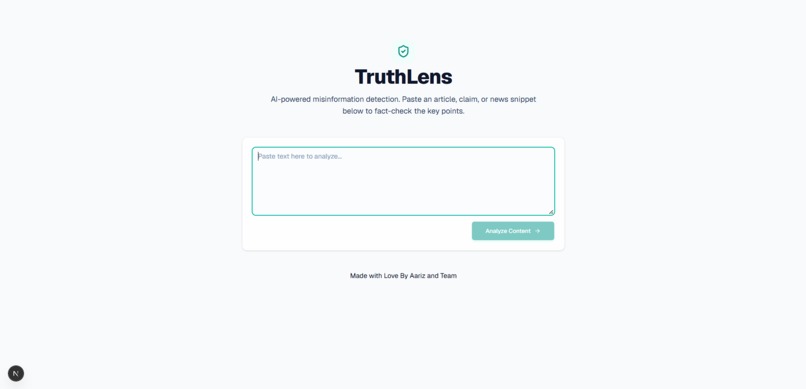
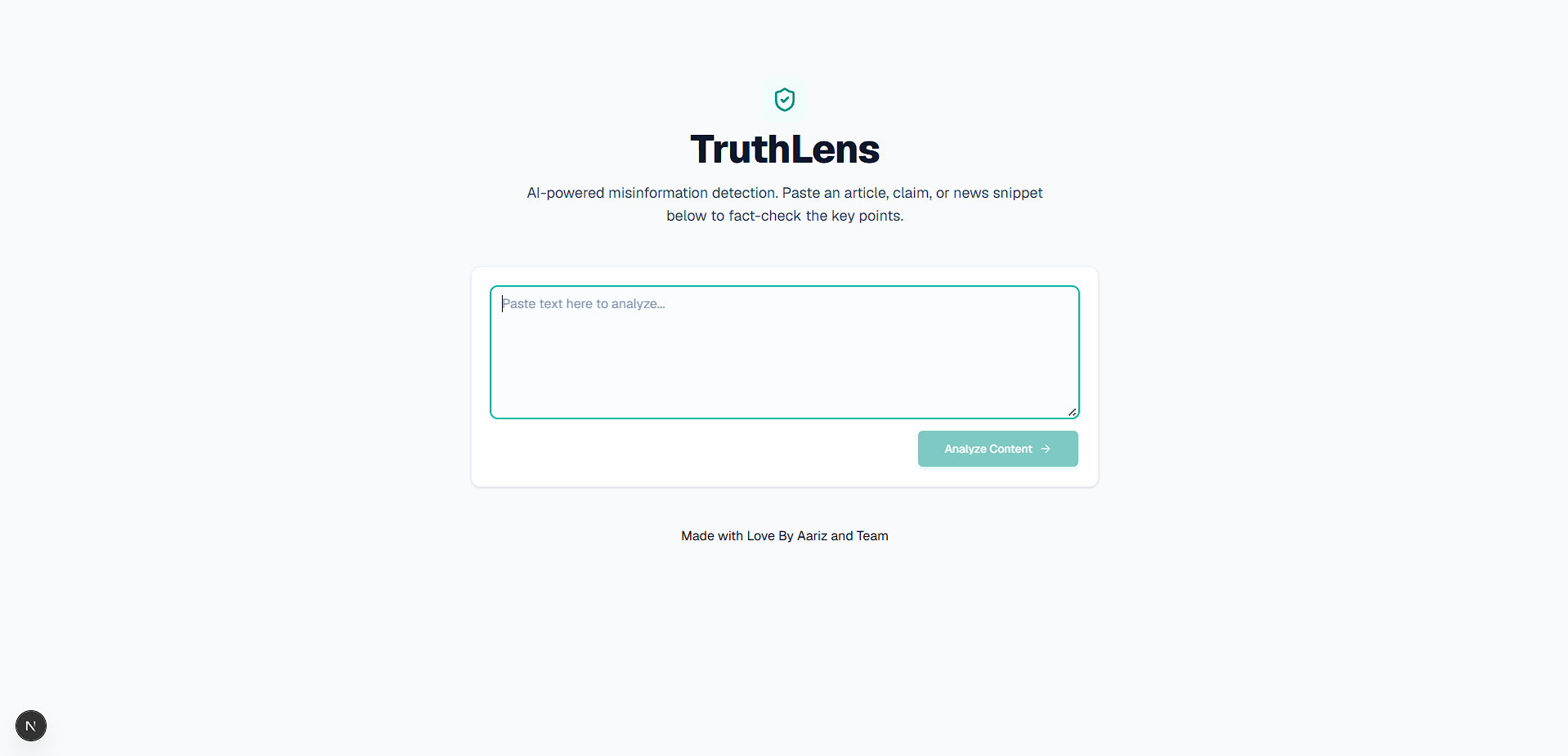
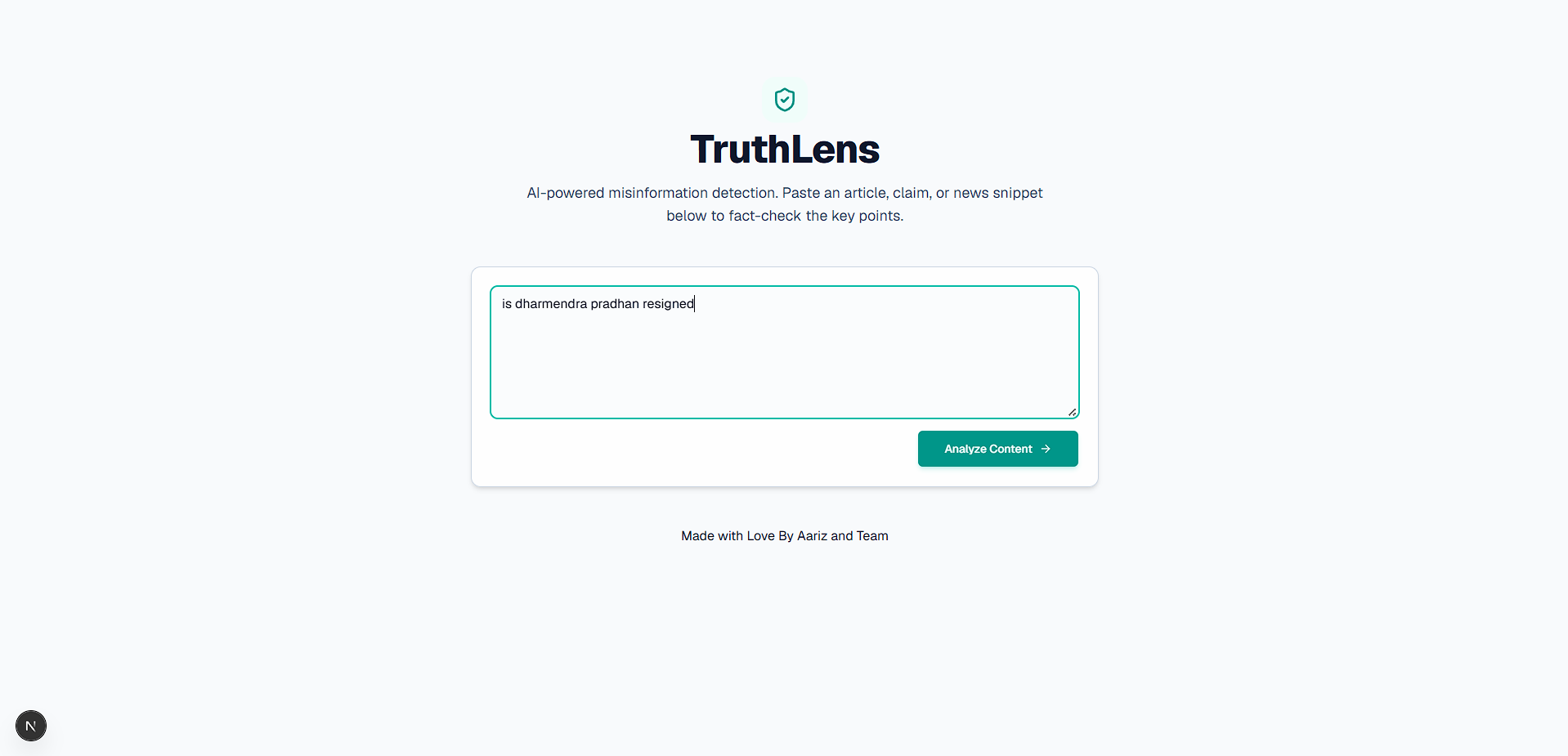
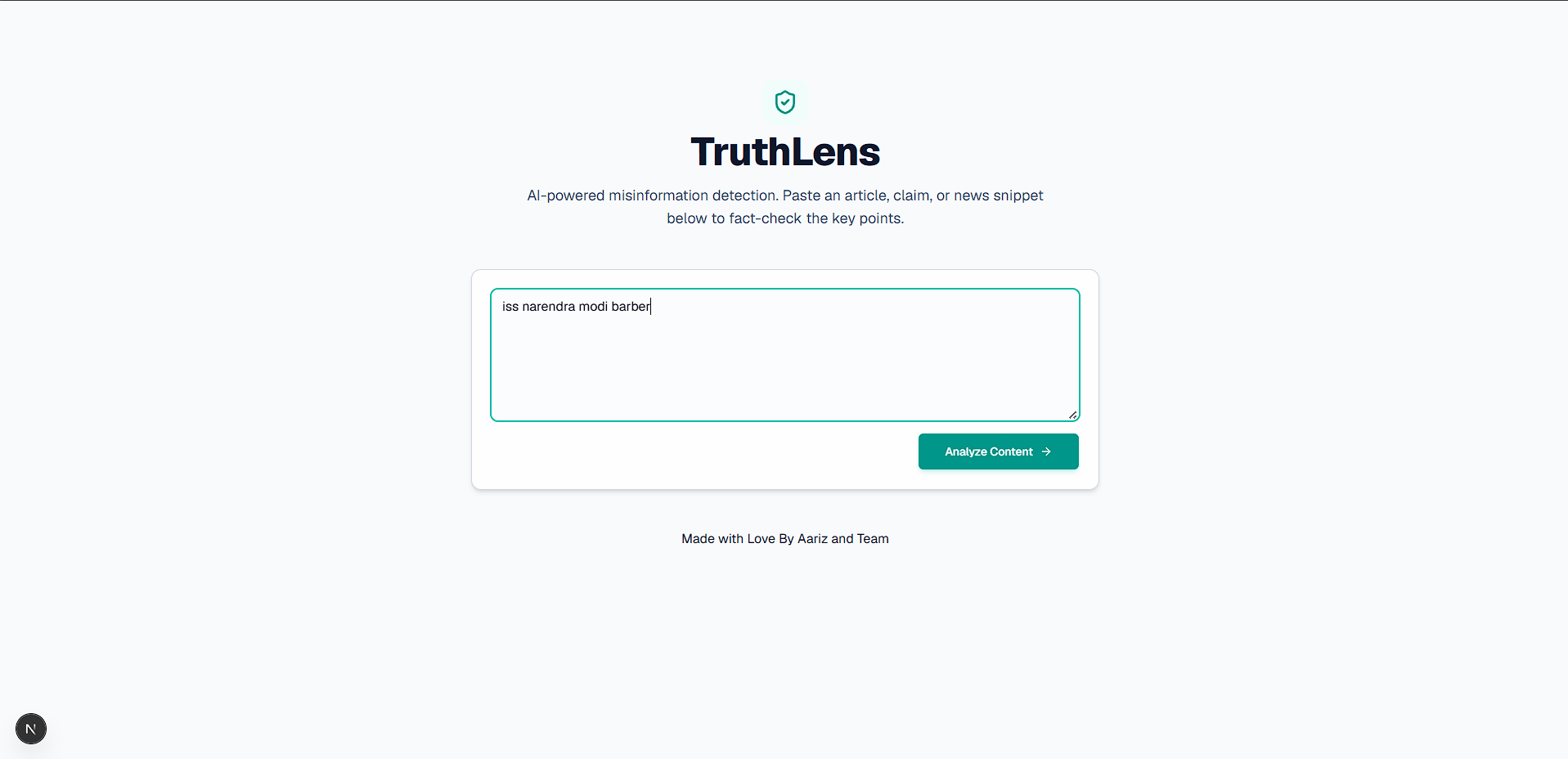
Home Page - Minimal and Elegant
-
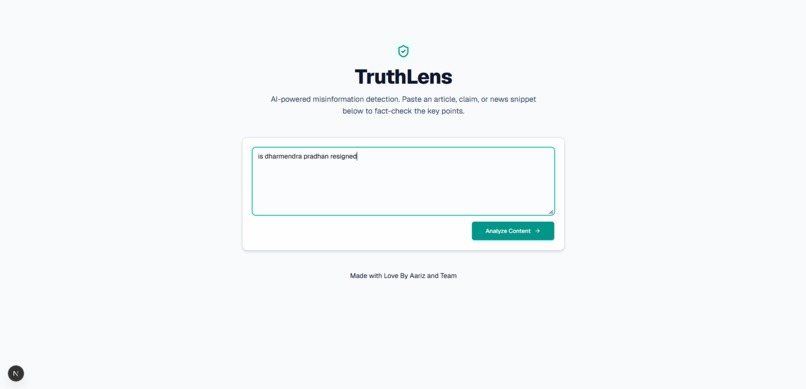
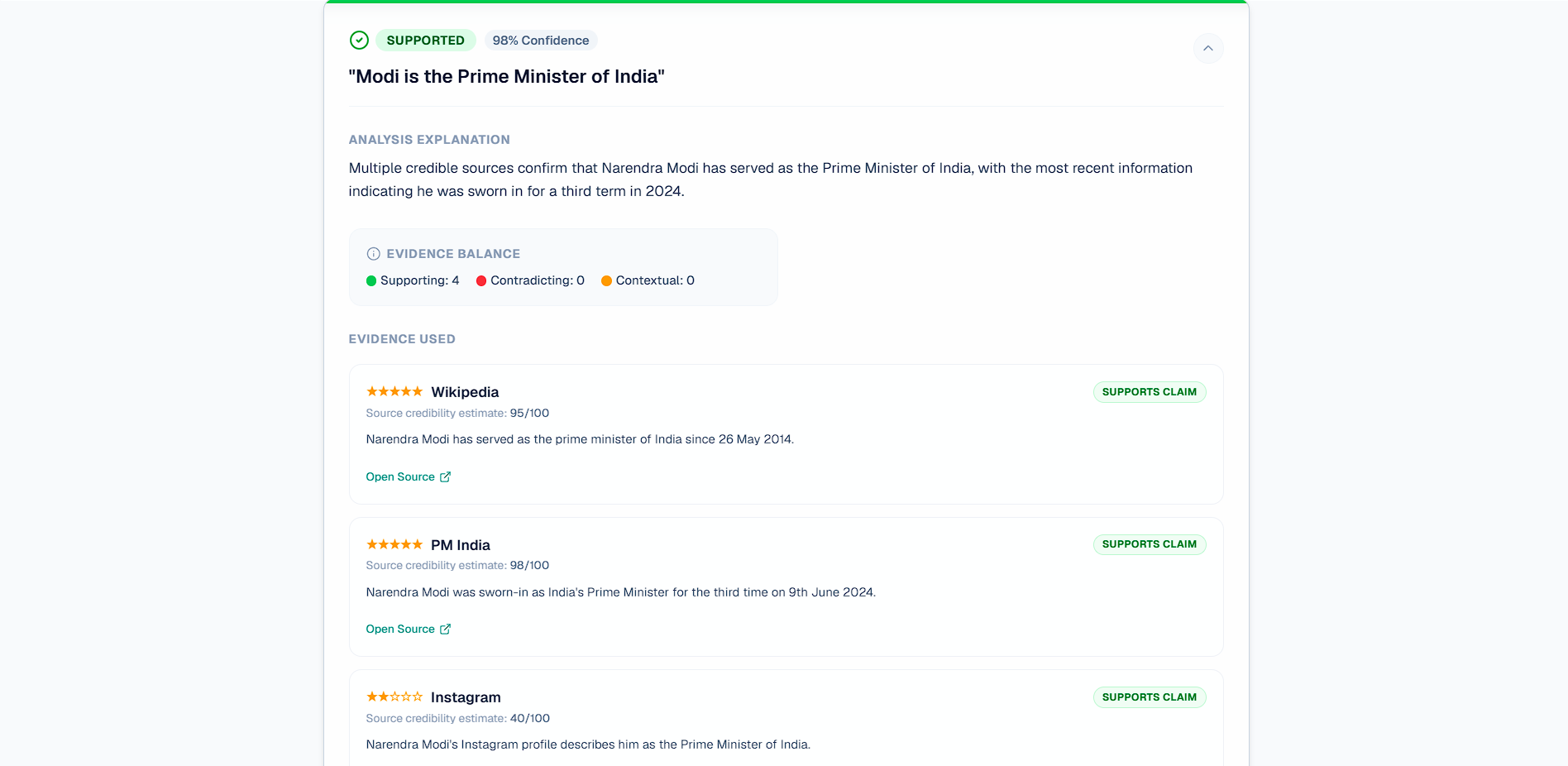
Test no 1 With True Information
-
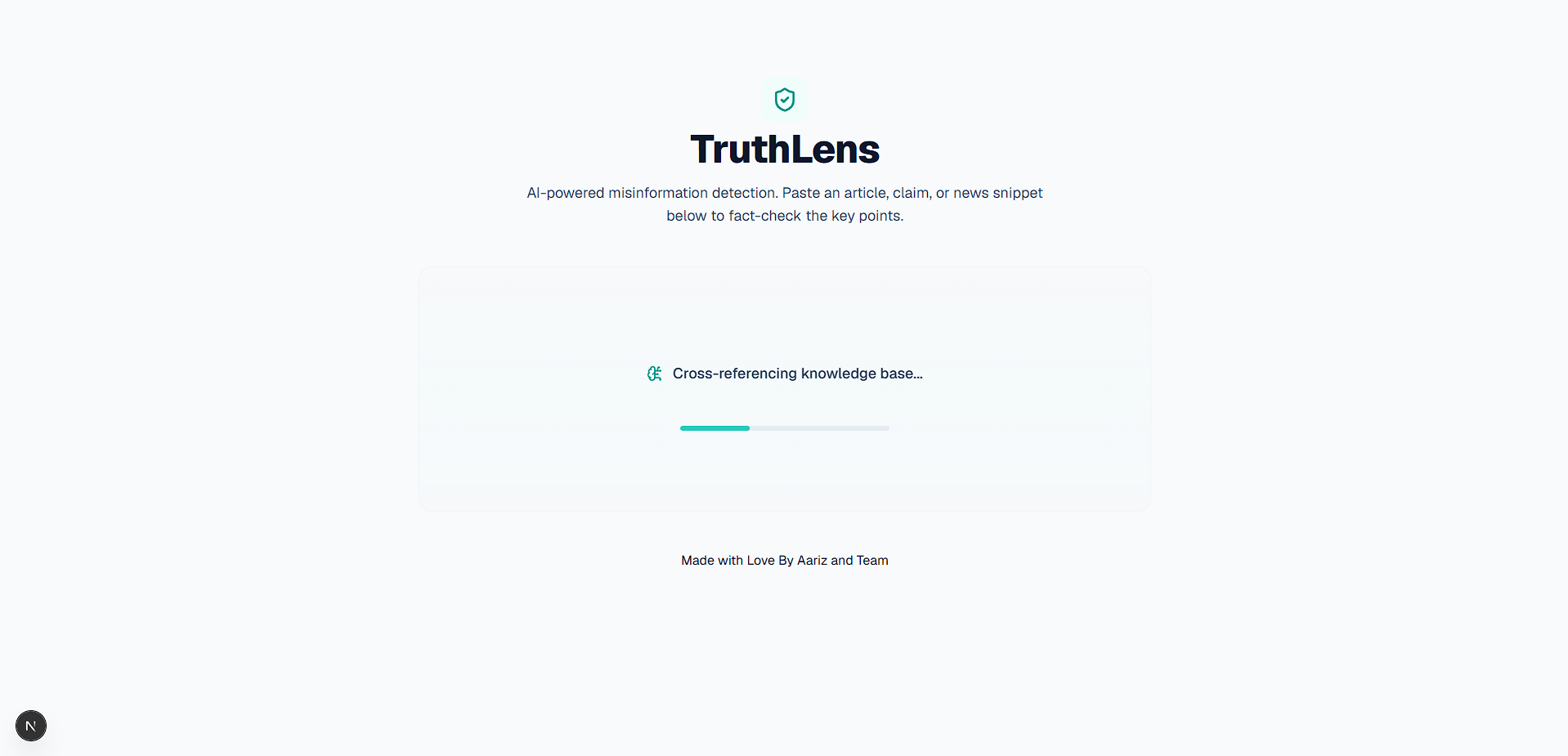
Loading Page
-
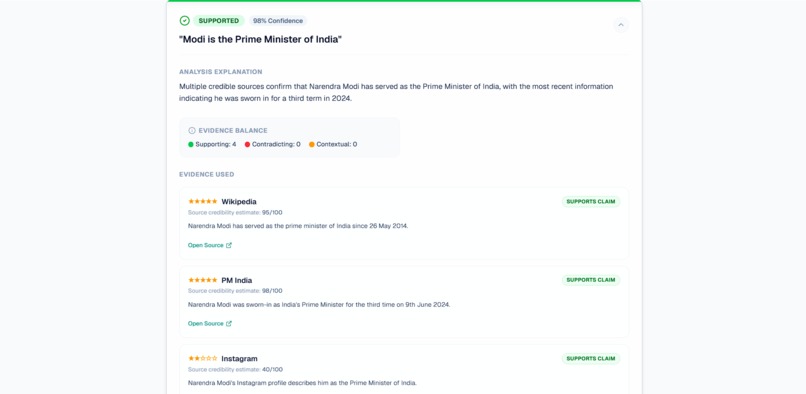
Evidence - Of data by which it claims the info to be True
-
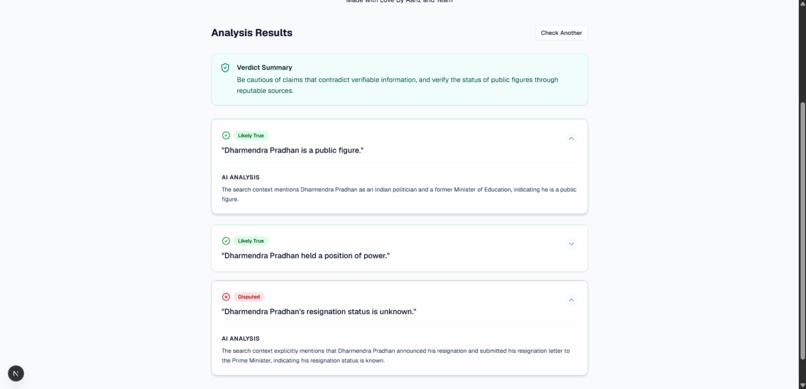
Output For test1
-
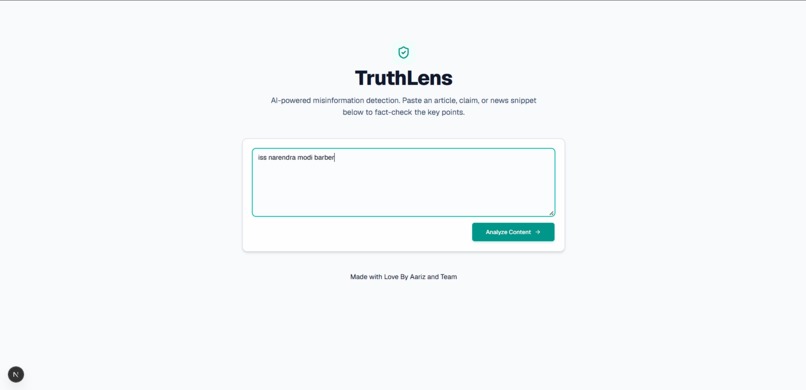
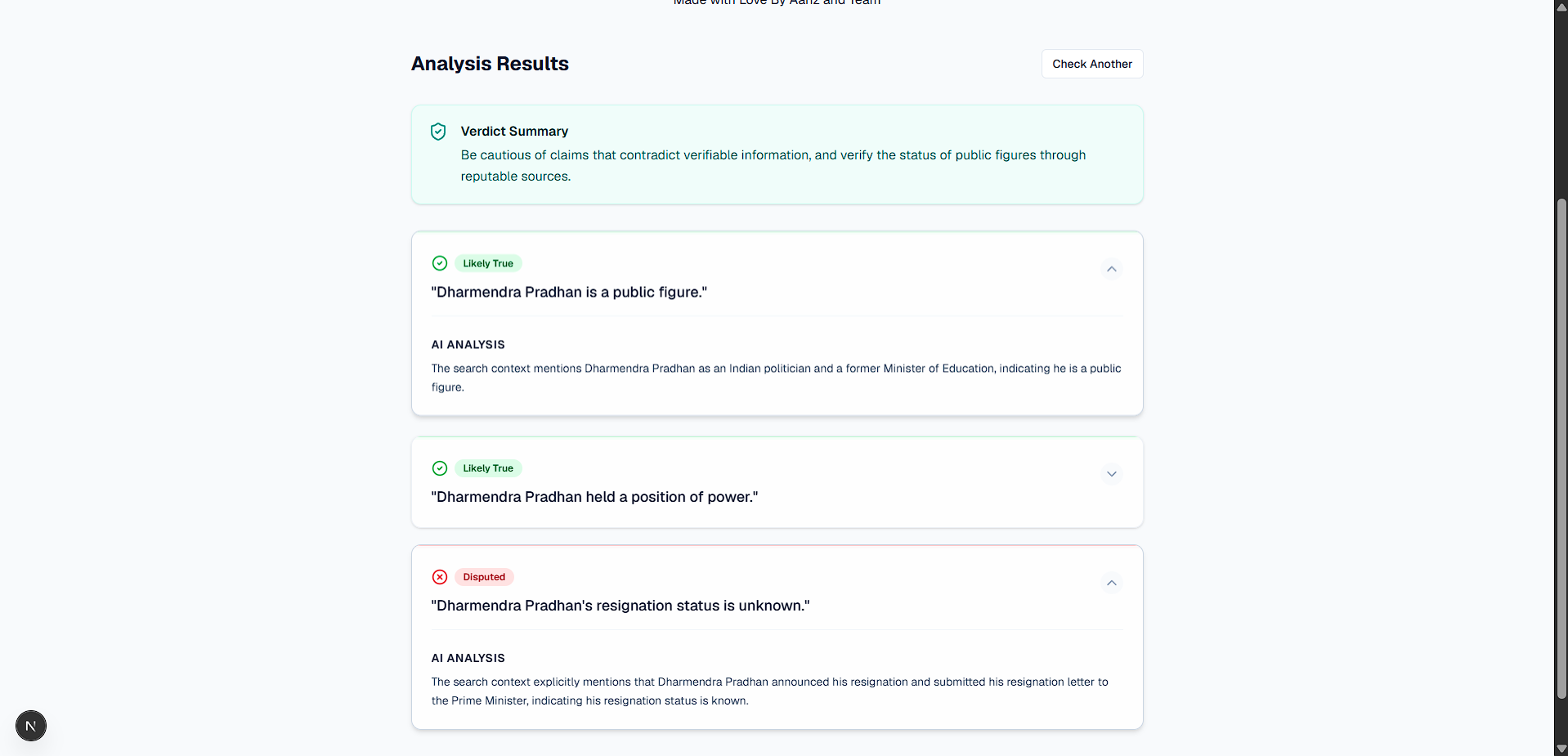
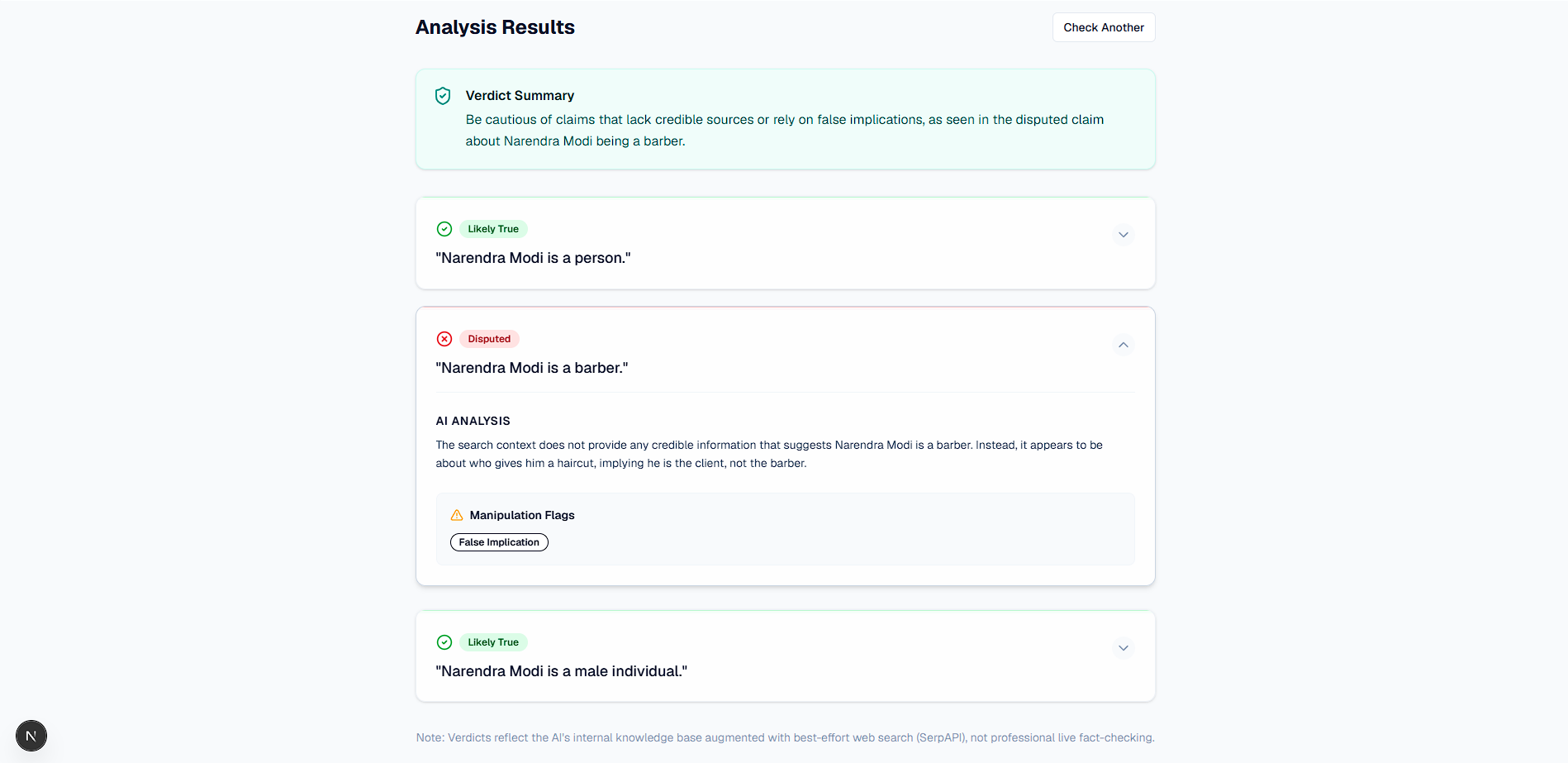
Testing no 2 with False Information
-
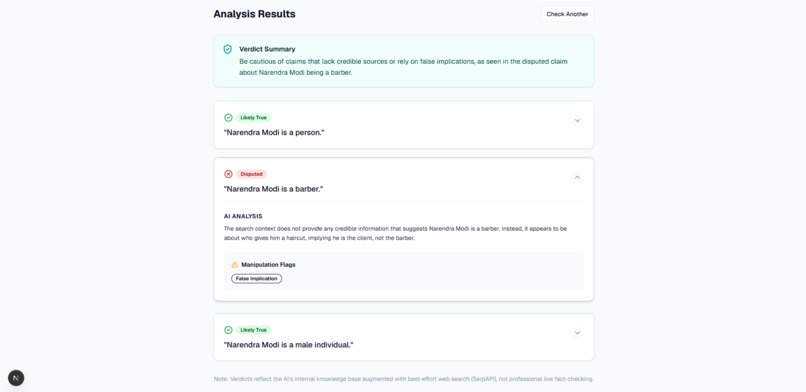
Output for text 2
Inspiration
We Got Inspiration of this project when my Grandfather shared a fake news about a man who was a nice person When he got know reality he was very sad ,So I decided to build This App so no one will share Misinformation About any person and spread hatered
TruthLens
TruthLens is a lightweight AI assistant that sits right where people consume content — as a web app for pasted text/links, and eventually a browser extension — and gives them a fast, explained verdict instead of a flat "true/false" label.
Instead of trying to be an oracle that declares content real or fake, TruthLens breaks a piece of content down the way a careful human fact-checker would: it pulls out the individual factual claims being made, checks each one against live web sources, flags manipulative language patterns (urgency, fear appeals, vague authority — "doctors say," "scientists agree"), and shows the user why something looks trustworthy or not. The goal isn't to replace the user's judgment — it's to give them the same evidence a professional fact-checker would gather, in under thirty seconds.
How To Do It
- Open the Deployed Link of app
- Paste the information you want to verify
- Then wait for 5 sec
- The Ai would have analyzed and verified the information and also would have found the branch of questions that will arise
Technology Used
- Frontend
- Next.js
- shadcn/ui
- Skiper UI
- Backend
- Groq API – For AI/LLM
- SerpApi – For Web Search
System Architecture
User Input (text / URL / forwarded message)
        │
        ▼
Step 1 — Content Ingestion
   (extract raw text; if URL, fetch and clean the article)
        │
        ▼
Step 2 — Claim Extraction (LLM)
   (break content into a list of distinct, checkable factual claims)
        │
        ▼
Step 3 — Evidence Gathering (Web Search, per claim)
   (pull current sources that support / contradict / are silent on each claim)
        │
        ▼
Step 4 — Verdict & Language Pattern Analysis (LLM)
   (rate each claim using the gathered evidence; flag manipulative phrasing)
        │
        ▼
Step 5 — Results Dashboard (React frontend)
   (claim-by-claim cards, source links, plain-language explanation,
    "what to watch for" tip)```
Accomplishments that we're proud of
- Real Time Information Access
- Simple and minimal Ui
- Its completely Free
- Even old people can Use it
- A real, working pipeline that grounds every verdict in live search results, not just the model's own (possibly outdated) training data
- Claim-by-claim breakdown instead of one opaque score — the same shape a human fact-checker would use
- Fully free to run and use — no paid API tier required
- Simple enough that a non-technical relative could paste a WhatsApp forward and understand the result in seconds
What we learned
- Effective Use of Api
- Using serp Api as real time information collector
- Groq's JSON output isn't always strictly valid — we added a retry step that re-prompts with a stricter "return ONLY valid JSON, no markdown fences" instruction when the first parse fails, instead of letting the request crash.
- SerpApi's free tier has a hard monthly search cap, so we cache search results per claim (hashed by the claim text) to avoid burning a search on a claim we've already checked.
- Groq's free tier rate-limits by tokens-per-minute, not just requests-per- minute — a single long article can hit that ceiling in one request even with room left on the request count. We added client-side debouncing so users can't fire duplicate analyses while one is still running.
- Chaining Groq (claim extraction) → SerpApi (evidence) → Groq (verdict) means one slow or failed step delays the whole pipeline — we learned to design the loading UI around real step progress instead of a single spinner, so users see what's happening, not just that something is.
What's next for TruthLens
- converting it to a Extension in Google extension Store
Built With
- groq
- nextjs
- serp-api
- vercel


Log in or sign up for Devpost to join the conversation.