-
-
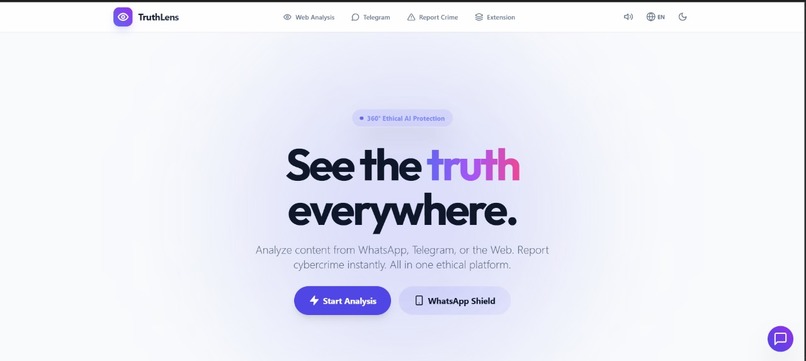
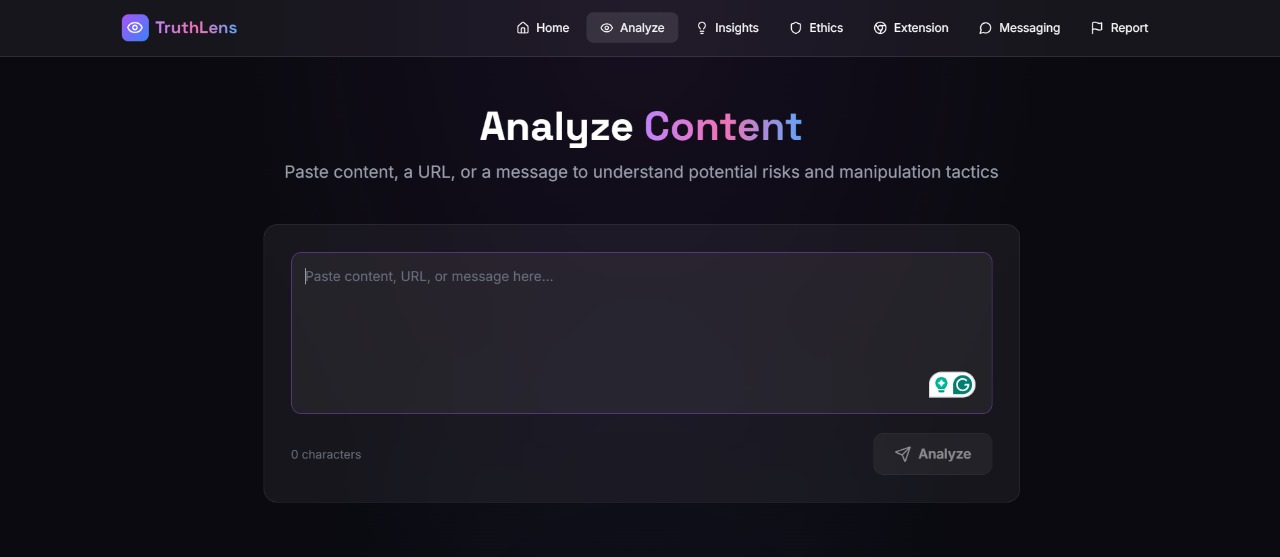
Home page
-
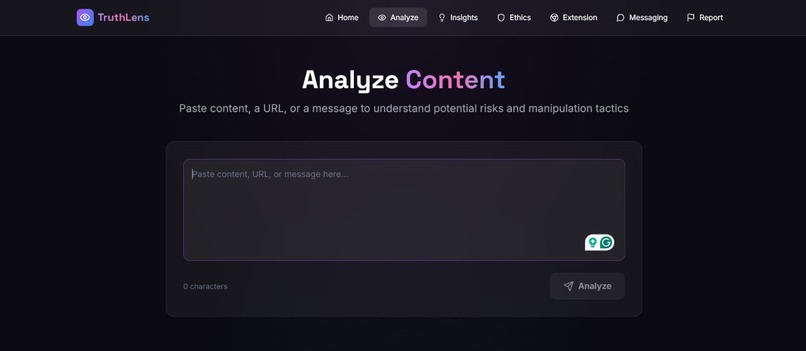
Insights page
-
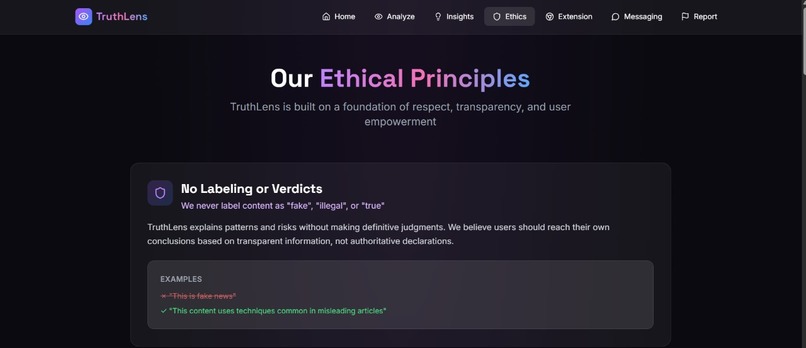
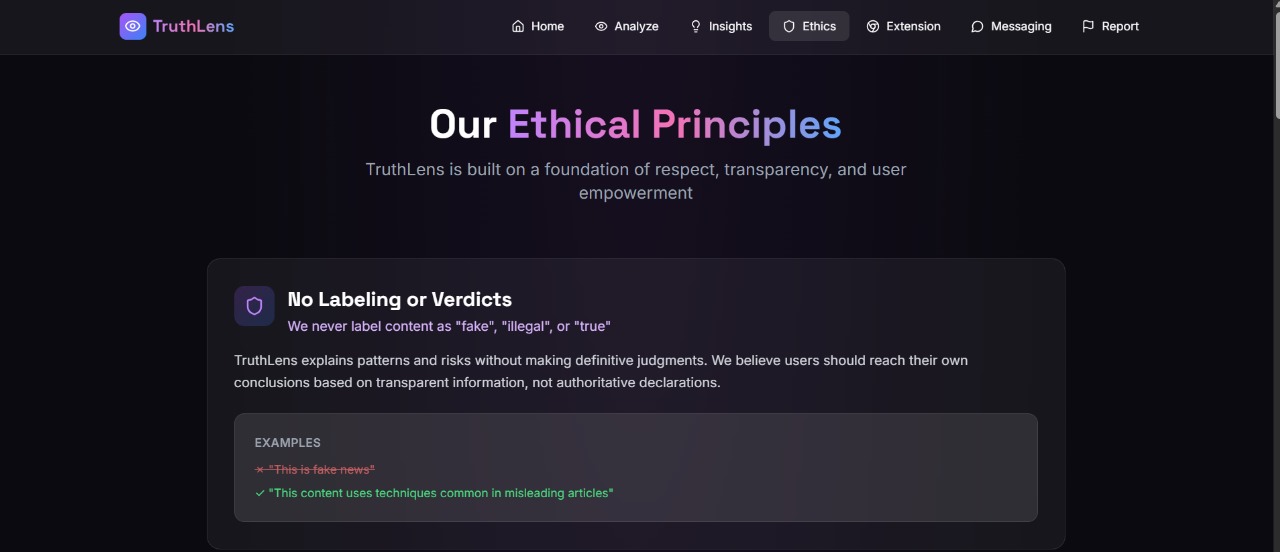
Ethical page
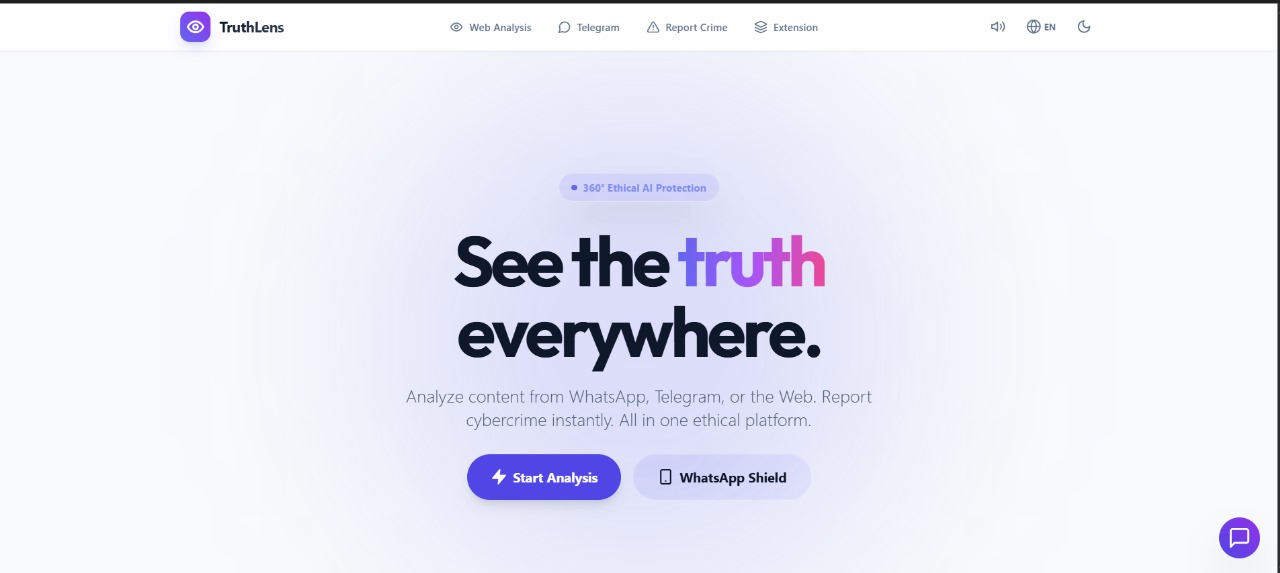
Inspiration
TruthLens was inspired by how subtle and persuasive online content has become. Across social media, messaging platforms, and websites, people are constantly exposed to content that influences their emotions, opinions, and decisions—often without their awareness. This is especially risky for young users and people who are not technically trained.
What motivated me was the lack of tools that explain how content influences users rather than simply labeling it as right or wrong. I wanted to create something that empowers people to think critically instead of telling them what to believe. TruthLens was born from the idea that transparency and understanding are more effective than fear or enforcement.
What it does
TruthLens is an ethical AI assistant that analyzes digital content and explains potential risks and influence patterns in a calm, human-readable way.
It helps users:
Recognize emotional manipulation and persuasive tactics
Identify scam, phishing, and spam indicators
Detect abusive or harmful language patterns
Understand whether content may be unsafe for children
Spot misleading or suspicious website behavior
Receive explanations in multiple languages
Rather than making absolute judgments, TruthLens focuses on explanation and awareness, allowing users to make informed decisions independently.
How we built it
TruthLens was built as a modular web application with a strong focus on clarity, ethics, and scalability.
A multi-page frontend was designed to separate different analysis features clearly
A custom content-analysis engine evaluates language patterns, intent, and risk signals
Context-based state management enables multilingual support and consistent behavior
A calm, glass-style UI was intentionally chosen to avoid alarmist or fear-based design
The system analyzes content using multiple signals—such as urgency cues, authority framing, emotional pressure, and safety indicators—and translates these signals into understandable explanations.
Challenges we ran into
One of the biggest challenges was ensuring consistent behavior across different environments. Features that worked in preview or development environments sometimes behaved differently in production, especially around routing, rendering logic, and configuration.
Another challenge was defining ethical boundaries. It was important to avoid labeling content as illegal or definitively false. Designing the system to explain risk indicators rather than delivering verdicts required careful architectural and UX decisions. Accomplishments that we're proud of
Building an ethical AI assistant that explains risk without judgment
Designing a multilingual system to improve accessibility
Creating a calm, trust-focused interface for sensitive topics
Structuring the project to support future extensions and integrations
Persisting through complex technical challenges and refining the system iteratively
What we learned
This project reinforced that ethical AI is not just about algorithms—it is about responsibility, communication, and user trust. I learned that deployment, system design, and user experience are just as critical as core logic.
I also learned the importance of resilience. Debugging silent failures and adapting to real-world constraints strengthened my problem-solving skills and confidence as a developer.
What's next for TruthLens
Future plans for TruthLens include:
A browser extension for real-time content analysis
Integration with messaging platforms for message safety insights
Expanded website risk and phishing detection
Improved child-safety explanations and parental guidance features
Continuous refinement based on user feedback
TruthLens aims to evolve into a responsible digital companion that promotes awareness, safety, and critical thinking online.
Built With
- api
- cloud
- context
- css
- framer
- git
- github
- hosting
- html
- icons
- javascript
- lucide
- motion
- react
- router
- scam-indicators
- typescript
- vite


Log in or sign up for Devpost to join the conversation.