🔎 TruthLens AI
Why I built it
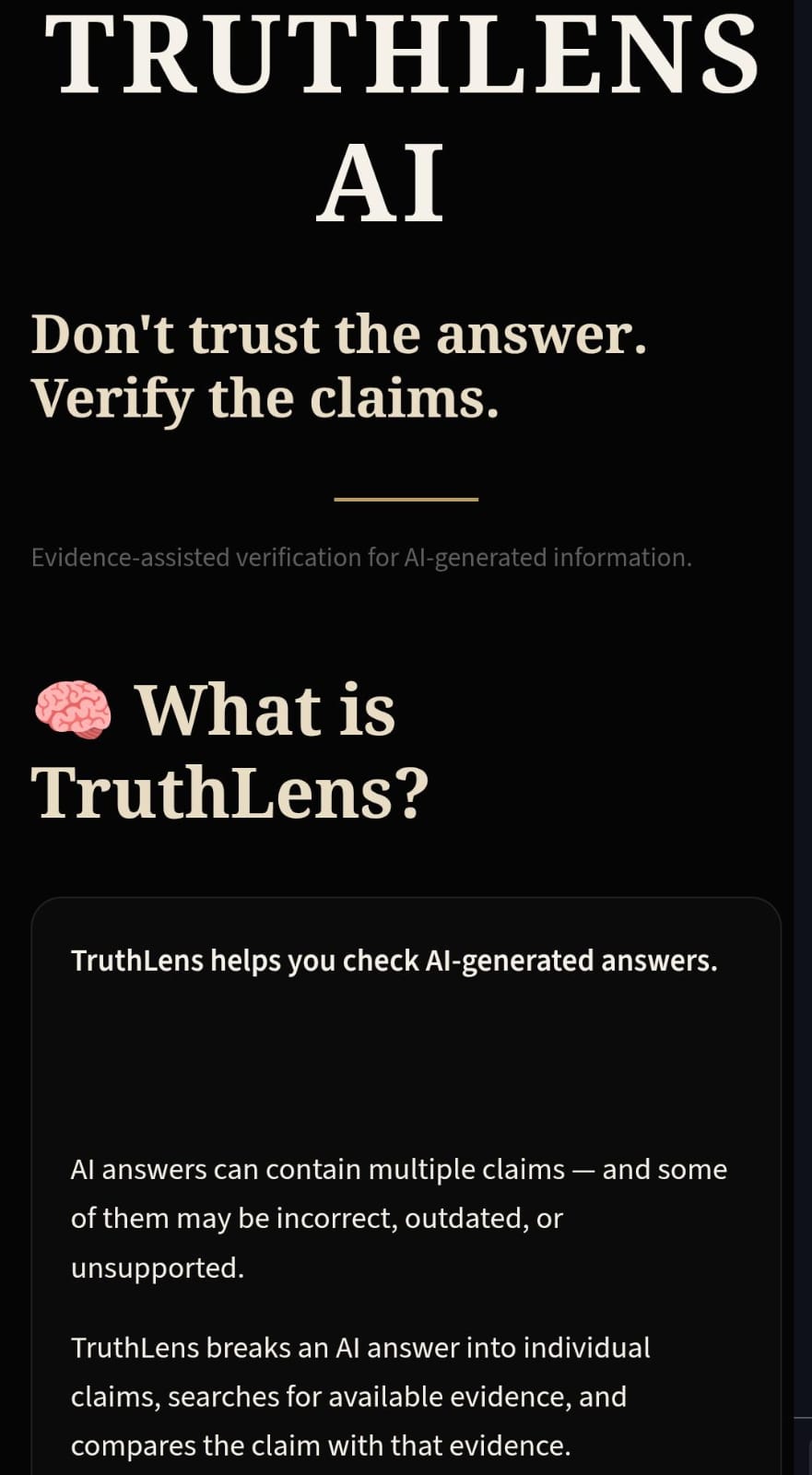
I use AI regularly for studying and finding information. One thing I noticed is that AI can give very confident answers even when some claims are incorrect or unsupported.
That made me wonder: instead of trusting the entire answer, why not check its individual claims?
That's how I came up with TruthLens AI.
How it works
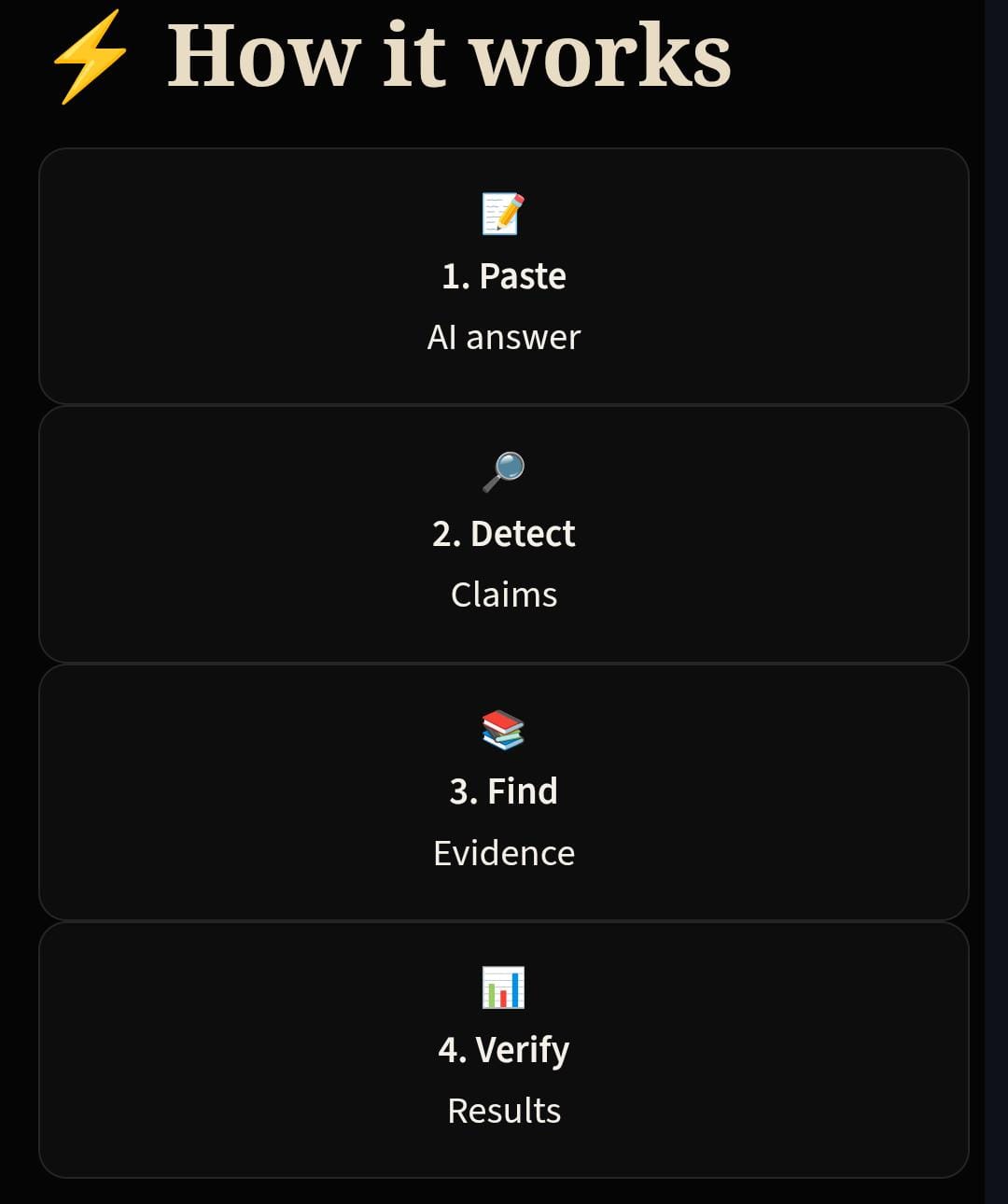
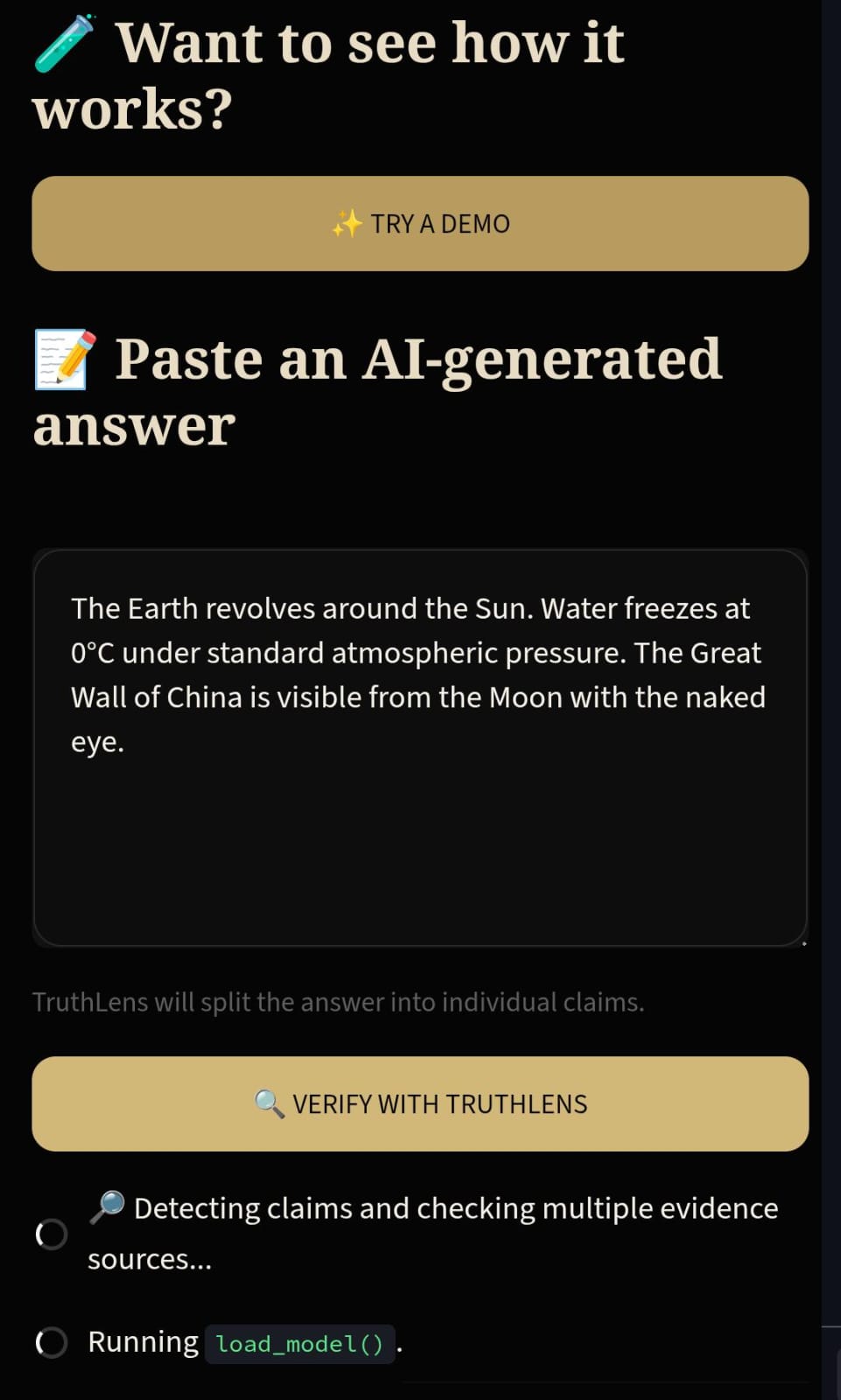
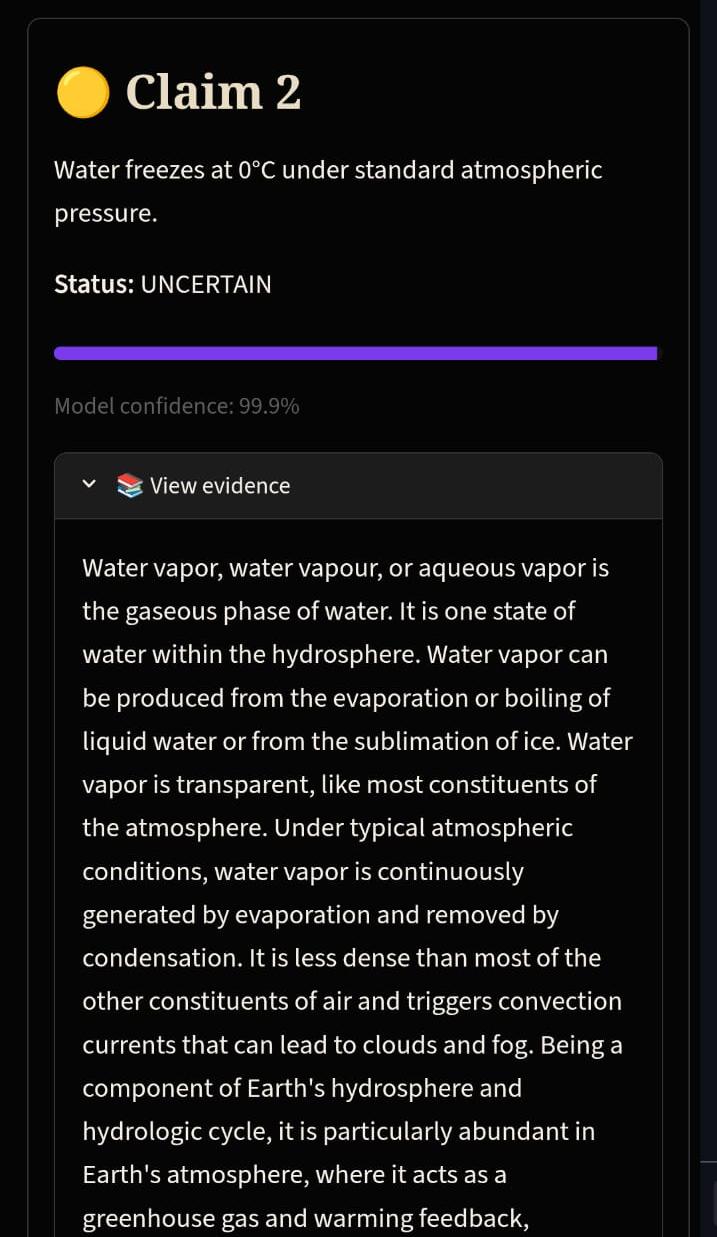
TruthLens takes an AI-generated response and breaks it into individual claims. It then searches for available evidence and uses an NLI model to compare each claim with the evidence.
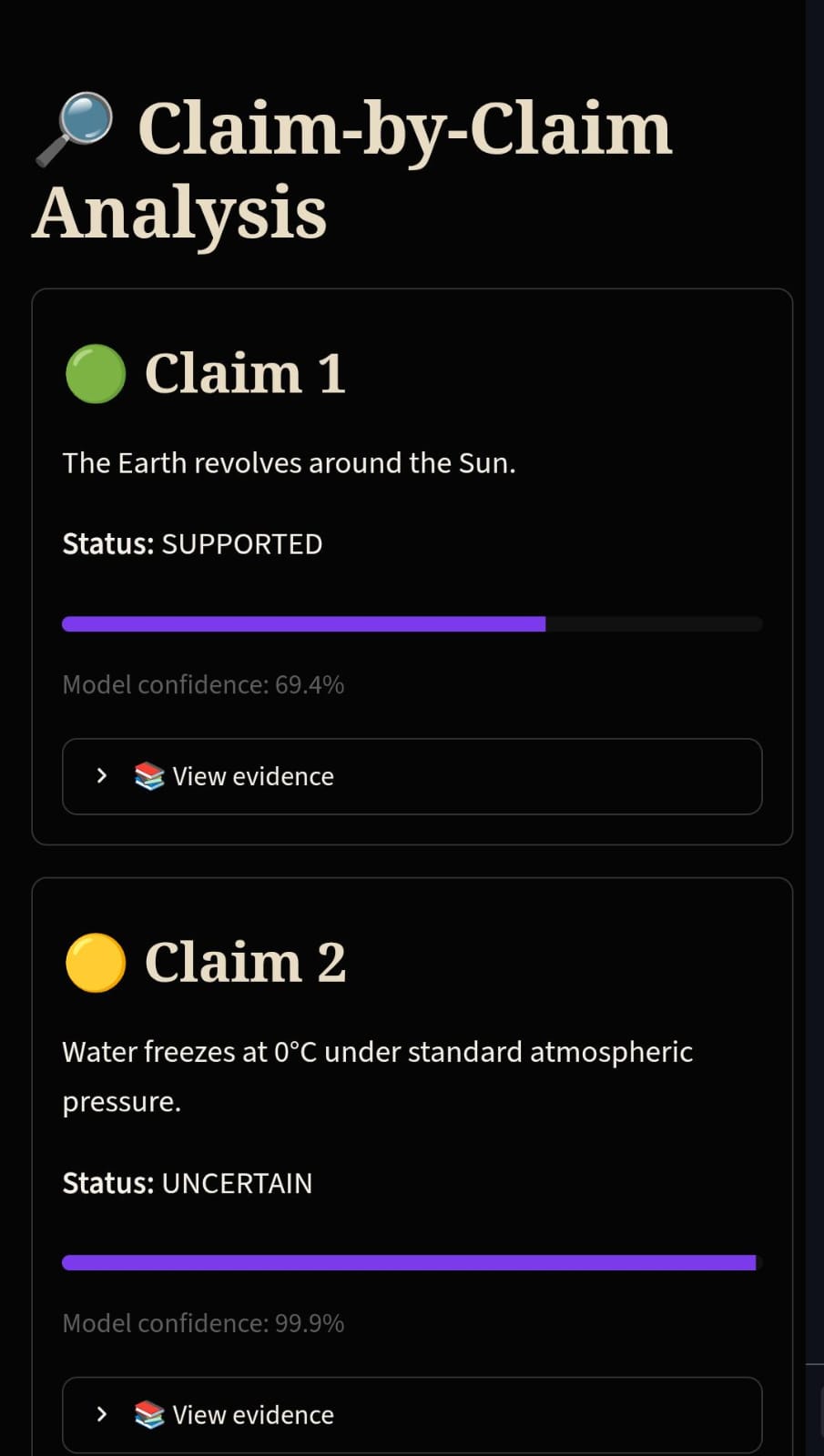
Each claim is classified as:
🟢 Supported 🔴 Contradicted 🟡 Uncertain
The app also provides a reliability score, evidence, and a source link so users can inspect the result themselves.
What I learned
While building TruthLens, I learned how to work with APIs, transformer-based models, evidence retrieval, and Streamlit.
I also learned that fact-checking isn't always black and white. A claim can be true but still be marked uncertain if the available evidence isn't strong enough.
Challenges
The biggest challenge was connecting evidence retrieval with the NLI model. Search results aren't always perfect, and the model sometimes needs better evidence to make a confident decision.
Instead of hiding this limitation, I made uncertainty part of the result.
What's next I want to expand TruthLens with more reliable sources, better evidence ranking, multilingual support, and improved verification.
The goal is simple: make AI-generated information easier to question and verify.


Log in or sign up for Devpost to join the conversation.