-
-

expert_status
-
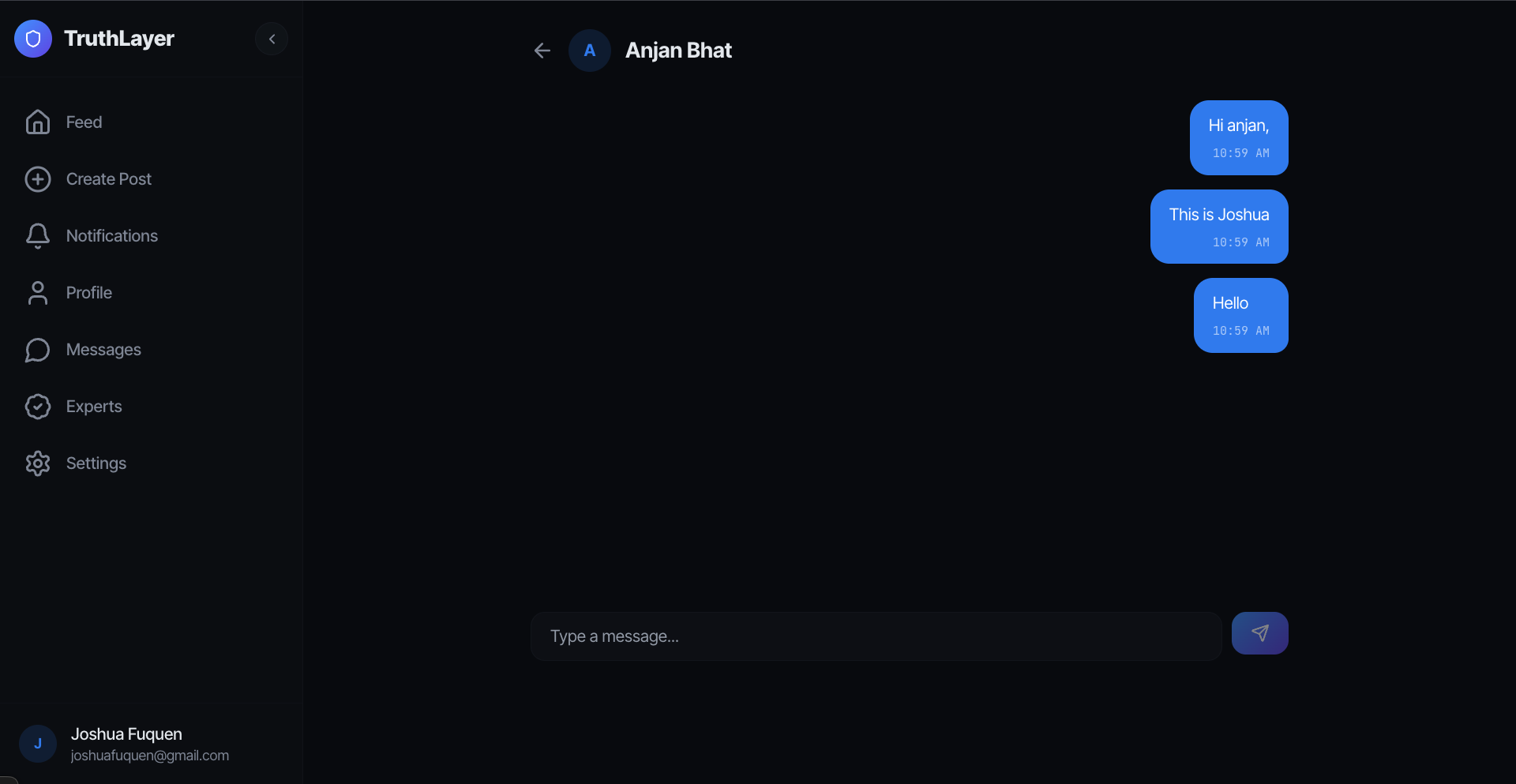
messages
-

create_a_post
-

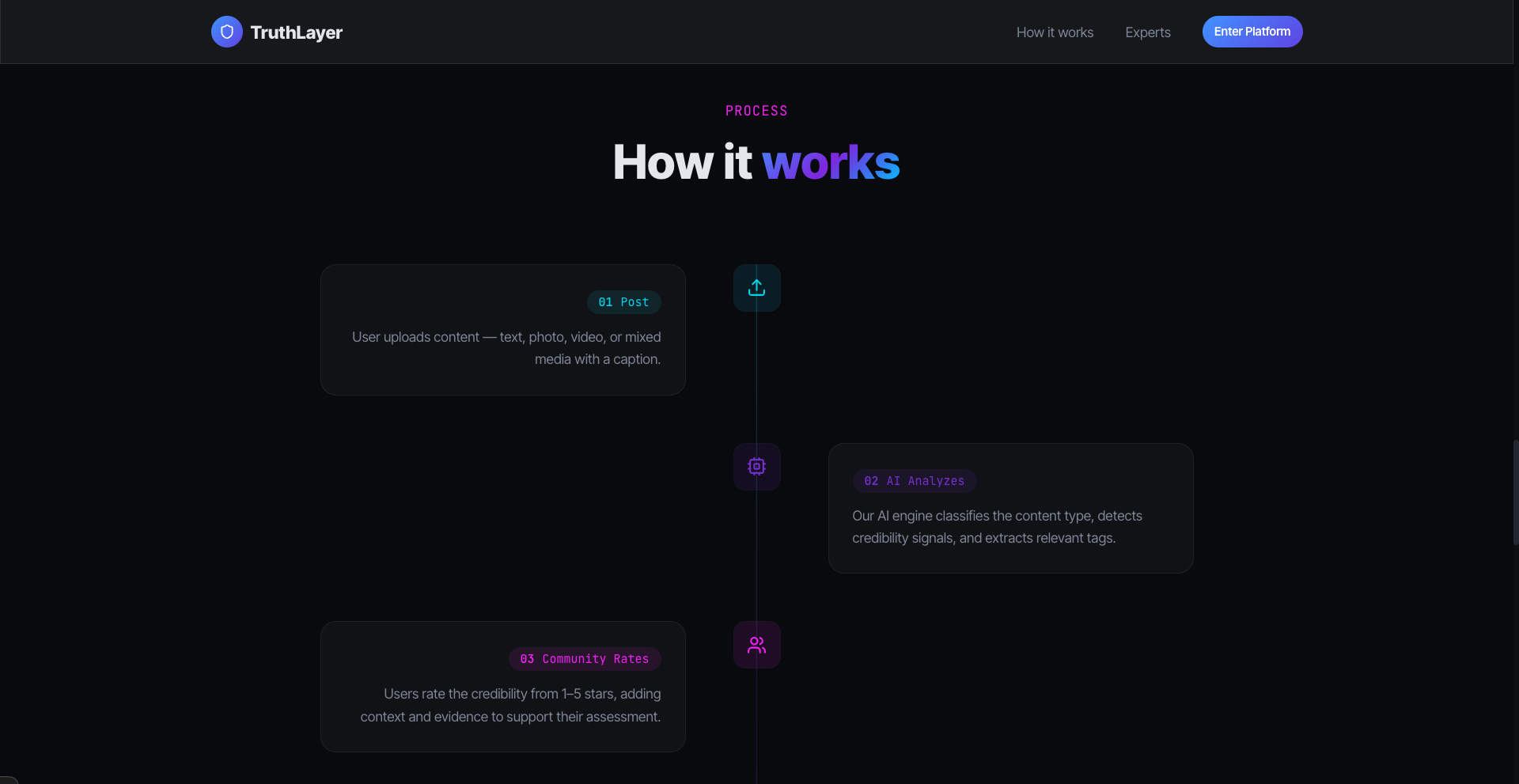
landing/how_it_works2
-
landing/how_it_works1
-
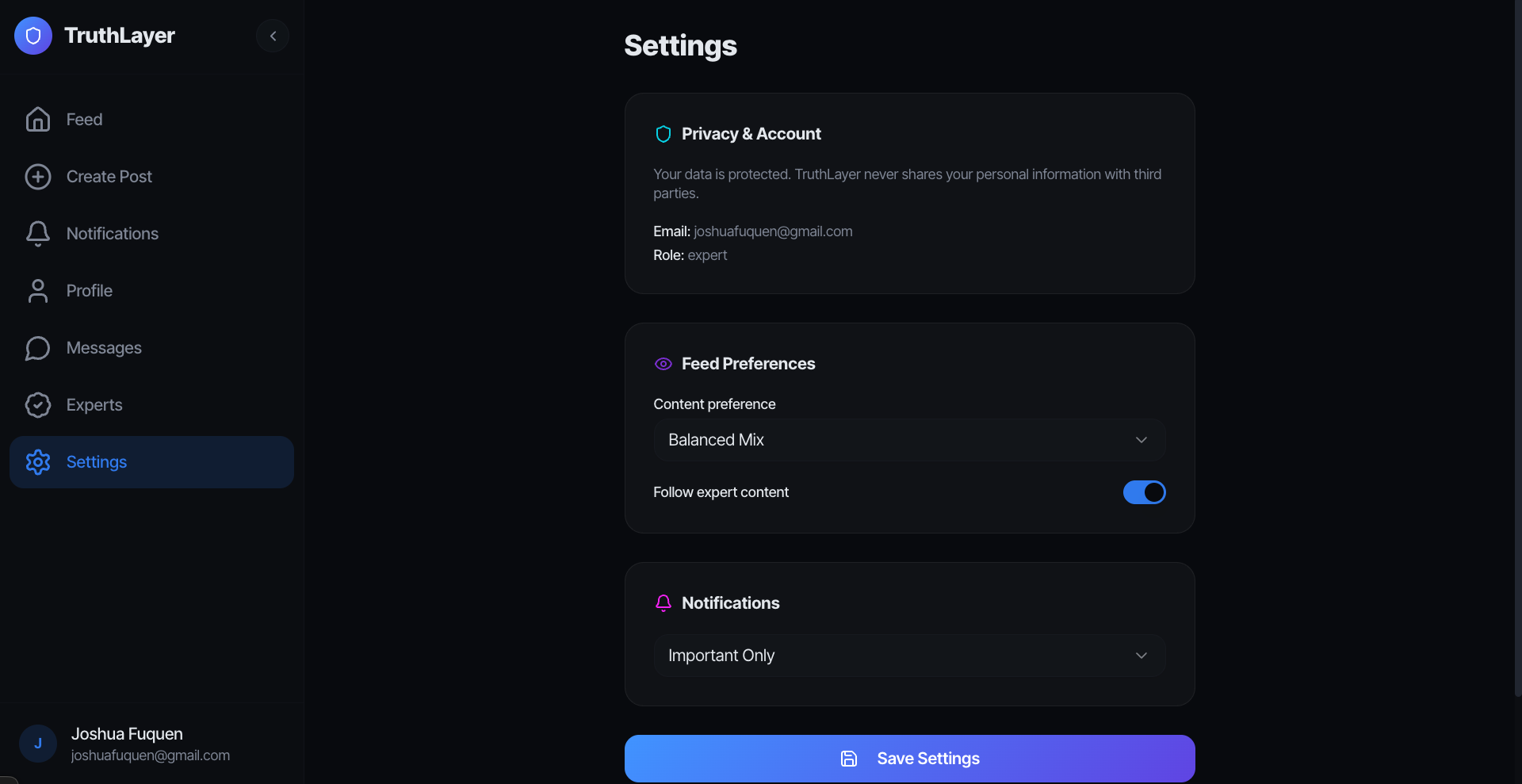
settings
-

feed
-

example_post
-
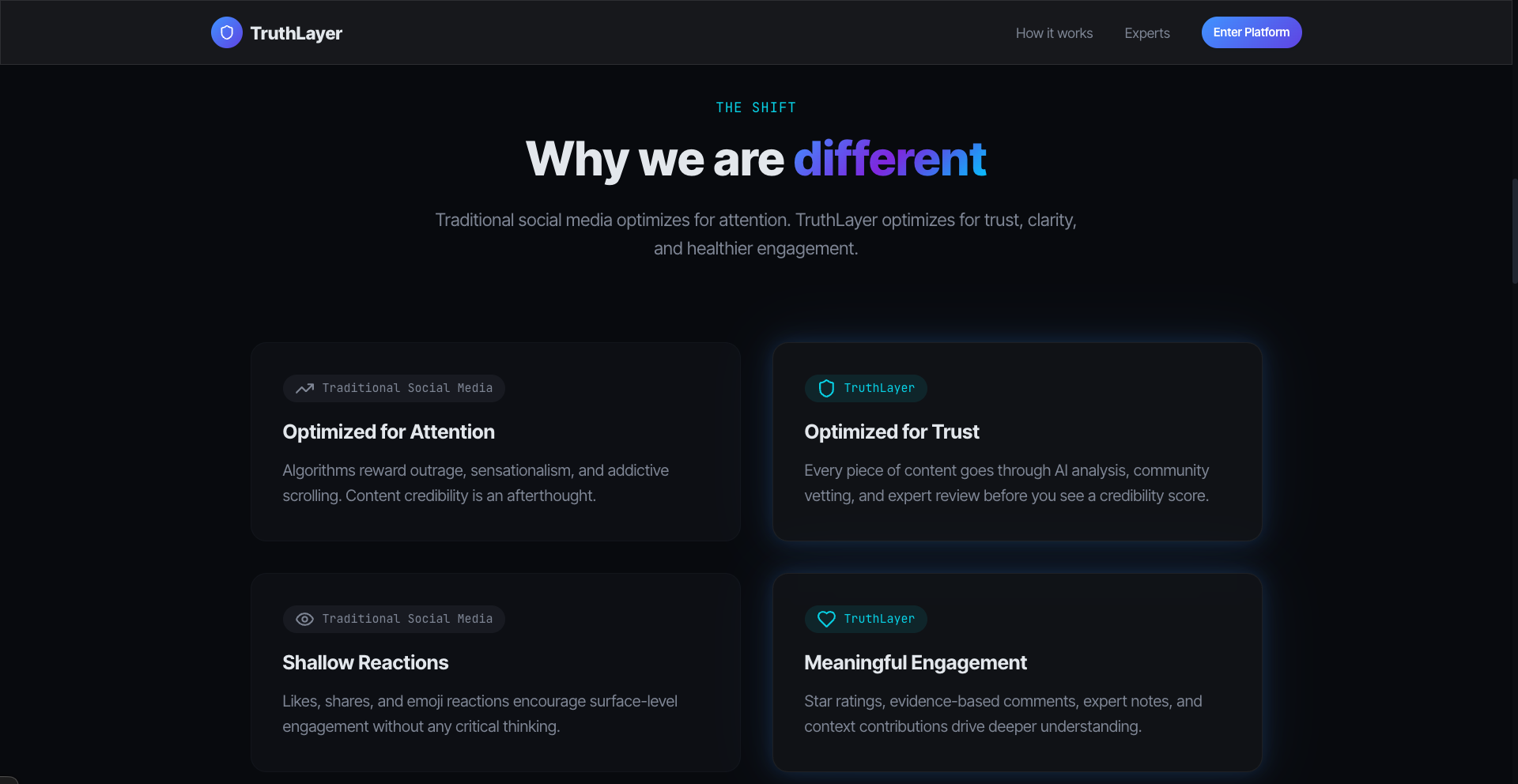
landing/why_are_we_different
-

landing/title
-

profile
-

landing/become_an_expert







Inspiration
We were inspired by a problem that almost everyone experiences but very few platforms truly solve: people are surrounded by content, yet they have less and less confidence in what they see. Today’s platforms are optimized to maximize reach, speed, and reaction, but not trust. That creates a massive gap in the digital world. We saw that gap not just as a problem, but as an opportunity to rethink how people interact with information. TruthLayer was born from the idea that credibility should not be an afterthought. It should be part of the product itself.
What it does
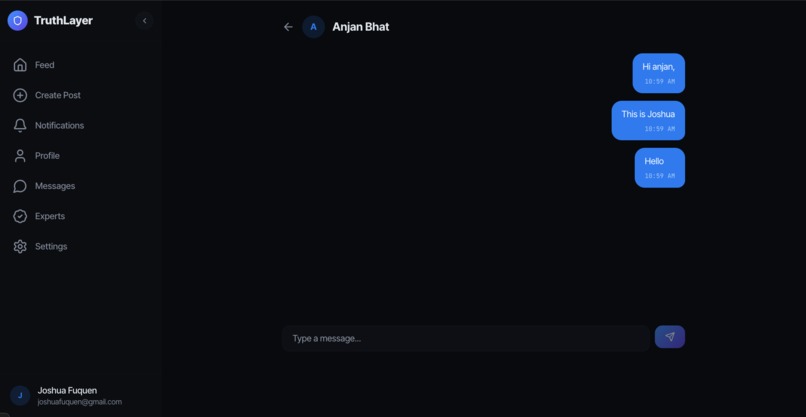
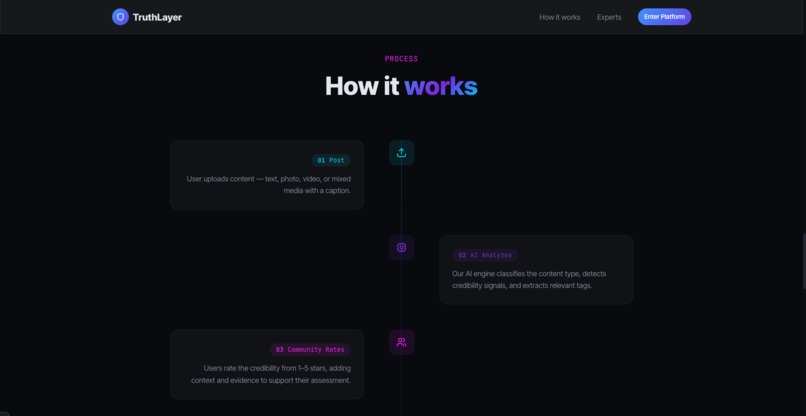
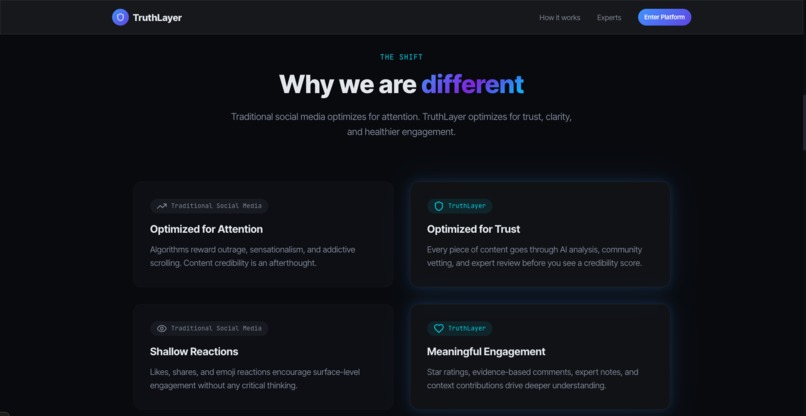
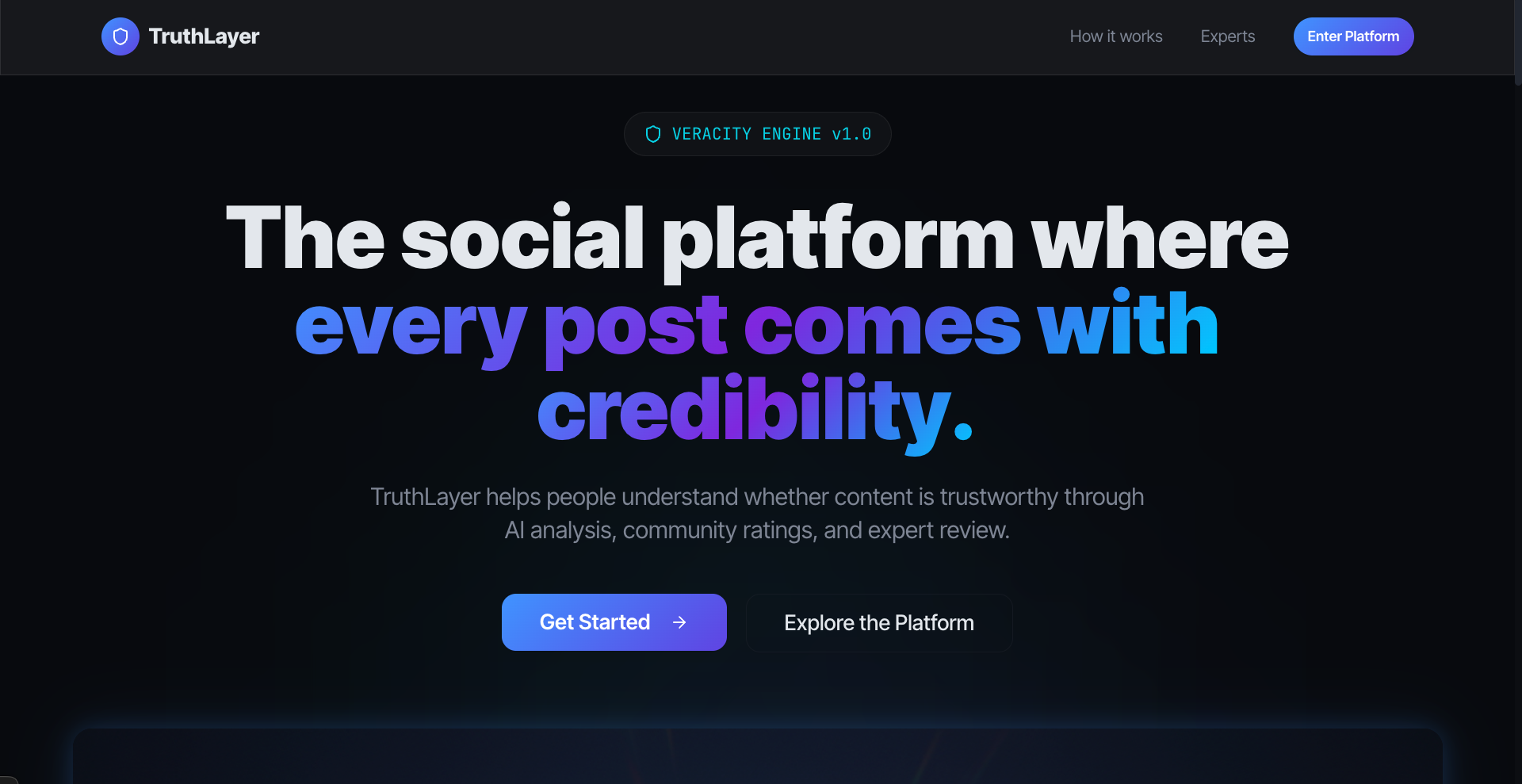
TruthLayer is a trust-centered content platform where every post carries a credibility layer. Users can share photos, videos, captions, statements, and claims, while the platform uses AI analysis, community ratings, and expert input to help evaluate how trustworthy that content is. Instead of forcing users to navigate uncertainty alone, TruthLayer gives them context before they believe, engage with, or share content. At the same time, it promotes healthier interaction, stronger accountability, and more meaningful participation than traditional social platforms.
How we built it
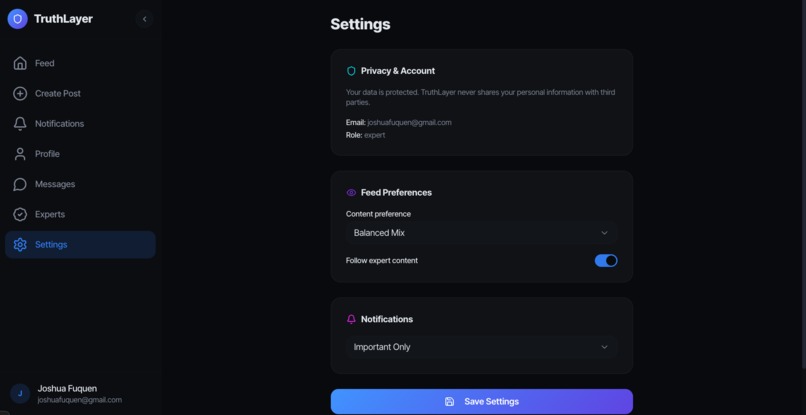
We built TruthLayer as a structured digital product, not just a concept. We designed the experience from the ground up with a landing page, onboarding flow, personalized categories, interactive feed, AI-assisted post analysis, credibility ratings, user profiles, expert applications, direct messaging, comments, and moderation/reporting features. More importantly, we built it around four strategic pillars: misinformation control, mental health, privacy, and meaningful engagement. That gave us a product vision that feels not only functional, but scalable and category-defining.
Challenges we ran into
One of the biggest challenges was balancing credibility with simplicity. Truth is rarely binary, so we had to think carefully about how to create a system that feels intuitive for users without oversimplifying reality. Another challenge was making the platform feel truly different from a traditional social app. We did not want to build “another feed.” We wanted to build something with a stronger purpose and a clearer product identity. That forced us to be more intentional in both design and system logic.
Accomplishments that we're proud of
What we are most proud of is that TruthLayer evolved from an idea about misinformation into a much bigger product vision. We are not just proposing a safer social platform; we are introducing a new way of structuring trust in digital environments. The concept of giving every post a credibility layer, while also connecting that to user accountability, expert participation, AI assistance, and healthier engagement, is what makes this project stand out. We believe that combination gives TruthLayer real potential beyond a classroom project or hackathon prototype.
What we learned
We learned that trust is not a single feature. It is a system. It requires transparency, good incentives, careful design, and a user experience that feels empowering rather than overwhelming. We also learned that the most interesting innovations often come from rethinking broken defaults. Social media has trained people to expect speed, noise, and reaction. Building TruthLayer showed us that there is real space for a platform designed around clarity, credibility, and confidence instead.
What's next for TruthLayer
Next, we want to strengthen the credibility engine, refine the expert verification model, improve evidence-based discussion, and expand the intelligence of the AI layer. We also see strong potential in making TruthLayer more than a standalone platform. Long term, this could evolve into a broader trust infrastructure for digital content: something that not only hosts content, but helps define how trustworthy content is understood across digital ecosystems. That is what excites us most. We believe we are not just building a product for today’s problem, but taking an early step toward a much larger category shift in how people experience information online.
Built With
- auth
- autoprefixer
- base44
- base44sdk
- eslint
- framer-motion-and-lucide
- framermotion
- javascriptjsx
- lucidereact
- postcss
- powered-by-base44-backend/auth/entities-via-@base44/sdk
- radixui
- react18
- reactrouter
- shadcnui
- tailwind-css-+-radix/shadcn-ui
- tailwindcss
- tanstackreactquery
- vite

Log in or sign up for Devpost to join the conversation.