-
Architecture Diagram
-

Home Page

Inspiration
In today’s digital world, misinformation spreads faster than verified truth. Social media platforms are flooded with manipulated narratives, emotionally charged headlines, fabricated claims, and AI-generated misinformation designed to influence public perception.
We were inspired by the growing impact of fake news, political misinformation, emotional manipulation, and digital scams driven by misleading online content.
Most existing tools only classify information as “fake” or “real” without explaining why content is misleading. We wanted to build a system that goes beyond detection.
TruthGuard AI was created to help users:
- Understand manipulation tactics
- Improve media literacy
- Think critically online
- Make safer digital decisions
Our goal was to combine AI with explainable digital forensics to promote truth, transparency, and responsible information sharing.
What it does
TruthGuard AI is an AI-powered misinformation detection and digital forensics platform.
The system analyzes text content in real time and provides:
- Credibility scoring
- Misinformation detection
- Timeline inconsistency analysis
- Psychological manipulation detection
- Bias & sensationalism analysis
- Explainable forensic reasoning
- Truthful neutral rewrites
- User safety recommendations
The platform identifies patterns commonly found in misleading narratives, including:
- Fear amplification
- Authority misuse
- Emotional manipulation
- Contradictory claims
- Fabricated timelines
- Sensational framing
Instead of only labeling information, TruthGuard AI explains:
- Why content appears suspicious
- Which manipulation tactics were detected
- What risks exist
- How users should interpret the information responsibly
How we built it
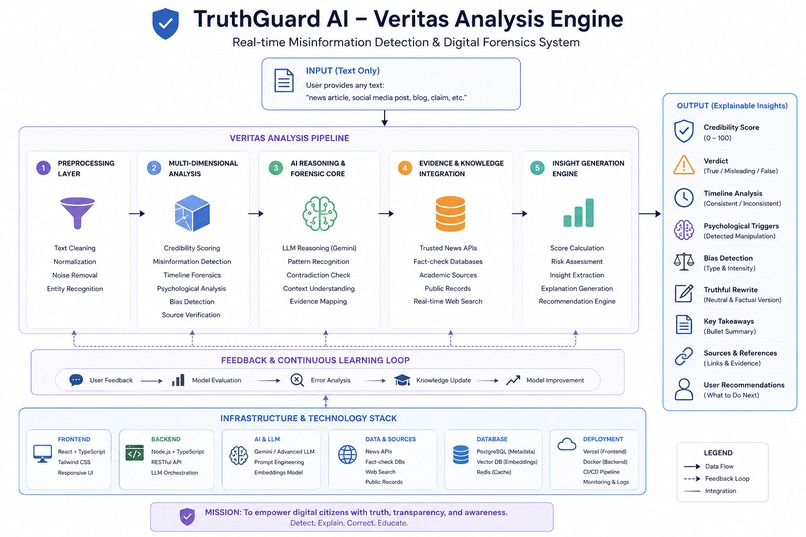
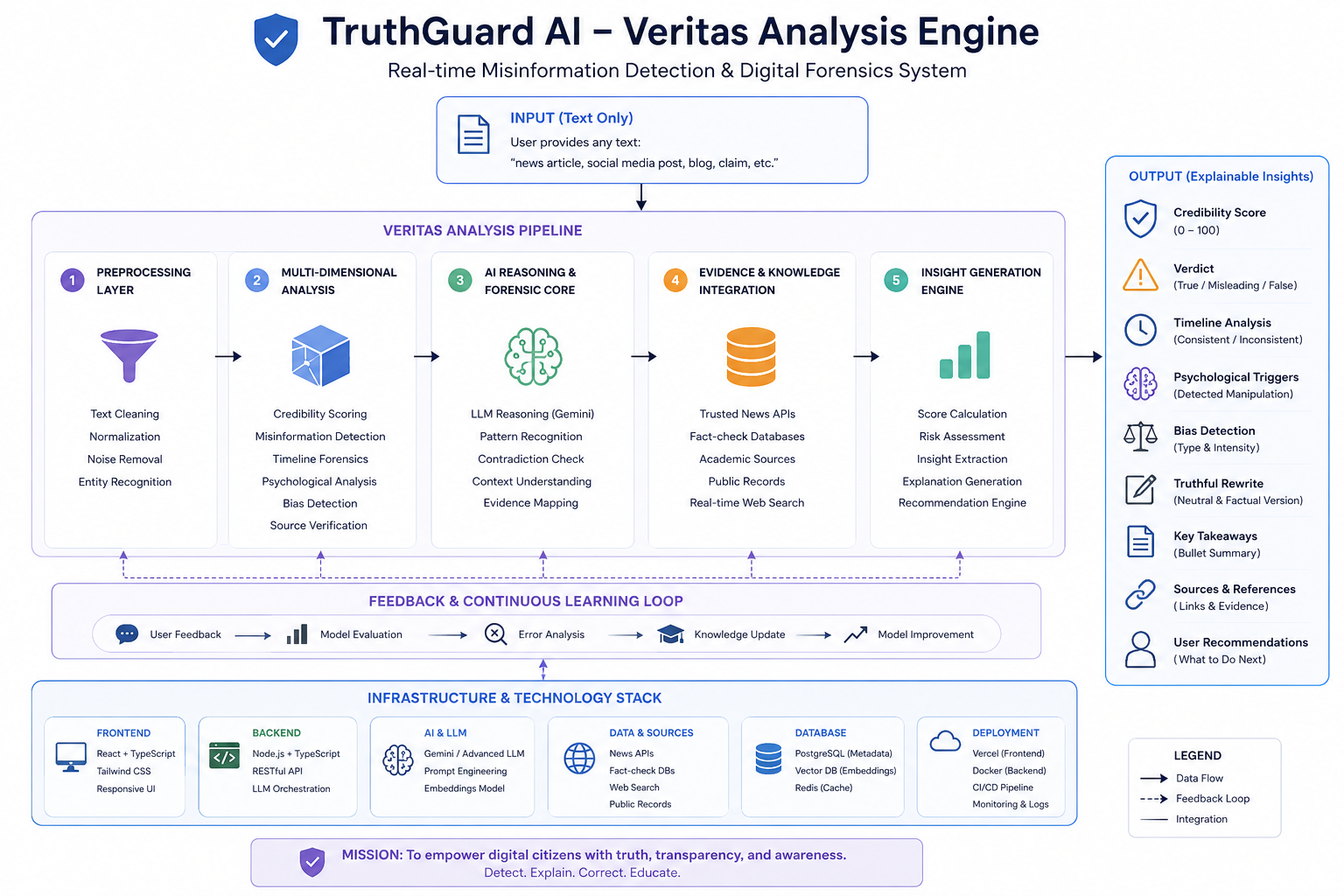
TruthGuard AI was built using a modern AI-driven architecture focused on explainability and forensic reasoning.
Frontend
- React
- TypeScript
- Tailwind CSS
- Vite
AI & Analysis Engine
- Gemini API / Advanced LLM reasoning
- Structured Prompt Engineering
- Multi-dimensional forensic analysis pipeline
Core Analysis Pipeline
The platform processes content through multiple stages:
- Text preprocessing
- Credibility analysis
- Timeline verification
- Psychological trigger analysis
- Bias detection
- AI forensic reasoning
- Explainable insight generation
Deployment
- Vercel
The system architecture was designed to simulate a real-world digital forensic intelligence engine rather than a simple chatbot interface.
Challenges we ran into
One of the biggest challenges was designing a system that produces meaningful forensic explanations instead of generic AI responses.
Explainable AI Reasoning
Creating outputs that explain:
- why content is misleading
- what manipulation techniques were used
- how credibility was calculated
Balancing Detection & Neutrality
We wanted the platform to:
- avoid extreme assumptions
- remain neutral
- encourage critical thinking instead of aggressively labeling everything as fake.
Multi-Dimensional Analysis
Combining:
- credibility scoring
- psychological analysis
- timeline forensics
- bias detection into one coherent pipeline required extensive prompt engineering and structured analysis design.
UI/UX Design
We focused heavily on creating a professional and trustworthy interface because misinformation platforms must visually communicate clarity and credibility.
Accomplishments that we're proud of
We are proud that TruthGuard AI evolved into more than just a fake-news detector.
Key accomplishments include:
- Building a real-time explainable AI forensic system
- Designing a professional multi-stage analysis pipeline
- Creating AI-generated factual rewrites
- Implementing psychological manipulation analysis
- Developing a clean and modern UI/UX
- Successfully deploying the platform publicly
- Aligning the project with European values of truth, transparency, and digital responsibility
We are especially proud of the platform’s ability to educate users instead of simply classifying content.
What we learned
This project taught us that misinformation detection is not only a technical problem — it is also a human and social challenge.
We learned:
- How explainable AI improves user trust
- The importance of responsible AI systems
- How emotional framing influences perception
- How AI can support media literacy
- The value of structured forensic reasoning
- The importance of thoughtful UI/UX in trust-based platforms
We also gained deeper experience in:
- Prompt engineering
- AI orchestration
- Frontend system design
- Human-centered AI development
What's next for TruthGuard AI — Veritas Analysis Engine
We plan to expand TruthGuard AI into a larger real-world misinformation defense ecosystem.
Planned Future Features
Browser Extension
Real-time misinformation detection while browsing the web.
Social Media Integration
Support for:
- X / Twitter
- Telegram
- News platforms
AI Image & Deepfake Detection
Analyze manipulated:
- images
- videos
- synthetic media
Multilingual Support
Support for multiple global and regional languages.
Live Fact Verification
Integration with:
- fact-checking databases
- trusted news APIs
- public evidence systems
Advanced Forensic Dashboard
Interactive visualization for:
- misinformation trends
- credibility analytics
- risk intelligence
Digital Awareness Platform
Transform TruthGuard AI into a broader educational platform promoting:
- media literacy
- responsible AI use
- digital safety awareness
TruthGuard AI aims to promote truth, transparency, responsible AI usage, and safer digital communities.
Built With
- gemini
- promptengineering
- react
- tailwand
- typescript
- vercel
- vite


Log in or sign up for Devpost to join the conversation.