-
-
Truth Logo
-
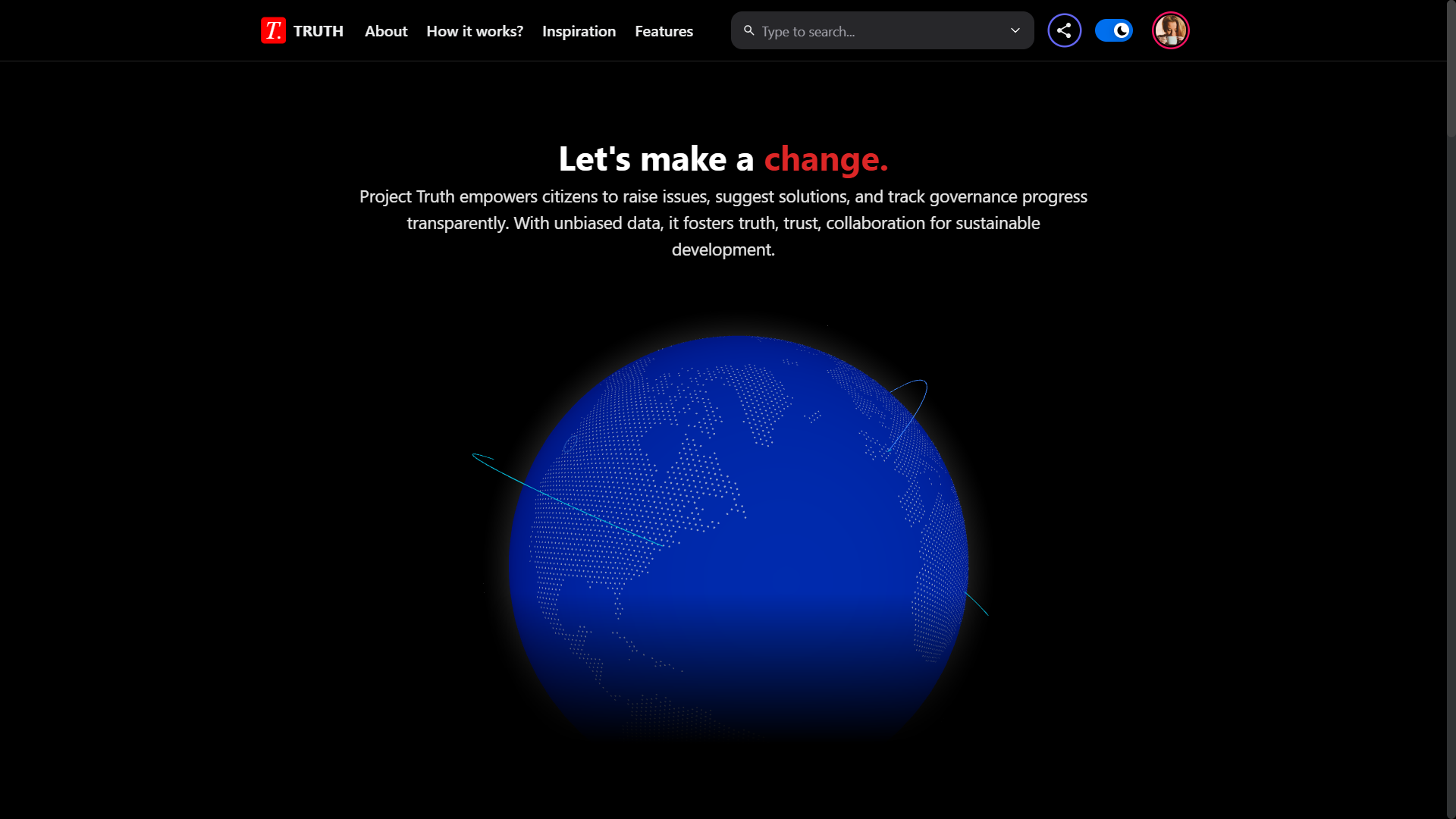
Landing Page
-
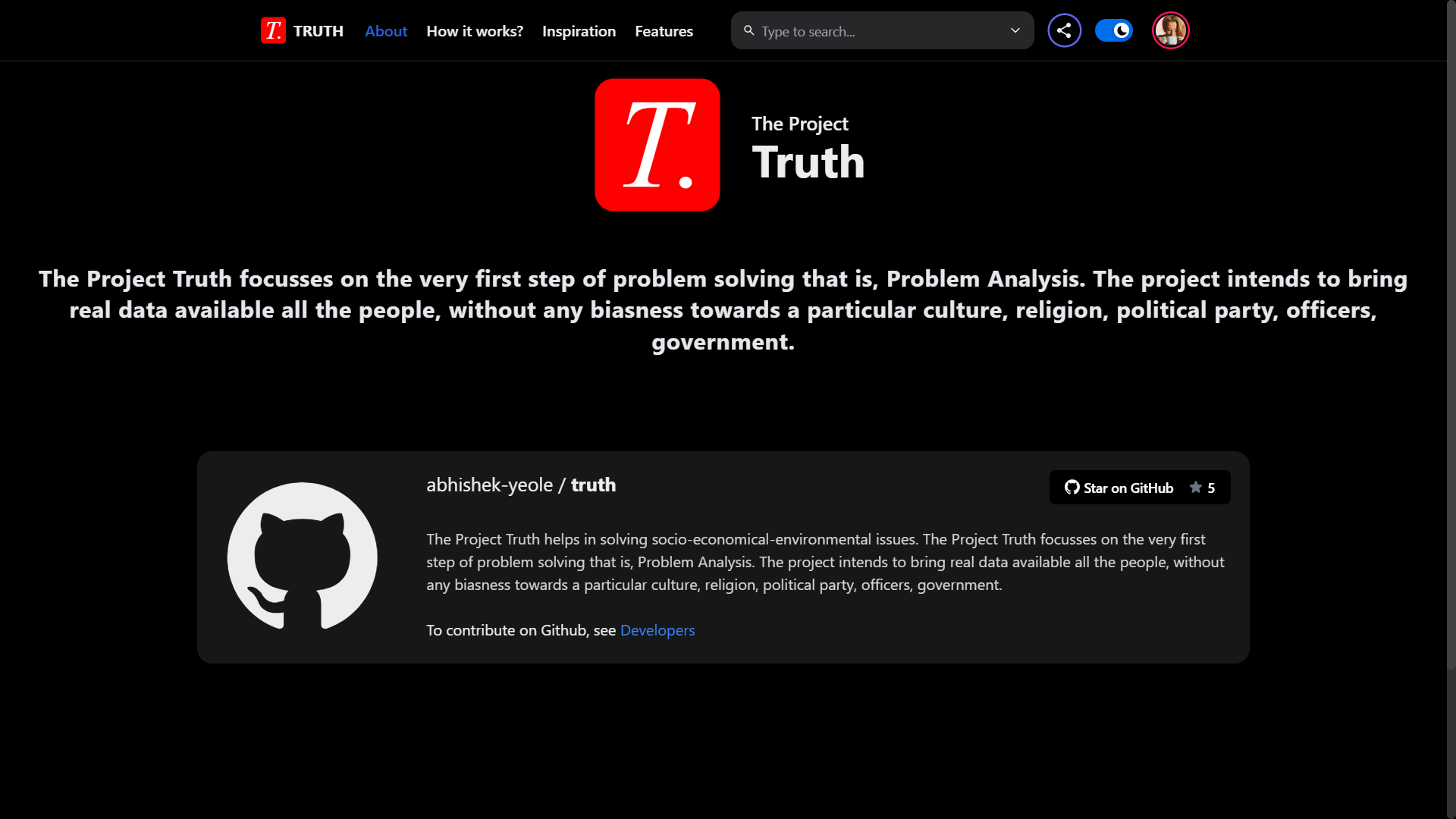
About
-
Working
-
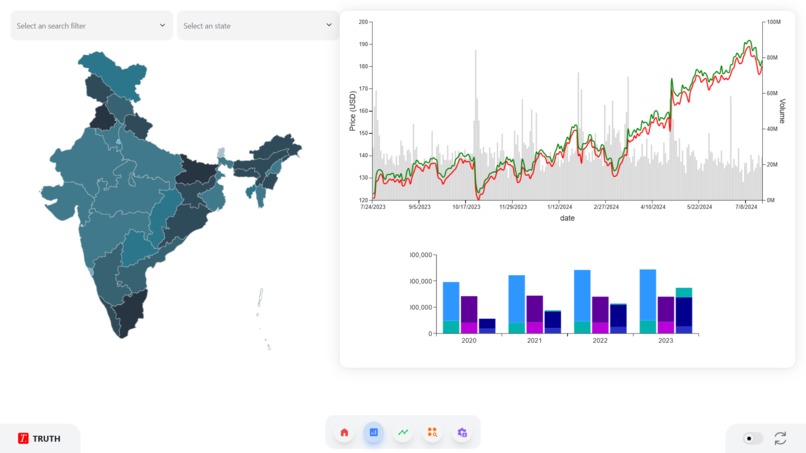
Analytics Demo
Inspiration
Project Truth was inspired by the need for transparency, accountability, and data-driven decision-making in governance. Observing the impact of biased social media narratives and false claims, we wanted to create a platform that empowers citizens to raise, track, and solve societal issues. The opportunity to contribute to UN SDG Goal 16 at the GNEC Hackathon 2024 Fall further fueled our drive. Tools like Ground News' emphasis on neutral, unbiased data also played a key role in shaping our vision for this project.
What it does
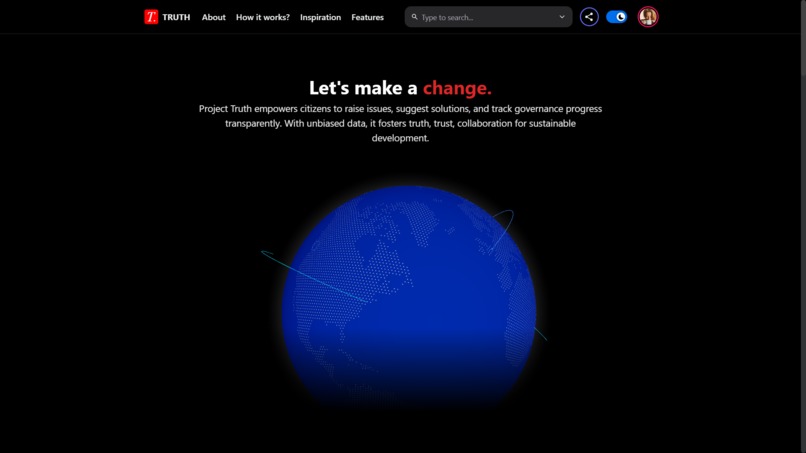
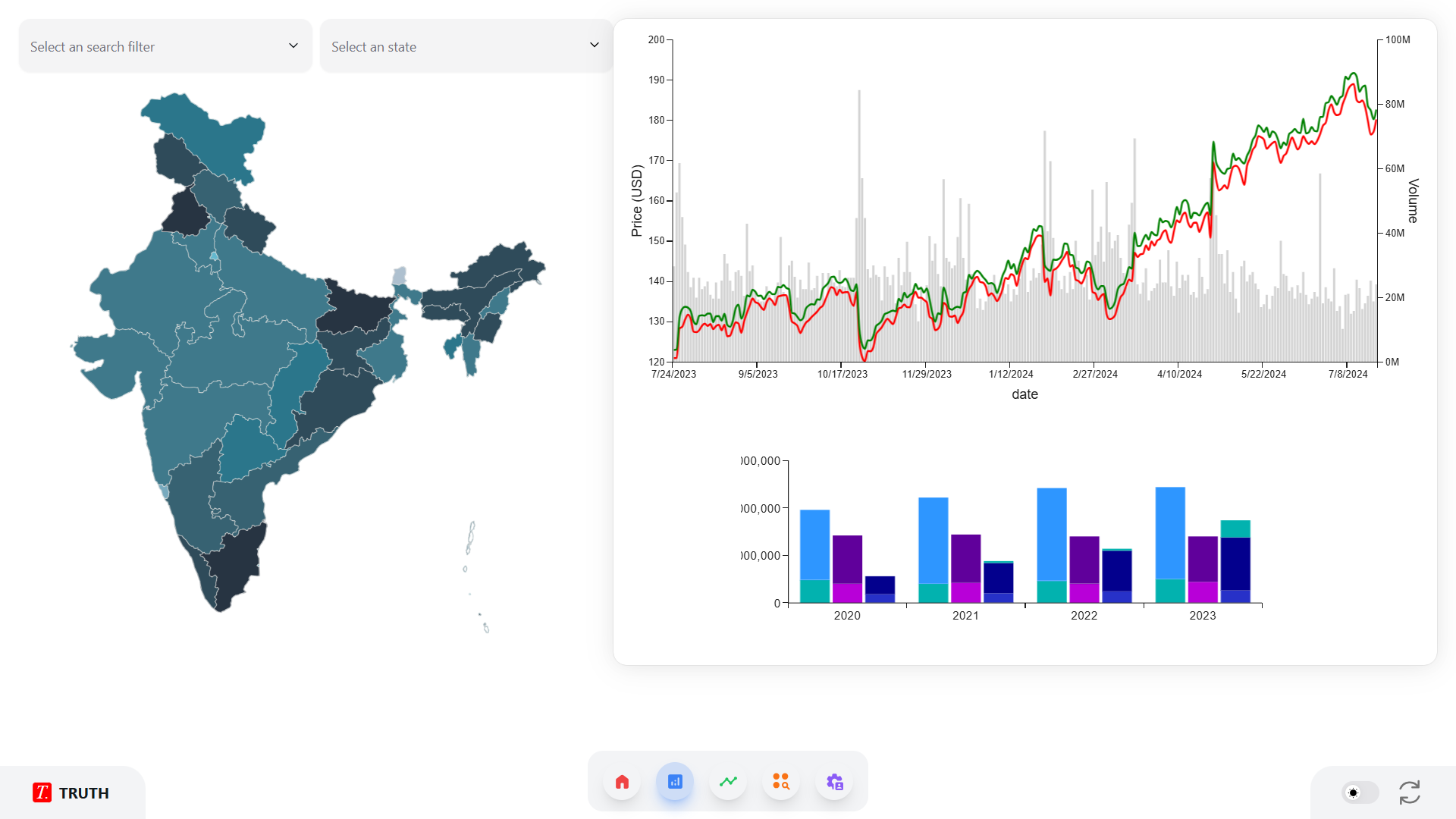
Project Truth allows citizens to raise issues with political leaders, government departments, or societal concerns, suggest solutions, and track progress transparently. The platform anonymizes data to protect user privacy while providing insights into government performance through data analysis and visualization. It helps users verify if issues have been resolved and fosters collective problem-solving through direct citizen involvement.
How we built it
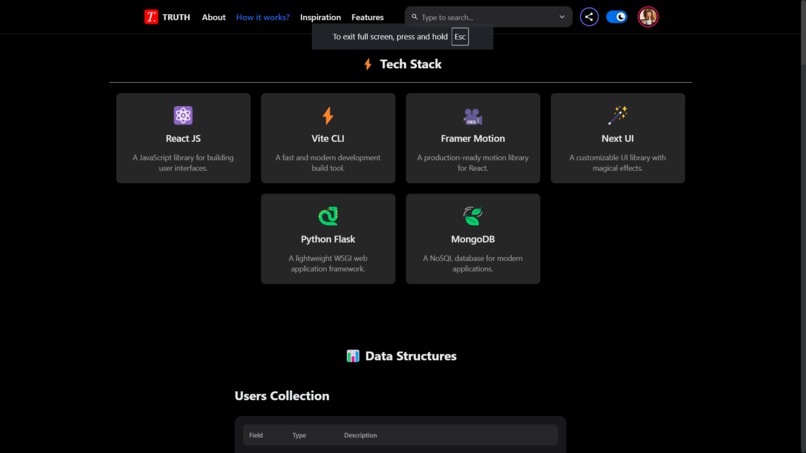
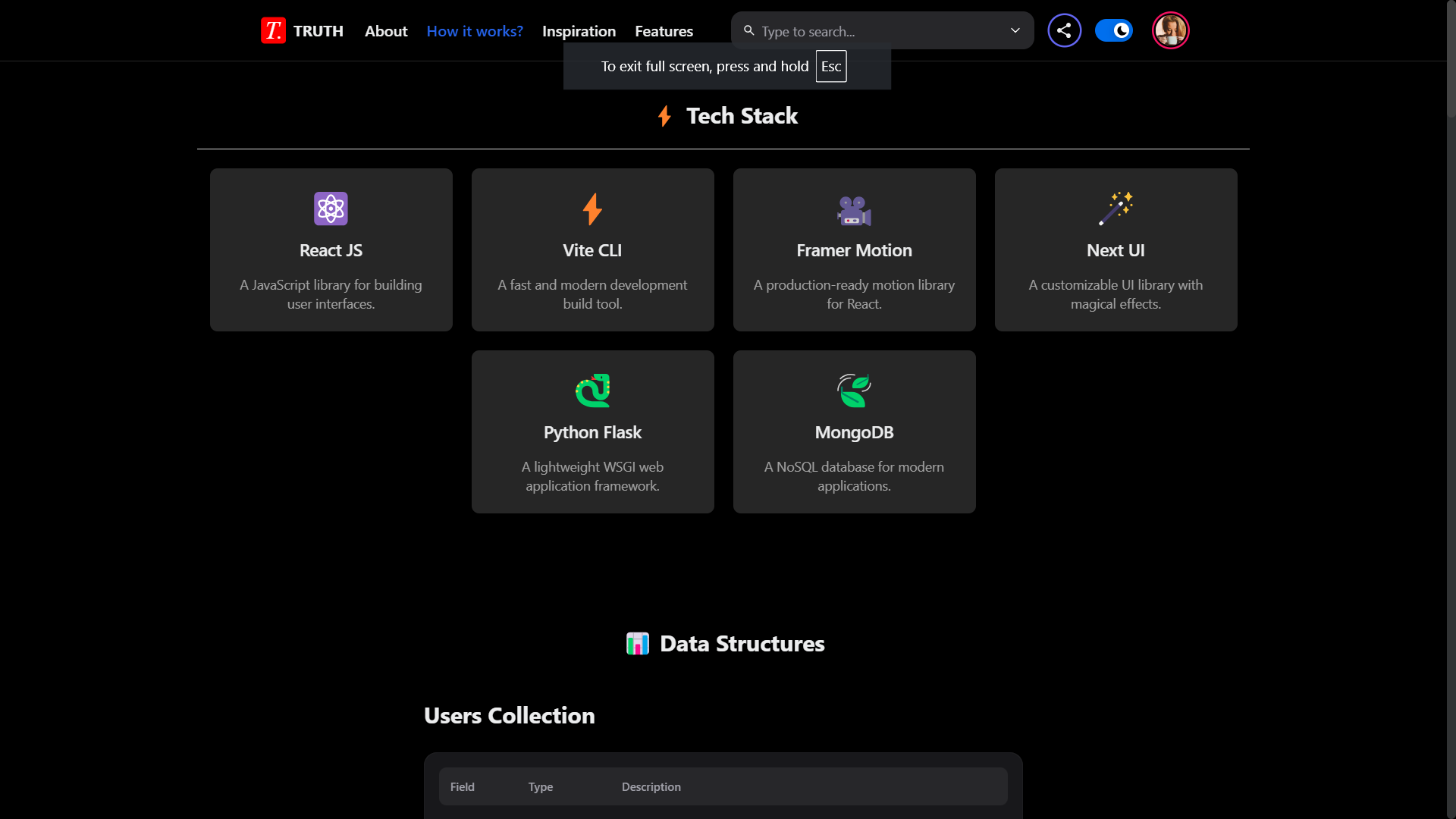
We developed Project Truth using:
- Frontend: React for a responsive, interactive user interface and Tailwind CSS for styling.
- Backend: Python Flask to manage the application logic and user submissions.
- Database: MongoDB for storing anonymized issue data and user interactions.
- Mapping & Analytics: Integrated APIs for map visualizations and real-time data analytics to track issue resolutions and governance performance.
Challenges we ran into
- Data Privacy: Ensuring secure user verification while maintaining privacy was a major hurdle. We implemented email-based verification for the prototype, but future iterations will involve government-approved IDs for more secure verification.
- Eliminating Bias: Ensuring that all data is processed and presented without bias required careful filtering and abstraction techniques.
- Data Visualization: Displaying large datasets clearly and interactively took considerable time and development effort.
- Scalability: Handling a growing user base and increasing amounts of data required designing a scalable system that maintained performance.
Accomplishments that we're proud of
- Developed a working prototype that effectively collects, analyzes, and visualizes data on societal issues and governance.
- Ensured user privacy and created a system that encourages transparency and citizen involvement.
- Laid the foundation for future integration with government systems for secure user verification.
What we learned
- The importance of unbiased data: Neutral and transparent data can significantly improve public trust in governance.
- User experience matters: Building a platform that is easy to use is essential for broad citizen engagement.
- Privacy and security are crucial: Safeguarding user data while maintaining the platform's functionality was a key learning experience.
- Collaboration: Working with diverse team members led to more innovative solutions and broader perspectives.
What's next for Truth
- Government Collaboration: Future versions will feature government-approved verification systems for more secure data.
- Enhanced Analytics: We plan to develop more sophisticated data analysis tools to provide deeper insights into governance performance.
- Wider Public Engagement: We aim to increase awareness of the platform and encourage more users to participate in raising and resolving societal issues.
- Scalability: We’ll continue improving the platform’s infrastructure to handle growing data and user bases efficiently.
Project Truth is just the beginning, and we’re excited for the journey ahead as we work to create a transparent, accountable society!

Log in or sign up for Devpost to join the conversation.