About Truth or Dare AI
Inspiration
The classic party game Truth or Dare has been a staple of social gatherings for generations. However, we noticed that traditional versions often have limitations:
- Static question banks that quickly become repetitive
- Questions that might be inappropriate for certain groups
- Lack of personalization based on player preferences
- Limited adaptability to different social settings
We saw an opportunity to modernize this beloved game using AI technology to create a more dynamic, inclusive, and engaging experience.
What We Built
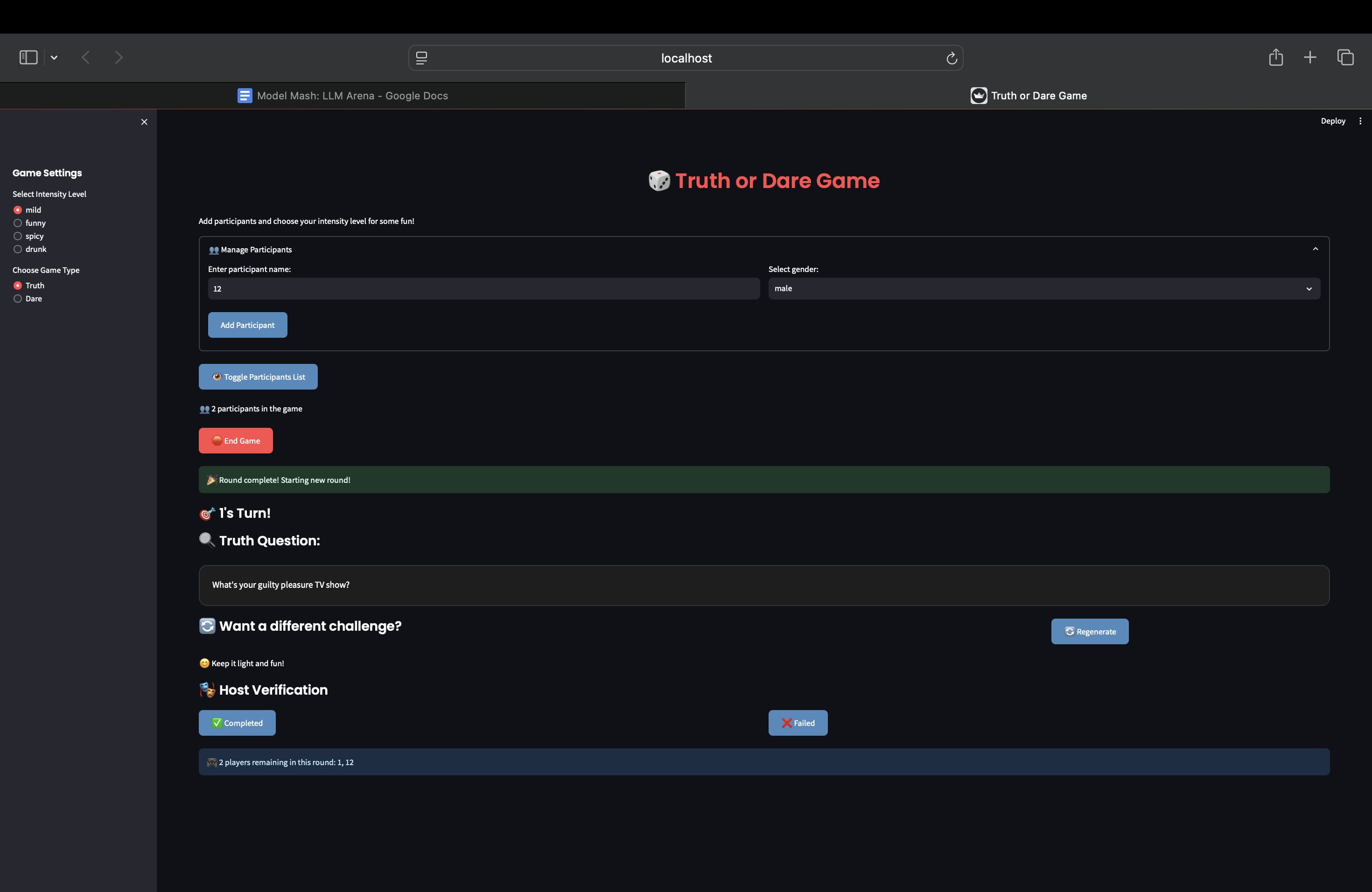
Truth or Dare AI is a web application that brings the classic party game into the digital age. Using Streamlit for the frontend and Google's Gemini Pro API for AI-powered content generation, we created a game that:
- Adapts questions based on player demographics
- Offers multiple intensity levels (mild, funny, spicy, drunk)
- Generates personalized content in real-time
- Maintains a fun and appropriate atmosphere for all players
How We Built It
The project was built using:
- Frontend: Streamlit for a responsive, user-friendly interface
- Backend: Python for game logic and state management
- AI Integration: Google's Gemini Pro API for dynamic content generation
- Development Tools: Git for version control and VS Code for development
The application features a carefully curated question bank with over 100 questions and dares, categorized by intensity and demographics. We implemented session state management to maintain game progress and player preferences.
Challenges We Faced
- Content Curation: Creating a diverse and appropriate question bank that appeals to different audiences while maintaining a fun atmosphere
- AI Integration: Fine-tuning the Gemini Pro API to generate contextually appropriate and engaging content
- State Management: Implementing effective session state management in Streamlit to maintain game flow
- User Experience: Balancing simplicity with feature richness to create an intuitive interface
What We Learned
- The importance of user experience in game design
- Effective state management in Streamlit applications
- Best practices for AI prompt engineering
- Creating inclusive content for diverse audiences
- Balancing different intensity levels in social games
Future Improvements
We plan to:
- Add multiplayer support with real-time interaction
- Implement a scoring system
- Expand the question bank with user-generated content
- Add themed question packs for specific occasions
- Incorporate machine learning to better personalize questions based on player responses

Log in or sign up for Devpost to join the conversation.