Inspiration
Misinformation has become one of the biggest challenges of the digital age. News spreads within seconds, but verifying its authenticity often takes much longer. As regular users of social media and online news, we noticed how easily misleading headlines, manipulated images, and unverified claims are shared without proper verification.
Most existing tools focus on a single content type or provide a result without explaining why the content is unreliable. This inspired us to build Truth Lens — a platform that helps users verify information before sharing it, using transparent and explainable AI.
What it does
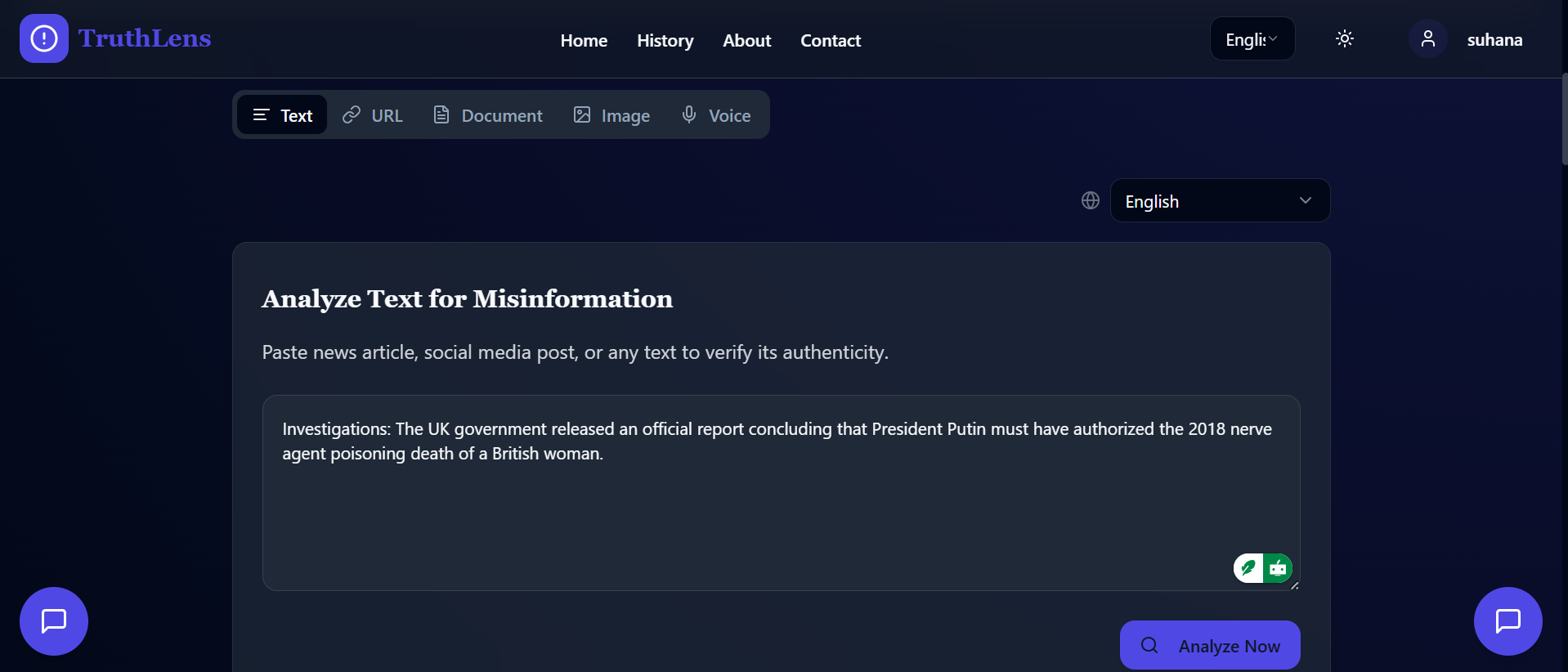
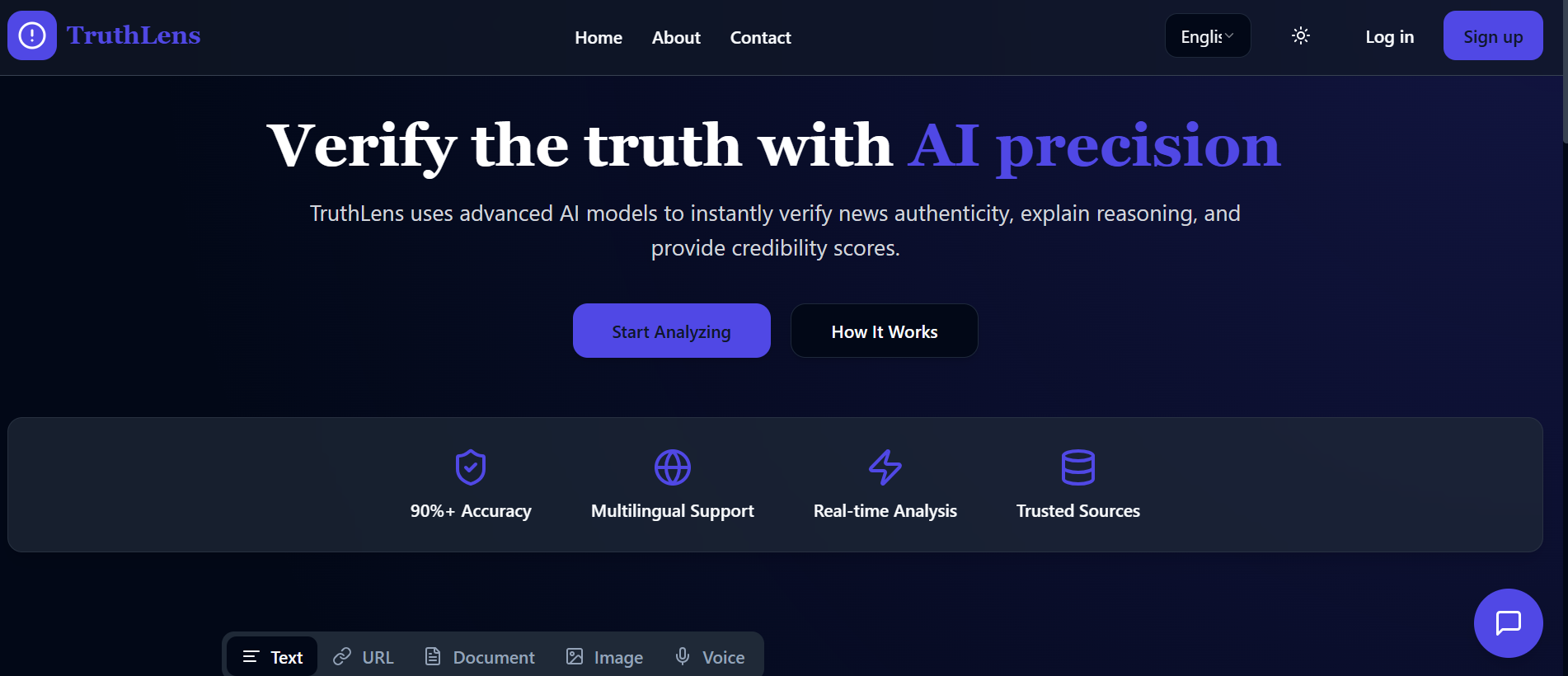
Truth Lens is an AI-powered fake news detection and fact-checking platform that analyzes information across multiple formats:
- Text and news articles
- Social media posts
- Website URLs
- Images and screenshots
- Documents such as PDFs
- Voice input
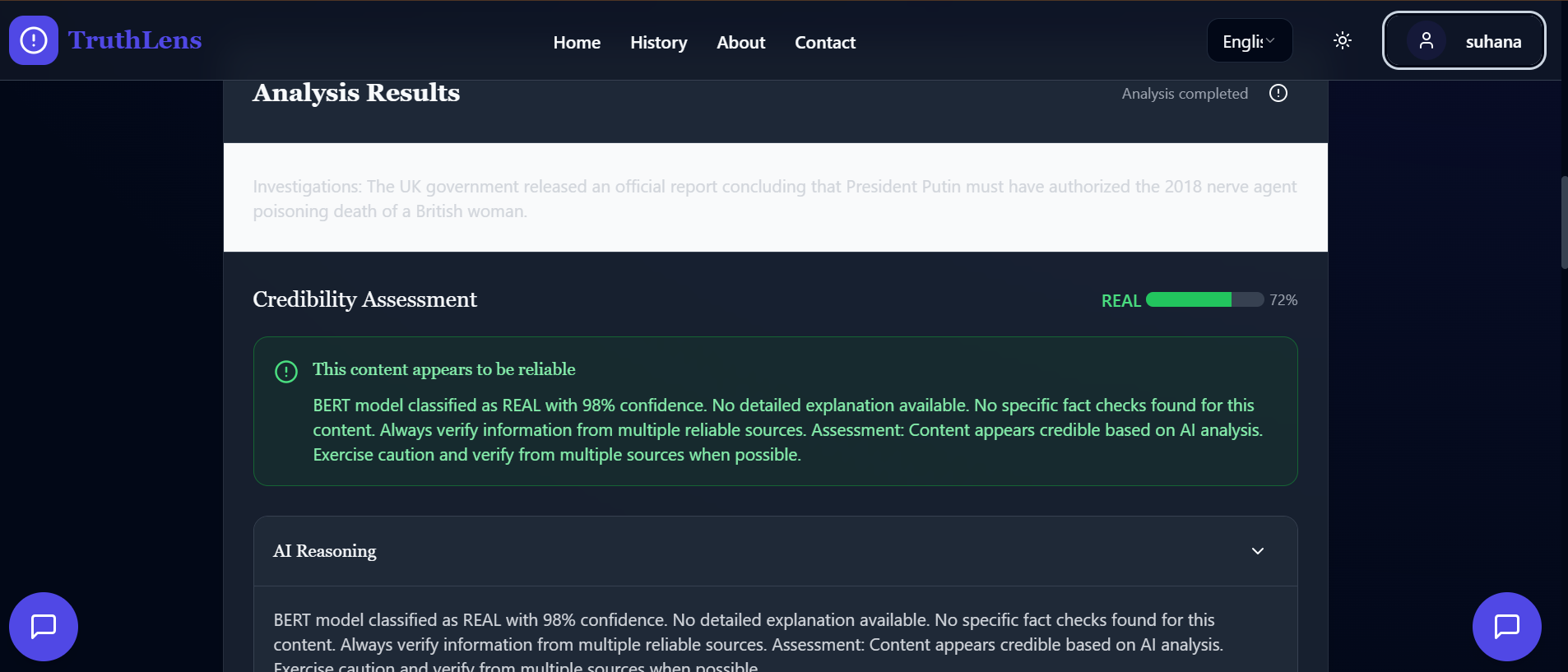
The platform classifies content as Real, Fake, or Misleading and provides:
- Confidence scores
- Clear, human-readable explanations
- Verified fact-check sources
- Sentiment and pattern insights
How we built it
Truth Lens is built using a modular, full-stack architecture and a multi-stage AI pipeline.
The final classification score is computed using a weighted combination of multiple signals:
[ \text{Final Score} = 0.55 \times \text{AI Model Analysis}
- 0.20 \times \text{Fact-Check Verification}
- 0.15 \times \text{Source Credibility}
- 0.10 \times \text{Sentiment & Patterns} ]
Technology Stack
- Frontend: React, TypeScript, Tailwind CSS, Framer Motion
- Backend: Node.js, Express, TypeScript
- Database: PostgreSQL (Neon) with Drizzle ORM
- AI & ML:
- BERT-based fake news classification
- Custom Python machine learning models
- OCR for image text extraction
- Source credibility and sentiment analysis
- BERT-based fake news classification
- Deployment: Render with a production-ready setup
Challenges we ran into
- Supporting multiple content formats such as images, documents, URLs, and voice input
- Integrating Python-based ML models with a Node.js backend
- Making AI decisions explainable and easy to understand
- Managing deployment constraints for AI workloads
- Balancing accuracy, performance, and user experience
Accomplishments that we're proud of
- Built a multi-format fake news detection system in a limited time
- Implemented explainable AI instead of a black-box predictor
- Designed a scalable and production-ready architecture
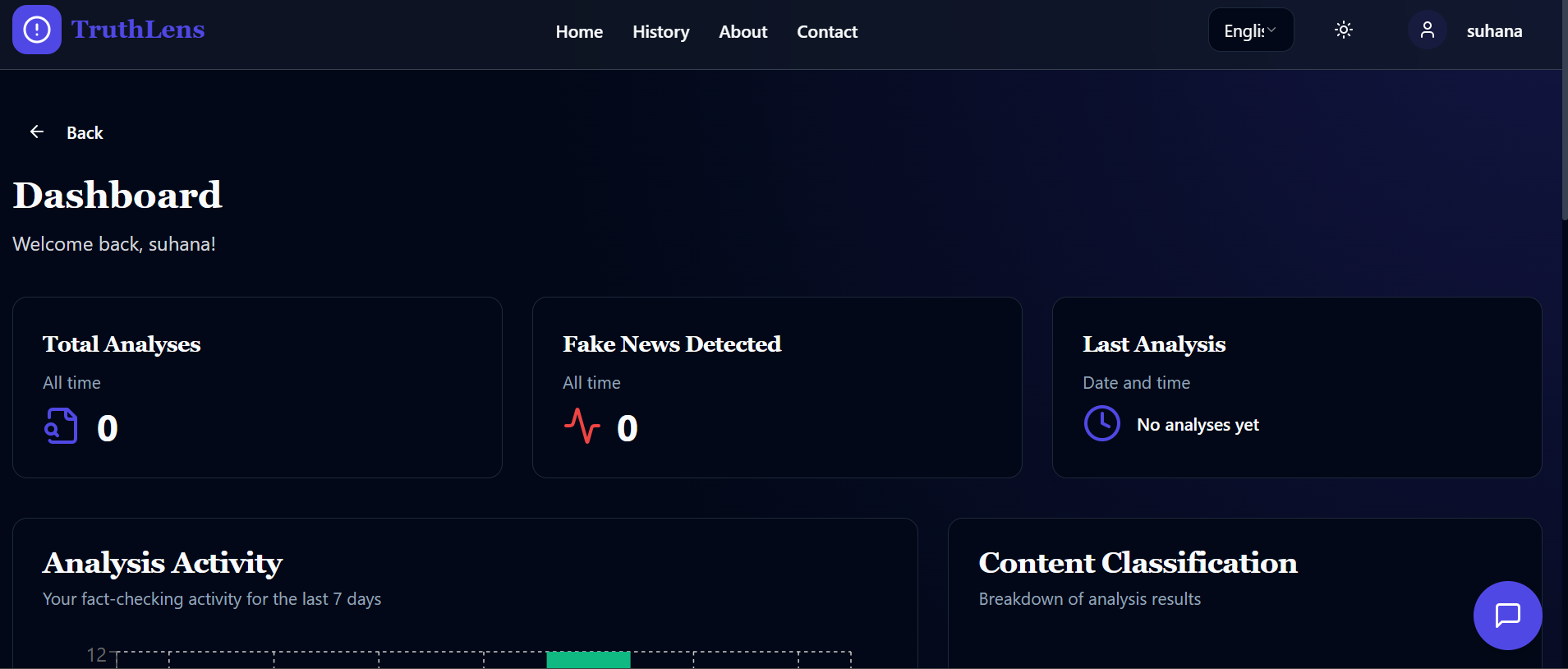
- Created a clean, intuitive, and user-friendly interface
- Successfully deployed the application with real-world infrastructure
What we learned
- How to design and integrate multi-model AI pipelines
- The importance of transparency and explainability in AI systems
- Practical challenges of deploying AI-powered applications
- How user trust depends on clarity, not just accuracy
What's next for Truth Lens
- Build a browser extension for one-click fact-checking
- Improve real-time performance and scalability
- Add community-driven verification features
- Expand mobile and accessibility support
- Introduce advanced analytics and reporting tools
Truth Lens — Trust the truth before you share.
Built With
- bert-based
- character
- classification
- custom
- express.js
- fake
- javascript
- language
- learning
- machine
- models
- natural
- news
- nlp)
- node.js
- optical
- processing
- python
- recognition
- typescript

Log in or sign up for Devpost to join the conversation.